BYD-first-cargo-ship

Automakers are fiercely lobbying governments to water down already-compromised emissions rules, but doing so will only lead to their doom as market entrants that are serious about EVs will continue ramping them anyway.

The auto industry is electrifying, and all new cars will be electric in the relatively near future. This is not in dispute by any serious person – and any alternative scenario, where humans continue to pollute as much as we do today, will result in worse and worse results for humanity the longer we pollute as climate change becomes progressively worse.

It is necessary that we stop burning fossil fuels, and fast. This is not a matter of opinion, it’s a matter of physics, and physics does not care about your arguments to the contrary.

And yet, the auto industry – which is responsible for more pollution than any other sector, at least in rich countries – still lobbies to worsen emissions reduction targets, even when those targets were already pushed back to begin with.

Automakers beg governments to let them emit more poison

We saw it this week in both Europe and the US. BMW, VW and Renault asked European regulators to push back the 2035 gas car phase-out, despite that this timeline has already been loosened. And in the US, the EPA finalized rules, but softened them due to auto industry lobbying – and the president of the main auto industry lobbyist characterized the final rules as a “stretch goal,” suggesting that he thinks there should be further softening of the already-softened rule.

Even these softened EPA rules will upend the industry, as current automaker commitments are not enough to meet the targets. Either automakers need to up their game, or someone is going to have to fill the millions-vehicle gap between commitments and requirements. And if traditional automakers don’t fill that gap, then new entrants will.

The lobbying is reminiscent of what the industry did from 2017-2021, when it lobbied an ignorant reality TV host to torpedo well-reasoned regulations which would have resulted in significantly more regulatory certainty for the industry. It eventually recognized its error, but Pandora’s box was already opened.

Today, the exact same automaker lobby which originally lobbied to fracture US and CA regulations – the Alliance for Automotive Innovation, previously known as Global Automakers, led by John Bozzella both then and now – still routinely complains about the two regulatory regimes being different, despite being personally responsible for the current state of affairs.

The compulsion against regulation is pathological. Even in situations where it doesn’t make sense to lobby against regulation, businesses will often still do so.

But wait, maybe it’s not a compulsion against all regulation. Because at the same time that automakers are begging for the ability to continue the global-scale mass murder that they continually enable (via pollution that kills millions worldwide per year), they’re also begging governments to slow down other parts of the industry that are taking the EV transition seriously.

Namely: China.

Chinese EVs will grow, whether you like it or not

China is actually a little late to the EV party. Until a few years ago, EV market share in China lagged other leading regions, but uptake in recent years has been quite rapid. NEV (EV+PHEV) market share should crest 50% in China next quarter, ahead of basically everywhere except the Nordic countries.

But as often happens, China may not always be the first entrant into a market, but once it truly commits its effort to something, those efforts tend to bear fruit rapidly.

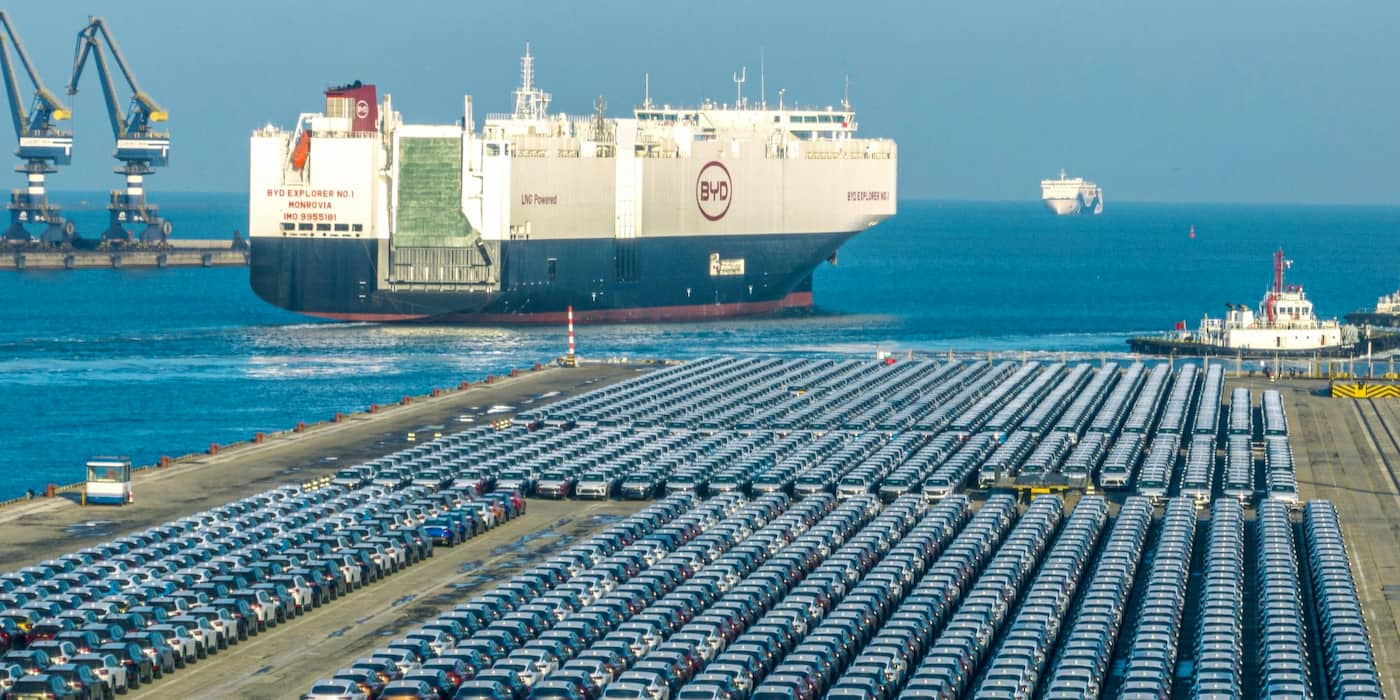
Chinese EV sales have started taking off overseas, particularly in Europe. While they still make up a relatively small percentage of the market – around 10% – that share has risen rapidly from less than 1% in 2019 (and it might be higher if Chinese automakers could find more ships, but they’re working on that).

In response to this rise in Chinese EV sales, instead of recognizing that they need to pick up their game, European automakers are… begging the EU to investigate the “flood” of Chinese EVs, even to the point of proposing retroactive tariffs. They contend that the Chinese government unfairly subsidizes its auto sector, making prices uncompetitively low. Nevermind that European governments also subsidize their auto sector (not to mention the massive worldwide subsidies for pollution), and that low prices are good for consumers (in fact, if EU consumers are benefitting from Chinese subsidies, that represents a transfer of wealth from China to the EU).

Sure, begging governments for help isn’t the only thing they’re doing, they’re also finally picking their pants up off the floor and considering building cheaper EVs, but both of these actions are in direct conflict to lobbying efforts to loosen emissions regulations. If you’re worried about competition undercutting you and taking control of the EV transition, the answer is not to cut production and pretend that EV sales are going down when they aren’t, it’s to move faster.

In the US, the anti-China lobbying has been more pre-emptive. There aren’t significant amounts of Chinese-built EVs in the US, and the country already has a number of protectionist tariffs against China.

The recent Inflation Reduction Act, which created hundreds of billions of dollars of incentives for EVs and green energy, does include provisions intended to advantage automakers who avoid using China as any part of their supply chain. And scaremongering about China is abundant throughout US political and economic discussions.

So it’s clear that Western automakers aren’t looking to compete on price or volume, they’re looking to change the rules of the game instead – in a way that ensures more pollution and more expensive vehicles for consumers. They don’t want to win the game, they want the ref to hand it to them. It’s gamesmanship – which the industry is well acquainted with.

Rising EV penetration isn’t due to regulatory minimums, it’s due to demand

But do we really think that will work? EV penetration has broadly exceeded the minimums set by emissions rules. The driver so far has not been regulatory minimums or targets set by government, it has been consumer demand – and consumer recognition that gas vehicles will soon become an albatross around the neck of anyone who makes the silly decision to buy a new one. We’ve seen it happen in Norway with well above 90% plug-in car sales in advance of its world’s-most-aggressive 2025 target, with China’s rapid rise in EV penetration which caught foreign automakers by surprise, and with California hitting ZEV goals years ahead of schedule.

So loosening the rules doesn’t seem likely to slow down consumer demand – and the public wants stronger rules anyway. Instead, it will just annoy customers who are frustrated that there aren’t enough options available (as has been the case for years – look at the excitement over the R3 and EX30 when so few other small EVs exist), and mollify laggard manufacturers into thinking they can take longer to join the party.

But if automakers (and countries with prominent auto industries, like Japan) want to survive the transition, they cannot be the last to the party. The longer they wait, the more trouble they’ll be in, and the more advantage they cede to their competition. Doing nothing didn’t work for Kodak in the shift to digital, and it won’t work for automakers during the shift to electric.

How do we know this? Because it’s already happened, in this very industry, just over the course of the trailing decade.

Big Auto let Tesla win

Over the course of the last ten years, we’ve seen plenty of efforts to regulate away Tesla’s sales model for example, and few for automakers to actually effectively compete against Tesla’s vehicle programs. We’ve also seen industry push, state by state, for abusive EV fees and other silly regulations in a desperate attempt to punish EVs for daring to be a superior choice.

All of this happened while Tesla gradually entered more segments, and gradually took over those segments. The first indication was around 2014-2015, when sales of large luxury vehicles fell for every manufacturer except Tesla. This happened again with the Model 3. And the Model Y is now the best-selling vehicle in the world. (As for trucks, well, maybe that’ll be a different story)

And yet, despite a decade of warning, it’s only recently that we’ve started seeing serious EV programs from other automakers start to spin up. But most automakers still only have a few EVs, and many of them still share platforms with gas cars. And due to Tesla’s head start, they’re the one company that has gotten scale and costs to the level that they can arbitrarily cut prices, starting an EV price war that they’re best positioned to deal with.

In refusing to act faster to accept the future that’s already here, automakers have already ceded ground. On top of the aforementioned points of market share ceded to Tesla, the industry also gave Tesla the whole concept of fueling stations.

Over the last decade, every automaker said that charging wasn’t their problem and that someone else would come along to solve it, while simultaneously saying that they can’t ramp EVs because there isn’t enough charging out there.

Tesla also said that there wasn’t enough charging out there… so it built chargers (without having to be forced into doing so). And now, as a result of automakers’ intransigence – and also thanks to President Biden’s infrastructure law, which influenced Tesla to finally open up its Supercharger network – every vehicle manufacturer is now using Tesla’s NACS plug, which means all of them will use its Supercharger network, and Tesla will be able to extract profits on fueling from basically every car on the road. “Tesla, you’re welcome”; signed – the auto industry.


Electrek

The Biden administration on Wednesday finalized one of the most significant pieces of its ambitious climate agenda: the strongest new tailpipe rules for passenger cars and trucks that will decisively push the US auto market toward electric vehicles and hybrids.

But in a concession to automakers and labor unions, the rules will be phased in more slowly than originally proposed and will give automakers more choices for how to comply.

Nearly a year ago, the Environmental Protection Agency proposed a fast ramp-up into EVs — a rule that would have ensured two-thirds of all vehicles sold were electric by the end of this decade. The EPA pumped the brakes on that plan Wednesday.

Instead of pushing automakers to sell more EVs to meet stringent pollution targets, the administration is allowing plug-in hybrids — vehicles that combine gas engines and EV-like batteries — to play a much bigger role in the electric transition.

In 2023, EVs made up just 7.6% of new car sales, according to Kelley Blue Book. The new rule is targeting 35% to 56% for EVs in 2032, and 13% to 36% for plug-in hybrids.

Transportation has an outsized climate impact, making up nearly a third of all US climate pollution, so even small steps can lead to significant change. Margo Oge, who previously headed the agency’s office of Transportation and Air Quality, called the new standard “the single most important climate regulation in the history of the country.”

In a statement Wednesday, President Joe Biden vowed the cars would be made by American workers. “US workers will lead the world on autos making clean cars and trucks, each stamped ‘Made in America,’” Biden said. “You have my word.”

Federal officials said the rule doesn’t favor electric vehicles over other types of vehicles, and will reduce nearly as much pollution as the original proposal — more than 7 billion metric tons of planet-warming emissions, along with other pollution that is detrimental to human health. By 2032, the new rule is expected to slash passenger car pollution nearly in half from 2026 levels.

“Within those ranges, we got to the same place” as the standard proposed last year, said Joe Goffman, who leads the agency’s Office of Air and Radiation.

Goffman said the agency considered different ways automakers could “mix and match” new vehicle models to meet the standard — by using more efficient gasoline engines, hybrids, plug-in hybrids and battery electric vehicles.

“By taking seriously the concerns of workers and communities, the EPA has created a more feasible emissions rule that protects workers building (traditional, gas-powered) vehicles, while providing a path forward for automakers to implement the full range of automotive technologies to reduce emissions,” the United Auto Workers union said in a statement.

White House national climate adviser Ali Zaidi said that “one of the really strong features” of the new rule was its flexibility.

“Different automakers are going to approach this in different ways,” Zaidi said. “You’ll have some automakers that maybe have a third of their fleet be plug-in hybrid electric vehicles.” Zaidi argued that would “translate into a lot of consumer choice.”

Carmakers get flexibility

Automakers like Toyota, who are favoring hybrids and plug-in hybrids and moving slowly on EVs, could be big benefactors of EPA’s new rule.

Toyota, the world’s largest automaker, is among the companies that aggressively pushed back against the Biden administration’s original proposal.

In a memo sent in the fall of 2023 to car dealers across the US, Toyota Motor North America group vice president of government affairs Stephen Ciccone described the EPA’s original EV proposal as a “mandate” and “draconian,” CNN recently reported. Ciccone wrote the proposal had caused an “existential crisis” in the industry and suggested an option giving automakers more choice.

“Toyota’s position is that the best way to reduce carbon is by giving consumers a choice of powertrain options, including hybrids, plug-in hybrids, fuel cells, fuel efficient ICE vehicles, and BEVs,” Ciccone wrote.

That flexibility is what the EPA finalized on Wednesday. But Toyota continued to characterize EPA’s rule as a “regulatory mandate” that will force it further into the EV game than it’s currently positioned.

The rule “requires a precipitous shift from around 8% market share of battery electric vehicles today to more than half by 2032 – an aggressive, sixfold increase over just eight years,” said Toyota spokesperson Edward Lewis in a statement. “Toyota will continue to lead the industry and comply with regulations, but serious challenges around affordability, charging infrastructure, and supply chain will need to be addressed before this mandate is realized.”

President Joe Biden has made the transition to EVs a signature issue of his presidency, stressing the economic impacts, in addition to the climate benefits, of cutting pollution. In August 2021, after the president announced an ambitious target that half of vehicles sold in the country by 2030 would be either battery electric, fuel-cell electric or plug-in hybrid, Biden test-drove a hybrid-electric Jeep on the White House grounds.

But political battle lines are being drawn around the EV transition. Former President Donald Trump, the Republican nominee for the 2024 presidential election, has railed against EVs in his speeches. He recently characterized EVs as “all” being made in China, even though Democrats’ Inflation Reduction Act has pushed a new EV manufacturing and assembly to the United States.

With the new standard giving automakers more flexibility, EPA administrator Michael Regan denounced the characterization that the agency was setting an EV “mandate.”

“When you look at the differences between the proposal and final, you will see that there is absolutely no mandate,” Regan told reporters, adding his agency was staying “well within the confines of the law.”

It’s not just Trump; the jump to EVs has some of Biden’s political allies worried, too. The United Auto Workers, a powerful union that has endorsed Biden, has also expressed concerns about what the shift to EVs could mean for their workers, who believe battery-powered cars require less labor to build.

But the demand for fully electric cars is growing in the US. The nation crossed a key threshold at the end of last year: 1.2 million electric vehicles were sold — a 46.3% jump from 2022.

EV adoption rates are likely to slow down this year, which is to be expected, said Trevor Houser, partner at the nonpartisan Rhodium Group. He’s looking for two main signs of EV success in the coming years: whether automakers can make a wide enough variety of the vehicles Americans want to drive, and whether the cost can come down to a more affordable range of $20,000 to $30,000.

“We won’t really know before (2025) how successfully we’re making that transition because the next generation of more affordable EVs won’t be on the market,” Houser told CNN.

Zaidi agreed it would take time to see whether more Americans move to fully electric cars.

“That’s something we’ll see over time,” Zaidi said. “But this rule is very flexible and allows for all of those pathways to emerge, and for (automakers) to pursue those in a manner that’s consistent with their strategies.”

Climate and health impacts

While the climate impact of the tailpipe rules have drawn the most attention, there is a big public-health component, as well.

Reducing pollution from cars and trucks could help Americans’ health on multiple levels, since the EPA’s multi-pollutant standards will tackle greenhouse gases that cause climate change, smog and particle emissions.

No amount of air pollution is safe, and according to the World Health Organization, it’s one of the greatest environmental risks to human health.

Vehicle exhaust is made up of all sorts of pollutants, including carbon monoxide, particulate matter, nitrogen oxides, sulfur dioxide and carbon emissions that contribute to a warming world, which is also itself a major threat to health.

Exposure to particle pollution ages and reduces lung function, and it can lead to cancerstrokeheart problemsCOPD and other lung and vascular issues. It can aggravate asthma and is linked to neurodegenerative diseases like Alzheimer’s, Parkinson’s and other types of dementia, studies have found. People exposed to higher amounts of this pollution for longer periods also have an increased risk of depression and anxiety. Exposure can even contribute to problems thinking clearly.

Particle pollution led to more than 107,000 premature deaths in the US in just one year, one 2019 study found. That’s more than the number of people killed each year in homicides and traffic accidents combined, researchers said.

“These standards really provide significant relief that communities across America need from vehicle exhaust,” said  Will Barrett, the American Lung Association’s senior director of advocacy for clean air. “It’s very much setting a strong direction to ensuring the auto industry cleans up harmful pollutants and communities are better protected from traffic emissions.”

CNN

In a new weekly update for pv magazine, Solcast, a DNV company, reports that persistent high pressure in the upper atmosphere led to irradiance as high as 30% above normal, and new records for solar generation and temperature in North America in mid-February.

A warm end to winter hit most of North America this February. In the west, during February mild air from the Pacific banked up clouds and depressed irradiance by 10-20%, according to analysis completed using the Solcast API. In the east, persistent high pressure in the upper atmosphere led to irradiance as high as 30% above normal, and new records for solar generation and temperature

A clear east/west divide is present in the irradiance anomaly this month. A strong low pressure system sat further east than normal over the Atlantic which brought calm, drier and sunny conditions to the Eastern U.S. and Mexico. Sunnier than normal conditions delivered 20-30% more irradiance than normal from Texas to New England. On the west coast however, high pressure was further west over the Pacific, so that coastal low pressure systems pulled moist air from equatorial regions, leading to increased clouds, blocking irradiance.

Clear skies and higher than normal irradiance will have benefited both large and small scale, solar producers. Residential ‘behind the meter’ solar performed strongly this February all over the East Coast. Solcast’s Grid Aggregation model for NYISO shows residential solar peaked at 3.52GW, and saw 23% more solar generation than last year after adjusting for capacity increases. By contrast, CAISO’s residential solar generation was down 12% on the long term capacity-adjusted average.

Utility scale generation in ERCOT also hit and surpassed their generation peak record, hitting 17.2GW on February 20th. A 50.1% increase in peak generation in February 2023, is mostly a function of capacity increases in the last year.

But it wasn’t just grid performance breaking recent records, temperature records were broken across the country, with the average temperature, more than 4 degrees above normal. Killeen in Texas saw a peak temperature of 38 C (100 F), and Jacaranda trees in Mexico City have been in full bloom all month, 6-8 weeks earlier than normal. Despite the heat further south, areas in Eastern Canada saw significant snowfall caused by a low pressure system stalling over the area, drawing in continuous cold air from the Atlantic. This caused one of the heaviest snowfall events in 20 years, blanketing parts of Nova Scotia with more than a meter of snow.

This extreme weather is reflective of an overall pattern being seen globally, as February 2024 was Earth’s warmest month on record for the 9th consecutive month.

PV Magazine

The American Clean Power Association (ACP) has released its Clean Power Annual Market Report, highlighting a landmark year for U.S. clean energy with more capacity installed in 2023 than in any previous year.

The industry added a total of 33.8 GW of new utility-scale clean energy projects, surpassing by 12.5% the previous annual installation record set in 2021. Solar and storage additions led the charge, breaking previous records for both technologies. Clean power accounted for most of the new power capacity installed. 

The U.S. now has 262 GW of clean energy powering its grid, and as a result, the nation now generates 16% of its electricity from wind and solar. Clean energy can be found in 93% of congressional districts and in all 50 states. The ACP says future development looks promising, with the report finding project pipelines are reaching historic levels. 

“Clean energy is fundamental to the American economy, accounting for more than 75% of all new power brought online last year. We are generating clean energy in every state and nearly every congressional district,” said ACP CEO Jason Grumet. “It has been a banner year for storage and solar, and there is real excitement over the 123 newly announced manufacturing facilities that will bring economic development to communities across the country. But despite these achievements, we need to make even greater strides to meet our shared energy security and net-zero goals. ACP will continue to advocate for improvements to siting, permitting, and planning processes to accelerate the deployment of clean energy.”  

Highlights from the Clean Power Annual Market Report 2023 include:

  • Solar, wind, and storage accounted for 77% of all new power capacity installed. 
  • Utility-scale solar installations soared to 19.6 GW, with utility-scale projects leading the expansion. 
  • Energy storage capacity nearly doubled as developers connected 7.9 GW to the grid. 
  • Investment in domestic clean energy manufacturing has grown significantly, spurred by federal tax incentives. 
  • The development pipeline is up over 25% year-over-year to 170 GW, indicating robust future clean power growth. 
  • Clean energy is found in 93% of congressional districts and in all 50 states.

Utility-scale solar energy — bolstered by favorable federal policies and decreasing costs — experienced nearly 20 GW installed across 44 states. Texas and California led the country in solar additions, bringing 5.9 GW and 2.3 GW of new solar online respectively. More than half of the 94 GW of solar in operation at the end of 2023 came online between 2020 and 2023. And more is on the way, with over 92 GW in the pipeline.

Battery storage demonstrated near-exponential growth by almost doubling installed capacity with around 8 GW installed. This brings the total operating capacity to 17 GW. California and Texas accounted for nearly three-quarters of the year’s storage additions, but a total of fifteen states added new storage capacity in 2023 (AZ, CA, CO, HI, MA, MN, NC, NJ, NM, NV, NY, OH, TX, VA, VT). The rapid growth of storage was supported by a new tax credit for standalone storage, the boom in solar power, the value storage delivers during peak demand and times of grid stress, and a decline in prices for key battery materials, ACP said.

The land-based and offshore wind sectors faced challenges in 2023, delivering 6.4 GW of wind power capacity—the slowest year for new wind installations in a decade. This slowdown was attributed largely to policy uncertainty, high costs of capital, long permitting processes, siting barriers, and a challenging environment for building new transmission, ACP said.

Corporate buyers are playing an important role in driving up clean energy demand by purchasing clean power for their operations. The top three commercial and industrial (C&I) buyers in 2023 were Amazon, Meta, and Google. Meta leads as the top buyer of operating clean power, while Amazon leads with the most total clean power capacity contracted.  

Renewable Energy World

I’ve added electrification predictions for 2024 to my customary set of solar and storage predictions. Electrification incentives in the Inflation Reduction Act (IRA) are already starting to drive demand for heat pumps and electrical upgrades, just as tax credits accelerated the solar and EV markets in the past. My better half pointed out that 2024 predictions are much tougher than 2023 recaps. Nevertheless, here I go sticking my neck out again with these 10 predictions for 2024.


1. EVs will be equipped with integrated 240-volt generators

More EV manufacturers will follow Ford’s and Tesla’s lead with integrated 240-volt generators in their vehicles. These generators will enable owners to use those huge batteries on wheels to power their home, both for ordinary daily use as well as during increasingly frequent blackouts. Clever drivers will learn to charge their vehicles inexpensively during the day, and then use their vehicle’s batteries to power their homes during peak electric times during the evening.

2. Heat pump sales will surge by 25%

Heat pump HVAC and water heater system sales will surge by 25% in 2024, limited only by equipment supplies and contractor resources. Even though IRA rebates for these systems are still not available due to DOE and state energy office delays, customers are buying because of the market awareness created by the IRA. Customers are taking advantage of currently available tax credits and local incentives for this equipment — which in some cases cover more than half the total installation cost.

3. Fewer than half of new clean energy manufacturing plants will be completed

The IRA provides strong incentives for EVs, solar, storage and heat pump manufacturing in the United States. However, rules for applying these incentives to both manufacturing facilities and projects are complicated. Although there have been over 60 manufacturing plants announced, fewer than half will actually go into full-scale production once the incentive and supply chain details are understood.

4. Utilities in other states will follow California’s lead to end net metering

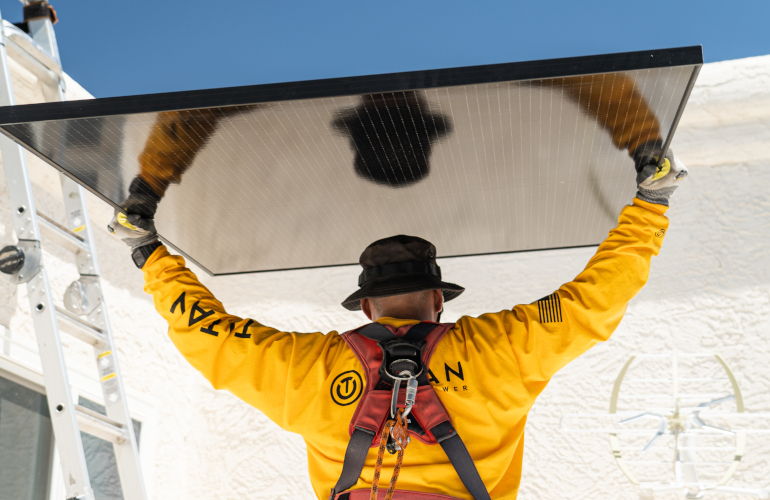
Credit: Titan Solar Power

The end of net metering in California will energize utilities in other states to limit the growth of rooftop solar and storage. The dirty secret is that utilities are permitted to use ratepayer funds to influence state politicians to eliminate competition from rooftop solar – and basically enforce their monopoly. Laws to restrict utility lobbying are uniquely difficult to pass since utilities spend tens of millions of dollars to lobby against these same laws.

5. Residential solar revenues in California will plunge by 50%

Residential rooftop solar revenues in California will plunge by 50% in 2024 compared to 2023. Even though California electric rates continue to increase at over 10% per year, the state is unlikely to recover its solar leadership position until net-metering policies are restored. Customer rage from skyrocketing electric bills and the end of NEM will backfire on politicians who accepted millions in contributions from utility interests over the past six years. Relying on the utility gravy train to get re-elected will no longer work for politicians once voters link their electric bills with the lobbying money their state representatives raked in.

6. A national-scale solar installation company will file for bankruptcy

Continued financial losses at national-scale solar installation and finance companies will result in at least one high-profile bankruptcy. The finance business model for large-scale residential solar companies is very sensitive to interest rates. Solar finance companies borrow money for PPAs and leases for relatively short terms to fund their growth and then get paid back over the much longer term of the PPA or lease. When interest rates spiked, they were not able to maintain their profits due to lower revenue and higher borrowing costs. Interest rates will decline significantly in 2025 at which time the solar finance market will bounce back, especially since average electric rates will be higher and equipment costs will be lower.

7. Tesla will claw its way into the U.S. inverter business

The inverter duopoly of SolarEdge and Enphase will turn into a tri-opoly (new word, not the board game) with the entrance of Tesla’s hybrid string inverter. Tesla will muscle into the inverter business with the combination of its brand name advantage and lower system costs – even though the performance of their systems will be lower without module-level electronics.

8. VPPs and V2G will not gain traction

Utility-sponsored tests of virtual power plants (VPPs) and vehicle-to-grid (V2G) will continue but will not gain traction without large customer incentives. The underlying friction of these business models is that utilities are unwilling to compensate customers for the full value of the battery systems – for the simple reason that utilities generate higher profits if these battery assets are owned by the utility itself rather than the customers. The paltry amount of money that utilities are willing to pay for customer-sited resources is insufficient to cover customer costs of their batteries, not to mention installer, manufacturer and aggregator costs to support these systems.

9. The residential battery system business will consolidate

The crowded residential battery system business will consolidate down to four national-scale players. Batteries by themselves are relatively inexpensive. On the other hand, releasing a complete and fully UL-approved battery and software system is expensive. But that’s just the beginning — building out a national sales and service organization costs a fortune. New battery system entrants — without the investment and army of people that it takes to support customers — will not succeed.

10. It’s game-over for fossil fuels

COP28 showed the world that it is “game over” for fossil fuels. Economics is the simple reason for this transition, although it will take another generation for the transition to be completed. Energy from solar and wind is already much less expensive than fossil fuels. These renewable energy sources are being deployed at an accelerating rate, while at the same time technologies that clean up fossil fuel emissions — such as carbon sequestration and storage, and direct air capture — struggle to pencil out economically. Despite the billions of dollars that fossil fuel companies spend to extend their businesses and continue to pollute, they are destined to become extinct just as their dinosaur ancestors.

Solar Power World

Wigton Windfarm Limited will remove its 10 per cent cap on individual ownership in two months, but already, investors are repositioning with heavy share transactions, the most robust of which occurred on Thursday with trades worth over $500 million.

“Removing the cap sets the stage for someone or group of bodies to try take control of the company. The belief is that in that environment, it will probably lead to an increase in the stock price,” said Mayberry Group CEO Gary Peart during an investor briefing last week.

Wigton is a renewable-energy producer that was formerly owned by the Jamaican Government but was divested via the stock market in 2019. Partly to entice subscription by a wide base of the public, the 11 billion share units were priced at an accessible 50 cents per unit during the IPO. Individual ownership in the stock was also capped at 10 per cent in a market that allows for such holdings of up to 80 per cent.

“Companies that do well are companies that are focused, and so the control issue is not important,” Peart asserted. The Wigton IPO was brokered by Mayberry Investments Limited, and one of its sister companies currently holds a stake in the wind farm.

The market activity last week knocked the stock off its perch to around 96 cents per share.

On Thursday, investors traded over 561 million units of WIG shares, the most activity the stock has seen in at least two years, according to Jamaica Stock Exchange data. The stock price fell 15 per cent on that day to close at 96 cents per share, but it was then still up 20 per cent year on year.

However, the rout was not sustained. By Friday, the stock had climbed back to $1.07 per share. It still closed 3.6 per cent lower for the week but was up 35 per cent year to date.

The WIG stock trades at around 38 times what it earned in the last financial year. This within the context of an overall market trading at a multiple of nine times.

The company is in the process of finalising an upgrade programme for some of its turbines that were installed two decades ago and are at the end of their useful life. Wigton has been cagey about disclosing the level of investment required but says it is in the process of seeking financing. Jamaica’s utility regulator is also yet to approve the upgrade programme laid out by the wind farm operator.

Wigton’s articles of incorporation in relation to the shareholding limitation will cease to have effect after May 2024, according to information on renewable energy producer’s website.

The largest shareholders in Wigton, based on market disclosures to December 2023, are Mayberry Jamaica Equities, a fund with 10 per cent interest; VM Building Society 9.87 per cent, National Insurance Fund 6.4 per cent, ATL Group Pension Fund 5.4 per cent, and Sagicor Investments with 4.4 per cent.

Wigton Windfarm is currently valued at $11.77 billion on the market.

Gleaner

IDB Lab will provide financing for start-up GoElectricTT in support of the push towards the adoption of electric vehicles in Trinidad & Tobago.

GoElectricTT will offer short- and long-term leases and rentals of an all-electric vehicle fleet, and will engage in outreach and public education on the benefits of using the vehicles. With an initial fleet of 15 vehicles, the start-up will focus on the business sector of Trinidad & Tobago and target companies that typically own or lease fleets.

Trinidad & Tobago’s population of approximately 1.4 million people operate more than 800,000 vehicles. Most of these vehicles have internal combustion engines, which produce pollution and contribute to climate change.

The IDB Lab said despite fiscal incentives on the importation of electric vehicles as a way to move towards a low-carbon future, the adoption of these vehicles has been slow – accounting for less than one per cent of new registrations.

“This investment contributes to IDB Lab’s growing portfolio in climate technology, which focuses on creating early-stage opportunities in Latin America and the Caribbean, leveraging innovation and priorisiting real-life impact for the people of the region,” it said.

Gleaner

The escalating expenses associated with electricity in Jamaica have significantly driven the expansion of solar energy usage. Notwithstanding this challenge, substantial initiatives have been implemented by both the government and CARICOM to foster the growth of renewables, enhancing affordability for Jamaica and other Caribbean nations. A notable exemption involves the elimination of taxes on the importation of solar lithium batteries. Given that solar batteries constitute a significant proportion of the overall expenses in a solar energy system, the removal of the common external tariff on solar lithium batteries has played a pivotal role. Consequently, this policy adjustment has empowered more homeowners to not only curtail energy costs but also to avail themselves of robust backup power options during extended blackouts, a scenario often induced by hurricanes or other natural disasters.

In a recent turn of events, the Council for Trade and Economic Development (COTED) made a decision that sent shockwaves through Jamaica’s renewable energy sector: not to extend the suspension of the Common External Tariff on Jamaica’s importation of lithium-ion batteries from outside the Caribbean which means lithium batteries would now be taxed 20% on importation. This decision, which could have had dire consequences for the burgeoning renewable energy industry, was met with rightful objection from the Jamaican Government. However, the disappointment lies not only in the initial decision but also in the government’s delayed response and lack of transparency in addressing the issue.

As an active participant in the renewable energy sector, I was deeply concerned when news broke of COTED’s decision to remove the suspension of the lithium battery tariff. This decision threatened to undermine Jamaica’s progress towards achieving its Vision 2030 goal of sourcing 50% of electricity from renewable resources by 2030. With lithium batteries playing a crucial role in renewable energy storage, the imposition of tariffs would have undoubtedly hindered the growth of the industry.

The situation was further compounded by the silence from key government officials. Despite Jamaica’s attendance at the COTED meeting in Barbados, there was no public acknowledgment for a staggering 30 days of the decision to reinstate the tariff. A TV news report that aired on January 30, 2024 was what prompted the government to release a press statement on January 31, 2024 addressing the issue.

The lag in the government’s response forced stakeholders of the (renewable) industry to pay the 20% tax for the entire month of January associated with the purchase of Lithium batteries thus undermining confidence in the commitment to champion the renewable energy agenda. Stakeholders of the renewable energy industry are now left questioning if their best interests are truly being represented.

The refusal of the government to disclose the name of the company in Barbados responsible for the tariff imposition adds another layer of opacity to the situation. Why not publicly state the name of the company that all were being forced to purchase tax free Lithium batteries from if the tax exemption had not been reinstated. This lack of transparency appears tone deaf particularly considering the significant financial implications incurred by Jamaican solar companies as a result of the unexpected duties.

The proactive move from the Jamaican government should have been an immediate response followed by full disclosure and that it is making every effort to refund solar companies the taxes paid by them during the month of January. While we acknowledge the reinstatement of the tariff exemption for 2024 and the relief it provides, the absence of accountability from the government and a plan to reimburse impacted industry players undermines their stated support for the renewable energy sector.

In the absence of a concrete plan from the government to prevent a recurrence of such events, uncertainty looms at large as to what will happen when the exemption expires February 2025. The lack of proactive measures to safeguard industry players against a repeat of events or similar cost impacting instances in the future will only erode trust and heighten skepticism in Vision 2030 and the government to fulfill its commitments. Stakeholders are now left to speculate on the future of the renewable energy industry in Jamaica.

As the need and demand for renewable energy continues, it is imperative that the Jamaican government takes swift and decisive action to address these grievances and secure the renewable energy sector and its stakeholders. Without accountability, transparent communication and engagement with stakeholders of the industry, and a strategic plan by the government, the reality of a sustainable energy future for Jamaica remains at risk of being derailed by bureaucratic inefficiencies or political apathy. 

Jason Robinson
Chief Executive Officer
SolarBuzz

The company from Barbados has been asked to provide the relevant information by no later than January 5, 2024


The Ministry of Science, Energy, Telecommunications and Transport has advised that a 20 per cent tariff will be applicable to the importation of lithium-ion batteries from outside the CARICOM region as of January 1.

A two-year suspension of the common external tariff (CET) is in place until the end of December, and Jamaica requested a further two year extension at a November meeting of the Council for Trade and Economic Development (COTED).

However, the ministry said in a media release on Friday that a Barbados-based company has objected to Jamaica’s application, indicating through the Barbados government that they produce the type of lithium-ion batteries being requested for CET suspension.

The  ministry said the necessary due diligence is now being done by the Jamaican authorities to assess the Barbadian company’s certificate of origin and their ability to meet the specifications and provide the quantities required by Jamaica’s renewable energy sector.

The company from Barbados has been asked to provide the relevant information by no later than January 5, 2024, to allow for the preparation of the Government of Jamaica’s response to COTED.

“Due to the objection raised by the Barbadian company, a 20 per cent CET will be applicable to the importation of lithium-ion batteries from outside the region as of 1st January 2024. While the country’s renewable energy stakeholders should remain guided by the Jamaica Customs Agency, it should be noted that only lithium-ion batteries imported for use in solar applications will be exempt from GCT,” the ministry stated.

The CET is applied by all participating countries on select products. It effectively raises the price of imports from outside of the region, giving internally manufactured products a competitive advantage.

Gleaner

A year into the implementation of the Government’s concessions on electric vehicles, new data show that EV imports soared to $9 billion over the period July 2022 to June 2023, as import volumes doubled year on year.

In a move aimed at softening the country’s dependence on petroleum for motor vehicles by making it more affordable for Jamaicans to acquire electric vehicles, the Government slashed the import duty on a limited number of electric vehicles from 30 per cent to 10 per cent and has removed licence fees for EVs. About a third of petroleum imports are used for transportation in Jamaica.

The concessionary measures took effect In July 2022 and will run to July 2027, but since then, EV imports have continued to rise, according to data requested by the
Jamaica Observer on electric vehicles including hybrids fromthe St atistical Institute of Jamaica (Statin).

For the year, July 2022 to June 2023, Jamaica imported 6,606 electric vehicles valued at $9.1 billion, more than double the 2,854 EVs imported a year earlier between July 2021 and June 2022 when the EVs imported were valued at $4.4 billion. Data provided by Statin only goes up to July 2023. Still, in that single month, Jamaica imported its highest quantity of EVs, totalling 951 units, which were valued at $1.5 billion. Still, despite doubling in the year to July 2023, EV imports were still just 16 per cent of the total $56 billion worth of vehicles imported into Jamaica in the same 12 months period.

While the data suggest that the EV market in Jamaica is slowly gaining some traction, key players in the industry have mixed reactions to the market’s performance, with at least one player — Andrew Jackson of Jetcon Corporation — taking the decision to minimise his company’s EV inventory.

“The EV market is dead. I’ve had EVs just sitting on the lot losing value, and even after cutting the price, they still weren’t moving. After about a year we got an offer from a company and we decided to take the deal,” Jackson told the
Jamaica Observer.

Jetcon is one the first used car dealers to dabble in the EV market. The company ordinarily stocked roughly 10 of the Nissan Leaf first-generation EV model, but given his experience with the market, Jackson says while he will still stock some EV units, the number will be fewer.

“I think a large part of the problem is the concession being offered by the Government. It’s a non-starter. It’s not significant enough to make the vehicle affordable for the average consumer and there are too many limits on who can actually benefit from the concession,” he said.

The reduced duties were expected to shave a little over $1 million off the Nissan Leaf, one of the lowest-priced battery electric vehicles available in Jamaica at $5 million, but those savings didn’t materialise for Jackson who said that upon entry into Jamaica he learnt that the vehicles did not fall within the prescribed age range to benefit from the tax break.

“It meant that those savings that I planned to pass on to the consumer were no longer possible,” Jackson said.

Days after the Government announced that it would provide a tax break on imported EVs, business operators, making early moves in the industry, criticised the Government for placing a cap of 1,000 units on the number of vehicles that could benefit from the tax break. Additionally, only electric vehicles below the age of three years could benefit from the tax incentive.

The operators’ initial take was that the measures were counterproductive, adding that the initiative would have a more meaningful impact had the limit been increased to 2,000 units. But Minister Clarke argued that the EV market cap would minimise the tax losses to $18 million over the five-year period.

Group marketing manager at ATL Automotive Limited, Christina Taylor, is also on board with the call for more incentives and has also called for greater clarity on the units which qualify for the duty break. However, EV sales at ATL Automotive are in stark contrast to EV sales a Jetcon.

“There has definitely been an uptick in sales as the price point is more attractive. We’ve introduced a variety of EVs across differing brands — mild hybrids, hybrids, plug-in, e-hybrids, and EVs since 2016, and the adoption, while slow, has increased,” Taylor told the
Business Observer.

She credits much of the improved performance to “lessening hesitancy” in the market as motorists become more aware of the benefits of EVs and the greater development of an ecosystem to facilitate electric mobility in Jamaica.

Jamaica is still in the early stages of adoption, but power provider Jamaica Public Service (JPS) and Evergo Jamaica continue to invest in charging stations. The latest target published by JPS is for the addition of 12 electric vehicle charging stations across the island, bringing to total 22 public electric vehicle charging stations operated by JPS. Later on, JPS is looking to roll out another 16 charging plugs.

Several of the charging stations are being constructed in partnership with gasoline retailers, whose sites host the stations. So far, partners have included Boots Gas Station, Texaco, and Total. Many of JPS’s charging stations are capable of recharging EVs at some of the fastest charging rates on the island.

“Through private sector organisations such as Evergo and JPS Charge N’ Go, the range anxiety that persons have been wary of has lessened as there are almost 100 charging stations island-wide, spanning multiple convenient locations in each parish so persons can charge wherever they go,” Taylor said.

She added that with improvements in technology, older EVs which would only have about 100 km of range are also a “thing of the past”.

“Through advanced technology and improvements in battery power, EVs nowadays can easily do 450 to 680 km, taking you from Kingston to Negril and back,” she said.

“Another hesitation has been the safety of EVs, but people are learning that EVs also undergo rigorous safety tests, just like any normal car. Additionally, through our training department, the ATL Academy, we’ve been working closely with the Jamaica Fire Brigade on how to extract persons from an EV in the event of an accident,” Taylor added.

ATL, which was last named the regional distributor for the BYD fleet of electric vehicles in Jamaica, Trinidad and Tobago, Cayman, Curaçao, Barbados, Aruba, Antigua, Saint Lucia, Guyana, and Suriname, also offers consumers a charger and complimentary installation at a location of their choice, whether at home or the office, as a sweetener for the purchase of any electric vehicle — be it plug-in, e-hybrid, or full EV.

ATL Automotive and Stewart’s Auto Sales Limited are two of the largest dealers of electric vehicles in Jamaica. However, efforts to get a comment from Duncan Stewart, general manager of affiliated company Stewart Motors Limited were unsuccessful up to press time.

EV brands carried by ATL Automotive include Audi, Porsche, BYD, BMW, and MINI. Meanwhile, Stewart’s Automotive represents brands such as Mercedes Benz, Land Rover, Jaguar, Mitsubishi, Suzuki, and Honda bikes.

Jamaica Observer