– Maximizing Your Solar System During Hurricane Melissa

Editor’s Note: This updated advisory reflects Jamaica’s upgrade to a Hurricane Watch as Hurricane Melissa approaches.

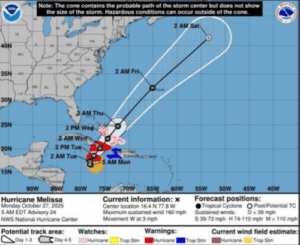
As Hurricane Melissa moves across the Central Caribbean Sea, Jamaica has been placed under a Hurricane Watch, with potential for heavy rains, strong winds, and possible power interruptions. 

For SolarBuzz system owners, this is the ideal time to take proactive steps to keep your solar energy system operating at peak efficiency and ensure continuous resilience against any grid-supply interruptions.

Our systems are designed and installed to deliver reliable performance and energy security even in challenging weather. Like any high-efficiency system, they operate at their best when used strategically during extreme conditions.
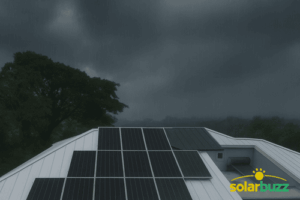
This guide offers practical reminders on conserving energy, prioritizing battery charging, and maintaining system efficiency with recommendations to help you stay powered, comfortable, and safe throughout the storm.

The goal is to minimize unnecessary energy use, maximize stored power, and adapt smartly to reduced sunlight during overcast conditions.

1. Unplug and Power Down Non-Essential Appliances and Equipment

Even the most efficient solar system performs at its highest potential when paired with good energy habits. 

During a storm, every watt saved contributes to longer battery runtime and uninterrupted comfort.
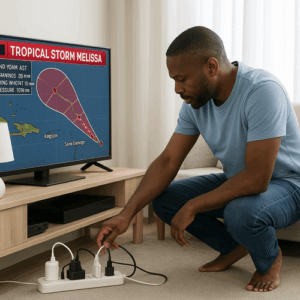
Unplug and switch off all non-essential devices, including:

  • Gym equipment – such as treadmills or ellipticals which often draw standby power.
  • Extra refrigerators or freezers –  if not in full use, as they require significant energy to maintain temperature.
  • Electronics – such as gaming consoles, decorative lighting, and unused chargers.
  • Deep freezers – Avoid opening doors unnecessarily to maintain cold air and preserve your food items.
  • Smart home devices – in unoccupied rooms, including smart bulbs and unused air-conditioning units.

Keep only essential items connected for example, your Wi-Fi router, refrigerator, and a few lights or fans. 

Conduct a quick home energy audit by walking through each room and identifying devices that draw power when idle. Power strips make it easier to turn multiple items off at once.

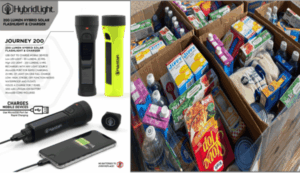
Prepare an emergency kit with items such as solar-powered flashlights (available at SolarBuzz) and non-perishable food that doesn’t require cooking to reduce use of your electric stove. 
These steps alone can reduce overall consumption by up to 20–30%, giving your batteries more flexibility and preserving stored energy for essential needs.

🏊 2. Turn Off High-Consumption Outdoor Equipment

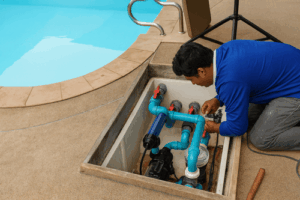
Outdoor electrical systems like pool pumps, fountains, and irrigation systems can have high power draws and are usually non-essential during storm periods. Switch them off until the weather clears.
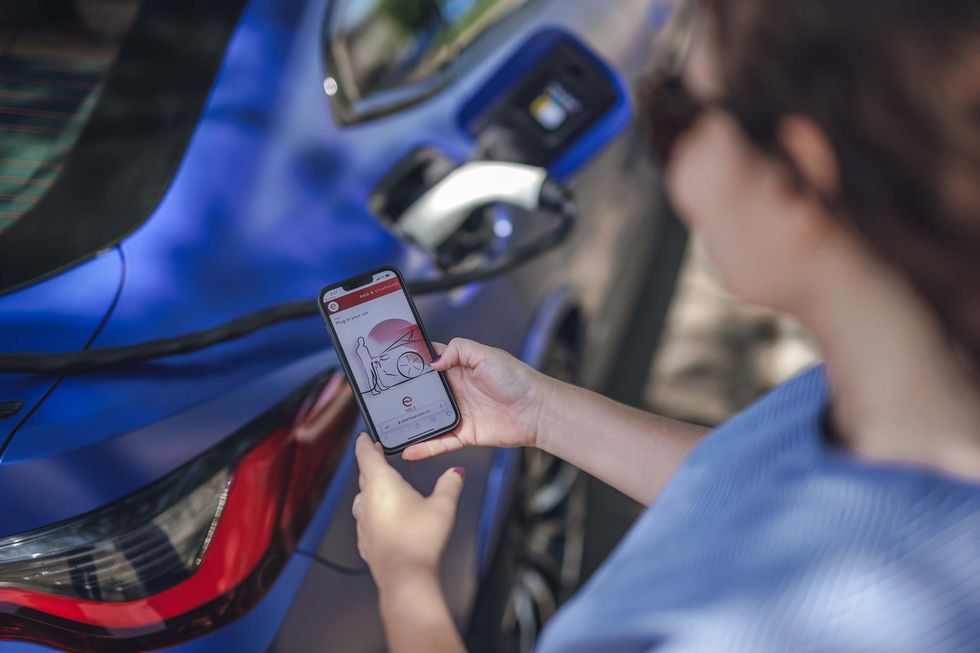
If you have an electric vehicle (EV), charge it during daylight hours once your batteries are fully charged, then unplug the charger to protect it from possible surges.

For solar-powered outdoor features such as garden lights, set them to low-power modes or turn them off to conserve internal batteries. 

Redirecting energy away from these systems ensures more power is available for your core household or business operations.

☀️ 3. Optimize Charging Before and During the Storm

Although cloud cover can limit sunlight, SolarBuzz systems are engineered to maintain strong performance even under diffuse light. To secure the best backup capacity:

  • Monitor the storm – Monitor the storm closely via local news and weather updates and temporarily switch your solar system to JPS/grid mode if possible and where applicable.
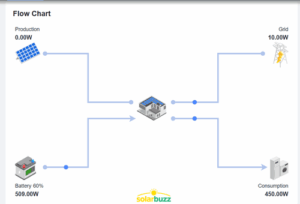
  • Use solar monitoring apps – At SolarBuzz, we encourage our clients to use their online monitoring app to track panel output, battery levels, energy usage and switch to JPS where applicable to allow the panels to focus on fully charging batteries, building a robust power reserve. Once fully charged, revert to solar use for clean, independent energy.
 

  • EV Charging – Charge your EV during sun hours after the batteries of your solar system are at full charge.
  • Pre-charge batteries – Charge batteries to 100% before storm conditions intensify. 
  • .Generator owners –  Perform a quick test run and use your generator sparingly to supplement charging if solar input is limited.

These actions help ensure your system is fully charged and ready to deliver steady power even if grid service is interrupted.

❄️ 4. Minimize Air Conditioning & Cooling Demands

Air conditioning is one of the largest household power consumers.

During cloudy or rainy periods:

  • Use A/C units only in occupied rooms, and set temperatures between 24–26°C for efficiency.
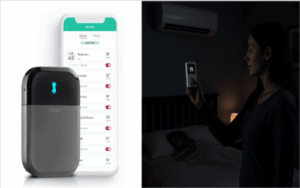
  • Use smart controls like the Sensibo Sky (available at SolarBuzz) to schedule A/C operation during daylight hours when panels are producing most energy.
  • Rely on fans or natural ventilation whenever possible; storms often bring cooler air that reduces the need for heavy cooling.

If your home has tinted windows or glass doors, maximize the benefits of your window film solution by using ceiling fans to circulate air effectively. These adjustments will extend stored power and help maintain comfort without strain on your system.

🌬️ 6. Secure Your Solar Infrastructure

SolarBuzz systems are engineered to withstand Jamaica’s tropical climate, but a quick pre-storm check ensures optimal readiness. 
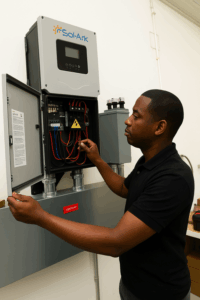
Before the weather worsens:

  • Verify that your inverter and battery systems display normal operation with no alerts.
  • Make sure breakers and electrical connections are properly secured and protected from moisture.
  • Protect your equipment from rain, especially your battery storage area. Keep batteries covered and sheltered from direct exposure to water or humidity.
  • Cover any fully exposed EV chargers to prevent rain or debris from entering the unit. Waterproof covers or heavy-duty plastic sheeting can provide an extra layer of protection.
  • Trim any overhanging branches that might fall on panels.
  • If you already have security window film installed, check that it remains intact and properly sealed. For those without it, consider this a worthwhile post-storm upgrade (available at SolarBuzz) to help reinforce glass surfaces before future weather events.

I

If you observe anything unusual, contact your solar service provider for guidance or assistance before the storm intensifies. 

🕯️ 7. Prepare for Extended Cloud Cover

If Hurricane Melissa lingers or leads to several days of limited sunlight, we encourage that you:

  • Conserve stored energy by reducing non-essential usage.
  • Use LED bulbs and energy-efficient devices.
  • Delay use of heavy-load appliances such as dryers, ovens, electric stoves and large motors until conditions improve.

Smart energy conservation ensures your system continues to deliver consistent, reliable power, even during extended cloudy periods.

Turning Storms Into Strength

Every storm reminds us of the importance of energy resilience and the value of preparation.

At SolarBuzz, we view Hurricane Melissa as an opportunity to empower our clients through knowledge, strengthen readiness, and reinforce confidence in Jamaica’s sustainable energy future. 
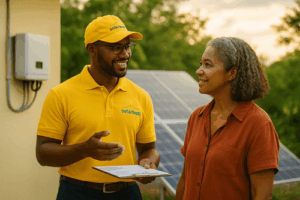
Our systems are designed for strength and reliability, ensuring you remain powered through any challenge. By following the proactive steps outlined in this guide, you can optimize your system’s performance and maintain comfort and stability throughout the storm.

Our team remains available, as weather conditions allow, to provide guidance and support before, during, and after the hurricane.

SolarBuzz remains committed to advancing renewable energy solutions that support continuity, sustainability, and resilience for all Jamaicans.

Stay informed. Stay safe. Stay powered.

From The SolarBuzz Team

Deidre Wedderburn is the Client Relations Manager at SolarBuzz, dedicated to building long-term partnerships and delivering a top-tier client experience (deidre@solarbuzzjamaica.com).
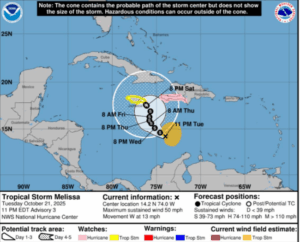

 

– Maximize Your Solar System During Tropical Storm Melissa

As Tropical Storm Melissa moves across the Central Caribbean Sea, Jamaica has been placed under a tropical storm watch, with potential for heavy rains, strong winds, and possible power interruptions. 

For SolarBuzz system owners, this is the ideal time to take proactive steps to keep your solar energy system operating at peak efficiency and ensure continuous resilience against any grid-supply interruptions.

Our systems are designed and installed to deliver reliable performance and energy security even in challenging weather. Like any high-efficiency system, they operate at their best when used strategically during extreme conditions.

This guide offers practical reminders on conserving energy, prioritizing battery charging, and maintaining system efficiency with recommendations to help you stay powered, comfortable, and safe throughout the storm.

The goal is to minimize unnecessary energy use, maximize stored power, and adapt smartly to reduced sunlight during overcast conditions.

1. Unplug and Power Down Non-Essential Appliances and Equipment

Even the most efficient solar system performs at its highest potential when paired with good energy habits. 

During a storm, every watt saved contributes to longer battery runtime and uninterrupted comfort.

Unplug and switch off all non-essential devices, including:

  • Gym equipment – such as treadmills or ellipticals which often draw standby power.
  • Extra refrigerators or freezers –  if not in full use, as they require significant energy to maintain temperature.
  • Electronics – such as gaming consoles, decorative lighting, and unused chargers.
  • Deep freezers – Avoid opening doors unnecessarily to maintain cold air and preserve your food items.
  • Smart home devices – in unoccupied rooms, including smart bulbs and unused air-conditioning units.

Keep only essential items connected for example, your Wi-Fi router, refrigerator, and a few lights or fans. 

Conduct a quick home energy audit by walking through each room and identifying devices that draw power when idle. Power strips make it easier to turn multiple items off at once.

Prepare an emergency kit with items such as solar-powered flashlights (available at SolarBuzz) and non-perishable food that doesn’t require cooking to reduce use of your electric stove. 

These steps alone can reduce overall consumption by up to 20–30%, giving your batteries more flexibility and preserving stored energy for essential needs.

🏊 2. Turn Off High-Consumption Outdoor Equipment

Outdoor electrical systems like pool pumps, fountains, and irrigation systems can have high power draws and are usually non-essential during storm periods. Switch them off until the weather clears.

If you have an electric vehicle (EV), charge it during daylight hours once your batteries are fully charged, then unplug the charger to protect it from possible surges.

For solar-powered outdoor features such as garden lights, set them to low-power modes or turn them off to conserve internal batteries. 

Redirecting energy away from these systems ensures more power is available for your core household or business operations.

☀️ 3. Optimize Charging Before and During the Storm

Although cloud cover can limit sunlight, SolarBuzz systems are engineered to maintain strong performance even under diffuse light. To secure the best backup capacity:

  • Monitor the storm – Monitor the storm closely via local news and weather updates and temporarily switch your solar system to JPS/grid mode if possible and where applicable.

  • Use solar monitoring apps – At SolarBuzz, we encourage our clients to use their online monitoring app to track panel output, battery levels, energy usage and switch to JPS where applicable to allow the panels to focus on fully charging batteries, building a robust power reserve. Once fully charged, revert to solar use for clean, independent energy.


  • EV Charging – Charge your EV during sun hours after the batteries of your solar system are at full charge.
  • Pre-charge batteries – Charge batteries to 100% before storm conditions intensify. 
  • .Generator owners –  Perform a quick test run and use your generator sparingly to supplement charging if solar input is limited.

These actions help ensure your system is fully charged and ready to deliver steady power even if grid service is interrupted.

❄️ 4. Minimize Air Conditioning & Cooling Demands

Air conditioning is one of the largest household power consumers.

During cloudy or rainy periods:

  • Use A/C units only in occupied rooms, and set temperatures between 24–26°C for efficiency.

  • Use smart controls like the Sensibo Sky (available at SolarBuzz) to schedule A/C operation during daylight hours when panels are producing most energy.

  • Rely on fans or natural ventilation whenever possible; storms often bring cooler air that reduces the need for heavy cooling.

If your home has tinted windows or glass doors, maximize the benefits of your window film solution by using ceiling fans to circulate air effectively. These adjustments will extend stored power and help maintain comfort without strain on your system.

🌬️ 6. Secure Your Solar Infrastructure

SolarBuzz systems are engineered to withstand Jamaica’s tropical climate, but a quick pre-storm check ensures optimal readiness. 

Before the weather worsens:

  • Verify that your inverter and battery systems display normal operation with no alerts.
  • Make sure breakers and electrical connections are properly secured and protected from moisture.
  • Trim any overhanging branches that might fall on panels.
  • Use protective security window film to prevent large panes of glass from shattering (available at SolarBuzz).

I

If you observe anything unusual, contact your solar service provider for guidance or assistance before the storm intensifies. 

🕯️ 7. Prepare for Extended Cloud Cover

If Tropical Storm Melissa lingers or leads to several days of limited sunlight, we encourage that you:

  • Conserve stored energy by reducing non-essential usage.

  • Use LED bulbs and energy-efficient devices.

  • Delay use of heavy-load appliances such as dryers, ovens, electric stoves and large motors until conditions improve.

Smart energy conservation ensures your system continues to deliver consistent, reliable power, even during extended cloudy periods.

Transforming Preparation into Empowerment and Resilience into Confidence

At SolarBuzz, our systems stand for independence, security, and sustainability. 

As Jamaica prepares for Tropical Storm Melissa, we encourage our clients to take a few proactive steps to ensure continued optimal performance and comfort throughout the weather event. With thoughtful preparation, your system will continue providing the reliable energy you have come to depend on.

SolarBuzz views every storm as an opportunity to strengthen resilience and empower our community through knowledge, readiness and trust. We remain committed to helping our clients harness the power of the sun even when the skies are grey. 

Stay informed. Stay safe. Stay powered.

From The SolarBuzz Team

Deidre Wedderburn is the Client Relations Manager at SolarBuzz, dedicated to building long-term partnerships and delivering a top-tier client experience (deidre@solarbuzzjamaica.com).
 

Sunnova powers more than 50,000 in Puerto Rico through Ernesto

Another inclement weather event, another testament to the utility of virtual power plants!

Sunnova Energy International announced today that it powered more than 54,500 customers in Puerto Rico during and after Tropical Storm Ernesto from August 13 to August 19. During the storm, local utility grids were unable to deliver power to approximately half of the residents on the island; in that seven day span, Sunnova solar + storage customers generated 8.05 GWh of energy.

“Keeping the lights on for over 54,500 Puerto Rican customers who lost grid power this month shows the tremendous value of our solar + storage systems,” said William J. (John) Berger, president and chief executive officer at Sunnova. “Nearly half of the Island was without power after the most recent storm, and at such critical and vulnerable times like this, we had the capability to deliver when the local utilities could not. By powering all of these customers in Puerto Rico, we are demonstrating the true power of solar + storage to protect our customers and their communities, and to live life uninterrupted. Our systems protect homeowners and provide peace of mind with clean, resilient power that comes backed by the best service in the industry.”

Sunnova reports about 98.5% of its SunSafe systems in Puerto Rico were undamaged by Ernesto. Sunnova says it sent technician crews out to repair those that did take a hit, performing repairs just hours after the storm struck.

“Once more, the durability and dependability of Sunnova’s solar + storage systems were battle-tested by another major storm and proved to be an excellent source of reliable electricity,” said Paul Mathews, executive vice president and chief operating officer at Sunnova. “It is unfortunate that so many of our customers have dealt with severe weather this summer, but it’s clear that going through storms with Sunnova service provides customers increased resiliency and reliable off-grid power. We are here for the long haul and as demonstrated with our rapid response, our customers can count on us when it matters most. I couldn’t be more proud of our Service teams and their response in Puerto Rico.”

Sunnova is getting used to making positive headlines in the wake of natural disasters. The company’s solar and storage solutions powered more than 5,500 customers across a four-state region during and after Hurricane Debby from August 5 to August 12. Last month, Sunnova reported similar success after it powered the homes of nearly 3,000 customers in the Houston area during and after Hurricane Beryl, which knocked out power to nearly three million utility customers. When Hurricane Fiona struck Puerto Rico in September 2022, Sunnova said its SunSafe solar + storage systems generated nearly 2 GWh of energy in the first two weeks after the storm. Systems provided a combined 3.4 million hours of backup power for solar + storage customers, with an average of 128 hours of power generated per household.

Sunnova is also collaborating with Tenet Energy to accelerate the adoption of solar energy and electric vehicles, offering exclusive promotions encouraging Sunnova customers to purchase an EV with Tenet’s financing options and Tenet customers to adopt Sunnova’s solar energy systems. By using solar panels to charge electric vehicles, homeowners can achieve significant cost savings that amount to potentially hundreds of dollars annually on their electric bills.

Renewable Energy World

Driving an electric vehicle is relatively simple; however, charging an EV can get complicated.
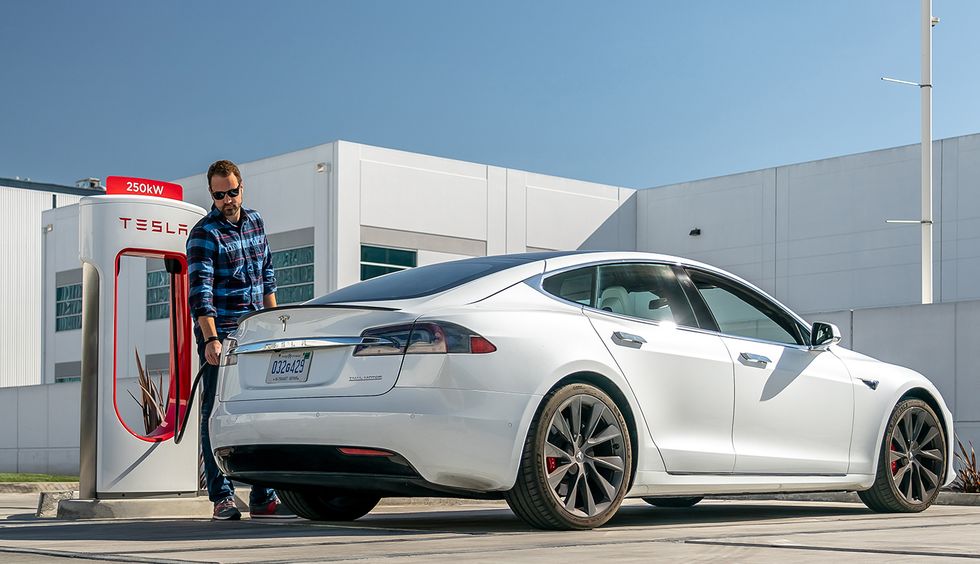
tesla model s ev charging electric car
Car shoppers buying or leasing an electric car will want to take into consideration what sort of charging infrastructure they have at home or nearby that can support their new vehicle’s recharging needs. Unlike gas-powered vehicles, which in some locales are seemingly supported gas stations at just about every corner, battery-powered cars and trucks charging options are fewer, and often further, between. Though the process of going all in on an EV involves more planning and forethought, it shouldn’t dissuade you from considering such a vehicle.
To start, one of the best decisions you can make before purchasing an EV is to have a charger installed where you live. That’s certainly easier if you own your home, but there are plenty of hoops to jump through to make it happen (permits, contractors, fees). To simplify the process, some automakers incentivize this process, as do a number of state and local governments. If you happen to rent the place you call home, then it never hurts to ask your landlord about the possibility of installing an electric car charger.
EV Charging Levels and Charging at Home

There are three main classifications of EV charging: Level 1, Level 2, and Level 3 (also known as DC fast charging). The one you’ll want to use often depends on how far you’re going and how much time you have for recharging.

If you charge at home, it’s easy to plug in at the end of each day and recharge overnight. The same is largely true during the day if you’re able to charge at work. Longer voyages require a different approach because you won’t want to waste hours for a suitable recharge to get back on the road.

Level 1 charge equipment is typically provided with all new EVs. This type plugs into an ordinary 120V household outlet, making this the most convenient but also the slowest way to charge an electric car. Level 1 chargers add roughly two to four miles of range per hour, with the lower end of that range corresponding to larger, less efficient EVs. This means Level 1 charging can take days, not hours, to fully replenish a depleted battery pack. But charging from empty is far from the norm, so Level 1 can work out just fine if you drive no more than 20 miles or so per day and can plug in every night.

You do need to consider a couple of points. First, you should consult an electrician to see if the socket you plan to use is up to it, especially if your home isn’t relatively new. Also, you should never plug your car’s Level 1 charge cord in via an extension cord, because the extra wire length adds resistance that can overheat your home wiring. Also, if you’re unable to plug in regularly, or want to be able to add spontaneous side trips during the day or on weekends, you may find that this setup charges at a rate that’s too slow for your liking.

To satiate your need for charging speed, you’re going to want to look into stepping up to Level 2 home charging, which can support up to 240 volts at triple (and in some cases quadruple) the amperage of Level 1. That makes most Level 2 setups six to eight times faster than Level 1, which equates to between 12 and 32 miles of range added per hour of charging, with the more efficient EVs toward the higher end of that range. With Level 2, you can add a significant amount of range to most EVs in a couple of hours, and it makes full overnight top-ups a breeze even if you happened to drive more miles than usual, skipped charging for a couple of days, or programmed your car to delay charging until the wee hours when electricity rates can plummet.

tesla model s charging at v3 supercharger

Level 2 is fairly attainable, especially if you are a homeowner. Some of the supplied cords that come with EVs have swappable ends that feature 240V plugs, but if the cord that comes with the EV you’re considering doesn’t have such a feature, you can purchase standalone Level 2 home charge equipment. Either way, you’ll need a 220–240V outlet that’s connected to a dedicated circuit breaker. A consultation with an electrician is necessary to add such a circuit and make sure your panel is up to it. There are a few notable plug options, but the best and most common is called a NEMA 14-50. This is the same outlet RV parks provide for Class A motorhomes, so you might be in a plug-and-play situation if you’ve already had your garage wired up to support such an RV.

But Level 2 isn’t just found at home. It’s the predominant type found in public spaces, workplaces, and certain shopping malls. Also, the cord-end that you plug into the car looks the same as home Level 1 and Level 2 equipment. You can add a significant chunk of range if you plug in while you’re having dinner-and-a-movie with a friend or significant other, but they are not intended for a full fill from near-empty, mainly because they’re generally not located where people spend many hours in one place.

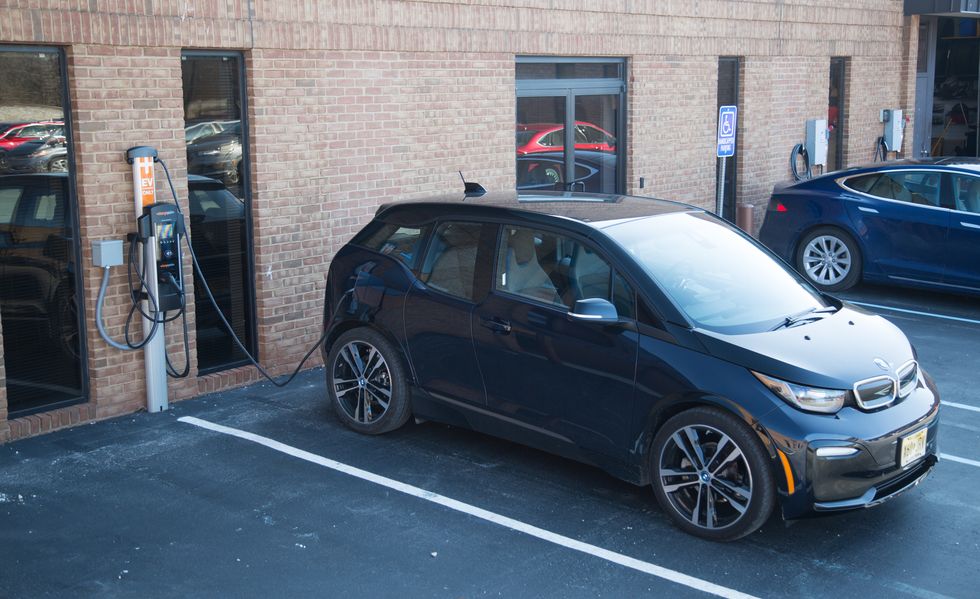
land vehicle, vehicle, car, motor vehicle, rim, automotive design, alloy wheel, hatchback, wheel, hot hatch,

Fast-Charging

Level 3 chargers are also known as DC fast chargers, and as the name suggests, this equipment can much more rapidly charge your electric car’s battery. Fast charging is particularly helpful on long trips that require intermediate charges to reach a destination because most compatible EVs can take on 100–250 miles or more of range in significantly less than an hour. Level 3 chargers differ from Level 2 charge equipment in that they utilize a different socket on the vehicle side, with extra pins intended to handle additional higher voltage.

There are three types. Tesla Superchargers have long utilized their own proprietary socket known as the North American Charging Standard (NACS) This made the extensive Supercharger network a Tesla-only recharging option for a long time. This has recently changed, and a number of other automakers currently do, or plan to, offer access to these chargers.

Until this seismic shift in recharging hardware, the vast majority of EVs outside of Tesla used the SAE Combo (also known as CCS or simply Combo) chargers. These are based on the same socket used by the Level 2 plug, but with an extra pair of large pins grafted on below. CCS-enabled cars typically have a secondary flap the user folds down to expose the socket for these extra pins.

Finally, there’s CHAdeMO, the BetaMax of the trio. This socket is mainly found on a few Mitsubishis and the Nissan Leaf, though Nissan’s future products will use the CCS interface going forward.

ev charging

The rate of charge is measured in kilowatts (kW), which currently range from a low of 50 kW to a high of 350 kW depending on the specific charger. The fast-charge capability of the car itself matters, too. A car that has a maximum DC Fast charge rate of 50 kW will gain nothing by plugging into a 350 kW station, and will instead take up a spot that a car with faster-charging capability could use.

EV owners will see a noticeable dip in the charge rate once their car’s battery reaches approximately 80 percent capacity. In practical terms, an 80 or 90 percent charge is more than enough to get you down the road to the next stop. But this is also done to prevent damaging the battery pack by way of overcharging or overheating it. Think of it like pouring water into a glass. You can dump in a lot at first, but you generally slow the flow as the glass approaches full and dribble it in near the end, otherwise, you run the risk the water may overflow.

Fast-Charging Networks

Tesla’s Supercharger network is made up of Level 3 chargers, which the company strategically places around the country. The sheer number of Supercharger locations is high because the network has been built out over some 10 years. This and the fact that its chargers are reliably in working order make Tesla’s electric car charging infrastructure one of the best currently available.

For everyone else (including Tesla drivers), there are several charge networks available to the public, such as ChargePoint, Electrify America, EVGo, and others. These networks are generally newer and less extensive, so we recommend joining as many as you can in order to increase your odds of finding an available and functioning station on your travels. It’s also a good idea to download each network’s app on your phone, have an active account, and keep a physical charge card with you.

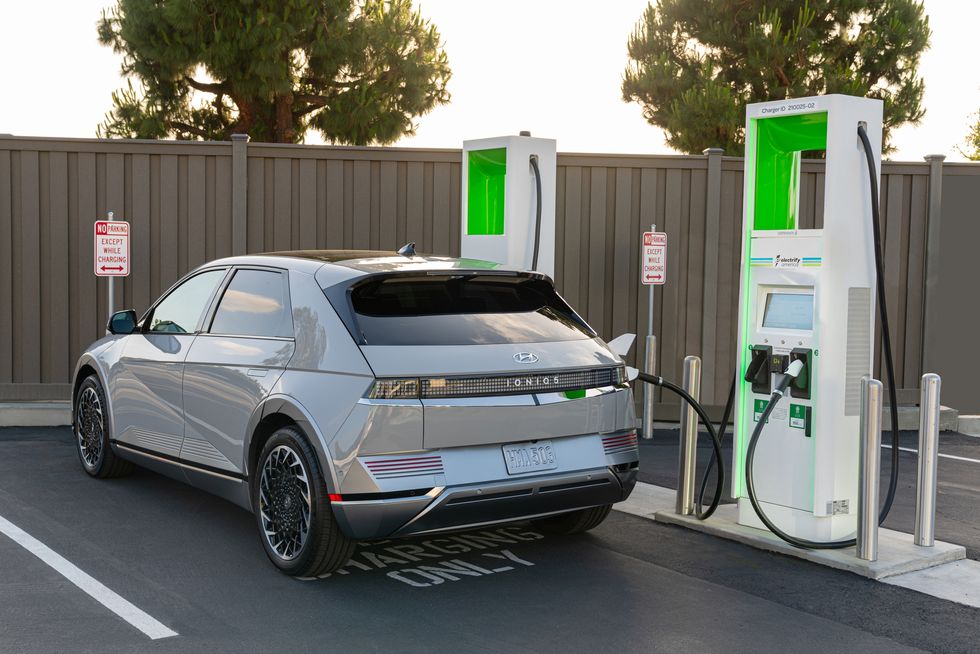
electrify america charging stations

Some automakers are also beginning to implement plug and charge, which is a way of accessing multiple networks for charging your electric car. The Mercedes EQS battery-electric sedan, for instance, can consolidate several networks under a single user account. It also includes a plug-and-charge function when using participating chargers. This allows you to simply plug your EQS in without having to interact with the charger’s app or physical charge card.

Charging on the go is further simplified by way of many electric cars’ in-dash navigation systems, which will typically suggest charging locations to stop at along your route should your EV need a charge in order to reach the final destination. That said, we recommend picking several alternate charging stations in case your range depletes quicker than expected or in the event a chosen charging station’s charger is already in use or out of order.

The Cost of Charging an Electric Car

Though the price of electricity varies by location, charging an electric car at home ought to cost notably less than filling your gas-powered car’s tank with an equivalent amount of gas. In some areas, your electricity provider may incentivize charging by lowering rates during off-peak hours. Generally, these lower rates take effect late in the evening and last through the early morning. Many electric cars allow you to schedule your daily at-home charging times, which ought to ensure your EV is charging during these off-peak hours. Prepare to spend a good deal more money on charging if you regularly rely on charging networks to recharge your electric car.

Those charging at home may want to invest in solar panels that feed a series of batteries called an energy storage system, an example of which is Tesla’s Powerwall. These systems collect energy from the sun during the day and store it for later uses, such as charging an electric car. In some areas, any excess power collected can be sold back to the local utility company. Be warned, energy storage systems can currently be prohibitively expensive.

EV Charging Etiquette

If you are a recent electric car convert, then you ought to be aware of a few of the simple etiquette guidelines that come with EV ownership. For instance, when using a charger in a public parking area, it’s best to keep tabs on your electric car’s state of charge. Once its battery is at full capacity, it’s common courtesy to move your car—even if that means hoofing it back to the charging station well before you’re ready to leave the area—so other drivers can charge their EVs. In fact, some charging networks will penalize you for keeping your car plugged into the charger after its battery reaches full capacity.

Additionally, it’s a good idea to make sure your electric car is correctly plugged in and actively charging before walking away. Faults sometimes occur within a minute or two of plugging in.

public ev charging at private homes

Once your EV’s done charging, place the charger handle back on the receptacle and neatly coil the cable. These components take a beating in everyday use and keeping them in good working order will pay dividends for you and other EV drivers alike. These cables are also a tripping hazard, so keeping them off the ground is always a smart idea. If you encounter a faulty charger, then your best bet is to notify the network of this issue so it can be fixed.

Charging an electric car may seem complex, but with the exception of the additional time it takes to get your car to its full energy capacity, it’s generally no harder than fueling up a gas- or diesel-powered vehicle. Even better, those with an at-home charger will find charging their electric car is just as easy as charging any mobile device. Just plug it in overnight, and wake up with it ready to go.

Car & Driver

Today Solar Buzz has grown its business to a team of eight and operates from The Trade Centre on Red Hills Road in Kingston. As part of the company’s growth plans, Robinson is eyeing a second location for Solar Buzz outside of Kingston. (Photo: Joseph Wellington)

After 13 years of carving out a niche in the renewable energy market, Solar Buzz is ready to deepen its business with residential customers as the new solar energy loan financing programme by the National Housing Trust (NHT) takes effect.

The family-owned business, which was conceptualised with a vision of raising the standard of solar installations in Jamaica, today earns the majority of its revenues from residential battery storage installations. Still, it’s a space that CEO Jason Robinson sees as having much scope for growth.

Fraser-Pryce withdraws from Switzerland meet

“We are in a hurricane zone obviously, and Beryl shows us that every home needs some sort of solar system, even if it’s something small. Commercial was our first go because that’s where the financing was and it’s still easier to get financing on commercial products; but getting a net billing licence is a lot more onerous than it should be and so some of the commercial customers get frustrated and may back out of the project.

“Residential is an opportunity we see because the market is not saturated and then there is a big push for electric vehicles and if you have an EV, having your own solar system goes hand in hand,” Robinson told the Jamaica Observer.

Solar Buzz is now banking on new business from the NHT’s smart energy home improvement loan, which took effect on July 1. Under the loan arrangement, individuals who received an NHT loan at least 10 years ago can access $1.5 million each, or $3 million jointly, to purchase solar panels and batteries, solar water heaters, solar insulation, other renewable energy technology such as windmills, hydropower and biomass; rainwater harvesting and storage systems to include water tanks and pumps.

The loans are being disbursed at an interest rate of 5 per cent with a payback period of up to 10 years. The new loan programme comes at a time when lithium-ion battery prices are also trending down.

“It’s a game changer for a couple of reasons: NHT financing is our main source of residential financing now just because the interest rates for the regular banks are so high because of what’s happening in the market now.

“People are working from home and they realise that even with a blip from JPS, they lose connection with their
Zoom meeting or school-from-home meeting, etc. We have been trying to work with the NHT for years and so them coming on stream with this loan product is really expected to drive growth in this industry,” Robinson Business Observer.

Currently, roughly 75 per cent of Solar Buzz’s business comes from residential lithium-ion battery storage systems.

Founded in June 2011 by brothers Jason and Justin, along with their father Gordon, Solar Buzz has grown from humble beginnings to become a key player in the Caribbean’s solar energy landscape.

The inspiration for Solar Buzz began during Robinson’s early years in California, where he witnessed the State’s progressive stance on renewable energy and recycling from 2002 to 2010. During this period, Robinson said he engaged in various environmental groups, took relevant classes, and interned at different businesses, solidifying his passion for the field.

The inspiration for Solar Buzz began during Robinson’s early years in California, where he witnessed the state’s progressive stance on renewable energy and recycling from 2002 to 2010. During this period, Robinson engaged in various environmental groups, took relevant classes, and interned at different businesses, solidifying his passion for the field.

“I got involved in everything solar business because I knew then that it was a field that I wanted to be involved in one day. Then in 2008, when the energy crisis hit and oil prices skyrocketed to over US$100 per barrel people started going out of business.

“Because my family is here, I was focused on what was happening in Jamaica, and I saw that as the opportune time for me to try to work in the industry, so I moved down in 2010, worked with a company, kinda learned how they did business, but I didn’t like the approach and thought I could do a better job,” Robinson recalled.

The early years were challenging. Securing financing for solar installations was difficult, pushing Solar Buzz to focus on energy efficiency and educating clients on optimising their solar systems.

However, a significant turning point for Solar Buzz came in 2014 when the Development Bank of Jamaica (DBJ) launched a solar financing programme. That initiative allowed clients to use their solar systems as collateral, unlocking access to solar financing for the first time.

Robinson credits Edison Galbraith, general manager for channels, relationships and marketing and his team at DBJ, for this groundbreaking development, which catalysed the growth of the residential and small commercial solar industry in Jamaica.

“It was huge. I credit Edison Galbraith and his team,” Robinson said, adding that the company’s client base currently includes Island Smiles, Gray’s Peppers, Chas E Ransom’s Group, Caribbean Foods, and The University of the West Indies.

Today Solar Buzz has grown its business to a team of eight and operates from The Trade Centre on Red Hills Road in Kingston. Its product and services have also expanded to include solar energy systems that offer up to 90 per cent savings on electricity bills for commercial and residential use; glass tinting for commercial, residential, and auto/fleet applications to provide instant reduction of glare, heat, and UV exposure; solar water heaters; solar pool pumps; solar inflatable lantern that inflate to 8 inches and provides 15 square feet of light and up to 12 hours of illumination, along with solar hybrid flashlights.

Exploring partnerships

As the company works to expand its presence in the residential market, Robinson stated that Solar Buzz is exploring strategic partnerships with developers and companies selling electric vehicles such as ATL Auto. The CEO is also looking to deepen its relationship with the bank and insurance firms.

“So far, our partners and clients have trusted us to install systems that are protected against up to category four hurricanes and we want to keep that relationship going. We have never considered ourselves to be the cheapest but our clients come to us because they know they are getting quality products and so we want to build on those relationships,” he said.

Robinson is also taking a serious look at financing options to prepare for growth opportunities. While the company is open to both private and public partnerships, Robinson currently leans towards private collaborations.

“We have really built the company out of self-funding and we are getting to the point where we need to look at how do we scale the business. Everything is on the table right now, we are looking at how best to scale, who to partner with and the opportunities that are there, what developers to work with and I think that is going to be a big focus for us going forward,”

“As it relates to going to public, its something that we would look at further down the line, I don’t think we are there yet to want to go public because that comes with a lot of responsibilities,” he said.

As part of the growth plans, Robinson is also eyeing a second location for Solar Buzz outside of Kingston.

ROBINSON…we are in a hurricane zone obviously, and Beryl shows us that every home needs some sort of solar system, even if it’s something small
Solar Buzz is banking on new business from the NHT’s smart energy home improvement loan which took effect on July 1. Roughly 75 per cent of company revenues currently comes from residential solar installations; however, Robinson see more scope for growth in that segment of the market.
Solar Buzz deals in lithum battery storage systems; grid-tie solar systems; glass tinting for commercial, residential, and auto/fleet applications; solar water heaters; solar pool pumps; solar inflatable lantern and solar hybrid flashlights.

Jamaica Observer

Cost has always been cited as the restrictive factor when considering alternative forms of energy, but Hurricane Beryl, and all she brought, should have more Jamaicans keen on embracing these.


No bigger sales pitch is needed than those Jamaicans who have experienced countless days and nights without electricity since the hurricane’s passing on July 3, and the subsequent struggles to stay powered.

Smart energy has been pushed by friends of the environment for aeons, and Jamaica has been slowly recognising its merit.

In March, Prime Minister Andrew Holness announced that National Housing Trust contributors would be able to access a new loan product for smart home energy solutions — for solar panels and batteries; solar water heaters; solar insulation; and other renewable energy technology such as windmills, hydropower and biomass.

It’s a good start for an island that has really been slow to embrace the alternative energy sources freely available year round in the form of solar, wind and hydro energy.

In the wake of Beryl, which left thousands without power, the urgency of rethinking our energy strategy has never been more apparent. This natural disaster underscored the vulnerability of the island’s energy infrastructure, and the pressing need for a more resilient and sustainable solution.

Embracing alternative energy is not just an environmentally friendly choice, but a strategic move towards energy security and economic stability.

One of the most compelling merits of solar energy, for example, is its reliability and resilience. Unlike traditional power grids, which can be severely disrupted by storms, solar panels can continue to generate electricity as long as there is sunlight. Even during a hurricane, when cloud cover might reduce efficiency, solar systems equipped with battery storage can ensure that essential services remain powered. This resilience is invaluable in countries prone to natural disasters.

By harnessing this natural resource, Jamaica can significantly reduce its dependence on imported fossil fuels and channel these resources to other critical areas.

Indeed, though pricey, the initial costs of solar installations are rapidly decreasing, and the long-term savings from reduced energy bills and maintenance costs make solar a financially prudent choice.

We understand that to fully realise the potential of alternative energy, supportive policies and investments are essential, and these have to go beyond the energy loans now offered. Government can play a pivotal role by cutting the bureaucracy around acquiring these loans, offering more incentives for installations, streamlining regulatory processes, and investing in research and development to improve alternative energy technologies.

Embracing alternative energy in Jamaica is not just an option now; it is a necessity. Beryl has highlighted the vulnerabilities of the current system, and it is imperative that we build a more resilient, sustainable, and economically viable energy infrastructure.

By investing in alternative energy power systems, Jamaica can turn the challenge of frequent natural disasters into an opportunity for transformative progress.

Jamaica Observer

Jamaica Public Service (JPS) technician aligning new wooden utility poles on July 7, 2024, in the aftermath of Hurricane Beryl’s passage in Portland.

Hurricane Beryl has brought significant damage to a few communities in Jamaica and it passed south of the island. 

If it had travelled across the island like Hurricane Gilbert, then it would have had a devastating impact, as it would mean that you could apply that devastation to most, if not all parishes. If it had even come 10 miles further inland, then St Catherine and St Andrew, with the largest population, would have been dealt a severe blow. 

The impact would have been way more than just the damage caused on the day but the significant cost of living increase, significant rebuilding costs (which could put persons into further debt), and reduced income as persons may have lost jobs if businesses had to close, possibly more loss of life, etc.

Already, with St Elizabeth hit so hard we will see food inflation. The country will recover and it will be more difficult for individuals.

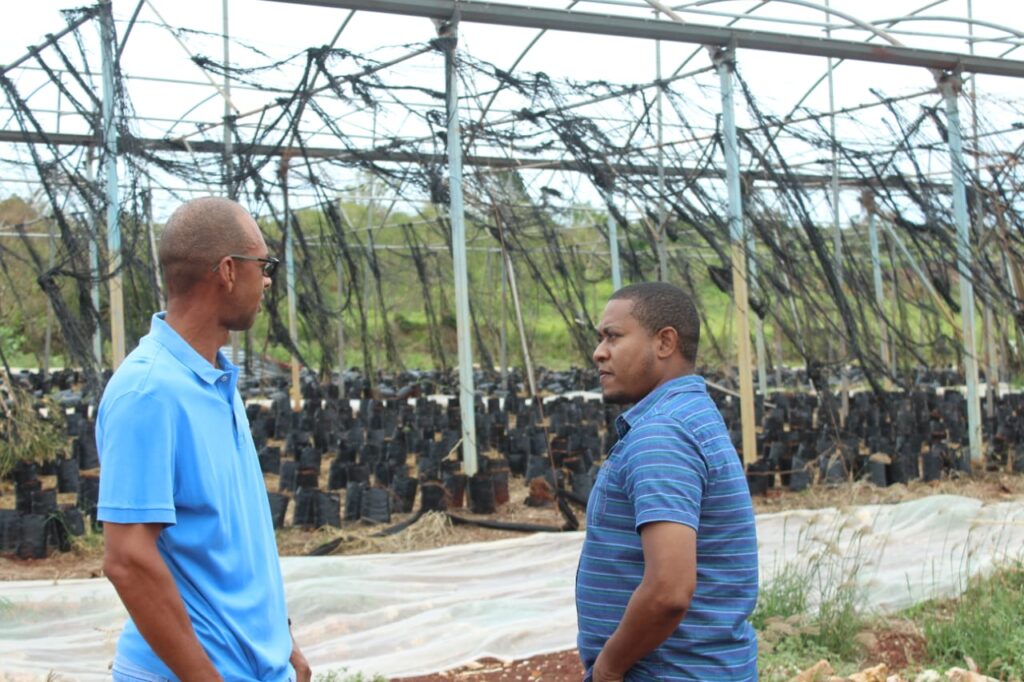
Minister of Agriculture Floyd Green (right) speaks to St. Elizabeth greenhouse farmer, Vaughn Ebanks, about the damage to his facility in the aftermath of Hurricane Beryl. Green led an assessment tour of farms in the parish on Saturday, July 6, 2024. (Photo: JIS)

This highlights the need for us to develop greater resilience as the best solution to dealing with natural disasters. The fact is that, just like death,  hurricanes and other natural disasters will come and we never know when. What we know though is that it is certain. 

What we know also is that we cannot totally remove the personal impact. So, when a hurricane is coming we may be able to relocate to a different location, but your house cannot move. You will also be affected by food and other price increases and by electricity, water and telecoms disruption. 

It means that the best approach is to build resilience, as a country but more importantly, individuals need to do this. Perhaps, instead of borrowing money to buy a car, borrow to build greater resilience at home, which is protecting your assets. The National Housing Trust (NHT), for example, has a loan for solar setup, which will assure you electricity throughout and after the hurricane, and will also send down your costs. 

Personally, right throughout the hurricane, I had electricity, internet and water. And so after the storm passed the only thing I had to do was clean up outside and put back what was stored to protect them from the winds. 

The challenge is that I was unable to get in touch with many because they lost all the utilities  What this means is that if we need to get back to normal as quickly as possible then this resilience must be widespread, or else productivity will be impacted.

Jamaica’s GDP for 2024 is estimated at J$3.2 trillion (or J$8.6 billion per day).

A man walks in a flooded street as Hurricane Beryl hits the southern coast of the island, in Kingston, Jamaica, July 3, 2024. (Photo: REUTERS/Marco Bello)

So for each day we have no activity we lose J$8.6 billion and if we take time to get back to full production we lose a portion of that daily GDP (gross domestic product). So if it takes us a week to get back to full production and we lose 50 per cent productivity, we would have lost J$30.1 billion, which is income for persons. The government would have lost close to J$8 billion in taxes, which means social services and capital expenditure could be delayed. 

With the impact of climate change, we can expect that hurricanes will get more intense, and even many modern roofs may have been built for a Category 3 hurricane. So as individuals and the wider Jamaican society as a whole, we need to start putting measures in place to make the country more resilient, or we will face greater personal and national losses. Spend the money now or it will end up costing us a lot more later.

OUR Today

Industry data now show utility-level solar costing between US$29 and US$96 per megawatt-hour (MWh) when compared to US$39 – US$101 per MWh for natural gas. Additionally, PV panel manufacturing costs have also fallen from $5 per watt in 2000 to less than $0.25 in 2023.


Even as the country’s sole light and power distribution company, Jamaica Public Service (JPS), takes steps to diversify its energy mix, director of Jamaica Renewable Energy Association (JREA) Jason Robinson has called on more residential clients to plug into solar as a form of back-up.

“Every home in Jamaica needs to be plugged in to some form of solar plus storage. Reduce your JPS bill but also have back-up power for safety. During blackouts the photovoltaic (PV) batteries act as a giant surge protector, so in the event there are fluctuations from the grid — which could damage your TV and other household appliances — users will be insulated from all of that,” Robinson told reporters during a Jamaica Observer Business Forum last week.

Having recently taken up the task to continue the build out of Jamaica’s solar energy resilience from Jamaica Energy Resilience Alliance (JERA), the JREA director, who is also the CEO of Solarbuzz Jamaica Limited, said the group as a successor will continue to advocate for solar adoption across, not just commercial and industrial enterprises but also for residential clients.

“These are the people we don’t want to have to leave the island in a case where, let’s say, the national grid should go down for six months. I say this because, following hurricanes in Puerto Rico, about 20-30 per cent of their population is said to have fled to the US after months without power. Here in Jamaica we can’t afford for that to happen, which is why we need to build resilience within both the commercial and residential markets — this as we also push other aspects of the global green campaign,” Robinson said.

As Jamaica continues to faces numerous climate change risks and high energy costs, stakeholders believe clean energy technologies like solar and battery storage can help to significantly mitigate these impacts, enhancing energy resilience while improving business profitability.

Considered to be the cheapest of the various forms of alternate energy sources, industry data now show utility-level solar costing between US$29 and US$96 per megawatt hour (MWh) when compared to US$39-US$101 per MWh for natural gas. Additionally, PV panel manufacturing costs, which have fallen from approximately US$5 per watt in 2000 to less than US$0.25 in 2023, have also created more opportunities for subsidised installations in some countries.

As reports from global sustainability firm Rocky Mountain Institute (RMI) project wind and solar projects remaining on track to account for more than a third of the world’s electricity by 2030, more countries across the globe have stepped up their adoption of these forms of energy. Locally, a US$1.2-billion price tag has been attached to the realising of clean energy transition — a move under which Jamaica is seeking to achieve its target of having 50 per cent renewables (a mix of wind, solar and energy) by 2030.

Mark Dennis, chair and senior energy expert for JERA and who played an active role in the recent re-energising of Jamaica’s solar resilience under the just-completed, three-and-half-year Strengthening Energy Sector Resilience (SERS) in Jamaica programme, further supported the adoption of solar technologies locally.

“Whether for commercial or residential clients, if there is a disruption to the grid for any reason— man-made or natural — being plugged into solar technologies will allow clients to still have power flowing to their facilities. As a consultant, my recommendation is never for people to completely dismiss JPS, as we still need a central grid, but people should also begin to supplement their usage with solar as a viable form of back-up,” he said.

Jamaica Observer

Dr Nigel Clarke (left), minister of Finance and the Public Service, shakes hands with Milton Brady (right), chairman, Sygnus Capital, while Jason Morris, co-founder, executive vice president, chief investment officer, Sygnus Capital, looks on during the Ja

Finance Minister Dr Nigel Clarke says economic resilience has got to be the key economic priority for Caribbean countries.

This, he said, is especially true given the open economies and narrow economic bases of small island developing states (SIDS), like Jamaica, which continue to face challenges ranging from economic vulnerability to climate change.

Speaking at the Jamaican launch of the US$135 million Caribbean Community Resilience Fund (CCRF) held last Thursday at the AC Hotel by Marriott, Clarke noted that it was “challenging to make life work for small island states, even if you have high per capita GDP”.

This is because the structural economic realities within the Caribbean indicates that even if there exists a certain amount of wealth, as measured by invested capital, it could all go away with one or two economic shocks.

“If it’s one thing we know, economic shocks are going to be a permanent reality of life in the Caribbean and being open means that it affects us when it may not affect somebody else,” Clarke noted.

Using the American state of Louisiana as an example, he explained that because the United States was “extremely resilient” a hurricane affecting one state would have no measurable impact on the GDP of the overall country.

Therefore, Clarke said it was the region’s duty to take responsibility for its vulnerabilities, as “that’s what societies that are advanced do for themselves”.

Continuing with another example, Clarke stated that in Canada where they are vulnerable to extremely cold weather which can have below freezing temperatures for long periods of time making life difficult, they are one of the countries with the largest amount of underground infrastructure, with millions of square feet of retail office space which allowed individuals to be able to spend an entire week underground.

This, he added, is an example of taking responsibility for one’s vulnerability.

In expressing his satisfaction with the announcement what the CCRF intends on achieving, he shared that it “was like music to the ears of policymakers”.

‘Timely’ and ‘exciting’

He praised how “timely” and “exciting” the fund is, as it “comes at a time where Jamaica and the Caribbean are all facing a potential crisis … where the solution to a large extent is going to lie in having pools of capital available to invest in our economies in finding solutions”.

The fund, which is supported by the United States Agency for International Development (USAID), promises to revolutionise the region’s approach to tackling climate resilience and economic sustainability.

Sygnus Group, which operates in Jamaica, St Lucia, and Puerto Rico, will manage the fund. The CCRF will target seven key resilience sectors, including energy, transportation, blue economy, housing, finance, information and communications technology (ICT), and agriculture.

Jason Morris, co-founder and executive vice president of Sygnus Capital, clarified that while the CCRF’s primary goal was climate resilience, its other objectives included strengthening the infrastructure of Caribbean nations by giving access to capital for projects and businesses, giving investors in the Caribbean the chance to invest in impact investments, offering technical support for capacity building, providing catalytic capital for the region, and providing flexible, patient, risk-tolerant, concessionary, and impactful capital.

The chief investment officer continued that the investment horizon of the 10-year fund can be increased to two one-year periods.

Divided into two investment periods, the fund will have two portfolios: an equity portfolio which has an investment period of five years, and a debt portfolio which has an investment period of seven years.

The debt portfolio will have two closure dates: the first is on June 30 and the second is some time in February 2025.

Morris, who gave a breakdown of the fund, stated that the Caribbean Development Fund (CDF) as a sponsor and supporting as first loss capital made a commitment of US$15 million. Additionally, over US$1 million was from Sygnus and US$5 million from enhanced capacity building.

For his part, Jason Connor, chief executive officer of Sygnus Capital Puerto Rico, said that he was well aware of the region’s lack of access to capital and that the CCRF’s launch would help to raise the visibility of both the Caribbean and the sectors that the fund is targeting, which were both severely underdeveloped for capital on a large scale.

“Recently I read as part of the development of the fund, the document from USAID states that just in climate related resiliency there’s over US$20 billion worth of opportunities to be deployed, to be unleashed in the Caribbean,” he said. “That doesn’t include the non-climate related opportunities, so we’re talking anywhere from $10 to $15 billion dollars additional of opportunities that year after year go unsolved, unreleased.”

Connor went on to say that while banks are unable to bridge this gap, they nonetheless try their best, and this is true even in countries with larger economies.

He emphasised that the only area that differed substantially from the developed world was the non-banking sector. According to him, this industry really required expansion so that businesses who do not qualify access the capital through the banks and have options.

Gleaner

The Biden administration on Wednesday finalized one of the most significant pieces of its ambitious climate agenda: the strongest new tailpipe rules for passenger cars and trucks that will decisively push the US auto market toward electric vehicles and hybrids.

But in a concession to automakers and labor unions, the rules will be phased in more slowly than originally proposed and will give automakers more choices for how to comply.

Nearly a year ago, the Environmental Protection Agency proposed a fast ramp-up into EVs — a rule that would have ensured two-thirds of all vehicles sold were electric by the end of this decade. The EPA pumped the brakes on that plan Wednesday.

Instead of pushing automakers to sell more EVs to meet stringent pollution targets, the administration is allowing plug-in hybrids — vehicles that combine gas engines and EV-like batteries — to play a much bigger role in the electric transition.

In 2023, EVs made up just 7.6% of new car sales, according to Kelley Blue Book. The new rule is targeting 35% to 56% for EVs in 2032, and 13% to 36% for plug-in hybrids.

Transportation has an outsized climate impact, making up nearly a third of all US climate pollution, so even small steps can lead to significant change. Margo Oge, who previously headed the agency’s office of Transportation and Air Quality, called the new standard “the single most important climate regulation in the history of the country.”

In a statement Wednesday, President Joe Biden vowed the cars would be made by American workers. “US workers will lead the world on autos making clean cars and trucks, each stamped ‘Made in America,’” Biden said. “You have my word.”

Federal officials said the rule doesn’t favor electric vehicles over other types of vehicles, and will reduce nearly as much pollution as the original proposal — more than 7 billion metric tons of planet-warming emissions, along with other pollution that is detrimental to human health. By 2032, the new rule is expected to slash passenger car pollution nearly in half from 2026 levels.

“Within those ranges, we got to the same place” as the standard proposed last year, said Joe Goffman, who leads the agency’s Office of Air and Radiation.

Goffman said the agency considered different ways automakers could “mix and match” new vehicle models to meet the standard — by using more efficient gasoline engines, hybrids, plug-in hybrids and battery electric vehicles.

“By taking seriously the concerns of workers and communities, the EPA has created a more feasible emissions rule that protects workers building (traditional, gas-powered) vehicles, while providing a path forward for automakers to implement the full range of automotive technologies to reduce emissions,” the United Auto Workers union said in a statement.

White House national climate adviser Ali Zaidi said that “one of the really strong features” of the new rule was its flexibility.

“Different automakers are going to approach this in different ways,” Zaidi said. “You’ll have some automakers that maybe have a third of their fleet be plug-in hybrid electric vehicles.” Zaidi argued that would “translate into a lot of consumer choice.”

Carmakers get flexibility

Automakers like Toyota, who are favoring hybrids and plug-in hybrids and moving slowly on EVs, could be big benefactors of EPA’s new rule.

Toyota, the world’s largest automaker, is among the companies that aggressively pushed back against the Biden administration’s original proposal.

In a memo sent in the fall of 2023 to car dealers across the US, Toyota Motor North America group vice president of government affairs Stephen Ciccone described the EPA’s original EV proposal as a “mandate” and “draconian,” CNN recently reported. Ciccone wrote the proposal had caused an “existential crisis” in the industry and suggested an option giving automakers more choice.

“Toyota’s position is that the best way to reduce carbon is by giving consumers a choice of powertrain options, including hybrids, plug-in hybrids, fuel cells, fuel efficient ICE vehicles, and BEVs,” Ciccone wrote.

That flexibility is what the EPA finalized on Wednesday. But Toyota continued to characterize EPA’s rule as a “regulatory mandate” that will force it further into the EV game than it’s currently positioned.

The rule “requires a precipitous shift from around 8% market share of battery electric vehicles today to more than half by 2032 – an aggressive, sixfold increase over just eight years,” said Toyota spokesperson Edward Lewis in a statement. “Toyota will continue to lead the industry and comply with regulations, but serious challenges around affordability, charging infrastructure, and supply chain will need to be addressed before this mandate is realized.”

President Joe Biden has made the transition to EVs a signature issue of his presidency, stressing the economic impacts, in addition to the climate benefits, of cutting pollution. In August 2021, after the president announced an ambitious target that half of vehicles sold in the country by 2030 would be either battery electric, fuel-cell electric or plug-in hybrid, Biden test-drove a hybrid-electric Jeep on the White House grounds.

But political battle lines are being drawn around the EV transition. Former President Donald Trump, the Republican nominee for the 2024 presidential election, has railed against EVs in his speeches. He recently characterized EVs as “all” being made in China, even though Democrats’ Inflation Reduction Act has pushed a new EV manufacturing and assembly to the United States.

With the new standard giving automakers more flexibility, EPA administrator Michael Regan denounced the characterization that the agency was setting an EV “mandate.”

“When you look at the differences between the proposal and final, you will see that there is absolutely no mandate,” Regan told reporters, adding his agency was staying “well within the confines of the law.”

It’s not just Trump; the jump to EVs has some of Biden’s political allies worried, too. The United Auto Workers, a powerful union that has endorsed Biden, has also expressed concerns about what the shift to EVs could mean for their workers, who believe battery-powered cars require less labor to build.

But the demand for fully electric cars is growing in the US. The nation crossed a key threshold at the end of last year: 1.2 million electric vehicles were sold — a 46.3% jump from 2022.

EV adoption rates are likely to slow down this year, which is to be expected, said Trevor Houser, partner at the nonpartisan Rhodium Group. He’s looking for two main signs of EV success in the coming years: whether automakers can make a wide enough variety of the vehicles Americans want to drive, and whether the cost can come down to a more affordable range of $20,000 to $30,000.

“We won’t really know before (2025) how successfully we’re making that transition because the next generation of more affordable EVs won’t be on the market,” Houser told CNN.

Zaidi agreed it would take time to see whether more Americans move to fully electric cars.

“That’s something we’ll see over time,” Zaidi said. “But this rule is very flexible and allows for all of those pathways to emerge, and for (automakers) to pursue those in a manner that’s consistent with their strategies.”

Climate and health impacts

While the climate impact of the tailpipe rules have drawn the most attention, there is a big public-health component, as well.

Reducing pollution from cars and trucks could help Americans’ health on multiple levels, since the EPA’s multi-pollutant standards will tackle greenhouse gases that cause climate change, smog and particle emissions.

No amount of air pollution is safe, and according to the World Health Organization, it’s one of the greatest environmental risks to human health.

Vehicle exhaust is made up of all sorts of pollutants, including carbon monoxide, particulate matter, nitrogen oxides, sulfur dioxide and carbon emissions that contribute to a warming world, which is also itself a major threat to health.

Exposure to particle pollution ages and reduces lung function, and it can lead to cancerstrokeheart problemsCOPD and other lung and vascular issues. It can aggravate asthma and is linked to neurodegenerative diseases like Alzheimer’s, Parkinson’s and other types of dementia, studies have found. People exposed to higher amounts of this pollution for longer periods also have an increased risk of depression and anxiety. Exposure can even contribute to problems thinking clearly.

Particle pollution led to more than 107,000 premature deaths in the US in just one year, one 2019 study found. That’s more than the number of people killed each year in homicides and traffic accidents combined, researchers said.

“These standards really provide significant relief that communities across America need from vehicle exhaust,” said  Will Barrett, the American Lung Association’s senior director of advocacy for clean air. “It’s very much setting a strong direction to ensuring the auto industry cleans up harmful pollutants and communities are better protected from traffic emissions.”

CNN