AS THE Adaptation Fund (AF) commemorated Earth Day on April 22, its policies has continued to uphold strong environmental principles while promoting biodiversity and nature-based solutions on the ground within the context of helping vulnerable countries adapt to climate change.
For example, in the small island developing state (SIDS) of Seychelles – a project funded by the AF and implemented by United Nations Development Programme and the Ministry of Agriculture, Climate Change and Environment – is building resilience to the effects of rising sea levels, cyclones and erratic rainfall, such as floods and water scarcity through ecosystem-based adaptation.
These ecosystem-based approaches are securing water supplies, cleaning wetlands, and providing protections against flooding and drought by applying nature-based solutions such as reforestation that enhances upland wetlands and water catchment areas as well as endemic and native plant species, while reducing erosion.
Rehabilitation activities have covered about 3,000 hectares on Mahe and Praslin Islands, which are Seychelles’ largest. The project also includes pilot restoration activities in a Bougainvillea wetland in southern Mahe that has provided a natural engineering gabion weir for water storage.
The ecosystem-based solutions in Seychelles have included livelihood training, while improving climate resilience and restoring natural protections, healthy ecosystems and biodiversity along the way.
Another AF-funded project in Armenia carried out by the Direct Access national implementing entity Environmental Project Implementation Unit is making a difference by strengthening land-based adaptation practices in vulnerable areas next to protected forests such as Khosrov Forest State Reserve and Dilijan National Park.
It is fostering community-based, climate-smart agricultural practices in degraded areas to reduce climate risks on rural livelihoods while sustaining protected areas and improving value chains and accessibility of climate-smart practices and technologies.
“As we celebrate Earth Day, the Seychelles and Armenia projects are great examples of the Adaptation Fund’s concrete adaptation actions on the ground that benefit the most vulnerable groups and the environment at the same time. We see this positive and inter-related dual impact reflected often throughout the fund’s work,” said Mikko Ollikainen, head of the Fund.
Projects like those in Armenia and the Seychelles can be seen across the Fund’s portfolio. More than 20 per cent of the Fund’s portfolio is committed to increase ecosystem resilience in response to climate change, and a majority of AF projects across a range of adaptation sectors contain a complementary NBS component.
Many projects are also creating greener, more sustainable livelihoods in the process. About 610,000 ha of natural habitat have further been restored or preserved, and another 165,000 metres of coastlines protected throughout the portfolio.
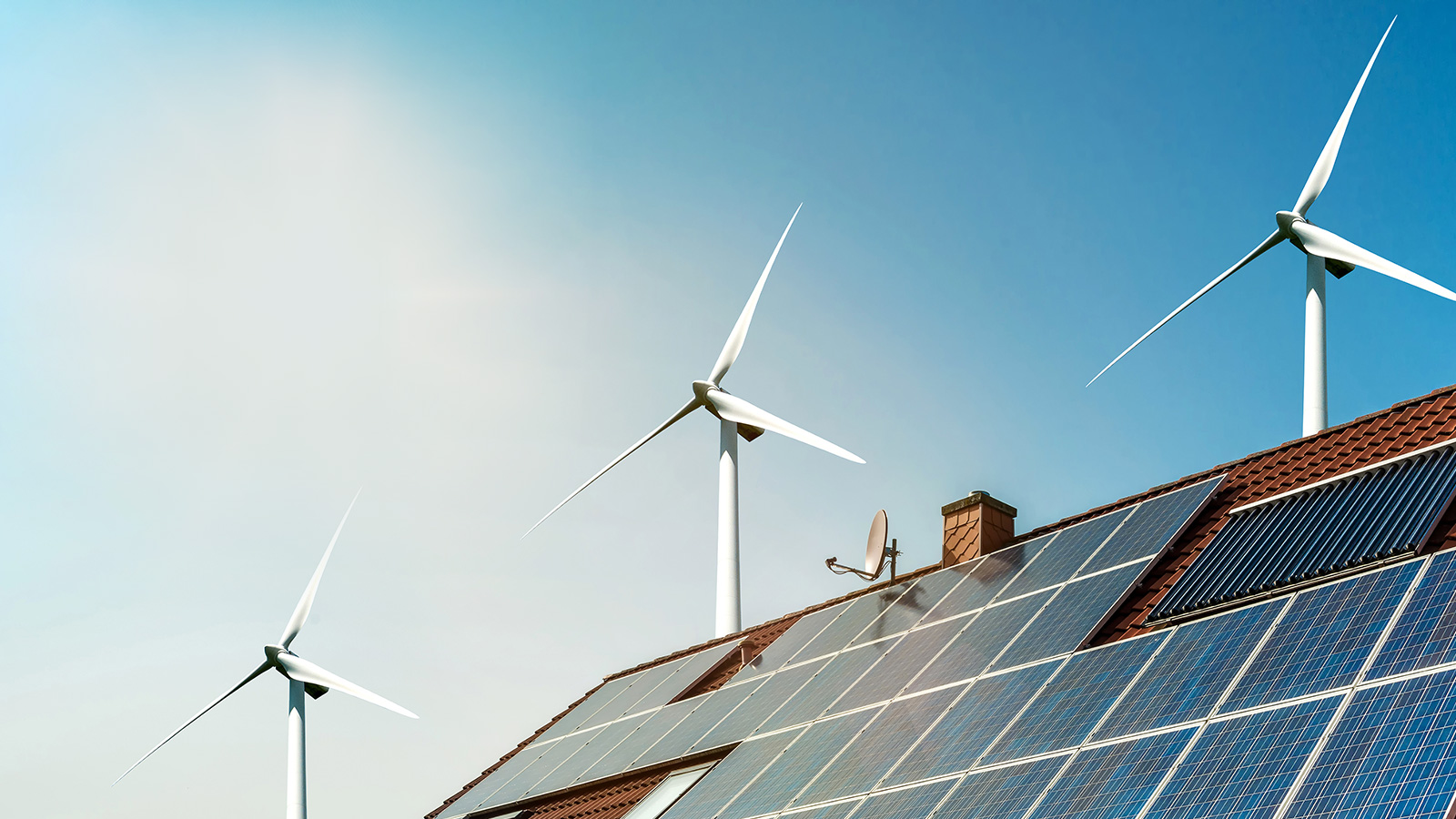
The rapid transition to renewable energy offers opportunities to reset the broken relationship between energy production and nature, according to a new report by the Coalition Linking Energy And Nature for action (CLEANaction).
In its first major report, CLEANaction confirms that even when the full range of environmental impacts — from sourcing raw materials to final operation — is considered, generating and storing energy from renewables is far less environmentally damaging than using fossil fuels. The report argues that a transition focused on wind and solar can result in significantly reduced environmental impacts compared to other renewable energy types, although other renewables can be the most appropriate solution depending upon the local circumstances.
To limit global warming to 1.5ºC above pre-industrial levels and avoid the worst risks of climate change, renewable energy will need to account for more than 90% of electricity generation by 2050 according to International Energy Agency projections. The report explains how, in a vital decade for action, the potential for negative impacts from the energy transition can be carefully managed to ensure that renewable energy technologies causing the least damage to nature are prioritized.
CLEANaction is a coalition of NGOs, leading businesses, government bodies and financial institutions established in recognition of the urgent need for a global and just transition to a low-impact and nature-sensitive renewable energy system. The founding members are WWF, IRENA, ICLEI, The Nature Conservancy, Birdlife International and the Alliance for Rural Electrification.
“Climate change is causing havoc across the globe and, together with habitat loss and overexploitation, is a leading cause of reduced biodiversity worldwide,” said Dean Cooper, WWF global energy lead. “This loss of biodiversity, and of the natural carbon uptake and storage enabled by healthy ecosystems, exacerbates the climate crisis and threatens the health and wellbeing of humankind around the world. We all must urgently shift to 100% renewable energy, but we must take care to protect and enhance nature at the same time.”
Existing global-scale mapping of sites for wind and solar indicate there is enough energy available in areas that have low conflict with biodiversity to achieve projections from the International Energy Agency for a power system consistent with holding global temperature rise to below 1.5ºC. This Paris Agreement goal is a crucial threshold to avoid the most catastrophic impacts of climate change on people and nature.
Significant changes are also needed in how we source and trace materials, such as rare earth elements, for developing our energy infrastructure. A new, circular economic model is essential to reduce environmental impacts, according to the report.
A circular economic and energy efficient model should prioritize the reduction of primary materials, as well as reuse and recycle to minimize further extraction and impacts related to the disposal of end-of-life equipment. When mining occurs, rigorous environmental and social safeguards must be in place to avoid the degradation of natural habitat and other harms, according to the report.
To achieve a clean energy future that takes full account of the impact on nature, CLEANaction is urging governments to:
Undertake strategic-level energy planning at national or regional scales to identify potential energy savings, suitable renewable energy sources and sites for energy expansion in areas of low biodiversity sensitivity.
Consider the impact on nature at the earliest stage of integrated clean energy planning, taking account of the full value chain (from sourcing material to disposal).
Develop national regulatory schemes that require energy developers to contribute to national conservation targets.
Invest in timely nature-sensitivity mapping to help direct technology siting through proper data and require industry to avoid protected areas, Key Biodiversity Areas and other areas of particular sensitivity and value.
Apply stringent environmental impact assessment processes and required standards to all new developments according to best practice.
Adopt a circular economy approach with optimized energy efficiency, to maximize reuse of energy materials, and minimize demand for natural resources.
CLEANaction is calling on renewable energy investors and developers to:
Integrate biodiversity, social and environmental risks early into renewable energy planning and investment decisions.
Apply effective biodiversity safeguards and environmental impact assessment procedures to avoid and minimize impacts, and offset any residual impacts to achieve net-positive outcomes.
Ensure there is traceability of raw materials and account for supply chain impacts within corporate commitments to nature.
Apply a circular approach to minimise the use of primary materials and maximise the reuse and recycling of materials.
Strengthen corporate disclosure and reporting on biodiversity, environmental and social impacts.
Climate education and environmental literacy are the most underestimated and underfunded solutions for adopting eco-friendly practices to end the climate crisis. Investing in education better prepares the next generation to face climate change as it establishes foundational values and solutions for environmental safety. Preparatory courses have the potential to raise awareness about harmful actions and develop a sense of circular and sustainable communities from a young age.
The Education International Manifesto on Quality Climate Change Education for All defines five pillars to help ensure such transformation is possible: (1) include governmental oversight on quality climate change education to guarantee students become climate-literate, (2) coursework based on science, (3) addressing the ethical, cultural, political, social and economic dimensions of climate change, (4) well-trained teachers, and (5) transformed school and learning environments to support climate literacy.
Even though effective methods of climate literacy implementation are widely available to governments, only a few countries have incorporated climate education into their school curriculum. According to the Climate Change Education Ambition Report Card, every country failed this commitment based on their submissions to the UNFCCC. The progressive countries on climate education with the highest real score include Cambodia (58%), Dominican Republic (51%), Colombia (50%), and Vanuatu (50%).
While the Paris Agreement emphasized the role of education and training to empower the public to make ethically informed decisions, countries who are committed to the treaty — including the US and China — have yet to implement an extensive and systemic reform on climate education. UNESCO exposes the tragic truth as reports show Africa and Oceania have considerably more climate change content, whereas Central and Southern Asia have the least. Countriesmost vulnerable to climate change are more likely to include climate literacy in their national curriculum frameworks than those primarily responsible for the emissions causing climate change.
The total negligence of climate literacy has disastrous implications for the countries as it not only jeopardizes the well-being of citizens and the safety of the environment, but also misses the chance to reverse climate change impact with proper education and professional development. For instance, well-trained architects and engineers can get the upper hand in the fight against climate change as they apply engineering principles that reduce the impact of major industrial activities. The Bureau of Labor Statistics already projects that the number of jobs for environmental scientists and specialists will increase by 8% between 2020 and 2030, signifying the priority for climate literacy inclusion in the school curriculum.
Llearning about environmentally conscious practices encourages changes in young people’s attitudes and behavior and helps them to adapt to climate change-related trends. Further progress intensely relies on our commitment to provide quality education in schools to prepare the younger generation for immediate climate change consequences and expose them to environmentally safe practices.
EARTHDAY.ORG’s Climate and Environmental Literacy Campaign is committed to ensuring that students worldwide have access to high-quality climate change education to support upcoming generations’ conscious and informed decisions. To successfully execute this commitment, demand global leaders at the United Nations Framework Convention on Climate Change commit to compulsory, assessed climate and environmental education with a robust civic engagement component at COP28 this November.
International Solar Alliance’s (ISA) Chief of Operations Joshua Wycliffe (right) speaking recently at the organisation’s office in Dehli, India. At left is ISA’s Chief of the Project Implementation Unit Remesh Kumar Kuruppath.
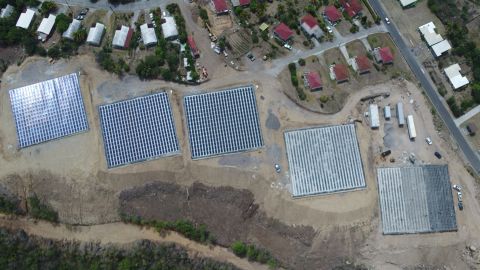
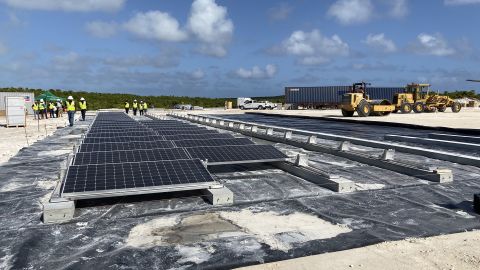
DEHLI, India — International Solar Alliance (ISA), based in this populous Asian city, has expressed interest in furthering its work with the Jamaica Government after providing funding of US$50,000 to complete the Little Park Solar Pump Station in St Elizabeth last year.
According to ISA’s chief of the Project Implementation Unit Remesh Kumar Kuruppath, Jamaica is the first country to benefit from this type of developmental solarisation project from the organisation.
“Jamaica is our first project in the solarisation of an agricultural pumping system. It is a water pumping system that has been solarised, and this was commissioned sometime in September last year. This is the first demonstration project we have done with the country to solarise a water pumping system there, and we have a very close interaction with the Jamaica Government and team there, and they want us to do more,” Kuruppath told journalists from the Caribbean and Latin America now in India on a familiarisation tour organised by the Indian Government.
This addition to the Little Park Pump Station saw the National Irrigation Commission (NIC) obtaining a 30-kilowatt solar retrofit to the Little Park-F3 Solar Pump Station through which over 390 farmers in the rural parish were already benefiting from increased and reliable access to water.
The organisation’s Chief of Operations Joshua Wycliffe told the Jamaica Observer that ISA believes Jamaica’s next step is to solarise other key sectors.
“It has been an absolute delight working and partnering with Jamaica. One of the areas that we are now looking at is how we have solarised our hospital rooftops. We would love to do that to health-care [and] educational facilities in Jamaica. These are two demonstration projects that can be replicated across Jamaica next,” Wycliffe said.
Pointing to the negative implications on the global job market and economy, Wycliffe went on to note that the project commissioned at the Little Park Pump Station in St Elizabeth by NIC supports the push for a more sustainable agricultural sector. Furthermore, the chief of operations told the Sunday Observer that the onset of the novel coronavirus pandemic saw an undeniable increase in agriculture due to the loss of jobs, and that ISA played its part in providing solarisation.
“Now Jamaica, like most island states, would also have a lot to do with fishing and marine exports, so coastal ridges are areas that we can support in terms of solarising that industrial segment. Recently there were countries, and I suspect Jamaica would be no exception, where hundreds of thousands of jobs were lost during the pandemic so people went back to farming — and we were able to provide solarisation to sustain that,” Wycliffe explained.
He continued, “This saw that a new channel for exporting was created so what we have looked at is being able to provide sustainable agriculture through solarised power. So, remote villages and communities where they don’t have power grid support to run the irrigation pumps, solarised pumps are an answer. They provide support for people living below the poverty line, so these are two broad areas where we can support Jamaica in being able to further solarise and transition.”
In the meantime, Wycliffe told the Sunday Observer that the ISA is hoping to meet with delegates from Jamaica at its upcoming regional committee meeting in the summer.
“We have had a great working relationship with the Jamaican Government, and that has certainly helped us in putting in small demonstration projects. We are looking forward, eagerly, to the regional committee meeting that is coming up; we would like to further work with them,” he said.
ISA is an international organisation with 110 member and signatory countries. It works with governments to improve energy access and security worldwide, and promotes solar power as a sustainable way to transition to a carbon-neutral future.
To support those projects the organisation partners with multilateral development banks, development financial institutions, private and public sector organisations, civil society, and other international institutions to deploy cost-effective and transformational solutions through solar energy, especially in the least -eveloped countries and the small-island developing states.
Carlos Ramos spoke to CNN as he helped his friends clean up their flood-damaged beach home in Salinas. Ramos said most of his neighbors in Aguas Buenas, in the island’s central mountain range, were among those who lost power in the wake of the hurricane.
But Ramos’s home maintained power.
Frustrated by the rising cost of electricity and the ever-looming threat of power outages on the storm-stricken island, the 59-year-old retired bank worker had solar panels installed on his home.
“All my neighbors said I was crazy for getting the solar panels,” he told CNN. “Now they’re sitting in the dark. It was the best investment.”
World leaders are in Sharm el-Sheikh, Egypt, this week for the UN’s COP27 climate summit where they are negotiating solutions to the climate crisis and haggling over how to help developing nations switch to clean energy and pay for extreme weather disasters.
But Caribbean leaders, residents and even utility companies say they are tired of waiting for world leaders to save them. Experts and residents tell CNN that the islands are now eagerly adapting on their own through grant funding, phasing out fossil fuels and advancing clean energy across the region, to make them better prepared for the worsening impacts of the climate crisis.
“We don’t have the luxury of being able to sit by and wait until the planet comes to an agreement,” Racquel Moses, CEO of the Caribbean Climate-Smart Accelerator, told CNN. “We have been waiting, and we have been trying to do the best that we can with the resources that we have. But we are not seeing enough momentum and we keep sustaining losses.”
Microgrids keep the lights on
In 2021, storm-ravaged Ragged Island in the Bahamas successfully developed a solar-powered microgrid so that the next time a storm hits, the lights can stay on.
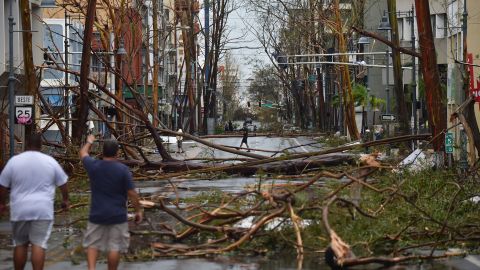
Last year, the Bahamas successfully developed a solar-powered microgrid that provides renewable energy to every home on Ragged Island – a small island community which was devastated by Hurricane Irma. The Category 5 tore through the Caribbean in 2017, displaced thousands of people and leveled electric grids.
The Ragged Island electric project was designed so that the next time a storm hits and takes down the power system, the 390-kilowatt microgrid can disconnect from the main grid and keep the lights on for residents.
That project’s success created a ripple effect across the Bahamas, said David Gumbs, director of the Islands Energy Program at the Rocky Mountain Institute, a non-profit group that’s working to scale up clean energy programs to curtail global emissions. The country has now deployed even more microgrids to other islands, totaling nearly 6.5 megawatts of renewable power across the country — which is enough to power around 300 Caribbean houses.
“The project is definitely a success,” Gumbs told CNN. “We’re in the phase of transition. There are now a number of islands that are champions in big initiatives.”
Moses said 2017’s back-to-back hurricanes — first Irma, then Maria — was the turning point for the Caribbean, where residents and government leaders said they could no longer afford to wait and “be sitting ducks, hoping” that wealthy countries would rescue them from the climate crisis, or halt its acceleration.
“We are already under threat,” Moses said. “You’ve just seen Hurricane Fiona and what it’s done, not only to islands in the Caribbean, but also in the US – the most powerful economy on the planet – and yet responding to billions of dollars’ worth of damages is going to be problematic.”
The Caribbean islands contribute a tiny fraction to the climate crisis — less than 2% of planet-warming emissions, Moses said — yet they are on the frontlines when it comes to climate disasters.
And on top of the flooding, fallen trees, battered roads and broken infrastructure, soaring utility prices have become unaffordable, Gumbs said.
“When you’re paying four times as much for electricity, and your income is four times less than the average income in the US, it just creates such a hardship for people,” he said. “And those are the people we are worried about getting left behind.”
Future-proofing the Caribbean
Gumbs experienced the wrath of Irma himself in his home island of Anguilla, where at the time he was the CEO of the island’s utility company. Now with RMI, he has been overseeing this energy transition across the Caribbean region, redesigning the electricity grid to be free of fossil fuels and climate-resilient.
“There’s such an enormous opportunity,” Gumbs said. “We would love for it to happen at scale, to just transform the entire system to renewables tomorrow, but there are certain barriers to do that.”
At COP27, money is the biggest debate. Developing nations are putting more pressure on the world’s richest countries to help them recover from climate disasters. Negotiators will also discuss the existing promise of climate finance meant to help developing countries adapt to climate change and transition to clean energy – a $100 billion-a-year pledge that rich countries have yet to make good on.
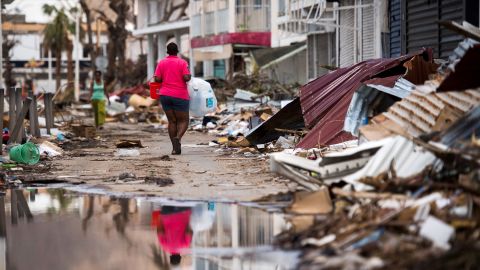
A woman walks on a street in Saint-Martin on September 11, 2017, after Hurricane Irma.
But even then, Gumbs said it’s hard for low-income countries “tap into” those funds: “It just takes years to get the money out,” he said. “It’s always a problem, but there are a number of ways to overcome that.”
On Tuesday, RMI and investment fund Lion’s Head Global Partners launched a new Caribbean Climate-Smart Fund to accelerate that clean energy shift. The initiative intends to expand the islands’ access to resilient clean energy, which advocates say would help Caribbean nations not only adapt to a warmer future, but also save millions each year in utility costs.
Gumbs said the fund will comprise more than $150 million of philanthropic money and will be spread across more than 20 Caribbean islands.
Charlin Bodley, the global south manager for RMI, said wealthy countries must look beyond reducing their climate emissions – which she said is the “easy part” – and consider how they will support small island nations suffering the consequences of their fossil fuel use.
“There is a level of support that is necessary,” Bodley, who is based in St. Lucia, told CNN. “It’s really, at this point, a matter of survival for Caribbean.”
And because the Caribbean islands see clean energy as a solution to withstand disasters but also to save on electricity costs, Moses said the momentum and political interest across the region is growing, and island governments are turning to groups like RMI and other nonprofits for grant funding to pursue their clean energy goals.
But Gumbs said they still need more clean energy programs, educational resources for residents, as well as access to funds from grant-making entities. To him, the solutions are ready. He said the Caribbean might just be the model that would convince both wealthy nations and the private sector to invest in solutions through climate finance.
“Climate-smart funds provide a vehicle to eliminate a big part of the problem,” Gumbs said. “It’s important to bring people along with these solutions, and we’re going to do it in a way that’s sensitive to the local environment.”
Minister of Science, Energy and Technology Dr Andrew Wheatley (left), interacts with students of the Merl Grove High School in Kingston on Wednesday. Also pictured (from second left) are president and chief executive officer of the Jamaica Public Service, Emanuel DaRosa; and principal of Merl Grove, Dr. Majorie Fullerton.
Minister of Science, Energy and Technology Dr Andrew Wheatley said the Government is leading by example and saving money as it works to encourage Jamaicans to use energy responsibly.
He noted that through various initiatives under the Energy Efficiency and Conservation Programme (EECP), the aim is to ensure that government ministries, departments and agencies (MDAs) become a model for the rest of the society in terms of energy management.
“We believe that if we as the public sector show the rest of Jamaica how we are saving as it relates to managing electricity, (by) cutting down our electricity bill, it will not only act as a perfect example, but also you will see the workers within the public sector bringing to their homes, their communities, the practices that we are doing within the public sector,” he said.
Dr Wheatley was speaking at a ceremony for the relaunch of the JPS Foundation Energy Club at Merl Grove High School in Kingston on Wednesday.
He informed that the Government has realised $135 million in savings to date under the EECP.
LOWER CONSUMPTION
The initiative, being implemented by the Petroleum Corporation of Jamaica through funding from international partners, aims to retrofit a range of government facilities, including public health, administrative and educational buildings, and facilitate training in best practices for energy efficiency and conservation.
Some of the conservation measures undertaken include coating glass windows/doors to reduce the amount of heat entering buildings; improving the cooling system by using more energy-efficient air-conditioning units; and installing cool-roofing systems.
Over 40 government facilities from the health, finance, education and security sectors have, so far, been retrofitted with solar-control film, cool-roof solutions or energy-efficient air-conditioning systems.
To ensure continued responsible energy use at government facilities, Dr Wheatley pointed out that just last month, an Energy Efficiency and Conservation Standards Guide was launched, which contains standards to which MDAs will be held accountable in order to lower electricity consumption.
The guide, which will be made available in April, was developed through the EECP.
The Public Service Company of New Mexico is asking for project proposals, including renewables and battery storage, designed to help reach its coal-free goal by 2031.
Public Service Company of New Mexico
It’s an ambitious, audacious goal.
In its 20-year 2017 Integrated Resource Plan submitted to the New Mexico Public Regulation Commission (NMPRC)earlier this year, Public Service Company of New Mexico (PNM) announced its intentions to be coal-free by 2031. Now it’s taken the first steps toward reaching those goals.
Last week, the state’s largest utility issued a request for proposals (RFP) for 456 MW of new generation resources, including renewable resources and battery storage. The RFP is predicated on the assumption that the utility’s San Juan Generating Station does not continue to operate post 2022.
The inclusion of battery storage in the RFP is part of a new NMPRC mandate that all the state’s utilities include those options in their future plans. The mandate was implemented in August.
In its August decision, the NMPRC said the original 2008 regulation that mandated IRPs didn’t take storage into account because the technology wasn’t sophisticated enough, and what did exist was too expensive. Now the technology is more easily deployable, adding them to the list of requirements makes far more sense – and PNM has taken the commission’s requirements into consideration with its new RFP.
But with new technologies available and prices coming down, the NMPRC decided the time was right to add it to the data requirements included in the reports.
PNM wants proposals that will help its portion of the grid provide the necessary reliability requirements and minimum operating resources that will meet North American Electric Reliability Corporation (NERC) and Western Electricity Coordinating Council (WECC) criteria.
A joint study by Finland’s Lappeenranta University of Technology and Energy Watch Group presented on the sidelines of the COP23 talks in Bonn demonstrates that a global transition to 100% renewable electricity could be achieved by 2050, and would be more cost effective than the current electricity system.
Longi Solar
The study, ‘Global Energy System Based on 100% Renewable Energy – Power Sector’ was presented during the Global Renewable Energy Solutions Showcase event, a sideline to the United Nations Climate Change Conference COP23 currently underway in Bonn.
The study’s key overall finding is that a global shift to 100% renewable electricity is feasible with current technology, and would be more cost effective than the current system led by fossil fuels and nuclear generation.
The study found that in a projected scenario for energy demand in 2050, 100% could be met by current renewable technologies, at a global average LCOE of €52/MWh, compared with 2015’s average LCOE of €70.
In EWG’s 2050 scenario, solar PV covers 69% of electricity demand, wind 18%, hydro 8% and bioenergy 2%. The study predicts that wind will briefly overtake solar in the 2020s, before further price drops put solar back in the lead.
Storage is outlined as the key supporting technology for solar, with around 31% of total demand covered by storage technologies. 95% of this is projected to come from short term storage provided by batteries, with power to gas conversion providing seasonal storage.
“There is no reason to invest one more dollar in fossil or nuclear power production,” exclaims EWG President Hans Josef. “All plans for a further expansion of coal, nuclear, gas and oil have to be ceased. More investments need to be channeled in renewable energies and the necessary infrastructure for storage and grids. Everything else will lead to unnecessary costs and increasing global warming.”
The report is based on an original model developed by Lappeenranta University of Technology, which calculates the most cost-effective mix of technologies based on available resources in 145 regions for a full reference year. The full study is published here.
Only time will tell whether this study’s recommendation will translate into reality. As lead author Christian Breyer sums up: “Energy transition is no longer a question of technical feasibility or economic viability, but of political will.”
Prime Minister Andrew Holness says Jamaica must capitalise on the availability of renewable energy. He explained that the country would be in a far better position if it could convert naturally occurring forces into energy.
“It is possible for Jamaica to go to approximately 50 per cent of its energy needs provided by alternatives,” Holness declared during a tour of BMR Jamaica Wind Limited in Potsdam, St Elizabeth, on Wednesday.
BMR Jamaica Wind Limited is the builder, owner and operator of Jamaica’s largest privately funded renewable energy project. The 36.3MW wind-generating facility has been in operation since July 1, 2016. At a cost of US$89.9 million, this represents a major investment in the parish of St Elizabeth.
LOCAL ENERGY A PREFERENCE
“From a policy perspective, we would much prefer to have more of our energy locally generated, and from that perspective, renewables are very important to us,” said Holness.
He pointed out that there is great potential between the parishes of Manchester and St Elizabeth for an expansion in wind-generating plants and that the significant investment made by BMR Limited is an indication that there can be even greater investment in wind energy in Jamaica.
Meanwhile, the Prime Minister said that the Government is doing an integrated resource plan which will project what are the country’s future needs. In addition, the plan will incorporate how the country can supply those future needs integrating renewables, in particular wind and solar.
PROBLEM WITH SUPPLY
“Of course, the problem with renewables is the intermittency of the supply, and even that can be overcome with battery technology, which has increased and improved, and so I hold a very optimistic view of the future of energy supply in Jamaica. We are now looking at expansion in solar,” added the Prime Minister.
According to Holness, another solar plant will be opened very soon and the Government is also examining waste energy as a solution.
The BMR Jamaica Wind project holds the distinction of being the first project funded in Jamaica by the Overseas Private Investment Company (OPIC). US$62.7 million was provided by OPIC and US$20 million from the International Finance Company (IFC).
The project is the recipient of the OPIC impact award 2016, as well as, the CREF Wind Project of the Year 2017.
Bonn, Germany, 10 Nov 2017 – Leaders from a wide range of sectors came together on Friday at Energy Day at the UN Climate Change Conference in Bonn to announce a new set of initiatives to transition to renewable energy and to show that more ambitious clean energy development can quickly become a bigger part of national climate plans submitted under the Paris Climate Change Agreement.
“With the price of renewable and storage technologies tumbling, and greater understanding on how to set the policy table for a cleaner energy mix and more integrated energy planning, the question before decision makers is, why wait?” said Rachel Kyte, Special Representative of the UN Secretary-General and CEO, Sustainable Energy for All.
Success stories, action and new commitments shared during Energy Day at the COP23 UN Climate Change Conference from businesses, states, cities and forward-thinking countries continue to show ambition to ensure the clean energy transition is not only underway but is irreversible.
“Our pledge to leave no one behind is a critical component of the Paris Agreement. The energy transition that we can see is underway and must be a transition towards energy systems around the world that secure sustainable energy for all,” said Ms Kyte.
“This means placing energy efficiency first, adopting a laser like focus on ending energy poverty and using the renewable energy revolution to achieve universal access and a bending of the emissions curve. With each year, each COP, the health and economic impacts of carbon pollution are better documented and the science of what awaits us, if we continue on our current path, mounts,” she said.
Adnan Z. Amin, International Renewable Energy Agency (IRENA) Director-General said: “Two-thirds of global greenhouse gas emissions stem from energy production and use, which puts the energy sector front and centre of global efforts to combat climate change. Our analysis shows that renewables and energy efficiency can together provide over 90 per cent of the mitigation needed in the energy system by 2050 to achieve the ambitions of the Paris Agreement, while also boosting the economy, creating jobs and improving human health and well-being.”
“We have a large, untapped, and affordable renewable energy potential waiting to be developed. Revising the Nationally Determined Contributions (NDCs) gives countries an opportunity to take a fresh look at how to harvest this potential, not only for mitigation, but in light of the multiple socio-economic benefits of renewables, also for adaptation,” said Mr Amin.
Fatih Birol, International Energy Agency (IEA) Executive Director, said: “The transition of the energy sector in the next decades will be critical to meeting shared climate and sustainable development goals. Widespread action by governments and private sector alike has helped keep global energy-related emissions flat the last three years. Our analysis shows we can meet climate goals while achieving energy access and improving the environment.”
The central goal of the Paris Agreement is to keep the average global temperature rise well below 2 degrees Celsius and as close as possible to 1.5 degrees. About one degree of that rise has already happened, underlining the urgency to progress much further and faster with the global clean energy transformation.
Energy Day is organized by The Climate Group, IEA, IRENA and Sustainable Energy for All (SEforALL) as part of a series of thematic action days held under the auspices of the Marrakech Partnership.
Key announcements from the day include:
IRENA releases a new report, ‘Untapped Potential for Climate Action: Renewable Energy in Nationally Determined Contributions,’ which finds that the renewable energy components of current national climate plans (NDCs) lag behind actual deployment trends, national energy targets and the cost-effective potential for accelerated deployment. The report suggests there is substantial scope for countries to cost-effectively increase the renewable energy ambitions set forth in their NDCs so that they are aligned with the long-term goals of the Paris Agreement.
The Climate Group announces new members to its recently launched EV100 campaign, a major new global electric transport initiative designed to make electric vehicles “the new normal.” The campaign is designed to utilize global business buying power to fast-track the roll-out of electric vehicles and infrastructure and address rising global transport emissions.
13 countries and the International Energy Agency announced on November 7 the launch of the “IEA Clean Energy Transitions Programme,” a new multi-year, EUR 30 million plan to support clean energy transitions around the world. Backed by IEA Member Countries committed to promoting the development of clean energy, this new programme will leverage the IEA’s unique energy expertise across all fuels and technologies to help accelerate global clean-energy transitions, particularly in major emerging economies.