When Terrence Dwyer received a knock on his door and a flyer for a solar panel system small enough to fit on his deck, he was quickly sold. Solar systems that plug into regular wall outlets have been popular in Europe for years and are gaining traction in the U.S. for their affordability and simple installation.

“We thought absolutely, let’s do this right away,” said Dwyer, who lives in Oakland, California.

These small-scale solar systems could become attractive to more homeowners now that President Donald Trump’s sweeping budget-and-policy package will scrap residential rooftop solar tax credits and may shift interest to cheaper alternatives. Even before the GOP bill passed, manufacturers of the smaller systems known as plug-in or balcony solar were seeing increased demand and other positive signs such as a new Utah law streamlining regulations for homeowners to buy and install them. The systems about the size of a door haven’t been as widely adopted in the U.S. as in Europe because of lack of awareness, patchwork utility rules and limited availability.

The $2,000 plug-in solar system installed on Dwyer’s backyard deck in March consists of two 400 watt panels, an inverter, a smart meter and a circuit breaker. It saves him around $35 per month on his power bill because he is consuming less energy from the grid, but he said reducing his carbon footprint was his primary motivation.

“We like the environmental benefits of solar and wanted to engage with solar in some fashion,” Dwyer said.

Had Dwyer opted for rooftop solar, he would have paid $20,000 for the system and $30,000 to upgrade his roof to support the panels.

Installing a plug-in solar system requires some homework. What power companies let customers do with energy-generating equipment varies, which is why prospective purchasers should check their utility’s policies first. Building permits might be required depending on the municipality. Some systems can be self-installed, while others may require an electrician. For example, some kits have meters that must be wired into a home’s circuit breaker.

Removing hurdles for plug-in solar

Dwyer bought his system from Bright Saver, a nonprofit company in California that advocates for plug-in solar. In addition to the type Dwyer bought, the company also offers a smaller model costing $399 that recently sold out in six days.

“The interest and demand have been overwhelming,” said Cora Stryker, a founder of Bright Saver. “It is clear that we are hitting a nerve — many Americans have wanted solar for a long time but have not had an option that is feasible and affordable for them until now.”

Kevin Chou, another founder of Bright Saver, said wider adoption of the systems in the U.S. has been hindered by utility policies that create uncertainty about whether they’re allowed and a lack of state and local policies to make clear what rules apply.

Some utilities contacted by The Associated Press say plug-in solar systems require the same interconnection applications as rooftop panels that send electricity back to the wider network. But Steven Hegedus, an electrical engineering professor at University of Delaware, said he doesn’t understand why a utility would need to require an interconnection agreement for plug-in solar because, unlike rooftop systems, they are designed to prevent energy from flowing to the grid.

Still, if in doubt, a customer should follow their utility’s policy.

During the early days of plug-in solar’s growth, some opposition from utilities is likely since customers are buying less energy, said Robert Cudd, a research analyst at the California Center for Sustainable Communities at the University of California, Los Angeles.

“Utilities really prefer everyone being a predictable and generous consumer of the electricity they sell,” Cudd said.

This year, Utah enacted a novel law supporting plug-in solar by exempting certain small-scale systems from interconnection agreements and establishing safety requirements such as being certified by a nationally recognized testing organization such as Underwriters Laboratories. It appears to be the only state that’s passed legislation supporting plug-in solar, according to the National Conference of State Legislatures.

Republican state Rep. Raymond Ward, who sponsored the legislation, said the smaller systems allow people to better manage where their energy comes from and what they pay.

“Europe has these things. You can go buy them and they work and people want them. There is no reason why we shouldn’t have them here in the United States,” Ward said.

Bright Saver says they are lobbying other states for similar legislation.

Alexis Abramson, dean of the University of Columbia Climate School, also applauded Utah’s move.

“We actually need more localities, more states putting in allowances for this type of equipment,” she said.

Plug-in solar availability and savings potential

Some questions remain about how much customers could save. Severin Borenstein, a professor at the University of California, Berkeley’s Haas School of Business, said the cost of some portable solar systems in the U.S. would make it hard for customers to come out ahead on their utility bills over the time they own them. He estimates the price of a $2,000 system in the U.S. works out to paying about $0.20 a kilowatt-hour over a 25-year period, which only saves people money if they have high utility costs. By comparison, Borenstein said the cost of systems sold in Europe, typically around $600, is equivalent to paying about $0.05 or $0.06 per kilowatt-hour over 25 years.

Baltimore resident Craig Keenan said saving money was only part of why he installed one of the smaller Bright Saver models on his balcony in July.

“I’m interested in renewable energy because the amount of carbon emissions that we produce as a species is very, very unsustainable for our world,” he said.

He said he expects the system will save him about $40 per year on utility bills, so it would take him about 10 years to recoup the cost of the kit.

Keenan, a mechanical engineer, said installation took him 10 to 15 minutes.

“I think anyone can install this,” he said. “It’s not complicated. It doesn’t require a technical degree.”

Other companies selling plug-in solar kits include Texas-based Craftstrom. It has sold about 2,000 systems in the U.S. since 2021, mostly in California, Texas and Florida. The company’s basic kits contain a solar panel that can fit in a backyard or other sunny space, along with equipment to maintain and regulate the flow of energy including an inverter and smart meter.

Kenneth Hutchings, Craftstrom’s chief revenue officer, said their U.S. sales rose this year even before the passage of the GOP tax bill, and he expects demand for plug-in solar to increase further as federal rooftop solar credits expire.

The company advises customers to notify their power company before installation, but it has “never had any pushback from any utility,” said Michael Scherer, one of the founders of Craftstrom.

China-based EcoFlow plans to begin selling plug-in solar systems in Utah and expand to other states if supportive legislation is passed, said Ryan Oliver, a company spokesperson.

“This is an example of where technology is sort of ahead of the regulators,” Oliver said, adding: “As this rolls out to more of a nationwide product, we expect it will become more mainstream as people understand it better.”

The Associated Press 
Government to press ahead with net zero plans as Keir Starmer rejects Tony Blair’s criticisms of climate policy


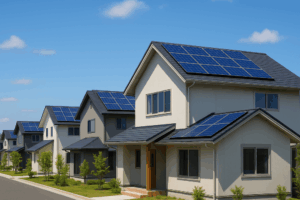
Almost all new homes in England will be fitted with solar panels during construction within two years, the government will announce after Keir Starmer rejected Tony Blair’s criticism of net zero policies.

Housebuilders will be legally required to install solar panels on the roofs of new properties by 2027 under the plans.

The policy is estimated to add between £3,000 and £4,000 to building a home but homeowners would save more than £1,000 on their annual energy bills, according to the Times.

Labour has set a target of building 1.5m homes by the end of the parliament. The party has promised to decarbonise the electricity grid by 2030 and cut household energy bills by £300 a year.

Ministers are also preparing to offer government-funded loans and grants for the installation of solar panels on existing homes.

The move is a sign that the government will press ahead with its net zero agenda after Starmer rejected criticisms of climate policy from Blair.

In a high-profile intervention days before the local elections, Blair said there needed to be a radical reset of “irrational” net zero policies that were “doomed to fail”.

Blair’s net zero intervention invites scrutiny of his institute’s donors

Read more

The former Labour prime minister argued that the public was being asked to make “financial sacrifices and changes in lifestyle” that would have “minimal” effect on global emissions. He said the drive to phase out fossil fuels in the short term was “doomed to fail” because their production and demand were rising.

His remarks angered government figures and triggered a response from senior No 10 officials, who called the Tony Blair Institute for Global Change (TBI) and urged it to address the fallout. The TBI issued a clarifying statement on Wednesday morning saying it believed the government’s net zero policy was “the right one”.

Blair’s remarks were interpreted as an attack on Starmer’s policy agenda after the prime minister said last week that tackling the climate crisis and bolstering energy security were “in the DNA of my government”.

Unite, the UK’s second biggest union, has echoed Blair’s criticism of climate policies. Its general secretary, Sharon Graham, said workers should not be thrown “on the scrapheap” in the pursuit of net zero.

Speaking to Times Radio on Thursday, Graham pointed to the developments at Grangemouth oil refinery and said: “The problem is that the jobs part of this is not being discussed.” The refinery stopped processing crude oil this week.

Asked whether she agreed with Blair’s comments this week, Graham said: “Workers want net zero, my members have no problem with net zero. The problem that we’ve got is that there is no investment currently about how we get to that and also secure jobs.

“There hasn’t been one single thing done so far that I can see in terms of investments on wind manufacture, in terms of investments into areas like sustainable air fuel … all of those things have not happened, and you cannot just plough on regardless and throw all of these workers on the scrapheap.”

Campaigners have welcomed the news that the government is going to mandate solar panels on new homes.

Lily-Rose Ellis, Greenpeace UK’s climate campaigner, said: “For too long we’ve wasted the free energy that falls on the roofs of houses every single day. Now, people living in new-build homes will save hundreds of pounds every year on their energy bills, thanks to this commonsense decision from the government.”

A government spokesperson said: “We have always been clear that we want solar panels on as many new homes as possible because they are a vital technology to help cut bills for families, boost our national energy security and help deliver net zero.

“Through the Future Homes Standard we plan to maximise the installation of solar panels on new homes as part of our ambition to ensure all new homes are energy efficient, and will set out final plans in due course.”

The Guardian

Powering a Greener Future

In a time where sustainability is no longer just an option but a necessity, the real estate and financial sectors are uniquely positioned to lead the charge toward a cleaner, more economically sound future. 

The global shift toward renewable energy is undeniable and solar energy stands at the forefront of this transformation. The benefits are clear —lower energy costs, reduced carbon footprints, and energy independence for homeowners and businesses alike. 

Unlocking the full potential of solar integration requires developers and financial institutions to work hand-in-hand, and offer attractive, flexible and secure financing solutions that treat solar as the high-yield investment that it is. 

The Synergy of Bankers and Developers 

Solar energy systems are tangible, low-risk assets offering homeowners significant savings, developers a competitive edge and banks the security of their investment. 

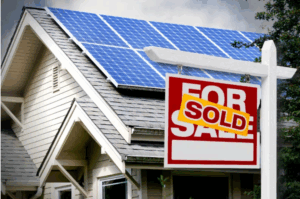
According to a 2024 U.S. study, homes equipped with solar systems sold for an average of 6.8% more than comparable homes without solar and spent less time on the market.

This premium reflects the growing demand for energy-efficient homes and makes a compelling case for developers to include solar in their projects.

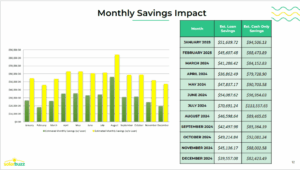
Replacing monthly utility bills with solar loan payments of a similar or lower amount allows homeowners to reduce living costs without compromising their lifestyle or financial stability.

With one less major bill to worry about, the likelihood of loan defaults drops significantly. 

Current data shows that the default rate for green energy loans is less than 1% making homes with installed solar systems a safe bet for banks.

Developers must design and build homes that are solar-ready or solar-integrated and banks need to create green loan products that match this forward-thinking approach.

Debunking Risk Aversion

Solar panels are income-generating assets. A properly installed solar system can save homeowners thousands of dollars over its lifetime and increase property value. 

Homeowners can also generate additional savings by selling back any surplus energy to the grid through a Net Billing license. 

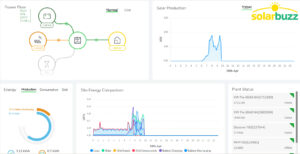
Modern solar systems that are data-engineered and include online monitoring, extended warranties, and long equipment lifespan are ideal collateral for financing. 

Systems that are GER-certified, professionally installed, and maintained through structured programs reduce lending risk and ensure optimal system performance.

These features allow solar systems to function as secure collateral, much like a home or vehicle, which reduces risk for banks and enables competitive loan rates.

In the rare event of a loan default, the modern design and warranties of solar systems enable easy resale to schools, nonprofits, or existing bank customers.

Solar systems typically have a payback period of 4 to 6 years. For many PAYE employed who are leveraging the new solar tax credit, the payback period shortens.

Banks can further reduce risk by offering incentives to borrowers who apply their tax refunds to their loan balance.

Financing a Greener Future

Banks need to offer financing models that are just as innovative as the solar systems themselves:

  • Incorporate solar into mortgages – Include solar systems in initial mortgage financing. Spreading the cost over a longer term makes systems more affordable and reduces default risk.
  • Use solar systems as collateral – Given their high quality equipment, lifespan, warranties, and online monitoring capabilities, modern solar systems can serve as loan collateral. This approach protects the homeowner’s equity and reduces risk for lenders.
  • Offer competitive interest rates – Secured loans, using the solar system as collateral, should have interest rates below the 15% – 19% that is currently on the local lending market. Lower rates encourage adoption and reduce defaults.
  • Bundle EV and solar loans – Reduced interest rates for loans that combine a solar system with the purchase of an electrical vehicle (EV) is a dual investment that amplifies savings for homeowners. Solar energy can power both homes and vehicles further reducing monthly expenses and default risks.
  • Leverage Net Billing for non primary residences – Require Net Billing licenses for  non-primary residences to enhance their savings and reduce the likelihood of loan defaults.
  • Mandate system maintenance – Require active maintenance as a clause in insurance coverage to ensure solar systems operate at optimal levels and protect the loan investment.

The National Housing Trust (NHT) is leading the way with revamped energy loan offerings like the Smart Energy Loan (up to J$2.5M) and Home Improvement Loan (up to J$5M) per contributor as of July 2024.

Banks should follow suit by offering secured solar financing backed by quality systems, long warranties and a maintenance program rather than relying on home liens

Developers, in turn, need access to financing with favorable terms so as to integrate solar into their designs without sacrificing profitability.

The Development Bank of Jamaica (DBJ) through its Credit Enhancement Facility (CEF), provides banks with funds for green energy loans for commercial clients where solar systems serve as collateral. Developers can therefore benefit from DBJ-backed competitive green financing.

Designing for the present

Developers can mainstream solar energy by incorporating it into their designs from the outset. Key design considerations include below:

  • Roof Space Optimization – Ensure adequate, unshaded roof space for solar panels.
  • Proximity to Infrastructure – Position main breaker panels close to designated solar equipment spaces for efficient installation.
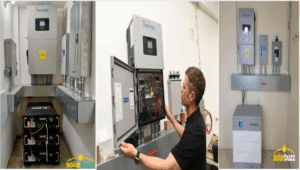
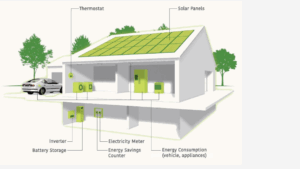
  • Battery Storage Readiness – Allocate dedicated indoor spaces for battery equipment to support energy storage.
  • Pre-Wired Solar Circuits – Install breakers specifically for solar systems 
  • Solar Expertise and Aftercare Services – Collaborate with certified solar providers for installation and maintenance to ensure long-term system performance and insurability.

Integrating these features increases a property’s appeal and sale value, incentivizing more developers to embrace solar-ready designs.

A Win for All

Solar energy is a transformative investment with proven returns for homeowners, developers, and banks. 

Banks can reimagine their lending practices, recognize the real value of solar systems and attract new customers with competitive green energy loans.

Developers can integrate solar systems into their offerings to enhance property value, accelerate sales, and meet growing consumer demand.

With low default rates, expanding consumer interest, and financial support from institutions like the DBJ, there has never been a better time for banks and developers to align and power a greener future together.

Deidre Wedderburn is the Client Relations Manager at SolarBuzz, dedicated to building long-term partnerships and delivering a top-tier client experience (deidre@solarbuzzjamaica.com).