Before the war in Iran broke out, the global adoption of electric vehicles was largely being driven by a number of emerging economies, including India, Mexico and Brazil, who were reporting higher EV sales than developed economies like the U.S. and Japan. Now, the surge in global oil prices triggered by the Strait of Hormuz closure, appears to have brought an unexpected boon to the EV market—with increased interest and sales reported in a number of countries.  

United States

At the start of the year, it seemed as though the EV revolution in the U.S. was dead in the water—sales in the final quarter of 2025 were at the lowest point since the end of 2022 as Biden-era government EV subsidies expired and domestic automakers pulled back on their investments in electric vehicle production. 

But first-quarter data for 2026 shows that used EV sales were 12% higher than the same time last year and 17% higher than the previous quarter. One factor likely helping push buyers toward these cars is high gas prices, which recently topped $4.00 a gallon for the first time in four years.

U.K. & Europe 

In the U.K., electric car sales reached a record high, with 86,120 vehicles sold in March. U.K.-based EV specialist Octopus Electric Vehicles said on March 25 it had seen EV leasing inquiries rise 36% since the start of the conflict. 

The French online used-car retailer Aramisauto reported its share of EV sales nearly doubled from Feb. ​16 to March 9, rising to 12.7% from 6.5%, while sales of fueled models dropped to 28% of sales from 34%, and sales of diesel models dropped to 10% from 14%. 

Germany’s largest online car market, mobile.de, told Reuters that the share of EV searches on ⁠its website has ​tripled since the start of March—from 12% to 36%, with car dealers receiving 66% more ​enquiries for used EVs than in February.

Asia 

Asia receives 80% of the crude oil that passes through the Strait of Hormuz. This has left the region hard hit by the shutdown. The uncertainty is causing an uptick in EV adoption in many countries. 

​​South Korea reported that registrations for electric vehicles more than doubled in March compared to the prior year, due in part to rising fuel prices and government subsidies. In Malaysia, Chinese EV company BYD’s distributor told Reuters that it observed an uptick in enquiries and customer interest in March compared with the first two months of the year. In Pakistan, electric rickshaws have been selling out, according to Bloomberg

Nepal, on the other hand, has stood out for its above average EV adoption rates. This pre-war trend has helped shield many people from the impact of the spike in oil prices. EVs made up 76% of new car sales in 2024, according to the most recent data from the energy think tank Ember

New Zealand & Australia 

In New Zealand, more than 1,000 EVs were registered in the ‌week that ended ⁠on March 22, close to double the week before, making it the country’s biggest week for electric vehicle registrations since the end of 2023, according to the country’s Transport Minister, Chris Bishop.

Australia, meanwhile, has already been experiencing rising EV sales in recent years, but saw a surge in new interest as consumers face rising fuel costs.  

As Australian Prime Minister Anthony Albanese said at the end of March: “I don’t think there’s anyone out there today who has bought an electric vehicle who’s regretting the decision at this point in time.” 

Time Magazine

Ofgem licence means firm can replicate Texas setup of powering homes, businesses and EVs

Elon Musk’s Tesla has won approval to supply electricity to households and businesses across Great Britain, as the tech billionaire expands his energy ambitions.

The energy regulator, Ofgem, has formally granted Tesla an electricity supply licence, enabling it to provide electricity to domestic and business premises in England, Scotland and Wales.

The company is expected to replicate its supply business in Texas, where it is branded as Tesla Electric and offers to help customers power “your home, electric vehicle and community with low-cost sustainable electricity”.

However, Tesla’s electricity licence means it cannot offer a dual fuel contract to households. It could supply a customer’s electricity if they had a separate tariff agreement for their gas supply.

In Texas the company already operates a “virtual power plant” that allows Tesla owners to charge their cars cheaply and then pays them for selling electricity stored in its Powerwall home batteries back to the grid.

In Britain the “virtual power plant” for Powerwall owners is offered through Octopus Energy, another household energy supplier.

Tesla does not report how many Powerwalls it has sold in Britain but it has sold more than 250,000 electric vehicles.

The carmaker’s sales have slumped in the UK and much of mainland Europe in the past year amid tougher competition in the electric car market and controversy around Musk’s politics.

Tesla’s UK sales fell 37% from 3,852 to 2,422 in February compared with the same period last year, according to the latest figures from the Society of Motor Manufacturers and Traders.

It estimated that Tesla’s market share in the UK stands at 1.34% in the year to date, below its Chinese rival BYD at 2.64% and BMW at 5.43%.

Sales were hurt in part by a buyer backlash against Musk’s support for Donald Trump and a period working in the president’s administration. In his role at the “department of government efficiency”, or Doge, the billionaire led sweeping job cuts, but he quit in May after falling out with Trump over the “big, beautiful” tax and spending bill.

Musk also alienated customers through other political interventions, including appearing to give a Nazi salute at Trump’s victory rally, showing support for Germany’s far-right Alternative für Deutschland party, and accusing Keir Starmer and other senior UK politicians of covering up the scandal about grooming gangs.

In December, Tesla launched a lower-priced version of its Model 3 car in Europe, in a push to revive sales. Musk has previously argued that the cheaper option would reinvigorate demand by appealing to a wider range of buyers.

Tesla was approached for comment.

The Guardian

Transport secretary promises to make buying electric cars ‘easier and cheaper’ as £700m subsidy package prepared.

The transport secretary has promised to make it “easier and cheaper” to buy electric cars, as the government announces £63m worth of funding to help build charging infrastructure.

Heidi Alexander said on Sunday she wanted to make it more affordable to switch to electric vehicles as she announced new money for councils and other bodies to spend on facilities to charge cars.

She announced £63m worth of funding for EV charging, with officials also finalising plans for a £700m package of subsidies to bring down the cost of buying a new electric car.

The money still falls short of the £950m pledged by the Conservatives for motorway charging points, however, which the Labour government scrapped last month, accusing the previous government of having failed to set aside funding for it.

UK-made EVs are expected to receive the most generous subsidies under the scheme, which would probably benefit the Japanese carmaker Nissan, which is gearing up to produce a new version of its Leaf electric car in Sunderland.

Support is expected to be targeted at the buyers of more affordable cars, meaning that premium and luxury vehicles such as those made by the US manufacturer Tesla and the new UK-made electric Range Rover and other Land Rover models soon to be launched by JLR may not be eligible.

Alexander said on Sunday: “We do need to make it easier and cheaper for people to buy an electric vehicle. So today we’re announcing really big investment, £63m in charging infrastructure across the country – £25m for councils.”

She said some of the money would be spent on new charging points, but the money for local authorities was to enable them to dig gullies under paving slabs to allow car owners to run charging cables across residential streets. An additional £30m would go to vehicle depots such as those used by the NHS.

Rachel Reeves, the chancellor, pledged £400m for charging infrastructure over the next five years at last month’s spending review – part of a £1.4bn fund to support the uptake of all EVs.

Just over 20% of new cars sold this year were electric, according to the data company Zap Map. But while the number of electric car sales increased by about 240% from 2021 to 2024, they still account for less than 5% of all the cars on British roads.

Ministers have set a target that electric cars should account of 28% of all new sales this year, though have introduced “flexibilities” into those rules that bring the real target down to about 22%, according to the thinktank New Automotive.

The Conservative and Liberal Democrat coalition government introduced the first purchase subsidies for EVs in 2011, when sales and the number of models on offer were tiny. However, the Conservatives ended the subsidies in 2022 amid concerns that the policy was expensive and mainly benefited wealthier households, in a move that was heavily criticised by carmakers.

The government is also seeking to boost domestic manufacturing of zero-emission vehicles, and separately announced on Sunday it would invest £2bn over the next five years on a range of technologies to help the industry.

Jonathan Reynolds, the business secretary, said: “We’re helping British carmakers get to the front of the pack by working hand in hand with investors to build a globally competitive electric vehicle supply chain in the UK.”

The Guardian

BYD on Monday unveiled a new platform for electric vehicles (EVs) that it said could charge EVs as quickly as it takes to pump gas and announced for the first time that it would build a charging network across China.

The so-called “super e-platform” will be capable of peak charging speeds of 1,000 kilowatts (kW), enabling cars that use it to travel 400 km (249 miles) on a 5-minute charge, founder Wang Chuanfu said at an event livestreamed from the company’s Shenzhen headquarters.

Charging speeds of 1,000 kW would be twice as fast as Tesla’s (TSLA.O), opens new tab superchargers whose latest version offers up to 500 kw charging speeds. Fast-charging technology has been key to increasing EV adoption as it is seen to help assure EV drivers’ concerns over being able to charge their cars quickly.

“In order to completely solve our user’s charging anxiety, we have been pursuing a goal to make the charging time of electric vehicles as short as the refuelling time of petrol vehicles,” Wang said.

“This is the first time in the industry that the unit of megawatt (charge) has been achieved on charging power,” he said.

The new charging architecture will be initially available in two new EVs – Han L sedan and Tang L SUV priced from 270,000 yuan ($37,328.91) and BYD said it would build over 4,000 ultra-fast charging piles, or units, across China to match the new platform.

The company didn’t specify the time frame or how much it would invest in building such facilities. To date, BYD owners have largely relied on other automakers’ charging facilities or public charging poles run by third-party operators to charge their vehicles.

Tesla has offered its superchargers in China since 2014 and BYD’s smaller Chinese peers such as Nio (9866.HK), opens new tab, Li Auto (2015.HK), opens new tab, Xpeng (9868.HK), opens new tab and Zeekr (ZK.N), opens new tab have also been investing extensively and building charging facilities for years.

BYD mostly relies on plug-in hybrids for its sales, which hit 4.2 million units last year. It has targeted selling 5-6 million units this year. 

Reuters

– When solar energy and your EV unite

Electric vehicles (EVs) are gaining momentum not just as cost-effective transportation but also as a key step toward reducing carbon footprints, protecting the environment, and achieving a sustainable lifestyle.

More EV owners are now turning to solar energy to enhance their eco-friendly lifestyle and protect themselves from rising and unpredictable energy costs. 

The economic benefits of installing solar energy systems for EV charging are compelling. Once the initial investment is recouped, homeowners can generate their own electricity, effectively powering their EVs for free.

This long-term return on investment (ROI) makes solar a powerful incentive for EV owners seeking both financial savings and environmental sustainability.

Real Clients, Real Results

Solar Buzz has seen a growing demand from EV clients seeking to reduce their carbon footprint without increasing their energy bills.

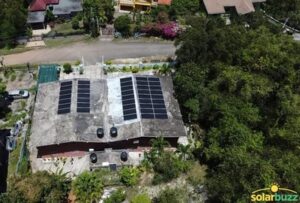
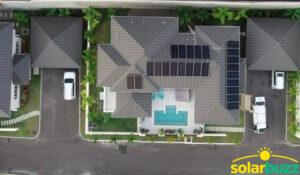
This week, we highlight two of our EV clients who have successfully aligned their transportation needs with a strong commitment to renewable energy.

Looking to reduce reliance on the local grid, our featured clients turned to Solar Buzz for efficient, future-ready solar solutions.

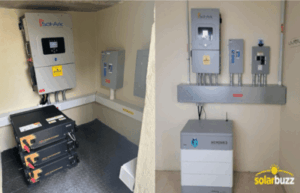
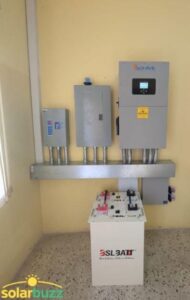
We designed and installed lithium iron phosphate (LFP) battery-based systems – known for safety, durability, and efficiency – projected to offset an average 85% of their energy use.

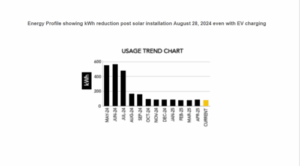
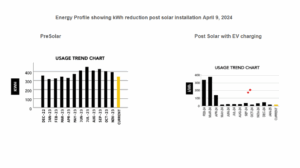
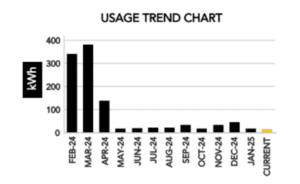
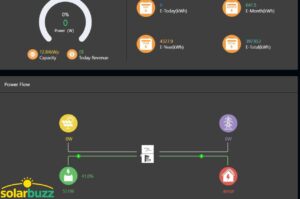
The JPS energy consumption graphs help to track monthly energy savings.

The sets of graphs below show that, since installation, the solar output is consistently meeting (and in some cases surpassing) 85% of the household and EV charging needs, aligning with our design projections.


Faster Payback, Bigger Savings

Did you know that charging your EV during peak sun hours can accelerate your return on investment? The more solar power you use, the faster you recoup your investment.

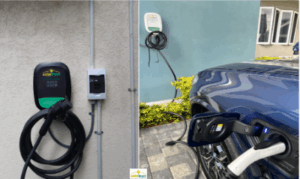
EV chargers require a significant amount of power, and using solar energy to charge during the day helps you maximize the value of your system.

Even clients who added EV chargers after their solar installation saw their savings continue to grow.

On average, our clients have reduced their monthly electricity bills to J$2,100, down from an average of J$38,000 before going solar – an impressive 95% average energy savings!

By charging their EVs during the day, clients not only exceeded their projected grid energy offset but are also on track to shorten their system’s payback period significantly.

Driving Future Energy Needs

With the rise of EV adoption across the island, Solar Buzz’s customized solar solutions are helping Jamaicans gain energy independence while lowering their carbon footprint. 

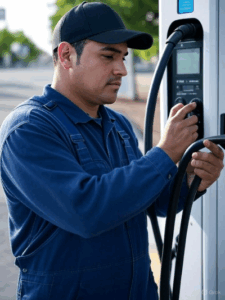
Our comprehensive services that range from solar installation to safe EV charger integration and maintenance are designed to meet the evolving needs of today’s energy-conscious consumers. 

The success of our EV clients demonstrates how solar power can reshape how Jamaicans fuel both homes and vehicles, paving the way for a cleaner, more sustainable future. 

Solar Buzz remains committed to leading the way in delivering clean energy solutions for a sustainable green future.

Let us show you how rewarding it is to plug into the sun.

Deidre Wedderburn is the Client Relations Manager at SolarBuzz, dedicated to building long-term partnerships and delivering a top-tier client experience (deidre@solarbuzzjamaica.com).

Having secured an exclusive Electric Golf Cart Dealership with Tara Golf Carts, based in Xiamen, China, two months ago, the Jamaican-based energy company Innovative Energy Group is now marketing these vehicles on the island.

The dealership is not limited to Jamaica but extends to the wider Caribbean. This dealership is facilitating IEG’s deployment of PV Solar charging infrastructure for the golf carts.

The management is optimistic about IEG’s growth trajectory, especially having secured the EV golf cart dealership, which is one way the company is seeking to diversify its revenue stream.

The recent acquisition of related company Innovative Energy Company DBA IEC SPEI Limited (IECL) by IEG, as well as the Chinese gold cart dealership, has resulted in a turnaround of the company’s fortune during the February 2025 quarter.

Reversing 2024 losses

IEG and its subsidiary, IECL recorded a profit of J$99.7 million, reversing the loss of J$4.4 million for IEG in the corresponding quarter of 2024, with revenues for the quarter climbing to J$130.7 million.

Given the completion of the IECL acquisition transaction on November 1, 2024, the year-to-date consolidated results reflect four months of the subsidiary’s performance. Revenues and profits reported for the year to date reflect the subsidiary’s operations during the period from November to February 2025.

The J$2.5 billion intangibles shown on the February 28, 2025, statement of financial position represent goodwill on consolidation. This intangible value will continue to be reassessed periodically, with external auditors reviewing and confirming it at the end of each financial year.

OUR Today

In today’s climate of unpredictable weather patterns, rising energy costs and increasing reliance on modern amenities, solar energy is a strategic investment rather than just a sustainable choice.

From weather resilience and financial independence to increasing property value and providing unmatched peace of mind, solar energy offers a wealth of benefits that make it a solid long-term investment. 

Weather Resilience

Extreme weather events such as hurricanes, are becoming more frequent and intense, putting pressure on aging electrical grids.

A direct hit from a strong storm could easily leave thousands without power for days or even weeks. 

Solar energy systems, when paired with battery storage, offer a reliable solution for both homeowners and vacation villa owners ensuring that their family or guests have access to electricity and essential amenities even when the grid fails. 

This kind of weather resilience is a game-changer especially for vacation rental owners, as it offers guests a seamless experience while setting your rental apart in a competitive market and safeguarding your revenue stream.

Upfront Investment

The upfront cost of solar installation is an investment that pays off in a short period of time.

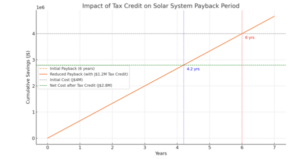
On average, residential solar systems with battery storage offer a return on investment within 4-6 years. This payback period can be even shorter as electricity rates continue to rise.

Homeowners can also maximize their returns by increasing daytime energy usage, effectively putting to use any excess solar energy that would otherwise go unused once their batteries are fully charged.

During the payback period, solar replaces your electricity bill while allowing you to invest in your own infrastructure or other opportunities.

With electricity rates still subject to global volatility and price hikes triggered by supply disruptions, oil market shifts or even local grid upgrades, solar energy shields you from these variables. Solar energy locks in predictable savings and provides a hedge against inflation in the utility sector.

Property Added Value and Revenue Security

Properties with installed solar systems enjoy higher resale value and market appeal.

Property owners who sell before the payback period ends can still benefit from accelerated financial returns by commanding a more competitive sale price. 

Vacation rental property owners stand to gain significantly from solar adoption.

Guests expect comfort and reliability, and a solar-powered villa offers them a superior experience that is uninterrupted by blackouts and free from energy usage restrictions without you bearing the burden of high energy bills.

This gives your property a competitive edge in the market since you can avoid passing fluctuating utility expenses onto guests. 

Furthermore, solar energy acts as a premium amenity that can justify higher nightly rates and boost income potential.

It also appeals to the Eco-Tourist that appreciates clean energy, enhancing your property’s attractiveness to the growing eco-tourism market.

Smart Investment for EV Owners

For those who own or plan to purchase an electric vehicle (EV), investing in solar energy is a no-brainer.

Harnessing solar energy to charge your EV in the day time can significantly reduce or even eliminate reliance on the grid, reducing your monthly expenses.

With the Jamaica Public Service (JPS) already approved to implement special billing for EV owners due to anticipated demand pressure on the grid, installing solar energy gives a clear advantage.

Solar becomes a proactive investment that allows EV owners to sidestep potential surcharges and truly enjoy energy independence.

Investment of a Lifestyle

Investing in solar energy is not just a financial decision but a lifestyle upgrade.

Solar allows homeowners to fully enjoy the comforts of modern living – especially the use of the air conditioning unit during increasingly hot days and nights – without the worry of high electricity bills. 

Additionally, modern solar systems include online monitoring tools that provide real-time insights into energy production and your usage.

This kind of monitoring empowers you to manage your energy consumption efficiently and inadvertently helps you to get the most out of your system while maximizing long-term savings.

Accelerated Investment Returns

The recently introduced solar tax credit further tilts the scales in favor of solar energy as an investment.

Homeowners can now claim up to 30% of the value of their system, capped at J$4 million which translates to a potential tax credit of up to J$1.2 million. This incentive can significantly shorten the payback period on your solar investment.


For PAYE-employed individuals who financed their solar system, this incentive is even more impactful since the tax credit is issued as a cash refund and can therefore be used to reduce loan balances if desired. 

Additionally, the cash refund from this solar tax credit can be reinvested into other opportunities, such as home renovations, upgrading your solar system, or ongoing maintenance to ensure optimal long-term performance and continued savings.

A Future-Proof Investment

With a payback period that is shrinking thanks to tax incentives and rising utility costs, the case for solar energy as an investment is stronger than ever.

Installing solar energy is a strategic move for financial security, property enhancement, energy resilience and peace of mind.

Invest today, and enjoy the rewards of resilience, savings, and independence for years to come. 

deidre@solarbuzzjamaica.com 

Electric vehicle (EV) dealership BYD Jamaica has partnered with the Jamaica Public Service Company (JPS) to offer residential customers 50 per cent off their electricity bills for six months by purchasing select BYD models.

Customers who purchase 2025 models from March to April, and 2026 models from June to July, are eligible for the promotion.

Sloane Jackson, head of business at BYD Jamaica, remarked “This partnership was born out of an increased and growing interest in electric vehicles islandwide, so we decided to incentivise potential customers’ curiosities by reaching out to the JPS, who has enthusiastically agreed to work with us in getting more customers to purchase EVs; specifically, BYD models”.

“An electricity bill reduced by up to 50 per cent for six months allows customers to easily and seamlessly start their EV journeys. JPS will also provide a thoughtful delivery care package with a radio frequency identification (RFID) card, details on how to use the card and the app, and a full list of the 68 JPS/Evergo charging stations across the island.”

Additionally, Dionne Nugent, director of business development at JPS, noted, We’re always looking to unleash Jamaica’s growth and productivity through innovative energy solutions, and we’re excited to do that by partnering with a fantastic brand such as BYD. We do not doubt that Jamaicans will enjoy driving away in their BYD vehicles with the bonus of reduced electricity bills during the promotion period.

The eligible models are the Yuan Plus, Seal, Song Plus DM-i, Sealion, and Shark.

Discounted bills start from the date of the vehicle’s delivery, and customers will receive up to 50 per cent off (or a maximum of J$25,000) their electricity bills for the next six months. The BYD Sales Team will send the [vehicle] registration details, driver’s license, and current JPS bill with the customer and property number to the JPS team. Terms and conditions will apply.

The ATL Automotive Group, exclusive distributors of BYD in the Caribbean, advised that as is standard, any purchase of a hybrid or electric vehicle includes the complimentary installation of a home charging station for easy access.

As the world’s leading EV manufacturer—renowned for its groundbreaking battery technology used in its wide range of electric vehicles, as well as energy systems and portable devices—BYD is committed to technological innovations for a better life, while simultaneously protecting the environment and cooling the earth by one degree.

Our Today

Thinktank says solar has been fastest-growing energy source for last 20 years, but remains dwarfed by hydro power

The world used clean power sources to meet more than 40% of its electricity demand last year for the first time since the 1940s, figures show.

A report by the energy thinktank Ember said the milestone was powered by a boom in solar power capacity, which has doubled in the last three years.

The report found that solar farms had been the world’s fastest-growing source of energy for the last 20 consecutive years.

Phil MacDonald, Ember’s managing director, said: “Solar power has become the engine of the global energy transition. Paired with battery storage, solar is set to be an unstoppable force. As the fastest-growing and largest source of new electricity, it is critical in meeting the world’s ever-increasing demand for electricity.”

Overall, solar power remains a relatively small part of the global energy system. It made up almost 7% of the world’s electricity last year, according to Ember, while wind power made up just over 8% of the global power system.

The fast-growing technologies remain dwarfed by hydro power, which has remained relatively steady in recent years, and made up 14% of the world’s electricity in 2024.

Hydro power is one of the modern world’s oldest renewable energy technologies, and made up a large proportion of global electricity in the 1940s – when the power system was about 50 times smaller than it is today.

The continuing growth of solar means clean power – including nuclear and bioenergy – is on track to expand faster than the world’s overall electricity demand, according to Ember. This should mean fossil fuels beginning to be squeezed out of the global power system.

Ember had previously predicted that 2023 would be the year in which emissions from electricity reached a peak, after a plateau in the first half of the year.

Climate experts hoped then that emissions would begin to fall, but a series of heatwaves across the globe ignited a surge in demand for electricity to power air conditioning and refrigeration systems, which caused fuel electricity to grow by 1.4% that year.

The report, which accounted for 93% of the global electricity market across 88 countries, found that the surge in demand pushed emissions from the global power sector up by 1.6% to an all-time high last year.

MacDonald said heatwaves were unlikely to ignite a similar demand surge in the year ahead – but the increasing use of electricity to power artificial intelligence, datacentres, electric vehicles and heat pumps was expected to play a bigger role in the world’s appetite for electricity.

Combined, these technologies accounted for a 0.7% increase in global electricity demand in 2024, double what they contributed five years ago, the report found.

“The world is watching how technologies like AI and EVs will drive electricity demand,” MacDonald said. “It’s clear that booming solar and wind are comfortably set to deliver, and those expecting fossil fuel generation to keep rising will be disappointed.”

The Guardian

A surge in Chinese car brands is transforming Jamaica’s automotive market. While Japanese, European, and American manufacturers have long dominated the market, and still dominate, the emergence of brands such as BYD, GWM (Haval), BAIC, Jetour, MG, and Chang’an is reshaping consumer preferences. Chinese brands are disrupting the market with competitive pricing, cutting edge technology, and features that rival or surpass those of established brands. The growth of Chinese vehicles in Jamaica reflects a global trend, with China increasingly dominating the automotive industry. This report delves into the factors driving this shift and examines how Chinese automakers are making inroads into a market once sceptical of their quality and reliability.


Bella Castle International Ltd, a Dominican Republic-based automobile distributor that sells Honda and Changan cars in its home country, opened its newest showroom in Kingston on December 4, 2024 to sell Changan, a Chinese car marque. Changan is the sixth Chinese car brand to enter the Jamaican market, traditionally dominated by Japanese and European marques, and more recently, Korean marques. However, in recent years, Chinese cars, once met with scepticism over quality, are increasingly appearing on Jamaican roads.

“I think that the acceptance of Chinese cars comes from the open-mindedness of new customers, younger clients that are less traditional about only Japanese or Korean car brands,” Praxedes Castillo Bellapart, general manager of Bella Castle Group, said in a December interview with the Jamaica Observer. He has witnessed younger generations choose Chinese brands after realising they offer technology and innovation.

“Everyone aspires to have a premium vehicle, and [they] get to have it at a very good price with a Chinese brand,” Bellapart said. “So, that’s what we’re doing here. We’re giving luxury at an economic price to all the Jamaican people.”

Andrew Jackson, CEO of Jetcon Corporation, the distributor of BAIC cars since 2023, faced scepticism initially. However, he has seen people adjust their behaviour towards the cars.

“If you compare the cars now with, say, the Chery QQ from 10 years ago, the fit and finish of these cars are far superior,” Jackson said. “In many cases, the styling of these cars is ahead of the Japanese and Korean cars — the modern type of styling. So the Chinese have really jumped ahead of the game — specially when it comes to styling. They are up there when it comes to quality,” Jackson pointed out.

BAIC is produced by Chinese State-owned automobile manufacturer Beijing Automotive Group Co, Ltd. Its acronym relates to its predecessor, Beijing Automotive Industry Corporation.

Chinese car brands have made significant inroads in Jamaica over the past three years. While Chinese truck brands such as Shacman, Sinotuk and Foton, had a presence, it wasn’t until 2021 that Chinese car brands started gaining traction. That’s when Stewart’s Automotive Group introduced Great Wall Motors’ Haval marque.

Titanya Clarke, brand sales manager for GWM Haval at Stewart’s Auto Group, said the marque was introduced in 2021 and sales began in 2022, ahead of its official May 2023 launch.

Clarke said the brand has been well-received by the market. Corporations have also bought its pickup truck line as part of their fleet vehicles.

“One of the things that we used as a strategy is to actually have people experience the vehicles. When you experience a Haval, and how it drives, and what we are offering, you understand why we go by the saying, ‘This is affordable luxury,’ “ she said.

Still, it was pointed out that while Jamaican consumers are warming to Chinese car brands, it is not an easy sell all the time.

Courtney Smith, sales manager for BYD Kingston, is still learning about customers who traditionally bought Japanese and Korean brands like Hondas or Kias. These customers react differently when introduced to a Chinese car brand, Smith said.

Smith, who previously sold Hondas for ATL Automotive Group, noted the difference.

“As a person who used to sell Honda, when a person walks in, nine out of 10 times they know what they want,” he said. “The brand is a household name [so] they’re more picking their colour and looking at specs.”

In contrast, newer brands require more effort to sell.

Yet, Jamaica’s automotive history suggests Chinese car brands are here to stay, with the recent shift being the latest chapter in this evolution. Although the first automobile was independently introduced to Jamaica in 1903, it was the 1960s that marked a pivotal period for the industry, with the country relying on trading partnerships with England and the United States to import popular vehicles.

Family cars like the Morris Oxford and Austin Cambridge, which doubled as taxis, dominated the market. Characterised by rectangular designs, these vehicles contrasted with sleek 1960s sports cars like the Jaguar E-Type. While SUVs were non-existent, station wagons and Land Rovers provided motorists with extra space and four-wheel drive capabilities.

The 1980s saw the introduction of Russian-made Ladas, which coincided with import restrictions. The easing of these restrictions in the 1990s paved the way for a lasting influx of Japanese vehicles, which continues to shape the country’s automotive market today.

However, that dominance is now being challenged by the Chinese car brands across the globe.

In 2008 that country’s automotive industry took the top spot in production, with its factories churning out millions of vehicles annually. As of 2024 it also ranks as the world’s largest automobile market, topping global sales and ownership charts. However, Chinese car makers are facing increasing headwinds from tariffs, particularly from the US and EU, which could potentially disrupt their export-driven growth. The US, for instance, in May 2024 quadrupled tariffs on Chinese electric vehicles from 25 per cent to 100 per cent, while the EU imposed tariffs on Chinese electric vehicles of up to 45.3 per cent in late October 2024.

Chinese automakers have, in response, pivoted in those markets, deciding to export its hybrid cars to Europe for example, to get around the tariffs on full electric models, and have also gone aggressively after new markets in Africa, Asia and Latin America.

“Because the Chinese are having problems to go into North America and Europe, they are pushing even harder to go into other countries. At the end of the day they are still competing with the BMWs and the Toyotas and so on — but maybe not in the primary market but in the Latin America, and the Caribbean, and India, and Africa and so on [instead],” Jackson said, adding that he expects the Chinese brands to eventually find their way into North America and Europe.

From January through October, Chinese companies sold 9.75 million fully electric and hybrid vehicles — an increase of 34 per cent from a year earlier, according to the China Association of Automobile Manufacturers. About one million of those vehicles were exported outside China.

BYD is well positioned as the leader, with a market share of around 35 per cent. In China, its biggest market, BYD sold 2.9 million fully electric and hybrid vehicles in the first 10 months of 2024 — an increase of 35 per cent from a year earlier, according to China Passenger Car Association. Globally, BYD has broken into the top 10 of total vehicles sold, and looks poised to pass Ford Motor and Honda soon.

The company has aggressively expanded overseas. It has built assembly lines in Brazil, Hungary, Thailand and Uzbekistan. It is also looking to put a factory in Mexico, a market where it expects sales to double next year.

Here in Jamaica it is classified as a premium brand and is thus not targeted at the mass market as are value brands such as Honda and Kia, though the prices are comparable, with the technology, most times, in these Chinese brands being superior — a far cry from the days when Chinese-made products were snubbed for being poor quality knock-offs of more popular western brands.

“From what I have seen the legacy brands — Toyotas, Hondas, Fords — they have taken a backseat in giving the public what they want and you have to wait long for changes,” Smith said.

He pointed out that Chinese automakers disrupt Jamaica’s car market by rapidly advancing technology, offering more features at lower prices, and outpacing legacy brands like Toyota and Honda in innovation cycles. Chinese brands like BYD and Haval provide advanced features — such as adaptive cruise control, 360-degree cameras, and cooling seats — as standard, making them more competitive. Unlike traditional automakers that update models every five years, Chinese manufacturers release frequent updates, enhancing technology and efficiency. For instance, BYD’s hybrid cars now achieve ranges of 1,100 km, with newer models already promising 2,000 km. This aggressive strategy challenges competitors like Tesla on pricing and innovation, reshaping consumer expectations across the world and in Jamaica.