Driving an electric vehicle is relatively simple; however, charging an EV can get complicated.
tesla model s ev charging electric car
Car shoppers buying or leasing an electric car will want to take into consideration what sort of charging infrastructure they have at home or nearby that can support their new vehicle’s recharging needs. Unlike gas-powered vehicles, which in some locales are seemingly supported gas stations at just about every corner, battery-powered cars and trucks charging options are fewer, and often further, between. Though the process of going all in on an EV involves more planning and forethought, it shouldn’t dissuade you from considering such a vehicle.
To start, one of the best decisions you can make before purchasing an EV is to have a charger installed where you live. That’s certainly easier if you own your home, but there are plenty of hoops to jump through to make it happen (permits, contractors, fees). To simplify the process, some automakers incentivize this process, as do a number of state and local governments. If you happen to rent the place you call home, then it never hurts to ask your landlord about the possibility of installing an electric car charger.
EV Charging Levels and Charging at Home

There are three main classifications of EV charging: Level 1, Level 2, and Level 3 (also known as DC fast charging). The one you’ll want to use often depends on how far you’re going and how much time you have for recharging.

If you charge at home, it’s easy to plug in at the end of each day and recharge overnight. The same is largely true during the day if you’re able to charge at work. Longer voyages require a different approach because you won’t want to waste hours for a suitable recharge to get back on the road.

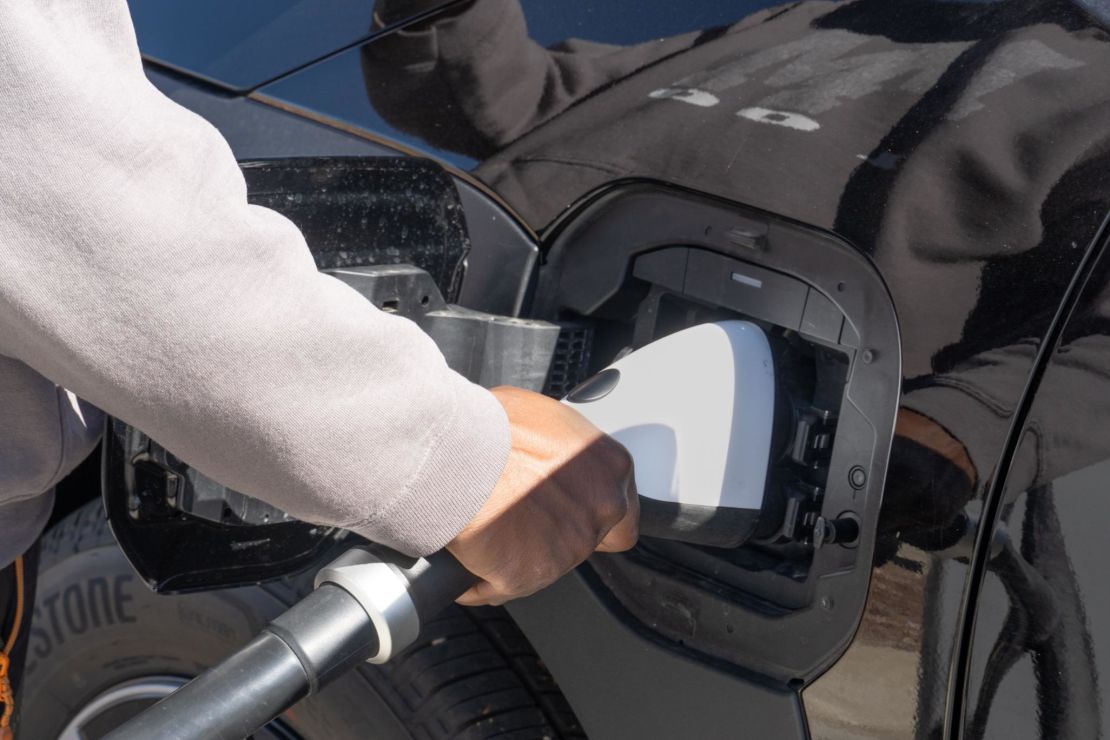
Level 1 charge equipment is typically provided with all new EVs. This type plugs into an ordinary 120V household outlet, making this the most convenient but also the slowest way to charge an electric car. Level 1 chargers add roughly two to four miles of range per hour, with the lower end of that range corresponding to larger, less efficient EVs. This means Level 1 charging can take days, not hours, to fully replenish a depleted battery pack. But charging from empty is far from the norm, so Level 1 can work out just fine if you drive no more than 20 miles or so per day and can plug in every night.

You do need to consider a couple of points. First, you should consult an electrician to see if the socket you plan to use is up to it, especially if your home isn’t relatively new. Also, you should never plug your car’s Level 1 charge cord in via an extension cord, because the extra wire length adds resistance that can overheat your home wiring. Also, if you’re unable to plug in regularly, or want to be able to add spontaneous side trips during the day or on weekends, you may find that this setup charges at a rate that’s too slow for your liking.

To satiate your need for charging speed, you’re going to want to look into stepping up to Level 2 home charging, which can support up to 240 volts at triple (and in some cases quadruple) the amperage of Level 1. That makes most Level 2 setups six to eight times faster than Level 1, which equates to between 12 and 32 miles of range added per hour of charging, with the more efficient EVs toward the higher end of that range. With Level 2, you can add a significant amount of range to most EVs in a couple of hours, and it makes full overnight top-ups a breeze even if you happened to drive more miles than usual, skipped charging for a couple of days, or programmed your car to delay charging until the wee hours when electricity rates can plummet.
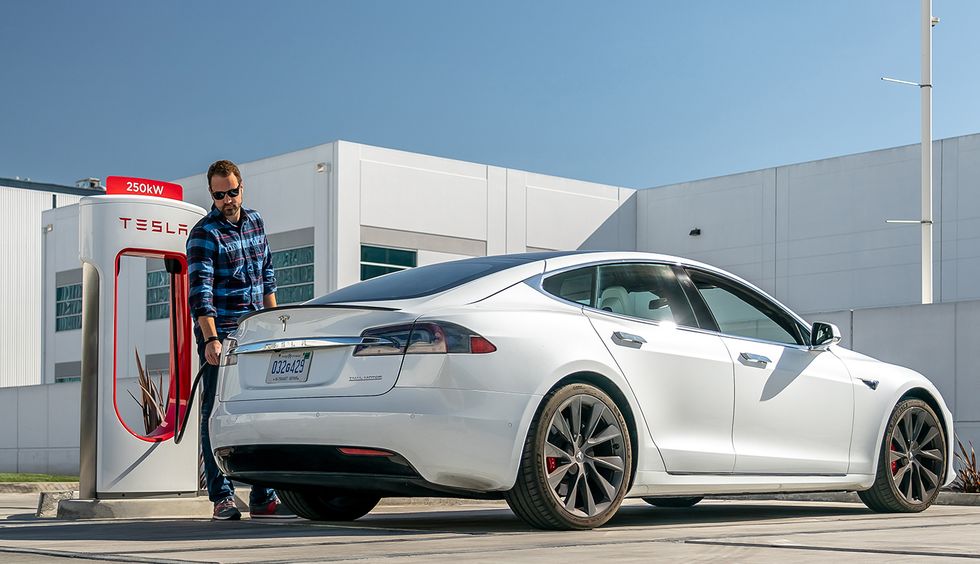
tesla model s charging at v3 supercharger

Level 2 is fairly attainable, especially if you are a homeowner. Some of the supplied cords that come with EVs have swappable ends that feature 240V plugs, but if the cord that comes with the EV you’re considering doesn’t have such a feature, you can purchase standalone Level 2 home charge equipment. Either way, you’ll need a 220–240V outlet that’s connected to a dedicated circuit breaker. A consultation with an electrician is necessary to add such a circuit and make sure your panel is up to it. There are a few notable plug options, but the best and most common is called a NEMA 14-50. This is the same outlet RV parks provide for Class A motorhomes, so you might be in a plug-and-play situation if you’ve already had your garage wired up to support such an RV.

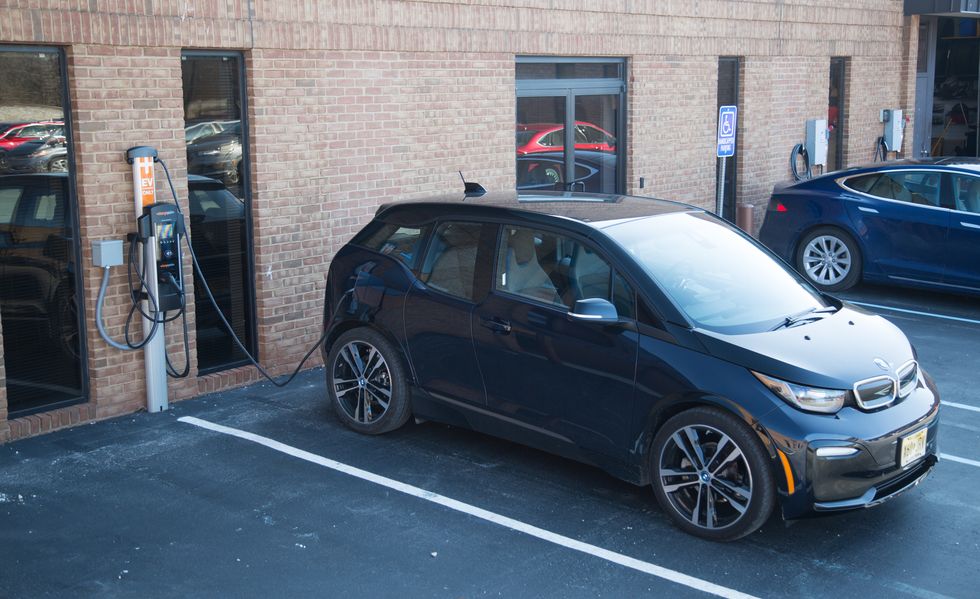
But Level 2 isn’t just found at home. It’s the predominant type found in public spaces, workplaces, and certain shopping malls. Also, the cord-end that you plug into the car looks the same as home Level 1 and Level 2 equipment. You can add a significant chunk of range if you plug in while you’re having dinner-and-a-movie with a friend or significant other, but they are not intended for a full fill from near-empty, mainly because they’re generally not located where people spend many hours in one place.
land vehicle, vehicle, car, motor vehicle, rim, automotive design, alloy wheel, hatchback, wheel, hot hatch,

Fast-Charging

Level 3 chargers are also known as DC fast chargers, and as the name suggests, this equipment can much more rapidly charge your electric car’s battery. Fast charging is particularly helpful on long trips that require intermediate charges to reach a destination because most compatible EVs can take on 100–250 miles or more of range in significantly less than an hour. Level 3 chargers differ from Level 2 charge equipment in that they utilize a different socket on the vehicle side, with extra pins intended to handle additional higher voltage.

There are three types. Tesla Superchargers have long utilized their own proprietary socket known as the North American Charging Standard (NACS) This made the extensive Supercharger network a Tesla-only recharging option for a long time. This has recently changed, and a number of other automakers currently do, or plan to, offer access to these chargers.

Until this seismic shift in recharging hardware, the vast majority of EVs outside of Tesla used the SAE Combo (also known as CCS or simply Combo) chargers. These are based on the same socket used by the Level 2 plug, but with an extra pair of large pins grafted on below. CCS-enabled cars typically have a secondary flap the user folds down to expose the socket for these extra pins.

Finally, there’s CHAdeMO, the BetaMax of the trio. This socket is mainly found on a few Mitsubishis and the Nissan Leaf, though Nissan’s future products will use the CCS interface going forward.
ev charging

The rate of charge is measured in kilowatts (kW), which currently range from a low of 50 kW to a high of 350 kW depending on the specific charger. The fast-charge capability of the car itself matters, too. A car that has a maximum DC Fast charge rate of 50 kW will gain nothing by plugging into a 350 kW station, and will instead take up a spot that a car with faster-charging capability could use.

EV owners will see a noticeable dip in the charge rate once their car’s battery reaches approximately 80 percent capacity. In practical terms, an 80 or 90 percent charge is more than enough to get you down the road to the next stop. But this is also done to prevent damaging the battery pack by way of overcharging or overheating it. Think of it like pouring water into a glass. You can dump in a lot at first, but you generally slow the flow as the glass approaches full and dribble it in near the end, otherwise, you run the risk the water may overflow.

Fast-Charging Networks

Tesla’s Supercharger network is made up of Level 3 chargers, which the company strategically places around the country. The sheer number of Supercharger locations is high because the network has been built out over some 10 years. This and the fact that its chargers are reliably in working order make Tesla’s electric car charging infrastructure one of the best currently available.

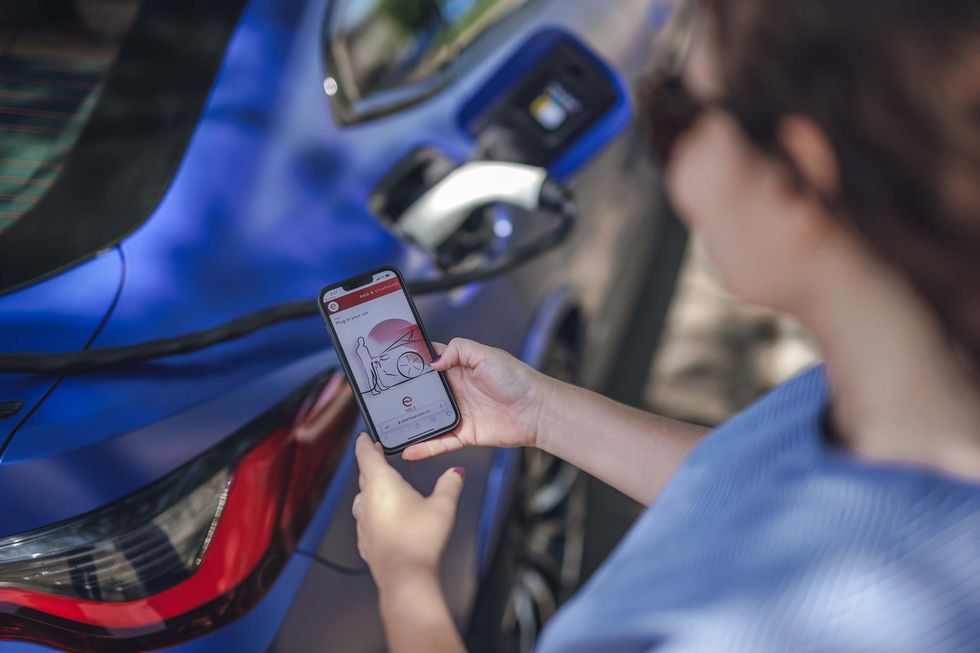
For everyone else (including Tesla drivers), there are several charge networks available to the public, such as ChargePoint, Electrify America, EVGo, and others. These networks are generally newer and less extensive, so we recommend joining as many as you can in order to increase your odds of finding an available and functioning station on your travels. It’s also a good idea to download each network’s app on your phone, have an active account, and keep a physical charge card with you.
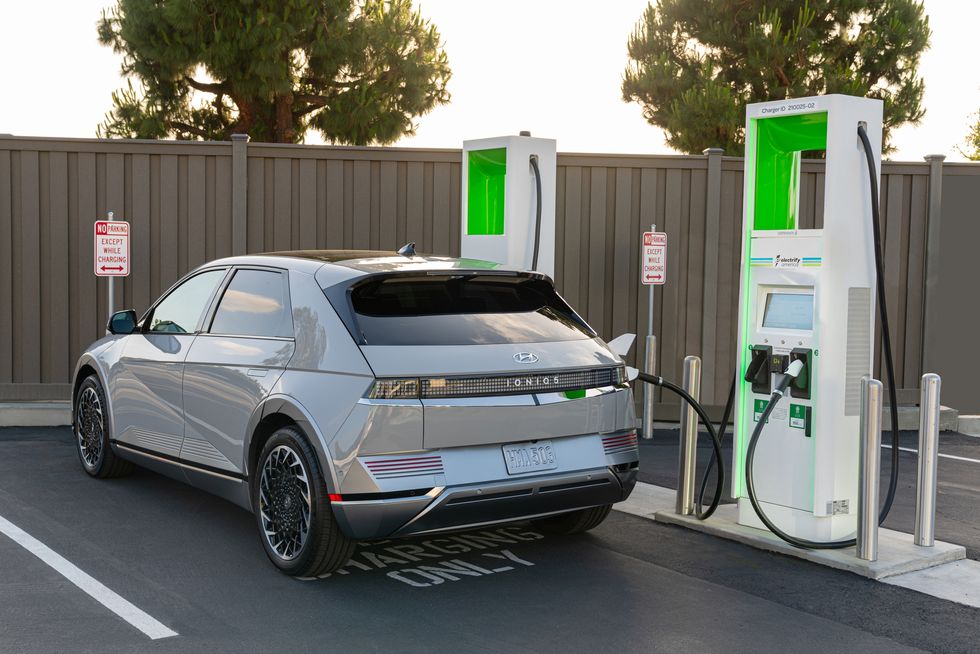
electrify america charging stations

Some automakers are also beginning to implement plug and charge, which is a way of accessing multiple networks for charging your electric car. The Mercedes EQS battery-electric sedan, for instance, can consolidate several networks under a single user account. It also includes a plug-and-charge function when using participating chargers. This allows you to simply plug your EQS in without having to interact with the charger’s app or physical charge card.

Charging on the go is further simplified by way of many electric cars’ in-dash navigation systems, which will typically suggest charging locations to stop at along your route should your EV need a charge in order to reach the final destination. That said, we recommend picking several alternate charging stations in case your range depletes quicker than expected or in the event a chosen charging station’s charger is already in use or out of order.

The Cost of Charging an Electric Car

Though the price of electricity varies by location, charging an electric car at home ought to cost notably less than filling your gas-powered car’s tank with an equivalent amount of gas. In some areas, your electricity provider may incentivize charging by lowering rates during off-peak hours. Generally, these lower rates take effect late in the evening and last through the early morning. Many electric cars allow you to schedule your daily at-home charging times, which ought to ensure your EV is charging during these off-peak hours. Prepare to spend a good deal more money on charging if you regularly rely on charging networks to recharge your electric car.

Those charging at home may want to invest in solar panels that feed a series of batteries called an energy storage system, an example of which is Tesla’s Powerwall. These systems collect energy from the sun during the day and store it for later uses, such as charging an electric car. In some areas, any excess power collected can be sold back to the local utility company. Be warned, energy storage systems can currently be prohibitively expensive.

EV Charging Etiquette

If you are a recent electric car convert, then you ought to be aware of a few of the simple etiquette guidelines that come with EV ownership. For instance, when using a charger in a public parking area, it’s best to keep tabs on your electric car’s state of charge. Once its battery is at full capacity, it’s common courtesy to move your car—even if that means hoofing it back to the charging station well before you’re ready to leave the area—so other drivers can charge their EVs. In fact, some charging networks will penalize you for keeping your car plugged into the charger after its battery reaches full capacity.

Additionally, it’s a good idea to make sure your electric car is correctly plugged in and actively charging before walking away. Faults sometimes occur within a minute or two of plugging in.
public ev charging at private homes

Once your EV’s done charging, place the charger handle back on the receptacle and neatly coil the cable. These components take a beating in everyday use and keeping them in good working order will pay dividends for you and other EV drivers alike. These cables are also a tripping hazard, so keeping them off the ground is always a smart idea. If you encounter a faulty charger, then your best bet is to notify the network of this issue so it can be fixed.

Charging an electric car may seem complex, but with the exception of the additional time it takes to get your car to its full energy capacity, it’s generally no harder than fueling up a gas- or diesel-powered vehicle. Even better, those with an at-home charger will find charging their electric car is just as easy as charging any mobile device. Just plug it in overnight, and wake up with it ready to go.

Car & Driver


Northvolt CEO Peter Carlsson speaks at the company’s office in Stockholm, Sweden, September 30, 2021. Picture taken September 30, 2021. REUTERS/Supantha Mukherjee/File Photo


The underlying shift towards electric vehicles is continuing despite a recent slowdown in the pace of growth, Northvolt’s CEO said while presenting the Swedish battery maker’s investment plans for a new plant in Germany on Monday.

The Northvolt 3 battery cell factory in Heide, in the northern state of Schleswig-Holstein, is expected to produce climate-friendly battery cells for 1 million cars a year once completed later this decade, the company has said.

“We’re seeing today some clouds on the sky, we are seeing a little bit of a decline of the electric vehicle trend overall, but I think that when you take a step back and look at the transition, the megatrend and the underlying change is there,” Northvolt CEO Peter Carlsson said at a groundbreaking ceremony for the new plant.

“The fact that we are going to go from (internal) combustion to electric is without a doubt going to happen,” he added.

High energy prices, soaring interest rates and a rise in the cost of raw materials had created “bumps in the road”, but the EV industry will continue to grow, the CEO said.

“We’re now seeing even stronger products coming out in the market, that will also be produced here at Northvolt 3, that will drive even stronger adoption of electric vehicles,” Carlsson said.

Attending the event, German Chancellor Olaf Scholz hailed the factory as a sign of his country’s industrial appeal.

“The production of good cars will remain the backbone of our industry beyond the combustion engine. For this we need battery cells made in Germany, made in Europe,” Scholz said.

“This is how we secure our technological sovereignty. This is how we secure value creation in Europe,” he added.

Cell assembly in the new factory is planned for 2026 and its final expansion is scheduled to be completed in 2029. The investment amounts to 4.5 billion euros ($4.86 billion) and around 3,000 new jobs will be created, Northvolt said.

The EU Commission in January approved state aid for the project. In total, there are subsidies amounting to 902 million euros – 700 million of which are grants and 202 million are guarantees.

OUR Today

Nissan Chief Executive Makoto Uchida, left, and Honda President Toshihiro Mibe attend a joint news conference in Tokyo, Friday, March 15, 2024.

Nissan and Honda announced that they will work together in developing electric vehicles and auto intelligence technology, sectors where Japanese automakers have fallen behind.

The chief executives of Nissan Motor Company and Honda Motor Company appeared together at a news conference in Tokyo to announce that Japan’s second and third biggest automakers will look into areas with a potential for collaboration.

The details of the non-binding agreement are still being worked out, both sides said. The executives said the companies will develop core technologies together, but their products will remain different.

Nissan Chief Executive Makoto Uchida stressed that speed is crucial for the companies in developing technological solutions.

“We don’t have time,” he said. “It is significant that we have reached this agreement based on a mutual understanding that Honda and Nissan face common challenges.”

Honda President Toshihiro Mibe said the companies share common values and could create “synergies” in facing their formidable rivals.

The world’s automakers are rapidly shifting toward electric vehicles, focusing on batteries and motors instead of gas engines, as concerns grow about emissions and climate change.

But Japanese automakers have fallen behind rivals such as Tesla of the United States and BYD of China in developing EVs, partly because they have historically been so successful with combustion engine vehicles.

Toyota Motor Corp, the world’s largest automaker, has often said the world is not ready for a complete shift to EVs, in part because of the lack of a charging infrastructure, and instead has pushed hybrids, which have a gas engine in addition to an electric motor.

But Toyota is also expected to aggressively deliver on an EV push in coming years.

Nissan is relatively ahead in EVs among Japanese automakers because it was among the first to come out with an EV with its Leaf, which went on sale in late 2010.

High expectations for the Nissan-Honda agreement were reflected in sharp increases in the stock prices of both companies on Thursday after a Japanese media report said such a deal might be in the works.

Their shares continued to rise Friday, with Nissan finishing 3.2 per cent higher Friday and Honda rising 1.7 per cent. The agreement was announced after trading closed in Tokyo.

The executives said no mutual capital ownership is involved in the agreement for now, but the companies may look into the possibility down the road.

“How we can raise our competitiveness is what we are determined to pursue,” Uchida said.

Gleaner

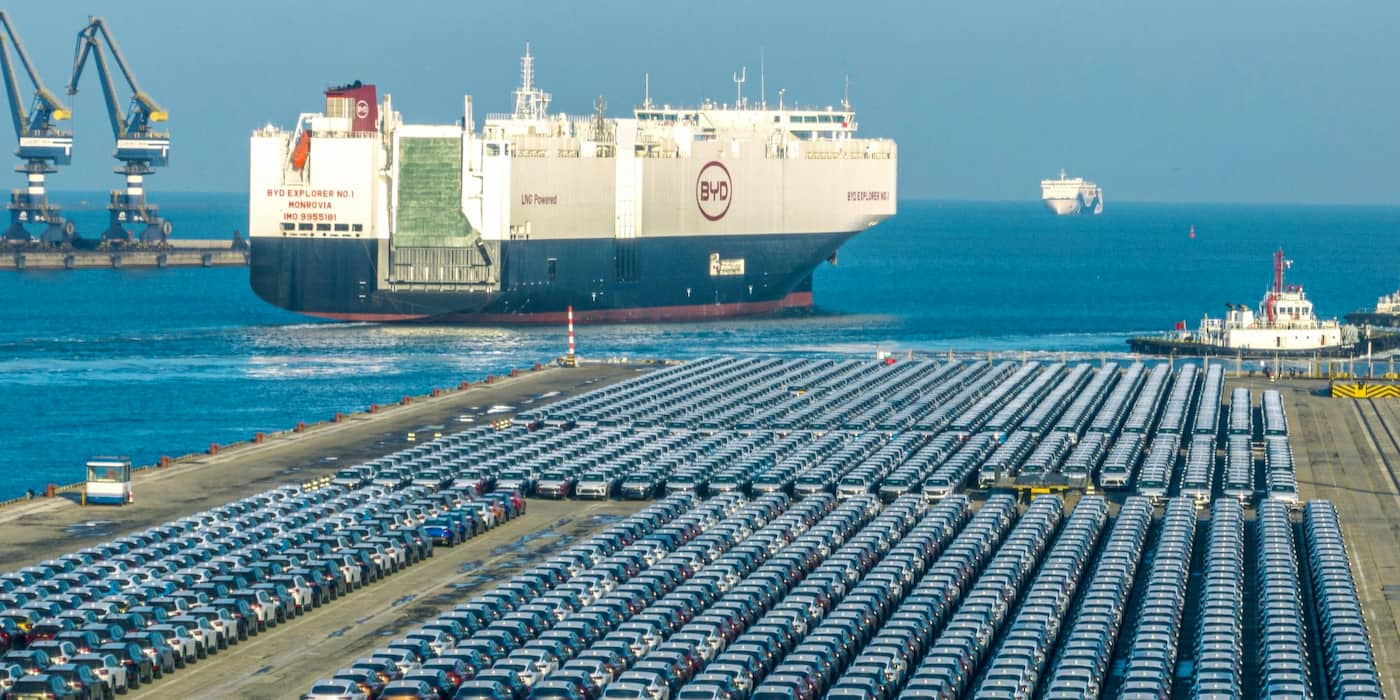
BYD-first-cargo-ship

Automakers are fiercely lobbying governments to water down already-compromised emissions rules, but doing so will only lead to their doom as market entrants that are serious about EVs will continue ramping them anyway.

The auto industry is electrifying, and all new cars will be electric in the relatively near future. This is not in dispute by any serious person – and any alternative scenario, where humans continue to pollute as much as we do today, will result in worse and worse results for humanity the longer we pollute as climate change becomes progressively worse.

It is necessary that we stop burning fossil fuels, and fast. This is not a matter of opinion, it’s a matter of physics, and physics does not care about your arguments to the contrary.

And yet, the auto industry – which is responsible for more pollution than any other sector, at least in rich countries – still lobbies to worsen emissions reduction targets, even when those targets were already pushed back to begin with.

Automakers beg governments to let them emit more poison

We saw it this week in both Europe and the US. BMW, VW and Renault asked European regulators to push back the 2035 gas car phase-out, despite that this timeline has already been loosened. And in the US, the EPA finalized rules, but softened them due to auto industry lobbying – and the president of the main auto industry lobbyist characterized the final rules as a “stretch goal,” suggesting that he thinks there should be further softening of the already-softened rule.

Even these softened EPA rules will upend the industry, as current automaker commitments are not enough to meet the targets. Either automakers need to up their game, or someone is going to have to fill the millions-vehicle gap between commitments and requirements. And if traditional automakers don’t fill that gap, then new entrants will.

The lobbying is reminiscent of what the industry did from 2017-2021, when it lobbied an ignorant reality TV host to torpedo well-reasoned regulations which would have resulted in significantly more regulatory certainty for the industry. It eventually recognized its error, but Pandora’s box was already opened.

Today, the exact same automaker lobby which originally lobbied to fracture US and CA regulations – the Alliance for Automotive Innovation, previously known as Global Automakers, led by John Bozzella both then and now – still routinely complains about the two regulatory regimes being different, despite being personally responsible for the current state of affairs.

The compulsion against regulation is pathological. Even in situations where it doesn’t make sense to lobby against regulation, businesses will often still do so.

But wait, maybe it’s not a compulsion against all regulation. Because at the same time that automakers are begging for the ability to continue the global-scale mass murder that they continually enable (via pollution that kills millions worldwide per year), they’re also begging governments to slow down other parts of the industry that are taking the EV transition seriously.

Namely: China.

Chinese EVs will grow, whether you like it or not

China is actually a little late to the EV party. Until a few years ago, EV market share in China lagged other leading regions, but uptake in recent years has been quite rapid. NEV (EV+PHEV) market share should crest 50% in China next quarter, ahead of basically everywhere except the Nordic countries.

But as often happens, China may not always be the first entrant into a market, but once it truly commits its effort to something, those efforts tend to bear fruit rapidly.

Chinese EV sales have started taking off overseas, particularly in Europe. While they still make up a relatively small percentage of the market – around 10% – that share has risen rapidly from less than 1% in 2019 (and it might be higher if Chinese automakers could find more ships, but they’re working on that).

In response to this rise in Chinese EV sales, instead of recognizing that they need to pick up their game, European automakers are… begging the EU to investigate the “flood” of Chinese EVs, even to the point of proposing retroactive tariffs. They contend that the Chinese government unfairly subsidizes its auto sector, making prices uncompetitively low. Nevermind that European governments also subsidize their auto sector (not to mention the massive worldwide subsidies for pollution), and that low prices are good for consumers (in fact, if EU consumers are benefitting from Chinese subsidies, that represents a transfer of wealth from China to the EU).

Sure, begging governments for help isn’t the only thing they’re doing, they’re also finally picking their pants up off the floor and considering building cheaper EVs, but both of these actions are in direct conflict to lobbying efforts to loosen emissions regulations. If you’re worried about competition undercutting you and taking control of the EV transition, the answer is not to cut production and pretend that EV sales are going down when they aren’t, it’s to move faster.

In the US, the anti-China lobbying has been more pre-emptive. There aren’t significant amounts of Chinese-built EVs in the US, and the country already has a number of protectionist tariffs against China.

The recent Inflation Reduction Act, which created hundreds of billions of dollars of incentives for EVs and green energy, does include provisions intended to advantage automakers who avoid using China as any part of their supply chain. And scaremongering about China is abundant throughout US political and economic discussions.

So it’s clear that Western automakers aren’t looking to compete on price or volume, they’re looking to change the rules of the game instead – in a way that ensures more pollution and more expensive vehicles for consumers. They don’t want to win the game, they want the ref to hand it to them. It’s gamesmanship – which the industry is well acquainted with.

Rising EV penetration isn’t due to regulatory minimums, it’s due to demand

But do we really think that will work? EV penetration has broadly exceeded the minimums set by emissions rules. The driver so far has not been regulatory minimums or targets set by government, it has been consumer demand – and consumer recognition that gas vehicles will soon become an albatross around the neck of anyone who makes the silly decision to buy a new one. We’ve seen it happen in Norway with well above 90% plug-in car sales in advance of its world’s-most-aggressive 2025 target, with China’s rapid rise in EV penetration which caught foreign automakers by surprise, and with California hitting ZEV goals years ahead of schedule.

So loosening the rules doesn’t seem likely to slow down consumer demand – and the public wants stronger rules anyway. Instead, it will just annoy customers who are frustrated that there aren’t enough options available (as has been the case for years – look at the excitement over the R3 and EX30 when so few other small EVs exist), and mollify laggard manufacturers into thinking they can take longer to join the party.

But if automakers (and countries with prominent auto industries, like Japan) want to survive the transition, they cannot be the last to the party. The longer they wait, the more trouble they’ll be in, and the more advantage they cede to their competition. Doing nothing didn’t work for Kodak in the shift to digital, and it won’t work for automakers during the shift to electric.

How do we know this? Because it’s already happened, in this very industry, just over the course of the trailing decade.

Big Auto let Tesla win

Over the course of the last ten years, we’ve seen plenty of efforts to regulate away Tesla’s sales model for example, and few for automakers to actually effectively compete against Tesla’s vehicle programs. We’ve also seen industry push, state by state, for abusive EV fees and other silly regulations in a desperate attempt to punish EVs for daring to be a superior choice.

All of this happened while Tesla gradually entered more segments, and gradually took over those segments. The first indication was around 2014-2015, when sales of large luxury vehicles fell for every manufacturer except Tesla. This happened again with the Model 3. And the Model Y is now the best-selling vehicle in the world. (As for trucks, well, maybe that’ll be a different story)

And yet, despite a decade of warning, it’s only recently that we’ve started seeing serious EV programs from other automakers start to spin up. But most automakers still only have a few EVs, and many of them still share platforms with gas cars. And due to Tesla’s head start, they’re the one company that has gotten scale and costs to the level that they can arbitrarily cut prices, starting an EV price war that they’re best positioned to deal with.

In refusing to act faster to accept the future that’s already here, automakers have already ceded ground. On top of the aforementioned points of market share ceded to Tesla, the industry also gave Tesla the whole concept of fueling stations.

Over the last decade, every automaker said that charging wasn’t their problem and that someone else would come along to solve it, while simultaneously saying that they can’t ramp EVs because there isn’t enough charging out there.

Tesla also said that there wasn’t enough charging out there… so it built chargers (without having to be forced into doing so). And now, as a result of automakers’ intransigence – and also thanks to President Biden’s infrastructure law, which influenced Tesla to finally open up its Supercharger network – every vehicle manufacturer is now using Tesla’s NACS plug, which means all of them will use its Supercharger network, and Tesla will be able to extract profits on fueling from basically every car on the road. “Tesla, you’re welcome”; signed – the auto industry.

Electrek

The Biden administration on Wednesday finalized one of the most significant pieces of its ambitious climate agenda: the strongest new tailpipe rules for passenger cars and trucks that will decisively push the US auto market toward electric vehicles and hybrids.

But in a concession to automakers and labor unions, the rules will be phased in more slowly than originally proposed and will give automakers more choices for how to comply.

Nearly a year ago, the Environmental Protection Agency proposed a fast ramp-up into EVs — a rule that would have ensured two-thirds of all vehicles sold were electric by the end of this decade. The EPA pumped the brakes on that plan Wednesday.

Instead of pushing automakers to sell more EVs to meet stringent pollution targets, the administration is allowing plug-in hybrids — vehicles that combine gas engines and EV-like batteries — to play a much bigger role in the electric transition.

In 2023, EVs made up just 7.6% of new car sales, according to Kelley Blue Book. The new rule is targeting 35% to 56% for EVs in 2032, and 13% to 36% for plug-in hybrids.

Transportation has an outsized climate impact, making up nearly a third of all US climate pollution, so even small steps can lead to significant change. Margo Oge, who previously headed the agency’s office of Transportation and Air Quality, called the new standard “the single most important climate regulation in the history of the country.”

In a statement Wednesday, President Joe Biden vowed the cars would be made by American workers. “US workers will lead the world on autos making clean cars and trucks, each stamped ‘Made in America,’” Biden said. “You have my word.”

Federal officials said the rule doesn’t favor electric vehicles over other types of vehicles, and will reduce nearly as much pollution as the original proposal — more than 7 billion metric tons of planet-warming emissions, along with other pollution that is detrimental to human health. By 2032, the new rule is expected to slash passenger car pollution nearly in half from 2026 levels.

“Within those ranges, we got to the same place” as the standard proposed last year, said Joe Goffman, who leads the agency’s Office of Air and Radiation.

Goffman said the agency considered different ways automakers could “mix and match” new vehicle models to meet the standard — by using more efficient gasoline engines, hybrids, plug-in hybrids and battery electric vehicles.

“By taking seriously the concerns of workers and communities, the EPA has created a more feasible emissions rule that protects workers building (traditional, gas-powered) vehicles, while providing a path forward for automakers to implement the full range of automotive technologies to reduce emissions,” the United Auto Workers union said in a statement.

White House national climate adviser Ali Zaidi said that “one of the really strong features” of the new rule was its flexibility.

“Different automakers are going to approach this in different ways,” Zaidi said. “You’ll have some automakers that maybe have a third of their fleet be plug-in hybrid electric vehicles.” Zaidi argued that would “translate into a lot of consumer choice.”

Carmakers get flexibility

Automakers like Toyota, who are favoring hybrids and plug-in hybrids and moving slowly on EVs, could be big benefactors of EPA’s new rule.

Toyota, the world’s largest automaker, is among the companies that aggressively pushed back against the Biden administration’s original proposal.

In a memo sent in the fall of 2023 to car dealers across the US, Toyota Motor North America group vice president of government affairs Stephen Ciccone described the EPA’s original EV proposal as a “mandate” and “draconian,” CNN recently reported. Ciccone wrote the proposal had caused an “existential crisis” in the industry and suggested an option giving automakers more choice.

“Toyota’s position is that the best way to reduce carbon is by giving consumers a choice of powertrain options, including hybrids, plug-in hybrids, fuel cells, fuel efficient ICE vehicles, and BEVs,” Ciccone wrote.

That flexibility is what the EPA finalized on Wednesday. But Toyota continued to characterize EPA’s rule as a “regulatory mandate” that will force it further into the EV game than it’s currently positioned.

The rule “requires a precipitous shift from around 8% market share of battery electric vehicles today to more than half by 2032 – an aggressive, sixfold increase over just eight years,” said Toyota spokesperson Edward Lewis in a statement. “Toyota will continue to lead the industry and comply with regulations, but serious challenges around affordability, charging infrastructure, and supply chain will need to be addressed before this mandate is realized.”

President Joe Biden has made the transition to EVs a signature issue of his presidency, stressing the economic impacts, in addition to the climate benefits, of cutting pollution. In August 2021, after the president announced an ambitious target that half of vehicles sold in the country by 2030 would be either battery electric, fuel-cell electric or plug-in hybrid, Biden test-drove a hybrid-electric Jeep on the White House grounds.

But political battle lines are being drawn around the EV transition. Former President Donald Trump, the Republican nominee for the 2024 presidential election, has railed against EVs in his speeches. He recently characterized EVs as “all” being made in China, even though Democrats’ Inflation Reduction Act has pushed a new EV manufacturing and assembly to the United States.

With the new standard giving automakers more flexibility, EPA administrator Michael Regan denounced the characterization that the agency was setting an EV “mandate.”

“When you look at the differences between the proposal and final, you will see that there is absolutely no mandate,” Regan told reporters, adding his agency was staying “well within the confines of the law.”

It’s not just Trump; the jump to EVs has some of Biden’s political allies worried, too. The United Auto Workers, a powerful union that has endorsed Biden, has also expressed concerns about what the shift to EVs could mean for their workers, who believe battery-powered cars require less labor to build.

But the demand for fully electric cars is growing in the US. The nation crossed a key threshold at the end of last year: 1.2 million electric vehicles were sold — a 46.3% jump from 2022.

EV adoption rates are likely to slow down this year, which is to be expected, said Trevor Houser, partner at the nonpartisan Rhodium Group. He’s looking for two main signs of EV success in the coming years: whether automakers can make a wide enough variety of the vehicles Americans want to drive, and whether the cost can come down to a more affordable range of $20,000 to $30,000.

“We won’t really know before (2025) how successfully we’re making that transition because the next generation of more affordable EVs won’t be on the market,” Houser told CNN.

Zaidi agreed it would take time to see whether more Americans move to fully electric cars.

“That’s something we’ll see over time,” Zaidi said. “But this rule is very flexible and allows for all of those pathways to emerge, and for (automakers) to pursue those in a manner that’s consistent with their strategies.”

Climate and health impacts

While the climate impact of the tailpipe rules have drawn the most attention, there is a big public-health component, as well.

Reducing pollution from cars and trucks could help Americans’ health on multiple levels, since the EPA’s multi-pollutant standards will tackle greenhouse gases that cause climate change, smog and particle emissions.

No amount of air pollution is safe, and according to the World Health Organization, it’s one of the greatest environmental risks to human health.

Vehicle exhaust is made up of all sorts of pollutants, including carbon monoxide, particulate matter, nitrogen oxides, sulfur dioxide and carbon emissions that contribute to a warming world, which is also itself a major threat to health.

Exposure to particle pollution ages and reduces lung function, and it can lead to cancerstrokeheart problemsCOPD and other lung and vascular issues. It can aggravate asthma and is linked to neurodegenerative diseases like Alzheimer’s, Parkinson’s and other types of dementia, studies have found. People exposed to higher amounts of this pollution for longer periods also have an increased risk of depression and anxiety. Exposure can even contribute to problems thinking clearly.

Particle pollution led to more than 107,000 premature deaths in the US in just one year, one 2019 study found. That’s more than the number of people killed each year in homicides and traffic accidents combined, researchers said.

“These standards really provide significant relief that communities across America need from vehicle exhaust,” said  Will Barrett, the American Lung Association’s senior director of advocacy for clean air. “It’s very much setting a strong direction to ensuring the auto industry cleans up harmful pollutants and communities are better protected from traffic emissions.”

CNN

IDB Lab will provide financing for start-up GoElectricTT in support of the push towards the adoption of electric vehicles in Trinidad & Tobago.

GoElectricTT will offer short- and long-term leases and rentals of an all-electric vehicle fleet, and will engage in outreach and public education on the benefits of using the vehicles. With an initial fleet of 15 vehicles, the start-up will focus on the business sector of Trinidad & Tobago and target companies that typically own or lease fleets.

Trinidad & Tobago’s population of approximately 1.4 million people operate more than 800,000 vehicles. Most of these vehicles have internal combustion engines, which produce pollution and contribute to climate change.

The IDB Lab said despite fiscal incentives on the importation of electric vehicles as a way to move towards a low-carbon future, the adoption of these vehicles has been slow – accounting for less than one per cent of new registrations.

“This investment contributes to IDB Lab’s growing portfolio in climate technology, which focuses on creating early-stage opportunities in Latin America and the Caribbean, leveraging innovation and priorisiting real-life impact for the people of the region,” it said.

Gleaner

A year into the implementation of the Government’s concessions on electric vehicles, new data show that EV imports soared to $9 billion over the period July 2022 to June 2023, as import volumes doubled year on year.

In a move aimed at softening the country’s dependence on petroleum for motor vehicles by making it more affordable for Jamaicans to acquire electric vehicles, the Government slashed the import duty on a limited number of electric vehicles from 30 per cent to 10 per cent and has removed licence fees for EVs. About a third of petroleum imports are used for transportation in Jamaica.

The concessionary measures took effect In July 2022 and will run to July 2027, but since then, EV imports have continued to rise, according to data requested by the
Jamaica Observer on electric vehicles including hybrids fromthe St atistical Institute of Jamaica (Statin).

For the year, July 2022 to June 2023, Jamaica imported 6,606 electric vehicles valued at $9.1 billion, more than double the 2,854 EVs imported a year earlier between July 2021 and June 2022 when the EVs imported were valued at $4.4 billion. Data provided by Statin only goes up to July 2023. Still, in that single month, Jamaica imported its highest quantity of EVs, totalling 951 units, which were valued at $1.5 billion. Still, despite doubling in the year to July 2023, EV imports were still just 16 per cent of the total $56 billion worth of vehicles imported into Jamaica in the same 12 months period.

While the data suggest that the EV market in Jamaica is slowly gaining some traction, key players in the industry have mixed reactions to the market’s performance, with at least one player — Andrew Jackson of Jetcon Corporation — taking the decision to minimise his company’s EV inventory.

“The EV market is dead. I’ve had EVs just sitting on the lot losing value, and even after cutting the price, they still weren’t moving. After about a year we got an offer from a company and we decided to take the deal,” Jackson told the
Jamaica Observer.

Jetcon is one the first used car dealers to dabble in the EV market. The company ordinarily stocked roughly 10 of the Nissan Leaf first-generation EV model, but given his experience with the market, Jackson says while he will still stock some EV units, the number will be fewer.

“I think a large part of the problem is the concession being offered by the Government. It’s a non-starter. It’s not significant enough to make the vehicle affordable for the average consumer and there are too many limits on who can actually benefit from the concession,” he said.

The reduced duties were expected to shave a little over $1 million off the Nissan Leaf, one of the lowest-priced battery electric vehicles available in Jamaica at $5 million, but those savings didn’t materialise for Jackson who said that upon entry into Jamaica he learnt that the vehicles did not fall within the prescribed age range to benefit from the tax break.

“It meant that those savings that I planned to pass on to the consumer were no longer possible,” Jackson said.

Days after the Government announced that it would provide a tax break on imported EVs, business operators, making early moves in the industry, criticised the Government for placing a cap of 1,000 units on the number of vehicles that could benefit from the tax break. Additionally, only electric vehicles below the age of three years could benefit from the tax incentive.

The operators’ initial take was that the measures were counterproductive, adding that the initiative would have a more meaningful impact had the limit been increased to 2,000 units. But Minister Clarke argued that the EV market cap would minimise the tax losses to $18 million over the five-year period.

Group marketing manager at ATL Automotive Limited, Christina Taylor, is also on board with the call for more incentives and has also called for greater clarity on the units which qualify for the duty break. However, EV sales at ATL Automotive are in stark contrast to EV sales a Jetcon.

“There has definitely been an uptick in sales as the price point is more attractive. We’ve introduced a variety of EVs across differing brands — mild hybrids, hybrids, plug-in, e-hybrids, and EVs since 2016, and the adoption, while slow, has increased,” Taylor told the
Business Observer.

She credits much of the improved performance to “lessening hesitancy” in the market as motorists become more aware of the benefits of EVs and the greater development of an ecosystem to facilitate electric mobility in Jamaica.

Jamaica is still in the early stages of adoption, but power provider Jamaica Public Service (JPS) and Evergo Jamaica continue to invest in charging stations. The latest target published by JPS is for the addition of 12 electric vehicle charging stations across the island, bringing to total 22 public electric vehicle charging stations operated by JPS. Later on, JPS is looking to roll out another 16 charging plugs.

Several of the charging stations are being constructed in partnership with gasoline retailers, whose sites host the stations. So far, partners have included Boots Gas Station, Texaco, and Total. Many of JPS’s charging stations are capable of recharging EVs at some of the fastest charging rates on the island.

“Through private sector organisations such as Evergo and JPS Charge N’ Go, the range anxiety that persons have been wary of has lessened as there are almost 100 charging stations island-wide, spanning multiple convenient locations in each parish so persons can charge wherever they go,” Taylor said.

She added that with improvements in technology, older EVs which would only have about 100 km of range are also a “thing of the past”.

“Through advanced technology and improvements in battery power, EVs nowadays can easily do 450 to 680 km, taking you from Kingston to Negril and back,” she said.

“Another hesitation has been the safety of EVs, but people are learning that EVs also undergo rigorous safety tests, just like any normal car. Additionally, through our training department, the ATL Academy, we’ve been working closely with the Jamaica Fire Brigade on how to extract persons from an EV in the event of an accident,” Taylor added.

ATL, which was last named the regional distributor for the BYD fleet of electric vehicles in Jamaica, Trinidad and Tobago, Cayman, Curaçao, Barbados, Aruba, Antigua, Saint Lucia, Guyana, and Suriname, also offers consumers a charger and complimentary installation at a location of their choice, whether at home or the office, as a sweetener for the purchase of any electric vehicle — be it plug-in, e-hybrid, or full EV.

ATL Automotive and Stewart’s Auto Sales Limited are two of the largest dealers of electric vehicles in Jamaica. However, efforts to get a comment from Duncan Stewart, general manager of affiliated company Stewart Motors Limited were unsuccessful up to press time.

EV brands carried by ATL Automotive include Audi, Porsche, BYD, BMW, and MINI. Meanwhile, Stewart’s Automotive represents brands such as Mercedes Benz, Land Rover, Jaguar, Mitsubishi, Suzuki, and Honda bikes.

Jamaica Observer

There has been no shortage of bleak climate news this year: unprecedented global heat fueled deadly extreme weather events, scientists issued dire warnings that next year may be worse still, and the world’s carbon pollution kept rising.

But amid the gloom, there have also been signs of progress. Renewable energy records have been set, the world celebrated one of its greatest environmental wins and countries made a cautious but historic step towards a fossil fuel-free future.

Here are five reasons to be hopeful.

A surge in renewable energy

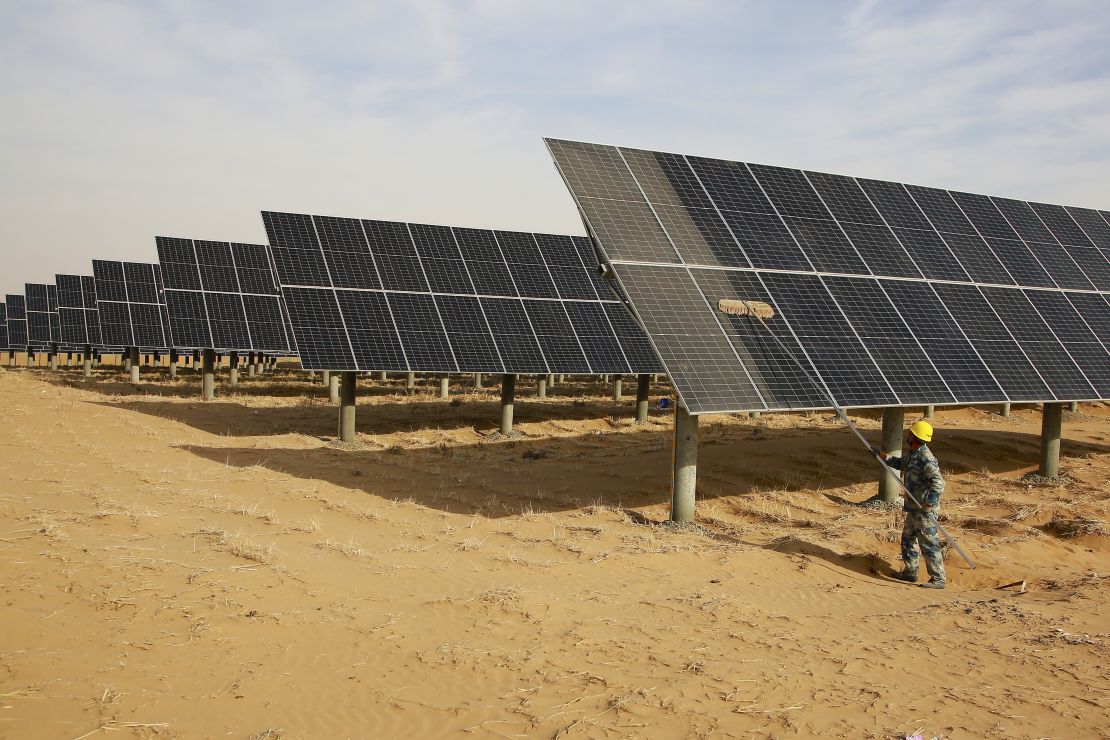
A worker cleans solar panels at a new energy base of Tengger Desert on December 9, 2023 in Zhongwei, Ningxia Hui Autonomous Region of China.

As the need to rapidly wean off planet-heating fossil fuels becomes increasingly urgent, there have been some clean energy bright spots around the world.

On Halloween, Portugal started a record-breaking streak. For more than six days straight, between October 31 to November 6, the nation of more than 10 million people relied solely on renewable energy sources — setting an exciting example for the rest of the world.

The year 2023 is on track to see the biggest increase in renewable energy capacity to date, according to the International Energy Agency.

China, the world’s biggest climate polluter, has made lightning advances in renewables, with the country set to shatter its wind and solar target five years early. A report published in June found that China’s solar capacity is now greater than the rest of the world’s nations combined, in a surge described by the report’s author, Global Energy Monitor, as “jaw-dropping.”

It can’t be ignored, however, that China also ramped up its coal production this year, turning to the fossil fuel as devastating heat waves increased energy demand for air conditioning and cooling, and as persistent drought in the country’s south impacted hydroelectric supplies, which are reliant on sufficient rainfall.

Hopes were raised that the country’s coal production will peak and come down soon, when China and the US in November announced they would resume cooperation on climate change, pledging a major ramp-up of renewable energy, specifically to replace fossil fuels.

A climate deal that targets fossil fuels

COP28 President Sultan al-Jaber, right, celebrates passing the global stocktake with United Nations Climate Chief Simon Stiell, left, and COP28 CEO Adnan Amin during a plenary session at the COP28 U.N. Climate Summit, Wednesday, Dec. 13, 2023, in Dubai, United Arab Emirates.

After more than two weeks of fraught negotiations, the COP28 climate summit in Dubai concluded in December with nearly 200 countries making an unprecedented commitment to move away from fossil fuels.

While the agreement fell short of requiring the world to phase out coal, oil and gas — which more than 100 countries had supported — it did call on countries to “contribute” to a “transition away from fossil fuels in energy systems.” This marked the first time that all fossil fuels, the main drivers of the climate crisis, were targeted in a COP agreement.

COP28 President Sultan Al Jaber, who presided over the negotiations, called the agreement “historic,” adding that the deal represented “a paradigm shift that has the potential to redefine our economies.”

How impactful this deal ultimately is will depend on what countries do next to implement it. Many experts warned of loopholes that could leave the door open to a continued expansion of fossil fuels.

But that a deal was struck at all on fossil fuels was widely welcomed seen as a breakthrough.

“We got people to do things they haven’t done before,” US climate envoy John Kerry told CNN’s Christiane Amanpour after the summit, describing it as a “historic success.”

Plummeting deforestation in Brazil

Aerial view of the city of Parauapebas surrounded by Amazon rainforest, in Para state, Brazil on May 17, 2023.

After years of soaring deforestation in the Brazilian Amazon, there was good progress this year in reducing forest destruction.

The Amazon is the world’s biggest rainforest and its protection is seen as vital to curbing climate change. It acts a carbon sink that sucks in planet-heating pollution from the atmosphere. When forests or trees are destroyed, they emit greenhouse gases. Deforestation and land degradation is responsible for at least one-tenth of the world’s carbon pollution.

Deforestation in Brazil fell by 22.3% in the 12 months through July, according to data from the national government, as President Luiz Ignácio Lula da Silva started to make progress on his pledge to rein in the rampant forest destruction that occurred under his predecessor, Jair Bolsonaro.

Marcio Astrini, head of advocacy group Climate Observatory, described it as an “impressive result” that “seals Brazil’s return to the climate agenda.”

Still, Brazil’s deforestation rate remained nearly twice that of its all-time low in 2012. Around 9,000 square kilometers of rainforest were destroyed in the period. There’s a long way to go to meet Lula’s pledge to reach zero deforestation by 2030.

The ozone layer is healing well

The Earth’s ozone layer is on track to recover completely within decades, a UN-backed panel of experts announced in January, as ozone-depleting chemicals are phased out across the world.

The ozone layer protects the planet from harmful ultraviolet rays, but since the 1980s, scientists have warned about a hole in this shield due to ozone-harming substances, including chlorofluorocarbons (CFCs), which were used widely in refrigerators, aerosols and solvents.

International cooperation has helped stem the damage. A deal known as the Montreal Protocol, which came into force in 1989, began the phase-out of CFCs. The ozone layer’s subsequent recovery has been hailed as one of the world’s greatest environmental achievements.

If global policies stay in place, the ozone layer is expected to recover to 1980 levels by 2040 for most of the world, the assessment found. For polar areas, the timeframe for recovery is longer: 2045 over the Arctic and 2066 over the Antarctic.

A study published in November, however, cast some doubt on this progress. The paper, published by Nature Communications, found that a hole in the ozone layer over the Antarctic “has not only remained large in area, but it has also become deeper throughout most of the Antarctic spring.” But some scientists were skeptical of the study’s findings, saying it relied on too short a time period to draw conclusions about the layer’s long-term health.

Electric vehicle sales surge

EV sales have surged to a record high in America this year.

The popularity of electric vehicles has surged this year, with American sales at an all-time high. People in China and Europe are snapping up EVs in large numbers as well.

Electric vehicles — which are better for the planet than gas and diesel-powered cars when they run on renewable energy sources — are key to decarbonizing road transport, which is responsible for around one-sixth of planet-heating pollution globally, according to the International Energy Agency.

Americans purchased 1 million fully electric vehicles in 2023, an annual record, according to a report from Bloomberg New Energy Finance.

Electric vehicles accounted for about 8% of all new vehicles sales in the US during the first half of 2023, according to the report. In China, EVs accounted for 19% of all vehicle sales, and worldwide, they made up 15% of new passenger vehicle sales.

EV sales in Europe were up 47% in the first nine months of 2023, according to data from the European Automobile Manufacturers Association (EAMA). However, car dealers have warned that sales are dropping off as consumers wait for cheaper models, expected in two to three years’ time.

CNN


In order to make your EV green-energy approved, you’ll need to charge it using a renewable energy source. Solar panels are one way to accomplish that.

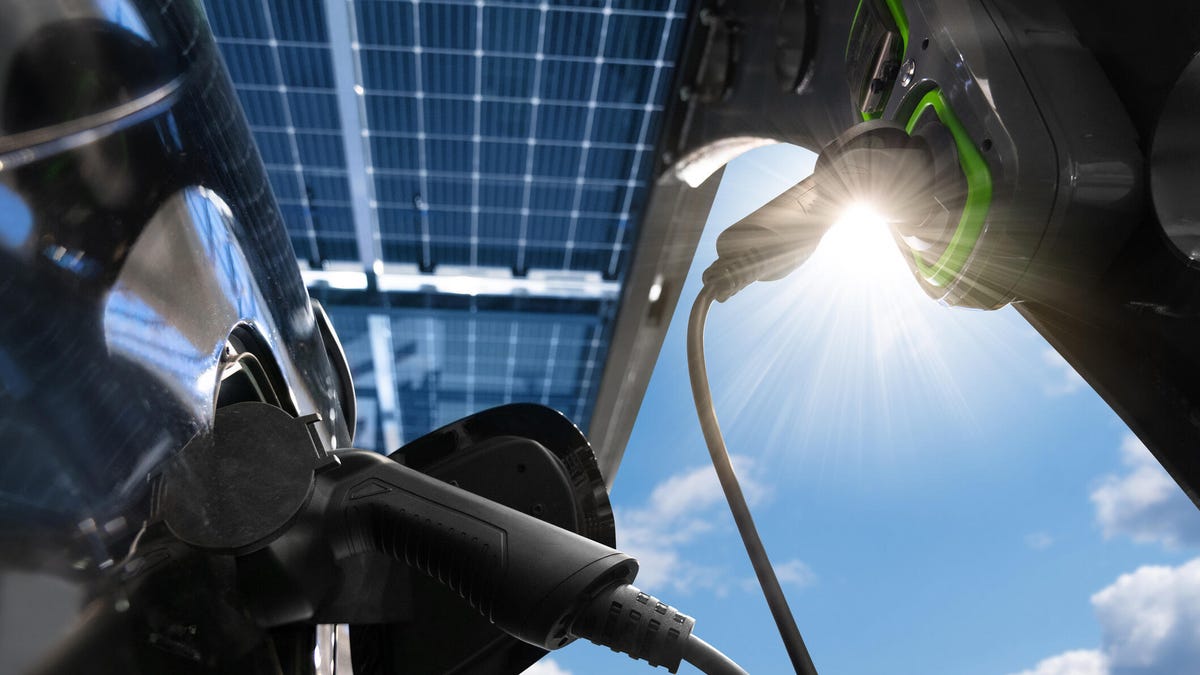
Close up view of an EV charging using a solar car port
Charging your electric car at home will only increase your electric usage unless you add another renewable energy source, such as solar panels, to offset it.

For the eco-conscious EV driver, an electric vehicle is only as clean and green as the source of electricity charging its battery.

That’s because EVs plugged into the grid can either be powered by “dirty” sources such as fossil fuels such as coal, or from “clean” renewable energy that comes from sources such as solar, hydro or wind power. With many utilities, it’s likely to be a mix of renewables and fossil fuels. The best way to ensure your EV is actually powered by renewable energy is to connect your home’s EV charger to a solar energy system or use a public charger also sourced by solar panels. 

With spiking gas and electric prices and an intensifying climate crisis, it’s no wonder the solar and electric vehicle industries are gaining in popularity each year.  Rooftop solar panel installations are breaking records, and US EV adoption is expected to accelerate — predicted to reach 40% of passenger car sales by 2030, according to the US Bureau of Labor and Statistics

Forget the statistics, it’s in plain sight and we can’t ignore it. EV charging stations are becoming the norm, automakers are making headlines as they invest in new EV technology, and rooftop solar panels are also becoming commonplace to see. 

Even with the upswing in EVs and home solar systems, switching from a combustion car to an electric vehicle, however, can be a complicated decision with considerations conventional car drivers don’t have to worry about, like installing a charger in your garage. Adding solar panels to the equation adds even more layers of complexity to an already significant investment.

Here’s what you need to know about powering your home and EV with solar panels and how many you’ll need if you do.  

Why use solar panels to charge an electric vehicle (EV)? 

There are some less obvious benefits to home solar charging in addition to watching free, clean electrons pulled from the sky streaming into your car’s battery. 

Most home EV chargers treat your car like any other appliance that needs to be plugged in and charged overnight. Actually, it’s more like a quite needy appliance that requires a particular current (DC) and lots of it as quickly as possible, which can mean operating at high voltage. 

All of this increases strain on the grid and can add a load to your home’s electrical system, especially if your wiring is older or in need of upgrading. In the worst cases of neglect or poor electrical work, it can even be dangerous. 

Using solar panels to charge an EV actually streamlines the charging process because both systems speak the same electrical language, in a way. 

As Wyldon Fishman, founder of the New York Solar Energy Society, explained, solar panels and electric vehicles both operate with direct current (DC), meaning there’s no need to install an inverter between your panels and EV, although a charge controller is still imperative to have in the circuit. DC can also run at lower, safer voltages. 

Relying on solar panels rather than the grid to charge your electric vehicle also means not having to worry about being stuck at home with a dead battery if the power goes out, especially if you opt to pair your panels with a battery or other solar storage. 

Home electricity scheme with battery energy storage system on modern house photovoltaic solar panels and rechargeable li-ion backup. Electric car charging on renewable smart power off-grid system.
A home’s energy set up could consist of solar panels, battery storage, inverter and an EV charger. Depending on the consumption, size, efficiency and how many panels you get, this equipment could accommodate all or some of this home energy production.  – Getty
How much energy is needed to charge your EV at home?

First, consider your goals for your solar charging system. Do you want to charge your car using your solar panelsand will you primarily be charging overnight? If so, you’re going to need to install a battery or other storage system. 

In most cases, you’re likely to have a solar system that’s hooked into the grid as well as your home, perhaps with a connected battery for emergency backup, or not. 

If this is your scenario, it could be helpful to know how much of your existing solar output the rest of your home is consuming. If you never pay a utility bill or your utility bill is primarily for nighttime or cloudy days (when your solar panels aren’t at work), this means your existing solar system is probably producing more than you need and the extra is being fed into the grid or a battery or both. Some of this excess energy could be used to charge your EV, meaning you will need fewer solar panels to drive a fully solar-powered car. 

Once you’ve got an idea of whether you’re running a solar surplus, the next step is determining how much additional demand an EV will add to your system. 

How many solar panels will I need to charge just my EV?

First, consider how much you typically drive in a day. Put simply, the more you drive, the more wattage you’re likely to need in panels. 

Here’s the steps to figuring out how your average daily energy needs to power an EV. 

Step 1. Determine how many kilowatt-hours your EV uses per mile. The EPA and US Department of Energy’s fueleconomy.gov site lists the estimated efficiency of all electric cars in kWh per 100 miles; simply divide by 100 for a per-mile estimate.

Step 2. Multiply your EV’s kWh/mi by the number of miles you anticipate you drive on an average day. (You can get your average daily miles by observing your driving habits for a few days or by dividing your annual observed mileage by 365). This gets you the total number of kilowatt-hours you’ll need to produce to power your daily driving.

Step 3. You can then divide the EVs needed kilowatt-hours by the number of peak sun hours you can expect to receive at your location each day. 

Step 4. The final figure should give you the size of your ideal EV-charging solar array in kilowatts.

Step 5To calculate the number of panels you’ll need, the wattage of the solar panel comes into play. The most efficient solar panel wattage can range from 370 to 465 watts. After you choose your best solar panel brand, convert the panel wattage of the panel to kilowatts by dividing by 1,000.

Step 6. Final math is to divide the EV kWh requirements by the solar panel efficiency in kWh to get the number of panels needed to charge the EV. 

The formula:
  1. kWh/mi for your EV x average miles driven in a day = total kWh production for the EV 
  2. Total kWh production needed for EV / local peak sun hours = size of ideal solar system (in kW)
  3. Convert the solar panel wattage of the brand of choice to kilowatts by dividing by 1,000. 
  4. EV production needed (in kWh per day) / panel efficiency (in kWh) = number of solar panels needed
Example math: 

Take the example of the Hyundai Ioniq 6, the most energy efficient electric sedan on the road today:

Step 1. According to fueleconomy.gov, it averages 24 kWh/100 mi or 0.24 kWh/mi

Step 2. We’ll also use the EPA’s average mileage estimate of 15,000 annual miles, which works out to around 41 miles per day

Step 3. 0.24 kWh/mi x 41 miles = 9.86 kWh daily power EV usage

Step 4. 9.86 kWh / 4 peak sun hours = 2.4 kW  (This is how much solar energy in kW you will need to charge your EV). 

Step 5. We will use a solar panel wattage of 410W, such as the Q.PEAK Duo Black from Qcells, to calculate the number of panels needed for the Hyundai Ioniq 6. Convert the 410W to kilowatts by dividing by 1,000 (0.41 kW). 

Step 6. EV production needed to charge the Hyundai Ioniq 6 (in kWh per day) / energy needed per Q.PEAK Qcells solar panel) = number of solar panels needed. 2.4 kW / 0.41 kW = 5.85 solar panels

In this example, six Qcells solar panels are needed to accommodate the energy needs of the Hyundai Ioniq 6 with average driving habits. Six Qcells solar panels don’t accommodate the rest of the home’s energy consumption. 

Meanwhile, at the other extreme, dropping the Ford F-150 Lightning‘s 48 kWh/100 mi into the same formula yields a daily energy use of 19.68 kWh and a 4.9 kW solar requirement, doubling the Qcells solar panels needed to 12 panels. 

If that’s too much math, Fishman simply recommends putting around  eight to 12 solar modules on a canopy that you can use as a solar carport

“It’s about 2.5 kilowatts that you need for a canopy. You might go a little more, but that’s all you need,” Fishman said.

We’ve seen others in the industry put the figure at closer to 3 kW, but if you’re unsure, you can run through all the math for your situation. 

How many solar panels will I need to power my whole home?

This basically comes down to figuring out your home’s total energy needs and then designing a solar array that can meet those needs. 

To calculate how many solar panels your home will needDesired energy production (kW) / Solar panel wattage (kW) = Number of solar panels needed

There’s a lot of things to consider to determine both sides of this equation, and CNET goes into further detail on the subject here. Adding EV chargers to your home simply means adding more energy use to both sides of the equation. 

Most reputable solar companies will help you work out your energy needs and propose a solution that they will surely be willing to install for you. But doing the math on your own as well can help you make the most informed choice when it comes to picking an installer and assisting in designing a system that meets your needs best. 

Don’t forget that there are other things you might want to do before even beginning to consider solar for your home. Making energy efficiency improvements can go a long way toward shrinking your overall needs and thereby shrinking the size of the solar system you require.  

Is it worth it to add more solar panels to accommodate an EV?

Adding more panels to your existing solar system or to one that you’re planning is one way to power all your home’s energy needs, including your EV. But it isn’t necessarily the only way to charge your EV.  You can also build a stand-alone off-grid system that’s dedicated to just your car. 

Fishman recommends building a carport topped with solar panels at just the right tilt to get a good amount of sun on average, based on your location on the globe. 

“A carport is fixed at latitude,” she explained. “So if you’re at 42 degrees above the Equator, then your tilt for your solar modules is 42 degrees.”

Which comes first: A solar panel or EV purchase?

If you’re dedicated to renewable energy and kicking fossil fuels to the curb, it makes sense to have your solar system all setup before you spring for the EV so you never have to worry about charging your car from dirtier energy sources that mix with renewables on the grid. 

But the reality for many people will be that an EV and home solar energy are two very costly investments. A car or EV tends to be a personal purchase that we spend a lot of time in, whereas energy is a readily available commodity that we tend to think about less. So it wouldn’t be surprising for people to prioritize a flashy new EV over adding solar panels to a home that already has access to electricity via the grid. 

Ultimately, it comes down to your priorities and your situation. Maybe your utility is good about incorporating solar into its energy mix via its own solar farm systemsrenewable energy credits or offering a community solar program. If so, you might have fewer qualms with plugging in your car at night, no matter how many panels are on the roof.  

CNET

Dear Editor,

Jamaica’s energy landscape stands at a crossroads as nuclear power is being considered.

In response to the Jamaican Government’s intention to explore nuclear energy, the expressed concerns of authors like Trevor Noel Blair and Ambassador Byron Blake, Jamaica’s former deputy permanent representative to the United Nations, underscore the potential drawbacks.

Blair elucidates issues concerning radioactive waste disposal, water consumption, and the risk of environmental disasters, while Blake highlights the challenge of finding suitable locations for nuclear power plants and emphasizes the importance of thorough consultation before making irreversible commitments.

Conversely, other contributors, like Haile Dennis, advocate for the potential benefits of nuclear power, focus on the safe management of radioactive waste, water usage, and the potential for reliable energy generation. Their opinions underscore the need for informed decision-making in the pursuit of a sustainable and resilient energy future for Jamaica.

Reforming the Electricity Act of 1995 is still essential. To foster renewable energy adoption, it is plausible to make solar panels and alternative energy generation methods economically more accessible, if not free. This move can ignite a green energy revolution. Simultaneously, registering electricity generation with the Government and introducing sensible taxation mechanisms ensure fair distribution of costs and benefits among Jamaican citizens.

Furthermore, decentralisation is the way forward. Removing houses from the grid and encouraging independent power generation aligns with the growing power needs of electric vehicles (EVs), which have become more commonplace.

A substantial reduction in the oil bill is on the horizon. As battery-swapping stations powered by alternative energy emerge, the transition to cleaner transportation is accelerated. For a sustainable future we recommend a bold step: make all vehicles imported after 2025 electric. This approach complements the evolving green energy grid, aligning with global sustainability goals.

Nuclear energy should be approached with caution, addressing the concerns raised by critics. The alternative is to transform Jamaica’s energy landscape by making renewable energy accessible, promoting decentralised energy generation, reducing the oil bill, and spearheading the transition to electric vehicles. This holistic strategy ensures a more sustainable and independent energy future for Jamaica.

L H Deer

Physics and integrated science teacher

Tivoli Gardens High School

Jamaica Observer