By Deidre Wedderburn (deidre@solarbuzzjamaica.com)

Client Relations Manager, Solar Buzz Jamaica 

Focused on building long-term partnerships and delivering a high-quality client experience
 

In periods of global stability, energy decisions are often guided by convenience, incremental savings, or long-term environmental consideration. 

Moments defined by geopolitical tension, supply chain disruption, and rising inflationary pressures elevate energy choices into matters of financial strategy and resilience. 

Global Pressures Reshaping Energy Costs

Geopolitical Tensions

The conflict between the United States and Iran, including significant disruptions to the Strait of Hormuz, drove sustained increases in oil, gasoline, and related energy costs in the months preceding a recently announced two-week ceasefire. While this development offers a degree of near-term relief, it does not represent a structural resolution. The cost increases it has already set in motion, including those now reflected in Jamaican electricity bills, remain firmly in place.

The Strait of Hormuz is a narrow stretch of water in the Persian Gulf through which roughly one in every five barrels of oil on earth must pass, and it sits at the geographic centre of this tension. 

Each escalation reprices crude, and repriced crude transmits directly into electricity costs, shipping, and the price of imported goods. Since the conflict intensified, global oil prices have risen from approximately US$60 per barrel to near US$100 per barrel, a shift with immediate implications for energy-dependent economies like Jamaica.

Rising Electricity Rates

For Jamaica, where electricity generation remains heavily tied to imported fuels, the effect is both immediate and direct.

The Jamaica Public Service Company Limited (JPSCo) has already communicated to customers that global fuel prices are rising sharply due to the conflict, and these increases will be reflected in the fuel charge on electricity bills.

With roughly 70 percent  of the island’s power generated from liquefied natural gas (LNG) and a further 20 percent from heavy fuel oil and diesel, international price increases translate directly into higher monthly costs for every household and business on the grid. 

Local business leaders, including Seprod Group CEO Richard Pandohie, have cautioned that the same global instability is likely to drive food price increases in the coming weeks, adding further weight to a cost-of-living environment that leaves little room for avoidable expense.

A Global Shift Toward Alternatives

Against this backdrop, consumer behaviour is shifting decisively toward alternatives. Higher fuel and electricity costs are accelerating interest in both electric vehicles and solar energy systems as people seek to hedge against sustained volatility.

Early indicators from across Asia, the UK, and the United States illustrate the scale of this shift. Dealerships for Chinese manufacturers such as BYD in Manila have reported significant increases in orders and showroom traffic since the conflict intensified. 

In the UK, electric car sales reached a record high in March, rising to 86,120 units according to the Society of Motor Manufacturers & Traders, with plug-in hybrids posting a 47% gain. As Albert Park, chief economist of the Asian Development Bank, observed, “Higher oil prices always help the transition to electric vehicles. It creates economic incentives to accelerate the green transition.”

The same dynamic is playing out strongly in Jamaica, where rising electricity rates have prompted more homeowners and businesses to view solar not merely as an environmentally responsible choice, but as a prudent financial hedge.

This surge in demand, however, introduces a dynamic that is critical to understand. The very forces driving people toward solar are simultaneously beginning to reshape the economics of accessing it.

The Collision of Surging Demand and Rising Costs

China manufactures approximately 80 percent of the world’s solar panels and a dominant share of lithium-ion battery technology. Effective April 1, 2026, it eliminated the value-added tax (VAT) export rebate on photovoltaic products, with a reduction on lithium batteries from 9 percent to 6 percent.  For years, these rebates underpinned a decade of falling panel prices across global markets. That is no longer the case.

This policy adjustment, alongside phased reductions in battery storage incentives, is already exerting upward pressure on module and component prices worldwide.

Analysts have projected near-term price increases of 9 percent to 15 percent across several markets. When combined with the global surge in demand, the result is a classic supply-demand pincer, with more buyers competing at higher price points for equipment that had historically only trended downward. 

The Narrowing Window

Against this global backdrop, Jamaica’s structural advantages remain firmly intact. The country’s exceptional solar irradiance, persistently high retail electricity rates, and net-billing arrangements, which allows system owners to receive credit for surplus electricity returned to the grid, collectively amplify the financial return on every unit of self-generated power.

Layered onto this is Jamaica’s residential solar photovoltaic tax credit, available to individual taxpayers for systems installed at primary residences since January 1, 2023, with a maximum credit of J$1.2 million.

For qualified homeowners, this incentive functions as a meaningful fiscal lever that, in combination with these underlying conditions, compresses payback periods to just a few years, after which the electricity generated by a well-designed system is effectively free and insulated from fuel-price volatility.

The same forces that make solar increasingly attractive are, however, also reshaping the supply landscape.

Rising electricity rates and growing awareness of energy vulnerability are driving a pronounced acceleration in demand globally. Simultaneously, adjustments in manufacturing economics, most notably the scaling back of Chinese export rebates that have underpinned solar pricing for over a decade, are beginning to exert upward pressure on system costs and installation timelines. What had been a sustained buyer’s market is quietly, but measurably, shifting.

This dynamic is compressing the window between current grid costs and solar investment costs. While the cost of going solar is rising, the cost of staying on the grid is rising as well. 

The critical difference is that solar represents a one-time investment that fixes your energy costs for the life of the system. Staying fully on the grid means absorbing every future increase with no ceiling in sight.

The window where solar remains the clearly smarter financial move is still open, even as it narrows.

The Time to Act is Now 

As electricity rates continue their upward trajectory and demand for solar systems accelerates globally, the likelihood of higher installation costs and extended lead times increases correspondingly. Each billing cycle that passes under rising grid tariffs represents continued exposure to precisely the volatility solar is designed to mitigate.

Acting now enables the locking in of current pricing before further market adjustments take hold.

Acting now enables the locking in of current pricing before further market adjustments take hold, the near-term realisation of savings, and the establishment of a degree of energy independence from increasingly unpredictable external cost drivers.

The financial structuring of a well-designed solar solution reinforces this position. When properly designed, a solar system can achieve a cash-positive outcome from inception, where monthly financing obligations align with, or remain below existing electricity expenditure. 

At Solar Buzz, this outcome is deliberately engineered. Every client engagement begins with a detailed, consultative review tailored to the home or business, providing full visibility into the required investment, timelines, projected savings, and expected payback. 

This approach ensures that the transition to solar introduces no additional financial burden, which is especially critical for clients pursuing solar financing. Instead, it reflects a disciplined reallocation of an existing expense toward the acquisition of a long-term asset. 

As electricity rates continue to rise, the financial advantage of this structure strengthens, with savings increasing over time.

Families and businesses that act decisively today are locking in stability ahead of the dual pressures of rising global demand and tightening export economics. 

There is no longer a question of whether solar is affordable. The more apposite question is whether continued exposure to rising, variable electricity costs, with no ceiling and no hedge, remains strategically justifiable.

The Window Remains Open

What is unfolding is not a temporary disturbance but a structural recalibration of the global energy landscape. Fuel markets are demonstrating increased sensitivity to geopolitical developments, supply chains are exhibiting reduced elasticity, and cost volatility is becoming more deeply embedded across energy-dependent sectors. For Jamaica, these dynamics are amplified by a structural dependence on imported fuel.

The recently announced ceasefire is a pause, not a resolution.  It is not a settlement, not a restoration of trust, and not a guarantee of stability. It is not peace earned, but a negotiated delay. 

The underlying conditions that drove oil from US$60 to near US$100 per barrel remain unresolved, and the cost increases already embedded in electricity bills, supply chains, and consumer prices do not reverse on the strength of a two-week pause. For a country like Jamaica whose energy security rests on external flows, a pause is not safety; it is time borrowed.

The window for securing solar under current conditions remains open. Those who act within it will do so at a point where the balance between system cost and avoided electricity expense remains distinctly favourable.

We invite you to contact Solar Buzz Jamaica today. Speak with one of our energy consultants and let us walk you through the numbers specific to your home or business. We will show you exactly what your transition would look like and how quickly your investment can pay for itself under current market conditions.

The window is open. Let us help you walk through it.
This article reflects market conditions as of early April 2026. Incentives and pricing are subject to regulatory and supplier confirmation.
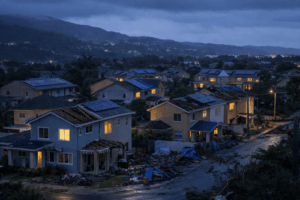
 

Australia’s energy regulator will cap key elements of electricity bills for the first time while introducing incentives to use power when solar generation is flooding the grid, as the Albanese government moves to ease political pressure over soaring household energy costs.

The reforms will be made through the Default Market Offer – the benchmark electricity price set by the Australian Energy Regulator for households and small businesses in NSW, South Australia and southeast Queensland.

The changes will cap individual tariff components such as daily supply charges and peak electricity rates, tightening a system that previously allowed retailers broad flexibility in how tariffs were structured provided the overall annual benchmark price was met.

The regulator had flagged the changes without specifics to the Default Market Offer.

The most eye-catching element of the reforms is the introduction of a new ‘Solar Sharer Offer’ – which will provide households with a daily window of free electricity in the middle of the day when solar power is abundant.

Under the proposal, retailers with more than 1000 customers will be required to make the opt-in tariff available, offering three hours of free electricity during daylight hours – between 11am and 2pm in NSW and southeast Queensland, and from noon to 3pm in South Australia.

The free electricity will be capped at roughly the amount of power used in a day by a five-person household, after which normal regulated tariffs will apply.

The policy is designed to encourage households to run energy-hungry appliances – such as washing machines, dishwashers or electric vehicle chargers – in the middle of the day when solar generation is flooding the grid and wholesale power prices are often at their lowest.

The changes come as electricity costs remain a politically charged issue after households endured sharp increases in power bills following the global energy shock triggered by Russia’s invasion of Ukraine in 2022.

Wholesale electricity prices surged as global gas and coal markets tightened, flowing through to retail power bills across Australia. The spike left a record number of households struggling to pay their electricity bills and forced governments to introduce a range of cost-of-living measures aimed at cushioning the blow for consumers.

The surge in electricity prices also became a significant contributor to Australia’s inflation spike, prompting repeated warnings from policymakers about the role energy costs were playing in pushing up household living expenses.

Against that backdrop, Labor has increasingly sought to point to retailer pricing behaviour as it tries to demonstrate action on energy bills.

Retailers, however, argue thebiggest driver of rising electricity costs is the expense of expanding networks and building new generation needed to support the government’s rapid shift toward renewable energy.

The AER says the latest reforms are designed to stop retailers shifting costs into particular parts of a power bill – such as sharply higher supply charges or expensive peak-time electricity rates – while still technically complying with the overall annual benchmark price.

Before the reforms, the Default Market Offer operated primarily as a cap on the total annual bill rather than the structure of the tariff itself. While the regulator set the benchmark price for a typical customer, retailers could decide how the individual charges – including supply fees and electricity usage rates – were arranged to reach that total.

The new measures form part of a broader redesign of the benchmark price following reforms announced by the federal government in late 2025 aimed at strengthening the Default Market Offer as a consumer safeguard while adapting the electricity system to Australia’s rapidly growing solar generation.
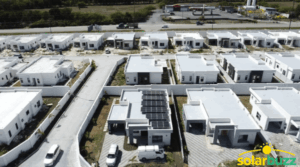
Alongside the tariff limits, the regulator will also publish two benchmark prices for households in each distribution zone for the first time – one based on a flat electricity rate and another based on time-of-use tariffs – giving consumers a clearer way to compare electricity plans as retailers increasingly charge different prices depending on when power is used.

The latest initiatives come as energy policymakers have increasingly focused on the challenge created by Australia’s rooftop solar boom. While solar power has helped push down electricity prices during daylight hours, demand surges in the evening as people return home and solar generation fades, putting pressure on the grid and driving the need for additional generation and network investment.

Shifting more electricity use into the middle of the day could help smooth those peaks and reduce the amount of expensive infrastructure needed to keep the system running.

The Default Market Offer itself is designed as a safety net for customers who do not shop around for better electricity deals, while also acting as the reference price against which retailers advertise discounts on market offers.

Despite its role as the benchmark price, relatively few customers remain on the standing offer, with fewer than 10 per cent of households and about 18 per cent of small businesses using it.

The regulator will release a draft determination next week before finalising the benchmark price in May following consultation with retailers, consumer groups and other stakeholders. The new price will take effect from July 1.

The Australian

Agnes Chan is part of a stealth solar revolution bubbling up in the US. The retired teacher has a tiny solar system propped up in her backyard in Berkeley, California, and plugged into a regular outlet. It costs around $2,000, shaves about $50 off her monthly bills, and she’s evangelical about it. “I have already recommended it many times,” she said.

Originally, Chan had wanted a full rooftop solar system, but the $20,000-plus price tag was unaffordable. Plug-in solar offered a cheaper, portable and more flexible option: It was incredibly easy to set up, would help keep her 100-year-old house toasty this winter and would pay for itself in three years.

Chan is one of a growing number of Americans turning to plug-in solar — also called “balcony solar” as it’s often slung over balconies — to help bring down soaring energy bills. Even as the Trump administration seeks to squash renewable energy, the interest is spurring action in nearly 30 states that are now considering legislation to make these cheap, small systems more accessible.

There are hurdles, however. Plug-in solar currently exists in a legal “gray area,” said Cora Stryker, co-founder of Bright Saver, a non-profit that advocates for balcony solar. Almost every state requires an agreement with the local utility company, a process that can take months and add costs.

That’s why people are going stealth and hooking up “guerilla solar” systems without telling their utility, Stryker said.

The beauty of plug-in solar is its simplicity: People pick up cheap, small solar panels, hang them almost anywhere without the need for an electrician, plug them into a regular outlet and start generating electricity — it’s essentially a DIY power plant. The only bit of special kit required is a microinverter, which allows the energy generated from the sun to feed directly into household electricity.

Germany is the pioneer, with 1.23 million balcony systems installed, according to the country’s Federal Network Agency. The real number may be as high as 4 million, as many systems are believed to be unregistered, according to a 2025 report from Solar Power Europe.

Regulations in that country have facilitated the boom, including by effectively preventing landlords blocking tenants from installing balcony solar. For Germans, it’s as easy as popping into Ikea to buy a panel, with prices starting at around $235. Data suggests plug-in solar can cut energy bills by 10% to 20%.

When Utah Republican State Representative Ray Ward first came across news articles about what was happening in Germany, it got his brain whirring. The more he read, the more it appealed. “You’re like, oh my gosh, this is so simple compared to what we’re doing and then it makes you wonder why you can’t have that here.”

So, he did something no other state had done. He sponsored a bill to allow small plug-in systems to be used by Utah residents without needing agreements with utility companies.

“People always want to tell you: ‘well that’s just impossible, that’s dangerous, you’d better not do that it will burn the building down’,” Ward said. He just pointed to Germany’s yearslong record, and told them: “It hasn’t burnt down.”

Ward’s arguments worked; the bill passed last year. What was astonishing was that it passed unanimously, said Jennifer Eden, a senior associate at the non-profit Utah Clean Energy. “The amount of buzz and interest it has created is fairly remarkable.”

The appeal of balcony solar is clear for those on the left, who want clean energy, and for those on the right, who want to meet their needs without government interference, Stryker said. “It’s almost a choose your own adventure of what narrative will appeal to your constituency,” she added.

Concerns about rising oil and gas prices due to conflict in the Middle East, may add another reason for both sides of the aisle to be interested.

Utah’s move has set off a legislative wave. At least 28 states, including Washington, California, Oklahoma and South Carolina, have draft bills in the works that would smooth the way to a much broader uptake.

But utility agreements are not the only hurdle. Another key issue is safety standards. While the constituent parts of plug-in solar — the panels and the microinverter — are certified for safety, there isn’t a certification for the system as a whole.

Concerns include the risk of overloading home circuits, causing wires to overheat and catch fire, and potential shock hazards for utility workers if devices unexpectedly export power to the grid. Germany has introduced measures to mitigate these risks, but the market is much newer in the US, which also operates a different electrical system.

Some utilities and trade groups have opposed draft bills. In Washington, Puget Sound Energy and the Association of Washington Business both testified against the state’s draft plug-in solar bill, citing safety concerns. There is a lack of “clear product safety certification for how these devices perform in real apartment buildings,” said AWB’s government affairs director Peter Godlewski.

But neither organization said they were opposed in principle to balcony solar. “If we’re able to address these issues, we could get to supporting the bill,” said a spokesperson for Puget Sound Energy.

Each safety risk “can be mitigated with engineered solutions, but products with those safety mitigations will differ from those presently on the market,” said Ken Boyce, a vice president at UL Solutions, a company that develops safety standards. In January, UL Solutions released a certification framework for plug-in solar.

Advocates hope final safety standards won’t add extra costs to those wanting plug in solar, for example by requiring professional installation.

“I am not trying to say we just don’t need a safety standard … but it’s not an electrically complicated product,” Ward said. He believes opposition lies in unfamiliarity with these tiny systems, which are very different to more complex rooftop solar systems.

There aren’t official statistics on how many US households have balcony solar, but there is evidence of their popularity. Texas-based company CraftStrom sells plug-in solar in all 50 states and sold 1,200 units last year. It advises customers to notify their utility but, as their kits don’t export any power to the grid, interconnection agreements typically aren’t needed, said Stephan Scherer, a company founder.

Balcony solar will only ever cover a fraction of American’s energy needs; these systems are small — that’s their whole point. But Stryker believes they can both tackle soaring bills and show people the benefits of renewable energy. “It is real gateway to clean energy awareness,” she said.

As proponents wait for regulations to catch up, they say the numbers of early adopters like Chan will continue to grow. “There are people who are savvy and adventurous, who are going to figure out ways to make this work,” said Utah Clean Energy’s Eden.

Ward thinks the clamor for balcony solar will only get louder. “It’s so easy to understand and people know they want it,” Ward said. “People are saying well why can’t I have this?”

CNN

From the CEO’s Desk 

As Jamaica navigates an era defined by climate volatility, energy insecurity, and evolving patterns of habitation, the definition of home demands renewed examination. 

Beyond questions of access and affordability, contemporary housing must now be evaluated by its capacity to endure disruption, sustain essential services, and safeguard human dignity in moments of national distress.

This article reflects Solar Buzz’s contribution to a broader, ongoing discourse among housing, energy, and development stakeholders on the future of Jamaican home design and ownership. It explores the imperative of embedding energy resilience and climate-responsive design into the foundations of housing policy and practice, and considers how these principles must inform the next chapter of Jamaica’s housing legacy.

We are pleased to share these perspectives with our community as part of our continued commitment to advancing resilient, sustainable energy solutions.

In celebration of the National Housing Trust’s (NHT) 50th anniversary, Solar Buzz was invited to contribute to the Trust’s special Home, Hope & Heritage edition of Home & A Way magazine. Drawing on his expertise in solar energy, CEO Jason Robinson highlights how resilient design can strengthen Jamaican homes in the face of escalating climate challenges. We are proud to present this contribution as a feature of our company newsletter.

“If the next fifty years of Jamaican housing are to truly serve our people, resilience must be built in, not added on.”

As Jamaica marks the National Housing Trust’s (NHT) landmark 50th anniversary, the special “Home, Hope & Heritage” edition of the Trust’s Home & A Way  invites us to reflect on what defines a Jamaican home in the 21st century. 

For decades, our national housing conversation has rightly focused on access, affordability, and ownership. Today, that conversation must expand to include energy resilience where homes are designed not only to shelter families, but to withstand disruption, maintain essential services, and protect livelihoods when the grid falters and storms test our infrastructure.

Against the backdrop of intensifying climate challenges and the devastating passage of Hurricane Melissa, which left billions of dollars in damage and widespread power outages in its wake, the case for resilient housing has never been clearer. Energy resilience is now an immediate national priority.

From Shelter to Security: Redefining the Jamaican Home

Housing stakeholders across the value chain such as developers, financiers and homeowners must now embrace energy independence through solar power paired with battery storage.

Developers have a critical role to play by integrating these systems directly into housing designs, positioning power resilience not as a luxury upgrade, but as a core feature of modern Jamaican homes. 

Homeowners, in turn, must ensure that their solar systems are professionally designed and installed in full compliance with Jamaica’s electrical codes. Proper engineering, certified installation, and adherence to standards are essential for safety, optimal performance, and long-term resilience.

A home in Jamaica is no longer defined solely by walls and roofing; it is defined by its ability to function as a self-supporting system sustaining stability, safety, and everyday living even when the national grid fails.

Reimagining Home through Financing and Design

Resilient design must be matched by accessible financing. This is where the NHT’s legacy becomes especially relevant. The National Housing Trust has long set the benchmark for accessible, affordable home ownership through attractive loan terms including support for solar adoption. 
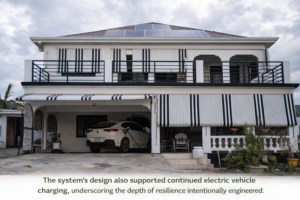
At this pivotal moment, the NHT’s leadership offers a powerful model for the wider financial sector. Commercial banks and lending institutions can follow the NHT’s lead by introducing innovative  financing for solar and battery storage with attractive loan terms. 

When energy resilience is embedded into housing finance at the point of purchase or construction, homeowners benefit immediately from reduced electricity costs, increased energy security and the stability of one less monthly bill. This approach not only empowers families, but strengthens our communities and reduces national vulnerability during climate-related disruptions.

Reimagining Home Post Hurricane Melissa

The visceral divide between Jamaican households after Hurricane Melissa was unmistakable.

Families with reliable solar systems backed by battery storage were able to keep food refrigerated, preserve life-saving medication, maintain communication, and in some cases support remote work or online learning for their children. 

Meanwhile, households without power grappled with prolonged outages, financial strain, and displacement. This contrast redefined the Jamaican home as not just a place of comfort but a bastion of self-reliance.
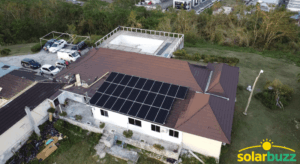
Energy independence has now evolved from a lifestyle choice or environmental preference into an indispensable safeguard for homes and family well-being. 

Solar systems paired with battery storage transform homes into self-supporting ecosystems where power, comfort, and normalcy can be maintained even when the national grid fails. 

Reimagining Homes in Jamaica for Resilient Design

Hurricane Melissa provided critical real-world insight, reinforcing the need for Jamaican homeowners to rethink and embrace resilient design. Roof type, structural integrity, and installation methodology emerged as central to energy resilience.

Standing seam metal roofs and concrete slab roofs performed particularly well in high-wind zones and have proven to be ideal foundations for roof-mounted solar systems in Jamaica when wind loading is properly engineered. These roof types offer superior strength, reduced uplift risk, and greater long-term durability when paired with professionally designed solar mounting systems.

The storm reinforced a vital truth that no solar system can outperform the roof it sits on. Annual roof inspections, proper maintenance, and structural assessments are now essential components of resilient homeownership. 

Building Resilience into Jamaica’s Housing Legacy

As the National Housing Trust commemorates its 50th anniversary, the opportunity before us is clear. Climate-conscious architecture that integrates renewable energy and battery storage must become a defining feature of Jamaica’s next housing chapter – not only to reduce costs, but to protect lives, livelihoods, and dignity in an era of intensifying climate threats.

The NHT’s half-century legacy of expanding homeownership and affordability has laid a strong foundation for nation-building. Now, Jamaican housing must evolve to mirror that legacy by prioritising energy resilience as an integral part of home design and ownership.

By embedding solar photovoltaic (PV) systems with battery storage, alongside resilient designs such as engineered metal roofing suited to Jamaica’s high-wind zone, into both new and existing developments, stakeholders can redefine the Jamaican home as a fortress of self-reliance. 

Developers must lead by making these features standard rather than optional. Financiers, inspired by the NHT’s attractive loan terms, should innovate green financing products that bundle resilience from day one.

Homeowners, supported by professional installation standards and compliance incentives, can embrace this shift with confidence knowing it delivers immediate savings and long-term security.

The NHT’s golden milestone reminds us that accessible housing has always powered Jamaican dreams.

If the next fifty years of housing are to truly serve the people of Jamaica, resilience must be built in, not added on. By reimagining how we design, finance, and experience home, Jamaica can lead the way in creating communities that endure, adapt, and thrive.

Solar met the majority of electricity demand between 9am and 6pm in the past week as much of the country cranked air conditioners

Australia’s power grid is changing rapidly – so rapidly that it can feel difficult to keep up.

This week, as an oppressive heatwave in the country’s south-east rewrote temperature records, there was also plenty of evidence demonstrating just how fast long-held assumptions about the electricity system are being overturned.

A significant part of the change is due to the astonishing rise of solar power, and the extent to which it is squashing coal generation. The grid is now operating in a way that many people considered unimaginable, and maybe impossible, not that long ago.

Back then, some commentators claimed the grid would not be able to function with more than 10% – and definitely not more than 20% – electricity coming from solar and wind.

Those predictions look foolish now.

Over the past seven days, solar provided 30% of all electricity in the country’s main grid, which supplies the five eastern states and the ACT. That’s across day and night.

If you narrow the calculation to consider just when the sun is out, the numbers are even more striking. Solar met 59% of electricity demand between 9am and 6pm. More than half of this – 37.6% of the total – was from small-scale systems spread across about 4m roofs. The rest was from large-scale solar farms.

Dylan McConnell, a senior research associate at the University of New South Wales, says between 12pm and 1pm solar output peaked at 67% of consumption. It was more than 70% in New South Wales and South Australia.

Coal-fired power, the historic backbone of the grid that once supplied nearly 90% of power, could not compete. Solar energy is incredibly cheap. It costs much more to burn coal. It meant the country’s ageing coal fleet was reduced to filling in gaps, kicking in barely a quarter of the electricity used over lunchtime.

That changed as the sun set, when the grid leant much more heavily on coal, with notable support from wind, hydro and batteries and gas.

The system still needs the existing dirty and often inefficient power plants that burn black and brown coal and emit significant amounts of climate pollution to function. There are significant challenges that need to be overcome before all coal plants can be shut, including building a fleet of synchronous condensers and other spinning devices needed to maintain grid security.

But an often overlooked point is that the grid is now just as reliant on renewable energy as it is coal. Each provides nearly half of the electricity that keeps our homes, businesses and, increasingly, cars running across the year.

In parts of the year, renewables are now ahead. The Australian Energy Market Operator this week described the last three months of 2025 as a “landmark moment”, with renewables’ share in the quarter rising beyond 50% for the first time.

It coincided with a 44% fall in wholesale electricity prices compared with the same period in 2024. Just as notably, output from batteries – which will be needed on a far greater scale as coal shuts – tripled in just a year.

It’s worth remembering how quickly this has changed. Five years ago renewables provided about 26% of generation. A decade ago it was less than 15%, with solar on less than 2%.

McConnell says one of the most remarkable things this week was how well the system coped as temperatures in parts of Melbourne pushed north of 45C and demand for electricity skyrocketed as people ran air conditioners at full bore. These sorts of conditions are often a cue for warnings of blackouts or load shedding.

Not this time.

“We had a little bit of volatility in the evening, but not much. That’s quite extraordinary for a system during peak demand,” McConnell says. “They are the days when the system is under stress. Things could have gone wrong, but they didn’t. There were really very few issues.”

Australia is in a slightly strange moment on renewable energy. From one perspective, it is embracing renewables, and solar in particular, what by any measure is a historic pace. From another, investment in new developments may not be happening fast enough to meet climate targets, or to ensure there is enough replacement capacity in place as old and failing coal plants close.

The reality is that both are true.

The transition being attempted is huge, more needs to be done, and there may be difficult moments ahead during a rapid shift to a near 100% renewable grid. Some actors – the Queensland LNP government, for example – are doing their best to prevent it.

But change is happening, and working. That’s no small thing.

The Guardian

Nearly two dozen states are weighing plug-in solar systems.

For years, many Europeans have enjoyed what Americans can’t have. Balcony solar has taken off there, while American homes and apartments have been left in the dark.

But that may be changing: California recently introduced legislation that would legalize installing cheap DIY solar systems to protect against blackouts and help with affordability. It’s not the only state, either.

As electricity prices soar and rooftop solar subsidies vanish, some US renters and homeowners are surreptitiously installing solar panels on balconies and backyards without their utility’s permission. Legislation recently introduced in nearly two dozen states would legalize “plug-in solar” systems, jumpstarting a nascent market for an affordable source of renewable energy.

Also called balcony solar, such systems usually comprise two to four solar panels that are plugged into wall outlets. They typically cost about $2,000 or more and generate enough electricity to power a refrigerator, electronics and lights, potentially shaving several hundred dollars a year from utility bills. Some plug-in solar systems come with batteries to store power for use during peak demand when electricity rates spike and when storms or heat waves knock out the grid.

Millions of balcony solar systems have been deployed in countries like Germany, which regulates the technology. But only about 5,000 have been installed in the US, according to advocates, most without utility authorization. That’s because plug-in solar has remained in the shadows due to a lack of safety standards and often costly requirements imposed by utilities, but that’s changing. Utah in 2025 enacted a law allowing plug-in solar without utility approval and other states are considering similar legislation, including New York and California, the nation’s largest solar market.

“The impact of California passing legislation would be huge and will get manufacturers to come into the market,” said Kevin Chou, cofounder and executive director of Bright Saver, a Bay Area nonprofit that sells do-it-yourself plug-in solar systems and has pushed to legalize the technology.

Under the legislation introduced in January in California, residents could install plug-in solar systems without utility authorization. But those systems couldn’t generate more than 1.2 kilowatts of electricity and must be certified by a nationally recognized testing lab. Legislation in other states contains siBmilar requirements.

Utah’s Republican-dominated legislature unanimously approved a plug-in solar bill in 2025, and the state’s Republican governor signed it into law. Although pro-renewable energy Democrats hold a supermajority in the California legislature, the bill introduced by state Senator Scott Wiener, who is running to replace US Representative Nancy Pelosi, is likely to face opposition from some landlords, homeowners associations and utilities, according to Chou.

Utilities have expressed concern about plug-in solar’s impact on the ability to balance the grid if the systems feed excess electricity to the network without their knowledge. Landlords may worry about solar panels falling off balconies or how they change the look of a building, he said. Homeowners associations, which regulate everything from house colors to landscaping, may object to the aesthetics of backyard solar.

California’s three big investor-owned utilities currently require plug-in solar owners to apply and secure approval to interconnect to the grid, just as owners of rooftop solar must do.

Chou estimates that more than a thousand plug-in solar systems have been installed in California. But PG&E and San Diego Gas & Electric have yet to receive any interconnection applications for the equipment, according to spokespeople.

Bloomberg

The New Cost Reality

Jamaica confronts a sobering reality. The Bank of Jamaica (BOJ) has cautioned that inflationary pressures, intensified by Hurricane Melissa’s impact on agriculture, infrastructure, and energy supply chains, will persist, with headline inflation unlikely to return to the 4–6% target band until 2027.

Recent electricity bills have already reflected this strain, registering a 7% increase in December 2025 (for November consumption), driven by reliance on more costly fuel alternatives following disruptions to natural gas supplies and a sharp drop in overall sales.

Beyond these projected domestic pressures, global pricing shifts are set to take effect from April 2026 and will reshape the cost landscape for solar adoption.

Property as the Hedge

Against this backdrop, a more structural response is quietly asserting itself through the transformation of property from a passive holding into an active hedge against inflation. 

The BOJ’s warnings underscore the urgency of this shift. With inflation projected to remain elevated well into the medium term, and utility costs unlikely to ease meaningfully before 2027, Jamaicans face a prolonged period in which essential expenses will continue to erode disposable income and operating margins. 

The present environment underscores that resilience includes repositioning assets to absorb economic shock. When energy generation is embedded into a home or commercial building, the property itself becomes a stabilising mechanism. 

A solar-equipped asset delivers a measurable, recurring financial benefit by reducing exposure to rising electricity costs and, in some cases, eliminating it altogether. Over time, this predictability functions much like an inflation hedge, insulating cash flows, preserving purchasing power, and improving the long-term economics of the asset. 

The Household and Business Dividend

For families, this means greater disposable income for education, healthcare, or discretionary spending, alongside more predictable energy costs and a meaningful step towards economic resilience. 

For businesses, the implications extend beyond savings. Commercial clients contemplating expansion should incorporate solar as the foundational step. 

Lower and more stable energy costs free up capital that might otherwise be siphoned into overhead, enabling reinvestment in growth. Capital can be redeployed into staff investment, productivity enhancements, or expansion.

A solar-powered factory or office also enhances its value proposition to investors, creditors, and clients.  

In this context, incorporating solar at the point of business growth, whether during construction, renovation, or scale-up, is a strategic first step in protecting future profitability. The property now becomes not merely an energy source, but a strategic multiplier of value and profitability.

Banking Innovation as the Critical Link

This asset-based logic should resonate just as strongly within Jamaica’s financial sector and, by extension, our public policy. 

Banks and lenders have an opportunity, and arguably a responsibility, to modernise how they assess and finance energy infrastructure. The BOJ’s admonition that borrowing will remain costly lends particular urgency to innovative financing mechanisms for solar adoption.

A well-maintained solar system with competitive warranties and a reliable 15–25-year lifecycle constitutes a tangible, appreciating asset. 

Banks can leverage solar systems that are actively maintained, particularly those whose upkeep meets insurability criteria, to offer secured lending options where the installation itself serves as collateral. This materially lowers risk and creates scope for more competitive interest rates and terms, reflecting the reduced probability of performance failure or asset degradation.

Such an approach would also alleviate the barriers many borrowers face when attempting to leverage property equity for energy upgrades. 

“A well-maintained solar system is not merely equipment; it is bankable infrastructure.”

Financing frameworks that recognise the solar system itself as collateral, particularly when its upkeep is verifiable and insured, can simplify approval processes, reduce transaction costs, and accelerate solar adoption.

In doing so, banks can avoid the cumbersome and often discouraging equity-based lending models that slow decision-making and dampen client demand.

Secured financing where the solar installation itself serves as collateral,  democratizes access for middle-income families and small-to-medium enterprises, while aligning lending portfolios with resilient, future-proof investments.

Embedding solar financing into mortgage products, whether for new construction or existing property improvements, would mark a watershed moment. Homebuyers and property investors could access clean energy without a separate financing hurdle, thereby accelerating solar adoption. 

For developers and commercial landlords, integrated solar not only reduces operating costs, but enhances rental and resale valuations.

Commercial enterprises must factor energy autonomy into their core expansion playbooks to reduce utility overhead and create competitive headroom in pricing, investment, and growth.

The banking industry is called upon to innovate and craft solar-enabling products that are accessible, equitable, and aligned with long-term economic resilience.

Policy Must Reduce Barriers, Not Add Them

Complementing these private-sector innovations, we recommend that government incentives, particularly the residential solar tax credit (offering 30% of acquisition and installation costs, capped at credit of J$1.2 million for systems valued up to J$4 million for primary residences), be further reviewed and optimized to accelerate mainstream solar adoption.

The residential solar tax credit was conceived to stimulate solar adoption, yet its current structure could benefit from adjustments to enhance accessibility. 

For instance, the requirement for a net billing licence, with its associated costs and administrative steps, presents an upfront challenge that may deter some potential adopters, even for systems primarily intended for self-consumption.

For homeowners, the promise of a future credit is diluted by immediate cash outlays and procedural complexity.

There is also a practical precedent for how effective the incentive can be when designed to minimise barriers. One of our clients successfully completed the income tax application process under the residential solar tax incentive and received their benefit by way of a cash refund at a time when the net billing requirement had not yet been introduced.

In that instance, the only meaningful upfront cost was the Government Electrical Regulatory (GER) Certificate of Compliance, which made the process attractive, credible, and relatively seamless. The incentive functioned as it should, rewarding responsible investment while shortening the payback horizon and strengthening household resilience.

If solar energy is to be truly mainstreamed as a national resilience strategy, we suggest evolving incentive mechanisms accordingly. For example, considering a review of the net billing requirement for residential installations primarily intended for self-consumption could help improve adoption rates. 

Additionally, structuring the tax credit to facilitate refunds with reduced upfront costs would shorten payback periods, enhance returns, and make solar investment accessible to a wider cross-section of households.

For banks, such policy alignment would further de-risk solar lending by improving cash-flow profiles and strengthening borrower capacity. Homeowners would be better positioned to accelerate the transformation of their property into a stabilising asset capable of absorbing inflationary pressure rather than amplifying it.

“When incentives are accessible, they move from policy intention to lived outcome.”

Several of our clients whom we have assisted in submitting their applications are now awaiting their incentive, which will be issued either as a cash refund or as a tax credit, as applicable.

Our clients’ progress reinforces a central point, that when incentives are structured to reduce upfront costs and procedural requirements, they encourage solar adoption in both principle and practice.

Why Timing Now Matters

The impact of Hurricane Melissa on the standard of living cost is not the only factor urging immediate action by businesses and homeowners to rethink what their assets can do for them. 

China, the global epicenter of solar and battery manufacturing, is eliminating key export tax rebates for photovoltaic and battery products beginning April 1, 2026, with further phase-outs for batteries through January 1, 2027.

This reduction is poised to elevate wholesale and retail prices globally, which is significant as most Jamaican solar suppliers rely heavily on Chinese imports.

Solar systems procured now will likely prove more economical than those acquired in the coming quarters, as the absence of these rebates will force upward adjustments in procurement and resale costs. 

For Jamaican homeowners and entrepreneurs, this means that early action can avert higher asset costs down the line. Those considering solar must act now, before pricing shifts materially erode the cost advantages of installation.

In this transition, one persistent bill becomes the foundation for sustained prosperity, and properties become the quiet architects of resilience.

The antidote to Jamaica’s protracted inflationary challenge cannot be confined to incremental household austerity or episodic business cost-cutting. Jamaicans will have to be willing to proactively fortify the very assets that define household and commercial stability. 

Solar adoption, therefore, is best understood as an exercise in strategic asset optimisation that converts property into a productive instrument capable of stabilising cash flow, preserving purchasing power, and enhancing long-term value. 

BOJ’s inflation outlook, higher borrowing costs, utility volatility, and impending global price adjustments are not isolated developments. Together, they form a clear signal.

For stakeholders prepared to respond with innovation rather than inertia, they define a narrowing window to act decisively while the economics remain favourable.

For those considering adoption, SolarBuzz can provide a tailored quote and timeline while current pricing conditions remain favourable. Our team is available for a complimentary online consultation for your home or business.

Deidre Wedderburn is the Client Relations Manager at SolarBuzz, dedicated to building long-term partnerships and delivering top-tier client experience (deidre@solarbuzzjamaica.com). 

Editor’s Note: Our clients and systems were referenced in a recent New York Times article examining the impact of Hurricane Melissa and how rooftop solar systems performed during and after the storm. Readers who wish to view the article may do so using the link below.

👉 Read the New York Times article:
https://www.nytimes.com/2025/11/08/climate/jamaica-hurricane-solar-power.html


Resilience is not a foreign concept in Jamaica. For generations, Jamaicans have navigated environmental uncertainty and economic constraint with ingenuity, perseverance, and resolve. From small business owners reopening their doors after floodwaters recede, to households restoring order and routine in the aftermath of storms, adaptability is not merely a response – it is our defining trait.

As climate change accelerates and extreme weather events intensify, hurricanes of Melissa’s magnitude are no longer exceptional. In this reality, resilience can no longer rely solely on human determination.

Our capacity to recover must be reinforced by infrastructure, particularly energy systems, that are designed to endure disruption and enable swift recovery. Jamaica’s solar and energy storage systems must deliver continuity, reliability, and stability precisely when communities need them most.

Resilience requires energy systems built to perform under pressure.

Systems That Stand When It Matters Most

In recent storms, a quiet yet consequential shift has been unfolding across the island. Properly designed solar energy systems have emerged as a cornerstone of resilience, supporting not only individual households but entire communities. Installed solar capacity has expanded from less than 1.4 megawatts in 2015 to nearly 65 megawatts by 2024, now accounting for approximately ten percent of Jamaica’s electricity mix.

Beyond capacity figures, solar has revealed a deeper dimension of resilience. When engineered correctly and installed to rigorous standards, these systems become anchors of care and solidarity. 

Homes that retain power after a storm often evolve into community lifelines and spaces where neighbours gather to charge devices, preserve food, access information, and reconnect with loved ones. In these moments, resilience transcends technology; it becomes collective.

Post-Melissa reporting in a recent New York Times article underscored this reality. Properly mounted solar panels largely withstood hurricane-force winds, maintained uninterrupted power supply throughout the storm, and enabled households to remain operational while serving as points of support for their communities. The article, After Jamaica’s Disastrous Storm, Solar Power Is a Bright Spot, featuring SolarBuzz clients in Treasure Beach and Kingston, highlights how rooftop solar systems, when done right, deliver continuity of power and meaningful community benefit.

One featured client, Jennifer Hue of Treasure Beach, experienced flooding and property damage during the hurricane, yet her rooftop solar system remained fully operational. While the grid failed, her home stayed powered, allowing neighbours to charge phones, preserve food, and maintain vital communication.

Similarly, Twila-Mae Logan of Kingston was able to use her solar-equipped home as a hub for food storage and family support during the outage.

At SolarBuzz, we view solar not as a lifestyle enhancement, but as essential infrastructure that is central to household safety, economic stability, and energy independence. 

These featured systems did not endure by chance. They performed as designed because they were engineered for Jamaica’s environmental realities and installed to standards capable of withstanding hurricane-force winds and extreme conditions.

Breaking the Cycle of Darkness

Despite this progress, access to resilient solar and storage systems remains uneven. While declining global equipment costs, government incentives such as the solar tax credit, financing mechanisms, and net billing policies should, in theory, make solar more attainable, local bureaucratic barriers continue to impede adoption.

Lengthy approval timelines, complex banking and net billing requirements, and lingering policy ambiguity place resilient energy solutions beyond the reach of many Jamaicans. However, climate realities demand the opposite approach.

Reducing dependence on long, vulnerable transmission lines and decentralising power generation directly at the point of use is no longer optional; it is imperative.

Incentive frameworks must therefore be clear, accessible, and free from protracted delays or cost-intensive administrative requirements.

Competitive financing from major banks, including the ability to integrate solar systems into new mortgages, is essential to broadening access to properly designed solar and battery solutions.

As Caribbean leaders continue to call for greater international support to address climate impacts the region played little role in creating, local action must demonstrate clarity, urgency, and execution.

Jamaicans deserve a straightforward, efficient, and affordable pathway to resilient solar adoption, alongside continued investment in strengthening the national grid.

For Jamaica, resilience now means empowering homeowners to invest confidently in high-quality solar and storage systems designed to withstand hurricane-force winds and deliver long-term energy security.

Deidre Wedderburn is the Client Relations Manager at SolarBuzz, dedicated to building long-term partnerships and delivering top-tier client experience (deidre@solarbuzzjamaica.com). 

#PrivacyThatPaysEveryDay

At SolarBuzz, we transform ordinary glass into high-performance surfaces that cool your space, cut energy bills, and elevate style.

We pair industry-leading Solar Gard films with professional installation to deliver customized solutions for every client, so each window film we install is as functional as it is beautiful.

What You Gain with SolarBuzz

Ultimate Privacy – keep families, guests, and patrons comfortable.

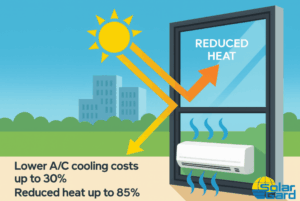
Sun-Heat Rejection – block up to 84% of outside heat, easing A/C strain

Anti-Glare Comfort – cut up to 95% glare to protect eyes and furnishings while maintaining natural light.

Security & Safety – hold glass shards together during accidents, break-ins, or even explosions.

Energy Savings – reduce cooling costs by up to 30%

Ease A/c Strain – by stabilizing interior temperatures, there is less need for air conditioning while moderating peak usage and allowing your cooling system to operate more efficiently

Reduced Carbon Footprint – lower A/C consumption means less electricity used and fewer CO₂ emissions over the building’s life, contributing to a more sustainable environment.

Privacy That Pays, Every Day

Solar Gard Stainless Steel 50 is our clients’ favourite for striking the balance between privacy and excellent heat rejection without altering the building’s look.

With 46% glare reduction and over 40% of the sun’s heat rejected, this film has helped businesses cut cooling costs of up to 30%,  translating into measurable energy and emissions savings.

  • Ideal for businesses with steady customer traffic where both operational cost and client experience are high priorities.
  • Client feature: SolarBuzz installations at one of each client’s locations – Starbucks, Broadbent and KFC, as seen in the photo collage below:

Cut the Heat; Keep the View

For homeowners and businesses seeking deeper shading and stronger privacy, the Stainless Steel 10, 20 and 30 series deliver up to 90% glare reduction and 99% UV protection.

This series keeps your interiors cooler and greener, lowering a/c reliance and reducing electricity demand.

  • These films excel on sun-facing windows, garden or pool areas, and exposed façades
  • Client feature: SolarBuzz installations at our client – Texaco – Food Mart and one of our client’s guest villa, as seen in the photo collage below:

Discretion in Style

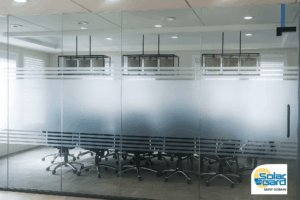
When discretion is non-negotiable, our frosted films are the answer. They provide complete privacy while allowing natural light to gently filter through.

Less tug-of-war between blinds and lights means improved energy efficiency and the added opportunity to showcase your brand identity with custom patterns or logos.

  • Ideal for spaces that demand discretion without sacrificing natural light such as office doors, boardrooms, and bathrooms.
  • Highlighted feature: SolarBuzz installation at one of our clients – Real Equity, and our own company’s entrance door as seen below:

See Everything. Reveal Nothing

For clients who want daytime privacy with clear outward views, our TrueVue 5 window film delivers. 

This film rejects 84% of sun heat, blocks 99% UV, and reduces glare by 94% resulting in cooler rooms, reduced energy bills, and less strain on the power grid.

  • With its low interior reflectivity, our  TrueVue 5 window film solution is ideal for hospitality spaces, executive offices, and beach homes/villas.
  • Client feature: SolarBuzz installation at a client’s home in Treasure Beach, St Elizabeth:

Holding Strong Under Pressure

Glass is often a building’s weakest link. Our Armorcoat® security film is engineered to protect against accidents, storms, vandalism and burglary.

This window film delays intrusion and holds shattered glass firmly in place, safeguarding people from injuries and buildings from further damage.

Depending on your needs, this film can block between 5% and 95% of daylight while adding an invisible layer of protection. 

By extending glass life and preventing premature replacements, our security film also avoids the embodied carbon “cost” of new glazing, proof that resilience and sustainability can go hand-in-hand.

  • Our Armorcoat security film is ideal for retail stores, banks, high-traffic businesses, and public buildings.
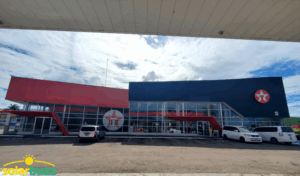
  • Client feature: SolarBuzz installation at one of Texaco’s locations:

Satisfied Clients, Proven Results

From residential homeowners to brands like Starbucks, Texaco, KFC, Wendy’s, Barita Investments and Broadbent, our clients return for style, comfort, energy savings and a peace of mind with greener operations as a bonus.

“Since Solar Buzz installed their Solar Gard tint, the comfort in my office has significantly improved. The tint has greatly reduced the amount of heat and glare entering through the windows. 

  • Darren Bouges – Concepts and Spaces

“I’m very impressed with the performance of the Solar Gard tint from SolarBuzz. It not only keeps our stores cooler but has reduced the strain on our A/C units,  helping us to keep our energy costs as low as possible. The SolarBuzz team is always professional, punctual, and continues to make the experience seamless.”

  • Bruce Hosang – Starbucks

“The tint has cut the glare on my TV and keeps the rooms cooler without blocking the natural light. I’ve cut back significantly on AC usage, and my JPS bill is reduced by about 10%. Big thanks to the Solar Buzz crew – they showed up when they said they would, worked neatly, and did a very professional job.”  

  • Jonathan Dabdoub Total Hardware & Supplies  
Ready to Transform Your Space?

Your windows and glass doors should work for you every day, providing cooler rooms, lower bills, greater privacy, and a finish that enhances the look of your home or business.

With over 15 years of experience and the proven performance of Solar Gard, SolarBuzz provides style, comfort, energy savings, and security while also supporting sustainable living and building practices.

Request your free consultation today and start saving with every sunrise.

Email us at info@solarbuzzjamaica.com or click here to book your consultation.

Deidre Wedderburn is the Client Relations Manager at SolarBuzz, dedicated to building long-term partnerships and delivering a top-tier client experience (deidre@solarbuzzjamaica.com).