
The New Cost Reality

Jamaica confronts a sobering reality. The Bank of Jamaica (BOJ) has cautioned that inflationary pressures, intensified by Hurricane Melissa’s impact on agriculture, infrastructure, and energy supply chains, will persist, with headline inflation unlikely to return to the 4–6% target band until 2027.
Recent electricity bills have already reflected this strain, registering a 7% increase in December 2025 (for November consumption), driven by reliance on more costly fuel alternatives following disruptions to natural gas supplies and a sharp drop in overall sales.
Beyond these projected domestic pressures, global pricing shifts are set to take effect from April 2026 and will reshape the cost landscape for solar adoption.
Property as the Hedge

Against this backdrop, a more structural response is quietly asserting itself through the transformation of property from a passive holding into an active hedge against inflation.

The BOJ’s warnings underscore the urgency of this shift. With inflation projected to remain elevated well into the medium term, and utility costs unlikely to ease meaningfully before 2027, Jamaicans face a prolonged period in which essential expenses will continue to erode disposable income and operating margins.

The present environment underscores that resilience includes repositioning assets to absorb economic shock. When energy generation is embedded into a home or commercial building, the property itself becomes a stabilising mechanism.

A solar-equipped asset delivers a measurable, recurring financial benefit by reducing exposure to rising electricity costs and, in some cases, eliminating it altogether. Over time, this predictability functions much like an inflation hedge, insulating cash flows, preserving purchasing power, and improving the long-term economics of the asset.
The Household and Business Dividend
For families, this means greater disposable income for education, healthcare, or discretionary spending, alongside more predictable energy costs and a meaningful step towards economic resilience.

For businesses, the implications extend beyond savings. Commercial clients contemplating expansion should incorporate solar as the foundational step.
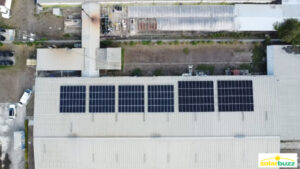
Lower and more stable energy costs free up capital that might otherwise be siphoned into overhead, enabling reinvestment in growth. Capital can be redeployed into staff investment, productivity enhancements, or expansion.
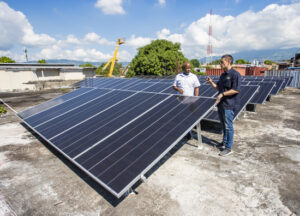
A solar-powered factory or office also enhances its value proposition to investors, creditors, and clients.

In this context, incorporating solar at the point of business growth, whether during construction, renovation, or scale-up, is a strategic first step in protecting future profitability. The property now becomes not merely an energy source, but a strategic multiplier of value and profitability.
Banking Innovation as the Critical Link
This asset-based logic should resonate just as strongly within Jamaica’s financial sector and, by extension, our public policy.
Banks and lenders have an opportunity, and arguably a responsibility, to modernise how they assess and finance energy infrastructure. The BOJ’s admonition that borrowing will remain costly lends particular urgency to innovative financing mechanisms for solar adoption.

A well-maintained solar system with competitive warranties and a reliable 15–25-year lifecycle constitutes a tangible, appreciating asset.
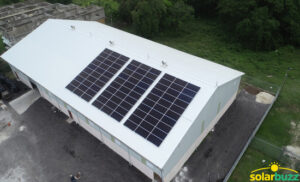
Banks can leverage solar systems that are actively maintained, particularly those whose upkeep meets insurability criteria, to offer secured lending options where the installation itself serves as collateral. This materially lowers risk and creates scope for more competitive interest rates and terms, reflecting the reduced probability of performance failure or asset degradation.
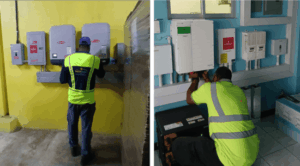
Such an approach would also alleviate the barriers many borrowers face when attempting to leverage property equity for energy upgrades.
“A well-maintained solar system is not merely equipment; it is bankable infrastructure.”
Financing frameworks that recognise the solar system itself as collateral, particularly when its upkeep is verifiable and insured, can simplify approval processes, reduce transaction costs, and accelerate solar adoption.

In doing so, banks can avoid the cumbersome and often discouraging equity-based lending models that slow decision-making and dampen client demand.
Secured financing where the solar installation itself serves as collateral, democratizes access for middle-income families and small-to-medium enterprises, while aligning lending portfolios with resilient, future-proof investments.
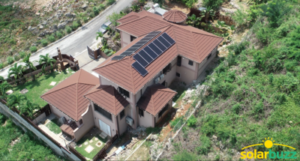
Embedding solar financing into mortgage products, whether for new construction or existing property improvements, would mark a watershed moment. Homebuyers and property investors could access clean energy without a separate financing hurdle, thereby accelerating solar adoption.

For developers and commercial landlords, integrated solar not only reduces operating costs, but enhances rental and resale valuations.
Commercial enterprises must factor energy autonomy into their core expansion playbooks to reduce utility overhead and create competitive headroom in pricing, investment, and growth.
The banking industry is called upon to innovate and craft solar-enabling products that are accessible, equitable, and aligned with long-term economic resilience.
Policy Must Reduce Barriers, Not Add Them
Complementing these private-sector innovations, we recommend that government incentives, particularly the residential solar tax credit (offering 30% of acquisition and installation costs, capped at credit of J$1.2 million for systems valued up to J$4 million for primary residences), be further reviewed and optimized to accelerate mainstream solar adoption.

The residential solar tax credit was conceived to stimulate solar adoption, yet its current structure could benefit from adjustments to enhance accessibility.
For instance, the requirement for a net billing licence, with its associated costs and administrative steps, presents an upfront challenge that may deter some potential adopters, even for systems primarily intended for self-consumption.
For homeowners, the promise of a future credit is diluted by immediate cash outlays and procedural complexity.

There is also a practical precedent for how effective the incentive can be when designed to minimise barriers. One of our clients successfully completed the income tax application process under the residential solar tax incentive and received their benefit by way of a cash refund at a time when the net billing requirement had not yet been introduced.

In that instance, the only meaningful upfront cost was the Government Electrical Regulatory (GER) Certificate of Compliance, which made the process attractive, credible, and relatively seamless. The incentive functioned as it should, rewarding responsible investment while shortening the payback horizon and strengthening household resilience.
If solar energy is to be truly mainstreamed as a national resilience strategy, we suggest evolving incentive mechanisms accordingly. For example, considering a review of the net billing requirement for residential installations primarily intended for self-consumption could help improve adoption rates.
Additionally, structuring the tax credit to facilitate refunds with reduced upfront costs would shorten payback periods, enhance returns, and make solar investment accessible to a wider cross-section of households.

For banks, such policy alignment would further de-risk solar lending by improving cash-flow profiles and strengthening borrower capacity. Homeowners would be better positioned to accelerate the transformation of their property into a stabilising asset capable of absorbing inflationary pressure rather than amplifying it.
“When incentives are accessible, they move from policy intention to lived outcome.”
Several of our clients whom we have assisted in submitting their applications are now awaiting their incentive, which will be issued either as a cash refund or as a tax credit, as applicable.
Our clients’ progress reinforces a central point, that when incentives are structured to reduce upfront costs and procedural requirements, they encourage solar adoption in both principle and practice.
Why Timing Now Matters
The impact of Hurricane Melissa on the standard of living cost is not the only factor urging immediate action by businesses and homeowners to rethink what their assets can do for them.

China, the global epicenter of solar and battery manufacturing, is eliminating key export tax rebates for photovoltaic and battery products beginning April 1, 2026, with further phase-outs for batteries through January 1, 2027.
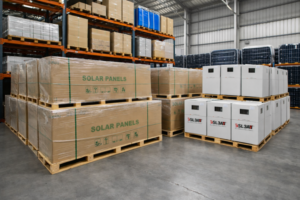
This reduction is poised to elevate wholesale and retail prices globally, which is significant as most Jamaican solar suppliers rely heavily on Chinese imports.
Solar systems procured now will likely prove more economical than those acquired in the coming quarters, as the absence of these rebates will force upward adjustments in procurement and resale costs.
For Jamaican homeowners and entrepreneurs, this means that early action can avert higher asset costs down the line. Those considering solar must act now, before pricing shifts materially erode the cost advantages of installation.
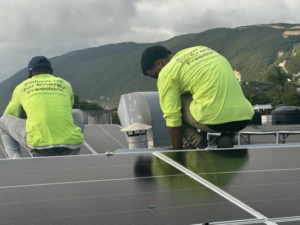
In this transition, one persistent bill becomes the foundation for sustained prosperity, and properties become the quiet architects of resilience.
The antidote to Jamaica’s protracted inflationary challenge cannot be confined to incremental household austerity or episodic business cost-cutting. Jamaicans will have to be willing to proactively fortify the very assets that define household and commercial stability.

Solar adoption, therefore, is best understood as an exercise in strategic asset optimisation that converts property into a productive instrument capable of stabilising cash flow, preserving purchasing power, and enhancing long-term value.

BOJ’s inflation outlook, higher borrowing costs, utility volatility, and impending global price adjustments are not isolated developments. Together, they form a clear signal.
For stakeholders prepared to respond with innovation rather than inertia, they define a narrowing window to act decisively while the economics remain favourable.
For those considering adoption, SolarBuzz can provide a tailored quote and timeline while current pricing conditions remain favourable. Our team is available for a complimentary online consultation for your home or business.
Deidre Wedderburn is the Client Relations Manager at SolarBuzz, dedicated to building long-term partnerships and delivering top-tier client experience (deidre@solarbuzzjamaica.com).