SolarBuzz FAQ Series: Answers from the desk of our Head of Engineering & Design, Kahlil Smith

Compiled and edited by Deidre Wedderburn, Client Relations Manager

Residential solar performance is determined long before equipment is energized. It is governed by load profile modeling, commissioning configurations, and the engineering standards applied to each roof and distribution board. Jamaica’s grid conditions, building stock, and tropical climate demand deliberate design.

Below are the questions most frequently directed to our engineering desk by homeowners. These answers explain not only how an engineered system behaves, but why it was configured that way. That reasoning is the core deliverable of a SolarBuzz installation, and the reason our pricing reflects senior engineering expertise.

The Discipline of Storage & Inverter Logic
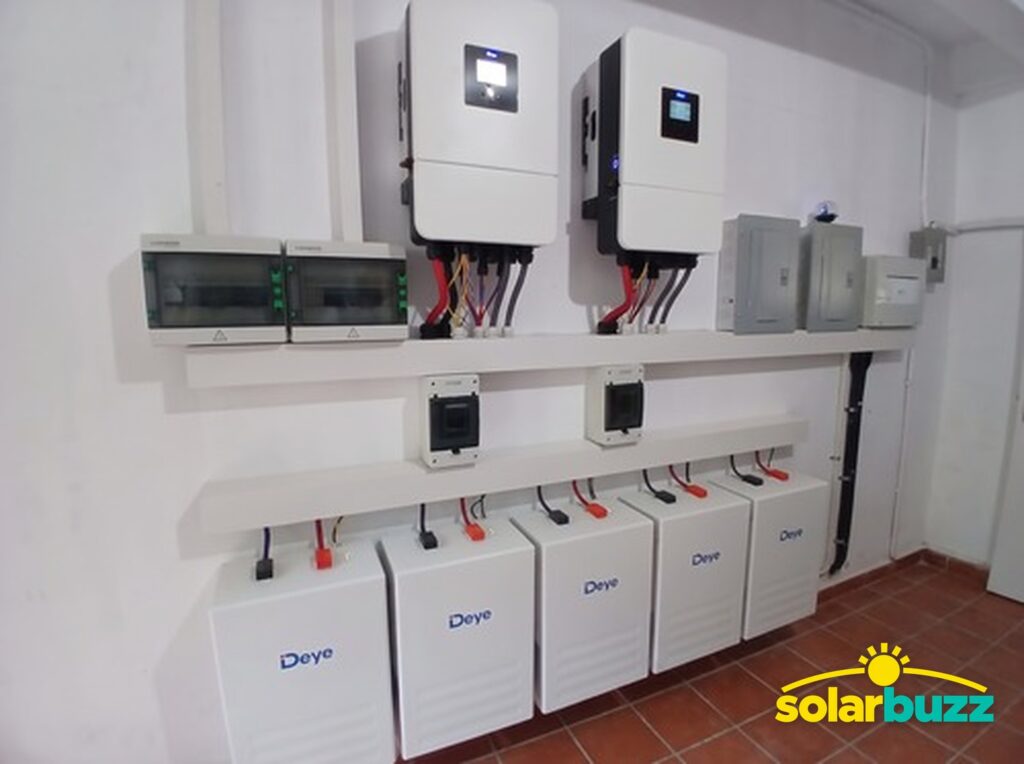
Alt text (slightly corrected):Two Deye hybrid inverters and five Deye lithium batteries in a SolarBuzz installation
Large-scale storage designed for a 98% average offset, with a protected battery reserve

“Why is the usable storage of a battery less than its rated capacity?”

Because a battery that is never cycled to absolute zero lasts years longer.

Repeated deep discharge of a lithium battery rapidly degrades cell chemistry and truncates cycle life. Retaining a portion of capacity as reserve materially extends the number of charge cycles the bank can deliver. 

Preserving an uncycled floor is an engineering standard applied across every system we install. You accept a modest reduction in nightly usable energy in exchange for significantly extended operating life. Over the lifespan of the equipment, this preservation protocol represents the superior financial return.

“Why does a home switch to the grid while the battery still shows residual charge?”

Because that 20% is held as an emergency lifeline, not abandoned energy.

We program the inverter to transfer normal household circuits to the grid once the battery reaches a 20% State of Charge (SOC).
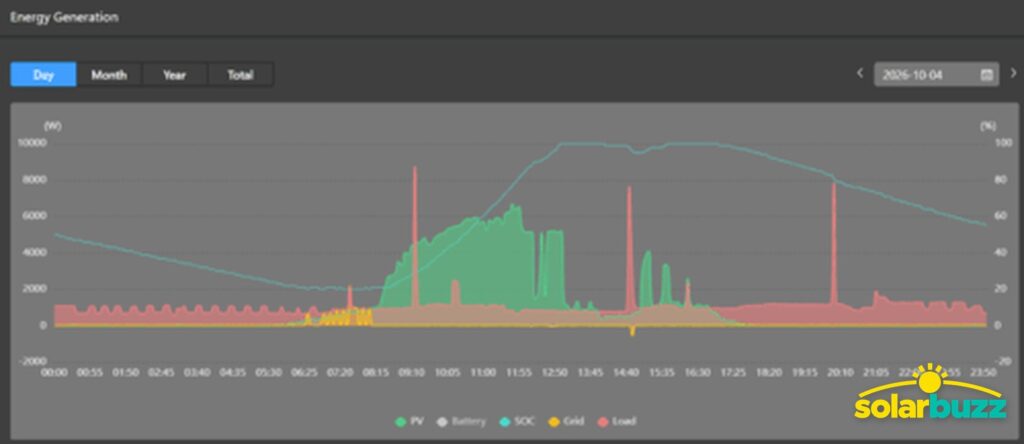
Daily monitoring chart showing solar production, battery charge and household load over 24 hours
24-hour monitoring: battery reaches its 20% reserve near sunrise, the grid bridges briefly, and solar recharges the bank to 100% by midday

However, during a utility outage, the inverter unlocks that reserve, drawing down to a secondary safety threshold. This architecture accomplishes two vital objectives:

  1. Outage Reserve: If JPS fails at 3:00 am, your household is not left stranded in the dark; reserve energy is ready to deploy immediately.
  2. Inverter Self-Recovery: It prevents the battery bank from dropping to a depleted voltage state that requires manual, complex field recovery to re-energise.

A setting of this kind shapes how a system performs for years. It is one of our engineering standards that determine whether a system remains reliable or becomes a source of recurring inconvenience.

“Why does a system switch to the grid in the early hours of the morning?”

Because it is designed to do exactly that.

Our installations are engineered so that battery banks reach full capacity by midday under favourable skies, while direct solar carries daytime loads. As production ceases at dusk, the home draws on storage to support high evening demand such as cooking, entertainment, pumping, and air conditioning.

By the early morning hours, stored energy reaches its planned depth-of-discharge limit. At that point. Our systems are engineered to draw from the grid in the hours before sunrise to protect the battery’s reserve until the PV array resumes generation.
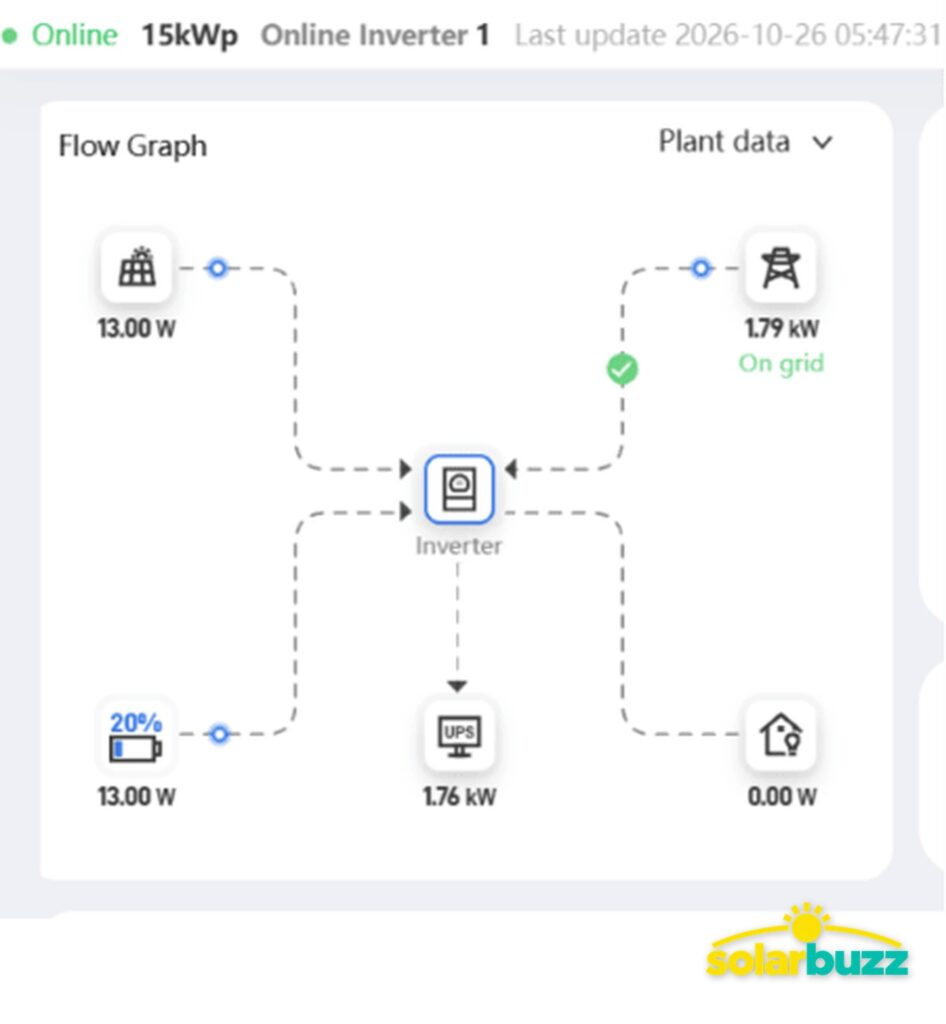
Solar monitoring flow graph at 5:47 a.m. showing the battery at 20% and the grid supplying household loads
5:47 a.m. flow graph, battery at 20%, grid supplying the home

Once solar production resumes at sunrise, the home automatically returns to solar coverage, with the panels supplying the household load while simultaneously recharging the batteries. 

When homeowners notice that pre-dawn grid window widening over time, it is almost always due to gradual lifestyle changes and added electricity use after installation. Once a family no longer feels the weight of each kilowatt-hour on their light bill, usage tends to rise, and a battery bank sized to the home’s original load assessment is simply being asked to do more. This is a pattern we observe regularly.

Because SolarBuzz models your electrical architecture from day one, we can often adjust inverter scheduling to stretch your batteries further overnight without new hardware. The system takes a small grid contribution during the evening peak, so the battery reaches midnight at a higher state of charge and carries the home further into the night. 

“Why does the monitoring application show solar production falling in the afternoon while the sun is still shining?”

Because the system has nowhere else to direct generated power.

Once batteries reach full charge, the inverter automatically throttles panel output to match only the instantaneous demand of the house plus a minor float charge. Solar panels do not force unneeded current into a saturated system. A lower afternoon production reading is not underperformance; it confirms that your storage reached 100% capacity early and is fully primed for the evening peak.

“Why does the monitoring app show a small continuous draw from the grid even when the battery is at 100%?”
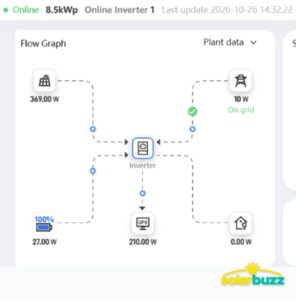
Solar monitoring flow graph at 2:32 p.m. showing the battery at 100% and solar output matched to household load
2:32 p.m. flow graph, battery at 100%, solar matched to load

This is intentional hybrid-inverter synchronisation, typically drawing 10 to 100 watts for three operational reasons:

  1. Export Prevention: Where net-billing export is not authorised, the draw acts as an instantaneous buffer against sudden swings in household load or solar output.
  2. Zero-Transfer Switching: It keeps the inverter synchronised with the grid, allowing your home to switch power sources instantly without interrupting sensitive electronics. 
  3. Continuous Inverter Power and Protection: The grid connection keeps the inverter powered at all times. If solar and battery supply are both unavailable, the inverter stays on and resumes normal operation the moment either source returns. It also monitors the quality of incoming grid power and blocks voltages or frequencies outside safe limits from reaching your appliances. 

This small baseline draw has no meaningful impact on your light bill, and we account for it in your savings projections from day one.

Engineered Sizing
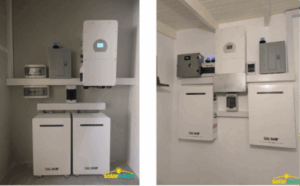
Two SolarBuzz installations, each with a Deye hybrid inverter and two BSL lithium batteries, one floor-standing and one wall-mounted
Compact storage engineered for full year-round charging

“If the batteries are fully charged by midday, why not simply add another?”

Because a mid-morning surplus in June does not reflect winter realities.

Under our design approach, your batteries will typically reach full charge between 11:00 am and midday on a favourable day, creating the impression of surplus capacity. That impression does not hold across the year.

In winter months, the solar production window narrows significantly. During successive overcast days or rainy periods, panel production drops sharply. Under those conditions, a system carrying an extra battery often cannot generate enough energy to bring every unit to a full, 100% saturation charge.

Repeatedly undercharging a lithium battery degrades its usable capacity and causes cell failure years before its expected lifespan. SolarBuzz sizes battery storage to what your available roof envelope can sustainably recharge throughout the entire year, not just on peak summer afternoons. An extra battery that sits chronically half-charged during winter is an idle cost that erodes your system’s overall return.

“Why might a design propose a smaller battery bank than requested, or advise against batteries altogether?”

Because an honest solar company does not sell hardware that site physics cannot support.

Surplus solar is what charges the batteries, so during daylight hours solar energy prioritises the household loads. If a property exhibits high daytime power consumption, or a restricted roof footprint with limited space for a purpose-built structure, the remaining energy harvest cannot support a battery bank. Sizing storage beyond that threshold guarantees chronic undercharging.
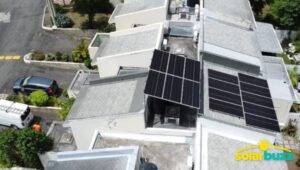
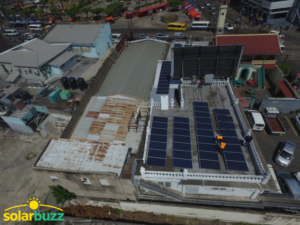
Aerial view of a SolarBuzz residential installation with solar panels mounted on a purpose-built structure and on a section of the roof
Restricted roof space: panels split between a purpose-built structure and the available roof area

Where daytime loads consume nearly all generation, we advise reducing storage or installing a grid-tied PV system without batteries. We size to what the site can sustain. That is the engineering judgement we apply to protect your capital. 

“Why does a household still draw noticeably from the grid in some months?”

Because savings models are calculated as annual averages, not rigid monthly guarantees.
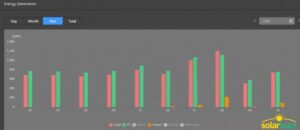
SolarBuzz client monitoring chart showing monthly household load, solar production and grid import from January to October 2026
Online monitoring: grid draw in August 2026, when household demand exceeded the system’s designed output

The savings offset we project is an annual average calculated from the household’s energy usage and the applicable JPS tariff rates. Seasonal variation in irradiance, shorter daylight hours from October to February, seasonal storm weather, and changes in household demand, mean that some months will show a higher offset and reduced grid reliance, while others will show a lower offset. 

Sound design anticipates that variation rather than eliminating it. Sizing a system to its weakest month would mean paying for capacity that sits idle for most of the year; designing to the annual profile is what secures the strongest return. Some clients do choose a higher level of independence, where off-grid resilience matters more to them than payback. That is a deliberate design decision and one we engineer for when it is the client’s stated priority.

A single billing cycle is simply one data point on an annual performance curve. The appropriate measure of a system is its performance across the full year relative to the load profile it was designed for. That is the standard we design to and the standard we review performance against.

“If the inverter can support more panels and roof space remains, why not simply add more?”

Because available roof space is not the same as productive roof space. 

At Jamaica’s latitude, south-facing roof faces yield the most energy and north-facing faces the least.  Our designs prioritise the most productive roof faces first, so the space that remains is often the least favourable. 

Each roof face must also carry a minimum number of panels to reach the voltage window required by the inverter, so a small residual area cannot simply accommodate one or two additional modules.
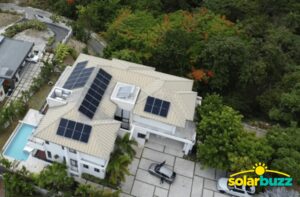
Aerial view of a hillside home with a SolarBuzz installation, with solar panels placed on its most productive roof faces
Panels placed on the most productive roof faces; the remaining roof area is the least favourable

Panels placed on poor orientations yield significantly less in the winter months, when the sun sits lower in the southern sky. This is the period when generation is most vulnerable.

We model year-round yield before recommending panel additions and advise if the return does not warrant the expenditure.

Electrical Safety and Tailored Resilience

“Does every solar installation need its own earth electrode?”

No. Once connected to the building’s earthing, a secondary electrode is not necessary.

Where a building already has a verified, adequate earthing system, connecting directly to it is the correct engineering procedure. A secondary electrode adds nothing of value from an earthing perspective.

An extra earth rod is widely assumed to provide lightning protection. It does not. The true function of an earthing system is safety: to give stray electrical fault currents a safe path to the ground so that circuit breakers trip as designed. Once a building’s existing earthing is sound, it performs that duty completely.

Every system we install includes dedicated Surge Protection Devices (SPDs) tied directly into the building’s earthing to safeguard against high-voltage surges, including those that may result from lightning. Surge protection limits damage from lightning-induced surges; full lightning protection requires a separate lightning protection system for the entire building.

A dedicated electrode is installed where the building’s earthing is inaccessible or the cable run to it is restricted, and site conditions allow. 

“Is battery backup possible without solar panels, and can an existing generator recharge it?”

Yes to both, provided the generator is compatible with the system.

A battery system can be charged entirely from the JPS grid, take over the moment supply fails, carry critical home loads during blackouts and recharge once power returns. It is the ideal high-reliability solution for apartments, townhouses, rented homes and properties where strata rules or architectural limits prohibit roof panels.

Two generator displays comparing a compatible 50 Hz, 230 V output with an incompatible 60 Hz, 120 V output
Check your generator’s display: output must read 50 Hz and 230 V to charge the system

Integrating an existing generator introduces two mandatory engineering requirements:

  • The 50 Hz Reality: Jamaica’s utility infrastructure operates at 50 Hz. Many generators imported from North America are set to 60 Hz / 120 V. 

Hybrid inverters configured for Jamaica’s grid accept only 50 Hz, 230/240 V input, so these generators cannot charge the bank. SolarBuzz verifies and measures generator output parameters during initial site audits to ensure full interoperability. 

  • Critical Load Subpanel Segregation: Battery-backed partial systems require isolating key circuits (refrigeration, pumps, lighting, networking) into a dedicated critical subpanel, so that only the intended appliances draw on the batteries. 

Leaving unmonitored general circuits connected to backup storage leads to rapid overnight battery exhaustion.

A battery-only installation requires substantial internal electrical labour: circuit tracing, panel construction, transfer switch integration, and Jamaican grid parameter configuration. That indoor engineering is what determines whether an emergency backup system functions seamlessly or fails at 2:00 am.

Engineering That Matters

Aerial view of a two-storey home with a SolarBuzz solar installation
Array mounted on flat terrace areas, designed for long-term performance

The quality of a solar system shows over time: in batteries that hold their capacity, in homes that stay powered through outages, and in hardware that survives severe weather.

SolarBuzz systems deliver consistent performance because every threshold, charging ceiling, and circuit segregation is an intentional engineering decision. That technical rigor is why our systems endured Hurricanes Beryl and Melissa, and why our installations continue to deliver verified, long-term ROI.

Renters and apartment dwellers could save hundreds of dollars on their power bills when Western Australia becomes the first state to legalise plug-in solar panels and batteries.

WA is set to unlock access to the technology commonly known as “balcony solar”, used by millions of people in Europe and the United Kingdom.

Overseas, the technology is usually attached to apartment balconies or installed in backyards, typically costing up to $1,300, plus extra for a plug-in battery.

In September, Australia’s energy ministers agreed to explore how to safely roll out plug-in solar across the nation.

But WA is the first state or territory to give the technology the green light, announcing consultations on a safety standard for the energy-saving devices, including how to ensure they don’t overload power circuits.

“For too long, the benefits of cheap solar have been out of reach for anyone who doesn’t own their roof. That isn’t fair,” Energy and Decarbonisation Minister Amber-Jade Sanderson said.

As the name suggests, they plug into regular power points and don’t require an electrician to install.

The panels feed power into the home network via an inverter and a standard plug, helping offset electricity used by appliances.

That means renters, who have no incentive to spend thousands putting solar panels on their rental’s roof, can now benefit from solar energy.

People living in apartments with a balcony or another reliable spot in the sun can also benefit.

Big savings

The state government estimated a typical plug-in solar system could save households $240 a year on their electricity bill, and up to $500 if they have a battery as well.

But industry experts believe the payback period for plug-in solar systems ranges from four to 10 years.

Solar Citizens, a community organisation that has been pushing for the legalisation of the technology, has previously said an average plug-in solar panel would save people $300-400 a year, and double that with a plug-in battery.

On top of that, renters can take the device with them when they move out.

Ms Sanderson said WA was leading the nation in technology uptake. 

“Millions of European households already use these systems every day, and WA families should be able to do the same,”  she said.

“Western Australians are already taking up solar and batteries in record numbers, and this will ensure even more families can see the savings from the energy transition.”

Solar Citizens CEO Heidi Lee Douglas welcomed the move and called for plug-in solar to be made safely available across Australia by mid-2027.

“WA’s announcement starts a ‘race to the top’, and puts a rocket up the need for the federal government to announce a nationally coordinated approach for the release of this money-saving technology across Australia by July next year,” she said.

“Plug-in solar and batteries are an anti-inflationary energy reform … At scale, these technologies could help lower energy system costs for everyone, not just those who own them.”

More than 40 per cent of homes in the South West Interconnected System, WA’s main electricity grid, have solar panels.

The state government will now need to bring landlords and body corporates on board to allow plug-in solar to be hung on balconies or set up in backyards.

The UK legalised plug-in solar earlier this year, and New Zealand is looking to do the same within 12 months.

Germany is a world leader in plug-in solar, with an estimated one in 10 households having a system installed.

ABC News (Australia)

LONDON (AP) — U.K. Treasury chief John Healey used his first budget Wednesday to offer households and businesses some support with energy bills this winter in the face of what he termed “global economic storms.”

Healey, appointed chancellor of the exchequer in July when Andy Burnham became prime minister following the resignation of Keir Starmer, said the Iran war wasn’t something that the Labour government wanted, but that it had to deal with the economic repercussions.

He said that his “choice in the budget today is to give families and businesses some breathing space now,” as the consequences of the Middle East conflict play out.

“For families, that means higher prices at the pump, higher energy bills and higher mortgages,” he said in his statement, one of the main dates of the parliamentary calendar. “For businesses, higher running costs and more expensive loans. And the impact is felt in the public finances too.”

Energy price support package takes center stage

Among the measures announced was a 100-pound ($133) one-off payment this winter for 20 million lower- and middle-income households, proportionately more of whom live in the electoral battlegrounds in northern England.

Other measures include the extension of a cut in the sales tax on electricity bills and the abolition of a charge paid on gas bills.

Energy bills are set to spike sharply over the winter as the Iran war and the ensuing bottlenecks in the Strait of Hormuz have squeezed global oil and gas supplies, pushing prices higher.

Healey said that banks, which have benefited from higher interest rates, will foot the bill with a doubling in the surcharge on their profits to 6% for 15 months from January.

“Amid global economic storms, I am looking to our banks to help fund breathing space for British families,” he said.

Other measures in the budget

Outside of the energy price support, it was a relatively low-key budget.

He outlined tax cuts for retail, hospitality and leisure businesses, such as pubs and clubs, which will be paid for by higher levies on gaming machines.

He also committed more money to reduce homelessness and confirmed that the government has a “target date” of spending 3% of the country’s annual gross domestic product on defense by 2030. Getting to 3% from the scheduled 2.7% by 2028 will cost billions, and Healey said that he would outline how that will be done when he unveils three-year spending plans next year.

For Healey, this is a touchstone issue as he quit as defense secretary earlier this year in protest at the lack of money being provided, a move that heaped pressure on Starmer.

He also announced 10 billion pounds ($13.3 billion) more of economic and military support for Ukraine.

“Today we send a clear message to Moscow: Britain will stand with Ukraine for as long as it takes,” he said.

Economic challenges from Iran war drag into 2027

Healey said that the U.K. economy has been more resilient and, according to the latest forecast from the independent Office for Budget Responsibility, will grow by 1.2% in 2026.

However, growth next year is expected to be much weaker than anticipated at 1% instead of 1.6% as a result of the Iran war’s economic shock.

Before the global financial crisis of 2008, the U.K. economy’s trend growth rate was around 2.5% and governments since then have struggled to get back to those sorts of levels — Britain’s departure from the European Union, the COVID-19 pandemic and Russia’s full-scale invasion of Ukraine have all contributed to this period of subpar growth.

Economists said that Healey’s overall package has done little to alter that backdrop.

“None of what was announced today is likely to shift the dial on what is set to be a truly terrible decade for living standards,” said Ruth Curtice, chief executive at the Resolution Foundation.

The main impact of the Iran war has been on inflation, which was due to fall earlier this year to the Bank of England’s 2% target. Instead, it has risen to 3.5% and is expected to climb further over the next year or two. As a result, the Bank of England is expected to raise interest rates soon, which will further raise the costs to the government of servicing its debt.

Debt remains a real obstacle

Arguably, the main economic problem facing Healey is the country’s debt mountain.

Even though the trajectory of the public finances was recently given a nod of approval from the International Monetary Fund, the U.K.’s debt has passed 3 trillion pounds ($4 trillion) for the first time ever, requiring 8% of government spending to service it.

Healey said that in forecasts provided by the independent Office for Budget Responsibility, the U.K. will spend 14 billion pounds ($18.6 billion) more on debt interest this year.

AP News

Government-backed Warm Home Loans scheme to help households cut energy bills by hundreds of pounds.

Households across the UK can now cut their energy bills by hundreds of pounds a year at no upfront cost by applying for interest-free or “low-interest” loans to fund upgrades such as heat pumps, batteries and solar panels.

The government-backed Warm Home Loans scheme, which launched on Tuesday, could mean thousands more households are able to access low-carbon energy alternative technologies, thanks to loans ranging from £7,500 to up £35,000.

Energy suppliers including British Gas and E.On have partnered with lenders from Tandem Bank and Homeserve respectively to offer the loans directly to customers at a discounted rate compared with those offered by high street lenders.

People interested in swapping their gas boiler for an air-source or ground-source heat pump could secure loans of up to £10,000 or £35,000 respectively, while also drawing on the government’s existing scheme which offers grants of up to £9,000 a year for households installing the replacements for fossil fuel heating.

Installing a heat pump, battery and solar panels could save households up to £550 a year on their energy bills, rising by a further £300 a year with a time-of-use tariff, according to the government.

Soaring energy costs have led to record demand for low-carbon home energy upgrades over the last year, and the government believes the loan scheme means “thousands more households” will be able to cut their energy bills by fitting clean energy technology and spreading repayments over many years.

The Guardian

Sunshine, government subsidies and high power prices are driving record solar installations 

Zoom in on satellite pictures of the Melbourne postcode 3029 and one feature becomes glaringly obvious – there are lots and lots of solar panels on lots and lots of roofs.

“If you walk along the streets, it’s actually hard to see a house without solar panels,” says Saajidh Nizam, a software engineer who lives in Tarneit with his wife, two children and a 6.6kWh solar system on the roof.

This western Melbourne postcode has more rooftop solar than anywhere else in Australia. More than 28,000 systems have been installed there since 2001, according to Australia’s Clean Energy Regulator.

Australia generates more electricity per person from solar panels than anywhere else in the world, making postcode 3029 the poster child for Australia’s residential solar sector.

There are about 4m homes and small businesses with rooftop solar – about 36% of households have a system – and the country’s enthusiasm for the photovoltaic panels is only building with 2026 on track to be a record year of installations. 

But the copious amounts of sunshine hitting Australia compared with other countries isn’t the only reason solar is booming.

For more than 20 years, the Australian government has been issuing certificates to homes and businesses that erect rooftop solar, cutting the upfront costs. The scheme has been extended this month to include larger systems on corporate premises.

Tristan Edis, the director of analysis and advisory at research and analytics firm Green Energy Markets, says relatively high electricity prices together with less onerous regulations than other countries, in particular the US, are two reasons why Australians have adopted solar so enthusiastically.

The other is the types of homes built around the country with “low-density housing and a lot of roof space, making [solar] easier to install,” Edis says.

According to the Clean Energy Council, an industry group representing the renewables sector, in the second quarter of this year, records were broken in every Australian state for installations, with 102,234 systems installed on roofs – the highest quarter on record.

Ten years ago, rooftop solar was generating less than 3% of the country’s electricity while coal supplied 75%. In the last 12 months, electricity from rooftops supplied almost 14%, while coal was down to 50%.

“There are more rooftop solar systems in Australia than there are swimming pools in backyards,” said a spokesperson for the Australian Energy Market Operator.

They said uptake of solar had “fundamentally changed the electricity system” and “given millions of consumers a more active role in how they produce and use electricity, and now store it with the influx of residential batteries”.

Solar had led to demand for grid electricity falling and wholesale electricity prices reaching zero, or even going negative, in the middle of the day, they said. In winter, with fewer sunshine hours, rooftop solar still covered 10% of the electricity used in the national electricity market, which supplies more than 85% of the population.

In the national market, rooftop solar now routinely supplies more than 40% of the electricity used during the middle of the day; on some days, it peaks above 60%. To cope with all of that solar power, new rules have been introduced requiring electricity retailers in most areas to offer customers three hours of free electricity every day.

A report from the government’s corporate watchdog found households with solar and batteries had bills that were between 20% and 52% lower than regular electricity customers, and households who joined a virtual power plant – where the battery’s output can be linked with other households and controlled by a retailer – had bills 57% to 63% lower.

Now, with the sudden arrival of home batteries – supported by a federal government program that has seen half a million installed since July last year – Edis says the traditional evening peak for electricity use is being flattened as solar-charged batteries kick into gear.

“That is going to destroy the economics of fossil fuel generators,” Edis says.

How much bigger?

But how much bigger could Australia’s rooftop solar boom get?

The government agency that operates the main electricity market produces a blueprint every two years for the most likely development of the electricity system.

This blueprint forecasts that the capacity of rooftop solar systems will grow from its current level of 20GW to 87GW by 2050 – meaning 56% of homes would have rooftop solar systems, “driven by ever-falling costs”. Two-thirds of those homes would also have batteries. If that change materialised, the energy market operator said rooftop solar alone would be supplying about 27% of the country’s electricity.

The challenge, the operator said, was “not simply accommodating more solar panels but making the most of the electricity they produce”.

Edis’s own projections have suggested even higher amounts of rooftop solar could be possible.

He says a typical 10kW solar system in Australia can produce more than enough electricity for an average household, even if they run an electric car.

“Their demand for electricity is almost entirely taken care of by their solar and their battery. Residential electricity consumption disappears from the grid,” he says.

A rising motivator for Australians buying solar systems, says Edis, is the advent of electric cars.

“There’s a relationship developing between electric cars and solar. For a lot of Australians, charging up their car will be incredibly cheap,” he says.

Some electricity system analysts, including Edis, point to commercial buildings and rental units as a “missing middle” where, with better rules, rooftop solar could grow even further.

‘A billion solar citizens’

This week in Fiji at a preparatory meeting before November’s UN global climate talks in Turkey, Australia became the first country to endorse a global voluntary pledge to double the number of homes with rooftop solar from 150m to 300m by 2030.

“Rooftop solar is the sleeping giant of global climate diplomacy,” says Heidi Lee Douglas, the chief executive of Solar Citizens, an advocacy group representing more than 200,000 rooftop solar owners.

“This is going to create a billion solar citizens,” says Douglas, who was in Fiji for the announcement. “[Rooftop solar] is politically popular, and it appeals to people because of the cost of living benefits and now, with energy security issues, governments are more motivated.

“A lot of energy ministers are going to sit up and take notice of this. Rooftop solar has the potential to do so much good but it has been so underrated. We know it is safe and it is a known quantity, and it is easy to deliver quickly.”

Solar Citizens was set up in Australia 16 years ago to advocate for solar owners and create a new political economy around rooftop systems.

The charity is working with civil society groups in Japan, Taiwan, Pakistan, Vanuatu, Malaysia and Indonesia to set up “solar citizen movements” and build advocacy campaigns, says Douglas.

In Australia, Douglas is pushing to triple the amount of rooftop solar connected to storage by 2030 and double the amount of rooftop solar capacity over the next eight years.

Back in Tarneit, Saajidh Nizam says he is doing the sums on adding a battery to the solar system on his roof.

“It’s a good idea,” he says, looking around his record-setting suburb.

“We’re not putting as much pressure on the grid, and we’re trying to be a bit more self-sustaining and a bit less damaging on the environment.

“We’re doing good on that front.”

The Guardian

From the CEO’s Desk 


Jamaica’s power wheeling regulations have been gazetted, and final preparations for implementation are advancing. This marks a consequential moment in the island’s energy architecture that has been anticipated, delayed, and debated for over a decade. 

As Minister Daryl Vaz confirmed in his contribution to the 2026/27 Sectoral Debate, final discussions on tariffs and billing arrangements are in their concluding stages.

Power wheeling will allow a party that generates electricity from a solar installation, for instance, to transport that electricity across the national grid to another location they own or operate, subject to a transmission fee paid to JPS as grid operator. The grid functions not as a supplier but as a corridor. 

The commercial logic is that a business generating surplus at one facility redirects that value to offset consumption at another, rather than exporting it to JPS at the buy-back rate and purchasing it back at full retail cost elsewhere.

The policy’s ambitions are to reduce energy costs over time, support economic growth, and protect Jamaicans from external shocks. Whether it will achieve those ambitions for the breadth of operators who stand to benefit, or whether it will remain, in practice, an instrument available only to Jamaica’s largest energy consumers, will be determined by the eligibility criteria yet to be confirmed within the gazetted regulations, and the transmission fee. 

This article examines what is at stake, and why both of those details matter considerably more than the policy announcement itself.

The Detail That Changes Everything 

The OUR’s 2020 Electricity Wheeling Tariff Methodology Determination, the most recent published framework, established that to qualify for a wheeling licence, an applicant must be a self-generator with an average annual demand in excess of one mega-volt ampere, equivalent to 1,000 kilo-volt amperes. At that threshold, the OUR itself estimated that only approximately 70 JPS customers qualified, and that fewer than 10 per cent of those had operations across multiple locations, narrowing the practical market to approximately seven operators. 

That is a narrow constituency for a framework being positioned as a meaningful instrument for energy cost reduction and economic development, and one that would largely exclude the commercial and industrial mid-market where solar adoption in Jamaica has been steadily and meaningfully growing.

The critical question is whether the newly gazetted regulations have revised that threshold. The announcement describes wheeling as available to Jamaicans who generate excess electricity in one location and use the credit at another site, which implies broader eligibility than the 2020 framework permits. 

Notwithstanding, the full text of the gazetted regulations has not yet been published in accessible form, and until it is, the 1 MVA requirement must be treated as potentially still operative. The tariff and billing discussions underway may or may not address this. Either way, the industry needs to ask directly, and loudly, before the framework is finalised.

A Case in Point

To understand what is at stake in that eligibility question, consider the profile of one of our own clients, as a precise illustration of who the policy should serve if it is to reflect the intended objectives.

A manufacturing operation with its factory in St. Thomas and a corporate head office in Kingston installed a 96.7 kW solar PV system at the factory. The system has delivered a 75–80% energy offset from prior peak usage, generates an average monthly surplus of approximately 7,000 kWh, and exports that surplus under a net billing licence to the value of J$104,500 in monthly credit. 

Under net billing, that surplus earns J$23.170 per kWh at the prevailing buy-back rate. The same factory draws grid electricity at a combined rate that, when all charges are aggregated, approaches J$65 per kWh at current billing rates. The gap between J$23.170 earned on export and J$65 paid on import at the factory is the commercial case for wheeling in a single number 

A kilowatt-hour wheeled from St. Thomas to Kingston, offsetting full retail consumption there at a comparable commercial rate, is worth nearly three times what the same unit earns under net billing. The arbitrage becomes compelling if the proposed transmission fee is below J$20 per kWh. 

Under the 2020 OUR threshold of 1MVA, this client with a 96.7 kW system, which is approximately 0.097 MVA, is below the minimum demand requirement and therefore would not qualify for power wheeling. If that threshold is carried forward into the new regulations unchanged, this client, generating meaningful surplus, operating across two locations, holding an active net billing licence, and representing precisely the profile of commercial solar operator the policy should be incentivising, will be excluded. 

When the Framework Delivers 

Setting eligibility concerns aside for a moment, the hybrid model represents the strongest outcome for multi-site owners and the clearest expression of what the framework could achieve if designed with genuine commercial breadth in mind.

A hybrid model allows available surplus to be wheeled first to offset full retail consumption at secondary locations, with any remaining generation exported under net billing. This approach creates layered value of full retail-rate avoidance across multiple facilities, and continued export income on true excess, most directly reflecting the policy’s stated intent. 

Using the same manufacturing client’s profile, a portion of the 7,000 kWh monthly surplus could offset consumption at the Kingston head office at full retail value, while the balance earns export credits. The transmission fee will be the critical variable. A commercially sensible fee, ideally below J$20 per kWh,  would make the hybrid model clearly superior to net billing export alone. At J$30 or higher, the arbitrage narrows significantly.

South Africa’s Eskom framework, the most comparable precedent, confirms the viability of this hybrid model. It explicitly supports on-site self-consumption combined with wheeled transfers to other owned facilities, and residual export via net billing-style mechanisms.

If eligibility is broadened, the scale of the multi-site opportunity can extend well beyond two-location operators. A manufacturing group with a factory, a distribution warehouse, and a head office across three parishes could redirect surplus dynamically across all three. A university could direct generation from a main campus installation to libraries, residential halls, and administrative facilities according to operational rhythms and occupancy cycles. The framework would then support redirection to multiple receiving accounts under common ownership and transform a single well-engineered solar system into a portfolio-wide energy asset.

Positioning Before the Framework Is Final

For businesses already generating under net billing, the immediate action is to understand whether their solar system and demand profile will qualify under the new framework, and to engage with the consultation process while there is still an opportunity to influence the eligibility threshold and fee structure. 

For businesses evaluating solar investment now, the directional case remains strong regardless of how the wheeling eligibility is resolved. A well-engineered system at a high-yield site delivers meaningful returns under net billing alone. If wheeling eligibility is confirmed and the fee is set reasonably, the same system becomes a multi-site asset capable of considerably greater financial impact. 

The investment decision and the wheeling decision are not the same decision, and they do not need to be made simultaneously. What matters is that the system is designed with future wheeling capacity in mind, so that when the framework is confirmed, the infrastructure is already in place to take advantage of it.

At Solar Buzz, we are tracking the eligibility and tariff developments closely. Businesses and property owners who want to understand what this framework could mean for their specific energy profile are invited to engage now. The details will not remain open indefinitely.

This editorial is intended for informational purposes. References to the OUR’s 2020 Electricity Wheeling Tariff Methodology Determination reflect published regulatory documents. The eligibility criteria and tariff structure of the newly gazetted power wheeling regulations have not yet been published in full at the time of writing. All financial figures are drawn from current JPS billing and OUR-published rates and are subject to revision.

The Cabinet has approved a “heads of terms” agreement for a new licence that the Government is to negotiate with the Jamaica Public Service (JPS), subject to a non-disclosure agreement between the company and the administration. 

A heads of terms agreement sets out the basic terms of a commercial transaction between parties. 

Daryl Vaz, minister of energy, telecommunications and transport, made the announcement in Parliament yesterday, saying that a review of the Electricity Act and the regulatory framework will be undertaken to give effect to the new licensing regime. 

In his contribution to the Sectoral Debate, Vaz reminded the country that if the Government is unable to reach an agreement with the JPS, it intends to turn to the international market to identify another provider. 

According to Vaz, the process has also begun to engage international legal counsel to support the negotiations as the ministry seeks to secure the most efficient and effective outcome. 

The minister also announced that the power-wheeling regulations have been completed and gazetted. He said final discussions are under way to settle tariffs and billing arrangements so that implementation can begin shortly. This, he said, will allow more participants to access and trade electricity across the grid. 

In his recent contribution to the Sectoral Debate, opposition spokesman on energy Phillip Paulwell urged the Government to implement wheeling immediately, noting that the facility allows a large commercial or industrial enterprise to generate power at one location and transport it across the national grid to its other facilities, subject to a reasonable transmission fee. 

Giving an update on the restoration of power following Hurricane Melissa, Vaz said that, effective May 5, 2026, the number of customers without electricity stood at 1,343. To date, he said, power has been restored to 99.81 per cent of JPS customers. 

In Westmoreland, 1,283 customers remain without power, while the number in St Elizabeth stands at 60. Vaz noted that of the remaining customers awaiting restoration, approximately 40 per cent, or 538 customers, are not yet ready to safely receive power because of property-related damage. That leaves about 805 customers who are able to receive electricity service still awaiting reconnection. 

He said restoration work continues to be affected by difficult terrain, limited access to remote areas, adverse weather, and challenging ground conditions, all of which have slowed progress. 

Vaz also highlighted that the Generation Procurement Entity has launched the largest renewable energy tender undertaken in the Caribbean, initially comprising 220 megawatts of renewable energy paired with 110 MW of battery storage. 

“Building on strong market interest and the  Government’s commitment to accelerating the energy transition, this has now been increased to 300 MW of renewable energy and 150 MW of battery storage, with the tender scheduled for August 2026.”  

The Gleaner

The Government is finalising preparations for the implementation of power wheeling in Jamaica, following the completion and gazetting of the required regulations.

Minister of Energy, Transport and Telecommunications, Hon. Daryl Vaz, said that final discussions are under way to settle tariffs and billing arrangements.

He was making his contribution to the 2026/27 Sectoral Debate in the House of Representatives on May 5.

Power wheeling will allow Jamaicans who generate excess electricity in one location to be able to use the credit obtained from the Jamaica Public Service (JPS) at another site.

It is another initiative by the Government to make the energy sector more robust and realise efficiencies.

“At the same time, the updated National Energy Policy, along with its supporting Action Plan and sub-policies, is being finalised for submission to Cabinet, for which I signed before coming to Parliament,” Mr. Vaz told the House.

He informed that the policy sets a clear pathway towards a modern energy system that is secure, reliable, affordable, and sustainable.

The Minister noted that that it addresses key national priorities, including expanding access to the remaining five per cent of Jamaicans without electricity, improving system efficiency, maintaining affordability, and strengthening resilience to natural disasters.

“In practical terms, this is about building an energy system that works for the Jamaican people, one that reduces costs over time, supports economic growth, and protects us from external shocks,” Mr. Vaz said.

JIS

Shell has become the latest energy giant to report a jump in profits following the sharp increase in oil prices since the beginning of the Iran war.

It reported profits of $6.92bn (£5.1bn) for the first three months of the year, which was higher than analysts had expected and up from $5.58bn in the same period a year earlier.

The price of oil has soared since the start of the US-Israel war with Iran as the key Strait of Hormuz, which usually carries about 20% of the global supplies of oil and liquid natural gas (LNG), has been effectively closed.

Last week, rival oil giant BP said its profits for the first three months of the year had more than doubled.

Other oil firms have also reported bumper results. On Wednesday, Norway’s Equinor said profits in the first three months of the year had hit $9.77bn, its highest quarterly profit for three years.

Traders profit

Shell chief executive Wael Sawan said: “Shell delivered strong results enabled by our relentless focus on operational performance in a quarter marked by unprecedented disruption in global energy markets.

“The safety of our people remains our priority as we work closely with governments and customers to address their energy needs.”

Like BP, one of the factors behind Shell’s profits rise was better results from its oil trading business.

Before the conflict began, the price of Brent crude, the global benchmark for oil prices, was around $73 a barrel.

Since then, oil has seen sharp swings – peaking above $120 at one point, but also falling below $100 on other occasions as speculation has swirled over when the Strait of Hormuz will reopen.

The big movements in the oil price that have been seen since the Iran war began can widen the gap between buying and selling prices. This typically enables traders to make bigger profits.

Shell’s profits were also boosted by higher margins at its refining business, which turns crude oil into finished products such as petrol and jet fuel.

However, the company said its oil and gas output had fallen by 4% compared with the final three months of last year due to the conflict.

Shell’s LNG production in Qatar has been shut down since early March because of the conflict, and its Pearl GTL site in Qatar has been damaged by attacks.

Last week, Shell announced it was buying Canadian shale producer ARC Resources for $16.4bn, which Sawan said would “deliver value for decades to come”.

Call to strengthen windfall tax

The surge in profits being reported by energy firms has led to criticism from environmental groups.

Danny Gross, climate campaigner at Friends of the Earth, said: “Once again, fossil fuel giants are pocketing monstrous profits while drivers are being squeezed at the petrol pump and households are set to pay higher energy bills.

“The answer is clear: strengthen the windfall tax on these indefensible profits and break our dependence on fossil fuels by powering our economy with homegrown renewables.”

Energy firms operating in the UK are subject to a windfall tax, called the Energy Profits Levy, that was introduced in 2022 as a response to soaring profits following Russia’s full-scale invasion of Ukraine. Labour extended the life of the tax to March 2030.

However, the levy only applies to profits made from extracting oil and gas in the UK, whereas the bulk of energy giants’ earnings are made overseas. The UK accounts for less than 5% of Shell’s global oil and gas production.

Gas and electricity bills for most households in Britain are protected for the moment by the energy price cap.

Until 30 June, the typical annual bill for dual-fuel households who pay by direct debit will be £1,641.

However, the jump in wholesale oil and gas prices since the Iran war began means the cap is currently estimated to rise by about £200 when it is revised in July.

Shipping giant passing on costs

Meanwhile, the chief executive of Danish shipping giant Maersk told the BBC it was passing on rising costs due to the war to its customers.

Vincent Clerc said the sharp rise in energy prices was adding half a billion dollars of extra costs per month to the business.

“What is really important is actually to pass on these cost increases to our customers as much as possible, so that we can protect our margin and the operations’ integrity going forward,” he said.

He added there was uncertainty over whether this would eventually lead to inflation and lower demand.

Maersk’s latest earnings show operating profits slightly above analysts’ forecasts, although that was mostly for the period just before the Iran war started.

On Monday, Maersk said its US-flagged vessel, the Alliance Fairfax, which had been stranded in the Gulf since the end of February, had managed to exit the Strait of Hormuz accompanied by US military assets.

Clerc said Tehran’s ambition for control of the Strait and eventual toll charges would be a significant change for the industry, “similar to the canals in Suez and in Panama, where we also pay to go through”.

But he said at this stage any toll charges on the Strait of Hormuz were “very, very speculative” and it would have to reopen first.

BBC News

While warning that the Government could possibly examine policies to limit movement as the country faces a significant crisis regarding international oil prices, Energy Minister Daryl Vaz says every Jamaican has a responsibility to conserve energy.

He made the call at Wednesday morning’s post-Cabinet press briefing as he outlined the Government’s response to the economic strain caused by the conflict in the Middle East and its impact on Jamaica’s oil pricing.

“My words to you Jamaica is, definitively, ‘You’re gonna see increases [in oil prices] as long as this [conflict in the Middle East] continues’. We [the Government] will do what we can do, but it is important that you do what you need to do to understand that you need to conserve starting today, today, today,” the minister stressed.

He noted that the Government will likely explore policies to limit movement, specifically transportation, and suggested the possibility of returning to a “COVID-hybrid” version of working from home to reduce fuel consumption.

But he emphasised that the Cabinet will ultimately decide on what final plans will be announced to conserve energy.

“The Government is gonna have to look at policies to limit movements, especially transportation movements. I don’t know… whether or not we go back to a COVID-hybrid version of working from home; something has to happen, because the level of traffic that I am seeing on the road doesn’t show me that anybody realises that there’s a war and the price of fuel/oil is going to go up, and up, and up,” Vaz said.

He added, “I am sure that Cabinet will deliberate, the Government will come up with plans as to how to conserve [energy], but it is 100 per cent the responsibility of every Jamaican to realise that we are in a major, major crisis as it relates to the price of oil internationally, and therefore, you need to take responsibility for your household, your business, [so] see what you can do.”

At the same time, Vaz said that despite the market volatility, Jamaica’s energy security remains intact due to established finished product supply contracts and the local refining capacity at Petrojam.

“So, it’s not a matter of not being able to buy [oil]; it’s the price. So there’s no need to panic,” he declared.

Earlier, the minister advised that the Government — through Petrojam, the Energy Ministry and the Finance Ministry — has taken deliberate steps to, among other things, mitigate the full pass-through of global price increases, and protect consumers from sudden and sharp fuel increases.

Additionally, Petrojam’s pricing committee continues to monitor market conditions and adjust ex-refinery prices accordingly.

However, Vaz pointed out that while the current mechanism has been effective in cushioning customers, it has resulted in “significant financial losses by Petrojam”, which is between $1.3 billion and $1.4 billion. That loss was not passed on to Jamaicans.

“If we continue the current pricing mechanism up to June 2026, it would cost the Government of Jamaica $11.8 billion, which is unaffordable, and unsustainable and, is, in fact, two-thirds of this budget year’s revenue measures,” Vaz informed.

Pointing to the breakdown in talks between Iran and the United States, Vaz said he was hopeful that there would be a resolution, noting that the discussions appear to be “going in the wrong direction since Monday”.

In response to the high oil prices globally, Vaz said Cabinet has considered a revised new tiered pricing mechanism, designed to allow for controlled and predictable adjustments, maintain consumer protection for smaller increases and enable greater flexibility during larger global price shocks.

As of Wednesday, he said the new pricing mechanism to be used by Petrojam to respond to the fuel uncertainty will entail a “tiered approach”, which will see petroleum prices being more closely aligned to global price movements.

“This will allow Petrojam to be more agile and respond in a more timely manner to price volatility. What does that mean? It means that the $4.50 cap [on fuel] cannot be sustained, and it means that we’ll have to have several different tiers of caps — probably three — that will speak to what’s happening in the market and, as I said, pricing is weekly. So it means that we can adjust on a weekly basis,” Vaz explained.

“But let me be blatantly and truthfully upfront in your face; the Government of Jamaica cannot stomach an $11.8 billion [loss] with all of what we have to do and all of the contending priorities, and anybody who tell you any [thing] different… rubbish! No Government in a situation like this can sustain that,” the minister argued.

Jamaica Observer