Solar panels are slowly becoming the new normal, but plenty of questions come with the most accessible form of renewable energy. Are plug-in solar panels any good? How much maintenance do they need? And, most importantly, how long do solar panels last?
There are plenty of hidden costs of home solar panels, but thankfully, frequent replacements aren’t something you’ll need to worry about. According to Sunrun, an industry-leading manufacturer, solar panels are made to last more than 25 years, with many from as early as the 1980s still working today. This Old House corroborates this statistic, saying that while it’s hard to gauge precisely how long solar panels last, many come with 25 to 30-year warranties, ensuring they’ll stick around for the long haul.
So, although you may need to fork over extra cash upfront, installing solar panels is a worthy investment for any household looking to cut back on energy costs. Given that they’ll last you a few decades, you won’t need to constantly spend money to maintain solar panels, and you can do a few things to make them last even longer.
How to make sure your solar panels last long
Solar panels aren’t cheap, and you’ll want your investment in green energy to last as long as possible. Thankfully, they aren’t very fragile either, so barring any unforeseen natural disaster or randomly accurate lightning strike, your solar panels will last you a few decades. But there are a few things you can do to ensure you get the most out of your investment.
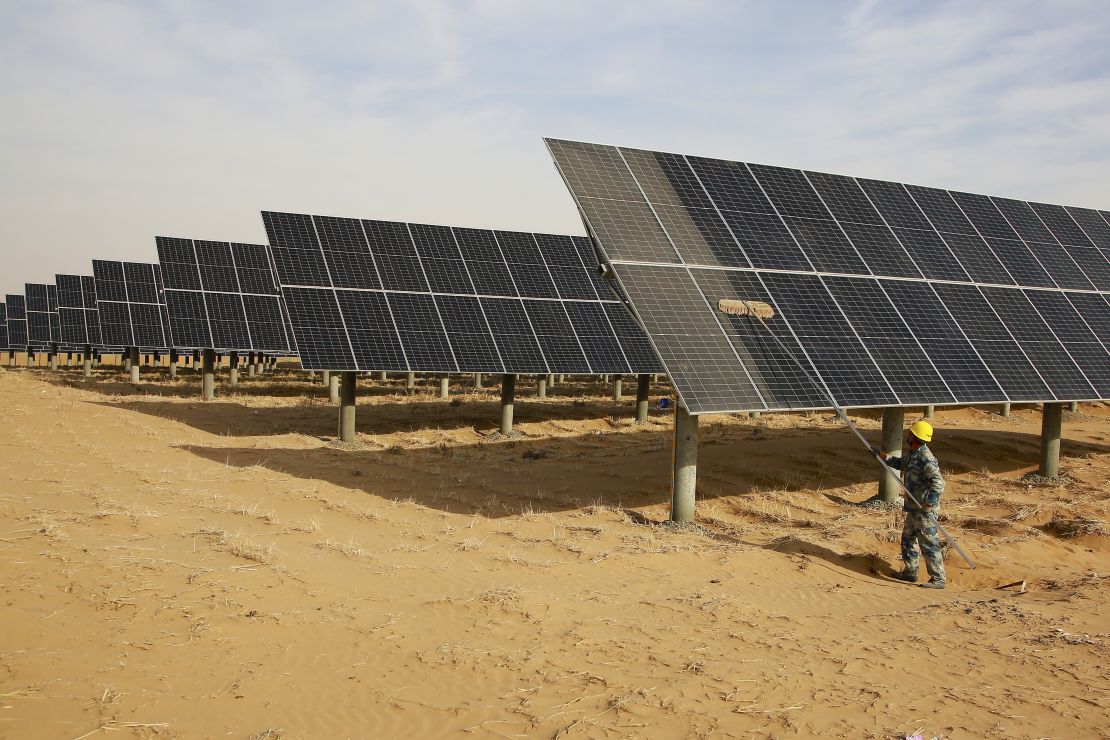
First, you want to keep your solar panels clean and clear of any debris. While dirt, grime, pollen, and leaves won’t destroy your panels, large buildups could impact their efficiency. Usually, rain will be enough to get rid of most of these, but regular cleaning with a broom or hiring a professional team will secure your solar panels a long lifespan.
You should also frequently monitor the usage of your solar panels. Sometimes, after a cleaning, solar panels can develop random electrical problems, so if you notice a spike in your utility bill, it’s best to call a professional to check on them. And if your systems have a shut-off switch, make sure it doesn’t accidentally get turned off by yourself, your children, or anyone else. Although useful, if you, your children, or someone else accidentally shut off your solar panels, you likely won’t notice it immediately, which could result in wasting built-up energy generation.
Whenever there is bad news about climate change, people ask: What can be done?
That’s likely to be the case again following Tuesday’s news that 2023 shattered annual heat records.
The European climate agency Copernicus said average global temperatures were 1.48º Celsius (2.66º Fahrenheit) hotter than pre-industrial times. That’s barely within the 1.5ºC international goal countries agreed to in the 2015 Paris climate accord to avoid a world devastated by climate change.
And January 2024 is on track to be so warm that for the first time, a 12-month period will exceed the 1.5º threshold, Copernicus Deputy Director Samantha Burgess said.
Scientists have repeatedly said that Earth would need to average 1.5 degrees of warming over two or three decades to be a technical breach of the threshold.
Scientists and energy experts have long laid out roadmaps – solutions – to reduce greenhouse gases like carbon dioxide and methane that are heating up the planet. And there’s hope for the way forward, the International Energy Agency said in its World Energy Outlook for 2023.
Led by solar and electric vehicles, investment in clean energy has risen by 40 per cent since 2020. Proponents of nuclear power say ramping up that carbon-free source can replace fossil fuels now as a way of making electricity.
Sharp cuts in methane emissions have become a global priority, as shown by the discussions at the United Nations COP28 climate talks in Dubai last month. Each person can also reduce their impact on the environment through the choices they make, whether that’s saving energy at home, switching to an electric vehicle, reducing air travel, or eating less meat and more plant-based foods.
Below is a closer look at all of these solutions.
Renewables roll-out
Nearly 200 countries agreed last month at COP28 to move away from fossil fuels by tripling the use of renewable energy by 2030. It was the first time they’ve made that crucial pledge to transition, but it will require new installations at double the current rate.
UN chief António Guterres said a fossil fuel phaseout is “inevitable”. Scientists overwhelmingly agree the world needs to drastically cut the burning of coal, oil and gas to limit global warming. That’s because when fossil fuels are burned, carbon dioxide forms and is released.
As an example, a 200-megawatt onshore wind project consisting of roughly 50 turbines, on average, avoids the emissions equivalent of taking 100,000 cars off the road or planting 20 million trees, according to the American Clean Power Association. The United States, which has lagged far behind Europe and Asia in building large offshore wind farms, now has two sending power to the grid that could fully open early this year.
New nuclear
To control global warming, the IEA says global nuclear capacity needs to expand by about three per cent each year. The global nuclear industry launched an initiative at COP28 for nations to pledge to triple nuclear energy by 2050. More than 20 have already signed on, including the United States and the host of the talks, the United Arab Emirates.
The World Nuclear Association says this form of electricity can be deployed on a large scale in time to combat climate change by directly replacing fossil fuel plants. Unlike fossil fuel-fired power plants, nuclear reactors do not produce carbon dioxide while operating.
US nuclear companies are also working on the next generation of reactors that are far smaller and cheaper than traditional ones. These small modular reactors and microreactors in the future could power a community, campus or military complex. Sceptics, however, caution that nuclear technology still comes with significant safety, security and environmental risks that other low-carbon energy sources don’t.
Less methane
Methane, or natural gas, is an extraordinarily powerful greenhouse gas, more potent at trapping heat than carbon dioxide. It’s responsible for about 30 per cent of today’s global warming.
Many nations are prioritising bringing down methane emissions as a crucial, quick way to curb further warming, because it doesn’t last as long as carbon dioxide in the atmosphere absorbing the sun’s heat.
The Biden administration last month issued a final rule aimed at reducing methane emissions, targeting the United States’ oil and natural gas industry for its role.
Separately, 50 oil companies representing nearly half of global production pledged at COP28 to reach near-zero methane emissions and stop wasting natural gas by burning it off, by 2030. Environmental groups, however, called the pledge a “smokescreen to hide the reality that we need to phase out oil, gas and coal”.
Personal choices
Every individual can make choices that protect the environment and slow climate change, according to the United Nations’ Sustainable Development Goals.
The UN says start saving energy wherever possible – reduce heating and cooling, switch to LED light bulbs and energy-efficient electric appliances, wash laundry in cold water and hang things to dry. Improving a home’s energy efficiency through better insulation, or replacing an oil or gas furnace with an electric heat pump, can reduce the equivalent of up to 900 kilogrammes of CO2, or carbon dioxide, per year.
Switching from a gasolene- or diesel-powered car to an electric vehicle, taking fewer flights, and shifting from a diet reliant on meat to a vegetarian one can also make significant dents in one’s carbon footprint, the UN said. Producing plant-based foods generally results in fewer greenhouse gas emissions and requires less energy, land and water.
The record heat in 2023 made life miserable and sometimes deadly in Europe, North America, China and many other places last year. But scientists say a warming climate is also to blame for more extreme weather events, like the lengthy drought that devastated the Horn of Africa, the torrential downpours that wiped out dams and killed thousands in Libya, and the Canada wildfires that fouled the air from North America to Europe.
Antarctic sea ice hit record low levels in 2023 and broke eight monthly records for low sea ice, Copernicus reported.
Copernicus calculated that the global average temperature for 2023 was about one-sixth of a degree Celsius (0.3ºF) warmer than the old record set in 2016. While that seems a small amount in global record-keeping, it’s an exceptionally large margin for the new record, Burgess said. Earth’s average temperature for 2023 was 14.98ºC (58.96ºF), Copernicus calculated.
“It was record-breaking for seven months. We had the warmest June, July, August, September, October, November, December,” Burgess said. “It wasn’t just a season or a month that was exceptional. It was exceptional for over half the year.”
There has been no shortage of bleak climate news this year: unprecedented global heat fueled deadly extreme weather events, scientists issued dire warnings that next year may be worse still, and the world’s carbon pollution kept rising.
But amid the gloom, there have also been signs of progress. Renewable energy records have been set, the world celebrated one of its greatest environmental wins and countries made a cautious but historic step towards a fossil fuel-free future.
Here are five reasons to be hopeful.
A surge in renewable energy
As the need to rapidly wean off planet-heating fossil fuels becomes increasingly urgent, there have been some clean energy bright spots around the world.
On Halloween, Portugal started a record-breaking streak. For more than six days straight, between October 31 to November 6, the nation of more than 10 million people relied solely on renewable energy sources — setting an exciting example for the rest of the world.
The year 2023 is on track to see the biggest increase in renewable energy capacity to date, according to the International Energy Agency.
China, the world’s biggest climate polluter, has made lightning advances in renewables, with the country set to shatter its wind and solar target five years early. A report published in June found that China’s solar capacity is now greater than the rest of the world’s nations combined, in a surge described by the report’s author, Global Energy Monitor, as “jaw-dropping.”
It can’t be ignored, however, that China also ramped up its coal production this year, turning to the fossil fuel as devastating heat waves increased energy demand for air conditioning and cooling, and as persistent drought in the country’s south impacted hydroelectric supplies, which are reliant on sufficient rainfall.
Hopes were raised that the country’s coal production will peak and come downsoon, when China and the US in November announced they would resume cooperation on climate change, pledging a major ramp-up of renewable energy, specifically to replace fossil fuels.
A climate deal that targets fossil fuels
After more than two weeks of fraught negotiations, the COP28 climate summit in Dubai concluded in December with nearly 200 countries making an unprecedented commitment to move away from fossil fuels.
While the agreement fell short of requiring the world to phase out coal, oil and gas — which more than 100 countries had supported — it did call on countries to “contribute” to a “transition away from fossil fuels in energy systems.” This marked the first time that all fossil fuels, the main drivers of the climate crisis, were targeted in a COP agreement.
COP28 President Sultan Al Jaber, who presided over the negotiations, called the agreement “historic,” adding that the deal represented “a paradigm shift that has the potential to redefine our economies.”
Howimpactful this deal ultimately is will depend on what countries do next to implement it. Many experts warned of loopholes that could leave the door open to a continued expansion of fossil fuels.
But that a deal was struck at all on fossil fuels was widely welcomed seen as a breakthrough.
“We got people to do things they haven’t done before,” US climate envoy John Kerry told CNN’s Christiane Amanpour after the summit, describing it as a “historic success.”
Plummeting deforestation in Brazil
After years of soaring deforestation in the Brazilian Amazon, there was good progress this year in reducing forest destruction.
The Amazon is the world’s biggest rainforest and its protection is seen as vital to curbing climate change. It acts a carbon sink that sucks in planet-heating pollution from the atmosphere. When forests or trees are destroyed, they emit greenhouse gases. Deforestation and land degradation is responsible for at least one-tenth of the world’s carbon pollution.
Deforestation in Brazil fell by 22.3% in the 12 months through July, according to data from the national government, as President Luiz Ignácio Lula da Silva started to make progress on his pledge to rein in the rampant forest destruction that occurred under his predecessor, Jair Bolsonaro.
Marcio Astrini, head of advocacy group Climate Observatory, described it as an “impressive result” that “seals Brazil’s return to the climate agenda.”
Still, Brazil’s deforestation rate remained nearly twice that of its all-time low in 2012. Around 9,000 square kilometers of rainforest were destroyed in the period. There’s a long way to go to meet Lula’s pledge to reach zero deforestation by 2030.
The ozone layer is healing well
The Earth’s ozone layer is on track to recover completely within decades, a UN-backed panel of experts announced in January, as ozone-depleting chemicals are phased out across the world.
The ozone layer protects the planet from harmful ultraviolet rays, but since the 1980s, scientists have warned about a hole in this shield due to ozone-harming substances, including chlorofluorocarbons (CFCs), which wereused widely in refrigerators, aerosols and solvents.
International cooperation has helped stem the damage. A deal known as the Montreal Protocol, which came into force in 1989, began the phase-out of CFCs. The ozone layer’s subsequent recovery has been hailed as one of the world’s greatest environmental achievements.
If global policies stay in place, the ozone layer is expected to recover to 1980 levels by 2040 for most of the world, the assessment found. For polar areas, the timeframe for recovery is longer: 2045 over the Arctic and 2066 over the Antarctic.
A study published in November, however, cast some doubt on this progress. The paper, published by Nature Communications, found that a hole in the ozone layer over the Antarctic “has not only remained large in area, but it has also become deeper throughout most of the Antarctic spring.” But some scientists were skeptical of the study’s findings, saying it relied on too short a time period to draw conclusions about the layer’s long-term health.
Electric vehicle sales surge
The popularity of electric vehicles has surged this year, with American sales at an all-time high. People in China and Europe are snapping up EVs in large numbers as well.
Electric vehicles — which are better for the planet than gas and diesel-powered cars when they run on renewable energy sources — are key to decarbonizing road transport, which is responsible for around one-sixth of planet-heating pollution globally, according to the International Energy Agency.
Electric vehicles accounted for about 8% of all new vehicles sales in the US during the first half of 2023, according to the report. In China, EVs accounted for 19% of all vehicle sales, and worldwide, they made up 15% of new passenger vehicle sales.
EV sales in Europe were up 47% in the first nine months of 2023, according to data from the European Automobile Manufacturers Association (EAMA). However, car dealers have warned that sales are dropping off as consumers wait for cheaper models, expected in two to three years’ time.
Power utility Jamaica Public Service Company, JPS, made record nine-month profit totalling U$$47.2 million, which outperformed the previous year by one-quarter.
It reflects increased earnings from its new ventures and higher demand for electricity, due to the record summer heat induced by increased warming of the planet.
“A significant portion of the improved performance for the referenced nine months would have been as a result of the strong performances of our non-utility business segments or investments,” said JPS Chief Financial Officer Vernon Douglas, in response to Financial Gleaner queries.
“Notwithstanding, our utility business also grew. This is attributable mainly to warmer temperatures throughout 2023, which would have resulted in increased demand.”
Earth experienced its hottest summer on record this year and led to persons finding refuge within air-conditioned offices, stores or homes. In Jamaica, that translated to increased demand for electricity for cooling purposes.
JPS, however, doesn’t solely rely on utility sales for revenue, which hit US$788 million over January to September. The electricity provider also earns from its renewable energy installation subsidiary, Caribbean Blue Skies Energy Limited, and associate business South Jamaica Power Company.
About US$10 million, or 20 per cent of the profit, made by JPS this year came from non-core activity, which it listed as ‘other income’ and ‘share of profit from equity-accounted investee’.
For JPS, which is owned by Korean, Japanese and Jamaican interests, it is the third straight year of rising profit for the group that experienced a fall in earnings in 2020 due to pandemic-related economic shocks.
“The group has diversified investments in new businesses since 2016, which would have changed the historic shape and trajectory of its performance,” Douglas said.
Profit as a proportion of the US$598 million in capital held by JPS rose to an annualised 10.5 per cent, up from 9.3 per cent in 2022, 7.8 per cent in 2021, and 6.5 per cent in 2020. The ratio reflects the rate at which the business is growing and serves as a proxy for comparing its performance to the yield on other investments, such as government paper, bonds or stocks.
“Our business has navigated various challenges this year, but we have remained resilient. We have strategically adapted to market shifts, focusing on innovation and customer-centric approaches. Our performance reflects the broader economic landscape, and we’re confident in our long-term strategies to drive sustainable growth and value for our stakeholders,” said Douglas.
Overall, the rate of profit generation at the JPS group has increased 55 per cent since the pandemic. On average, the power company averaged US$47.5 million in annualised profit for the period spanning 2020 to 2023. That’s better than the US$30.3 million annual average for the 2016 to 2019 period.
Douglas downplayed the linkages between global oil price fluctuations on JPS’s current financial performance. The utility doesn’t make money from fluctuations in energy prices. It passes on the cost to customers without adding a margin, based on regulatory requirements.
Customer bills, however, would have experienced fluctuations largely arising from Russia’s invasion of Ukraine in 2022 as oil prices spiked to highs of US$122 a barrel in June of that year. Oil is currently hovering at US$81 a barrel, based on Brent crude prices, which Jamaica tracks.
“While electricity is not a known elastic good and service, generally speaking, lower fuel prices have at intervals shown some levels of correlation with electricity demand, as has been the case in 2023 versus 2022,” Douglas said.
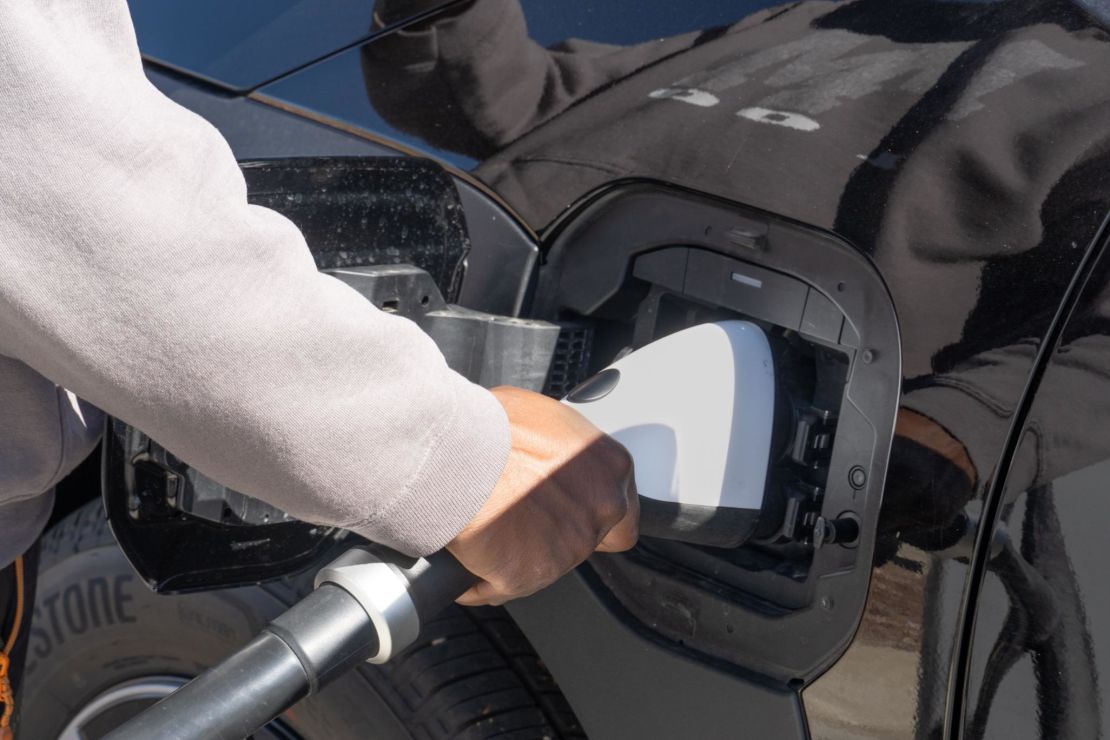
In order to make your EV green-energy approved, you’ll need to charge it using a renewable energy source. Solar panels are one way to accomplish that.
Charging your electric car at home will only increase your electric usage unless you add another renewable energy source, such as solar panels, to offset it.
For the eco-conscious EV driver, an electric vehicle is only as clean and green as the source of electricity charging its battery.
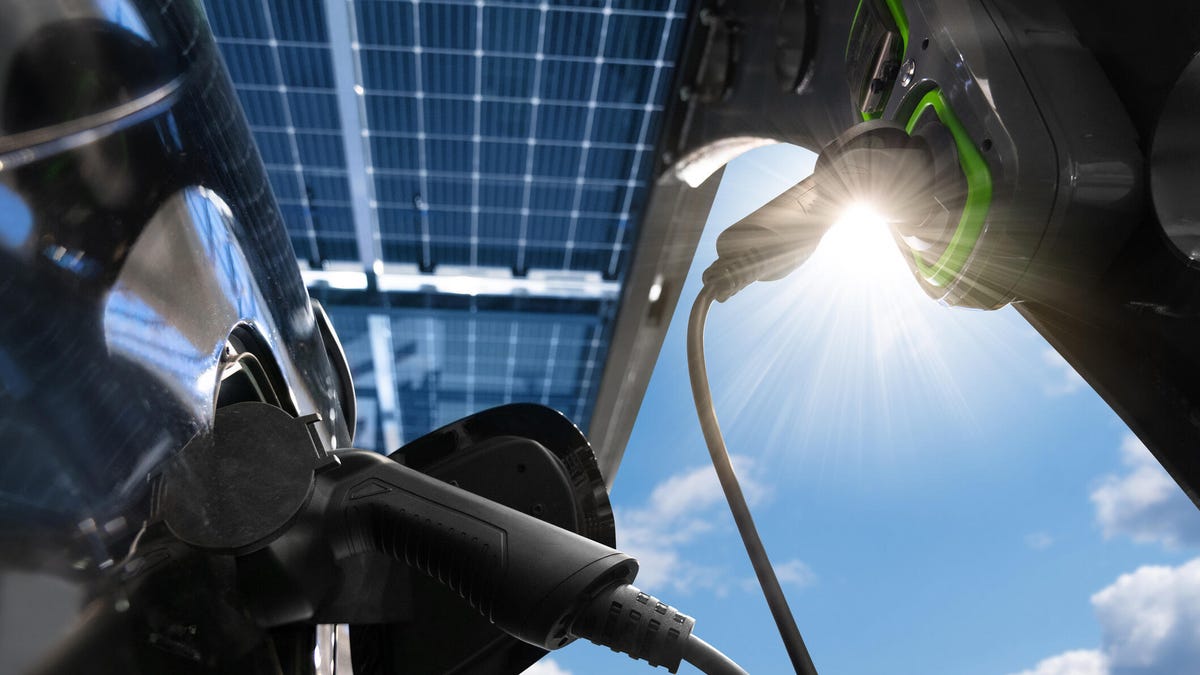
That’s because EVs plugged into the grid can either be powered by “dirty” sources such as fossil fuels such as coal, or from “clean” renewable energy that comes from sources such as solar, hydro or wind power. With many utilities, it’s likely to be a mix of renewables and fossil fuels. The best way to ensure your EV is actually powered by renewable energy is to connect your home’s EV charger to a solar energy system or use a public charger also sourced by solar panels.
Forget the statistics, it’s in plain sight and we can’t ignore it. EV charging stations are becoming the norm, automakers are making headlines as they invest in new EV technology, and rooftop solar panels are also becoming commonplace to see.
Even with the upswing in EVs and home solar systems, switching from a combustion car to an electric vehicle, however, can be a complicated decision with considerations conventional car drivers don’t have to worry about, like installing a charger in your garage. Adding solar panels to the equation adds even more layers of complexity to an already significant investment.
Here’s what you need to know about powering your home and EV with solar panels and how many you’ll need if you do.
Why use solar panels to charge an electric vehicle (EV)?
There are some less obvious benefits to home solar charging in addition to watching free, clean electrons pulled from the sky streaming into your car’s battery.
Most home EV chargers treat your car like any other appliance that needs to be plugged in and charged overnight. Actually, it’s more like a quite needy appliance that requires a particular current (DC) and lots of it as quickly as possible, which can mean operating at high voltage.
All of this increases strain on the grid and can add a load to your home’s electrical system, especially if your wiring is older or in need of upgrading. In the worst cases of neglect or poor electrical work, it can even be dangerous.
Using solar panels to charge an EV actually streamlines the charging process because both systems speak the same electrical language, in a way.
As Wyldon Fishman, founder of the New York Solar Energy Society, explained, solar panels and electric vehicles both operate with direct current (DC), meaning there’s no need to install an inverter between your panels and EV, although a charge controller is still imperative to have in the circuit. DC can also run at lower, safer voltages.
Relying on solar panels rather than the grid to charge your electric vehicle also means not having to worry about being stuck at home with a dead battery if the power goes out, especially if you opt to pair your panels with a battery or other solar storage.
A home’s energy set up could consist of solar panels, battery storage, inverter and an EV charger. Depending on the consumption, size, efficiency and how many panels you get, this equipment could accommodate all or some of this home energy production. – Getty
How much energy is needed to charge your EV at home?
First, consider your goals for your solar charging system. Do you want to charge your car using your solar panels, and will you primarily be charging overnight? If so, you’re going to need to install a battery or other storage system.
In most cases, you’re likely to have a solar system that’s hooked into the grid as well as your home, perhaps with a connected battery for emergency backup, or not.
If this is your scenario, it could be helpful to know how much of your existing solar output the rest of your home is consuming. If you never pay a utility bill or your utility bill is primarily for nighttime or cloudy days (when your solar panels aren’t at work), this means your existing solar system is probably producing more than you need and the extra is being fed into the grid or a battery or both. Some of this excess energy could be used to charge your EV, meaning you will need fewer solar panels to drive a fully solar-powered car.
Once you’ve got an idea of whether you’re running a solar surplus, the next step is determining how much additional demand an EV will add to your system.
How many solar panels will I need to charge just my EV?
First, consider how much you typically drive in a day. Put simply, the more you drive, the more wattage you’re likely to need in panels.
Here’s the steps to figuring out how your average daily energy needs to power an EV.
Step 1. Determine how many kilowatt-hours your EV uses per mile. The EPA and US Department of Energy’s fueleconomy.gov site lists the estimated efficiency of all electric cars in kWh per 100 miles; simply divide by 100 for a per-mile estimate.
Step 2. Multiply your EV’s kWh/mi by the number of miles you anticipate you drive on an average day. (You can get your average daily miles by observing your driving habits for a few days or by dividing your annual observed mileage by 365). This gets you the total number of kilowatt-hours you’ll need to produce to power your daily driving.
Step 3. You can then divide the EVs needed kilowatt-hours by the number of peak sun hours you can expect to receive at your location each day.
Step 4. The final figure should give you the size of your ideal EV-charging solar array in kilowatts.
Step 1. According to fueleconomy.gov, it averages 24 kWh/100 mi or 0.24 kWh/mi.
Step 2. We’ll also use the EPA’s average mileage estimate of 15,000 annual miles, which works out to around 41 miles per day.
Step 3. 0.24 kWh/mi x 41 miles = 9.86 kWh daily power EV usage
Step 4. 9.86 kWh / 4 peak sun hours = 2.4 kW (This is how much solar energy in kW you will need to charge your EV).
Step 5. We will use a solar panel wattage of 410W, such as the Q.PEAK Duo Black from Qcells, to calculate the number of panels needed for the Hyundai Ioniq 6. Convert the 410W to kilowatts by dividing by 1,000 (0.41 kW).
Step 6. EV production needed to charge the Hyundai Ioniq 6 (in kWh per day) / energy needed per Q.PEAK Qcells solar panel) = number of solar panels needed. 2.4 kW / 0.41 kW = 5.85 solar panels
In this example, six Qcells solar panels are needed to accommodate the energy needs of the Hyundai Ioniq 6 with average driving habits. Six Qcells solar panels don’t accommodate the rest of the home’s energy consumption.
Meanwhile, at the other extreme, dropping the Ford F-150 Lightning‘s 48 kWh/100 mi into the same formula yields a daily energy use of 19.68 kWh and a 4.9 kW solar requirement, doubling the Qcells solar panels needed to 12 panels.
If that’s too much math, Fishman simply recommends putting around eight to 12 solar modules on a canopy that you can use as a solar carport.
“It’s about 2.5 kilowatts that you need for a canopy. You might go a little more, but that’s all you need,” Fishman said.
We’ve seen others in the industry put the figure at closer to 3 kW, but if you’re unsure, you can run through all the math for your situation.
How many solar panels will I need to power my whole home?
This basically comes down to figuring out your home’s total energy needs and then designing a solar array that can meet those needs.
There’s a lot of things to consider to determine both sides of this equation, and CNET goes into further detail on the subject here. Adding EV chargers to your home simply means adding more energy use to both sides of the equation.
Most reputable solar companies will help you work out your energy needs and propose a solution that they will surely be willing to install for you. But doing the math on your own as well can help you make the most informed choice when it comes to picking an installer and assisting in designing a system that meets your needs best.
Don’t forget that there are other things you might want to do before even beginning to consider solar for your home. Making energy efficiency improvements can go a long way toward shrinking your overall needs and thereby shrinking the size of the solar system you require.
Is it worth it to add more solar panels to accommodate an EV?
Adding more panels to your existing solar system or to one that you’re planning is one way to power all your home’s energy needs, including your EV. But it isn’t necessarily the only way to charge your EV. You can also build a stand-alone off-grid system that’s dedicated to just your car.
Fishman recommends building a carport topped with solar panels at just the right tilt to get a good amount of sun on average, based on your location on the globe.
“A carport is fixed at latitude,” she explained. “So if you’re at 42 degrees above the Equator, then your tilt for your solar modules is 42 degrees.”
Which comes first: A solar panel or EV purchase?
If you’re dedicated to renewable energy and kicking fossil fuels to the curb, it makes sense to have your solar system all setup before you spring for the EV so you never have to worry about charging your car from dirtier energy sources that mix with renewables on the grid.
But the reality for many people will be that an EV and home solar energy are two very costly investments. A car or EV tends to be a personal purchase that we spend a lot of time in, whereas energy is a readily available commodity that we tend to think about less. So it wouldn’t be surprising for people to prioritize a flashy new EV over adding solar panels to a home that already has access to electricity via the grid.
Ultimately, it comes down to your priorities and your situation. Maybe your utility is good about incorporating solar into its energy mix via its own solar farm systems, renewable energy credits or offering a community solar program. If so, you might have fewer qualms with plugging in your car at night, no matter how many panels are on the roof.
Jamaica’s energy landscape stands at a crossroads as nuclear power is being considered.
In response to the Jamaican Government’s intention to explore nuclear energy, the expressed concerns of authors like Trevor Noel Blair and Ambassador Byron Blake, Jamaica’s former deputy permanent representative to the United Nations, underscore the potential drawbacks.
Blair elucidates issues concerning radioactive waste disposal, water consumption, and the risk of environmental disasters, while Blake highlights the challenge of finding suitable locations for nuclear power plants and emphasizes the importance of thorough consultation before making irreversible commitments.
Conversely, other contributors, like Haile Dennis, advocate for the potential benefits of nuclear power, focus on the safe management of radioactive waste, water usage, and the potential for reliable energy generation. Their opinions underscore the need for informed decision-making in the pursuit of a sustainable and resilient energy future for Jamaica.
Reforming the Electricity Act of 1995 is still essential. To foster renewable energy adoption, it is plausible to make solar panels and alternative energy generation methods economically more accessible, if not free. This move can ignite a green energy revolution. Simultaneously, registering electricity generation with the Government and introducing sensible taxation mechanisms ensure fair distribution of costs and benefits among Jamaican citizens.
Furthermore, decentralisation is the way forward. Removing houses from the grid and encouraging independent power generation aligns with the growing power needs of electric vehicles (EVs), which have become more commonplace.
A substantial reduction in the oil bill is on the horizon. As battery-swapping stations powered by alternative energy emerge, the transition to cleaner transportation is accelerated. For a sustainable future we recommend a bold step: make all vehicles imported after 2025 electric. This approach complements the evolving green energy grid, aligning with global sustainability goals.
Nuclear energy should be approached with caution, addressing the concerns raised by critics. The alternative is to transform Jamaica’s energy landscape by making renewable energy accessible, promoting decentralised energy generation, reducing the oil bill, and spearheading the transition to electric vehicles. This holistic strategy ensures a more sustainable and independent energy future for Jamaica.
Jamaica’s justification for the request included reference to the national energy policy, reducing carbon emissions and in particular, the goal to have 50 per cent renewable energy for electricity generation by 2030
CARICOM’s trade body is set to approve an extension of the suspension of a tax on Jamaica’s importation of nine renewable and energy efficient technologies, including lithium-ion batteries, from outside the region.
A two-year suspension of the Common External Tariff (CET) is due to end December 31.
But Jamaica’s energy ministry has asked the Council for Trade and Economic Development (COTED) to keep the suspension in place for another two years, from January 1, 2024 – December 31, 2025.
That request was given favourable consideration at last week’s meeting of technical officials ahead of the November 27-28 meeting of CARICOM trade ministers under COTED, which has the authority rule on the matter.
The CET is applied by all participating countries on select products. It effectively raises the price of imports from outside of the region, giving internally manufactured products a competitive advantage.
The treaty that governs CARICOM allows for a suspension for a variety reasons, including in instances where there is limited supply of product critical to a country’s economic development.
Jamaica’s justification for the request included reference to the national energy policy, reducing carbon emissions and in particular, the goal to have 50 per cent renewable energy for electricity generation by 2030.
It also pointed to the recent adoption of the electric vehicle and the energy efficiency and conservation policy and guidelines for public facilities, specifically for schools and hospitals.
Jamaica said the waivers would also assist consumers to finance the investment cost and increase the growth rate of installations and further that the targeted technologies are not being produced in Jamaica and the quantity of any of the products being produced does not satisfy the demand of the Jamaican market.
The energy ministry said it consulted with private and public sector stakeholders – the Jamaica Renewable Energy Association, the Consumer Affairs Commission, the Bureau of Standards Jamaica; the Jamaica Customs Agency and the Ministry of Finance and the Public Service.
Jamaica’s electricity sector mix was supplied by 34 per cent fossil fuels, 53 per cent Liquefied Natural Gas and 13 per cent renewable energy in 2022, according to the ministry.
Renewable energy and energy efficient technologies on Jamaica’s priority list
1. Compact fluorescent lamps
2. Air conditioning and chillers with rotary screw compressors
3. (Electric) vapour absorption refrigeration systems
4. Thermal storage air conditioning systems.
5. Ice thermal storage air condition systems
6. Solar water heating mounting accessories
7. Other accumulators – rechargeable batteries for renewable energy systems (photovoltaic systems)
8. Absorption refrigeration equipment and materials utilising solar energy
PROSPECT, Westmoreland — Minister of Science, Energy, Telecommunication and Transport Daryl Vaz says his ministry is currently looking into the issue of some insurance companies’ refusal to insure electric vehicles (EVs).
The minister said he was hearing for the first time about the issue, which was brought to his attention last week in a Jamaica Observer business report.
“It is something that the ministry is looking into, based on the complaint that was made. But the policy, as it stands, does allow for used and new electric vehicles,” stated Vaz.
In the Observer article, published last Wednesday, a lecturer in the Department of Life Sciences at The University of the West Indies, Mona, Dr Dwight Robinson said he purchased an EV in September but was unable to get it insured comprehensively with his insurer, Insurance Company of the West Indies (ICWI).
According to the article, president of ICWI Paul Lalor said the company would only refuse to insure an EV if it is a car imported by an individual or entity that is not one of the registered new car dealers, or if it is an imported used EV.
Said Vaz: “The insurance company has the right to decide whether they want to insure or what type of vehicle — whether new or used — but the bottom line is that the policy, which is what… [Government] is responsible for, allows for both. So, it is something that we will have to look into to see exactly what the issues are,” stated Vaz.
“I suspect that the issue of the charging of the electric vehicles and the fact that there has been some reported incidents of fire — which obviously nobody knows what the true situation is in terms of the cause of the fire — [might be the cause of this decision by the insurer],” said Vaz, noting that the Government will speak on the matter in due course.
In the article, Robinson said the issue is something Government should look into, considering its push for EVs.
In June of last year Cabinet approved a policy to incentivise the importation of EVs. Government had also announced that it is making adjustments to the Motor Vehicle Import Policy to accommodate an EV concessional rate of 10 per cent.
Vaz, asked if the development is a blow to Government’s push for EVs, said, “No, because the truth of the matter is that EV is a new technology. And I believe that once it shows that it can perform and that the vehicles are roadworthy, and of course safe, the panic and the concerns will die down.”
Marubeni says old power plants to be replaced by renewables
Executives from JPS shareholder Marubeni commit to replacing its aging power plants with renewable energy plants in the next two years. The Marubeni executives made the commitment in a recent meeting with Prime Minister Andrew Holness.
arubeni Power International has now confirmed that renewables have been chosen to replace old fossil fuel-fired power plants at Rockfort and Hunt’s Bay in Kingston. The company made the revelation about the choice after making the commitment to the Government to align the company with the objective of having 50 per cent of power generated in Jamaica coming from renewable sources by 2030, during a recent visit.
The two power plants are expected to be shutdown starting in the next two years, and the Jamaica Public Service (JPS), based on its licence, has the right to replace generating capacity it already owns and will be spending US$500 million to replace those plants with renewable energy. It will be looking to develop projects which together will replace 171 megawatt entirely with solar and wind energy.
“In the next two years or less, some of the plants are going to be shutting down and have to be replaced, and the replacement the Government indicates to us has to be renewables,” Damian Obiglio, senior vice-president, Marubeni Power International and chairman of JPS, told the Jamaica Observer in an interview Tuesday. He added that the investment will also include battery storage to ensure power remains available when the sun is not shining or when the wind dies down.
The confirmation comes long after it was first indicated that the JPS would be replacing the old power plants with renewable energy. Daryl Vaz, Jamaica’s energy minister, earlier this year told the parliamentary committee reviewing the Electricity Act that renewables would be the replacement power source, but a check with the JPS then revealed that the issue was not finalised as yet.
Marubeni says it will be working with its partners to spend US$500 million to replace 171MW of fossil fuel-generated electricity with solar and wind solutions in the next two to three years.
“JPS is in the final stages with the Government about how much battery, wind and solar power,” Obiglio added in the interview with the Business Observer. He said it is expected that 60 per cent of the investment, or US$300 million, will be spent on batteries to store power for future use. Of the US$200 million left to build the farms, he said US$160 million will go to solar farms while the other US$40 million will be invested in wind energy solutions.
“These are different investments from the other renewable investments the Government is seeking. This is the JPS just replacing existing capacity which is about to come off line with renewables,” Obiglio stressed. He said the Government indicates that it would prefer the battery farm to be somewhere in the Corporate Area where demand is greatest, either on Spanish Town Road or at its old plant at Hunt’s Bay.
“In the case of renewables, the Government have indicated a strong preference for the farms to be in the eastern end of Jamaica — the St Thomas area and the Portland area — while some of the plants may be set up in Clarendon.”
The company added that it is awaiting further directives and stand ready to cooperate as soon as the plans are agreed upon.
Just recently, executives from Marubeni Corporation and Marubeni Power International visited Jamaica in demonstration of their ongoing commitment to the country and to being an investment partner in the nation’s growth.
In the island for a one-day visit were Satoru Harada, Chief operating officer, Power Division of Marubeni Corporation and Yukio Konishi, senior vice-president, Marubeni Power International.
They paid a courtesy visit on Prime Minister Andrew Holness at the prime minister’s office, where Harada spoke to the significance of Marubeni’s investment in Jamaica and pledged to continue to partner with the Government in supporting economic growth through efficient and sustainable energy generation.
Marubeni, a major shareholder in JPS, also has interests in the 194-MW capacity power plant operated by South Jamaica Power Company, located in St Catherine.
Currently, JPS has two major investors: Marubeni Corporation and Korea East-West Power, and each holds 40 per cent of shares in JPS. The Government of Jamaica, through the Development Bank of Jamaica, holds the remaining 19.9 per cent while the remaining less than 1 per cent is held by private shareholders.
GEORGETOWN, Guyana, 2023 – Guyana is to implement a policy to tax companies that consume large amounts of electricity during peak hours.
This was announced by Vice President Bharrat Jagdeo.
The move comes after the Guyana Power and Light Friday called for consumers to adopt conservation practises as the utility company registered its highest-ever electricity generation and demand.
In a statement, the company said that it recorded a peak demand of 182 megawatts compared to 154 megawatts for the corresponding period last year.
Jagdeo also on Friday explained that the over-peaking of electricity consumption was due in part to large electricity consumers who were previously self-generating and are now reconnecting to the national grid following the government’s decision to subsidise electricity costs.
The situation is compounded by the current high temperatures being experienced which have led to higher use of air conditioning units and fans.
“To cushion the effect of this situation, GPL is seeking the support and cooperation of our customers in adopting conscientious electricity conservation practises,” the power company said, urging consumers to use LEDs that consume “significantly less electricity and generate less heat”.
In addition, factories, manufacturers and other large customers are being asked to “manage their production schedules efficiently to conserve electricity” and housewives are urged to schedule laundry and ironing on one day instead of multiple days.
“Our demand now, in a single night, is 180 megawatts and we only have 174 megawatts of installed capacity, so you have, of necessity, to take some people off the grid,” Jagdeo told a gathering at the opening of the West Central Mall at Leonora, West Coast Demerara.
However, he said that the government will be investing in additional generation capacity of some 30 megawatts of power, expected before the end of the year.
He added that the 300-megawatt Wales gas-to-energy project that is to come on stream next year is expected to significantly improve electricity supply as well as reduce costs.
The vice president accused the former APNU+AFC Coalition administration of not making the required investments in the energy sector, citing the scrapping of the 165-megawatt Amaila Falls hydropower plant, which he claims has led to an increase in the spate of blackouts.
He also accused the coalition of not investing in new capacity during its 2015-2020 tenure.