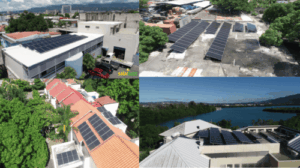
Editor’s Note: Our clients and systems were referenced in a recent New York Times article examining the impact of Hurricane Melissa and how rooftop solar systems performed during and after the storm. Readers who wish to view the article may do so using the link below.

👉 Read the New York Times article:
https://www.nytimes.com/2025/11/08/climate/jamaica-hurricane-solar-power.html

 

Resilience is not a foreign concept in Jamaica. For generations, Jamaicans have navigated environmental uncertainty and economic constraint with ingenuity, perseverance, and resolve. From small business owners reopening their doors after floodwaters recede, to households restoring order and routine in the aftermath of storms, adaptability is not merely a response – it is our defining trait.
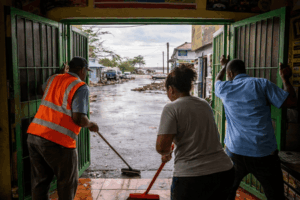
As climate change accelerates and extreme weather events intensify, hurricanes of Melissa’s magnitude are no longer exceptional. In this reality, resilience can no longer rely solely on human determination.

Our capacity to recover must be reinforced by infrastructure, particularly energy systems, that are designed to endure disruption and enable swift recovery. Jamaica’s solar and energy storage systems must deliver continuity, reliability, and stability precisely when communities need them most.
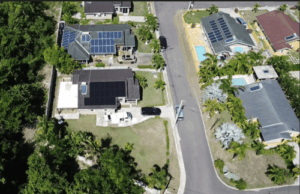
Resilience requires energy systems built to perform under pressure.

Systems That Stand When It Matters Most
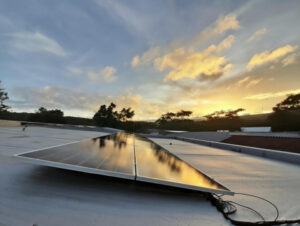
In recent storms, a quiet yet consequential shift has been unfolding across the island. Properly designed solar energy systems have emerged as a cornerstone of resilience, supporting not only individual households but entire communities. Installed solar capacity has expanded from less than 1.4 megawatts in 2015 to nearly 65 megawatts by 2024, now accounting for approximately ten percent of Jamaica’s electricity mix.
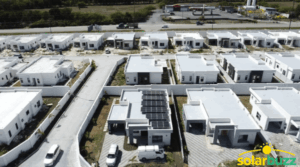
Beyond capacity figures, solar has revealed a deeper dimension of resilience. When engineered correctly and installed to rigorous standards, these systems become anchors of care and solidarity. 

Homes that retain power after a storm often evolve into community lifelines and spaces where neighbours gather to charge devices, preserve food, access information, and reconnect with loved ones. In these moments, resilience transcends technology; it becomes collective.

Post-Melissa reporting in a recent New York Times article underscored this reality. Properly mounted solar panels largely withstood hurricane-force winds, maintained uninterrupted power supply throughout the storm, and enabled households to remain operational while serving as points of support for their communities. The article, After Jamaica’s Disastrous Storm, Solar Power Is a Bright Spot, featuring SolarBuzz clients in Treasure Beach and Kingston, highlights how rooftop solar systems, when done right, deliver continuity of power and meaningful community benefit.

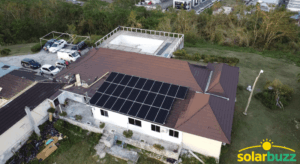
One featured client, Jennifer Hue of Treasure Beach, experienced flooding and property damage during the hurricane, yet her rooftop solar system remained fully operational. While the grid failed, her home stayed powered, allowing neighbours to charge phones, preserve food, and maintain vital communication.
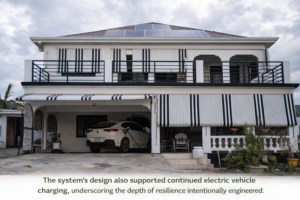
Similarly, Twila-Mae Logan of Kingston was able to use her solar-equipped home as a hub for food storage and family support during the outage.

At SolarBuzz, we view solar not as a lifestyle enhancement, but as essential infrastructure that is central to household safety, economic stability, and energy independence. 

These featured systems did not endure by chance. They performed as designed because they were engineered for Jamaica’s environmental realities and installed to standards capable of withstanding hurricane-force winds and extreme conditions.
Breaking the Cycle of Darkness
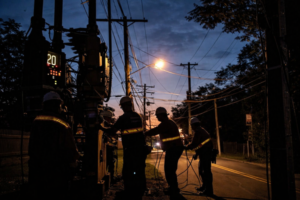
Despite this progress, access to resilient solar and storage systems remains uneven. While declining global equipment costs, government incentives such as the solar tax credit, financing mechanisms, and net billing policies should, in theory, make solar more attainable, local bureaucratic barriers continue to impede adoption.

Lengthy approval timelines, complex banking and net billing requirements, and lingering policy ambiguity place resilient energy solutions beyond the reach of many Jamaicans. However, climate realities demand the opposite approach.

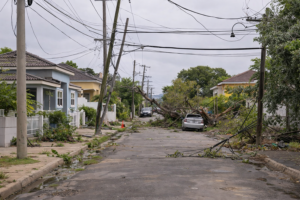
Reducing dependence on long, vulnerable transmission lines and decentralising power generation directly at the point of use is no longer optional; it is imperative.
Incentive frameworks must therefore be clear, accessible, and free from protracted delays or cost-intensive administrative requirements.

Competitive financing from major banks, including the ability to integrate solar systems into new mortgages, is essential to broadening access to properly designed solar and battery solutions.

As Caribbean leaders continue to call for greater international support to address climate impacts the region played little role in creating, local action must demonstrate clarity, urgency, and execution.

Jamaicans deserve a straightforward, efficient, and affordable pathway to resilient solar adoption, alongside continued investment in strengthening the national grid.

For Jamaica, resilience now means empowering homeowners to invest confidently in high-quality solar and storage systems designed to withstand hurricane-force winds and deliver long-term energy security.

Deidre Wedderburn is the Client Relations Manager at SolarBuzz, dedicated to building long-term partnerships and delivering top-tier client experience (deidre@solarbuzzjamaica.com). 

KINGSTON, Jamaica — The Government has signalled it will not be renewing the Jamaica Public Service’s (JPS) all-island licence to supply electricity without re-negotiation of the current terms, and is open to exploring other contracts with interested parties.

Minister of Science, Energy, Telecommunications and Transport Daryl Vaz made the announcement during a press briefing on Tuesday.

He indicated that the Government’s position was that the licence itself, which was signed for a 20-year period and gives JPS the power to operate, was “flawed”, resulting in “flawed service”. However, the Government will continue to operate under those conditions as mandated, until its expiry in 2027.

“In the meantime, the Government of Jamaica is going to start looking at our options, [those] options include any and everybody. Whoever it is that we end up going to the table with for a final negotiation for a new licence with new terms as of May 2027 will be terms that are favourable to the Jamaican people,” he said.

Vaz maintained that, under its current terms, the licence has not served the country well.

“The terms under the current licence have yielded electricity prices which are amongst the highest in the region. The arrangements are deeply flawed and in need of significant reform,” he said.

Forefront in that reform must be an increase in the use of renewable energy to generate the country’s electricity, according to Vaz.

“There has been a significant global reduction in the cost of renewables. The Government of Jamaica is determined that consumers of electricity in Jamaica should be placed in the best position to benefit from these developments. The current licensing arrangements with the JPS does not provide sufficient incentives to bring renewables onto the grid at scale, and it provides for generation via imported fossil fuels which is not cost-effective,” the minister said.

JPS was informed by letter of the Government’s intention to renegotiate, via condition 27 of the current licence, which allows the Government to acquire the licensed business at the expiration of the term of the licence, Vaz explained.

He stressed that the Government does not intend to take over electricity provision, and will instead renegotiate.

The minister maintained that the timing of the announcement, months before an election is expected to be called, was in fact the best “first opportunity presented to the current administration” to renegotiate the contract from a position of authority, pre-empting accusations of it being an election ploy.

“These were the timelines…July 8th 2023 for the Government to communicate to the licensee… and 2027, for the expiry of the existing licence,” he said.

Added Vaz, “We are getting an opportunity to draw a line in the sand, learn from our mistakes on an even keel to get the best results.”

In fending off the possibility of lower quality of service as the contract comes to an end, Vaz said he would deal with any dip in service quality by employing the strength of the Office of Utilities Regulation (OUR), but stressed he did not expect this to happen.

Jamaica Observer

The Government of Jamaica has formally notified the Jamaica Public Service Company (JPS) of its intention not to renew the current all-island electricity licence under the existing terms upon its expiration on July 8, 2027.

Energy Minister, the Honourable Daryl Vaz, MP, made the announcement on Tuesday (July 1, 2025), underscoring the Government’s commitment to meaningful reform in Jamaica’s electricity sector and the delivery of better outcomes for the Jamaican people.

“This morning, in my capacity as Energy Minister, I wrote the Jamaica Public Service Company (JPS) and gave formal notice of the Government’s intention upon expiration of the current all-island licence NOT to renew under existing terms,” Minister Vaz announced.

The Government’s decision is rooted in the need to reduce Jamaica’s high electricity costs, expand the use of renewables, and introduce more favourable licensing arrangements. Minister Vaz emphasized that “the people of Jamaica have NOT been served well by the existing electricity supply arrangements. The terms under the current licence have yielded electricity prices which are amongst the highest in the region. The arrangements are deeply flawed and in need of significant reform.”

The Government’s notification to JPS is in accordance with Condition 27 of the current licence, which provides for the Government of Jamaica to acquire the licensed business upon expiration.

Minister Vaz was clear in stating that the Government does not intend to take over operations of the JPS. Instead, the Government will pursue negotiations for a new licence with more favourable terms for the Jamaican people and is open to exploring offers from potential investors, including JPS.

“The action I have taken today, on behalf of the Government of Jamaica, in giving formal notice to the JPS of the Government’s intention to acquire the licensed business at the expiration of the term of the licence, is a step towards achieving the change which our country demands,” Minister Vaz stated.

The Energy Minister assured Jamaicans that this move will not disrupt electricity services and that stability will be maintained throughout the transition period.

In the meantime, Minister Vaz reaffirmed the Government’s goal: “This administration of Prime Minister Andrew Holness will NOT enter into arrangements which do not provide a framework for positive reformation of the energy sector. We fully intend to deliver real and sustainable results for the people of Jamaica.”

The Government will now move forward with the development of a long-term plan aimed at securing more reliable, affordable, and renewable energy solutions for Jamaican households and businesses.

OPM News

Solar Buzz Jamaica commends the Government’s recent announcements on the non-renewal of the current JPS licence and its renewed emphasis on expanding renewables to lower electricity costs. These measures echo proposals that industry bodies – including the Jamaica Renewable Energy Association (JREA) for over a decade and the recently formed JMEA Energy Committee – have advanced. 

While the renewed focus is welcome, the real measure of success will be in how swiftly and effectively the Government addresses the practical hurdles that have slowed our energy transition.

Government Announcements

JPS Licence Renewal
On July 1st 2025, Minister Daryl Vaz confirmed that Jamaica Public Service’s all-island licence will not be renewed under its current terms when it expires on July 8th 2027.

Private-Sector Leadership
At the CARICOM summit days later, Prime Minister Andrew Holness encouraged businesses to invest boldly in renewables, highlighting their role in lowering bills and building resilience.

Net-Billing: A Critical Bottleneck

Distributed rooftop solar has enormous potential to reduce system demand, stabilize the grid, and deliver low-cost energy to all Jamaicans. 

Yet the Net-Billing framework remains encumbered by:

  • Complex Application Requirements — multiple technical reviews and declarations that can feel duplicative.

  • Substantial Up-Front Fees — including a J$19,000 non-refundable processing charge.

  • Prolonged Approval Timelines — often stretching weeks or months beyond statutory targets.

These procedural barriers deter many prospective applicants and slow the very renewable deployment the Government now champions.

Residential Tax Breaks: Unintended Consequences

In March 2025, MSET imposed the Net-Billing licence requirement for homeowners applying for residential renewables tax credits just days before the  April 1st 2025 deadline. The last-minute rule change stipulated that only those with approved Net-Billing licences would qualify – a requirement that was not initially imposed when the incentive was announced with great fanfare. 

Although Minister Vaz granted a limited extension until April 1st 2025, this effectively means all homeowners with solar systems now need a Net-Billing licence or risk operating illegally. This is not only impractical and, at this point, impossible to govern, but the Electricity Act itself states that homeowners who self-generate power from solar, with no intention of selling back, are exempt from needing a Net-Billing licence.

Recommendations for Practical Progress

To convert policy intent into real-world impact, we urge the Government to:

  1. Set and Enforce Clear Timelines
    Institute a statutory 10-business-day window for Net-Billing licence decisions, with automatic escalation if unmet.

  2. Simplify Documentation
    Review and eliminate overlapping technical or financial declarations to streamline the customer experience.

  3. Stabilize Incentive Rules
    Publish any changes to tax-credit eligibility at least six months before they take effect, ensuring homeowners can plan with certainty – and clarifying that self-generating systems with batteries do not require a Net-Billing licence.

Engage Stakeholders Continuously
Convene regular working groups with industry, regulators, and consumer representatives to monitor progress and troubleshoot emerging issues – rather than announcing new policies that do not sync with the Vision 2030 policy or the Government’s renewed focus on high energy costs.

Solar Buzz Jamaica stands ready to partner with MSET, the Office of Utilities Regulation, Tax Administration of Jamaica and other stakeholders to translate today’s announcements into tomorrow’s clean-energy achievements. 

With targeted adjustments to Net-Billing procedures and tax-incentive clarity, we can accelerate the deployment of distributed rooftop solar across the island – not just large, tendered grid installations – bringing lower bills, greater job creation, and enhanced resilience for all Jamaicans, especially at the residential level.


Jason Robinson
Chief Executive Officer
Solar Buzz Jamaica

Daily blackouts averaging four hours or more have become the new normal across Cuba’s capital of Havana, an unsettling sign of a still-unresolved energy crisis as the sultry Caribbean summer sets in.

Havana’s misfortune follows a string of nationwide blackouts over several months, most recently in March, that plunged the country’s frail grid into near-total disarray, stressed by fuel shortages, natural disaster and economic crisis.

The major commercial hub on the island and a top tourist destination, Havana has long endured occasional blackouts but until this year had been largely shielded from the worst of the outages by the grid operator.

“People are stressed,” said Aramis Bueno, a 47-year-old resident of the densely populated Central Havana neighborhood of Dragones, as he sat on his doorstep during an evening blackout this week.

“It’s not easy living like this. Look at what time it is. We haven’t been able to shower, to eat … because of the blackouts.”

The worsening power outages in Havana come as the United States has severely tightened sanctions on Cuba, returning the island nation to a list of state sponsors of terrorism and ratcheting up restrictions on remittances, tourism and trade.

Blackouts in the capital, unlike in much of the rest of the country, are largely scheduled, and far shorter than in the outlying and more rural provinces, where outages sometimes span 15 hours or more per day.

But they are increasingly the talk of the town in Havana.

“It’s terrible, it’s terrible. The electricity system in this country right now just isn’t working,” said Dayamí Cheri, 52, a resident of cramped Old Havana. “With this heat and no electricity, no one can survive.”

Recent outages led to school and workplace closures, reinforcing an already deep shortfall in economic output, which fell 1.9% in 2023. The economy did not expand in 2024, when more severe blackouts set in, though the government has not yet released last year’s growth figures.

There are glimmers of hope, however.

Cuba is making progress this year on a China-backed plan to install more than 50 solar parks capable of churning out more than 1,000 megawatts of electricity.

Eleven such solar parks have been installed since February, offering the promise of a better future, though most Habaneros say they’re still hunkering down for a long summer.

“I was born with blackouts,” said Yasunay Perez, 46, of central Havana. “This is nothing new.”

Reuters

Amid the forty-degree heat that paralysed the coastal city of Karachi in April, Saad Saleem blasted his air-conditioning with near-abandon.

Electricity tariffs have surged, but the affluent entrepreneur has been unbothered since he spent $7,500 installing solar panels on his bungalow’s roof as part of a solar boom in Pakistan.

Saleem bought his modules two years ago, as the International Monetary Fund and economically beleaguered Pakistan were hammering out a preliminary bailout program. Under the deal, Pakistan sharply raised power and gas tariffs to support struggling suppliers in the heavily-indebted sector.

Pakistanis now pay more than a quarter more on average for electricity, setting off a scramble to install solar modules.

Solar made up over 14% of Pakistan’s power supply last year, up from 4% in 2021 and displacing coal as the third-largest energy source, according to U.K. energy think-tank Ember. That is nearly double the share in China, the world’s top supplier of solar panels and a global leader in green technologies, and one of the highest rates in Asia, according to Reuters’ analysis of Ember data.

But the explosion in solar uptake has left out many in Pakistan’s struggling urban middle class, who have been forced to cut back on electricity in face of soaring bills, according to interviews with more than two dozen people, including energy officials, consumers and power-sector analysts. Most of the nation’s solar panels aren’t connected to sell excess capacity to the grid, so the benefits of cheap and reliable power aren’t widely shared.

Some observers also blame financial stress in the energy sector on deals Pakistan made with China for Beijing to finance billions of dollars worth of power-generation contracts, many of which involve coal-fired plants. Pakistan is behind on many of the payments and has been in talks with China about extending the time it has to repay the debt.


Countries like South Africa also face widening energy gaps after affluent residents adopted solar power. But analysts are watching Pakistan particularly closely due to the pace at which the nation of 250 million has taken to sun-based energy.

“This could serve as a cautionary tale as to how regulation and policy needs to keep up with technological change and rapidly evolving economics,” said Haneea Isaad, an Islamabad-based energy finance specialist at the Institute for Energy Economics and Financial Analysis.

In an interview with Reuters, Pakistan power minister Awais Leghari acknowledged the energy gap but noted that tariffs have come down significantly since June 2024, when the IMF approved reductions.

He also pointed to heavy uptake of solar by rural Pakistanis, many of whom previously had limited access to the grid. Many non-urban Pakistanis have installed small solar setups to meet their power needs, which are typically far lower than those of their city-dwelling counterparts.

“Pakistan has actually gone through a solar revolution,” he said. “The grid is going to get cleaner by the day, and this is something that we’ve achieved as a nation that we are proud of.”

The IMF did not return requests for comment.


ENERGY DIVIDE


Just a few miles away from Saleem’s upscale neighbourhood, Nadia Khan has restructured her life to cut electricity costs.

The air-conditioning in the home maker’s apartment is rarely used and she’s stopped ironing most of the clothes worn by her family of five, citing the price of power.

Khan’s family is not alone in cutting back: Only 1% of paying consumers used over 400 units of power in 2024, per Karachi-based consultancy Renewables First, down from 10% before the pandemic.

Like others among Pakistan’s masses of apartment dwellers without space to install solar modules, Khan has been shut out of the revolution.

The roofs of many apartment buildings are designated for water storage and other sanitation purposes, while owners of rental buildings have little incentive to invest in solar connections for their tenants.

“We get some sunlight indoors but I can’t seem to think of a way to go solar,” she said. “Why must people living in apartments suffer?”

Meanwhile, land-owning Pakistanis have benefited from the glut of Chinese-made low-cost solar modules shut out of the West by high tariffs.

China exported 16.6 gigawatts of solar capacity to Pakistan last year, according to Ember, about five times as much as in 2022. The average cost per watt of solar-module capacity exported also fell 54% in the same period.

However, most solar setups aren’t configured to send spare power back to the grid, limiting their benefit to the wider public. Renewables expert Syed Faizan Ali Shah, who advises the government on solar adoption, has said that less than 10% of solar consumers sell excess power to the grid.

Experts and government officials blame high costs and sanctioning delays. Connecting a solar module to the grid usually takes between three and nine months, said Renewables First energy expert Ahtasam Ahmad, prompting many to not bother.

Converting power generated from a solar panel for transmission to the grid also requires equipment like inverters, which typically cost between $1,400 and $1,800, or roughly half the median household income in Pakistan.

SUNK COSTS


Pakistan conglomerate Interloop has installed hundreds of solar modules next to its cowsheds in Punjab province that help provide the electricity keeping its 9,300 livestock cool and their milk chilled.

The investment in solar has been a lucrative one for Interloop, which typically breaks even on solar installation costs after three to four years. Basic operating costs are about three quarters less than payments to the grid, said Interloop energy manager Faizan Ul Haq.

The money Interloop saves also reflects a gaping hole in the accounts of Pakistan’s power companies.

Even though industrial groups and wealthier Pakistanis now consume less grid power, suppliers’ costs haven’t changed proportionately. Fixed expenses like fuel contracts and upgrades to transmission architecture accounted for about 70% of supplier expenditure in the year to June 2024, according to an Arzachel estimate.

To cover costs, suppliers have raised prices on their remaining customers, who have already faced repeated increases as a result of the IMF deal.

Fixed costs of 200 billion rupees were shifted to non-solar consumers in the 2023-2024 fiscal year, meaning they paid 6.3% more per kilowatt-hour than they otherwise would have, according to Arzachel data.

Solar panel imports have increased since, meaning grid demand is likely to continue dropping, forcing remaining customers to pay more.

“Pakistan’s experience demonstrates a crucial lesson: when governments fail to adapt quickly enough, people take charge,” said Ahmad of Renewables First.


Reuters

Spain and Portugal are reeling from a massive, unexplained power outage that knocked out traffic lights, caused chaos on roads and in airports, and prompted both countries to declare a state of emergency.

Portugal’s grid operator Redes Energéticas Nacionais (REN) said electrical supply was lost across the entire Iberian Peninsula, and in parts of France, shortly after midday. Hours later, Spain’s Prime Minister Pedro Sanchez said authorities were still not sure what caused the blackout.

The outage took out lighting and power sockets, and caused subway systems to suddenly fail. In Madrid, traffic piled up on the roads after the lights went out.

“I was driving and suddenly there was no traffic lights … It was a bit of a jungle,” Luis Ibáñez Jiménez told CNN. “I saw a massive bus coming, and I had to accelerate a lot to go past it.”

The cause of the blackout was unclear, but its impact was dramatic: transport hubs were shuttered and governments in both countries, which share a population of around 60 million people, hastily arranged emergency meetings to co-ordinate a response.

Spain’s Interior Ministry declared a state of emergency in the regions of Andalucia, Extremadura, Murcia, La Rioja and Madrid. After a late-night cabinet meeting, Portugal’s Prime Minister Luis Montenegro declared an energy crisis, with the country’s grid operator warning that fully restoring power would be a “complex operation.”

By the end of Monday, grid operators said the supply of energy was gradually being restored in pockets of both countries. More than 87% of power had been restored in Spain by early Tuesday morning, with all affected substations functioning again, while videos on social media showed people in Portugal cheering at night as power was restored.

Earlier, Madrid’s mayor José Luis Martinez Almeida asked people to minimize their movements and only call emergency services if it was truly urgent. He also called on people to clear the roads for emergency workers. Later in the day, Madrid’s emergency services provider urged the country’s government to declare a national emergency, and local leader Isabel Díaz Ayuso asked the country to deploy the army.

Antonio Costa – president of the European Council and Portugal’s former prime minister – said although the cause of the outage was not clear, there were “no indications” of a cyberattack.

Portugal’s prime minister blamed his neighboring nation for the scenes, saying his government did not yet know what caused the cut, but that it “did not originate in Portugal” and “everything indicates” that the problem started in Spain.

João Faria Conceição, head of REN, said Portugal was badly affected because it imports electricity from Spain in the morning, because Spain is one hour ahead and electricity produced by its solar plants is cheaper than producing it internally, during those hours.

“We are peripheral,” Conceição told a news conference Monday evening. While Spain received support from France and Morocco, Portugal had no country to turn to for emergency supplies of electricity.

Confusion grips major cities

Monday’s blackout hit a huge and busy swathe of southern Europe. Dozens of Iberian cities, like Madrid, Lisbon, Barcelona, Seville and Valencia, are major hubs for transport, finance and tourism. Two of the five busiest airports in the European Union in 2023 were Madrid’s and Barcelona’s, according to EU data.

For a few hours, modern routines were suspended: cash replaced card payments, police officers used arm signals to direct traffic, and restaurants, supermarkets and stores closed their doors. Madrid’s firefighters carried out 174 “elevator interventions” across the city on Monday, its Emergency Information Office said, and some shoppers stocked up on essentials and on canned goods.

The worst-case scenarios appear to have been averted, at least in the first hours of the blackout. Spain’s nuclear sites were declared operational and safe, while Portugal’s National Institute for Medical Emergencies said it had “activated its contingency plan,” running its telephone and IT systems through a back-up generator. Spain’s health ministry said the same process happened in hospitals there.

But travel was hit harder. Flights at major airports in the region were suddenly delayed or canceled, with travelers scrambling to adapt; online flight trackers reported that several airports saw their frequent departures suddenly halted after midday. Portugal’s flag carrier TAP Air Portugal told people not to travel to the airport until further notice.

Ellie Kenny, a holidaymaker inside Lisbon’s Humberto Delgado airport, said hundreds of people were stood in the dark in lines, with no air conditioning or running water. Shops were only accepting cash, she told CNN.

Trains were also suspended in Spain. And darkness suddenly descended in subway tunnels; video posted on social media showed blackened subway cars stuck in standstill on platforms in Madrid, where the metro was suspended and entrances to stations were taped off.

Sporting events were impacted too. Tennis fans at the Madrid Open filed out of courts after the outage caused play to be suspended.

Some parts of southern France, near the Spanish border, felt a more sporadic impact.

Emilie Grandidie, a spokeswoman for France’s electricity transmission operator RTE, told CNN there was “a small power cut” in the French Basque Country; “It lasted only a couple of minutes and was restored very quickly,” she said.

For several hours on Monday, tens of millions of people were asking each other when power would return, and why it was knocked out in the first place.

Neither question was easy to answer. But once power returns, it could still take days to untangle the damage caused by Monday’s worrying blackout.

Spain’s transportation minister said medium and long-distance trains won’t resume service until at least Tuesday, and the impact of a huge backlog in flights could stretch throughout the week.

CNN

Vaz rubbishes Opposition’s criticisms of Government’s energy policy

MINISTER with responsibility for energy Daryl Vaz has defended the Administration’s handling of the energy sector in the wake of claims by the Opposition People’s National Party (PNP) that the Government is to be blamed for the high electricity prices Jamaicans now face.

Making his presentation to the 2025/26 Budget Debate last week, Opposition spokesman on finance Julian Robinson slammed the Government over its energy policy as he pointed out that the cost of electricity in Jamaica is more than US$0.40 per kilowatt hour (kWh), while it was as low as US$0.22/kWh during the last PNP Administration.

That theme was continued by Opposition Leader Mark Golding during his presentation to the budget debate on Tuesday as he charged that the Andrew Holness Administration had dropped the ball as it failed to issue regular request for proposals (RFPs) for additional renewable energy for years which could have resulted in lower electricity prices for Jamaicans.

But during a mid-morning media briefing on Tuesday Vaz scoffed at the PNP’s claim that the high cost of electricity was due to Government’s inability to develop a sustainable renewable energy framework.

Vaz listed a multiplicity of factors he said caused the delay, rejected the narrative that little progress has been made in the renewable energy sector, and described the Opposition’s claims as “disingenuous and misleading”.

According to Vaz, measurable achievements and strategic investments in renewables underscore the Government’s commitment to achieving an evidence-based, sustainable, and affordable resilient energy future for Jamaica.

“Data clearly refutes claims of inaction and demonstrates a consistent, structured approach to energy diversification and transformation. The increase in electricity prices between 2016 and 2024 was not due to a lack of renewable energy deployment but rather global scenarios linked to fossil fuel volatility, inflation, supply chain disruptions and geopolitical issues.

“The Government’s renewable energy expansion remains on track, ensuring long-term energy affordability and security for Jamaica. More renewables are coming but at the right time and in the right way as we continue to lower the cost for all our citizens. Together we are building a cleaner and more secure energy future for Jamaica,” Vaz said.

He argued that detractors are spreading propaganda because the island is now in the “silly season” with a general election near.

“This is something that is ongoing and it is not specific to my ministry or to energy but there is just a lot of misconceptions, misleading, and disingenuous information. What I can say specifically is that I encourage all well-thinking Jamaicans to get the facts and most importantly judge the policies and performance of those who are putting themselves forward in the upcoming election,” Vaz said.

“We are not perfect, but definitively we have a lot of runs on the board and our job will be to make sure and put those out in the public domain so people can examine and make informed decisions,” added Vaz.

The energy minister said significant progress has been made in expanding the energy portfolio, guided by a robust policy framework and strategic investments.

He said several factors, including surging fossil fuel prices, the Russia-Ukraine war, and global supply chain disruptions have contributed to the high price for electricity.

Vaz argued that while renewable energy technology costs have declined over time, the transition from fossil fuels must be a planned, orderly and well-timed process.

Jamaica Observer

Natural gas remains by far the largest source of electricity in the country, according to research from clean-energy think tank Ember

Wind and solar energy generated more electricity in the U.S. than coal for the first time last year, according to analysis from clean-energy think tank Ember. The two renewable energy sources accounted for 17% of the country’s power mix while coal fell to a low of 15%, it said.

Solar was the fastest-growing energy source, according to Ember’s analysis of data from the U.S. Energy Information Administration, increasing 27% from the year before, while wind rose 7%.

“We’re in a new paradigm,” said Dave Jones, chief analyst at Ember. “Solar did more to meet the rising demand for electricity last year than natural gas. And that’s at odds with the current narrative and expectations going forward, where so much of the discussion has switched towards building more gas plants.”

Ember used terawatt hours of electricity supply data from the EIA to reach its conclusions, including generation from distributed and small-scale solar installations such as those installed on rooftops and commercial and industrial systems.

Natural gas generation increased 3.3% in 2024, according to Ember, and remains by far the largest source of electricity in the U.S., accounting for 43% of the mix.

The analysis comes as the Trump administration is preparing for an upsurge in natural gas production and exports. Energy Secretary Chris Wright told an energy conference in Houston this week that he is pushing for new gas pipelines in places like Alaska and New England, and approving permits to ship natural gas overseas.

“Drill, baby, drill also requires build, baby, build,” he said.

Overall, the U.S. installed 50 gigawatts of new solar capacity in 2024, according to a report this week from the Solar Energy Industries Association, a nonprofit trade group, and consulting firm Wood Mackenzie. This marked a record in new power generation added to the grid in any energy technology in more than two decades.

Solar and storage account for 84% of all new electricity-generating capacity added to the grid last year, the SEIA report said.

Wind and solar have overtaken coal in 24 states, according to Ember, with Illinois the latest to join the ranks in 2024, following Arizona, Colorado, Florida and Maryland in 2023.

California and Nevada both surpassed 30% annual share of solar in their electricity mix for the first time last year (32% and 30%, respectively). California’s battery growth was key to its solar success. It installed 20% more battery capacity than it did solar capacity, which helped it transfer a significant share of its daytime solar to the evening.

Texas installed more solar and battery capacity than even California. Yet the growth of solar was uneven28 states generated less than 5% of their electricity from solar in 2024, highlighting significant untapped potentialeven before adding battery storage.

“It shows that renewables can meet that rise in electricity demand, that solar is able and wind is if it is given the chance,” Jones said. “The fall in battery costs is a gamechanger for how much solar the U.S. electricity grid could integrate in the near future.”

Looking ahead, the global offshore wind industry is poised for a rebound in 2025, with capacity additions expected to reach 19 gigawatts and sector-wide expenditure projected to hit $80 billion, according to research from Rystad Energy. This recovery follows a slowdown at the end of last year, when new installations dropped to approximately 8 GW—2 GW lower than the prior year. A record wave of lease auctions is driving the resurgence, with the world’s largest offshore wind market, mainland China, accounting for 65% of new capacity, Rystad said.

The Wall Street Journal

Jamaica Public Service Company (JPS) is exploring the possibility of underground power lines as part of a sweeping overhaul to fortify its grid against the growing threat of Category 5 hurricanes.

While the company has long relied on overhead transmission lines, the increasing frequency of stronger hurricanes and other climate-driven disasters has renewed discussions around selective undergrounding to protect critical infrastructure and reduce extended power outages.

At the Jamaica Chamber of Commerce breakfast conversation last Friday, the discussion turned to whether JPS would align with the approach taken by some developed nations and explore the feasibility of underground power lines as part of its infrastructure strategy. Underground power lines typically helps to reduce the risk of wildfires and outages caused by storms.

“An underground system is about 10 times more expensive than an overhead system,” JPS President and CEO Hugh Grant said.

“However, for selective areas, particularly critical infrastructure, it can help to reduce storm-related outages and speed up recovery.”

JPS is conducting feasibility studies to determine where undergrounding would provide the most value, balancing the significant upfront costs with long-term resilience benefits. While full-scale undergrounding isn’t feasible due to cost constraints, Grant noted that high-density commercial zones and essential service hubs could benefit from a more resilient underground system.

“We won’t be able to underground everything, but where it makes sense—such as in high-traffic business districts and areas where rapid restoration is critical—we are looking at the feasibility,” he said.

The undergrounding initiative is just one part of JPS’s broader infrastructure upgrade, which also includes transitioning to hurricane-resistant power poles, reinforcing substations, and enhancing Jamaica’s preparedness for earthquakes.

JPS’s grid-hardening strategy comes in response to Hurricane Beryl, which caused widespread power outages across Jamaica earlier this year. The company acknowledges that its infrastructure is currently built to withstand Category 3 hurricanes, but as storms become more intense, it is now designing for Category 5 conditions.

“We saw the impact that Beryl had, and going forward, we are designing for a Category 5,” Grant said.

A major component of this shift involves replacing wooden utility poles with concrete structures, which offer greater wind resistance and durability. Grant explained that JPS is already making this transition as part of its regular infrastructure upgrades.

“One of the things we are doing right now is moving from wooden structures to concrete poles, which have higher wind resistance and better longevity in extreme weather conditions,” he told the Business Observer in a follow-up interview.

Additionally, JPS is strengthening its substations, many of which are located in coastal areas prone to flooding. The company is also expanding vegetation management programs, as fallen trees and overgrown branches remain a major cause of storm-related outages.

Beyond its internal upgrades, JPS is partnering with developers to ensure that new residential and commercial projects integrate storm-resistant power infrastructure from the start.

“For new developments, we are working with developers to see how we can integrate more resilient infrastructure from the outset. That means pre-installed underground circuits where feasible, reinforced pole structures, and smart grid solutions that allow for faster power restoration after a storm,” Grant said.

While much of JPS’s disaster resilience planning has focused on hurricanes, Grant also highlighted the need to prepare for earthquakes, a less-discussed but serious risk for Jamaica’s power network.

Between August and December last year, the country recorded 11 earthquakes, ranging in magnitude from 2.9 to 6.5, according to The University of the West Indies’ Earthquake Unit.

“When it comes to earthquakes, the type of devastation we’re talking about calls for alignment and joint partnerships across the board,” Grant said. “The power sector, government, military, and telecoms must have a coordinated response plan.”

JPS’s earthquake-readiness plan involves reinforcing transmission towers and substations to withstand seismic shocks, enhancing emergency response protocols to ensure faster power restoration after an earthquake, and securing backup power solutions for critical facilities such as hospitals, water treatment plants, and emergency services.

Although Jamaica’s power grid has automatic shutdown mechanisms in place to protect major infrastructure during an earthquake, Grant warned that significant structural damage could take weeks to repair. As a result, JPS is prioritising reinforcement of critical infrastructure, particularly in urban centers where power restoration is most critical.

“Unlike hurricanes, earthquakes happen with no warning. So our approach has to be proactive rather than reactive,” Grant emphasised.

With 14,000 kilometres of distribution lines and 3,000 kilometres of transmission lines, upgrading Jamaica’s power grid is a massive undertaking. Grant acknowledged concerns about how these improvements will be financed without placing an additional burden on consumers.

“This is not an overnight fix,” he admitted. “With the scale of infrastructure we are working with, this is a multi-year, phased approach. We have to prioritise key areas first, then expand as funding allows.”

JPS is working to secure funding through multiple channels to avoid sharp increases in electricity rates. These include public-private partnerships with developers, government-backed infrastructure initiatives, and international climate resilience funding.

Grant noted that while these upgrades will require significant capital investments, they are expected to reduce long-term operational costs, ultimately saving money by minimising storm damage and cutting outage restoration times.

“We are balancing the need for resilience with ensuring energy remains affordable,” he said. “If we execute this correctly, these investments will save us money in the long run—by reducing storm damage costs, cutting outage durations, and improving overall efficiency.”

Jamaica Observer