
If the Peru and Mexico auctions are any indication, Latin American markets are establishing a new, and very low, normal for solar prices. Peru recently awarded a solar power purchase agreement (PPA) at $47.98/MWh to Enel Green Power (EGP), making headlines as the lowest PPA on record. But just weeks later, EGP beat its own a record in Mexico’s auction with a PPA price of $35.44/MWh for solar PV, and an average price for all awardees of $50.77/MWh for wind and solar.

What’s pushing these prices down, and how long will it last? Developers are likely making a few key assumptions:

1) Commodity prices are falling — 80 per cent since 2008, according to data from IRENA — and are expected to continue dropping, so modules will be cheaper;

2) Energy Performance Certificate costs are likely to fall as renewable energy penetration increases throughout the region; and

3) The quality of resources is very good in these markets, increasing the effectiveness of solar technologies so developers can get more bang for their buck.

While solar costs are indeed falling, it’s the jaw-droppingly low price bids by EGP that are making headlines. They are building massive installations, much larger than in the past, and economies of scale are helping to push down the prices. Access to funds at highly competitive rates from organisations such as the European Investment Bank has also enabled EGP to bid aggressively.

“Our prices were the most competitive but in line with those submitted by other international operators taking part in the auction,” said Carlo Zorzoli, EGP’s head of Latin America.

EGP has won 1,172 megawatts of solar PV in Latin America in 2016 alone. That, in itself, is noteworthy; perhaps more noteworthy is that they believe they can build profitable projects across a portfolio of tightly priced PPAs.

It’s hard, and perhaps not even desirable, for other developers to compete with EGP’s low bids, but there are other players in these markets bidding at or very near to Enel’s winning prices. Companies eager to make a footprint in the market are coming in at or below cost, according to industry analysts, potentially with internal rates of return in the single digits – a reality they are willing to face to gain a strong foothold in these young markets with enormous potential.

A favourable regulatory environment will continue to be vital in attracting serious developers and maintaining low prices. Peru’s regulator, Osinergmin, required very high bid bonds for their RFP — $50,000/MW — and tied the PPA price to the US dollar, which could prevent results similar to the frenzied bids and current situation in Brazil.

Mexico also allowed developers to bid in pesos indexed to the US dollar, which offered more economic certainty.

Peru’s next request for proposal is couple of years off, but Mexico has one coming up in August, and many expect to see even lower prices.

However, when it comes to other Latin American markets, while prices may be relatively low, they aren’t expected to break records, particularly in Argentina where many unknown factors loom. Broadly, however, the theme is clear: Latin America is opening up, competition is fierce and — at least as far as pricing is concerned — it’s a race to the bottom.

Jamaica Observer 

Screen Shot 2016-03-16 at 13.39.34

German artist Hermann Josef Hack’s World Climate Refugee Camp in Hannover displaying 600 miniature climate refugee tents. The model camp is a public art intervention that depicts the social impacts of climate change.

Scientists predict that if there is an increase in global temperature of up to 4° Celsius — which the current trajectory has us reaching by the end of this century, small island developing states (SIDS) face the threat of extinction. SIDS, with similar characteristics of tropical climates, small populations and related socio-economic and development challenges, are perhaps the most vulnerable countries to this phenomenon of global warming, primarily because of their low-lying position in relation to the sea and their limited economic ability to respond to catastrophic events.

For a small island like Jamaica, which has already begun to experience effects of climate change, using the significant beach erosion in the tourist areas of Negril and Hellshire, as well as lengthy periods of droughts as examples, a call for action cannot be overemphasised. Let’s act while we still can.

Identifying the problem

The unfortunate reality of industrialisation is that, although it has improved the lives of many, it has single-handedly resulted in a wealth of environmental catastrophes — climate change is arguably the worst.

Historically, States like the US and China, in their quest to becoming developed, have played a notorious role contributing to the destruction of the environment. Ironically, however, despite SIDS having contributed the least to global warming (accounting for less than one per cent towards GreenHouse Gas (GHG) emissions), they stand to be the worst affected.

Extreme weather patterns, like extended droughts and increased temperatures, are just some of the threats of climate change. Of the list, perhaps the most serious is a rise in sea levels. This will not only potentially cause ground and surface water sources to become contaminated but also affect the livelihoods of many. Sectors like tourism and agriculture, both of which are heavily relied on by many SIDS for economic growth and stability, will suffer greatly as beaches become eroded, fisheries collapse, and arable lands are destroyed. As a consequence, governments will have to contemplate strategies at domestic and regional levels to address issues of public health and job and food security.

In addition to the threat to infrastructure and economies, climate change also puts millions at risk of becoming either internally displaced or altogether stateless. That would create the real possibility of climate migration in the future. Issues surrounding statelessness and climate refugees have been widely discussed in the public domain, with many questioning the ability of the international community to cope with yet another humanitarian crisis.

Some critics believe that the overwhelming number of migrants that will result from climate change will far exceed the scale and gravity of any of the humanitarian disasters being experienced today. What’s worse, they posit that if the response of the international community to the humanitarian crisis in Syria is anything to go by, it is unlikely that attitudes towards climate-related event will be any different. For those who live amongst SIDS, this should be a matter of grave concern.

Maldives and Kiribati are two SIDS which have already researched relocating their populations to different countries due to their imminent threat of becoming submerged by rising seas. Other SIDS ought to follow suit with urgency to avoid the worst.

Solving the problem

It is prudent for States to appreciate that climate change is an economic issue just as much as it is an environmental one. Numerous developing countries, including SIDS, have traditionally concentrated their efforts on advancing development while postponing action on pertinent environmental issues. In recent years, the issue of climate change has increasingly gained recognition by the international community and has been put at the forefront of the agendas of many world leaders. Of note is the Paris Agreement arrived at in December last year, in which some 150 countries have agreed to take steps to limit global temperatures at or below 2° Celsius.

Caricom, including Jamaica, which lobbied in Paris as part of the Alliance of Small Island States, had pushed for it to be capped at 1.5° Celsius. It would therefore be now remiss of us not to follow through and implement practical steps towards achieving the target.

Traditionally, economics has influenced decision-making on a domestic and international level, and although it is justifiable to some degree, States need to divorce the practice of allowing economics alone to dictate political momentum. Environmental problems are becoming increasingly acute and nothing but short-term pain for long-term gain will bring about the kind of revolutionary change towards reducing carbon footprint and creating a greener space.

The truth is that the problems posed by climate change can no longer be ignored; they are here to stay. SIDS have the choice of mitigating the threats and adapting to the changes now, or suffering the consequences later.

While some may prefer one option over the other, particularly since adaptation over the longterm can be significantly more costly than mitigation, the Paris Agreement calls for both methods to be employed. SIDS have little option but to do both, for again, they contribute the least to the problems, but will be the ones most affected.

On a wider scale, reducing GHG emissions in line with the Paris Agreement is a target that all States should buy into as successfully ‘holding the increase in the global average temperature to well below 2°C above pre-industrial levels’ is contingent on the participation of all states.

It is hoped that with the US$100 billion pledged to developing countries under the Paris Agreement, SIDS will receive greater financial assistance that facilitate promote capacity building, sustainable livelihoods, and appropriate mitigation and adaptation schemes. It is hoped, too, that countries don’t wait until it is too late to act, but move with urgency now.

Jamaica Observer

 McCaulay … It appears the environment will be under the Office of the Prime Minister along with a lot of different, other important national areas and I fear the environment focus will be lost in the other priorities.

Prime Minister Andrew Holness has attracted the attention of environmentalists with the exclusion of the environment and climate change portfolio as a named ministry in his Cabinet.

For environmentalists, it does not send a positive signal.

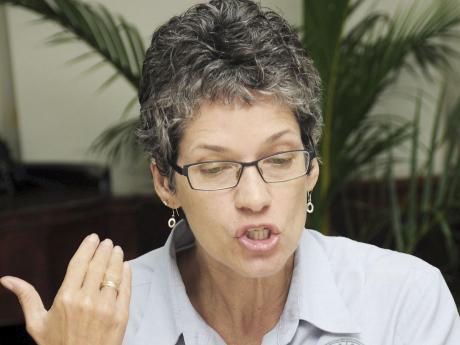
“I am disappointed to see that there is no environment ministry and no environment minister. It appears the environment will be under the Office of the Prime Minister along with a lot of different, other important national areas and I fear the environment focus will be lost in the other priorities,” said Diana McCaulay, Chief Executive Officer of the Jamaica Environment Trust (JET).

“I don’t think this first signal is a very positive one. It used to be that the environment portfolio moved around from ministry to ministry. Now it would it seem to have disappeared entirely,” she added.

Only last week, JET, along with a number of other entities, including the Windsor Research Centre, urged the new Prime Minister to give priority to a host of environment issues, notably:

*climate Change
*Cockpit Country
*planning for sustainable development
*protected areas
*sanitation and public health
*enforcement of environmental laws

With the Jamaica Labour Party vowing in its manifesto to work with environment actors, McCaulay said she was eager to learn how the realities of the new Cabinet will gel with the identified priority areas.

“I would like to hear the details of how this would work sooner rather than later and I would like to hear a timeframe for doing some of the things stated in the manifesto,” she told The Gleaner.

Head of the South Trelawny Environment Agency Hugh Dixon was in agreement.

“I think with growth and prosperity being the sort of thrust of the new government, it seems to be an awful oversight as the issues that are at the forefront of development are predicated to a great extent on an awareness and sensitivity to [for example] climate change,” he said.

According to Dixon, the situation is will challenge civil society environment groups to gain traction in terms of the significance and value of climate change, and the environment.

“I would, with caution, say that I hope that wherever it has been dispensed to, it holds some order of priority consistent with its current standing globally and any sort of growth and development agenda,” he added.

Former Minister of Local Government and Community Development, and one-time Opposition spokesman on Environment Noel Arscott has himself questioned the rationale behind the lack of a designated ministry of environment and/or climate change.

“Jamaica and the Caribbean fall in one of the most vulnerable regions in the world affected by the vagaries of the weather. We certainly are victims of any kind of climate change impacts… So for a government not to put that on the front burner was really shortsighted…” he said.

The Gleaner

Jamaica is to reduce greenhouse gas emissions by the equivalent of 1.1 million metric tons of carbon dioxide per year by 2030 as part of its global commitment to take climate change mitigation action.

To bring this about, the island – as reflected in its nine-page Intended Nationally Determined Contributions (INDCs) document to the United Nations Framework Convention on Climate Change – has undertaken to implement energy policies that ensure that the island uses energy wisely and aggressively to pursue opportunities for conservation and efficiency has a modernised and expanded energy infrastructure that enhances energy-generation capacity and ensures that energy supplies are safely, reliably, and affordably transported to homes, communities, and the productive sectors on a sustainable basis, and achieves its energy resource potential through the development of renewable energy sources by increasing their share in its primary energy mix of 20 per cent by 2030.

Such policies are also to ensure that government agencies and ministries are models and leaders in energy conservation and environmental stewardship and that the island has a well-defined and established governance, institutional, legal, and regulatory framework.

Private Industry Support

Fully implemented energy polices need, too, to ensure that private industry embraces “efficiency and ecological stewardship to advance international competitiveness and to move towards a green economy”, the document said.

Realising Nationally Determined Contributions is essential if the target of the climate deal, brokered in Paris in December, is to be reached.

That agreement – to which Jamaica is a party – looks to hold “the increase in the global average temperatures to well below two degrees above pre-industrial levels and to pursue efforts to limit the temperature increase to 1.5 degrees Celsius above pre-industrial levels”.

New Activities

It is against this background that Jamaica is continuing its own mitigation efforts.

“Certain new activities have started up again under the memorandum of understanding we had with the Americans, for example, particularly around natural gas, that will allow us to have much more efficient plants …” a source from the Ministry of Water, Land, Environment, and Climate Change told The Gleaner at the start of the year.

“Natural gas generation, generally speaking, can be made to respond very well to changes in demand … . For example, if you have a solar plant and production dips, it is relatively easy for you to ramp up the production of electricity from a natural gas plant,” the source added.

There are also other efforts afoot.

“Recognising that energy is not just electricity, it is also transport, some of the work we will be doing in respect of sector planning will involve a closer look at transportation and transportation efficiency and how we can reduce the amount of oil consumed there,” the source noted.

Further, to achieve 20 per cent renewables in the island’s energy mix, the source said, “You can increase the amount of renewables or decrease the amount of other fuels in the mix. There, you are talking efficiency measures and the Government is looking at efficiency in a number of respects.”

The Gleaner

power-lines
Getty Images

Solar’s threat to the utility industry is deeper than not having to purchase electricity

Now that solar power is reaching prime time, the fossil fuel industry is doing all that it can to stop its growth.

For many years solar was on the periphery, installed by early adopters and helped along by government subsidy. But over the last several years, solar has emphatically become mainstream. It is still growing from a low base, but it is now one of the most preferred sources of new electricity generation. The cost of residential solar have been cut in half since 2010, and utility-scale solar has achieved even greater cost declines.

In 2015, the U.S. saw 16 gigawatts of new renewable energy capacity installed, which accounted for two-thirds of the total. Solar alone accounted for about one-third of new capacity last year. Natural gas only captured 25 percent of the newly installed capacity despite several years of incredibly low prices. The banner year for clean energy occurred while 11 gigawatts of coal-fired electricity came offline as old plants were retired amid rising costs and stricter environmental regulation. The clean energy transition is very much underway.

TIME

With the ink now dry on Jamaica’s Climate Change Policy Framework and Action Plan, the island’s Climate Change Division (CCD) is to drive the realisation of its goals.

“We never did have a launch of the policy framework per se, but Minister (of Water, Land, Environment and Climate Change Robert Pickersgill) did speak to [its completion]. The Climate Change Division will now drive the implementation,” Colonel Oral Khan, the ministry’s chief technical director, told The Gleaner.

Khan added that the publication of the policy was expedited last September, following the inclusion of comments from public consultations done, final approval from Cabinet and some three years of work.

“Some of the priorities highlighted include the mainstreaming of climate change in policy and development planning frameworks, and we have started that process,” noted CCD head Albert Daley.

According to Daley, “There is a 2015 to 2018 framework which highlights the priority actions to be done and who is to do them, timelines, and so on.

“We have been working closely with the Planning Institute of Jamaica to ensure climate-change concerns are reflected in the actions for the various sectors,” he noted.

WORK IN PROGRESS

As things stand, there are a number of adaptation and mitigation sector plans on which work has been ongoing.

The policy was made possible through the Government of Jamaica/European Union/United Nations Development Programme Climate Change Adaptation and Disaster Risk Reduction project, funded by the EU under the Global Climate Change Alliance.

In addition to facilitating and coordinating the national response to the impacts of climate change and promoting low-carbon development, the 36-page policy is to:

– mobilise climate financing for adaptation and mitigation initiatives; and

– improve communication at all levels on climate-change impacts and also adaptation- and mitigation-related opportunities so that decision makers and the general public will be better informed.

This is while mainstreaming climate-change considerations and supporting those institutions, including research entities that would enable that process.

The Gleaner


NCB Group headquarters, The Atrium, at Trafalgar Road, New Kingston. The banking group’s energy initatives have cuts its electricity bill by 20 per cent across its network.

National Commercial Bank Jamaica (NCB) has cut its energy consumption by 20 per cent over the past four years and is projecting half-billion dollars of new savings over the next four.

By tinting its windows, changing its light and air-conditioning units, and installing some solar photovoltaic (PV) systems, the bank hopes to cut its electricity bill by another eight per cent in 2016.

If it achieves its latest goal, NCB would spend $140 million less on energy this year than it would if it had not implemented any of the energy-saving initiatives that started in 2011.

Back then, the financial institution forked out over $600 million to keep the lights on. Air conditioning accounted for more than 60 per cent of the energy use while lighting accounted for another 20 per cent, so it was decided that light-emitting diode (LED) lights would be installed across its locations, while high efficiency air-condition units and solar systems have been put in place at select sites, such as NCB’s head office on Trafalgar Road.

Reflective tinting on windows, roof insulation, and automated light controls have also helped protect the bank’s buildings from heat infiltration and have enhanced the energy-saving process.

This year, NCB plans to “continue implementing projects to install high-efficiency air-conditioning systems at relevant locations and increase the use of LED and PV panels,” according to the latest annual report.

So far, it has spent $500 million to implement various energy-reduction initiatives.

“We have an energy portfolio that is continuously being assessed, and our expenditure is guided by our environmental policy and, therefore, is subject to variations,” said NCB in reply to Sunday Business queries.

With the energy-saving expenditure, the banking group has so far avoided some $300 million in energy cost over the past four years, and expects to save another $500 million over the next four, based on current energy rates.

NCB can also boast a positive contribution to the environment. By reducing its energy consumption by 2.7 million kilowatt-hours – which is equivalent to the electricity used by 1,350 homes in Jamaica – it has reduced its footprint by approximately 1,800 metric tonnes of carbon dioxide annually. That’s the equivalent of the emissions given off by a plane making 25 round trips to and from New York, or by 100 cars driving from Kingston to Mandeville and back every day for a year.

A coal miner works to secure the roof with bolts in an underground coal mine roughly 40-inches-high. Preliminary government figures released Friday show U.S. coal production has fallen to its lowest level in nearly 30 years as cheaper sources of power and stricter environmental regulations reduce demand.

United States (US) coal production has fallen to its lowest level in nearly 30 years as cheaper sources of power and stricter environmental regulations reduce demand, according to preliminary government figures.

A report released last Friday by the US Energy Information Administration estimates that 900 million short tons of coal were produced last year, a drop from about 1 billion short tons in 2014.

That’s the lowest volume since 1986.

The slump has led to bankruptcies and layoffs at mining companies, but the effects have rippled outward, stressing state budgets and forcing layoffs in other sector, such as railroads, which are transporting less coal.

Power plants are increasingly relying on cheaper and cleaner-burning natural gas to provide electricity and comply with regulations aimed at reducing pollution that contributes to climate change.

A sweeping agreement adopted last month in Paris by nearly 200 countries determined to further reduce greenhouse gas emissions is likely to make coal an even less viable choice in the decades ahead.

The Gleaner

Screen Shot 2015-12-11 at 11.58.36

PARIS, France (CMC) — Caribbean delegates at the climate change talks here were engaged in another round of talks on the penultimate day of negotiations for a new climate change agreement that will take into consideration their demands and concerns.

Regional government ministers and other representatives deliberated into the early hours yesterday morning over the terms and conditions outlined in the second draft agreement, which was presented earlier in the day.

A statement released by the Caribbean Community (Caricom) after the talks said that while the draft text represents “a useful basis for negotiation” and the region is prepared to engage in negotiations on that basis, there are still some concerns to be addressed in the next round of negotiations.

There was still no consensus on cuts to global temperature rises, and Caricom has made it clear that some of the options put forward were not acceptable.

“For example, option one, to hold the temperature increase to two degrees celsius is not acceptable as it has been established by the Structured Expert Dialogue that two degrees is too high. We therefore should not be spending any more time considering it.”

“The goal should be 1.5 and … we want to emphasise, however, that the provision in option two that recognises the higher risks at 1.5 is not a viable option as this is not a goal or an objective. It is an expression of sympathy and we are not here begging for sympathy; we are here because climate change threatens our survival and economic stability and we are seeking solutions under this threat.”

Chairman of Caricom’s Regional Coordinating Committee on Climate Change, Dr James Fletcher described the goal of two degrees celsius as “a business as usual agreement”, which the Caribbean cannot accept.

“Since everybody has spoken so eloquently about wanting this to be an ambitious agreement, the only way we can leave here with an ambitious agreement is an agreement that either speaks to the temperature goal being below 1.5 degrees Celsius or retains two degrees Celsius as a temperature goal but nuances it by saying well below two degrees Celsius and rapidly scaling up efforts to get to 1.5 degrees. That is the minimum that we can live with,” Fletcher told the Caribbean Media Corporation (CMC).

Caricom also noted that the draft agreement does not take into consideration the special circumstances of Small Island Developing States (SIDS).

“We want to emphasise that these special circumstances are real and have been recognised by the international community/world leaders in multiple fora. This reality is non-negotiable. The process here cannot refute what is abundantly evident.

“Likewise it is an undisputed fact, recognised under the Financial Mechanism of the Convention, no less, that SIDS have specific challenges to accessing finance especially for adaptation, and to accessing appropriate technology given our capacity and scale of needs. It would be a grave injustice for those who are bearing the brunt of the adverse effects of climate change and who are very likely to have to pay the ultimate price, to now be treated with such benign neglect in this text,” the statement said.

However, Barbados’ Environment Minister Denis Lowe told CMC that he was confident that developed countries would agree to a 1.5 degree celsius cap on further increase in greenhouse gas emissions.

“The 1.5 (degrees) issue is gaining great support and we feel that it is clear that we are going to get it in the text. It may not come in its absolute form and I think that based on the submissions of other countries of G77, of China, of the Europeans, a strong statement by Britain, I believe that we’re going to get that,” Dr Lowe said.

A final agreement is expected to be reached at the end of the conference this evening.

Jamaica Observer

WITH ONLY two days to go before the official end to the climate talks here, Caribbean negotiators are working feverishly to safeguard the region’s interest in the final outcome document.

That document – referred to as ‘the text’ throughout the negotiating process – is widely expected to inform the global response to climate change.

“All of the Caribbean issues are still alive, which is a good thing … . We haven’t lost anything in the text,” said head of the CARICOM Task Force on Climate Change Dr James Fletcher.

But, he cautioned: “We haven’t sealed the deal on too many things. What has happened is that the COP [Conference of the Parties to the United Nations Framework Convention on Climate Change] president (Laurent Fabius) has put out the latest version of the text.”

“It is a shortened version … but we are still not anywhere near a final text because there are so many options still on the table,” explained Fletcher, who is also St Lucia’s minister of sustainable development, energy, science, and technology.

He was speaking to The Gleaner following the 3 p.m. release of the latest text yesterday, which reflects the current state of play of the negotiations on issues such as adaptation, loss and damage, finance, technology, and mitigation.

The options the minister referred to are the so-called ‘bracketed text’, on which no consensus has been reached among countries. Until they are agreed, the brackets cannot be removed and there can be no final document.

Areas Of Interest

Among the Caribbean’s particular areas of interest are loss and damage; 1.5 degrees Celsius as the target for a cap on greenhouse gas emission increases; and additional, predictable, and adequate financing.

“What has been happening since that draft text was distributed is that the various groups have been meeting to review the text to identify where there are possible areas of compromise, where there are significant red lines [points of no return] and issues that they cannot live with,” he said.

Once those groups – including the Alliance of Small Island States of which CARICOM countries form a part – come back, the process will move forward with a meeting of all countries, as they attempt to reach consensus on a final document.

A Mountain To Climb

In commenting on the work it would take to get there, one of Jamaica’s senior negotiators, Jeffrey Spooner, said: “It is not a hill but a mountain that we have to climb.

“And we all have to climb it, in the interest of the planet for the next generation,” he added.

Meanwhile, Spooner said there was no question of the Caribbean pressing home what it needs in order to ensure its survival in the face of climate impacts, including sea-level rise, coastal erosion, droughts, stronger hurricanes, among other things.

“By tomorrow [today], we will know exactly where we stand and, of course, we will still press for our concerns. ‘1.5 to Stay Alive’ and loss and damage – these are two important items for us,” he said.

Fletcher agreed.

“By and large, all of our issues are on the table, and that is a good thing. What has to happen now is that we have to fight to ensure that not only do they remain on the table, but that they are reflected in the final text … “.

The Gleaner