A family stands in front of property with solar panels

A big part of why many homeowners get solar panels installed on their properties is to offset high electricity bills, especially during the summer months when energy usage rises sharply. While many types of solar panels can cover up to 100% of the electricity consumption needs of a household, you might still have to rely on the energy provided by your utility company to meet the excess demand. In the best-case scenario, the utility bills you receive as a result of this usage should be minimal.

However, from time to time, you might notice a spike in your electricity bills, even with your solar panels working. There are numerous reasons for this, from increased energy usage on your part to a malfunction in the system. There can also be external factors that are just beyond your control. That said, the sooner you look into what’s causing the spike and address the issue, the sooner you can bring down your utility bills and continue enjoying the benefits of your solar system installation. Below, we’ll take a look at five of the most common reasons for high electricity bills, despite having a solar system.

Changing energy consumption patterns
Person turns on AC

Often, after homeowners install solar panels on their property, they stop keeping track of their energy consumption. Whether it’s plugging in and using appliances and lights that are not needed or cranking up the air conditioner, many of these habits can, unsurprisingly, cause your electricity needs to rise.

Even if you’ve been careful about your energy usage, changes in your living situation or the addition of new appliances to your household might be what’s causing a spike in your electricity bill. For instance, guests visiting you during the holidays naturally add to energy needs. The same goes for if you or another resident shift to a remote work situation. Additionally, if you don’t like the heat, staying indoors for more hours can significantly increase your energy consumption too.

While some of these changes are temporary, it’s a good idea to take a look at your energy consumption over a few weeks and try to spot new habits or inefficiencies in your appliances that might be running up your electricity usage. Taking steps to be more mindful about your energy consumption and getting appliances, like your air conditioner and refrigerator, serviced can help keep your utility bills under control.

Weather-related factors

The weather has a big impact on how well your solar panels function. If you’ve been getting a lot of rain, or it’s been getting darker earlier in the day, your solar system’s efficiency will naturally take a dip. Cool, sunny days are what’s ideal for your solar panels to function at their peak capacity. On the other hand, intense heat, cloudy skies, snow, and even excess humidity can reduce a solar system’s efficiency. If the weather conditions haven’t been conducive for a while, you may be relying more on traditional sources to meet your energy consumption demands. This, in turn, can cause an increase in your electricity bills.

The best way to keep weather-related factors from affecting your solar system’s energy production capacity is to install the panels in a sunny location. However, if your roof isn’t positioned in a way that gets maximum sun exposure, consider using portable solar panels that can be moved around your property to capture more sunlight. Additionally, you might want to invest in a few energy-saving lighting options, so you’re not using as much electricity.

Malfunctioning or dirty solar panels
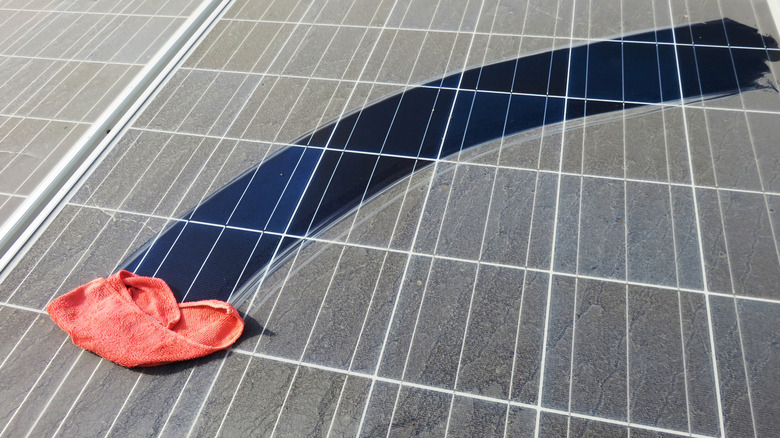
Cleaning solar panels

Solar panels usually have a pretty solid build quality, given that they’re expected to work outdoors and hold up to the elements. However, it’s possible for the panels to malfunction and even potentially break due to a number of reasons, from debris falling on the surface to the effects of corrosion.

If your electricity bills have recently risen while your electricity consumption has remained the same, it’s worth checking if your panels are working as they should. If you don’t see any obvious signs of damage on the panels, check if the breaker switches have tripped. If all those seem fine, check whether your solar inverter is functioning normally. Typically, a green light means it’s working fine, whereas a red, yellow, or blinking light indicates an issue. Your manual should have more information about how to identify potential issues. Since the inverter is an important part of a solar system, addressing any problems related to the inverter will help.

Another thing you should do is check if the solar panels are clean. MIT News reported that the accumulation of dust on solar panels can reduce the output of the panels by up to 30% in just one month, which means dirty panels might just be what’s causing your electricity bills to rise. The good news is that cleaning solar panels is fairly easy and should result in better output.

Size of your solar system
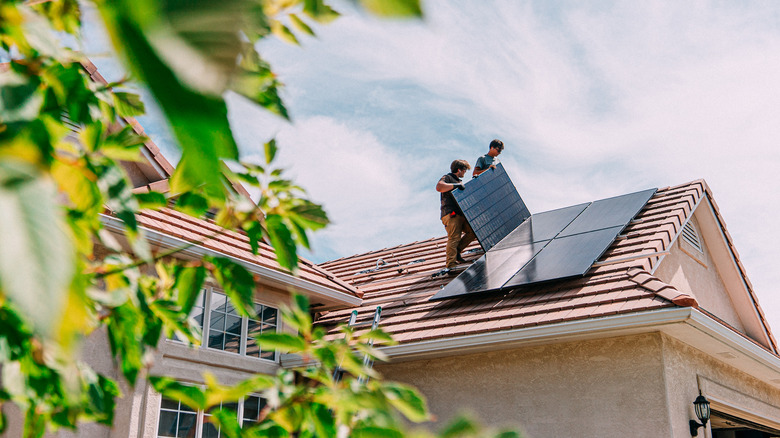
 

People installing solar panels

How many solar panels you need to power your home will depend on your energy needs. If your current solar system is too small for your needs and is not offsetting 100% of your consumption, your electricity bills might fluctuate. In this case, the easiest thing to do is add more solar panels to the roof. This way, your consumption will be met by the increased output provided by the new panels.

If your roof cannot accommodate more panels, consider purchasing portable solar panels. Alternatively, you might want to purchase a solar battery. Keep in mind that your solar panels generate maximum energy when the sun is the brightest, and this usually happens between 9 a.m. and 3 p.m. for east-facing panels, and later in the day for west-facing panels. If you’re not using enough energy during these hours and are using more energy in the evenings or at night, a solar battery might come in handy since it can store some of the surplus energy that is generated during the peak production hours. This can help you use solar energy continuously throughout the day.

Incorrect meter reading
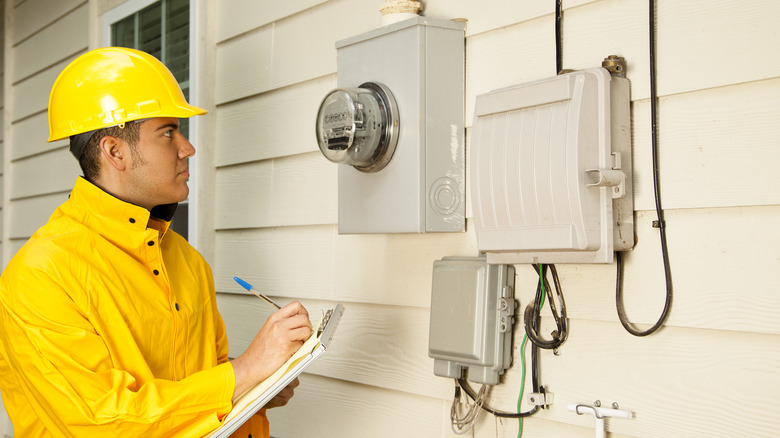
Electrician inspecting meter

If none of the above-mentioned reasons explain why your energy bills are spiking, it’s worth checking if the culprit is a faulty meter that’s causing a billing inaccuracy. Billing inaccuracies can have a number of causes, but if you’ve already determined that none of your appliances are malfunctioning and using up more energy, you’ll want to check if the utility meter is working. If you just moved into your home, it’s also possible that the meter wasn’t installed or activated properly. 

If you suspect that your meter is malfunctioning, call your utility company or an electrician to inspect the meter. A professional will be able to test the meter and identify if it’s working normally or is malfunctioning and causing incorrect meter readings. If it’s faulty or broken, there’s a good chance you’ll receive a refund from your energy company for any overbilling that the meter caused, and this should address the spike in your electricity bills.

SlashGear

The Biden administration on Wednesday finalized one of the most significant pieces of its ambitious climate agenda: the strongest new tailpipe rules for passenger cars and trucks that will decisively push the US auto market toward electric vehicles and hybrids.

But in a concession to automakers and labor unions, the rules will be phased in more slowly than originally proposed and will give automakers more choices for how to comply.

Nearly a year ago, the Environmental Protection Agency proposed a fast ramp-up into EVs — a rule that would have ensured two-thirds of all vehicles sold were electric by the end of this decade. The EPA pumped the brakes on that plan Wednesday.

Instead of pushing automakers to sell more EVs to meet stringent pollution targets, the administration is allowing plug-in hybrids — vehicles that combine gas engines and EV-like batteries — to play a much bigger role in the electric transition.

In 2023, EVs made up just 7.6% of new car sales, according to Kelley Blue Book. The new rule is targeting 35% to 56% for EVs in 2032, and 13% to 36% for plug-in hybrids.

Transportation has an outsized climate impact, making up nearly a third of all US climate pollution, so even small steps can lead to significant change. Margo Oge, who previously headed the agency’s office of Transportation and Air Quality, called the new standard “the single most important climate regulation in the history of the country.”

In a statement Wednesday, President Joe Biden vowed the cars would be made by American workers. “US workers will lead the world on autos making clean cars and trucks, each stamped ‘Made in America,’” Biden said. “You have my word.”

Federal officials said the rule doesn’t favor electric vehicles over other types of vehicles, and will reduce nearly as much pollution as the original proposal — more than 7 billion metric tons of planet-warming emissions, along with other pollution that is detrimental to human health. By 2032, the new rule is expected to slash passenger car pollution nearly in half from 2026 levels.

“Within those ranges, we got to the same place” as the standard proposed last year, said Joe Goffman, who leads the agency’s Office of Air and Radiation.

Goffman said the agency considered different ways automakers could “mix and match” new vehicle models to meet the standard — by using more efficient gasoline engines, hybrids, plug-in hybrids and battery electric vehicles.

“By taking seriously the concerns of workers and communities, the EPA has created a more feasible emissions rule that protects workers building (traditional, gas-powered) vehicles, while providing a path forward for automakers to implement the full range of automotive technologies to reduce emissions,” the United Auto Workers union said in a statement.

White House national climate adviser Ali Zaidi said that “one of the really strong features” of the new rule was its flexibility.

“Different automakers are going to approach this in different ways,” Zaidi said. “You’ll have some automakers that maybe have a third of their fleet be plug-in hybrid electric vehicles.” Zaidi argued that would “translate into a lot of consumer choice.”

Carmakers get flexibility

Automakers like Toyota, who are favoring hybrids and plug-in hybrids and moving slowly on EVs, could be big benefactors of EPA’s new rule.

Toyota, the world’s largest automaker, is among the companies that aggressively pushed back against the Biden administration’s original proposal.

In a memo sent in the fall of 2023 to car dealers across the US, Toyota Motor North America group vice president of government affairs Stephen Ciccone described the EPA’s original EV proposal as a “mandate” and “draconian,” CNN recently reported. Ciccone wrote the proposal had caused an “existential crisis” in the industry and suggested an option giving automakers more choice.

“Toyota’s position is that the best way to reduce carbon is by giving consumers a choice of powertrain options, including hybrids, plug-in hybrids, fuel cells, fuel efficient ICE vehicles, and BEVs,” Ciccone wrote.

That flexibility is what the EPA finalized on Wednesday. But Toyota continued to characterize EPA’s rule as a “regulatory mandate” that will force it further into the EV game than it’s currently positioned.

The rule “requires a precipitous shift from around 8% market share of battery electric vehicles today to more than half by 2032 – an aggressive, sixfold increase over just eight years,” said Toyota spokesperson Edward Lewis in a statement. “Toyota will continue to lead the industry and comply with regulations, but serious challenges around affordability, charging infrastructure, and supply chain will need to be addressed before this mandate is realized.”

President Joe Biden has made the transition to EVs a signature issue of his presidency, stressing the economic impacts, in addition to the climate benefits, of cutting pollution. In August 2021, after the president announced an ambitious target that half of vehicles sold in the country by 2030 would be either battery electric, fuel-cell electric or plug-in hybrid, Biden test-drove a hybrid-electric Jeep on the White House grounds.

But political battle lines are being drawn around the EV transition. Former President Donald Trump, the Republican nominee for the 2024 presidential election, has railed against EVs in his speeches. He recently characterized EVs as “all” being made in China, even though Democrats’ Inflation Reduction Act has pushed a new EV manufacturing and assembly to the United States.

With the new standard giving automakers more flexibility, EPA administrator Michael Regan denounced the characterization that the agency was setting an EV “mandate.”

“When you look at the differences between the proposal and final, you will see that there is absolutely no mandate,” Regan told reporters, adding his agency was staying “well within the confines of the law.”

It’s not just Trump; the jump to EVs has some of Biden’s political allies worried, too. The United Auto Workers, a powerful union that has endorsed Biden, has also expressed concerns about what the shift to EVs could mean for their workers, who believe battery-powered cars require less labor to build.

But the demand for fully electric cars is growing in the US. The nation crossed a key threshold at the end of last year: 1.2 million electric vehicles were sold — a 46.3% jump from 2022.

EV adoption rates are likely to slow down this year, which is to be expected, said Trevor Houser, partner at the nonpartisan Rhodium Group. He’s looking for two main signs of EV success in the coming years: whether automakers can make a wide enough variety of the vehicles Americans want to drive, and whether the cost can come down to a more affordable range of $20,000 to $30,000.

“We won’t really know before (2025) how successfully we’re making that transition because the next generation of more affordable EVs won’t be on the market,” Houser told CNN.

Zaidi agreed it would take time to see whether more Americans move to fully electric cars.

“That’s something we’ll see over time,” Zaidi said. “But this rule is very flexible and allows for all of those pathways to emerge, and for (automakers) to pursue those in a manner that’s consistent with their strategies.”

Climate and health impacts

While the climate impact of the tailpipe rules have drawn the most attention, there is a big public-health component, as well.

Reducing pollution from cars and trucks could help Americans’ health on multiple levels, since the EPA’s multi-pollutant standards will tackle greenhouse gases that cause climate change, smog and particle emissions.

No amount of air pollution is safe, and according to the World Health Organization, it’s one of the greatest environmental risks to human health.

Vehicle exhaust is made up of all sorts of pollutants, including carbon monoxide, particulate matter, nitrogen oxides, sulfur dioxide and carbon emissions that contribute to a warming world, which is also itself a major threat to health.

Exposure to particle pollution ages and reduces lung function, and it can lead to cancerstrokeheart problemsCOPD and other lung and vascular issues. It can aggravate asthma and is linked to neurodegenerative diseases like Alzheimer’s, Parkinson’s and other types of dementia, studies have found. People exposed to higher amounts of this pollution for longer periods also have an increased risk of depression and anxiety. Exposure can even contribute to problems thinking clearly.

Particle pollution led to more than 107,000 premature deaths in the US in just one year, one 2019 study found. That’s more than the number of people killed each year in homicides and traffic accidents combined, researchers said.

“These standards really provide significant relief that communities across America need from vehicle exhaust,” said  Will Barrett, the American Lung Association’s senior director of advocacy for clean air. “It’s very much setting a strong direction to ensuring the auto industry cleans up harmful pollutants and communities are better protected from traffic emissions.”

CNN

The American Clean Power Association (ACP) has released its Clean Power Annual Market Report, highlighting a landmark year for U.S. clean energy with more capacity installed in 2023 than in any previous year.

The industry added a total of 33.8 GW of new utility-scale clean energy projects, surpassing by 12.5% the previous annual installation record set in 2021. Solar and storage additions led the charge, breaking previous records for both technologies. Clean power accounted for most of the new power capacity installed. 

The U.S. now has 262 GW of clean energy powering its grid, and as a result, the nation now generates 16% of its electricity from wind and solar. Clean energy can be found in 93% of congressional districts and in all 50 states. The ACP says future development looks promising, with the report finding project pipelines are reaching historic levels. 

“Clean energy is fundamental to the American economy, accounting for more than 75% of all new power brought online last year. We are generating clean energy in every state and nearly every congressional district,” said ACP CEO Jason Grumet. “It has been a banner year for storage and solar, and there is real excitement over the 123 newly announced manufacturing facilities that will bring economic development to communities across the country. But despite these achievements, we need to make even greater strides to meet our shared energy security and net-zero goals. ACP will continue to advocate for improvements to siting, permitting, and planning processes to accelerate the deployment of clean energy.”  

Highlights from the Clean Power Annual Market Report 2023 include:

  • Solar, wind, and storage accounted for 77% of all new power capacity installed. 
  • Utility-scale solar installations soared to 19.6 GW, with utility-scale projects leading the expansion. 
  • Energy storage capacity nearly doubled as developers connected 7.9 GW to the grid. 
  • Investment in domestic clean energy manufacturing has grown significantly, spurred by federal tax incentives. 
  • The development pipeline is up over 25% year-over-year to 170 GW, indicating robust future clean power growth. 
  • Clean energy is found in 93% of congressional districts and in all 50 states.

Utility-scale solar energy — bolstered by favorable federal policies and decreasing costs — experienced nearly 20 GW installed across 44 states. Texas and California led the country in solar additions, bringing 5.9 GW and 2.3 GW of new solar online respectively. More than half of the 94 GW of solar in operation at the end of 2023 came online between 2020 and 2023. And more is on the way, with over 92 GW in the pipeline.

Battery storage demonstrated near-exponential growth by almost doubling installed capacity with around 8 GW installed. This brings the total operating capacity to 17 GW. California and Texas accounted for nearly three-quarters of the year’s storage additions, but a total of fifteen states added new storage capacity in 2023 (AZ, CA, CO, HI, MA, MN, NC, NJ, NM, NV, NY, OH, TX, VA, VT). The rapid growth of storage was supported by a new tax credit for standalone storage, the boom in solar power, the value storage delivers during peak demand and times of grid stress, and a decline in prices for key battery materials, ACP said.

The land-based and offshore wind sectors faced challenges in 2023, delivering 6.4 GW of wind power capacity—the slowest year for new wind installations in a decade. This slowdown was attributed largely to policy uncertainty, high costs of capital, long permitting processes, siting barriers, and a challenging environment for building new transmission, ACP said.

Corporate buyers are playing an important role in driving up clean energy demand by purchasing clean power for their operations. The top three commercial and industrial (C&I) buyers in 2023 were Amazon, Meta, and Google. Meta leads as the top buyer of operating clean power, while Amazon leads with the most total clean power capacity contracted.  

Renewable Energy World

I’ve added electrification predictions for 2024 to my customary set of solar and storage predictions. Electrification incentives in the Inflation Reduction Act (IRA) are already starting to drive demand for heat pumps and electrical upgrades, just as tax credits accelerated the solar and EV markets in the past. My better half pointed out that 2024 predictions are much tougher than 2023 recaps. Nevertheless, here I go sticking my neck out again with these 10 predictions for 2024.


1. EVs will be equipped with integrated 240-volt generators

More EV manufacturers will follow Ford’s and Tesla’s lead with integrated 240-volt generators in their vehicles. These generators will enable owners to use those huge batteries on wheels to power their home, both for ordinary daily use as well as during increasingly frequent blackouts. Clever drivers will learn to charge their vehicles inexpensively during the day, and then use their vehicle’s batteries to power their homes during peak electric times during the evening.

2. Heat pump sales will surge by 25%

Heat pump HVAC and water heater system sales will surge by 25% in 2024, limited only by equipment supplies and contractor resources. Even though IRA rebates for these systems are still not available due to DOE and state energy office delays, customers are buying because of the market awareness created by the IRA. Customers are taking advantage of currently available tax credits and local incentives for this equipment — which in some cases cover more than half the total installation cost.

3. Fewer than half of new clean energy manufacturing plants will be completed

The IRA provides strong incentives for EVs, solar, storage and heat pump manufacturing in the United States. However, rules for applying these incentives to both manufacturing facilities and projects are complicated. Although there have been over 60 manufacturing plants announced, fewer than half will actually go into full-scale production once the incentive and supply chain details are understood.

4. Utilities in other states will follow California’s lead to end net metering

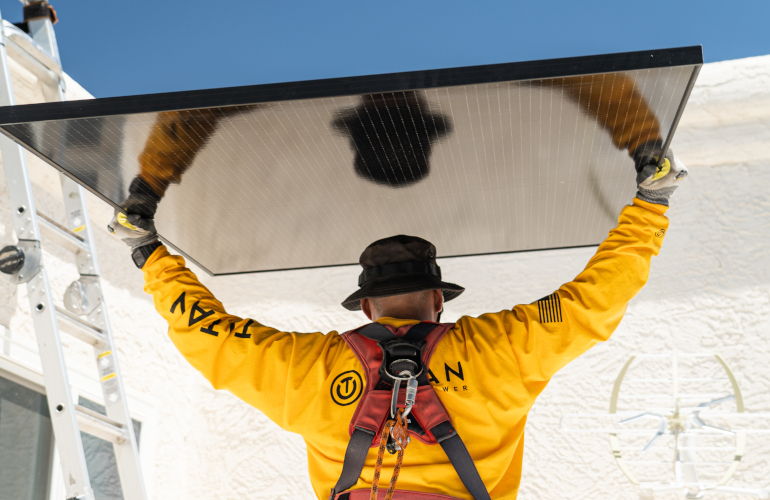
Credit: Titan Solar Power

The end of net metering in California will energize utilities in other states to limit the growth of rooftop solar and storage. The dirty secret is that utilities are permitted to use ratepayer funds to influence state politicians to eliminate competition from rooftop solar – and basically enforce their monopoly. Laws to restrict utility lobbying are uniquely difficult to pass since utilities spend tens of millions of dollars to lobby against these same laws.

5. Residential solar revenues in California will plunge by 50%

Residential rooftop solar revenues in California will plunge by 50% in 2024 compared to 2023. Even though California electric rates continue to increase at over 10% per year, the state is unlikely to recover its solar leadership position until net-metering policies are restored. Customer rage from skyrocketing electric bills and the end of NEM will backfire on politicians who accepted millions in contributions from utility interests over the past six years. Relying on the utility gravy train to get re-elected will no longer work for politicians once voters link their electric bills with the lobbying money their state representatives raked in.

6. A national-scale solar installation company will file for bankruptcy

Continued financial losses at national-scale solar installation and finance companies will result in at least one high-profile bankruptcy. The finance business model for large-scale residential solar companies is very sensitive to interest rates. Solar finance companies borrow money for PPAs and leases for relatively short terms to fund their growth and then get paid back over the much longer term of the PPA or lease. When interest rates spiked, they were not able to maintain their profits due to lower revenue and higher borrowing costs. Interest rates will decline significantly in 2025 at which time the solar finance market will bounce back, especially since average electric rates will be higher and equipment costs will be lower.

7. Tesla will claw its way into the U.S. inverter business

The inverter duopoly of SolarEdge and Enphase will turn into a tri-opoly (new word, not the board game) with the entrance of Tesla’s hybrid string inverter. Tesla will muscle into the inverter business with the combination of its brand name advantage and lower system costs – even though the performance of their systems will be lower without module-level electronics.

8. VPPs and V2G will not gain traction

Utility-sponsored tests of virtual power plants (VPPs) and vehicle-to-grid (V2G) will continue but will not gain traction without large customer incentives. The underlying friction of these business models is that utilities are unwilling to compensate customers for the full value of the battery systems – for the simple reason that utilities generate higher profits if these battery assets are owned by the utility itself rather than the customers. The paltry amount of money that utilities are willing to pay for customer-sited resources is insufficient to cover customer costs of their batteries, not to mention installer, manufacturer and aggregator costs to support these systems.

9. The residential battery system business will consolidate

The crowded residential battery system business will consolidate down to four national-scale players. Batteries by themselves are relatively inexpensive. On the other hand, releasing a complete and fully UL-approved battery and software system is expensive. But that’s just the beginning — building out a national sales and service organization costs a fortune. New battery system entrants — without the investment and army of people that it takes to support customers — will not succeed.

10. It’s game-over for fossil fuels

COP28 showed the world that it is “game over” for fossil fuels. Economics is the simple reason for this transition, although it will take another generation for the transition to be completed. Energy from solar and wind is already much less expensive than fossil fuels. These renewable energy sources are being deployed at an accelerating rate, while at the same time technologies that clean up fossil fuel emissions — such as carbon sequestration and storage, and direct air capture — struggle to pencil out economically. Despite the billions of dollars that fossil fuel companies spend to extend their businesses and continue to pollute, they are destined to become extinct just as their dinosaur ancestors.

Solar Power World

Wigton Windfarm Limited will remove its 10 per cent cap on individual ownership in two months, but already, investors are repositioning with heavy share transactions, the most robust of which occurred on Thursday with trades worth over $500 million.

“Removing the cap sets the stage for someone or group of bodies to try take control of the company. The belief is that in that environment, it will probably lead to an increase in the stock price,” said Mayberry Group CEO Gary Peart during an investor briefing last week.

Wigton is a renewable-energy producer that was formerly owned by the Jamaican Government but was divested via the stock market in 2019. Partly to entice subscription by a wide base of the public, the 11 billion share units were priced at an accessible 50 cents per unit during the IPO. Individual ownership in the stock was also capped at 10 per cent in a market that allows for such holdings of up to 80 per cent.

“Companies that do well are companies that are focused, and so the control issue is not important,” Peart asserted. The Wigton IPO was brokered by Mayberry Investments Limited, and one of its sister companies currently holds a stake in the wind farm.

The market activity last week knocked the stock off its perch to around 96 cents per share.

On Thursday, investors traded over 561 million units of WIG shares, the most activity the stock has seen in at least two years, according to Jamaica Stock Exchange data. The stock price fell 15 per cent on that day to close at 96 cents per share, but it was then still up 20 per cent year on year.

However, the rout was not sustained. By Friday, the stock had climbed back to $1.07 per share. It still closed 3.6 per cent lower for the week but was up 35 per cent year to date.

The WIG stock trades at around 38 times what it earned in the last financial year. This within the context of an overall market trading at a multiple of nine times.

The company is in the process of finalising an upgrade programme for some of its turbines that were installed two decades ago and are at the end of their useful life. Wigton has been cagey about disclosing the level of investment required but says it is in the process of seeking financing. Jamaica’s utility regulator is also yet to approve the upgrade programme laid out by the wind farm operator.

Wigton’s articles of incorporation in relation to the shareholding limitation will cease to have effect after May 2024, according to information on renewable energy producer’s website.

The largest shareholders in Wigton, based on market disclosures to December 2023, are Mayberry Jamaica Equities, a fund with 10 per cent interest; VM Building Society 9.87 per cent, National Insurance Fund 6.4 per cent, ATL Group Pension Fund 5.4 per cent, and Sagicor Investments with 4.4 per cent.

Wigton Windfarm is currently valued at $11.77 billion on the market.

Gleaner

IDB Lab will provide financing for start-up GoElectricTT in support of the push towards the adoption of electric vehicles in Trinidad & Tobago.

GoElectricTT will offer short- and long-term leases and rentals of an all-electric vehicle fleet, and will engage in outreach and public education on the benefits of using the vehicles. With an initial fleet of 15 vehicles, the start-up will focus on the business sector of Trinidad & Tobago and target companies that typically own or lease fleets.

Trinidad & Tobago’s population of approximately 1.4 million people operate more than 800,000 vehicles. Most of these vehicles have internal combustion engines, which produce pollution and contribute to climate change.

The IDB Lab said despite fiscal incentives on the importation of electric vehicles as a way to move towards a low-carbon future, the adoption of these vehicles has been slow – accounting for less than one per cent of new registrations.

“This investment contributes to IDB Lab’s growing portfolio in climate technology, which focuses on creating early-stage opportunities in Latin America and the Caribbean, leveraging innovation and priorisiting real-life impact for the people of the region,” it said.

Gleaner

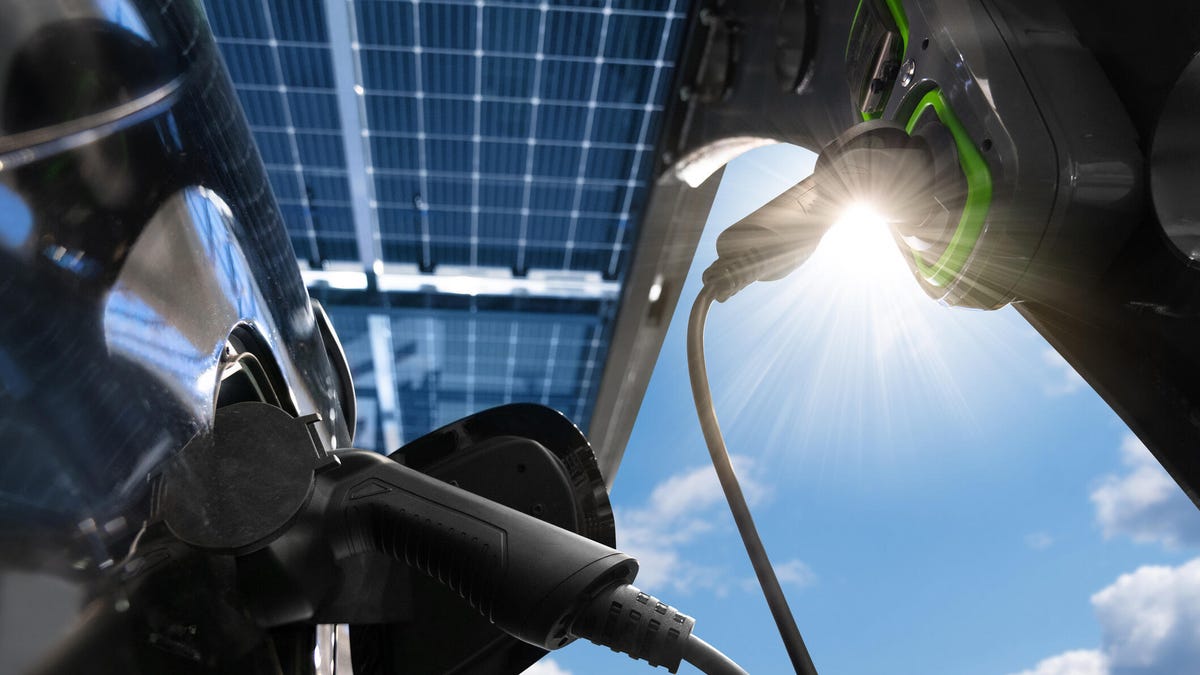
In order to make your EV green-energy approved, you’ll need to charge it using a renewable energy source. Solar panels are one way to accomplish that.

Close up view of an EV charging using a solar car port
Charging your electric car at home will only increase your electric usage unless you add another renewable energy source, such as solar panels, to offset it.

For the eco-conscious EV driver, an electric vehicle is only as clean and green as the source of electricity charging its battery.

That’s because EVs plugged into the grid can either be powered by “dirty” sources such as fossil fuels such as coal, or from “clean” renewable energy that comes from sources such as solar, hydro or wind power. With many utilities, it’s likely to be a mix of renewables and fossil fuels. The best way to ensure your EV is actually powered by renewable energy is to connect your home’s EV charger to a solar energy system or use a public charger also sourced by solar panels. 

With spiking gas and electric prices and an intensifying climate crisis, it’s no wonder the solar and electric vehicle industries are gaining in popularity each year.  Rooftop solar panel installations are breaking records, and US EV adoption is expected to accelerate — predicted to reach 40% of passenger car sales by 2030, according to the US Bureau of Labor and Statistics

Forget the statistics, it’s in plain sight and we can’t ignore it. EV charging stations are becoming the norm, automakers are making headlines as they invest in new EV technology, and rooftop solar panels are also becoming commonplace to see. 

Even with the upswing in EVs and home solar systems, switching from a combustion car to an electric vehicle, however, can be a complicated decision with considerations conventional car drivers don’t have to worry about, like installing a charger in your garage. Adding solar panels to the equation adds even more layers of complexity to an already significant investment.

Here’s what you need to know about powering your home and EV with solar panels and how many you’ll need if you do.  

Why use solar panels to charge an electric vehicle (EV)? 

There are some less obvious benefits to home solar charging in addition to watching free, clean electrons pulled from the sky streaming into your car’s battery. 

Most home EV chargers treat your car like any other appliance that needs to be plugged in and charged overnight. Actually, it’s more like a quite needy appliance that requires a particular current (DC) and lots of it as quickly as possible, which can mean operating at high voltage. 

All of this increases strain on the grid and can add a load to your home’s electrical system, especially if your wiring is older or in need of upgrading. In the worst cases of neglect or poor electrical work, it can even be dangerous. 

Using solar panels to charge an EV actually streamlines the charging process because both systems speak the same electrical language, in a way. 

As Wyldon Fishman, founder of the New York Solar Energy Society, explained, solar panels and electric vehicles both operate with direct current (DC), meaning there’s no need to install an inverter between your panels and EV, although a charge controller is still imperative to have in the circuit. DC can also run at lower, safer voltages. 

Relying on solar panels rather than the grid to charge your electric vehicle also means not having to worry about being stuck at home with a dead battery if the power goes out, especially if you opt to pair your panels with a battery or other solar storage. 

Home electricity scheme with battery energy storage system on modern house photovoltaic solar panels and rechargeable li-ion backup. Electric car charging on renewable smart power off-grid system.
A home’s energy set up could consist of solar panels, battery storage, inverter and an EV charger. Depending on the consumption, size, efficiency and how many panels you get, this equipment could accommodate all or some of this home energy production.  – Getty
How much energy is needed to charge your EV at home?

First, consider your goals for your solar charging system. Do you want to charge your car using your solar panelsand will you primarily be charging overnight? If so, you’re going to need to install a battery or other storage system. 

In most cases, you’re likely to have a solar system that’s hooked into the grid as well as your home, perhaps with a connected battery for emergency backup, or not. 

If this is your scenario, it could be helpful to know how much of your existing solar output the rest of your home is consuming. If you never pay a utility bill or your utility bill is primarily for nighttime or cloudy days (when your solar panels aren’t at work), this means your existing solar system is probably producing more than you need and the extra is being fed into the grid or a battery or both. Some of this excess energy could be used to charge your EV, meaning you will need fewer solar panels to drive a fully solar-powered car. 

Once you’ve got an idea of whether you’re running a solar surplus, the next step is determining how much additional demand an EV will add to your system. 

How many solar panels will I need to charge just my EV?

First, consider how much you typically drive in a day. Put simply, the more you drive, the more wattage you’re likely to need in panels. 

Here’s the steps to figuring out how your average daily energy needs to power an EV. 

Step 1. Determine how many kilowatt-hours your EV uses per mile. The EPA and US Department of Energy’s fueleconomy.gov site lists the estimated efficiency of all electric cars in kWh per 100 miles; simply divide by 100 for a per-mile estimate.

Step 2. Multiply your EV’s kWh/mi by the number of miles you anticipate you drive on an average day. (You can get your average daily miles by observing your driving habits for a few days or by dividing your annual observed mileage by 365). This gets you the total number of kilowatt-hours you’ll need to produce to power your daily driving.

Step 3. You can then divide the EVs needed kilowatt-hours by the number of peak sun hours you can expect to receive at your location each day. 

Step 4. The final figure should give you the size of your ideal EV-charging solar array in kilowatts.

Step 5To calculate the number of panels you’ll need, the wattage of the solar panel comes into play. The most efficient solar panel wattage can range from 370 to 465 watts. After you choose your best solar panel brand, convert the panel wattage of the panel to kilowatts by dividing by 1,000.

Step 6. Final math is to divide the EV kWh requirements by the solar panel efficiency in kWh to get the number of panels needed to charge the EV. 

The formula:
  1. kWh/mi for your EV x average miles driven in a day = total kWh production for the EV 
  2. Total kWh production needed for EV / local peak sun hours = size of ideal solar system (in kW)
  3. Convert the solar panel wattage of the brand of choice to kilowatts by dividing by 1,000. 
  4. EV production needed (in kWh per day) / panel efficiency (in kWh) = number of solar panels needed
Example math: 

Take the example of the Hyundai Ioniq 6, the most energy efficient electric sedan on the road today:

Step 1. According to fueleconomy.gov, it averages 24 kWh/100 mi or 0.24 kWh/mi

Step 2. We’ll also use the EPA’s average mileage estimate of 15,000 annual miles, which works out to around 41 miles per day

Step 3. 0.24 kWh/mi x 41 miles = 9.86 kWh daily power EV usage

Step 4. 9.86 kWh / 4 peak sun hours = 2.4 kW  (This is how much solar energy in kW you will need to charge your EV). 

Step 5. We will use a solar panel wattage of 410W, such as the Q.PEAK Duo Black from Qcells, to calculate the number of panels needed for the Hyundai Ioniq 6. Convert the 410W to kilowatts by dividing by 1,000 (0.41 kW). 

Step 6. EV production needed to charge the Hyundai Ioniq 6 (in kWh per day) / energy needed per Q.PEAK Qcells solar panel) = number of solar panels needed. 2.4 kW / 0.41 kW = 5.85 solar panels

In this example, six Qcells solar panels are needed to accommodate the energy needs of the Hyundai Ioniq 6 with average driving habits. Six Qcells solar panels don’t accommodate the rest of the home’s energy consumption. 

Meanwhile, at the other extreme, dropping the Ford F-150 Lightning‘s 48 kWh/100 mi into the same formula yields a daily energy use of 19.68 kWh and a 4.9 kW solar requirement, doubling the Qcells solar panels needed to 12 panels. 

If that’s too much math, Fishman simply recommends putting around  eight to 12 solar modules on a canopy that you can use as a solar carport

“It’s about 2.5 kilowatts that you need for a canopy. You might go a little more, but that’s all you need,” Fishman said.

We’ve seen others in the industry put the figure at closer to 3 kW, but if you’re unsure, you can run through all the math for your situation. 

How many solar panels will I need to power my whole home?

This basically comes down to figuring out your home’s total energy needs and then designing a solar array that can meet those needs. 

To calculate how many solar panels your home will needDesired energy production (kW) / Solar panel wattage (kW) = Number of solar panels needed

There’s a lot of things to consider to determine both sides of this equation, and CNET goes into further detail on the subject here. Adding EV chargers to your home simply means adding more energy use to both sides of the equation. 

Most reputable solar companies will help you work out your energy needs and propose a solution that they will surely be willing to install for you. But doing the math on your own as well can help you make the most informed choice when it comes to picking an installer and assisting in designing a system that meets your needs best. 

Don’t forget that there are other things you might want to do before even beginning to consider solar for your home. Making energy efficiency improvements can go a long way toward shrinking your overall needs and thereby shrinking the size of the solar system you require.  

Is it worth it to add more solar panels to accommodate an EV?

Adding more panels to your existing solar system or to one that you’re planning is one way to power all your home’s energy needs, including your EV. But it isn’t necessarily the only way to charge your EV.  You can also build a stand-alone off-grid system that’s dedicated to just your car. 

Fishman recommends building a carport topped with solar panels at just the right tilt to get a good amount of sun on average, based on your location on the globe. 

“A carport is fixed at latitude,” she explained. “So if you’re at 42 degrees above the Equator, then your tilt for your solar modules is 42 degrees.”

Which comes first: A solar panel or EV purchase?

If you’re dedicated to renewable energy and kicking fossil fuels to the curb, it makes sense to have your solar system all setup before you spring for the EV so you never have to worry about charging your car from dirtier energy sources that mix with renewables on the grid. 

But the reality for many people will be that an EV and home solar energy are two very costly investments. A car or EV tends to be a personal purchase that we spend a lot of time in, whereas energy is a readily available commodity that we tend to think about less. So it wouldn’t be surprising for people to prioritize a flashy new EV over adding solar panels to a home that already has access to electricity via the grid. 

Ultimately, it comes down to your priorities and your situation. Maybe your utility is good about incorporating solar into its energy mix via its own solar farm systemsrenewable energy credits or offering a community solar program. If so, you might have fewer qualms with plugging in your car at night, no matter how many panels are on the roof.  

CNET

Jamaica's justification for the request included reference to the national energy policy, reducing carbon emissions and in particular, the goal to have 50 per cent renewable energy for electricity generation by 2030
Jamaica’s justification for the request included reference to the national energy policy, reducing carbon emissions and in particular, the goal to have 50 per cent renewable energy for electricity generation by 2030

CARICOM’s trade body is set to approve an extension of the suspension of a tax on Jamaica’s importation of nine renewable and energy efficient technologies, including lithium-ion batteries, from outside the region.

A two-year suspension of the Common External Tariff (CET) is due to end December 31. 

But Jamaica’s energy ministry has asked the Council for Trade and Economic Development (COTED) to keep the suspension in place for another two years, from January 1, 2024 – December 31, 2025.

That request was given favourable consideration at last week’s meeting of technical officials ahead of the November 27-28 meeting of CARICOM trade ministers under COTED, which has the authority rule on the matter. 

The CET is applied by all participating countries on select products. It effectively raises the price of imports from outside of the region, giving internally manufactured products a competitive advantage.

The treaty that governs CARICOM allows for a suspension for a variety reasons, including in instances where there is limited supply of product critical to a country’s economic development. 

Jamaica’s justification for the request included reference to the national energy policy, reducing carbon emissions and in particular, the goal to have 50 per cent renewable energy for electricity generation by 2030.

It also pointed to the recent adoption of the electric vehicle and the energy efficiency and conservation policy and guidelines for public facilities, specifically for schools and hospitals. 

Jamaica said the waivers would also assist consumers to finance the investment cost and increase the growth rate of installations and further that the targeted technologies are not being produced in Jamaica and the quantity of any of the products being produced does not satisfy the demand of the Jamaican market. 

The energy ministry said it consulted with private and public sector stakeholders – the Jamaica Renewable Energy Association, the Consumer Affairs Commission, the Bureau of Standards Jamaica; the Jamaica Customs Agency and the Ministry of Finance and the Public Service. 

Jamaica’s electricity sector mix was supplied by 34 per cent fossil fuels, 53 per cent Liquefied Natural Gas and 13 per cent renewable energy in 2022, according to the ministry. 

Renewable energy and energy efficient technologies on Jamaica’s priority list 

1. Compact fluorescent lamps

2. Air conditioning and chillers with rotary screw compressors

3. (Electric) vapour absorption refrigeration systems

4. Thermal storage air conditioning systems.

5. Ice thermal storage air condition systems

6. Solar water heating mounting accessories

7. Other accumulators – rechargeable batteries for renewable energy systems (photovoltaic systems)

8. Absorption refrigeration equipment and materials utilising solar energy 

9. Lithium-ion batteries. 

Gleaner

PROSPECT, Westmoreland — Minister of Science, Energy, Telecommunication and Transport Daryl Vaz says his ministry is currently looking into the issue of some insurance companies’ refusal to insure electric vehicles (EVs).

The minister said he was hearing for the first time about the issue, which was brought to his attention last week in a Jamaica Observer business report.

“It is something that the ministry is looking into, based on the complaint that was made. But the policy, as it stands, does allow for used and new electric vehicles,” stated Vaz.

In the Observer article, published last Wednesday, a lecturer in the Department of Life Sciences at The University of the West Indies, Mona, Dr Dwight Robinson said he purchased an EV in September but was unable to get it insured comprehensively with his insurer, Insurance Company of the West Indies (ICWI).

According to the article, president of ICWI Paul Lalor said the company would only refuse to insure an EV if it is a car imported by an individual or entity that is not one of the registered new car dealers, or if it is an imported used EV.

Said Vaz: “The insurance company has the right to decide whether they want to insure or what type of vehicle — whether new or used — but the bottom line is that the policy, which is what… [Government] is responsible for, allows for both. So, it is something that we will have to look into to see exactly what the issues are,” stated Vaz.

“I suspect that the issue of the charging of the electric vehicles and the fact that there has been some reported incidents of fire — which obviously nobody knows what the true situation is in terms of the cause of the fire — [might be the cause of this decision by the insurer],” said Vaz, noting that the Government will speak on the matter in due course.

In the article, Robinson said the issue is something Government should look into, considering its push for EVs.

In June of last year Cabinet approved a policy to incentivise the importation of EVs. Government had also announced that it is making adjustments to the Motor Vehicle Import Policy to accommodate an EV concessional rate of 10 per cent.

Vaz, asked if the development is a blow to Government’s push for EVs, said, “No, because the truth of the matter is that EV is a new technology. And I believe that once it shows that it can perform and that the vehicles are roadworthy, and of course safe, the panic and the concerns will die down.”

Jamaica Observer

Marubeni says old power plants to be replaced by renewables
Executives from JPS shareholder Marubeni commit to replacing its aging power plants with renewable energy plants in the next two years. The Marubeni executives made the commitment in a recent meeting with Prime Minister Andrew Holness.

arubeni Power International has now confirmed that renewables have been chosen to replace old fossil fuel-fired power plants at Rockfort and Hunt’s Bay in Kingston. The company made the revelation about the choice after making the commitment to the Government to align the company with the objective of having 50 per cent of power generated in Jamaica coming from renewable sources by 2030, during a recent visit.

The two power plants are expected to be shutdown starting in the next two years, and the Jamaica Public Service (JPS), based on its licence, has the right to replace generating capacity it already owns and will be spending US$500 million to replace those plants with renewable energy. It will be looking to develop projects which together will replace 171 megawatt entirely with solar and wind energy.

“In the next two years or less, some of the plants are going to be shutting down and have to be replaced, and the replacement the Government indicates to us has to be renewables,” Damian Obiglio, senior vice-president, Marubeni Power International and chairman of JPS, told the Jamaica Observer in an interview Tuesday. He added that the investment will also include battery storage to ensure power remains available when the sun is not shining or when the wind dies down.

The confirmation comes long after it was first indicated that the JPS would be replacing the old power plants with renewable energy. Daryl Vaz, Jamaica’s energy minister, earlier this year told the parliamentary committee reviewing the Electricity Act that renewables would be the replacement power source, but a check with the JPS then revealed that the issue was not finalised as yet.

Marubeni says it will be working with its partners to spend US$500 million to replace 171MW of fossil fuel-generated electricity with solar and wind solutions in the next two to three years.

“JPS is in the final stages with the Government about how much battery, wind and solar power,” Obiglio added in the interview with the Business Observer. He said it is expected that 60 per cent of the investment, or US$300 million, will be spent on batteries to store power for future use. Of the US$200 million left to build the farms, he said US$160 million will go to solar farms while the other US$40 million will be invested in wind energy solutions.

“These are different investments from the other renewable investments the Government is seeking. This is the JPS just replacing existing capacity which is about to come off line with renewables,” Obiglio stressed. He said the Government indicates that it would prefer the battery farm to be somewhere in the Corporate Area where demand is greatest, either on Spanish Town Road or at its old plant at Hunt’s Bay.

“In the case of renewables, the Government have indicated a strong preference for the farms to be in the eastern end of Jamaica — the St Thomas area and the Portland area — while some of the plants may be set up in Clarendon.”

The company added that it is awaiting further directives and stand ready to cooperate as soon as the plans are agreed upon.

Just recently, executives from Marubeni Corporation and Marubeni Power International visited Jamaica in demonstration of their ongoing commitment to the country and to being an investment partner in the nation’s growth.

In the island for a one-day visit were Satoru Harada, Chief operating officer, Power Division of Marubeni Corporation and Yukio Konishi, senior vice-president, Marubeni Power International.

They paid a courtesy visit on Prime Minister Andrew Holness at the prime minister’s office, where Harada spoke to the significance of Marubeni’s investment in Jamaica and pledged to continue to partner with the Government in supporting economic growth through efficient and sustainable energy generation.

Marubeni, a major shareholder in JPS, also has interests in the 194-MW capacity power plant operated by South Jamaica Power Company, located in St Catherine.

Currently, JPS has two major investors: Marubeni Corporation and Korea East-West Power, and each holds 40 per cent of shares in JPS. The Government of Jamaica, through the Development Bank of Jamaica, holds the remaining 19.9 per cent while the remaining less than 1 per cent is held by private shareholders.

Jamaica Observer