In today’s environment, where electricity rates are increasingly vulnerable to global oil price swings, supply disruptions, grid upgrades, and the escalating effects of climate change – hotter days, stronger storms, and unpredictable weather – going solar is a responsible and bold step toward self-reliance and sustainability.

But going green is only truly progressive when it is done right.
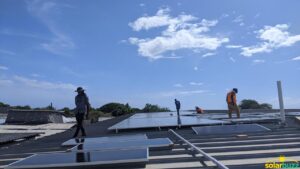
Too often, homeowners and businesses are left with underperforming systems sold on vague promises based only on utility bills and assumptions; not on actual usage or site data.

Without designs grounded in factual analysis of energy usage and site conditions, solar risks becoming just another expense rather than a tool for energy independence.
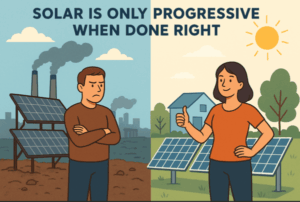
At SolarBuzz, we believe progress should be measurable, not assumed. 

Our solar solutions are engineered and tailored to actual consumption, unique site layouts, and long-term energy goals. 

This approach ensures that every system we install delivers on performance, savings, and ROI as promised, while also reducing carbon emissions.

Progress That’s Measurable, Not Assumed

Progress is achieved when solar systems are built with high-quality, long-lasting equipment, designed through precise data analysis, and installed to maximize performance and measurable CO₂ reduction.

SolarBuzz has been entrusted by clients across Jamaica to install, upgrade, and optimize systems that allow them to adopt environmentally responsible practices while saving significantly on energy costs.

Case in Point: Fleetwood Jamaica Ltd.
In May 2022, Fleetwood Jamaica Ltd. partnered with us to reduce their reliance on fossil fuels and lower energy costs. 

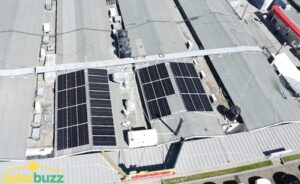
After a detailed load profile analysis, we designed and installed a 53.1kW grid-tie system projected to offset 54% of grid consumption and reduce CO₂ emissions by 57.49 tonnes annually.
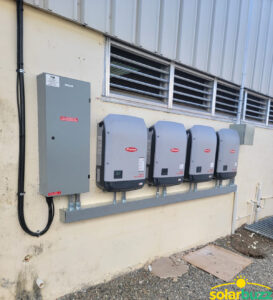
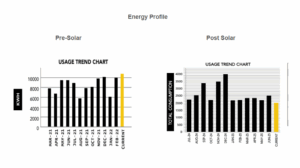
The results spoke for themselves: 51% offset, annual savings of J$3,077,214, and CO₂ reduction of nearly 80 tonnes. 
Encouraged by these measurable results, Fleetwood initiated a second phase in 2024, adding a 43.6kW system. 
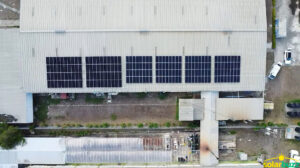
Today, they enjoy a 75%-80% energy offset from prior peak usage and total CO₂ reduction of 248.5 tonnes. 
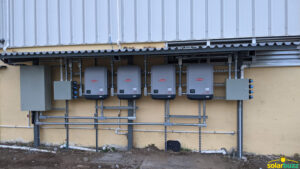
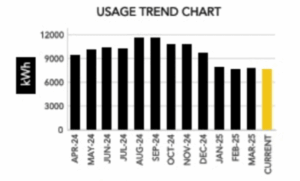
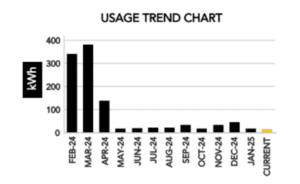
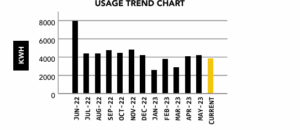
Their monthly electricity bills as seen in the graph below reflect over 7,000 kWh in savings, proof of how going green is progressive when done right.
Progress That Allows You to Do More With Less

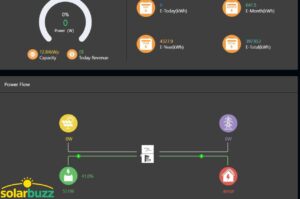
Our systems are not only designed to deliver savings; they are equipped with real-time monitoring and performance tracking to maximize value. 

Clients can see how their systems perform daily and adjust their energy use for even greater efficiency.
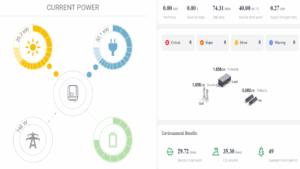


This capability allows businesses to scale production or homeowners to run appliances, charge EVs, and work from home during peak sunlight all while reducing grid dependency.

Case in Point: Gray’s Peppers
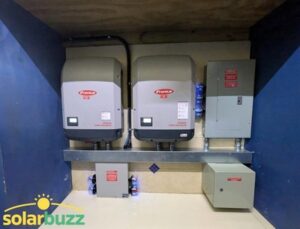
Gray’s Peppers sought to offset energy costs while boosting production. We installed a 38kW system projected to generate 4,307 kWh monthly and offset 35% of grid use. 
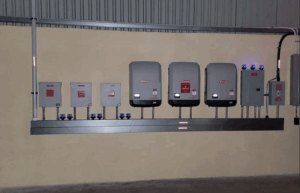
Our online monitoring of the system shows consistent performance within design expectations. 
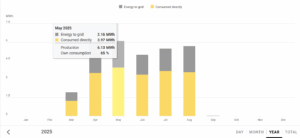
 

With an average offset of 34%, Gray’s Peppers has been able to expand operations without compromising projected savings.
Progress That Supports Modern Lifestyles

Solar isn’t just about savings; it’s about enabling a sustainable lifestyle.

Case in Point: Residential Client with EV Charging Needs
One of our featured homeowners wanted to upgrade his system to meet new EV charging needs. 

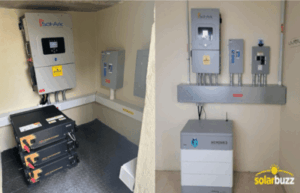
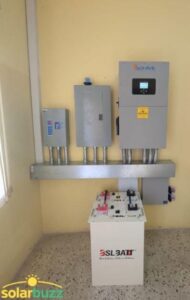
After analyzing his load profile via online monitoring data, we upgraded his existing grid tie system to 11.92kW with a 19.2kWh battery and a 15kW SolArk inverter, providing an output of 1,200 kWh per month. 
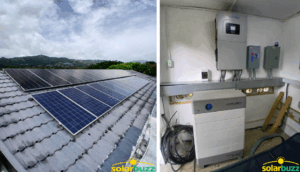
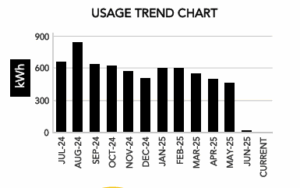
The electricity bill graph below shows the system performing as designed, powering daily EV charging and household needs, and further proving that going green the right way enables seamless integration with modern living.
Case in Point: Client with Remote-Work Office and EV Charging Needs
Another of our residential clients sought resilience against power outages and the flexibility to work from home while charging his EV. 

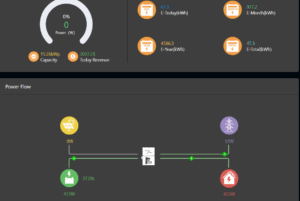
After analyzing his profile, we designed and installed a 14.72kW LFP battery system for his home.
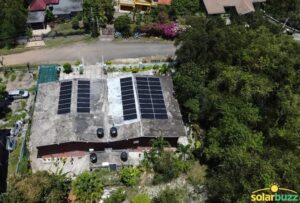
Since April 2025, he has enjoyed free daytime EV charging, uninterrupted productivity, and an 87% energy offset, making sustainability both practical and progressive.

Smart Systems for Smart Green Financing

When solar systems are designed using full load profiles, projected savings align with real performance. This makes them not only reliable but also ideal for financing.

At SolarBuzz, our data-engineered approach guarantees systems that support loan repayment schedules, replacing electricity bills with predictable loan obligations thus giving clients peace of mind.

Case in Point: Smart Energy Financing
One of our clients came to SolarBuzz with a clear goal: to cut his electricity bills as much as possible while securing financing through one of our banking partners.

For this client, achieving maximum solar savings was essential to ensure that his monthly loan payments could be seamlessly covered by the energy cost reductions.

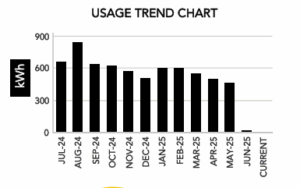
In May 2025, we designed and installed an 8.2kW lithium iron phosphate (LFP) battery-based system, tailored to his energy profile and projected to offset 84% of his grid usage.
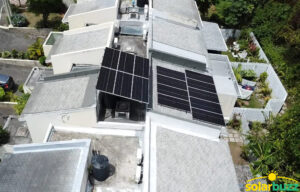
Already, our client is experiencing a drop in their bills from J$40,000 to J$630, exceeding our predictions!
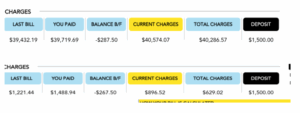
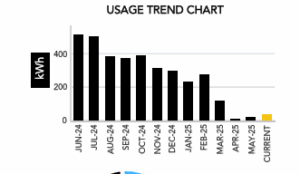
Similarly, another client leveraged the NHT’s Smart Energy Loan to finance with us a 4.36kW LFP battery system, projected to offset 90% of her total energy usage. 
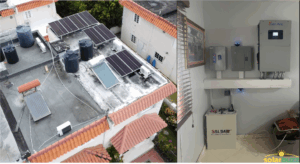
Since installation in February 2025, her system has performed consistently, with savings covering her loan obligations and serving as a true demonstration of how going green can be progressive when done right.
 

Progress That Empowers a Greener Future

When solar is engineered with precision, installed with integrity, and supported with monitoring, it becomes not just a system but a tool for measurable progress. 

Whether enabling businesses to scale, households to adopt EVs, or clients to finance sustainability with confidence, SolarBuzz ensures that going green is not just a choice but a smart, progressive investment.

At SolarBuzz, progress is always measurable, reliable, and empowering.

Solar progress, when done right, empowers you to save more, live better, and build a greener future.

If you wish to explore how we can design a data-engineered system tailored to your energy needs, please contact us today and start living your better, greener life!

Deidre Wedderburn is the Client Relations Manager at SolarBuzz, dedicated to building long-term partnerships and delivering a top-tier client experience (deidre@solarbuzzjamaica.com).

Prime Minister Dr Andrew Holness has called on Caribbean businesses to take the lead in transforming the region’s energy landscape, saying the time has come for bold investment in renewables to drive down costs and strengthen economic resilience.

His comments come amid confirmation that the Government of Jamaica will not renew the all-island licence of the Jamaica Public Service (JPS) when it expires in 2027, a move that signals a major shift in the country’s energy future.

Speaking at the CARICOM Private Sector Organisation (CPSO) breakfast at Sandals Montego Bay on Tuesday, Monday, Holness said the Caribbean is blessed with abundant renewable resources, from solar and wind to hydro and geothermal, and must leverage them to reduce the high cost of living.

“Every island is bathed with incredible solar energy,” he said. “Some of us have wind, some hydro, some geothermal. The question is, how can we cooperate to use it beneficially for all?”

He pointed to hydrogen as a potential game-changer, referencing discussions with European partners interested in sourcing clean hydrogen from the Caribbean, should the region be able to convert its renewable energy at scale.

“If we can convert our solar and wind into hydrogen, there is a huge market we could supply endlessly,” Holness said. “I am throwing that out to the business community. We need you to apply greater innovation in the energy sector.”

Jamaica’s own decision to end the JPS monopoly has reenergized the conversation on energy independence and competition. With the current agreement ending in 2027, the government now has an opportunity to open the energy sector to new players, including regional and international investors in renewable infrastructure.

Holness did not directly address the JPS decision in his speech, but his remarks on innovation, regional collaboration, and de-risking frameworks for green energy investment struck a clear tone of urgency.

“Most of us are struggling with the overarching cost of living. Energy is a big part of that,” he said. “Government must provide the regulatory and de-risking support, but the private sector must seize the economic opportunity.”

Energy costs remain among the highest operational burdens for Caribbean businesses and households, affecting everything from food prices to digital services.

He also framed energy security as part of a broader national security strategy, protecting not just electricity access, but economic and cyber infrastructure. “Security is not just violence. It is the security of our telecommunications, our shipping and logistics, our financial systems. Energy underpins all of it.”

Jamaica Gleaner

In a windfall for more than a million households, the amount of electricity generated by solar panels hit an all-time high in the first five months of the year.

Britain’s sunniest spring yet has generated a record amount of solar power, delivering a windfall for the million-plus households with solar panels.

The country had 43 per cent more sunshine than average for the season, the most since modern records began 115 years ago, the Met Office said this week. The sunny weather has triggered a boom in electricity generation from solar panels on rooftops and in fields.

Data from the National Energy System Operator shows that a total of 7.6 terawatt hours of electricity was generated from solar over the first five months of the year — and average output peaked at nearly 3,400 megawatts in May.

The five-month total is up 42 per cent on the same period last year and is an all-time high, according to the website Carbon Brief, which analysed the figures.

Solar power, whose capacity Ed Miliband, the energy secretary, hopes to triple by 2030, is the sixth biggest source of electricity in the UK, behind others including gas, wind and nuclear.

However, it is playing an increasingly important role during spring and summer, when demand for electricity is lower. For the first time, solar accounted for more than a tenth of monthly electricity generation for two months in a row, March and April.

Simon Evans, senior policy editor at the climate and energy website Carbon Brief, said: “Solar power is rising faster than most people realise. It is cheap, fast to install and every unit of electricity it generates here in the UK displaces two units of imported gas.”

There are 1.5 million homes with solar panels. Analysis of official figures by the solar company Gryd Energy shows households are installing them at three times the rate of businesses.

The sunshine will have cut energy bills for households because they need to draw less power from the grid, and solar owners including the Red Dwarf actor Robert Llewellyn have shared examples of high generation from their panels on social media.

It will also have earned significant payments from energy suppliers for the thousands of people still on valuable “feed-in tariffs” — long-term contracts launched in 2010 before being scrapped in 2019. Energy billpayers without solar will feel little financial benefit, though, because of how the price of electricity is set.

The solar power record stems not only from sunny conditions but also an expansion in capacity: two in five new homes have solar panels. Officially there is 18.2 gigawatts of capacity nationally, up from 17.2 gigawatts a year ago. The industry body Solar Energy UK says the true figure is even higher.

Britain’s biggest solar farm, a vast 370-megawatt installation announced eight years ago near Faversham in Kent, is expected to be fully complete within weeks. Even bigger solar farms, some of which have caused consternation for nearby residents, have been given the green light by Miliband since he took office. The government is also mulling mandating solar panels on new car parks.

Spring has become sunnier since the 1980s, the Met Office has found — there were 653.3 sunshine hours this season — and spring months have been about 15 per cent sunnier over the past decade than the average between 1961 and 1990.

The Times UK

– When solar energy and your EV unite

Electric vehicles (EVs) are gaining momentum not just as cost-effective transportation but also as a key step toward reducing carbon footprints, protecting the environment, and achieving a sustainable lifestyle.

More EV owners are now turning to solar energy to enhance their eco-friendly lifestyle and protect themselves from rising and unpredictable energy costs. 

The economic benefits of installing solar energy systems for EV charging are compelling. Once the initial investment is recouped, homeowners can generate their own electricity, effectively powering their EVs for free.

This long-term return on investment (ROI) makes solar a powerful incentive for EV owners seeking both financial savings and environmental sustainability.

Real Clients, Real Results

Solar Buzz has seen a growing demand from EV clients seeking to reduce their carbon footprint without increasing their energy bills.

This week, we highlight two of our EV clients who have successfully aligned their transportation needs with a strong commitment to renewable energy.

Looking to reduce reliance on the local grid, our featured clients turned to Solar Buzz for efficient, future-ready solar solutions.

We designed and installed lithium iron phosphate (LFP) battery-based systems – known for safety, durability, and efficiency – projected to offset an average 85% of their energy use.

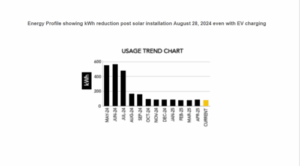
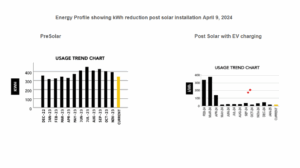
The JPS energy consumption graphs help to track monthly energy savings.

The sets of graphs below show that, since installation, the solar output is consistently meeting (and in some cases surpassing) 85% of the household and EV charging needs, aligning with our design projections.


Faster Payback, Bigger Savings

Did you know that charging your EV during peak sun hours can accelerate your return on investment? The more solar power you use, the faster you recoup your investment.

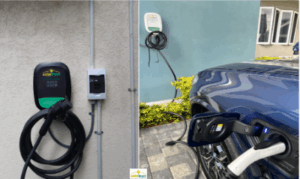
EV chargers require a significant amount of power, and using solar energy to charge during the day helps you maximize the value of your system.

Even clients who added EV chargers after their solar installation saw their savings continue to grow.

On average, our clients have reduced their monthly electricity bills to J$2,100, down from an average of J$38,000 before going solar – an impressive 95% average energy savings!

By charging their EVs during the day, clients not only exceeded their projected grid energy offset but are also on track to shorten their system’s payback period significantly.

Driving Future Energy Needs

With the rise of EV adoption across the island, Solar Buzz’s customized solar solutions are helping Jamaicans gain energy independence while lowering their carbon footprint. 

Our comprehensive services that range from solar installation to safe EV charger integration and maintenance are designed to meet the evolving needs of today’s energy-conscious consumers. 

The success of our EV clients demonstrates how solar power can reshape how Jamaicans fuel both homes and vehicles, paving the way for a cleaner, more sustainable future. 

Solar Buzz remains committed to leading the way in delivering clean energy solutions for a sustainable green future.

Let us show you how rewarding it is to plug into the sun.

Deidre Wedderburn is the Client Relations Manager at SolarBuzz, dedicated to building long-term partnerships and delivering a top-tier client experience (deidre@solarbuzzjamaica.com).
Tastee returned to Solar Buzz once again to power operations at their newest location in the Harbour View Shopping Centre with clean, renewable energy. 

After consistent results at their Half Way Tree branch, they were ready for a repeat success to reduce energy costs and maximize profitability.

Tailored for Tastee’s Energy Needs

At Solar Buzz, we design systems that perform exactly as projected. By analyzing each client’s actual energy usage, we custom design solar solutions that maximize return on investment.

After analyzing Tastee’s load profile, a 20.7kW grid-tied (no batteries)  system with a 4-year payback period was designed and installed. 

Due to their 24/7 cold storage needs, Tastee has significant nighttime usage accounting for 54% of their total usage. Considering their nighttime usage and roof space availability, we engineered a system projected to offset  20% of their total energy usage. This offset is a reduction of over 3,000 kWh per month which is a projected savings of J$1,392,788 annually. 

Delivering as Promised: Another Solar Win!

Tastee Harbour View switched to solar in December 2024. Below is the  Tastee Harbour View JPS chart showing January 2025 as the first full month on solar.  The graph reinforces the project as a solar success story with the system delivering consistent savings as projected.


Country Traders Ltd: Another Solar Success! 

Country Traders Ltd partnered with Solar Buzz to reduce their carbon footprint while maximizing energy savings and production.

Custom-Designed for Maximum Impact

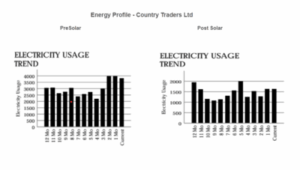
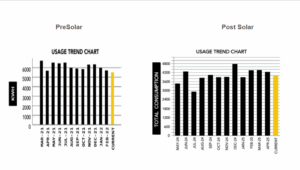
After analyzing Country Trader’s load profile, a 19.8kW grid-tied system with an average energy offset of 62% was designed and installed. With minimal night usage and no cold storage demands, their operations made them an ideal candidate for a high offset solar system and a 4-year payback period. 

Below are the JPS charts for Country Traders Ltd showing their energy profile before and after solar energy installation.

These graphs show the system delivering energy savings as predicted. Our client was also able to increase production when needed without impacting projected savings!

The Results Are In!

Since installation of their solar system, our client has already secured full payback on their investment as promised, while continuing to enjoy real energy savings!

Ready to Energise Your Business?

It’s time to reduce your operating costs and invest in your bottom line; not someone else’s. 

Let Solar Buzz energize your business today with clean, renewable energy and systems that perform as promised.

Contact us today to begin your journey to sustainable success!

Deidre Wedderburn is the Client Relations Manager at SolarBuzz, dedicated to building long-term partnerships and delivering a top-tier client experience (deidre@solarbuzzjamaica.com).

In today’s climate of unpredictable weather patterns, rising energy costs and increasing reliance on modern amenities, solar energy is a strategic investment rather than just a sustainable choice.

From weather resilience and financial independence to increasing property value and providing unmatched peace of mind, solar energy offers a wealth of benefits that make it a solid long-term investment. 

Weather Resilience

Extreme weather events such as hurricanes, are becoming more frequent and intense, putting pressure on aging electrical grids.

A direct hit from a strong storm could easily leave thousands without power for days or even weeks. 

Solar energy systems, when paired with battery storage, offer a reliable solution for both homeowners and vacation villa owners ensuring that their family or guests have access to electricity and essential amenities even when the grid fails. 

This kind of weather resilience is a game-changer especially for vacation rental owners, as it offers guests a seamless experience while setting your rental apart in a competitive market and safeguarding your revenue stream.

Upfront Investment

The upfront cost of solar installation is an investment that pays off in a short period of time.

On average, residential solar systems with battery storage offer a return on investment within 4-6 years. This payback period can be even shorter as electricity rates continue to rise.

Homeowners can also maximize their returns by increasing daytime energy usage, effectively putting to use any excess solar energy that would otherwise go unused once their batteries are fully charged.

During the payback period, solar replaces your electricity bill while allowing you to invest in your own infrastructure or other opportunities.

With electricity rates still subject to global volatility and price hikes triggered by supply disruptions, oil market shifts or even local grid upgrades, solar energy shields you from these variables. Solar energy locks in predictable savings and provides a hedge against inflation in the utility sector.

Property Added Value and Revenue Security

Properties with installed solar systems enjoy higher resale value and market appeal.

Property owners who sell before the payback period ends can still benefit from accelerated financial returns by commanding a more competitive sale price. 

Vacation rental property owners stand to gain significantly from solar adoption.

Guests expect comfort and reliability, and a solar-powered villa offers them a superior experience that is uninterrupted by blackouts and free from energy usage restrictions without you bearing the burden of high energy bills.

This gives your property a competitive edge in the market since you can avoid passing fluctuating utility expenses onto guests. 

Furthermore, solar energy acts as a premium amenity that can justify higher nightly rates and boost income potential.

It also appeals to the Eco-Tourist that appreciates clean energy, enhancing your property’s attractiveness to the growing eco-tourism market.

Smart Investment for EV Owners

For those who own or plan to purchase an electric vehicle (EV), investing in solar energy is a no-brainer.

Harnessing solar energy to charge your EV in the day time can significantly reduce or even eliminate reliance on the grid, reducing your monthly expenses.

With the Jamaica Public Service (JPS) already approved to implement special billing for EV owners due to anticipated demand pressure on the grid, installing solar energy gives a clear advantage.

Solar becomes a proactive investment that allows EV owners to sidestep potential surcharges and truly enjoy energy independence.

Investment of a Lifestyle

Investing in solar energy is not just a financial decision but a lifestyle upgrade.

Solar allows homeowners to fully enjoy the comforts of modern living – especially the use of the air conditioning unit during increasingly hot days and nights – without the worry of high electricity bills. 

Additionally, modern solar systems include online monitoring tools that provide real-time insights into energy production and your usage.

This kind of monitoring empowers you to manage your energy consumption efficiently and inadvertently helps you to get the most out of your system while maximizing long-term savings.

Accelerated Investment Returns

The recently introduced solar tax credit further tilts the scales in favor of solar energy as an investment.

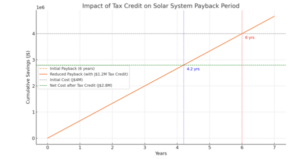
Homeowners can now claim up to 30% of the value of their system, capped at J$4 million which translates to a potential tax credit of up to J$1.2 million. This incentive can significantly shorten the payback period on your solar investment.


For PAYE-employed individuals who financed their solar system, this incentive is even more impactful since the tax credit is issued as a cash refund and can therefore be used to reduce loan balances if desired. 

Additionally, the cash refund from this solar tax credit can be reinvested into other opportunities, such as home renovations, upgrading your solar system, or ongoing maintenance to ensure optimal long-term performance and continued savings.

A Future-Proof Investment

With a payback period that is shrinking thanks to tax incentives and rising utility costs, the case for solar energy as an investment is stronger than ever.

Installing solar energy is a strategic move for financial security, property enhancement, energy resilience and peace of mind.

Invest today, and enjoy the rewards of resilience, savings, and independence for years to come. 

deidre@solarbuzzjamaica.com 

Electric vehicle (EV) dealership BYD Jamaica has partnered with the Jamaica Public Service Company (JPS) to offer residential customers 50 per cent off their electricity bills for six months by purchasing select BYD models.

Customers who purchase 2025 models from March to April, and 2026 models from June to July, are eligible for the promotion.

Sloane Jackson, head of business at BYD Jamaica, remarked “This partnership was born out of an increased and growing interest in electric vehicles islandwide, so we decided to incentivise potential customers’ curiosities by reaching out to the JPS, who has enthusiastically agreed to work with us in getting more customers to purchase EVs; specifically, BYD models”.

“An electricity bill reduced by up to 50 per cent for six months allows customers to easily and seamlessly start their EV journeys. JPS will also provide a thoughtful delivery care package with a radio frequency identification (RFID) card, details on how to use the card and the app, and a full list of the 68 JPS/Evergo charging stations across the island.”

Additionally, Dionne Nugent, director of business development at JPS, noted, We’re always looking to unleash Jamaica’s growth and productivity through innovative energy solutions, and we’re excited to do that by partnering with a fantastic brand such as BYD. We do not doubt that Jamaicans will enjoy driving away in their BYD vehicles with the bonus of reduced electricity bills during the promotion period.

The eligible models are the Yuan Plus, Seal, Song Plus DM-i, Sealion, and Shark.

Discounted bills start from the date of the vehicle’s delivery, and customers will receive up to 50 per cent off (or a maximum of J$25,000) their electricity bills for the next six months. The BYD Sales Team will send the [vehicle] registration details, driver’s license, and current JPS bill with the customer and property number to the JPS team. Terms and conditions will apply.

The ATL Automotive Group, exclusive distributors of BYD in the Caribbean, advised that as is standard, any purchase of a hybrid or electric vehicle includes the complimentary installation of a home charging station for easy access.

As the world’s leading EV manufacturer—renowned for its groundbreaking battery technology used in its wide range of electric vehicles, as well as energy systems and portable devices—BYD is committed to technological innovations for a better life, while simultaneously protecting the environment and cooling the earth by one degree.

Our Today

Thinktank says solar has been fastest-growing energy source for last 20 years, but remains dwarfed by hydro power

The world used clean power sources to meet more than 40% of its electricity demand last year for the first time since the 1940s, figures show.

A report by the energy thinktank Ember said the milestone was powered by a boom in solar power capacity, which has doubled in the last three years.

The report found that solar farms had been the world’s fastest-growing source of energy for the last 20 consecutive years.

Phil MacDonald, Ember’s managing director, said: “Solar power has become the engine of the global energy transition. Paired with battery storage, solar is set to be an unstoppable force. As the fastest-growing and largest source of new electricity, it is critical in meeting the world’s ever-increasing demand for electricity.”

Overall, solar power remains a relatively small part of the global energy system. It made up almost 7% of the world’s electricity last year, according to Ember, while wind power made up just over 8% of the global power system.

The fast-growing technologies remain dwarfed by hydro power, which has remained relatively steady in recent years, and made up 14% of the world’s electricity in 2024.

Hydro power is one of the modern world’s oldest renewable energy technologies, and made up a large proportion of global electricity in the 1940s – when the power system was about 50 times smaller than it is today.

The continuing growth of solar means clean power – including nuclear and bioenergy – is on track to expand faster than the world’s overall electricity demand, according to Ember. This should mean fossil fuels beginning to be squeezed out of the global power system.

Ember had previously predicted that 2023 would be the year in which emissions from electricity reached a peak, after a plateau in the first half of the year.

Climate experts hoped then that emissions would begin to fall, but a series of heatwaves across the globe ignited a surge in demand for electricity to power air conditioning and refrigeration systems, which caused fuel electricity to grow by 1.4% that year.

The report, which accounted for 93% of the global electricity market across 88 countries, found that the surge in demand pushed emissions from the global power sector up by 1.6% to an all-time high last year.

MacDonald said heatwaves were unlikely to ignite a similar demand surge in the year ahead – but the increasing use of electricity to power artificial intelligence, datacentres, electric vehicles and heat pumps was expected to play a bigger role in the world’s appetite for electricity.

Combined, these technologies accounted for a 0.7% increase in global electricity demand in 2024, double what they contributed five years ago, the report found.

“The world is watching how technologies like AI and EVs will drive electricity demand,” MacDonald said. “It’s clear that booming solar and wind are comfortably set to deliver, and those expecting fossil fuel generation to keep rising will be disappointed.”

The Guardian

Solar dominates project queues through 2028, said data from the Federal Energy Regulatory Commission (FERC).

Solar now represents 10.53% of total available installed generating capacity in the United States, according to the Federal Energy Regulatory Commission (FERC).

Solar capacity is approaching that of its renewable energy counterpart in wind, which is now 11.77% of available capacity, and is expected to surpass it in the coming years. Hydrocarbon based power remains dominant on U.S. grids, with nearly 43% of capacity attributed to natural gas and 15% to coal. Hydropower contributes 7.6% of U.S. capacity, said FERC.

Despite natural gas dominance in existing power, solar energy leads the way for the present and future of installations. In January 2025, 2,950 MW was installed, compared to 60 MW of natural gas.

Looking ahead FERC tracks 89 GW of high-probability capacity additions from solar through January 2028, compared with 16 GW for natural gas. What’s more, FERC expects nearly 16 GW of natural gas retirements over the same period. Notably, nearly 25 GW of coal is also expected to be retired through January 2028, highlighting the shift toward emissions-free sources of power.

pv Magazine

Kevin Wen is one of a growing number of Australians with rooftop solar who have decided the economics of installing a battery storage system finally stack up.

In 2022, Mr Wen was getting about 15 cents per kilowatt-hour for exporting his excess energy back into the grid.

“Then they lowered the buyback price to 8 cents, and then 5 cents, and then 3 cents now,” Mr Wen tells ABC News.

“I just think it’s a scam, so now I would like to use my energy for myself.”

Kevin Wen has installed a battery at his Sydney home after falling solar feed-in tariffs. (ABC News: John Gunn)

He’s far from alone. About 75,000 battery storage systems were installed across Australia last year — up 47 per cent from 2023.

That brings the total of home battery storage systems across the country to more than 320,000, according to solar energy consultancy SunWiz.

Chris Williams, CEO of Natural Solar, a company that now installs about 100 batteries a week, says the reduction in solar feed-in tariffs has been a tipping point for many of his customers.

“Solar feed-in tariffs, effectively, are a rate that the household will receive when power is sent back to the grid during the day from your solar panels,” Mr Williams says.

“Now, that rate, historically, may have been 15 cents or 20 cents per kilowatt-hour fed back to the grid.

“What we’re seeing today, that might be as low as, you know, 2 or 3 cents in New South Wales, in Victoria, it might be as low as, you know, less than 1 cent.”

Solar tariffs have also been as high as 60 cents per kilowatt-hour in Victoria, while New South Wales also offered generous incentives for the solar power people used themselves.

In certain circumstances, Mr Williams says, nowadays households will actually be charged for sending power back to the grid.

“Instead of making money, they’ll actually have to pay a fee to send that power back.”

Rising power bills, which are set to increase again in July, by 2–9 per cent depending on where you live, are also driving the boom in household battery installations.

Mr Williams’s business has received 250 per cent more battery enquiries since the regulated price increases were announced just last week.

“Consumers and households are very sensitive at this point in time, particularly on the back of the cost-of-living crisis we’re in, when they see that their power price is going to go up.”

Solar installs dwarf battery take-up

Households can save about $1,500 a year on power bills with rooftop solar, and another $1,000 with battery storage, according to the Smart Energy Council.

More than 4 million Australian households and businesses have rooftop solar but, despite the additional savings, only about one in 12 have battery storage.

The high purchase price of batteries has been a barrier for many.

“Batteries are, on average, around about $10,000 per system.

“We have seen prices come down year-on-year by between 5 and 10 per cent and we do expect that trend to continue,” Mr Williams says.

“The average battery should have a return on investment between six to eight years before subsidies — including subsidies, that may be as little as five to seven years for the average household.”

Solar energy consultancy SunWiz has crunched the numbers on how long it takes to make your money back on a combined solar and battery system.

The “payback time” now sits at about 8.3 years, which includes a mix of subsidised and non-subsidised systems.

Battery subsidies are currently only available through the New South Wales and the Northern Territory governments.

Other jurisdictions — like Victoria, Tasmania and the ACT — offer interest-free loans for batteries.

As the federal budget and election loom, there are calls for a national government subsidy, similar to the existing scheme for rooftop solar, to further reduce the cost of batteries.

“Solar energy, of course, doesn’t work at night-time, so what we want is a battery booster scheme that helps people take the energy from the middle of the day and use it in the evening when they’re home from work and school,” Smart Energy Council CEO John Grimes tells ABC News.

The Smart Energy Council, a peak body for the renewable energy industry, is calling for a national subsidy of $350 per kilowatt-hour (kWh).

In layman’s terms, that would reduce the cost of a small 5kWh battery to about $3,000, or $7,000 for a larger 10kWh battery.

Mr Grimes says battery storage systems would allow households to avoid higher prices when cheaper solar energy is unavailable.

“What solar batteries do is, they time-shift energy from the middle of the day, when it’s super-cheap, to make that super-cheap energy available at night-time, when prices spike,” Mr Grimes says.

Modelling by the Smart Energy Council shows that if Australia reaches 1 million solar batteries by 2030, households will save more than $19 billion.

“There’s a saving not just for the householder, but for the whole community. That’s because we’re taking pressure off when electricity prices are high.

“The more solar batteries we can install, the more money we save, the more we save individuals and the more we help the environment.”

Other renewable energy industry groups, including the Clean Energy Council, are calling for a national rebate for batteries of up to $6,500.

Former RBA deputy backs battery subsidy calls

Last year, the centrepiece of the federal budget was the $3.5 billion in energy bill relief for households, which amounted to a $300 rebate for households and $325 for small businesses.

Those rebates not only reduced household power bills but worked to bring down inflation.

Former RBA deputy governor Guy Debelle argues there is a better way to shield households from energy price inflation, which is subject to global shocks such as Russia’s invasion of Ukraine.

The former central banker, who also spent a period at Fortescue Future Industries, says instead of bill rebates, money should be spent on subsidies for batteries and increased incentives for bringing down the cost of solar.

“The relief to household budgets is only temporary, while they’re receiving those cash payments.

“You could repurpose that money to provide them with the opportunity to get rooftop solar and batteries to provide much more long-lasting insulation from energy prices.”

Mr Debelle says those incentives should also target low-income households, strata buildings and landlords.

“Sun isn’t subject to geopolitics, so it’s not going to be affected by Russia invading Ukraine,” he says.

Kevin Wen is glad he’ll be less reliant on the grid and therefore less exposed to price spikes.

Mr Wen was able to get $2,000 off the cost of his home battery storage system under the NSW government scheme, but says higher subsidies would encourage more people to take up solar and batteries.

“If they want to promote green energy, it is really good to increase the subsidies right now … If they can increase it, that will be great for everyone.”

Energy experts spoken to for this story say increased subsidies, not loans, will be the best way to increase the uptake of solar batteries.

A spokesperson for the federal minister for climate change and energy Chris Bowen said in a statement:

“The government is always looking for ways to ease household budget pressure.

“Through our Household Energy Upgrades Fund, we’re providing $1 billion to help Australian home owners lower their energy bills through discounted green loans for energy upgrades, such as solar panels and batteries.”

ABC News (Australia)