While warning that the Government could possibly examine policies to limit movement as the country faces a significant crisis regarding international oil prices, Energy Minister Daryl Vaz says every Jamaican has a responsibility to conserve energy.

He made the call at Wednesday morning’s post-Cabinet press briefing as he outlined the Government’s response to the economic strain caused by the conflict in the Middle East and its impact on Jamaica’s oil pricing.

“My words to you Jamaica is, definitively, ‘You’re gonna see increases [in oil prices] as long as this [conflict in the Middle East] continues’. We [the Government] will do what we can do, but it is important that you do what you need to do to understand that you need to conserve starting today, today, today,” the minister stressed.

He noted that the Government will likely explore policies to limit movement, specifically transportation, and suggested the possibility of returning to a “COVID-hybrid” version of working from home to reduce fuel consumption.

But he emphasised that the Cabinet will ultimately decide on what final plans will be announced to conserve energy.

“The Government is gonna have to look at policies to limit movements, especially transportation movements. I don’t know… whether or not we go back to a COVID-hybrid version of working from home; something has to happen, because the level of traffic that I am seeing on the road doesn’t show me that anybody realises that there’s a war and the price of fuel/oil is going to go up, and up, and up,” Vaz said.

He added, “I am sure that Cabinet will deliberate, the Government will come up with plans as to how to conserve [energy], but it is 100 per cent the responsibility of every Jamaican to realise that we are in a major, major crisis as it relates to the price of oil internationally, and therefore, you need to take responsibility for your household, your business, [so] see what you can do.”

At the same time, Vaz said that despite the market volatility, Jamaica’s energy security remains intact due to established finished product supply contracts and the local refining capacity at Petrojam.

“So, it’s not a matter of not being able to buy [oil]; it’s the price. So there’s no need to panic,” he declared.

Earlier, the minister advised that the Government — through Petrojam, the Energy Ministry and the Finance Ministry — has taken deliberate steps to, among other things, mitigate the full pass-through of global price increases, and protect consumers from sudden and sharp fuel increases.

Additionally, Petrojam’s pricing committee continues to monitor market conditions and adjust ex-refinery prices accordingly.

However, Vaz pointed out that while the current mechanism has been effective in cushioning customers, it has resulted in “significant financial losses by Petrojam”, which is between $1.3 billion and $1.4 billion. That loss was not passed on to Jamaicans.

“If we continue the current pricing mechanism up to June 2026, it would cost the Government of Jamaica $11.8 billion, which is unaffordable, and unsustainable and, is, in fact, two-thirds of this budget year’s revenue measures,” Vaz informed.

Pointing to the breakdown in talks between Iran and the United States, Vaz said he was hopeful that there would be a resolution, noting that the discussions appear to be “going in the wrong direction since Monday”.

In response to the high oil prices globally, Vaz said Cabinet has considered a revised new tiered pricing mechanism, designed to allow for controlled and predictable adjustments, maintain consumer protection for smaller increases and enable greater flexibility during larger global price shocks.

As of Wednesday, he said the new pricing mechanism to be used by Petrojam to respond to the fuel uncertainty will entail a “tiered approach”, which will see petroleum prices being more closely aligned to global price movements.

“This will allow Petrojam to be more agile and respond in a more timely manner to price volatility. What does that mean? It means that the $4.50 cap [on fuel] cannot be sustained, and it means that we’ll have to have several different tiers of caps — probably three — that will speak to what’s happening in the market and, as I said, pricing is weekly. So it means that we can adjust on a weekly basis,” Vaz explained.

“But let me be blatantly and truthfully upfront in your face; the Government of Jamaica cannot stomach an $11.8 billion [loss] with all of what we have to do and all of the contending priorities, and anybody who tell you any [thing] different… rubbish! No Government in a situation like this can sustain that,” the minister argued.

Jamaica Observer

Why Jamaica’s fuel relief strategy is only half the equation


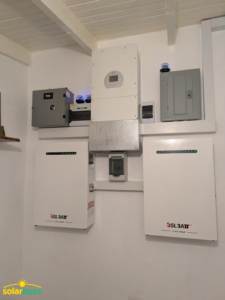
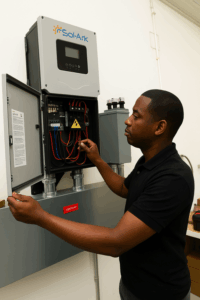
                                               A Solar Buzz 15.1kW system installation at a Kingston residence.

The Government’s proposal to consider a return to post-COVID style hybrid or remote working arrangements to ease fuel demand arrives at a pivotal moment for Jamaican households. 

With the removal of fuel price caps and a shift to more market-reflective electricity pricing, any increase in daytime residential energy use must be met with a clear cost-control strategy.

On April 15, 2026, Energy Minister Daryl Vaz highlighted the unsustainability of the current fuel price cap mechanism, which has cost Petrojam between J$1.3 billion and J$1.4 billion in a recent four-week period. With tiered pricing now tracking international markets on a weekly basis, households face greater and more immediate exposure to global energy volatility.

The Incomplete Equation

Remote work offers real savings on transportation fuel. However, a professional working from home shifts substantial daytime energy consumption including air conditioning, computing equipment, lighting, internet infrastructure, and often additional household activity onto their home’s electricity bill. 

For upper-middle and executive households best positioned for hybrid arrangements, this represents a meaningful transfer of consumption from commercial to residential settings.

Without a supporting energy solution, the intended financial relief risks being redirected from the fuel pump to the electricity meter.


The Government is offering relief at the fuel pump. Solar completes the equation at the meter.

The Other Half of the Equation

A properly designed solar system with battery storage offers a practical and accessible way to complete that energy picture. It directly offsets the higher daytime residential demand, stabilises costs against weekly price movements, and delivers genuine net savings for many households. 

The supporting framework already exists: the GCT exemption on solar systems, panels, and battery storage equipment reduces the effective cost of adoption meaningfully. The residential solar tax credit offers a further 30% on system value, claimable against up to 50% of taxable income. And through the National Housing Trust, eligible contributors have access to financing that the open market cannot approach, at subsidised rates of 3 to 5%.

Hybrid Work and the Energy Equation

Eligible NHT contributors can access up to J$2.5 million through the Smart Energy Loan, designed specifically for solar PV systems with battery storage and energy-efficient appliances, and up to J$5 million via the Home Improvement Loan for a broader scope of work including roof repair, structural upgrades, and solar installation. These two facilities are not mutually exclusive. Used in combination they unlock up to J$7.5 million, enough to design, finance, and install a complete solar and battery solution in a single coordinated project, at repayment terms of up to 10 years or until the homeowner reaches age 70.

The critical design principle is that the monthly loan repayment should be structured to be equivalent to or less than the existing JPS bill it replaces. The fuel savings from reduced commuting are retained rather than redirected to the utility. And the household acquires an asset with a design life measured in decades.

Consider two profiles from the Solar Buzz client base. The distinction between their outcomes lies in loan tenure eligibility, which directly shapes the financial result in each case. 

In the first, a professional household with a 6.05 kW hybrid system and 20.48 kWh of battery storage offsets 98% of its consumption. Even with near-doubled electricity usage to support home offices and air conditioning, the JPS bill drops to roughly J$1,200. 

Because this client was eligible only for the standard 10-year NHT Smart Energy Loan term, total monthly outgoings including loan repayment sit at approximately J$26,300, only about J$9,000 more than their average JPS bill, yet delivering almost twice the electricity. Full energy freedom is achieved once the loan is repaid.

In the second, a 5.0 kW hybrid system with 15.36 kWh battery storage achieves a 100% offset. Full eligibility for the loan repayment term provided considerably more favourable financing conditions.

The household effectively substitutes its JPS electricity bill with the NHT loan repayment, reducing the monthly JPS charge to fixed non-fuel costs only, delivering complete energy independence during the loan period itself. The combination of system output and financing terms positions the household for what can genuinely be described as cash-flow-positive energy freedom.

System Design that Supports Hybrid Work

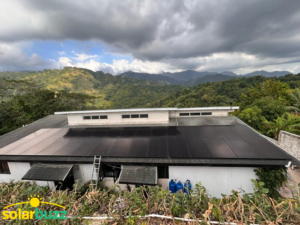
      A Solar Buzz 7.65kW system with 20kWh battery storage installed for a hybrid-working household.

Jamaica’s grid, despite ongoing investment commitments, remains characterised by outages that are disproportionate to the ambitions of a professional or executive household relying on continuity of power for productive work. A solar system without battery storage offers billing relief when the sun shines and supply holds, but it does not offer energy independence.

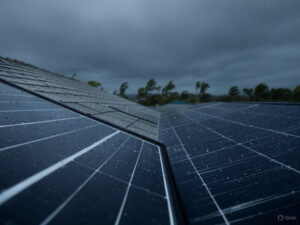
Jamaica’s grid realities, combined with increasingly variable weather patterns, mean that resilience matters as much as generation. What has traditionally been understood as the dry season has become structurally less predictable, with extended cloud cover and above-normal rainfall now appearing well into what should be the island’s driest months. 

Extended cloud cover during a significant weather system can suppress solar generation entirely for twenty-four to forty-eight hours or longer. A well-sized battery system ensures continuity for professional work through outages and extended cloud cover. It is no longer sufficient to size a battery for overnight use. It must be sized for sustained generation loss.

During Hurricane Melissa, Solar Buzz systems continued to deliver power for clients in severely affected areas through extended JPS outages lasting three to four months. This experience highlights the practical importance of well-designed solar-plus-storage solutions for households that require reliable daytime energy, particularly under work-from-home arrangements.

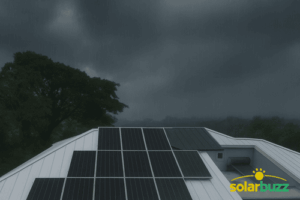
                                                                        A Solar Buzz 13.5kW system installation.

The Energy Policy Block in the Hybrid Work Equation 

One targeted policy refinement would make a meaningful difference. 

The net billing licence is currently required as a precondition for the residential solar tax credit, even for systems installed entirely for self-consumption. Most home-office households will consume what they generate during daylight hours. There is no surplus to export and no commercial rationale for the requirement as applied to these households. It adds months of administrative delay and upfront cost that run directly counter to the goal of broader solar adoption.

An interim waiver of this requirement, pending formal review, would allow households to act now, ahead of further equipment price pressures and any increase in residential energy demand that a work-from-home policy would introduce. 

The fiscal impact to the Government would be negligible. The impact to Jamaican households would be immediate.

Hybrid Work and the Energy Opportunity 

Those considering solar are encouraged to act ahead of further price movements. Using NHT contributions where eligible, and doing so early, can secure more favourable loan terms and help position a system to deliver cash-flow-positive benefits during the repayment period itself. 

Solar Buzz is an NHT-approved vendor. Our consultations begin with your actual energy bill, your roof’s current condition, your NHT eligibility, and your appliance load. 

Ready to see what your numbers look like? We design the system, model the projected savings, and structure the financing so the numbers make sense before any commitment is made. Contact us for your online solar consultation.


Written By: Deidre Wedderburn

Client Relations Manager, Solar Buzz


The EU will cut electricity taxes and provide consumers with fresh incentives to ditch fuel-burning cars and boilers, the European Commission has announced, as the energy crisis from the Iran war speeds a shift to a clean economy.

The plan, which foresees tweaking rules so that electricity is taxed less than oil and gas, aims to bring down bills while encouraging the move away from polluting devices that prolong reliance on foreign fuels.

The commission said it would adopt temporary state aid rules to allow member countries to directly shield consumers and businesses from high energy prices, but it warned that any support must be “targeted, timely and temporary”.

It stopped short of measures introduced after the Russian invasion of Ukraine, such as a windfall tax on oil and gas companies, which five EU finance ministers had called for earlier this month. The commission also ruled out a cap on gas prices, which energy experts had warned would be counterproductive.

“By investing in clean energy and electrification, we unlock more money for our economy,” said Dan Jørgensen, the energy and housing commissioner. “In the future, instead of buying something and burning it to get energy and buying it again, we need to produce our own homegrown clean energy.”

Europe sped up its deployment of wind turbines and solar panels after the last energy crisis in 2022 but has made little headway in replacing machines that burn oil and gas. The lingering reliance on foreign fuels has left the EU vulnerable to price spikes since the war in Iran, which some analysts fear will persist even if the war ends quickly.

The commission said it would set an electrification target before the summer and propose action to lower the price ratio between electricity and fossil fuels. Experts say this is a key factor in whether consumers and industries adopt cleaner technologies, including by phasing out fossil fuel subsidies.

Proposals to change the EU’s fragmented tax systems require unanimous approval from member states and have historically been hard to pass. Green groups said the plans consisted of “half measures”.

Antony Froggatt, of the campaign group Transport and Environment, said: “These go in the right direction but fail to create the right EU instruments both on the revenue and financing sides. As oil companies make tens of billions in war profits, windfall taxes that relieve the financial pain for European households are critical.”

Under the plans announced on Wednesday, the commission will adopt a legal proposal in May that would incentivise cost-effective use of the electricity grid infrastructure and more flexible consumption habits. It would also give member states and national regulators greater freedom to cut charges and taxes for vulnerable groups and energy-intensive industries.

Louise Sunderland, of the Regulatory Assistance Project, an energy thinktank, said: “The proposal to reduce network and tax elements of the electricity bill, which account for on average across the EU over 50% of the household bill, is a quick-acting step in the right direction. But these reforms will only be as effective as their implementation – and many governments have not yet made use of their existing ability to reduce taxation on electricity.”

The commission also plans to coordinate the filling of gas storage sites well before the winter months, as well as the procurement of jet fuel, which could soon be in short supply. It announced a new observatory to monitor transport fuels and allow it to act before shortages.

Jørgensen said the nature of the crisis meant countries needed the freedom to help struggling industries and households, but he added: “Since our long-term goal is to transition away from fossils, anything we do that might – directly or indirectly – subsidise fossils needs to be temporary and needs to be very targeted.”

Jørgensen has spoken in favour of radical fuel-saving measures proposed by the International Energy Agency last month, such as driving less and avoiding flights. Long supported by climate activists to stop the planet from heating, these measures were absent from the main package but appeared in an annexe of good practices adopted by national governments.

Jørgensen said: “On the demand side, we obviously still encourage member states to do whatever they can to bring down demand. Which specific measures member states choose to use, we think is best for member states to decide.”

The Guardian

Fossil fuel price surge after US-Israeli attacks on Iran prompts calls to end dependence on ‘volatile’ energy source.

The UK government must double down on its clean energy drive to protect bill payers from increasingly volatile fossil fuel markets in the wake of the US-Israel war on Iran, climate groups, academics and energy experts have warned.

Research published on Thursday shows that the last fossil fuel energy crisis, caused by the Russian invasion of Ukraine, cost the EU and the UK $1.8tn between 2022 and 2025, driving up bills and fuelling a devastating cost of living crisis.

The US-Israeli attacks on Iran, which started at the weekend, have resulted in fossil fuel prices surging again. Experts say it underscores the need for the UK to end its dependance on such an unstable energy source.

Bob Ward, from the Grantham Research Institute at the London School of Economics, warned the ongoing conflict in the Middle East and subsequent surge in oil and gas prices “could translate into significantly higher energy bills for British households and consumers”.

“The UK is vulnerable to the volatility of international fossil fuel markets, and the only way to protect ourselves from these price increases is by speeding up the transition to domestic supplies of clean energy, namely renewables and nuclear power.”

The UN’s climate chief, Simon Stiell, said the latest upheaval in the Middle East “shows yet again that fossil fuel dependence leaves economies, businesses, markets and people at the mercy of each new conflict or trade policy lurch.”.

He added: “There is a clear solution to this fossil fuel cost chaos – renewables are now cheaper, safer and faster-to-market, making them the obvious pathway to energy security and sovereignty.”

Research published on Thursday by the Transition Security Project showed that the 2022 energy shock had cost the UK and the EU $1.8tn and left governments increasingly dependent on imports of liquid natural gas from the US, giving Donald Trump a stranglehold over EU and UK energy supplies.

The study found the rising costs came through higher household and business energy bills and from the cost of government policies such as price caps, rebates and tax cuts, which aimed to softened the direct impact on consumers of the fossil fuel crisis.

Kevin Cashman, author of the report, said the 2022 energy crisis “presented a fork in the road for Europe – double down on volatile fossil fuel markets, or pivot to homegrown clean energy and greater security”.

“The failure to do the latter has left people on ordinary incomes paying the price for an irresponsible and shortsighted energy policy,” he said.

Khem Rogaly, co-director at the Transition Security Project, said European leaders had prioritised their relationship with the US over the needs of their citizens after the 2022 energy crisis. “Instead of clinging on to a broken transatlantic partnership, Europe needs to develop an independent foreign policy based on international solidarity, restraint and climate collaboration.”

Earlier this week, eight former energy ministers wrote an open letter to the UK prime minister, Keir Starmer, urging the government to reverse its ban on new oil and gas licences in the North Sea and give the green light to two new fields, Rosebank and Jackdaw.

But experts say such a move would do nothing to reduce energy bills, improve energy security, protect fossil fuel jobs in the long term or reduce the UK’s reliance on fossil fuel imports. It would also be a significant blow to efforts to fight the climate crisis and reduce emissions.

The energy secretary, Ed Miliband, said on Wednesday that the latest conflict in the Middle East was “yet another reminder that the only route to energy security and sovereignty for the UK is to get off our dependence on fossil fuel markets, whose prices we do not control, and onto clean homegrown power we do”.

He added: “The Tories and Reform have opposed our clean energy mission at every turn. They have learned nothing from their own failures during Russia’s invasion of Ukraine, which landed us with the biggest cost of living crisis in generations due to our exposure to fossil fuels. The North Sea will continue to play an important role in our energy mix for decades to come, but new exploration licences won’t take a penny off bills.”

Tessa Khan, the executive director of Uplift, said the “oil and gas industry, and its political cheerleaders, were peddling a fantasy”. She said new fields such as Rosebank would do nothing to protect UK households from the inevitable price shocks caused by war in the Middle East.

“Rosebank is an oilfield whose reserves, if developed, would be exported – like 80% of all UK oil. It contains minimal gas. In the best case, it would provide just one per cent of UK gas demand. Like all North Sea production, it would do nothing to lower our energy bills.”

Khan pointed out that even if the UK continued to develop new fields, it would still become almost entirely dependent on gas imports by 2050, due to the declining oil and gas reserves in the North Sea basin, leaving bill payers and businesses “hugely exposed to price shocks for decades to come. All this while the nation sits on some of the best wind resources in the world”.

She added: “This is not the first time we have seen the gas price soar off the back of conflict and it will not be the last. We need this government to urgently learn the lessons of the past five years – that the UK’s dependence on oil and gas is making us all poorer – and instead free us from fossil fuels by doubling down on renewables and upgrading homes.”

The Guardian

Agnes Chan is part of a stealth solar revolution bubbling up in the US. The retired teacher has a tiny solar system propped up in her backyard in Berkeley, California, and plugged into a regular outlet. It costs around $2,000, shaves about $50 off her monthly bills, and she’s evangelical about it. “I have already recommended it many times,” she said.

Originally, Chan had wanted a full rooftop solar system, but the $20,000-plus price tag was unaffordable. Plug-in solar offered a cheaper, portable and more flexible option: It was incredibly easy to set up, would help keep her 100-year-old house toasty this winter and would pay for itself in three years.

Chan is one of a growing number of Americans turning to plug-in solar — also called “balcony solar” as it’s often slung over balconies — to help bring down soaring energy bills. Even as the Trump administration seeks to squash renewable energy, the interest is spurring action in nearly 30 states that are now considering legislation to make these cheap, small systems more accessible.

There are hurdles, however. Plug-in solar currently exists in a legal “gray area,” said Cora Stryker, co-founder of Bright Saver, a non-profit that advocates for balcony solar. Almost every state requires an agreement with the local utility company, a process that can take months and add costs.

That’s why people are going stealth and hooking up “guerilla solar” systems without telling their utility, Stryker said.

The beauty of plug-in solar is its simplicity: People pick up cheap, small solar panels, hang them almost anywhere without the need for an electrician, plug them into a regular outlet and start generating electricity — it’s essentially a DIY power plant. The only bit of special kit required is a microinverter, which allows the energy generated from the sun to feed directly into household electricity.

Germany is the pioneer, with 1.23 million balcony systems installed, according to the country’s Federal Network Agency. The real number may be as high as 4 million, as many systems are believed to be unregistered, according to a 2025 report from Solar Power Europe.

Regulations in that country have facilitated the boom, including by effectively preventing landlords blocking tenants from installing balcony solar. For Germans, it’s as easy as popping into Ikea to buy a panel, with prices starting at around $235. Data suggests plug-in solar can cut energy bills by 10% to 20%.

When Utah Republican State Representative Ray Ward first came across news articles about what was happening in Germany, it got his brain whirring. The more he read, the more it appealed. “You’re like, oh my gosh, this is so simple compared to what we’re doing and then it makes you wonder why you can’t have that here.”

So, he did something no other state had done. He sponsored a bill to allow small plug-in systems to be used by Utah residents without needing agreements with utility companies.

“People always want to tell you: ‘well that’s just impossible, that’s dangerous, you’d better not do that it will burn the building down’,” Ward said. He just pointed to Germany’s yearslong record, and told them: “It hasn’t burnt down.”

Ward’s arguments worked; the bill passed last year. What was astonishing was that it passed unanimously, said Jennifer Eden, a senior associate at the non-profit Utah Clean Energy. “The amount of buzz and interest it has created is fairly remarkable.”

The appeal of balcony solar is clear for those on the left, who want clean energy, and for those on the right, who want to meet their needs without government interference, Stryker said. “It’s almost a choose your own adventure of what narrative will appeal to your constituency,” she added.

Concerns about rising oil and gas prices due to conflict in the Middle East, may add another reason for both sides of the aisle to be interested.

Utah’s move has set off a legislative wave. At least 28 states, including Washington, California, Oklahoma and South Carolina, have draft bills in the works that would smooth the way to a much broader uptake.

But utility agreements are not the only hurdle. Another key issue is safety standards. While the constituent parts of plug-in solar — the panels and the microinverter — are certified for safety, there isn’t a certification for the system as a whole.

Concerns include the risk of overloading home circuits, causing wires to overheat and catch fire, and potential shock hazards for utility workers if devices unexpectedly export power to the grid. Germany has introduced measures to mitigate these risks, but the market is much newer in the US, which also operates a different electrical system.

Some utilities and trade groups have opposed draft bills. In Washington, Puget Sound Energy and the Association of Washington Business both testified against the state’s draft plug-in solar bill, citing safety concerns. There is a lack of “clear product safety certification for how these devices perform in real apartment buildings,” said AWB’s government affairs director Peter Godlewski.

But neither organization said they were opposed in principle to balcony solar. “If we’re able to address these issues, we could get to supporting the bill,” said a spokesperson for Puget Sound Energy.

Each safety risk “can be mitigated with engineered solutions, but products with those safety mitigations will differ from those presently on the market,” said Ken Boyce, a vice president at UL Solutions, a company that develops safety standards. In January, UL Solutions released a certification framework for plug-in solar.

Advocates hope final safety standards won’t add extra costs to those wanting plug in solar, for example by requiring professional installation.

“I am not trying to say we just don’t need a safety standard … but it’s not an electrically complicated product,” Ward said. He believes opposition lies in unfamiliarity with these tiny systems, which are very different to more complex rooftop solar systems.

There aren’t official statistics on how many US households have balcony solar, but there is evidence of their popularity. Texas-based company CraftStrom sells plug-in solar in all 50 states and sold 1,200 units last year. It advises customers to notify their utility but, as their kits don’t export any power to the grid, interconnection agreements typically aren’t needed, said Stephan Scherer, a company founder.

Balcony solar will only ever cover a fraction of American’s energy needs; these systems are small — that’s their whole point. But Stryker believes they can both tackle soaring bills and show people the benefits of renewable energy. “It is real gateway to clean energy awareness,” she said.

As proponents wait for regulations to catch up, they say the numbers of early adopters like Chan will continue to grow. “There are people who are savvy and adventurous, who are going to figure out ways to make this work,” said Utah Clean Energy’s Eden.

Ward thinks the clamor for balcony solar will only get louder. “It’s so easy to understand and people know they want it,” Ward said. “People are saying well why can’t I have this?”

CNN

TOKYO, Dec 23 (Reuters) – Japan plans to provide 210 billion yen ($1.34 billion) to help companies that are using clean power to fund investments, in a push to boost demand for renewable energy and spur growth in regional areas, a government official said late on Monday.

The subsidies are designed to help the country, the world’s fifth-largest emitter of carbon dioxide, reach its clean energy targets and reduce its reliance on imported fossil fuels after facing setbacks on wind and solar projects.

The scheme will provide funds over five years starting in fiscal 2026, said Juntaro Shimizu, director of the Green Transformation (GX) policy group at the Ministry of Economy, Trade and Industry.

Companies that rely entirely on decarbonised electricity and contribute to regions where the power is generated will be eligible for subsidies covering up to half of their capital expenditure, he said. Data centre operators meeting the same criteria will also qualify.

The government plans to begin soliciting applications from eligible businesses next fiscal year.

Japan wants renewables to account for up to 50% of its electricity mix by fiscal 2040, with nuclear power supplying another 20%, up from 22.9% renewables and 8.5% nuclear in fiscal 2023.

Progress toward the renewable energy goal has slowed as offshore wind projects, seen as crucial to achieving the target, have faced surging costs, while large-scale solar farms have stalled due to local opposition.

The new support measures form part of Japan’s “GX 2040 vision,” a national strategy integrating decarbonisation and industrial policy approved by the Cabinet earlier this year, seeking to promote the energy transition and economic growth.

As part of the framework, the government will establish a “GX Strategy Region” system to create new industrial clusters in areas with decarbonised power sources.

Local governments and companies will jointly draw up plans, with the national government selecting regions and providing support through subsidies and regulatory reforms. Applications from local governments are expected to open later this fiscal year, Shimizu said.

Reuters

– Maximizing Your Solar System During Hurricane Melissa

Editor’s Note: This updated advisory reflects Jamaica’s upgrade to a Hurricane Watch as Hurricane Melissa approaches.

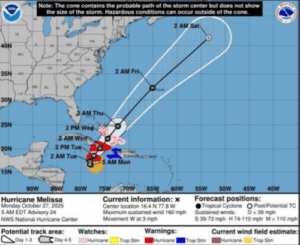
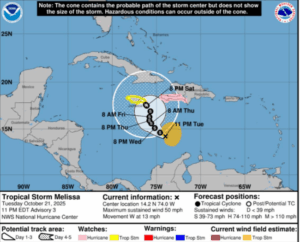
As Hurricane Melissa moves across the Central Caribbean Sea, Jamaica has been placed under a Hurricane Watch, with potential for heavy rains, strong winds, and possible power interruptions. 

For SolarBuzz system owners, this is the ideal time to take proactive steps to keep your solar energy system operating at peak efficiency and ensure continuous resilience against any grid-supply interruptions.

Our systems are designed and installed to deliver reliable performance and energy security even in challenging weather. Like any high-efficiency system, they operate at their best when used strategically during extreme conditions.

This guide offers practical reminders on conserving energy, prioritizing battery charging, and maintaining system efficiency with recommendations to help you stay powered, comfortable, and safe throughout the storm.

The goal is to minimize unnecessary energy use, maximize stored power, and adapt smartly to reduced sunlight during overcast conditions.

1. Unplug and Power Down Non-Essential Appliances and Equipment

Even the most efficient solar system performs at its highest potential when paired with good energy habits. 

During a storm, every watt saved contributes to longer battery runtime and uninterrupted comfort.

Unplug and switch off all non-essential devices, including:

  • Gym equipment – such as treadmills or ellipticals which often draw standby power.
  • Extra refrigerators or freezers –  if not in full use, as they require significant energy to maintain temperature.
  • Electronics – such as gaming consoles, decorative lighting, and unused chargers.
  • Deep freezers – Avoid opening doors unnecessarily to maintain cold air and preserve your food items.
  • Smart home devices – in unoccupied rooms, including smart bulbs and unused air-conditioning units.

Keep only essential items connected for example, your Wi-Fi router, refrigerator, and a few lights or fans. 

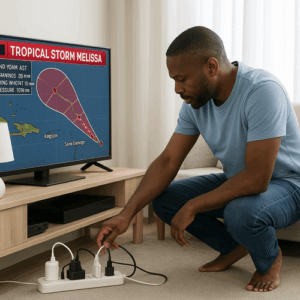
Conduct a quick home energy audit by walking through each room and identifying devices that draw power when idle. Power strips make it easier to turn multiple items off at once.

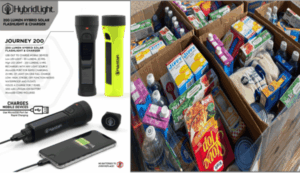
Prepare an emergency kit with items such as solar-powered flashlights (available at SolarBuzz) and non-perishable food that doesn’t require cooking to reduce use of your electric stove. 

These steps alone can reduce overall consumption by up to 20–30%, giving your batteries more flexibility and preserving stored energy for essential needs.

🏊 2. Turn Off High-Consumption Outdoor Equipment

Outdoor electrical systems like pool pumps, fountains, and irrigation systems can have high power draws and are usually non-essential during storm periods. Switch them off until the weather clears.

If you have an electric vehicle (EV), charge it during daylight hours once your batteries are fully charged, then unplug the charger to protect it from possible surges.

For solar-powered outdoor features such as garden lights, set them to low-power modes or turn them off to conserve internal batteries. 

Redirecting energy away from these systems ensures more power is available for your core household or business operations.

☀️ 3. Optimize Charging Before and During the Storm

Although cloud cover can limit sunlight, SolarBuzz systems are engineered to maintain strong performance even under diffuse light. To secure the best backup capacity:

  • Monitor the storm – Monitor the storm closely via local news and weather updates and temporarily switch your solar system to JPS/grid mode if possible and where applicable.

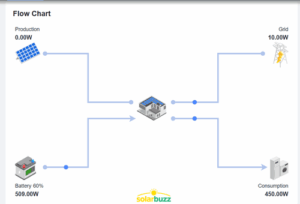
  • Use solar monitoring apps – At SolarBuzz, we encourage our clients to use their online monitoring app to track panel output, battery levels, energy usage and switch to JPS where applicable to allow the panels to focus on fully charging batteries, building a robust power reserve. Once fully charged, revert to solar use for clean, independent energy.


  • EV Charging – Charge your EV during sun hours after the batteries of your solar system are at full charge.
  • Pre-charge batteries – Charge batteries to 100% before storm conditions intensify. 
  • .Generator owners –  Perform a quick test run and use your generator sparingly to supplement charging if solar input is limited.

These actions help ensure your system is fully charged and ready to deliver steady power even if grid service is interrupted.

❄️ 4. Minimize Air Conditioning & Cooling Demands

Air conditioning is one of the largest household power consumers.

During cloudy or rainy periods:

  • Use A/C units only in occupied rooms, and set temperatures between 24–26°C for efficiency.
  • Use smart controls like the Sensibo Sky (available at SolarBuzz) to schedule A/C operation during daylight hours when panels are producing most energy.

  • Rely on fans or natural ventilation whenever possible; storms often bring cooler air that reduces the need for heavy cooling.

If your home has tinted windows or glass doors, maximize the benefits of your window film solution by using ceiling fans to circulate air effectively. These adjustments will extend stored power and help maintain comfort without strain on your system.

🌬️ 6. Secure Your Solar Infrastructure

SolarBuzz systems are engineered to withstand Jamaica’s tropical climate, but a quick pre-storm check ensures optimal readiness. 

Before the weather worsens:

  • Verify that your inverter and battery systems display normal operation with no alerts.
  • Make sure breakers and electrical connections are properly secured and protected from moisture.
  • Protect your equipment from rain, especially your battery storage area. Keep batteries covered and sheltered from direct exposure to water or humidity.
  • Cover any fully exposed EV chargers to prevent rain or debris from entering the unit. Waterproof covers or heavy-duty plastic sheeting can provide an extra layer of protection.
  • Trim any overhanging branches that might fall on panels.
  • If you already have security window film installed, check that it remains intact and properly sealed. For those without it, consider this a worthwhile post-storm upgrade (available at SolarBuzz) to help reinforce glass surfaces before future weather events.

I

If you observe anything unusual, contact your solar service provider for guidance or assistance before the storm intensifies. 

🕯️ 7. Prepare for Extended Cloud Cover

If Hurricane Melissa lingers or leads to several days of limited sunlight, we encourage that you:

  • Conserve stored energy by reducing non-essential usage.
  • Use LED bulbs and energy-efficient devices.
  • Delay use of heavy-load appliances such as dryers, ovens, electric stoves and large motors until conditions improve.

Smart energy conservation ensures your system continues to deliver consistent, reliable power, even during extended cloudy periods.

Turning Storms Into Strength

Every storm reminds us of the importance of energy resilience and the value of preparation.

At SolarBuzz, we view Hurricane Melissa as an opportunity to empower our clients through knowledge, strengthen readiness, and reinforce confidence in Jamaica’s sustainable energy future. 

Our systems are designed for strength and reliability, ensuring you remain powered through any challenge. By following the proactive steps outlined in this guide, you can optimize your system’s performance and maintain comfort and stability throughout the storm.

Our team remains available, as weather conditions allow, to provide guidance and support before, during, and after the hurricane.

SolarBuzz remains committed to advancing renewable energy solutions that support continuity, sustainability, and resilience for all Jamaicans.

Stay informed. Stay safe. Stay powered.

From The SolarBuzz Team

Deidre Wedderburn is the Client Relations Manager at SolarBuzz, dedicated to building long-term partnerships and delivering a top-tier client experience (deidre@solarbuzzjamaica.com).


– Maximize Your Solar System During Tropical Storm Melissa

As Tropical Storm Melissa moves across the Central Caribbean Sea, Jamaica has been placed under a tropical storm watch, with potential for heavy rains, strong winds, and possible power interruptions. 

For SolarBuzz system owners, this is the ideal time to take proactive steps to keep your solar energy system operating at peak efficiency and ensure continuous resilience against any grid-supply interruptions.

Our systems are designed and installed to deliver reliable performance and energy security even in challenging weather. Like any high-efficiency system, they operate at their best when used strategically during extreme conditions.

This guide offers practical reminders on conserving energy, prioritizing battery charging, and maintaining system efficiency with recommendations to help you stay powered, comfortable, and safe throughout the storm.

The goal is to minimize unnecessary energy use, maximize stored power, and adapt smartly to reduced sunlight during overcast conditions.

1. Unplug and Power Down Non-Essential Appliances and Equipment

Even the most efficient solar system performs at its highest potential when paired with good energy habits. 

During a storm, every watt saved contributes to longer battery runtime and uninterrupted comfort.

Unplug and switch off all non-essential devices, including:

  • Gym equipment – such as treadmills or ellipticals which often draw standby power.
  • Extra refrigerators or freezers –  if not in full use, as they require significant energy to maintain temperature.
  • Electronics – such as gaming consoles, decorative lighting, and unused chargers.
  • Deep freezers – Avoid opening doors unnecessarily to maintain cold air and preserve your food items.
  • Smart home devices – in unoccupied rooms, including smart bulbs and unused air-conditioning units.

Keep only essential items connected for example, your Wi-Fi router, refrigerator, and a few lights or fans. 

Conduct a quick home energy audit by walking through each room and identifying devices that draw power when idle. Power strips make it easier to turn multiple items off at once.

Prepare an emergency kit with items such as solar-powered flashlights (available at SolarBuzz) and non-perishable food that doesn’t require cooking to reduce use of your electric stove. 

These steps alone can reduce overall consumption by up to 20–30%, giving your batteries more flexibility and preserving stored energy for essential needs.

🏊 2. Turn Off High-Consumption Outdoor Equipment

Outdoor electrical systems like pool pumps, fountains, and irrigation systems can have high power draws and are usually non-essential during storm periods. Switch them off until the weather clears.

If you have an electric vehicle (EV), charge it during daylight hours once your batteries are fully charged, then unplug the charger to protect it from possible surges.

For solar-powered outdoor features such as garden lights, set them to low-power modes or turn them off to conserve internal batteries. 

Redirecting energy away from these systems ensures more power is available for your core household or business operations.

☀️ 3. Optimize Charging Before and During the Storm

Although cloud cover can limit sunlight, SolarBuzz systems are engineered to maintain strong performance even under diffuse light. To secure the best backup capacity:

  • Monitor the storm – Monitor the storm closely via local news and weather updates and temporarily switch your solar system to JPS/grid mode if possible and where applicable.

  • Use solar monitoring apps – At SolarBuzz, we encourage our clients to use their online monitoring app to track panel output, battery levels, energy usage and switch to JPS where applicable to allow the panels to focus on fully charging batteries, building a robust power reserve. Once fully charged, revert to solar use for clean, independent energy.


  • EV Charging – Charge your EV during sun hours after the batteries of your solar system are at full charge.
  • Pre-charge batteries – Charge batteries to 100% before storm conditions intensify. 
  • .Generator owners –  Perform a quick test run and use your generator sparingly to supplement charging if solar input is limited.

These actions help ensure your system is fully charged and ready to deliver steady power even if grid service is interrupted.

❄️ 4. Minimize Air Conditioning & Cooling Demands

Air conditioning is one of the largest household power consumers.

During cloudy or rainy periods:

  • Use A/C units only in occupied rooms, and set temperatures between 24–26°C for efficiency.

  • Use smart controls like the Sensibo Sky (available at SolarBuzz) to schedule A/C operation during daylight hours when panels are producing most energy.

  • Rely on fans or natural ventilation whenever possible; storms often bring cooler air that reduces the need for heavy cooling.

If your home has tinted windows or glass doors, maximize the benefits of your window film solution by using ceiling fans to circulate air effectively. These adjustments will extend stored power and help maintain comfort without strain on your system.

🌬️ 6. Secure Your Solar Infrastructure

SolarBuzz systems are engineered to withstand Jamaica’s tropical climate, but a quick pre-storm check ensures optimal readiness. 

Before the weather worsens:

  • Verify that your inverter and battery systems display normal operation with no alerts.
  • Make sure breakers and electrical connections are properly secured and protected from moisture.
  • Trim any overhanging branches that might fall on panels.
  • Use protective security window film to prevent large panes of glass from shattering (available at SolarBuzz).

I

If you observe anything unusual, contact your solar service provider for guidance or assistance before the storm intensifies. 

🕯️ 7. Prepare for Extended Cloud Cover

If Tropical Storm Melissa lingers or leads to several days of limited sunlight, we encourage that you:

  • Conserve stored energy by reducing non-essential usage.

  • Use LED bulbs and energy-efficient devices.

  • Delay use of heavy-load appliances such as dryers, ovens, electric stoves and large motors until conditions improve.

Smart energy conservation ensures your system continues to deliver consistent, reliable power, even during extended cloudy periods.

Transforming Preparation into Empowerment and Resilience into Confidence

At SolarBuzz, our systems stand for independence, security, and sustainability. 

As Jamaica prepares for Tropical Storm Melissa, we encourage our clients to take a few proactive steps to ensure continued optimal performance and comfort throughout the weather event. With thoughtful preparation, your system will continue providing the reliable energy you have come to depend on.

SolarBuzz views every storm as an opportunity to strengthen resilience and empower our community through knowledge, readiness and trust. We remain committed to helping our clients harness the power of the sun even when the skies are grey. 

Stay informed. Stay safe. Stay powered.

From The SolarBuzz Team

Deidre Wedderburn is the Client Relations Manager at SolarBuzz, dedicated to building long-term partnerships and delivering a top-tier client experience (deidre@solarbuzzjamaica.com).


#PrivacyThatPaysEveryDay

At SolarBuzz, we transform ordinary glass into high-performance surfaces that cool your space, cut energy bills, and elevate style.

We pair industry-leading Solar Gard films with professional installation to deliver customized solutions for every client, so each window film we install is as functional as it is beautiful.

What You Gain with SolarBuzz

Ultimate Privacy – keep families, guests, and patrons comfortable.

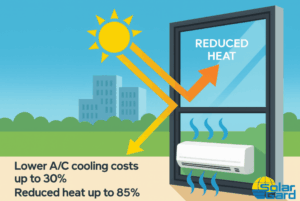
Sun-Heat Rejection – block up to 84% of outside heat, easing A/C strain

Anti-Glare Comfort – cut up to 95% glare to protect eyes and furnishings while maintaining natural light.

Security & Safety – hold glass shards together during accidents, break-ins, or even explosions.

Energy Savings – reduce cooling costs by up to 30%

Ease A/c Strain – by stabilizing interior temperatures, there is less need for air conditioning while moderating peak usage and allowing your cooling system to operate more efficiently

Reduced Carbon Footprint – lower A/C consumption means less electricity used and fewer CO₂ emissions over the building’s life, contributing to a more sustainable environment.

Privacy That Pays, Every Day

Solar Gard Stainless Steel 50 is our clients’ favourite for striking the balance between privacy and excellent heat rejection without altering the building’s look.

With 46% glare reduction and over 40% of the sun’s heat rejected, this film has helped businesses cut cooling costs of up to 30%,  translating into measurable energy and emissions savings.

  • Ideal for businesses with steady customer traffic where both operational cost and client experience are high priorities.
  • Client feature: SolarBuzz installations at one of each client’s locations – Starbucks, Broadbent and KFC, as seen in the photo collage below:

Cut the Heat; Keep the View

For homeowners and businesses seeking deeper shading and stronger privacy, the Stainless Steel 10, 20 and 30 series deliver up to 90% glare reduction and 99% UV protection.

This series keeps your interiors cooler and greener, lowering a/c reliance and reducing electricity demand.

  • These films excel on sun-facing windows, garden or pool areas, and exposed façades
  • Client feature: SolarBuzz installations at our client – Texaco – Food Mart and one of our client’s guest villa, as seen in the photo collage below:

Discretion in Style

When discretion is non-negotiable, our frosted films are the answer. They provide complete privacy while allowing natural light to gently filter through.

Less tug-of-war between blinds and lights means improved energy efficiency and the added opportunity to showcase your brand identity with custom patterns or logos.

  • Ideal for spaces that demand discretion without sacrificing natural light such as office doors, boardrooms, and bathrooms.
  • Highlighted feature: SolarBuzz installation at one of our clients – Real Equity, and our own company’s entrance door as seen below:

See Everything. Reveal Nothing

For clients who want daytime privacy with clear outward views, our TrueVue 5 window film delivers. 

This film rejects 84% of sun heat, blocks 99% UV, and reduces glare by 94% resulting in cooler rooms, reduced energy bills, and less strain on the power grid.

  • With its low interior reflectivity, our  TrueVue 5 window film solution is ideal for hospitality spaces, executive offices, and beach homes/villas.
  • Client feature: SolarBuzz installation at a client’s home in Treasure Beach, St Elizabeth:

Holding Strong Under Pressure

Glass is often a building’s weakest link. Our Armorcoat® security film is engineered to protect against accidents, storms, vandalism and burglary.

This window film delays intrusion and holds shattered glass firmly in place, safeguarding people from injuries and buildings from further damage.

Depending on your needs, this film can block between 5% and 95% of daylight while adding an invisible layer of protection. 

By extending glass life and preventing premature replacements, our security film also avoids the embodied carbon “cost” of new glazing, proof that resilience and sustainability can go hand-in-hand.

  • Our Armorcoat security film is ideal for retail stores, banks, high-traffic businesses, and public buildings.
  • Client feature: SolarBuzz installation at one of Texaco’s locations:

Satisfied Clients, Proven Results

From residential homeowners to brands like Starbucks, Texaco, KFC, Wendy’s, Barita Investments and Broadbent, our clients return for style, comfort, energy savings and a peace of mind with greener operations as a bonus.

“Since Solar Buzz installed their Solar Gard tint, the comfort in my office has significantly improved. The tint has greatly reduced the amount of heat and glare entering through the windows. 

  • Darren Bouges – Concepts and Spaces

“I’m very impressed with the performance of the Solar Gard tint from SolarBuzz. It not only keeps our stores cooler but has reduced the strain on our A/C units,  helping us to keep our energy costs as low as possible. The SolarBuzz team is always professional, punctual, and continues to make the experience seamless.”

  • Bruce Hosang – Starbucks

“The tint has cut the glare on my TV and keeps the rooms cooler without blocking the natural light. I’ve cut back significantly on AC usage, and my JPS bill is reduced by about 10%. Big thanks to the Solar Buzz crew – they showed up when they said they would, worked neatly, and did a very professional job.”  

  • Jonathan Dabdoub Total Hardware & Supplies  
Ready to Transform Your Space?

Your windows and glass doors should work for you every day, providing cooler rooms, lower bills, greater privacy, and a finish that enhances the look of your home or business.

With over 15 years of experience and the proven performance of Solar Gard, SolarBuzz provides style, comfort, energy savings, and security while also supporting sustainable living and building practices.

Request your free consultation today and start saving with every sunrise.

Email us at info@solarbuzzjamaica.com or click here to book your consultation.

Deidre Wedderburn is the Client Relations Manager at SolarBuzz, dedicated to building long-term partnerships and delivering a top-tier client experience (deidre@solarbuzzjamaica.com).

When Terrence Dwyer received a knock on his door and a flyer for a solar panel system small enough to fit on his deck, he was quickly sold. Solar systems that plug into regular wall outlets have been popular in Europe for years and are gaining traction in the U.S. for their affordability and simple installation.

“We thought absolutely, let’s do this right away,” said Dwyer, who lives in Oakland, California.

These small-scale solar systems could become attractive to more homeowners now that President Donald Trump’s sweeping budget-and-policy package will scrap residential rooftop solar tax credits and may shift interest to cheaper alternatives. Even before the GOP bill passed, manufacturers of the smaller systems known as plug-in or balcony solar were seeing increased demand and other positive signs such as a new Utah law streamlining regulations for homeowners to buy and install them. The systems about the size of a door haven’t been as widely adopted in the U.S. as in Europe because of lack of awareness, patchwork utility rules and limited availability.

The $2,000 plug-in solar system installed on Dwyer’s backyard deck in March consists of two 400 watt panels, an inverter, a smart meter and a circuit breaker. It saves him around $35 per month on his power bill because he is consuming less energy from the grid, but he said reducing his carbon footprint was his primary motivation.

“We like the environmental benefits of solar and wanted to engage with solar in some fashion,” Dwyer said.

Had Dwyer opted for rooftop solar, he would have paid $20,000 for the system and $30,000 to upgrade his roof to support the panels.

Installing a plug-in solar system requires some homework. What power companies let customers do with energy-generating equipment varies, which is why prospective purchasers should check their utility’s policies first. Building permits might be required depending on the municipality. Some systems can be self-installed, while others may require an electrician. For example, some kits have meters that must be wired into a home’s circuit breaker.

Removing hurdles for plug-in solar

Dwyer bought his system from Bright Saver, a nonprofit company in California that advocates for plug-in solar. In addition to the type Dwyer bought, the company also offers a smaller model costing $399 that recently sold out in six days.

“The interest and demand have been overwhelming,” said Cora Stryker, a founder of Bright Saver. “It is clear that we are hitting a nerve — many Americans have wanted solar for a long time but have not had an option that is feasible and affordable for them until now.”

Kevin Chou, another founder of Bright Saver, said wider adoption of the systems in the U.S. has been hindered by utility policies that create uncertainty about whether they’re allowed and a lack of state and local policies to make clear what rules apply.

Some utilities contacted by The Associated Press say plug-in solar systems require the same interconnection applications as rooftop panels that send electricity back to the wider network. But Steven Hegedus, an electrical engineering professor at University of Delaware, said he doesn’t understand why a utility would need to require an interconnection agreement for plug-in solar because, unlike rooftop systems, they are designed to prevent energy from flowing to the grid.

Still, if in doubt, a customer should follow their utility’s policy.

During the early days of plug-in solar’s growth, some opposition from utilities is likely since customers are buying less energy, said Robert Cudd, a research analyst at the California Center for Sustainable Communities at the University of California, Los Angeles.

“Utilities really prefer everyone being a predictable and generous consumer of the electricity they sell,” Cudd said.

This year, Utah enacted a novel law supporting plug-in solar by exempting certain small-scale systems from interconnection agreements and establishing safety requirements such as being certified by a nationally recognized testing organization such as Underwriters Laboratories. It appears to be the only state that’s passed legislation supporting plug-in solar, according to the National Conference of State Legislatures.

Republican state Rep. Raymond Ward, who sponsored the legislation, said the smaller systems allow people to better manage where their energy comes from and what they pay.

“Europe has these things. You can go buy them and they work and people want them. There is no reason why we shouldn’t have them here in the United States,” Ward said.

Bright Saver says they are lobbying other states for similar legislation.

Alexis Abramson, dean of the University of Columbia Climate School, also applauded Utah’s move.

“We actually need more localities, more states putting in allowances for this type of equipment,” she said.

Plug-in solar availability and savings potential

Some questions remain about how much customers could save. Severin Borenstein, a professor at the University of California, Berkeley’s Haas School of Business, said the cost of some portable solar systems in the U.S. would make it hard for customers to come out ahead on their utility bills over the time they own them. He estimates the price of a $2,000 system in the U.S. works out to paying about $0.20 a kilowatt-hour over a 25-year period, which only saves people money if they have high utility costs. By comparison, Borenstein said the cost of systems sold in Europe, typically around $600, is equivalent to paying about $0.05 or $0.06 per kilowatt-hour over 25 years.

Baltimore resident Craig Keenan said saving money was only part of why he installed one of the smaller Bright Saver models on his balcony in July.

“I’m interested in renewable energy because the amount of carbon emissions that we produce as a species is very, very unsustainable for our world,” he said.

He said he expects the system will save him about $40 per year on utility bills, so it would take him about 10 years to recoup the cost of the kit.

Keenan, a mechanical engineer, said installation took him 10 to 15 minutes.

“I think anyone can install this,” he said. “It’s not complicated. It doesn’t require a technical degree.”

Other companies selling plug-in solar kits include Texas-based Craftstrom. It has sold about 2,000 systems in the U.S. since 2021, mostly in California, Texas and Florida. The company’s basic kits contain a solar panel that can fit in a backyard or other sunny space, along with equipment to maintain and regulate the flow of energy including an inverter and smart meter.

Kenneth Hutchings, Craftstrom’s chief revenue officer, said their U.S. sales rose this year even before the passage of the GOP tax bill, and he expects demand for plug-in solar to increase further as federal rooftop solar credits expire.

The company advises customers to notify their power company before installation, but it has “never had any pushback from any utility,” said Michael Scherer, one of the founders of Craftstrom.

China-based EcoFlow plans to begin selling plug-in solar systems in Utah and expand to other states if supportive legislation is passed, said Ryan Oliver, a company spokesperson.

“This is an example of where technology is sort of ahead of the regulators,” Oliver said, adding: “As this rolls out to more of a nationwide product, we expect it will become more mainstream as people understand it better.”

The Associated Press