In a windfall for more than a million households, the amount of electricity generated by solar panels hit an all-time high in the first five months of the year.

Britain’s sunniest spring yet has generated a record amount of solar power, delivering a windfall for the million-plus households with solar panels.

The country had 43 per cent more sunshine than average for the season, the most since modern records began 115 years ago, the Met Office said this week. The sunny weather has triggered a boom in electricity generation from solar panels on rooftops and in fields.

Data from the National Energy System Operator shows that a total of 7.6 terawatt hours of electricity was generated from solar over the first five months of the year — and average output peaked at nearly 3,400 megawatts in May.

The five-month total is up 42 per cent on the same period last year and is an all-time high, according to the website Carbon Brief, which analysed the figures.

Solar power, whose capacity Ed Miliband, the energy secretary, hopes to triple by 2030, is the sixth biggest source of electricity in the UK, behind others including gas, wind and nuclear.

However, it is playing an increasingly important role during spring and summer, when demand for electricity is lower. For the first time, solar accounted for more than a tenth of monthly electricity generation for two months in a row, March and April.

Simon Evans, senior policy editor at the climate and energy website Carbon Brief, said: “Solar power is rising faster than most people realise. It is cheap, fast to install and every unit of electricity it generates here in the UK displaces two units of imported gas.”

There are 1.5 million homes with solar panels. Analysis of official figures by the solar company Gryd Energy shows households are installing them at three times the rate of businesses.

The sunshine will have cut energy bills for households because they need to draw less power from the grid, and solar owners including the Red Dwarf actor Robert Llewellyn have shared examples of high generation from their panels on social media.

It will also have earned significant payments from energy suppliers for the thousands of people still on valuable “feed-in tariffs” — long-term contracts launched in 2010 before being scrapped in 2019. Energy billpayers without solar will feel little financial benefit, though, because of how the price of electricity is set.

The solar power record stems not only from sunny conditions but also an expansion in capacity: two in five new homes have solar panels. Officially there is 18.2 gigawatts of capacity nationally, up from 17.2 gigawatts a year ago. The industry body Solar Energy UK says the true figure is even higher.

Britain’s biggest solar farm, a vast 370-megawatt installation announced eight years ago near Faversham in Kent, is expected to be fully complete within weeks. Even bigger solar farms, some of which have caused consternation for nearby residents, have been given the green light by Miliband since he took office. The government is also mulling mandating solar panels on new car parks.

Spring has become sunnier since the 1980s, the Met Office has found — there were 653.3 sunshine hours this season — and spring months have been about 15 per cent sunnier over the past decade than the average between 1961 and 1990.

The Times UK

– When solar energy and your EV unite

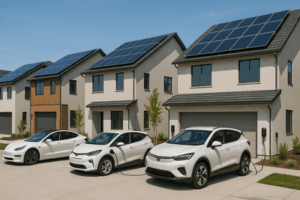
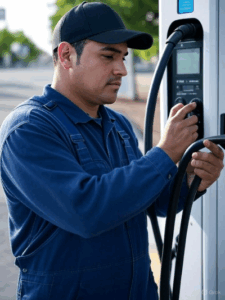
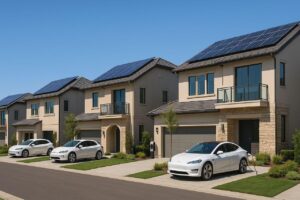
Electric vehicles (EVs) are gaining momentum not just as cost-effective transportation but also as a key step toward reducing carbon footprints, protecting the environment, and achieving a sustainable lifestyle.

More EV owners are now turning to solar energy to enhance their eco-friendly lifestyle and protect themselves from rising and unpredictable energy costs. 

The economic benefits of installing solar energy systems for EV charging are compelling. Once the initial investment is recouped, homeowners can generate their own electricity, effectively powering their EVs for free.

This long-term return on investment (ROI) makes solar a powerful incentive for EV owners seeking both financial savings and environmental sustainability.

Real Clients, Real Results

Solar Buzz has seen a growing demand from EV clients seeking to reduce their carbon footprint without increasing their energy bills.

This week, we highlight two of our EV clients who have successfully aligned their transportation needs with a strong commitment to renewable energy.

Looking to reduce reliance on the local grid, our featured clients turned to Solar Buzz for efficient, future-ready solar solutions.

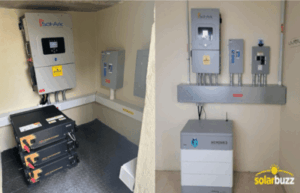
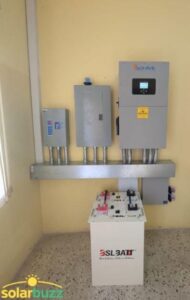
We designed and installed lithium iron phosphate (LFP) battery-based systems – known for safety, durability, and efficiency – projected to offset an average 85% of their energy use.

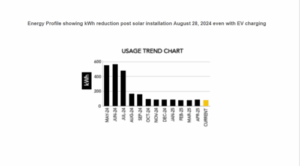
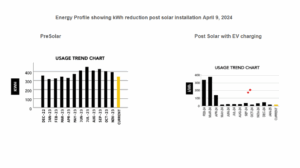
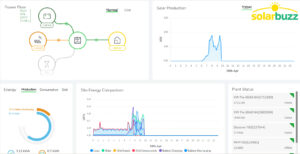
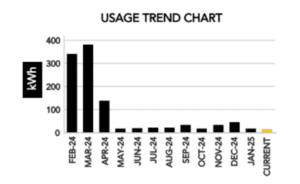
The JPS energy consumption graphs help to track monthly energy savings.

The sets of graphs below show that, since installation, the solar output is consistently meeting (and in some cases surpassing) 85% of the household and EV charging needs, aligning with our design projections.


Faster Payback, Bigger Savings

Did you know that charging your EV during peak sun hours can accelerate your return on investment? The more solar power you use, the faster you recoup your investment.

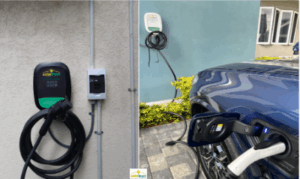
EV chargers require a significant amount of power, and using solar energy to charge during the day helps you maximize the value of your system.

Even clients who added EV chargers after their solar installation saw their savings continue to grow.

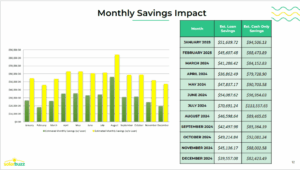
On average, our clients have reduced their monthly electricity bills to J$2,100, down from an average of J$38,000 before going solar – an impressive 95% average energy savings!

By charging their EVs during the day, clients not only exceeded their projected grid energy offset but are also on track to shorten their system’s payback period significantly.

Driving Future Energy Needs

With the rise of EV adoption across the island, Solar Buzz’s customized solar solutions are helping Jamaicans gain energy independence while lowering their carbon footprint. 

Our comprehensive services that range from solar installation to safe EV charger integration and maintenance are designed to meet the evolving needs of today’s energy-conscious consumers. 

The success of our EV clients demonstrates how solar power can reshape how Jamaicans fuel both homes and vehicles, paving the way for a cleaner, more sustainable future. 

Solar Buzz remains committed to leading the way in delivering clean energy solutions for a sustainable green future.

Let us show you how rewarding it is to plug into the sun.

Deidre Wedderburn is the Client Relations Manager at SolarBuzz, dedicated to building long-term partnerships and delivering a top-tier client experience (deidre@solarbuzzjamaica.com).

Global wariness of Chinese solar and E.V. domination offers India an opening. The government is spending money to try to catch up, but it has a long way to go.

China, the world’s clean-energy juggernaut, faces a rival right next door. And one of its top customers, no less.

India, a big buyer of Chinese solar panels and electric vehicle batteries, is using a raft of government incentives to make more green gear at home. It is driven not just by the need to satisfy the galloping energy demands of its 1.4 billion people, but also to cash in on other countries that want to China-proof their energy supply chains, not least the United States.

India remains a tiny and tardy entrant. Last year it produced around 80 gigawatts of solar modules, while China produced more than 10 times that. India is still tied to coal, the dirtiest fossil fuel: Coal is its largest source of electricity, and India plans to mine for more of it.

But India is aggressively trying to take advantage of a global energy transition and a backlash against Chinese dominance of new energy technologies.

Hoping to spur a clean energy manufacturing boom, the government is offering lucrative subsidies for locally produced solar cells and batteries, and it is restricting foreign products in its biggest renewable-energy projects. To cash in on government contracts to install rooftop solar for 27 million households by the end of this decade, for instance, companies must make the panels at home.

For New Delhi, there are social, economic and geopolitical imperatives. China is its most formidable rival — the two countries have in the past gone to war over border disputes — so India’s quest to build solar, wind and electric vehicle factories is partly designed to secure its energy supply chain. At the same time India wants to create good-paying manufacturing jobs.

Still, India confronts a dilemma facing many other countries: Either buy renewable energy technologies as cheaply as possible from China, or spend more to make the goods at home.

“Strategically, to ensure we have energy independence, we need to have manufacturing capacity,” said Sudeep Jain, additional secretary in India’s Ministry of New and Renewable Energy. “Currently, yes, there is a cost arbitrage.”

The problem is that China commands the building blocks of renewable energy goods. More than 90 percent of the polysilicon that goes into solar panels is in Chinese control. So even as India rapidly expands its production of solar panels, it still imports most of the cells that go into the panels, mainly from Chinese companies. And Indian companies that make solar cells typically import silicon wafers mainly from China.

India has a very tiny battery industry, and it has proven difficult, for a host of reasons, to scale up. Two Indian companies making electric vehicle batteries, Reliance Industries and Ola Electric, recently missed production targets they had promised to hit in exchange for government subsidies. It doesn’t help that China dominates the processing of key battery minerals like lithium.

China has “first mover’s advantage,” said Amit Paithankar, chief executive of Waaree Energies, the country’s largest solar panel maker. “It’s about us being proactive, and being a part of the solution in diversifying the supply chain for India, for the U.S. and for the world.”

Borrowing China ideas

India is lifting from the Chinese playbook in at least one way. It is counting on its enormous domestic demand.

India’s wind and solar capacity has nearly doubled in the past five years, according to the research firm Ember, making it the world’s third largest generator of electricity from renewable sources after China and the United States. It plans to incorporate 500 gigawatts of non-fossil-fuel sources into its electricity grid by 2030.

The government has put in place both carrots and sticks to encourage production.

For the past several years, there were subsidies for locally produced solar panels. Those are now being discontinued, but new subsidies are kicking in next year for locally produced solar cells that go into panels, as well as for battery cells.

Domestic demand isn’t the only driver. Last year, more than half of India’s solar modules ended up on American soil.

Now, the wild card for India’s export dreams is the tariff chaos sown by President Trump.

The latest Trump administration duties on goods imported from India are far lower (27 percent) than new duties on Chinese goods (145 percent) and on those from Southeast Asia (up to 3,500 percent), where Chinese companies have set up shop.

Prime Minister Narendra Modi of India has sought to cultivate warm relations with Mr. Trump, and officials from the two countries say they hope to negotiate a bilateral trade deal in May. “Whatever the United States is going to import, we may still be the most competitive to supply it,” Mr. Jain said.

Wanted: More good jobs

The global energy transition potentially brings India something it badly needs: factory jobs.

Two out of three Indians are under the age of 35. A majority of people still work in agriculture. And manufacturing as a share of the national economy is still barely 13 percent, a bit lower than it was a decade ago.

The southern state of Tamil Nadu has been among the most forceful in attracting new factories, including in the clean-energy sector. Wind blade makers arrived nearly a decade ago, followed by solar panel makers and electric vehicle companies.

Tamil Nadu offered ready land and government subsidies. The state supported pensions and housing for workers.

“These are all schemes we came up with, peering into the future, looking at how the world is going,” the state’s industry minister, T.R.B. Rajaa, said in an interview. “Energy is everything. Energy security must be localized.”

Perhaps most important, Tamil Nadu, with a long record of women’s education, offered an army of women workers with college degrees.

Which is how 26-year-old Amala K. came to chase her dreams at the Tata Power solar panel factory on the outskirts of a small town, Tirunelveli, near India’s southern tip. (Like most people in the region, she uses her father’s initial as a surname.)

Around 2,000 women like her run the machines round the clock at this factory. Every day, starting at dawn, they move in and out by the busload. Dark blue uniforms. Backpacks. Sandals that are traded for steel-toe factory shoes. The factory floor is largely automated. Human workers are there to make sure robot arms are working properly, to solder a junction box or pick up broken shards of wafers that have slipped in between cracks.

The sun was already shining bright and hot by 7 a.m. on a recent Wednesday, as Amala boarded a company bus after her all-night shift. The bus pulled out of the parking lot, drove past banana orchards, and wove through a river of honking cars and motorcycles. Some of the women nodded off. A few scrolled through their phones.

Amala leaned against the window. For her, the job was partly a way to defer the inevitable arranged marriage. “If I stayed home, I’d be married by now,” she said.

In between work shifts, she was preparing to take an exam to become a physics professor.

Varsha A.R., 26, sitting one row up, had to persuade  her mother to let her take this job.

Her mother worried about Varsha living two hours away from home, in a workers’ dorm. So Varsha brought her there and introduced her to other workers. “I explained that this is an opportunity for my life and my career,” Varsha said.

The job meant different things to different women workers. Some said they were saving to buy gold jewelry for their weddings. Others said they were saving to go to graduate school. A few said they liked being able to buy gifts for their nieces and nephews — or buy themselves an ice cream when they wanted.

Varsha and Amala stepped off the bus and walked down a narrow lane to their dorm, two workers in an energy industry all but unknown in their parents’ time. Each year, at least seven million young Indians like them enter the labor market, according to the International Labor Organization. India’s efforts to expand its clean-energy business is a key test of the country’s efforts to deliver the skilled jobs that a new generation of Indians has come to expect.

The solar panels they help make in Tirunelveli furnish Tata Power’s four-gigawatt solar farm on the other side of the country, in the northwestern desert of Rajasthan. The wafers still come from China. So, too, many of the glass panels on which they are affixed.

The risks of relying on Chinese suppliers became abundantly clear during the coronavirus epidemic, Tata Power’s chief executive, Praveer Sinha, recalled. Shipments were disrupted. There were unexpected price swings.

“It’s very important you have a supply chain that’s not vulnerable to two or three countries,” he said.

At the time, during President Biden’s term, the United States agreed. The U.S. International Development Finance Corporation, a government lender, supported the Tata project with a $425 million loan, with the goal of “diversifying global supply chains.”

First Solar, a U.S. company, set up shop near the state capital, Chennai, also with financing from the U.S. government. Vikram Solar, which makes solar modules near Chennai, is set to build one gigawatt of battery storage.

In an industrial park farther west in Tamil Nadu, the Indian electric scooter company, Ola, is getting ready to produce its own battery cells. At the moment, like most electric car and scooter makers in India, a majority of battery cells come from China.

Selling to America

The question for renewable energy companies now is whether they focus on the Indian market or push to sell Indian-made goods abroad.

Until recently, an export strategy was enormously profitable for Waaree Energies. It made most of its money last year exporting its Indian-made solar panels to the United States. Lured by tax breaks offered by the Biden administration, Waaree invested $1 billion in a solar-panel plant in Houston.

Other companies’ exports surged, too. Between 2022 and 2024, the export of Indian solar modules grew “exponentially” by 23 times, according to the Institute for Energy Economics and Financial Analysis, a research group. So spectacular was the growth that the group concluded that India could potentially replace Southeast Asian countries as the leading supplier of solar photovoltaics to the United States.

Then Mr. Trump took office. Solar’s future in the United States became far more uncertain. Waaree stocks slumped. The company intends to continue to make solar panels for Americans, Mr. Paithankar, Waaree Energies’ chief executive, said.

In the end, whether Indian companies can muscle in on the renewable energy supply chain depends less on India and more on the geopolitical trade-offs that every government will have to make. “Whether we can become an alternative to China depends on what other countries do,” said Sumant Sinha, chief executive of ReNew Power, which builds solar and wind equipment for the Indian domestic market. “If everyone says, ‘I’m going to buy cheap,’ then China will come out dominating.”

The New York Times

Government to press ahead with net zero plans as Keir Starmer rejects Tony Blair’s criticisms of climate policy


Almost all new homes in England will be fitted with solar panels during construction within two years, the government will announce after Keir Starmer rejected Tony Blair’s criticism of net zero policies.

Housebuilders will be legally required to install solar panels on the roofs of new properties by 2027 under the plans.

The policy is estimated to add between £3,000 and £4,000 to building a home but homeowners would save more than £1,000 on their annual energy bills, according to the Times.

Labour has set a target of building 1.5m homes by the end of the parliament. The party has promised to decarbonise the electricity grid by 2030 and cut household energy bills by £300 a year.

Ministers are also preparing to offer government-funded loans and grants for the installation of solar panels on existing homes.

The move is a sign that the government will press ahead with its net zero agenda after Starmer rejected criticisms of climate policy from Blair.

In a high-profile intervention days before the local elections, Blair said there needed to be a radical reset of “irrational” net zero policies that were “doomed to fail”.

Blair’s net zero intervention invites scrutiny of his institute’s donors

Read more

The former Labour prime minister argued that the public was being asked to make “financial sacrifices and changes in lifestyle” that would have “minimal” effect on global emissions. He said the drive to phase out fossil fuels in the short term was “doomed to fail” because their production and demand were rising.

His remarks angered government figures and triggered a response from senior No 10 officials, who called the Tony Blair Institute for Global Change (TBI) and urged it to address the fallout. The TBI issued a clarifying statement on Wednesday morning saying it believed the government’s net zero policy was “the right one”.

Blair’s remarks were interpreted as an attack on Starmer’s policy agenda after the prime minister said last week that tackling the climate crisis and bolstering energy security were “in the DNA of my government”.

Unite, the UK’s second biggest union, has echoed Blair’s criticism of climate policies. Its general secretary, Sharon Graham, said workers should not be thrown “on the scrapheap” in the pursuit of net zero.

Speaking to Times Radio on Thursday, Graham pointed to the developments at Grangemouth oil refinery and said: “The problem is that the jobs part of this is not being discussed.” The refinery stopped processing crude oil this week.

Asked whether she agreed with Blair’s comments this week, Graham said: “Workers want net zero, my members have no problem with net zero. The problem that we’ve got is that there is no investment currently about how we get to that and also secure jobs.

“There hasn’t been one single thing done so far that I can see in terms of investments on wind manufacture, in terms of investments into areas like sustainable air fuel … all of those things have not happened, and you cannot just plough on regardless and throw all of these workers on the scrapheap.”

Campaigners have welcomed the news that the government is going to mandate solar panels on new homes.

Lily-Rose Ellis, Greenpeace UK’s climate campaigner, said: “For too long we’ve wasted the free energy that falls on the roofs of houses every single day. Now, people living in new-build homes will save hundreds of pounds every year on their energy bills, thanks to this commonsense decision from the government.”

A government spokesperson said: “We have always been clear that we want solar panels on as many new homes as possible because they are a vital technology to help cut bills for families, boost our national energy security and help deliver net zero.

“Through the Future Homes Standard we plan to maximise the installation of solar panels on new homes as part of our ambition to ensure all new homes are energy efficient, and will set out final plans in due course.”

The Guardian

Daily blackouts averaging four hours or more have become the new normal across Cuba’s capital of Havana, an unsettling sign of a still-unresolved energy crisis as the sultry Caribbean summer sets in.

Havana’s misfortune follows a string of nationwide blackouts over several months, most recently in March, that plunged the country’s frail grid into near-total disarray, stressed by fuel shortages, natural disaster and economic crisis.

The major commercial hub on the island and a top tourist destination, Havana has long endured occasional blackouts but until this year had been largely shielded from the worst of the outages by the grid operator.

“People are stressed,” said Aramis Bueno, a 47-year-old resident of the densely populated Central Havana neighborhood of Dragones, as he sat on his doorstep during an evening blackout this week.

“It’s not easy living like this. Look at what time it is. We haven’t been able to shower, to eat … because of the blackouts.”

The worsening power outages in Havana come as the United States has severely tightened sanctions on Cuba, returning the island nation to a list of state sponsors of terrorism and ratcheting up restrictions on remittances, tourism and trade.

Blackouts in the capital, unlike in much of the rest of the country, are largely scheduled, and far shorter than in the outlying and more rural provinces, where outages sometimes span 15 hours or more per day.

But they are increasingly the talk of the town in Havana.

“It’s terrible, it’s terrible. The electricity system in this country right now just isn’t working,” said Dayamí Cheri, 52, a resident of cramped Old Havana. “With this heat and no electricity, no one can survive.”

Recent outages led to school and workplace closures, reinforcing an already deep shortfall in economic output, which fell 1.9% in 2023. The economy did not expand in 2024, when more severe blackouts set in, though the government has not yet released last year’s growth figures.

There are glimmers of hope, however.

Cuba is making progress this year on a China-backed plan to install more than 50 solar parks capable of churning out more than 1,000 megawatts of electricity.

Eleven such solar parks have been installed since February, offering the promise of a better future, though most Habaneros say they’re still hunkering down for a long summer.

“I was born with blackouts,” said Yasunay Perez, 46, of central Havana. “This is nothing new.”

Reuters

Tastee returned to Solar Buzz once again to power operations at their newest location in the Harbour View Shopping Centre with clean, renewable energy. 

After consistent results at their Half Way Tree branch, they were ready for a repeat success to reduce energy costs and maximize profitability.

Tailored for Tastee’s Energy Needs

At Solar Buzz, we design systems that perform exactly as projected. By analyzing each client’s actual energy usage, we custom design solar solutions that maximize return on investment.

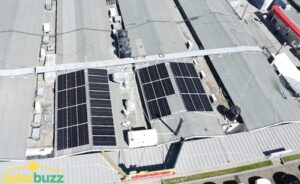
After analyzing Tastee’s load profile, a 20.7kW grid-tied (no batteries)  system with a 4-year payback period was designed and installed. 

Due to their 24/7 cold storage needs, Tastee has significant nighttime usage accounting for 54% of their total usage. Considering their nighttime usage and roof space availability, we engineered a system projected to offset  20% of their total energy usage. This offset is a reduction of over 3,000 kWh per month which is a projected savings of J$1,392,788 annually. 

Delivering as Promised: Another Solar Win!

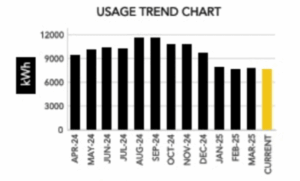
Tastee Harbour View switched to solar in December 2024. Below is the  Tastee Harbour View JPS chart showing January 2025 as the first full month on solar.  The graph reinforces the project as a solar success story with the system delivering consistent savings as projected.


Country Traders Ltd: Another Solar Success! 

Country Traders Ltd partnered with Solar Buzz to reduce their carbon footprint while maximizing energy savings and production.

Custom-Designed for Maximum Impact

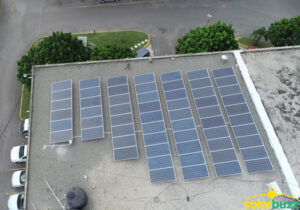
After analyzing Country Trader’s load profile, a 19.8kW grid-tied system with an average energy offset of 62% was designed and installed. With minimal night usage and no cold storage demands, their operations made them an ideal candidate for a high offset solar system and a 4-year payback period. 

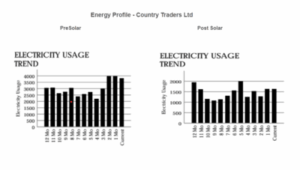
Below are the JPS charts for Country Traders Ltd showing their energy profile before and after solar energy installation.

These graphs show the system delivering energy savings as predicted. Our client was also able to increase production when needed without impacting projected savings!

The Results Are In!

Since installation of their solar system, our client has already secured full payback on their investment as promised, while continuing to enjoy real energy savings!

Ready to Energise Your Business?

It’s time to reduce your operating costs and invest in your bottom line; not someone else’s. 

Let Solar Buzz energize your business today with clean, renewable energy and systems that perform as promised.

Contact us today to begin your journey to sustainable success!

Deidre Wedderburn is the Client Relations Manager at SolarBuzz, dedicated to building long-term partnerships and delivering a top-tier client experience (deidre@solarbuzzjamaica.com).

Amid the forty-degree heat that paralysed the coastal city of Karachi in April, Saad Saleem blasted his air-conditioning with near-abandon.

Electricity tariffs have surged, but the affluent entrepreneur has been unbothered since he spent $7,500 installing solar panels on his bungalow’s roof as part of a solar boom in Pakistan.

Saleem bought his modules two years ago, as the International Monetary Fund and economically beleaguered Pakistan were hammering out a preliminary bailout program. Under the deal, Pakistan sharply raised power and gas tariffs to support struggling suppliers in the heavily-indebted sector.

Pakistanis now pay more than a quarter more on average for electricity, setting off a scramble to install solar modules.

Solar made up over 14% of Pakistan’s power supply last year, up from 4% in 2021 and displacing coal as the third-largest energy source, according to U.K. energy think-tank Ember. That is nearly double the share in China, the world’s top supplier of solar panels and a global leader in green technologies, and one of the highest rates in Asia, according to Reuters’ analysis of Ember data.

But the explosion in solar uptake has left out many in Pakistan’s struggling urban middle class, who have been forced to cut back on electricity in face of soaring bills, according to interviews with more than two dozen people, including energy officials, consumers and power-sector analysts. Most of the nation’s solar panels aren’t connected to sell excess capacity to the grid, so the benefits of cheap and reliable power aren’t widely shared.

Some observers also blame financial stress in the energy sector on deals Pakistan made with China for Beijing to finance billions of dollars worth of power-generation contracts, many of which involve coal-fired plants. Pakistan is behind on many of the payments and has been in talks with China about extending the time it has to repay the debt.


Countries like South Africa also face widening energy gaps after affluent residents adopted solar power. But analysts are watching Pakistan particularly closely due to the pace at which the nation of 250 million has taken to sun-based energy.

“This could serve as a cautionary tale as to how regulation and policy needs to keep up with technological change and rapidly evolving economics,” said Haneea Isaad, an Islamabad-based energy finance specialist at the Institute for Energy Economics and Financial Analysis.

In an interview with Reuters, Pakistan power minister Awais Leghari acknowledged the energy gap but noted that tariffs have come down significantly since June 2024, when the IMF approved reductions.

He also pointed to heavy uptake of solar by rural Pakistanis, many of whom previously had limited access to the grid. Many non-urban Pakistanis have installed small solar setups to meet their power needs, which are typically far lower than those of their city-dwelling counterparts.

“Pakistan has actually gone through a solar revolution,” he said. “The grid is going to get cleaner by the day, and this is something that we’ve achieved as a nation that we are proud of.”

The IMF did not return requests for comment.


ENERGY DIVIDE


Just a few miles away from Saleem’s upscale neighbourhood, Nadia Khan has restructured her life to cut electricity costs.

The air-conditioning in the home maker’s apartment is rarely used and she’s stopped ironing most of the clothes worn by her family of five, citing the price of power.

Khan’s family is not alone in cutting back: Only 1% of paying consumers used over 400 units of power in 2024, per Karachi-based consultancy Renewables First, down from 10% before the pandemic.

Like others among Pakistan’s masses of apartment dwellers without space to install solar modules, Khan has been shut out of the revolution.

The roofs of many apartment buildings are designated for water storage and other sanitation purposes, while owners of rental buildings have little incentive to invest in solar connections for their tenants.

“We get some sunlight indoors but I can’t seem to think of a way to go solar,” she said. “Why must people living in apartments suffer?”

Meanwhile, land-owning Pakistanis have benefited from the glut of Chinese-made low-cost solar modules shut out of the West by high tariffs.

China exported 16.6 gigawatts of solar capacity to Pakistan last year, according to Ember, about five times as much as in 2022. The average cost per watt of solar-module capacity exported also fell 54% in the same period.
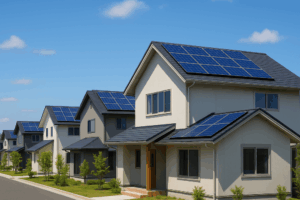
However, most solar setups aren’t configured to send spare power back to the grid, limiting their benefit to the wider public. Renewables expert Syed Faizan Ali Shah, who advises the government on solar adoption, has said that less than 10% of solar consumers sell excess power to the grid.

Experts and government officials blame high costs and sanctioning delays. Connecting a solar module to the grid usually takes between three and nine months, said Renewables First energy expert Ahtasam Ahmad, prompting many to not bother.

Converting power generated from a solar panel for transmission to the grid also requires equipment like inverters, which typically cost between $1,400 and $1,800, or roughly half the median household income in Pakistan.

SUNK COSTS


Pakistan conglomerate Interloop has installed hundreds of solar modules next to its cowsheds in Punjab province that help provide the electricity keeping its 9,300 livestock cool and their milk chilled.

The investment in solar has been a lucrative one for Interloop, which typically breaks even on solar installation costs after three to four years. Basic operating costs are about three quarters less than payments to the grid, said Interloop energy manager Faizan Ul Haq.

The money Interloop saves also reflects a gaping hole in the accounts of Pakistan’s power companies.

Even though industrial groups and wealthier Pakistanis now consume less grid power, suppliers’ costs haven’t changed proportionately. Fixed expenses like fuel contracts and upgrades to transmission architecture accounted for about 70% of supplier expenditure in the year to June 2024, according to an Arzachel estimate.

To cover costs, suppliers have raised prices on their remaining customers, who have already faced repeated increases as a result of the IMF deal.

Fixed costs of 200 billion rupees were shifted to non-solar consumers in the 2023-2024 fiscal year, meaning they paid 6.3% more per kilowatt-hour than they otherwise would have, according to Arzachel data.

Solar panel imports have increased since, meaning grid demand is likely to continue dropping, forcing remaining customers to pay more.

“Pakistan’s experience demonstrates a crucial lesson: when governments fail to adapt quickly enough, people take charge,” said Ahmad of Renewables First.


Reuters

Solar energy is a low-risk, high-return investment offering lower utility bills, increased property value, and energy security. 

However, not all solar systems are created equal.

To protect and maximize your investment, it is crucial to work with experienced providers using quality equipment and forward-thinking system designs.

This guide outlines what to look for when selecting a solar company for the purchase or financing of a solar system.

1. High Quality Equipment 

1.1 Choose premium quality solar panels, inverters, batteries and other components to ensure system durability and longevity. Ensure that the solar provider uses equipment with high efficiency and performance ratings so as to protect against  early system failure and minimize costly replacement. 

1.2 Choose batteries, panels, inverters with lifespans of 15 – 20 years to ensure consistent energy production and cost savings. Similarly, select equipment with long warranties – 25 years for panels and 10 to 15 years for batteries – to secure system longevity and return of investment.

1.3 Prefer Lithium Phosphate Iron (LFP) batteries that can discharge fully very quickly for enhanced reliability during any extended grid outage.

2. Safe and Compliant Installations

2.1 Ensure system installations are done up to Jamaica’s electrical code to pass any GER inspection that is required for solar tax credit or net billing applications.

2.2 The solar provider has a standard of engineering systems to withstand hurricane-force winds beyond national grid resilience. Presently, the national grid’s resilience is at CAT-3 hurricane force winds. 

2.3 Choose companies that design, install, and maintain systems according to insurance policy standards so as to manage risks effectively.

3. Data-Driven System Design

3.1 Systems are engineered using actual energy usage data and not estimates derived from (JPS) energy bills. 

3.2 A data-driven approach helps to determine whether a grid tie or battery based system best meets a household’s energy needs.

3.3 Companies that offer data-driven designs reduce the risk of underperforming systems so lenders can be assured of consistent energy savings to support loan repayments.

4. Expertise in Optimizing System Design

4.1 Design systems with scalability in mind to accommodate future needs without costly overhauls. 

4.2 Advise on optimal panel placement based on roof orientation and whether or not any structure is needed to host additional panels. 

4.3 Balance current and future energy needs to secure long-term investment value. 

5. Use of Modern, Insurable Equipment

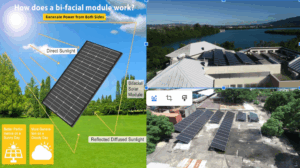
5.1 System designs include advanced technology that maximizes returns at no added cost for example Bifacial panels that can generate up to 60W more per panel when installed at a tilt.

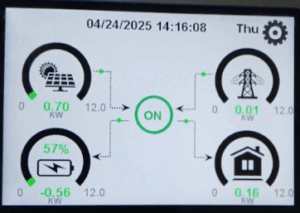
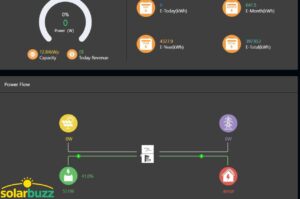
5.2 Include an online monitoring app for real-time system performance insights and proactive solar provider support.

5.3 Choose solar providers with an active maintenance program that is designed to meet insurance standards.

6. Energy Consultation and Cost Savings Projections

6.1 Installers should be able to advise on how to maximize daytime energy production while preserving batteries for nighttime use. 

6.2 Solar providers should be able to assess if net billing is feasible and explain how it can boost savings.

6.3 System design should include projected energy savings and how financing impacts payback periods.

7. Experience with Proven Expertise

7.1 Partner with companies with at least 10 years in the industry that have a proven track record.

7.2 Partner with companies that understand the local energy landscape and are familiar with a wide range of equipment, as this gives them the ability to tailor solutions for differing energy needs. 

7.3 Select companies that invest in research, training and staying up to date on new technologies, as this makes them better equipped to meet evolving energy demands. 

8. After-Sales Support and Warranty Assistance

8.1 Ensure the solar provider offers accessible support for system settings, monitoring and consultation, and upgrades.

8.2  Choose solar providers with an active maintenance program that helps to secure system longevity and optimal performance.

8.3 Partner with companies that are able to handle warranty claims including upgraded replacements if models are discontinued.

9. Reputation, Visibility and Advocacy

9.1 Select companies with strong online visibility, positive reviews, client testimonials, and references.

9.2 Choose solar companies that actively advocate for client interests in energy policy discussions.

9.3 Verify if the solar provider has partnerships with reputable lenders such as banks, the National Housing Trust (NHT) and Development Bank of Jamaica (DBJ).

10. Guidance on Government Policies and Incentives

10.1 Partner with solar providers who are knowledgeable and experienced about net billing policies and application procedures.

10.2 Solar companies should offer administrative support and guidance with government incentives such as the recently implemented solar tax credit. This is key especially in cases where the incentive can significantly impact the payback period of your solar investment.

10.3 Prefer providers who actively engage in policy advocacy to protect client interests. 

Invest with Confidence

Solar is a proven solid investment but only when approached with quality, foresight, support and expertise. 

Prioritizing high-quality equipment, data-driven system designs, safe installations and reliable post-installation support secures optimal system performance and return on your investment.  

Choosing an experienced, accessible solar provider who can navigate policies and advocate for your interests is key to making your solar journey profitable, sustainable, and hassle-free.

Deidre Wedderburn is the Client Relations Manager at SolarBuzz, dedicated to building long-term partnerships and delivering a top-tier client experience (deidre@solarbuzzjamaica.com).

Powering a Greener Future

In a time where sustainability is no longer just an option but a necessity, the real estate and financial sectors are uniquely positioned to lead the charge toward a cleaner, more economically sound future. 

The global shift toward renewable energy is undeniable and solar energy stands at the forefront of this transformation. The benefits are clear —lower energy costs, reduced carbon footprints, and energy independence for homeowners and businesses alike. 

Unlocking the full potential of solar integration requires developers and financial institutions to work hand-in-hand, and offer attractive, flexible and secure financing solutions that treat solar as the high-yield investment that it is. 

The Synergy of Bankers and Developers 

Solar energy systems are tangible, low-risk assets offering homeowners significant savings, developers a competitive edge and banks the security of their investment. 

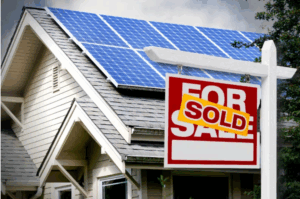
According to a 2024 U.S. study, homes equipped with solar systems sold for an average of 6.8% more than comparable homes without solar and spent less time on the market.

This premium reflects the growing demand for energy-efficient homes and makes a compelling case for developers to include solar in their projects.

Replacing monthly utility bills with solar loan payments of a similar or lower amount allows homeowners to reduce living costs without compromising their lifestyle or financial stability.

With one less major bill to worry about, the likelihood of loan defaults drops significantly. 

Current data shows that the default rate for green energy loans is less than 1% making homes with installed solar systems a safe bet for banks.

Developers must design and build homes that are solar-ready or solar-integrated and banks need to create green loan products that match this forward-thinking approach.

Debunking Risk Aversion

Solar panels are income-generating assets. A properly installed solar system can save homeowners thousands of dollars over its lifetime and increase property value. 

Homeowners can also generate additional savings by selling back any surplus energy to the grid through a Net Billing license. 

Modern solar systems that are data-engineered and include online monitoring, extended warranties, and long equipment lifespan are ideal collateral for financing. 

Systems that are GER-certified, professionally installed, and maintained through structured programs reduce lending risk and ensure optimal system performance.

These features allow solar systems to function as secure collateral, much like a home or vehicle, which reduces risk for banks and enables competitive loan rates.

In the rare event of a loan default, the modern design and warranties of solar systems enable easy resale to schools, nonprofits, or existing bank customers.

Solar systems typically have a payback period of 4 to 6 years. For many PAYE employed who are leveraging the new solar tax credit, the payback period shortens.

Banks can further reduce risk by offering incentives to borrowers who apply their tax refunds to their loan balance.

Financing a Greener Future

Banks need to offer financing models that are just as innovative as the solar systems themselves:

  • Incorporate solar into mortgages – Include solar systems in initial mortgage financing. Spreading the cost over a longer term makes systems more affordable and reduces default risk.
  • Use solar systems as collateral – Given their high quality equipment, lifespan, warranties, and online monitoring capabilities, modern solar systems can serve as loan collateral. This approach protects the homeowner’s equity and reduces risk for lenders.
  • Offer competitive interest rates – Secured loans, using the solar system as collateral, should have interest rates below the 15% – 19% that is currently on the local lending market. Lower rates encourage adoption and reduce defaults.
  • Bundle EV and solar loans – Reduced interest rates for loans that combine a solar system with the purchase of an electrical vehicle (EV) is a dual investment that amplifies savings for homeowners. Solar energy can power both homes and vehicles further reducing monthly expenses and default risks.
  • Leverage Net Billing for non primary residences – Require Net Billing licenses for  non-primary residences to enhance their savings and reduce the likelihood of loan defaults.
  • Mandate system maintenance – Require active maintenance as a clause in insurance coverage to ensure solar systems operate at optimal levels and protect the loan investment.

The National Housing Trust (NHT) is leading the way with revamped energy loan offerings like the Smart Energy Loan (up to J$2.5M) and Home Improvement Loan (up to J$5M) per contributor as of July 2024.

Banks should follow suit by offering secured solar financing backed by quality systems, long warranties and a maintenance program rather than relying on home liens

Developers, in turn, need access to financing with favorable terms so as to integrate solar into their designs without sacrificing profitability.

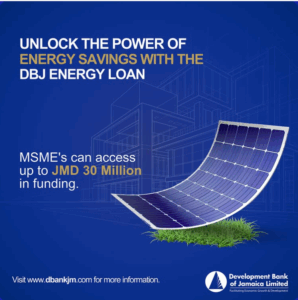
The Development Bank of Jamaica (DBJ) through its Credit Enhancement Facility (CEF), provides banks with funds for green energy loans for commercial clients where solar systems serve as collateral. Developers can therefore benefit from DBJ-backed competitive green financing.

Designing for the present

Developers can mainstream solar energy by incorporating it into their designs from the outset. Key design considerations include below:

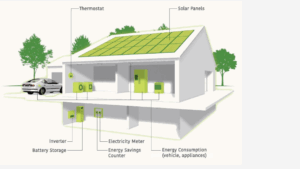
  • Roof Space Optimization – Ensure adequate, unshaded roof space for solar panels.
  • Proximity to Infrastructure – Position main breaker panels close to designated solar equipment spaces for efficient installation.
  • Battery Storage Readiness – Allocate dedicated indoor spaces for battery equipment to support energy storage.
  • Pre-Wired Solar Circuits – Install breakers specifically for solar systems 
  • Solar Expertise and Aftercare Services – Collaborate with certified solar providers for installation and maintenance to ensure long-term system performance and insurability.

Integrating these features increases a property’s appeal and sale value, incentivizing more developers to embrace solar-ready designs.

A Win for All

Solar energy is a transformative investment with proven returns for homeowners, developers, and banks. 

Banks can reimagine their lending practices, recognize the real value of solar systems and attract new customers with competitive green energy loans.

Developers can integrate solar systems into their offerings to enhance property value, accelerate sales, and meet growing consumer demand.

With low default rates, expanding consumer interest, and financial support from institutions like the DBJ, there has never been a better time for banks and developers to align and power a greener future together.

Deidre Wedderburn is the Client Relations Manager at SolarBuzz, dedicated to building long-term partnerships and delivering a top-tier client experience (deidre@solarbuzzjamaica.com).

In today’s climate of unpredictable weather patterns, rising energy costs and increasing reliance on modern amenities, solar energy is a strategic investment rather than just a sustainable choice.

From weather resilience and financial independence to increasing property value and providing unmatched peace of mind, solar energy offers a wealth of benefits that make it a solid long-term investment. 

Weather Resilience

Extreme weather events such as hurricanes, are becoming more frequent and intense, putting pressure on aging electrical grids.

A direct hit from a strong storm could easily leave thousands without power for days or even weeks. 

Solar energy systems, when paired with battery storage, offer a reliable solution for both homeowners and vacation villa owners ensuring that their family or guests have access to electricity and essential amenities even when the grid fails. 

This kind of weather resilience is a game-changer especially for vacation rental owners, as it offers guests a seamless experience while setting your rental apart in a competitive market and safeguarding your revenue stream.

Upfront Investment

The upfront cost of solar installation is an investment that pays off in a short period of time.

On average, residential solar systems with battery storage offer a return on investment within 4-6 years. This payback period can be even shorter as electricity rates continue to rise.

Homeowners can also maximize their returns by increasing daytime energy usage, effectively putting to use any excess solar energy that would otherwise go unused once their batteries are fully charged.

During the payback period, solar replaces your electricity bill while allowing you to invest in your own infrastructure or other opportunities.

With electricity rates still subject to global volatility and price hikes triggered by supply disruptions, oil market shifts or even local grid upgrades, solar energy shields you from these variables. Solar energy locks in predictable savings and provides a hedge against inflation in the utility sector.

Property Added Value and Revenue Security

Properties with installed solar systems enjoy higher resale value and market appeal.

Property owners who sell before the payback period ends can still benefit from accelerated financial returns by commanding a more competitive sale price. 

Vacation rental property owners stand to gain significantly from solar adoption.

Guests expect comfort and reliability, and a solar-powered villa offers them a superior experience that is uninterrupted by blackouts and free from energy usage restrictions without you bearing the burden of high energy bills.

This gives your property a competitive edge in the market since you can avoid passing fluctuating utility expenses onto guests. 

Furthermore, solar energy acts as a premium amenity that can justify higher nightly rates and boost income potential.

It also appeals to the Eco-Tourist that appreciates clean energy, enhancing your property’s attractiveness to the growing eco-tourism market.

Smart Investment for EV Owners

For those who own or plan to purchase an electric vehicle (EV), investing in solar energy is a no-brainer.

Harnessing solar energy to charge your EV in the day time can significantly reduce or even eliminate reliance on the grid, reducing your monthly expenses.

With the Jamaica Public Service (JPS) already approved to implement special billing for EV owners due to anticipated demand pressure on the grid, installing solar energy gives a clear advantage.

Solar becomes a proactive investment that allows EV owners to sidestep potential surcharges and truly enjoy energy independence.

Investment of a Lifestyle

Investing in solar energy is not just a financial decision but a lifestyle upgrade.

Solar allows homeowners to fully enjoy the comforts of modern living – especially the use of the air conditioning unit during increasingly hot days and nights – without the worry of high electricity bills. 

Additionally, modern solar systems include online monitoring tools that provide real-time insights into energy production and your usage.

This kind of monitoring empowers you to manage your energy consumption efficiently and inadvertently helps you to get the most out of your system while maximizing long-term savings.

Accelerated Investment Returns

The recently introduced solar tax credit further tilts the scales in favor of solar energy as an investment.

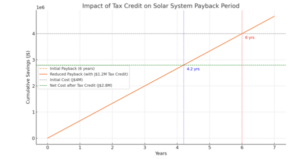
Homeowners can now claim up to 30% of the value of their system, capped at J$4 million which translates to a potential tax credit of up to J$1.2 million. This incentive can significantly shorten the payback period on your solar investment.


For PAYE-employed individuals who financed their solar system, this incentive is even more impactful since the tax credit is issued as a cash refund and can therefore be used to reduce loan balances if desired. 

Additionally, the cash refund from this solar tax credit can be reinvested into other opportunities, such as home renovations, upgrading your solar system, or ongoing maintenance to ensure optimal long-term performance and continued savings.

A Future-Proof Investment

With a payback period that is shrinking thanks to tax incentives and rising utility costs, the case for solar energy as an investment is stronger than ever.

Installing solar energy is a strategic move for financial security, property enhancement, energy resilience and peace of mind.

Invest today, and enjoy the rewards of resilience, savings, and independence for years to come. 

deidre@solarbuzzjamaica.com