TOKYO, Dec 23 (Reuters) – Japan plans to provide 210 billion yen ($1.34 billion) to help companies that are using clean power to fund investments, in a push to boost demand for renewable energy and spur growth in regional areas, a government official said late on Monday.

The subsidies are designed to help the country, the world’s fifth-largest emitter of carbon dioxide, reach its clean energy targets and reduce its reliance on imported fossil fuels after facing setbacks on wind and solar projects.

The scheme will provide funds over five years starting in fiscal 2026, said Juntaro Shimizu, director of the Green Transformation (GX) policy group at the Ministry of Economy, Trade and Industry.

Companies that rely entirely on decarbonised electricity and contribute to regions where the power is generated will be eligible for subsidies covering up to half of their capital expenditure, he said. Data centre operators meeting the same criteria will also qualify.

The government plans to begin soliciting applications from eligible businesses next fiscal year.

Japan wants renewables to account for up to 50% of its electricity mix by fiscal 2040, with nuclear power supplying another 20%, up from 22.9% renewables and 8.5% nuclear in fiscal 2023.

Progress toward the renewable energy goal has slowed as offshore wind projects, seen as crucial to achieving the target, have faced surging costs, while large-scale solar farms have stalled due to local opposition.

The new support measures form part of Japan’s “GX 2040 vision,” a national strategy integrating decarbonisation and industrial policy approved by the Cabinet earlier this year, seeking to promote the energy transition and economic growth.

As part of the framework, the government will establish a “GX Strategy Region” system to create new industrial clusters in areas with decarbonised power sources.

Local governments and companies will jointly draw up plans, with the national government selecting regions and providing support through subsidies and regulatory reforms. Applications from local governments are expected to open later this fiscal year, Shimizu said.

Reuters

People with rooftop solar panels got their power back almost immediately. The ‘entire neighbourhood benefits’, one resident said.

The morning after Hurricane Melissa tore through Jamaica, Jennifer Hue, a retired tax auditor living close to hard-hit Treasure Beach, woke up to devastation. Her mango, breadfruit and papaya trees were lost, their tops snapped off by 180-mile-per-hour winds. There was water everywhere.

But her roof was intact, and just as importantly, so were the solar panels she had installed two years ago. Most of her neighbors didn’t have electricity. But she did.

Neighbors began stopping by to charge their phones, to take a cool drink from the refrigerator, to message loved ones to let them know they were safe. Ms. Hue is still hosting a cousin and his mother, as well as two medical students from the local university, whose accommodations were damaged.

“The wind was like a tornado, and water came through every crevice,” Ms. Hue said. “But we didn’t lose any solar panels, and the next morning, the sun was shining bright and early,” she said. “We had our power back.”

A small but vibrant market for rooftop solar panels in Jamaica has long been seen as a promising way to wean the nation off imported fossil fuels. The country is reliant on oil and gas from abroad for its power plants, which not only is polluting but also makes Jamaica’s electricity some of the priciest in the world per kilowatt-hour.

But now, solar power is also seen as a way for Jamaica and other nations in one of the world’s most hurricane-prone regions to become more resilient to ever-intensifying storms.

Rooftop solar has grown significantly in Jamaica over the past decade, from less than 1.4 megawatts in 2015 to nearly 65 megawatts in 2023, a significant amount for a small island, experts say. Overall, solar and other forms of renewable energy made up about 10 percent of Jamaica’s power generation in 2023.

The hope is that growth will start to cut down on Jamaica’s dependence on imported oil and liquefied natural gas, which is shipped in tankers to the island nation, at a time when ports, refineries, power plants and transmission lines are becoming vulnerable to extreme weather worsened by a warming planet.

Wide swaths of the country remain without electricity after Hurricane Melissa hit Jamaica as a Category 5 storm last week, killing at least 32 people and destroying an untold number of buildings and homes. “You’re talking about restoring a very lengthy, complex and expensive infrastructure,” said David Gumbs, an expert on energy in the Caribbean at the Rocky Mountain Institute and the former chief executive of the Anguilla Electricity Company.

“With solar, you maintain some ability to continue generating electricity” without relying on hundreds of miles of damaged power lines, he said. “And in the Caribbean context, when the hurricane passes, if I have rooftop solar and batteries and if I can keep my refrigerator running, my entire neighborhood benefits.”

The solar panels must survive the high winds, of course. Jason Robinson, who runs Solar Buzz, an installer based in Kingston, Jamaica’s capital, has been surveying the damage this week, navigating roads on the west side of the island strewed with downed trees and power lines. “With nearly 200 mile-per-hour winds, you’re in the universe’s hands,” Mr. Robinson said.

But so far, none of his nearly 300 clients have reported extensive damage, he said. Panels installed flat against the roof, in particular, fared well. Some rooftop solar owners have taken to removing their panels ahead of strong winds. Many were already back online.

“As long as you install to code, and your roof stays on, you have a chance of surviving extremely long power outages,” Mr. Robinson said. “Resiliency is becoming even more important than lowering your bill.”

Solar panels remain beyond the reach of many Jamaicans, but prices are falling rapidly as Chinese gear floods into the market. In recent years the Jamaican government has also started providing a solar income-tax credit, and banks have begun to offer more financing. Jamaica’s electric utility also now compensates solar households for excess electricity they put back into the grid.

That’s helping Jamaica make progress toward its goal of generating 50 percent of its electricity from renewable sources by 2030.

Annabelle Todd manages an oceanfront guest villa on Treasure Beach, where two dozen panels and battery storage were installed two-and-a-half years ago. The panels survived, apart from one that was punctured by flying debris. She had electricity and air-conditioning the morning after the storm, much to the envy of her neighbors.

The system wasn’t cheap, costing about $30,000. But it has virtually eliminated electricity bills that used to top $1,000 a month, because her guests “would run that A.C. morning and noon and night,” she said. “Honestly, we could pay it off in two, three years,” she said.

More than that, not losing power has been a relief, she said. It’s the second year in a row that the seaside community, known for its black sand beaches, has been ravaged by a hurricane.

“Now everyone who runs villas here wants solar. I already see solar suppliers driving up and down Treasure Beach,” Ms. Todd said. “They got hit two years in a row, and they’re not going to fool around anymore.”

Twila-Mae Logan, deputy executive director of the University of the West Indies’ business school, spent about $20,000 to install panels at her Kingston home two years ago. The capital was spared the worst of Hurricane Melissa, but even then, her neighborhood lost power, making her home one of the few with electricity. Ahead of the storm, her brother and her niece rushed to her home to store food in her freezer so it wouldn’t spoil.

“We’re a third-world country and our government is significantly under-resourced, but I really do think our government has put some fair degree of priority behind solar,” she said. “Most people would go solar, save for the expense.”

Leaders across the Caribbean have demanded more financial assistance from the world’s rich countries to help Jamaica contend with the consequences of climate change. Caribbean island nations will suffer the most from climate change, despite being least responsible for the greenhouse gas emissions that are warming the world, they say. The International Monetary Fund says the region requires about $100 billion in economic investment to build resilience to climate-fueled disasters.

Ms. Hue, the retired tax auditor, doesn’t expect to quickly make back the tens of thousands of dollars she paid for her solar panels in 2023. But “it was never about that,” she said. “It was about having very reliable power, and having peace of mind.”

“We were just fortunate to have the sun out the next morning,” she said.

The New York Times

Keir Starmer prepares to miss key green target in effort to keep energy bills down

Ministers are considering dropping one of their central green pledges in an effort to keep energy bills down, sources have told the Guardian.

Government insiders say Keir Starmer is prepared to miss his own target of removing almost all fossil fuels from the UK’s electricity supply by 2030 if doing so proves much more expensive than building gas power instead.

The issue will come to a head within weeks as Ed Miliband, the energy secretary, decides how much renewable energy to commission for the next few years. Allies say Miliband is willing to buy less than experts say is needed to hit the 2030 target, if paying for them would push energy bills much higher than their current levels.

Concern is growing in Downing Street that the cost of living is fuelling the rise of Reform UK, which leads national polls and is predicted to take the Welsh Senedd seat of Caerphilly in a byelection this week.

One government insider said: “There is a choice about what price you’re willing to pay for the next [renewables] auction round, which is key to hitting 2030. If it comes to a choice between hitting the target and overpaying, or missing it and keeping costs down, we will miss it.”

Officials pointed to comments Miliband made last week, when he told an energy industry conference: “We won’t buy at any price. And if specific technologies aren’t competitive, we will look elsewhere. We will take the long-term decisions to secure the right amount of capacity at the right price for the country.”

Starmer committed to hitting the clean power target last year in his “plan for change”. The prime minister said at the time the plan would “make Britain a clean energy superpower and accelerate to net zero”.

Experts say that hitting the target would require Miliband to commission a record 8 gigawatts of new electricity generation at the current auction round. The government sets subsidy levels by asking renewable companies to bid and then commissioning whichever projects promise the cheapest clean energy.

The energy secretary is in talks with Rachel Reeves, the chancellor, about how much to spend on the commissioning round.

But energy industry insiders say high interest rates and the sheer amount of electricity that needs to be commissioned is likely to push prices beyond what it would cost to build the equivalent amount of gas power.

Dieter Helm, professor of economic policy at the University of Oxford, said Miliband was “deluded” if he thought he could bring down energy bills by pushing for clean power by 2030. “The reality is that net zero by 2030 is expensive and that by dashing flat-out towards it, the result will be even higher costs. The price is not coming down; it is going up.”

The state-owned energy system operator, NESO, which runs the electricity grid, recently warned: “With a short and shrinking window of time, pace must be the primary goal. However, this cannot come at the expense of public consent or excessive cost as that would mean the clean power objective would be self-defeating.”

 report published on Thursday by the Tony Blair Institute argues the government should drop the 2030 target altogether while sticking to the longer-term net zero commitment.

Tone Langengen, the report’s author, said: “Launched in the middle of the gas crisis and in a low-interest environment, Clean Power 2030 was right for its time, but circumstances have changed.”

The institute has been criticised for its founder’s links to the fossil fuel industry, but its reports are taken seriously in Downing Street, which is staffed by several of its former employees.

Some officials in Downing Street and the Treasury want the prime minister to publicly drop the 2030 target in a sign to both voters and the energy industry that he is not willing to let bills rise, having previously promised to bring them down by £300.

Starmer is resisting this, and is instead understood to be willing to simply miss the target rather than openly disown it. One government aide said: “The prime minister made this the centrepiece of one of his missions. He is not going to drop it now.”

Another insider said: “It would be really silly to amend the target publicly – even if we accept the higher risk it won’t be met.”

Green experts also warn that ditching the target – either quietly or publicly – would reduce business confidence.

Jess Ralston, an energy analyst at the Energy & Climate Intelligence Unit, said: “Renewables provided around half of our electricity last year, and we have the world’s second largest market for offshore wind. Drastic policy changes could jeopardise that investment and those jobs, like we have seen in the US.”

Allies of Miliband insist that even if he does not commission the full 8GW of power in January, there will be other ways to make sure the electricity grid is almost entirely carbon free by 2030. They include building more batteries and encouraging people to use less electricity at peak times in order to reduce the amount of new capacity that needs to be built.

However, industry insiders say the 2030 target would be almost unachievable without the extra renewable power they say needs to be commissioned in January. One said: “There are other ways to make the sums add up, but unless you get close to 8GW of new power in this round, you’re very unlikely to hit the 2030 target.”

A government spokesperson said: “The government is fully committed to delivering clean power by 2030 because it is how we deliver a system that can bring down bills for consumers.”

The Guardian

Renewables are thriving, with Africa breaking solar energy records – but action is needed to plug financing gap

The first signs of a takeoff of Africa’s green economy are raising hopes that a transformation of the continent’s fortunes may be under way, driven by solar power and an increase in low-carbon investment.

African leaders are meeting this week in Addis Ababa, Ethiopia, for the Africa Climate Summit, a precursor to the global UN Cop30 in November. They will call for an increase in support from rich countries for Africa’s green resurgence, without which they will warn it could be fragile and spread unevenly.

Richard Muyungi, the climate envoy and adviser to the president of Tanzania, said: “Africa is ready to be part of [the global fight to stave off climate breakdown] provided we are supported with finance, technology and capacity-building.

“There has been an increase of investments in some areas but Africa still needs a lot of financing to be able to be part of the global solution, and to address the challenges we are facing.”

Green energy is booming in Africa, with 20 countries breaking records for imports of solar panels in the 12 months to June. According to the thinktank Ember, imports of photovoltaic equipment from China rose by 60% over the past year, from 9GW in 2024 to 15GW of capacity, with a tripling of imports to countries outside South Africa.

Though the increase is impressive, it is from a low base. Africa, which boasts the greatest potential for solar power, has lagged far behind other countries in installations. Only 4% of global solar generation last year was in Africa, and in 2023, the International Energy Agency reported that Belgium had as many solar panels as the entire continent.

“There is a glimmer of light [in the increased investment] but this is still quite meagre compared to other continents in the global south,” Muyungi said.

Last year’s imported panels would add about 5% to current electricity generation capacity in 16 countries, according to Ember, but the need remains vast. About 600 million people in Africa lack access to electricity, and about a billion have only firewood or dirty fuels for cooking. Women and girls are worst affected.

Melaku Yirga, the regional director for Africa at Mercy Corps, a humanitarian organisation, said: “Renewable energy is not only Africa’s greatest opportunity, it is also an urgent necessity. Renewable power enables everything from irrigation and food storage to early-warning systems, healthcare and livelihoods.”

While recent increases in renewable energy investment were welcome, Yirga said the public sector and overseas aid were still vital.

“Africa has no shortage of ambition in renewable energy, but without stronger international finance and the right incentives, the private sector will remain on the sidelines and adaptation goals will go unmet,” he said.

“Private sector financing must be met with public commitments, and funding must also be long-term and reliable – short grants rarely achieve full impact, as meaningful engagement with governments and communities takes time and requires significant upfront investment.”

Reductions in overseas aid from rich countries are causing consternation among African governments, many of which are blighted by record debt burdens, exacerbated by the aftermath of the Covid-19 pandemic and recent interest rate rises.

Macky Sall, the former president of Senegal, said: “The drop in official development assistance fundamentally changes the climate calculus. Where does that leave Africa, if we can no longer count on our partners’ promises?

“The costs of the climate crisis have fallen most heavily on Africa. We are not the cause. We are not only footing the largest bill – we are also seeing the cheques to stem the damage cancelled.”

Private sector companies will put cash into renewable energy, but few will help Africa adapt to the impacts of the climate crisis, which are already being felt in the form of droughts, floods and crop failures. Investment to build resilience – such as water storage systems, better infrastructure and new farming techniques – is lacking.

A report published at the summit on Monday showed that while Africa needed at least $70bn a year to adapt to the effects of the climate crisis, and possibly much more, only $15bn was provided in adaptation finance to the continent in 2023.

Without urgent action to address that vast financing gap, Africa’s future costs from climate impacts will balloon, wiping out a fifth of GDP by 2050.

Patrick Verkooijen, the chief executive of the Global Center on Adaptation thinktank, says rich countries must increase their finance for adaptation in Africa, which is responsible for only 4% of global greenhouse gas emissions while bearing the brunt of climate breakdown.

“Europe [and other countries] will shoot themselves in the foot if they defund ODA [official development assistance],” he said. “African leaders will see it as a stab in the back.”

While Africa is behind in climate adaptation, its riches are increasingly sought after by China and the rest of the rich world.

Africa has some of the biggest deposits of “critical minerals” – elements vital to building renewable energy components. Cobalt, lithium, copper, nickel, rare earths and other minerals are abundant in parts of Africa, which has spurred a global scramble for the resources.

Human rights abuses have soared in some mining areas, with child labour and the exploitation of adult workers, particularly women, in places such as the Democratic Republic of the Congo. Africa’s under-resourced public sector is struggling to contain the damage and ensure resource extraction is done responsibly, without causing environmental devastation and in a way that benefits local people.

Africa also abounds in gas, with reserves of the fossil fuel that have scarcely been tapped in some countries. Muyungi insisted they must be allowed to exploit those resources, despite the impact on the climate crisis. “We do not envisage anything to stop us using gas – we need it for our development,” he said.

For rich countries to tackle the climate crisis, Africa’s assistance will be essential. If global north governments fail to address the continent’s needs, they will feel the impact. Roughly 60% of Africa’s population is under 25, a “youthquake” that could spur development or, if poorly handled, will be felt around the world.

Abay Yimere, a scholar at the Climate Policy Lab at Tufts University in the US, said: “If the climate crisis is not tackled in Africa, that will be a problem for migration. If we do not provide them with jobs, and adapt to climate change, the impact will be huge and not controllable. The global north should look at this from their own national perspectives and see where their interest lies.”

 This article was amended on 9 September 2025. An earlier version measured imports of solar panels from China in megawatts; this should have said gigawatts.

The Guardian

When Terrence Dwyer received a knock on his door and a flyer for a solar panel system small enough to fit on his deck, he was quickly sold. Solar systems that plug into regular wall outlets have been popular in Europe for years and are gaining traction in the U.S. for their affordability and simple installation.

“We thought absolutely, let’s do this right away,” said Dwyer, who lives in Oakland, California.

These small-scale solar systems could become attractive to more homeowners now that President Donald Trump’s sweeping budget-and-policy package will scrap residential rooftop solar tax credits and may shift interest to cheaper alternatives. Even before the GOP bill passed, manufacturers of the smaller systems known as plug-in or balcony solar were seeing increased demand and other positive signs such as a new Utah law streamlining regulations for homeowners to buy and install them. The systems about the size of a door haven’t been as widely adopted in the U.S. as in Europe because of lack of awareness, patchwork utility rules and limited availability.

The $2,000 plug-in solar system installed on Dwyer’s backyard deck in March consists of two 400 watt panels, an inverter, a smart meter and a circuit breaker. It saves him around $35 per month on his power bill because he is consuming less energy from the grid, but he said reducing his carbon footprint was his primary motivation.

“We like the environmental benefits of solar and wanted to engage with solar in some fashion,” Dwyer said.

Had Dwyer opted for rooftop solar, he would have paid $20,000 for the system and $30,000 to upgrade his roof to support the panels.

Installing a plug-in solar system requires some homework. What power companies let customers do with energy-generating equipment varies, which is why prospective purchasers should check their utility’s policies first. Building permits might be required depending on the municipality. Some systems can be self-installed, while others may require an electrician. For example, some kits have meters that must be wired into a home’s circuit breaker.

Removing hurdles for plug-in solar

Dwyer bought his system from Bright Saver, a nonprofit company in California that advocates for plug-in solar. In addition to the type Dwyer bought, the company also offers a smaller model costing $399 that recently sold out in six days.

“The interest and demand have been overwhelming,” said Cora Stryker, a founder of Bright Saver. “It is clear that we are hitting a nerve — many Americans have wanted solar for a long time but have not had an option that is feasible and affordable for them until now.”

Kevin Chou, another founder of Bright Saver, said wider adoption of the systems in the U.S. has been hindered by utility policies that create uncertainty about whether they’re allowed and a lack of state and local policies to make clear what rules apply.

Some utilities contacted by The Associated Press say plug-in solar systems require the same interconnection applications as rooftop panels that send electricity back to the wider network. But Steven Hegedus, an electrical engineering professor at University of Delaware, said he doesn’t understand why a utility would need to require an interconnection agreement for plug-in solar because, unlike rooftop systems, they are designed to prevent energy from flowing to the grid.

Still, if in doubt, a customer should follow their utility’s policy.

During the early days of plug-in solar’s growth, some opposition from utilities is likely since customers are buying less energy, said Robert Cudd, a research analyst at the California Center for Sustainable Communities at the University of California, Los Angeles.

“Utilities really prefer everyone being a predictable and generous consumer of the electricity they sell,” Cudd said.

This year, Utah enacted a novel law supporting plug-in solar by exempting certain small-scale systems from interconnection agreements and establishing safety requirements such as being certified by a nationally recognized testing organization such as Underwriters Laboratories. It appears to be the only state that’s passed legislation supporting plug-in solar, according to the National Conference of State Legislatures.

Republican state Rep. Raymond Ward, who sponsored the legislation, said the smaller systems allow people to better manage where their energy comes from and what they pay.

“Europe has these things. You can go buy them and they work and people want them. There is no reason why we shouldn’t have them here in the United States,” Ward said.

Bright Saver says they are lobbying other states for similar legislation.

Alexis Abramson, dean of the University of Columbia Climate School, also applauded Utah’s move.

“We actually need more localities, more states putting in allowances for this type of equipment,” she said.

Plug-in solar availability and savings potential

Some questions remain about how much customers could save. Severin Borenstein, a professor at the University of California, Berkeley’s Haas School of Business, said the cost of some portable solar systems in the U.S. would make it hard for customers to come out ahead on their utility bills over the time they own them. He estimates the price of a $2,000 system in the U.S. works out to paying about $0.20 a kilowatt-hour over a 25-year period, which only saves people money if they have high utility costs. By comparison, Borenstein said the cost of systems sold in Europe, typically around $600, is equivalent to paying about $0.05 or $0.06 per kilowatt-hour over 25 years.

Baltimore resident Craig Keenan said saving money was only part of why he installed one of the smaller Bright Saver models on his balcony in July.

“I’m interested in renewable energy because the amount of carbon emissions that we produce as a species is very, very unsustainable for our world,” he said.

He said he expects the system will save him about $40 per year on utility bills, so it would take him about 10 years to recoup the cost of the kit.

Keenan, a mechanical engineer, said installation took him 10 to 15 minutes.

“I think anyone can install this,” he said. “It’s not complicated. It doesn’t require a technical degree.”

Other companies selling plug-in solar kits include Texas-based Craftstrom. It has sold about 2,000 systems in the U.S. since 2021, mostly in California, Texas and Florida. The company’s basic kits contain a solar panel that can fit in a backyard or other sunny space, along with equipment to maintain and regulate the flow of energy including an inverter and smart meter.

Kenneth Hutchings, Craftstrom’s chief revenue officer, said their U.S. sales rose this year even before the passage of the GOP tax bill, and he expects demand for plug-in solar to increase further as federal rooftop solar credits expire.

The company advises customers to notify their power company before installation, but it has “never had any pushback from any utility,” said Michael Scherer, one of the founders of Craftstrom.

China-based EcoFlow plans to begin selling plug-in solar systems in Utah and expand to other states if supportive legislation is passed, said Ryan Oliver, a company spokesperson.

“This is an example of where technology is sort of ahead of the regulators,” Oliver said, adding: “As this rolls out to more of a nationwide product, we expect it will become more mainstream as people understand it better.”

The Associated Press 

Researchers also suggest system could resolve problems with irregular and weather-dependent Earth-based supply.

Solar panels in space could cut Europe’s terrestrial renewable energy needs by 80% by 2050, a study has found.

Using a detailed computer model of the continent’s future power grid, the researchers found that a system of space-based panels designed by Nasa could reduce the cost of the whole European power system by as much as 15%. It could also cut battery use by more than two-thirds.

The study, led by researchers at King’s College London, is the first to assess the possible impact of space solar energy on Europe. The space-based solar power (SBSP) panels that yielded the positive results uses a heliostat design. The design, which the system imitates, uses mirror-like reflectors to collect sunlight in orbit. The sunlight is then transmitted to stations on Earth and converted to electricity before it is delivered to an energy grid.

The computer model of the continent’s power grid spans 33 countries, and simulates electricity demand, generation and storage to identify the lowest-cost option to meet Europe’s electricity needs.

When the researchers integrated the SBSP concept into the model based on Nasa’s predictions of its potential energy capacity, results showed that it could replace as much as 80% of Europe’s land-based renewable energy.

Land-based renewable energy is irregular and weather-dependent, complicating reliable supply, and comes at varying costs, the researchers point out. SBSPs could be an alternative centralised energy resource that operates above the atmosphere with continuous gigawatt-scale power.

The authors note that the modelling does not account for potential impacts from space-specific challenges such as orbital congestion, transmission interruptions or beaming variability, which could influence SBSP reliability and operational performance.

Nor could the potential cost-effectiveness of SBSP be realised until 2050 because building, launching and maintaining it would be too expensive unless technological growth reduces its costs.

Dr Wei He, a senior lecturer at KCL’s engineering department and lead author of the study, which is published in Joule, said: “There are some risks to consider, such as how the satellite in space could have too many solar panels. Could it cause collisions or be damaged by debris in space?”

Despite those risks, Wei believes the research shows that SBSP has the potential to help countries in achieving net zero. “Renewable energy to replace fossil fuels is the most important action we are taking as humans. Space-based solar power is a potential technology and can provide continuous solar power as a renewable energy source,” he said.

Japan is already developing SBSP and integrating it into its space and net-zero strategy, Wei said.

Europe could follow suit, the paper suggests, mentioning the continent’s longstanding tradition of multinational cooperation of cross-border electricity exchange and satellite ventures under the European Space Agency.

The authors believe Europe could leverage its multinational cooperation to develop and operate a centralised SBSP infrastructure. In doing so, it could create a continent-scale solution to provide stable, baseload-scale renewable supply, reducing the continent’s reliance on gas-fired power.

“Now is the time,” Wei said.

The Guardian

In today’s environment, where electricity rates are increasingly vulnerable to global oil price swings, supply disruptions, grid upgrades, and the escalating effects of climate change – hotter days, stronger storms, and unpredictable weather – going solar is a responsible and bold step toward self-reliance and sustainability.

But going green is only truly progressive when it is done right.
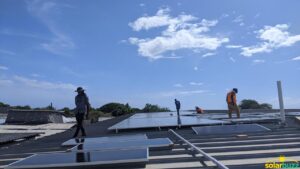
Too often, homeowners and businesses are left with underperforming systems sold on vague promises based only on utility bills and assumptions; not on actual usage or site data.

Without designs grounded in factual analysis of energy usage and site conditions, solar risks becoming just another expense rather than a tool for energy independence.
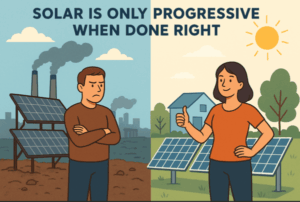
At SolarBuzz, we believe progress should be measurable, not assumed. 

Our solar solutions are engineered and tailored to actual consumption, unique site layouts, and long-term energy goals. 

This approach ensures that every system we install delivers on performance, savings, and ROI as promised, while also reducing carbon emissions.

Progress That’s Measurable, Not Assumed

Progress is achieved when solar systems are built with high-quality, long-lasting equipment, designed through precise data analysis, and installed to maximize performance and measurable CO₂ reduction.

SolarBuzz has been entrusted by clients across Jamaica to install, upgrade, and optimize systems that allow them to adopt environmentally responsible practices while saving significantly on energy costs.

Case in Point: Fleetwood Jamaica Ltd.
In May 2022, Fleetwood Jamaica Ltd. partnered with us to reduce their reliance on fossil fuels and lower energy costs. 

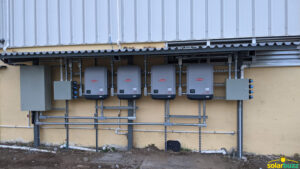
After a detailed load profile analysis, we designed and installed a 53.1kW grid-tie system projected to offset 54% of grid consumption and reduce CO₂ emissions by 57.49 tonnes annually.
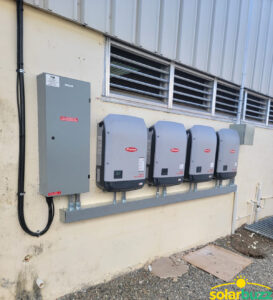
The results spoke for themselves: 51% offset, annual savings of J$3,077,214, and CO₂ reduction of nearly 80 tonnes. 
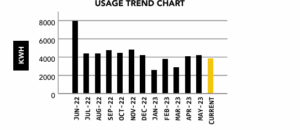
Encouraged by these measurable results, Fleetwood initiated a second phase in 2024, adding a 43.6kW system. 
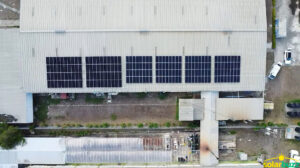
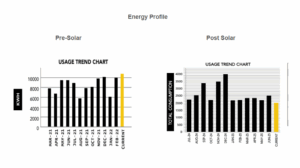
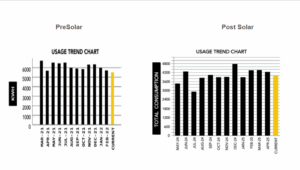
Today, they enjoy a 75%-80% energy offset from prior peak usage and total CO₂ reduction of 248.5 tonnes. 
Their monthly electricity bills as seen in the graph below reflect over 7,000 kWh in savings, proof of how going green is progressive when done right.
Progress That Allows You to Do More With Less

Our systems are not only designed to deliver savings; they are equipped with real-time monitoring and performance tracking to maximize value. 

Clients can see how their systems perform daily and adjust their energy use for even greater efficiency.
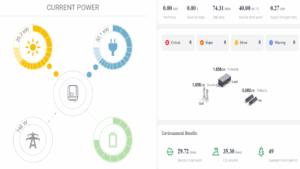


This capability allows businesses to scale production or homeowners to run appliances, charge EVs, and work from home during peak sunlight all while reducing grid dependency.

Case in Point: Gray’s Peppers
Gray’s Peppers sought to offset energy costs while boosting production. We installed a 38kW system projected to generate 4,307 kWh monthly and offset 35% of grid use. 
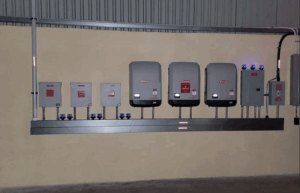
Our online monitoring of the system shows consistent performance within design expectations. 
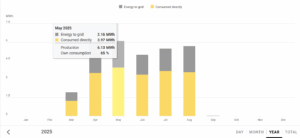
 

With an average offset of 34%, Gray’s Peppers has been able to expand operations without compromising projected savings.
Progress That Supports Modern Lifestyles

Solar isn’t just about savings; it’s about enabling a sustainable lifestyle.

Case in Point: Residential Client with EV Charging Needs
One of our featured homeowners wanted to upgrade his system to meet new EV charging needs. 

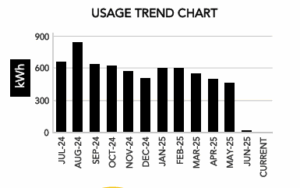
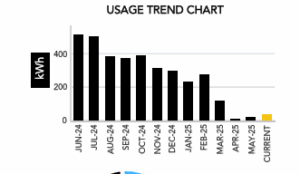
After analyzing his load profile via online monitoring data, we upgraded his existing grid tie system to 11.92kW with a 19.2kWh battery and a 15kW SolArk inverter, providing an output of 1,200 kWh per month. 
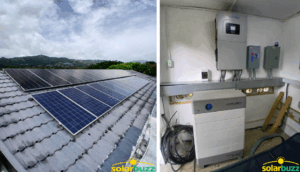
The electricity bill graph below shows the system performing as designed, powering daily EV charging and household needs, and further proving that going green the right way enables seamless integration with modern living.
Case in Point: Client with Remote-Work Office and EV Charging Needs
Another of our residential clients sought resilience against power outages and the flexibility to work from home while charging his EV. 

After analyzing his profile, we designed and installed a 14.72kW LFP battery system for his home.
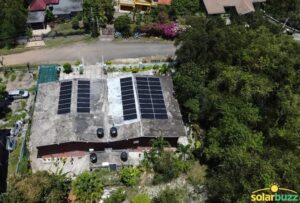
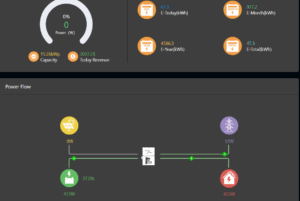
Since April 2025, he has enjoyed free daytime EV charging, uninterrupted productivity, and an 87% energy offset, making sustainability both practical and progressive.

Smart Systems for Smart Green Financing

When solar systems are designed using full load profiles, projected savings align with real performance. This makes them not only reliable but also ideal for financing.

At SolarBuzz, our data-engineered approach guarantees systems that support loan repayment schedules, replacing electricity bills with predictable loan obligations thus giving clients peace of mind.

Case in Point: Smart Energy Financing
One of our clients came to SolarBuzz with a clear goal: to cut his electricity bills as much as possible while securing financing through one of our banking partners.

For this client, achieving maximum solar savings was essential to ensure that his monthly loan payments could be seamlessly covered by the energy cost reductions.

In May 2025, we designed and installed an 8.2kW lithium iron phosphate (LFP) battery-based system, tailored to his energy profile and projected to offset 84% of his grid usage.
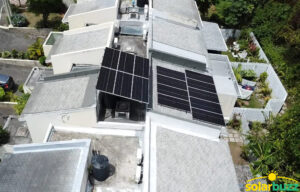
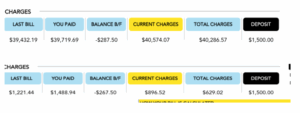
Already, our client is experiencing a drop in their bills from J$40,000 to J$630, exceeding our predictions!
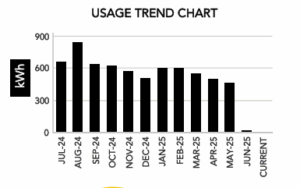
Similarly, another client leveraged the NHT’s Smart Energy Loan to finance with us a 4.36kW LFP battery system, projected to offset 90% of her total energy usage. 
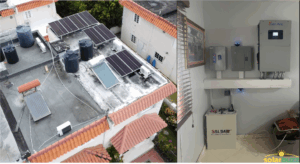
Since installation in February 2025, her system has performed consistently, with savings covering her loan obligations and serving as a true demonstration of how going green can be progressive when done right.
 

Progress That Empowers a Greener Future

When solar is engineered with precision, installed with integrity, and supported with monitoring, it becomes not just a system but a tool for measurable progress. 

Whether enabling businesses to scale, households to adopt EVs, or clients to finance sustainability with confidence, SolarBuzz ensures that going green is not just a choice but a smart, progressive investment.

At SolarBuzz, progress is always measurable, reliable, and empowering.

Solar progress, when done right, empowers you to save more, live better, and build a greener future.

If you wish to explore how we can design a data-engineered system tailored to your energy needs, please contact us today and start living your better, greener life!

Deidre Wedderburn is the Client Relations Manager at SolarBuzz, dedicated to building long-term partnerships and delivering a top-tier client experience (deidre@solarbuzzjamaica.com).


The U.S. International Trade Commission voted on Friday to proceed with an investigation into whether solar panels from India, Laos and Indonesia are stifling domestic manufacturing, a key procedural step that could result in tariffs on those imports.

WHY IT’S IMPORTANT

The unanimous decision by the three-member panel is a victory for domestic solar manufacturers who say Chinese companies with operations in those countries receive unfair government subsidies and are selling their products below the cost of production in the United States. U.S. producers are seeking to protect billions of dollars of investment in American factories.

KEY QUOTE

“Today’s ITC decision confirms what our petitions allege: U.S. solar manufacturers are being undercut and harmed by unfairly traded imports. Chinese-owned and other companies in Laos, Indonesia, and India are gaming the system with unfair practices that are gutting U.S. jobs and investment,” said Tim Brightbill, lead counsel to the Alliance for American Solar Manufacturing and Trade and partner at Wiley Rein LLP.

CONTEXT

The case was brought in July by the alliance, a coalition of U.S. solar manufacturers including First Solar (FSLR.O) and Hanwha’s (000880.KS)  Qcells.

Imports from India, Indonesia, and Laos surged to $1.6 billion last year, up from $289 million in 2022, according to the group. Many of these imports are believed to have shifted from countries already subject to U.S. tariffs on Southeast Asian solar exports.

WHAT’S NEXT

The U.S. Department of Commerce will continue investigations into the imports, with preliminary determinations on countervailing, or anti-subsidy, duties expected around Oct. 10 and on antidumping duties around Dec. 24.

Reuters

Prime Minister Dr Andrew Holness has called on Caribbean businesses to take the lead in transforming the region’s energy landscape, saying the time has come for bold investment in renewables to drive down costs and strengthen economic resilience.

His comments come amid confirmation that the Government of Jamaica will not renew the all-island licence of the Jamaica Public Service (JPS) when it expires in 2027, a move that signals a major shift in the country’s energy future.

Speaking at the CARICOM Private Sector Organisation (CPSO) breakfast at Sandals Montego Bay on Tuesday, Monday, Holness said the Caribbean is blessed with abundant renewable resources, from solar and wind to hydro and geothermal, and must leverage them to reduce the high cost of living.

“Every island is bathed with incredible solar energy,” he said. “Some of us have wind, some hydro, some geothermal. The question is, how can we cooperate to use it beneficially for all?”

He pointed to hydrogen as a potential game-changer, referencing discussions with European partners interested in sourcing clean hydrogen from the Caribbean, should the region be able to convert its renewable energy at scale.

“If we can convert our solar and wind into hydrogen, there is a huge market we could supply endlessly,” Holness said. “I am throwing that out to the business community. We need you to apply greater innovation in the energy sector.”

Jamaica’s own decision to end the JPS monopoly has reenergized the conversation on energy independence and competition. With the current agreement ending in 2027, the government now has an opportunity to open the energy sector to new players, including regional and international investors in renewable infrastructure.

Holness did not directly address the JPS decision in his speech, but his remarks on innovation, regional collaboration, and de-risking frameworks for green energy investment struck a clear tone of urgency.

“Most of us are struggling with the overarching cost of living. Energy is a big part of that,” he said. “Government must provide the regulatory and de-risking support, but the private sector must seize the economic opportunity.”

Energy costs remain among the highest operational burdens for Caribbean businesses and households, affecting everything from food prices to digital services.

He also framed energy security as part of a broader national security strategy, protecting not just electricity access, but economic and cyber infrastructure. “Security is not just violence. It is the security of our telecommunications, our shipping and logistics, our financial systems. Energy underpins all of it.”

Jamaica Gleaner

Solar Buzz Jamaica commends the Government’s recent announcements on the non-renewal of the current JPS licence and its renewed emphasis on expanding renewables to lower electricity costs. These measures echo proposals that industry bodies – including the Jamaica Renewable Energy Association (JREA) for over a decade and the recently formed JMEA Energy Committee – have advanced. 

While the renewed focus is welcome, the real measure of success will be in how swiftly and effectively the Government addresses the practical hurdles that have slowed our energy transition.

Government Announcements

JPS Licence Renewal
On July 1st 2025, Minister Daryl Vaz confirmed that Jamaica Public Service’s all-island licence will not be renewed under its current terms when it expires on July 8th 2027.

Private-Sector Leadership
At the CARICOM summit days later, Prime Minister Andrew Holness encouraged businesses to invest boldly in renewables, highlighting their role in lowering bills and building resilience.

Net-Billing: A Critical Bottleneck

Distributed rooftop solar has enormous potential to reduce system demand, stabilize the grid, and deliver low-cost energy to all Jamaicans. 

Yet the Net-Billing framework remains encumbered by:

  • Complex Application Requirements — multiple technical reviews and declarations that can feel duplicative.

  • Substantial Up-Front Fees — including a J$19,000 non-refundable processing charge.

  • Prolonged Approval Timelines — often stretching weeks or months beyond statutory targets.

These procedural barriers deter many prospective applicants and slow the very renewable deployment the Government now champions.

Residential Tax Breaks: Unintended Consequences

In March 2025, MSET imposed the Net-Billing licence requirement for homeowners applying for residential renewables tax credits just days before the  April 1st 2025 deadline. The last-minute rule change stipulated that only those with approved Net-Billing licences would qualify – a requirement that was not initially imposed when the incentive was announced with great fanfare. 

Although Minister Vaz granted a limited extension until April 1st 2025, this effectively means all homeowners with solar systems now need a Net-Billing licence or risk operating illegally. This is not only impractical and, at this point, impossible to govern, but the Electricity Act itself states that homeowners who self-generate power from solar, with no intention of selling back, are exempt from needing a Net-Billing licence.

Recommendations for Practical Progress

To convert policy intent into real-world impact, we urge the Government to:

  1. Set and Enforce Clear Timelines
    Institute a statutory 10-business-day window for Net-Billing licence decisions, with automatic escalation if unmet.

  2. Simplify Documentation
    Review and eliminate overlapping technical or financial declarations to streamline the customer experience.

  3. Stabilize Incentive Rules
    Publish any changes to tax-credit eligibility at least six months before they take effect, ensuring homeowners can plan with certainty – and clarifying that self-generating systems with batteries do not require a Net-Billing licence.

Engage Stakeholders Continuously
Convene regular working groups with industry, regulators, and consumer representatives to monitor progress and troubleshoot emerging issues – rather than announcing new policies that do not sync with the Vision 2030 policy or the Government’s renewed focus on high energy costs.

Solar Buzz Jamaica stands ready to partner with MSET, the Office of Utilities Regulation, Tax Administration of Jamaica and other stakeholders to translate today’s announcements into tomorrow’s clean-energy achievements. 

With targeted adjustments to Net-Billing procedures and tax-incentive clarity, we can accelerate the deployment of distributed rooftop solar across the island – not just large, tendered grid installations – bringing lower bills, greater job creation, and enhanced resilience for all Jamaicans, especially at the residential level.


Jason Robinson
Chief Executive Officer
Solar Buzz Jamaica