Graphical representation of an under construction nuclear power plant. Amb Byron Blake writes: Positioned as an apt solution for a small island nation, SMRs are presented as a ‘burgeoning technology’” But, that burgeoning is all ‘on paper’, as it
Graphical representation of an under construction nuclear power plant. Amb Byron Blake writes: Positioned as an apt solution for a small island nation, SMRs are presented as a ‘burgeoning technology’” But, that burgeoning is all ‘on paper’, as it is still at the design stage.

In an article published in the Sunday Gleaner of July 30, titled ‘The Potential of Nuclear Energy as Part of the Future Energy Mix in Jamaica’, Oshane Hamilton explored the viability of integrating nuclear energy into Jamaica’s energy landscape. While his exposition on this nuclear prospect may be persuasive at first glance, a more critical evaluation is warranted.

Hamilton’s central argument for nuclear energy in Jamaica is predicated on the promise of Small Modular Reactors (SMRs), an emerging design stage technology. Approximately 85 per cent of the article is dedicated to extolling the merits of nuclear power as a low-greenhouse-gas-emissions, highly available energy source, and emphasising the advantages of SMRs over conventional nuclear power plants.

Positioned as an apt solution for a small island nation, SMRs are presented as a “burgeoning technology”. But, that burgeoning is all “on paper”, as it is still at the design stage. In that regard, it is important to note Hamilton’s concession in his article’s closing lines that the deployment and validation of SMRs are yet to be realised.

FALLS SHORT

One key advantage highlighted by Hamilton is the small spatial footprint of SMRs. However, the article falls short of clarifying the required number of units to establish a substantial power-generating facility. Procuring upwards of 35 acres of suitable, flat, remote, and uninhabited land, and possibly several pieces, in Jamaica, could be a formidable challenge, given the island’s limited available space and topography.

The article seems to dismiss concerns about nuclear plant safety by arguing that SMRs are safer than conventional nuclear plants, which, in turn, are supposedly safer than alternative energy sources. But, to be safer than the alternative does not make a technology safe. Further, this perspective sidesteps the perpetual challenge of nuclear waste disposal and management, radiation hazards, and the long-term implications. One significant apprehension in Jamaica and the Caribbean pertains to nuclear material usage and the required safe disposal of waste. Considering the region’s high dependence on tourism and the Caribbean Sea’s extensive traffic, coupled with the presence of geographical parts of nuclear-armed states, a nuclear-free stance has been advocated and rigorously pursued.

DEFICIENCY

We do well to remind ourselves that, while illogical, parts of the US, France, and UK are within the Caribbean. These realities have underpinned historical efforts to establish the Caribbean as a nuclear-free zone and the region’s consistent protests against the trans-shipment of nuclear waste through the Caribbean Sea. The unbroken collaboration within the Caribbean underlines the importance of thorough consultation before any action to alter this stance.

A notable deficiency in Hamilton’s article lies in its treatment of renewable energy sources. In the brief segment addressing renewables, he acknowledges Jamaica’s abundant renewable resources, which could substantially diminish reliance on costly, environmentally detrimental fossil fuels. However, the subsequent section titled ‘Problems with Renewable Energy’ focuses disproportionately on the limitations of solar and wind power. While it is true that these sources are subject to natural variability, entail high initial costs, and require extensive land, a comparative analysis should encompass both financial and economic costs and benefits. It is crucial to recognise that the costs of these technologies have been falling, economic costs escalate with global climate change, and many of the financial costs are localised, thus reducing foreign currency demands. Moreover, innovative placement of wind turbines at sea or in remote areas, as well as efficient land use in solar project spaces, have demonstrably enhanced their overall viability.

Curiously, Hamilton’s article omits any mention of biomass-based energy, which holds, perhaps, the greatest potential in the Caribbean’s humid tropical environment. Biomass offers the added advantage of capturing greenhouse gases from the atmosphere and sequestering them, while serving numerous other agricultural, economic, and environmental purposes. It is, for example, a means of enhancing the rediscovered importance of agriculture in national development.

In conclusion, the article has a discernible inclination to validate a preconceived notion. The exploration moved quickly to the advancement of viability. The rigour in interrogating an unproven technology and the consequent cautions are absent. The case of potential alternatives, in particular the alternative for which Jamaica is best endowed, is superficial. These shortcomings notwithstanding, Oshane Hamilton’s piece could serve as a valuable catalyst for serious deliberation on a subject with far-reaching policy implications for both Jamaica and the wider Caribbean. It is hoped that the opportunity will spark substantial discourse among stakeholders and policymakers before commitments are given and investments made which will bind Jamaican citizens and taxpayers.


Byron Blake is former assistant secretary general of the Caribbean Community (CARICOM), based in Kingston, Jamaica. 

Gleaner

Earlier in January, Finance Minister Dr Nigel Clarke announced that the Jamaican Government is removing the duty on European vehicles imported into the country.

This action stemmed from the economic partnership agreement (EPA) signed between Jamaica and the European Union (EU) back in 2008. The EPA, a free trade agreement aimed at fostering trade and investment between the two regions, has paved the way for a surge in accessibility and competition within Jamaica’s automotive market.

Specifically, for Chapter 87 goods, which include motor vehicles, duty breakdowns have been established to facilitate imports. For instance, motor vehicles with engine capacities exceeding 1000cc but not exceeding 1500cc, imported by individuals using gasoline, which previously attracted an import duty of 20 per cent now attract a 0 per cent import duty rate under the EPAs, while the General Consumption Tax (GCT) remains at 15 per cent and the Special Consumption Tax on Fuel (SCTA) at 20 per cent.

In the case of electric vehicles imported by individuals, with an electric motor for propulsion and manufactured within the past three years, a preferential import duty rate of 0 per cent is applied. Similarly, the GCT remains at 0 per cent, exempted under the GCT Act, while the SCTA stands at 0.5 per cent.

The Jamaica Customs Agency (JCA) has published a guide on the requirements to qualify for duty exemption, which can be found on its website:

  • The vehicles must be manufactured or made in any of the EU member states or the United Kingdom.
  • The vehicles must meet the requisite origin criteria.
  • Vehicles with a date of report prior to January 1, 2023, are not eligible to access preferential rates of 0 per cent under the EPAs.
  • A valid, original Movement Certificate EUR.1 must be submitted with your import declaration or a declaration given by the exporter on an invoice, a delivery note, or any other commercial document which describes the products concerned in sufficient detail to enable them to be identified.
  • Vehicles must be directly consigned from the exporting EU/UK member state to Jamaica.

Speaking with Our Today, Lynvalle Hamilton, president of Jamaica Used Car Dealers Association (JUCDA), said, “While there are some dealers who are seeing benefits from the duty changes, not a wide selection of the used car dealers opt to import European vehicles due to the high prices coming out of the UK, the better option for them is usually vehicles coming out of Japan.”

Christina Taylor, group marketing manager at ATL Automotive Group confirmed with Our Today, that ATL has not yet obtained units that benefit from the duty removal.

Taylor was mum, however, as to when these new vehicles would arrive in the country.

While she was unable to reveal specific sales information, she confirmed that among motor vehicles where the removal of duty under the EPA applies, the savings will be passed on to customers.

OUR Today

THE EDITOR, Madam:

As a young university graduate with a degree in physics and applied physics, I was an ardent advocate of nuclear power in Jamaica. I argued that the use of nuclear power was necessary to generate abundant, cheap energy to allow Jamaica to develop manufacturing industries such as the production of aluminium and other finished goods, providing much-needed jobs and economic growth. At the same time, I dismissed cons such as environmental pollution and safety issues as being irrelevant and of secondary concern.

With advancing years and hopefully a little more wisdom, I have come to realise that we have an obligation to pass our only planet on to our descendants in a condition that is no worse than we found it.

The recent announcements by the prime minister and Minister Vaz that Jamaica is planning to add nuclear power generation in the form of small nuclear reactors to our energy mix, leaves me with grave concerns about the advice they are receiving.

As Dr Dennis Minott has said in several articles in your newspaper, there are a number of issues that need to be carefully considered before making such a decision. Among them are:

1. Although the manufacturers of these plants promise that they will take them back for disposal when they reach the end of their useful life, what guarantee do we have that the company will still be around to fulfil its obligation when the 40-50 year expected lifespan expires?


2. Even if the company is still in business, changes in government regulations in their home country may well bar them from shipping the unit or its disassembled components into their country. The radioactive waste may then find its way into poor third countries in exchange for a pittance paid to corrupt politicians, or simply be dumped into the ocean.

3. Although some nuclear power plants use air cooling, most such plants, including small modular reactors (SMRs), use significant amounts of water for cooling and for the production of steam to generate electricity. This water can be held in either a closed-loop or a ‘once-through’ system. The actual amount of water consumed will vary depending on the technology being used and may fall as the technology improves, but a reasonable estimate for an SMR generating 300 MW will typically range between two to 14 million gallons per day for the primary coolant (used to transfer heat away from the fuel rods), plus an additional eight to 80 million gallons per day for the secondary coolant (used to transfer heat from the primary coolant to the steam-generation system, where the actual electricity is produced). In total, we are looking at anywhere from 10-94 million gallons of water consumed per day, depending on the plant design and whether the system is open or closed-loop.

4. Even more concerning, and a fact that is often glossed over by advocates, is that ALL nuclear reactors produce radioactive coolant (usually water) as a by-product of their operation. By design, coolant comes into contact with the reactor core where the uranium fuel rods are contained. As the fuel undergoes fission, radioactive isotopes are generated, some of which can dissolve or become suspended in the coolant. This radioactive coolant is treated to reduce the radioactivity as much as is possible with current technology, but it is impossible to remove it entirely. The radioactive coolant has to be stored somewhere – usually in some sort of storage pond. In a country that sits on a major fault zone, where a high-magnitude earthquake is a matter of ‘when’ NOT ‘if’, a pond full of radioactive water/coolant represents a potential environmental disaster. If you have doubts about this, consider the repeated discharge of polluted industrial effluent into the Rio Cobre.

METHODS OF DISPOSAL

5. Returning to the issue of disposing of the nuclear plant at the end of its useful life, the most common methods are: a) decommissioning and dismantling, b) entombment (encasing it in an element such as lead), and c) deep geological repository (disposing of the radioactive components by dumping them in a salt formation or deep rock formation). Given Jamaica’s small land area and widespread porous limestone geology, options b) and c) are impractical, which leaves us with option a) which involves removing all radioactive materials, decontaminating the site, and demolishing the facility. The radioactive waste generated during this process is packaged and stored in specialised containers for long-term storage or disposal. It is obvious that to minimise transmission costs and losses, the SMR location can’t be too remote from where the power is to be used, which means that in reality, this demolished, still-radioactive site will be left sitting within a few miles of major industrial and/or residential centres. It is important to note that EVERY gram of radioactive waste generated since the first nuclear power plant was built in 1954, is still sitting somewhere out there emitting radiation!

We should ask ourselves why, prior to the Ukraine-Russia war, many European and Asian countries were planning to mothball their very expensive nuclear power plants long before they had become obsolete.

Assuming that we find a suitable location and an adequate water supply and that the plant does become a reality, I very much doubt that future generations will thank us for the legacy we plan to leave for them.

Gleaner


MINOTT… we are not doing a good job at dealing with waste at all, let alone with nuclear waste which is thousands and millions of times more dangerous.

EXPONENTIAL start-up costs, qualified employees, proper waste disposal and site selection are being cited as factors for Jamaica’s shortfall to be able to successfully establish a nuclear energy facility on the island.

The concerns were raised by Dr Dennis Minott, a scientist trained in applied nuclear physics, with a PhD in physics and undergraduate training in engineering, who has described announcements by the Government to introduce nuclear energy in the renewable energy mix as delusive.

“The cost of small nuclei is running at about US$8 million per megawatt. Just the capital cost. And for Jamaica, if we were even to have a 10-megawatt plant let alone a 100-megawatt plant that would be US$800 million of installation cost, let alone the cost of personnel, the cost of infrastructure, the need for clear space and the need to be extremely military,” Dr Minott revealed to the Jamaica Observer in an interview.

In a recent sectoral debate presentation in Parliament, Minister of Science, Energy and Technology Daryl Vaz said if Jamaica does not join the rest of the world in pursuit of building its own nuclear energy capabilities, the country will be left behind. However, the renewable energy specialist says several things need to be in place before such a move could even be considered, and Jamaica’s economic position already put it at a disadvantage.

He explained that for such transformation to take place, a rigorous evaluation of what the aim is will be needed. For a nuclear plant to operate effectively, he says the trained human capital is paramount and it would require to have on stream, all the time, one or two nuclear physicists available 24/7 and these trained employees will need to be properly compensated.

“It cost CAN$251,000, US$190,000 (plus) per annum to even get a low-grade physicist to work full time at the boring, but important job of supervising a nuclear power reactor. Then you need engineers, they come in at roughly the same costs, then you have got to have operators, they come in at about US$90,000 plus per annum,” added Dr Minott.

He reiterated that the country has no experienced civilian engineers, physicists, operators or fire personnel in dealing with nuclear energy. For the most part, the human capital that is available and is knowledgeable about some nuclear science and technology resides at the University of the West Indies, Mona, in the International Centre for Environmental and Nuclear Sciences (ICENS). But, ICENS only operates a small nuclear reactor, which is slow and small-scale and Dr Minott says it is a misrepresentation of what a nuclear facility is.

“It [ICENS] has nothing to do with this [nuclear energy] at all. It is blatantly untrue to say that we’ve had 40 years of experience with nuclear power, we have not, and we have no experience whatsoever. We may have one or two people trained in nuclear power like myself, but nobody based on anything in Jamaica has been trained in Jamaica to handle nuclear matters,” he said.

But even with trained members operating in a nuclear facility, proper disposal of nuclear waste is another concern.

“We are not doing a good job at dealing with waste at all, let alone with nuclear waste which is thousands and millions of times more dangerous,” he said discerningly.

In pointing to the country’s already troubled disposal practices, including from medical waste which has been piling up, Dr Minott said those waste could possibly include radionuclides from nuclear medicine practice. He believes if medical waste is not being disposed of properly now, the same will follow suit with nuclear waste.

“Have no doubt that the medical doctors who must have administered those nuclear medicines knew that these were extremely hazardous materials but they are out there because whoever is disposing of them is not incinerating them,” said Dr Minott with serious concern.

He says that medical nuclear waste is likely to stay radioactive for three or four months, while nuclear waste has far longer-lasting radioactivity. He explained that even if nuclear waste is disposed of in deep salt mines some 500 to 600 metres or more below the earth’s surface or in mountains, they are still radiating. As such, it’s just a matter of putting them out of direct reach from people, and he’s of the view that it’s highly unlikely nuclear waste generated in Jamaica will be dumped elsewhere.

He, however, admitted that it is possible to minimise the risks against alpha particles, and beta particles because they can be contained. But gamma radiation, which is electromagnetic radiation, cannot be contained effectively without adequate shielding and less frequent exposure.

“Workers cannot be continuously going five days a week or seven days a week, spending five hours per day, on a reactor, and not come away hurt, and I’m not talking about nuclear accidents, I’m just talking about normal operations,” he said.

He added that the narrative or assumption that Jamaica has an insufficiency of power is false and a false solution is being pushed. He says the issue of grid stability is not only dependent on the availability of power.

“Jamaica doesn’t have an ideal grid but it’s not unstable. JPS doesn’t necessarily run an unstable utility. The problem is we have failed to invest in infrastructure, the distribution lines as well as the big transmissions lines. We have failed to invest in the kinds of consumption devices that we ought to, and not just invest, we do not maintain them as well as we should. We do a bad job at it,” said Dr Minott.

He further added that if Jamaica were to get and concentrate on getting power properly connected to the electricity grid, then it would have stability because the instability that Jamaica endures is not caused by lack of power.

If all these were to be in place, though an advantage to pursue the creation of its own nuclear facility, Dr Minott reminded of Jamaica’s geographical position on the tectonic plates which poses a major risk of a nuclear accident due to earthquakes.

“Even an earthquake that is near the Jamaican soil, let alone one that hits and moves two tectonic plates in the way we know they can shake and I don’t know of any nuclear plant that’s built to withstand that,” he added.

And based on Jamaica’s small size, he says it’s a terrible idea to build a nuclear plant in Jamaica, explaining that large reactors are only appropriate for places with enough space. The Business Observer asked Dr Minott, should a nuclear facility be built in Jamaica, where would be a good location? His response was “The part of Jamaica that fits on Antarctica.”

Jamaica Observer 

Local scientist warns Caribbean leaders about building nuclear power plants

Jamaican scientist Dr Dennis Minott has issued an appeal to Caribbean governments to exercise caution on the matter of erecting inland or near-shore mini nuclear fusion power plants, saying that any such venture could pose serious risk to lives and the natural environment.

Dr Minott, who has a PhD in physics, postgraduate training in applied nuclear physics, and undergraduate training in engineering, made the appeal in a letter to the Jamaica Observer over the weekend in response to a comment by Prime Minister Andrew Holness at the opening ceremony of Expo Jamaica 2023 on April 27.

Holness had said that the Government was looking at introducing new energy sources that will make power generation in Jamaica more reliable, available, and affordable.

“We are currently doing a new integrated resource plan to make sure that when we do introduce more green energy, up to 50 per cent, that the entire grid is stable, and that the capacity has been increased,” the Jamaica Information Service reported Holness as saying.

“So, we are looking at pumped hydro storage… looking at the Mahogany Vale project, which I announced as an important element in our energy mix. I have [also] met with the International Atomic Agency. Jamaica has to explore new technology in nuclear energy, small nuclear plants to generate energy in Jamaica, which will be cheaper, more stable, and more affordable,” he added, as he indicated that the Government is serious about insulating the economy from energy shocks and high energy prices.

These initiatives, Holness is reported as saying, may take a decade to happen, but the country, he argued, has been lagging for 40 years.

“Let us start doing things differently. Let us start looking at the big projects that are going to make the difference, and that is what we are investing in now, to create a new paradigm in energy in Jamaica,” the prime minister said.

Dr Minott did not name Holness in his letter; however, it was clear that he was including the Jamaican chief executive in his plea to Caribbean leaders.

Stating that he understands the importance of considering all available options when it comes to energy generation, Minott said that “it is crucial that we do not compromise safety and sustainability in the pursuit of cheaper or more efficient energy”.

“As you are well aware, the Caribbean is renowned for its beautiful beaches, diverse wildlife, and vibrant communities. It is essential that we prioritise the safety of our people, environment, and future generations when making decisions about energy generation,” Minott said.

“Given our geographies, it is almost impossible to locate any small nuclear fusion power plant that would be 35km or more clear of human, large-animal, or fish habitation on these islands. Moreover, nuclear wastes must be safely disposed of, and there is very limited availability of trained physicists and nuclear power engineers, let alone civilian nuclear power technicians. Therefore, it would be unwise to venture into nuclear energy without proper consideration of the long-term implications,” he argued.

He said the potential dangers of nuclear energy are well-documented, and “it would be irresponsible to put our people and environment at risk without proper consideration of the consequences”.

He reiterated his appeal to Caribbean leaders to prioritise the safety of the region’s people and environment when considering energy-generation options.

“There are many viable alternatives to nuclear energy that we can further explore, including renewable energy sources like solar, wind power, small, medium and mini-hydro, and farmed biomass. These options are safer, more sustainable, and less likely to cause harm to our communities,” Minott stated.

In 2022, the International Atomic Energy Agency (IAEA) launched a project to help Caribbean countries safely reap the benefits of nuclear technologies in medicine, industry, agriculture, and research.

The Regulatory Infrastructure Development Project opened on April 11 with a four-day workshop in Vienna, Austria, with some participants joining online. Government officials from 14 countries in the region, all at different stages in the development of their nuclear regulatory infrastructure, had the opportunity to hold bilateral sessions with IAEA experts to assess their needs, the agency stated in an online report.

Participants included experts from Antigua and Barbuda, The Bahamas, Barbados, Belize, Dominica, Grenada, Guyana, Jamaica, St Vincent and the Grenadines, St Kitts and Nevis, and Suriname.

Two years earlier, Jamaica officially launched its Hazardous Substances Regulatory Authority, becoming the first Caricom member state to establish an independent regulatory body to ensure safety and security in the operation of facilities involving ionising radiation and nuclear technology in the country, including the Caribbean’s only nuclear reactor — the 20kW SLOWPOKE research reactor, which is owned and operated by The University of the West Indies on its Mona Campus.

The reactor is primarily used for neutron activation analysis of trace elements in studies related to health, the environment and agriculture as well as in education and training.

Jamaica Observer

Gov’t exploring nuclear energy as part of National Energy Policy

Prime Minister Andrew Holness has signalled the intentions of the Government to integrate nuclear energy in the country’s energy mix.

Speaking at the opening ceremony of Expo Jamaica 2023 last week Thursday, April 28, 2023, the prime minster revealed that already he had spoken to the International Atomic Energy Agency (IAEA) — the world’s central intergovernmental forum for scientific and technical co-operation in the nuclear field — about using nuclear energy to generate electricity.

The move will form part of the Government of Jamaica’s National Energy Policy which, in part, aims to generate 50 per cent of electric energy from renewable sources by 2030. This, Holness said, will make the supply of electricity “more reliable, more available, and more affordable”.

“Jamaica has to explore new technology in [the form of] nuclear energy — small nuclear plants to generate in Jamaica — which is cheaper, more stable and more affordable,” he explained further.

“So the Jamaica Government is serious about insulating our economy [against] energy shocks and high energy prices,” the prime minister continued.

The move has been welcomed by president of the Jamaica Renewable Energy Association (JREA) Alex Hill, who informed Jamaica Observer that “nuclear cannot be written off as future energy source”. He added that though there are pros and cons, the energy source should be considered for integration into the country’s energy mix over the next five years.

Last October, Jamaican billionaire and chairman of Portland Holdings Michael Lee-Chin signed a memorandum of understanding with the Canadian Nuclear Laboratory (CNL) under which he will be promoting nuclear technology — through small modular reactors (SMRs) — as the means to decarbonise electricity production across the world. When asked by Business Observer if Jamaica will be targeted for SMRs, he responded, “Every country is a target, whether you are a large oil-producing nation, or Jamaica, there are demands for our services.”

Still vice-president of JREA Jason Robinson is of a completely different opinion to his colleague Hill, explaining that Jamaica is not ready “or will ever be ready” for such energy source.

“Jamaica is located in a hurricane and earthquake zone which puts us in extreme danger with out having to worry about a nuclear meltdown. Also Jamaica’s brand is a natural vibe not a one that fits well with nuclear energy. I think it would take a lot away from Brand Jamaica in terms of tourism as well,” he contended.

While Robinson notes the comments of Lee-Chin, and the backing he has received from Government, the JREA vice-president told Business Observer that there needs to be a much heavier debate before there is a push towards a nuclear facility in Jamaica.

“We all can remember Fukushima and Jamaica and the Caribbean cannot withstand that type of meltdown,” he added.

Hydroelectricity

In the meantime, Holness, pointing to an announcement he made in his budget presentation in March, said on Thursday that the Government of Jamaica of creating “a new Integrated Resource Plan [IRP]” that will facilitate the introduction of new energy sources to the energy mix and ensure that the grid is stable and has the capacity to respond to the growing demand for electricity.

Back in March, Holness informed Parliament that the draft of the IRP 2 was being presented to various stakeholders for discussion and feedback, and thereafter will be finalised and presented to the Cabinet for consideration and approval.

One of the energy sources the IRP 2 will explore is hydroelectricity from hydro storage pumps. In particular, he said the Government is pursuing the Mahogany Vale Project as a national priority and an important element in the energy mix. The Mahogany Vale Dam, located in St Thomas, was first proposed as a source of convert electricity from potable water supplied to the Kingston Metropolitan Area in 1967.

“These initiatives will not materialise in two years. It may take a decade to materialise but I want you to reflect on it: we have been lagging behind for 40 years. Let’s start doing things differently now, let’s start looking at the big picture to transform our country [and] let’s start looking at big projects that are going to make a difference,” Holness urged.

The introduction of new energy sources, the prime minister argued, will create a new paradigm in energy and “change the parameters that can reduce the cost of production, increase [businesses’] capacity, and ensure [businesses] can innovate integrate technology and compete effectively with the rest of the world”.

Jamaica Observer

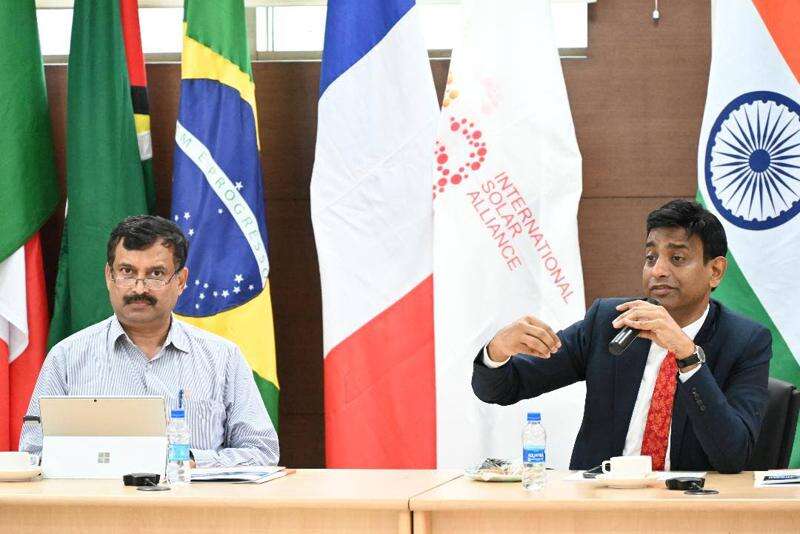
International Solar Alliance's (ISA) Chief of Operations Joshua Wycliffe (right) speaking recently at the organisation's office in Dehli, India. At left is ISA's Chief of the Project Implementation Unit Remesh Kumar Kuruppath.
International Solar Alliance’s (ISA) Chief of Operations Joshua Wycliffe (right) speaking recently at the organisation’s office in Dehli, India. At left is ISA’s Chief of the Project Implementation Unit Remesh Kumar Kuruppath.

DEHLI, India — International Solar Alliance (ISA), based in this populous Asian city, has expressed interest in furthering its work with the Jamaica Government after providing funding of US$50,000 to complete the Little Park Solar Pump Station in St Elizabeth last year.

According to ISA’s chief of the Project Implementation Unit Remesh Kumar Kuruppath, Jamaica is the first country to benefit from this type of developmental solarisation project from the organisation.

“Jamaica is our first project in the solarisation of an agricultural pumping system. It is a water pumping system that has been solarised, and this was commissioned sometime in September last year. This is the first demonstration project we have done with the country to solarise a water pumping system there, and we have a very close interaction with the Jamaica Government and team there, and they want us to do more,” Kuruppath told journalists from the Caribbean and Latin America now in India on a familiarisation tour organised by the Indian Government.

This addition to the Little Park Pump Station saw the National Irrigation Commission (NIC) obtaining a 30-kilowatt solar retrofit to the Little Park-F3 Solar Pump Station through which over 390 farmers in the rural parish were already benefiting from increased and reliable access to water.

The organisation’s Chief of Operations Joshua Wycliffe told the Jamaica Observer that ISA believes Jamaica’s next step is to solarise other key sectors.

“It has been an absolute delight working and partnering with Jamaica. One of the areas that we are now looking at is how we have solarised our hospital rooftops. We would love to do that to health-care [and] educational facilities in Jamaica. These are two demonstration projects that can be replicated across Jamaica next,” Wycliffe said.

Pointing to the negative implications on the global job market and economy, Wycliffe went on to note that the project commissioned at the Little Park Pump Station in St Elizabeth by NIC supports the push for a more sustainable agricultural sector. Furthermore, the chief of operations told the Sunday Observer that the onset of the novel coronavirus pandemic saw an undeniable increase in agriculture due to the loss of jobs, and that ISA played its part in providing solarisation.

“Now Jamaica, like most island states, would also have a lot to do with fishing and marine exports, so coastal ridges are areas that we can support in terms of solarising that industrial segment. Recently there were countries, and I suspect Jamaica would be no exception, where hundreds of thousands of jobs were lost during the pandemic so people went back to farming — and we were able to provide solarisation to sustain that,” Wycliffe explained.

He continued, “This saw that a new channel for exporting was created so what we have looked at is being able to provide sustainable agriculture through solarised power. So, remote villages and communities where they don’t have power grid support to run the irrigation pumps, solarised pumps are an answer. They provide support for people living below the poverty line, so these are two broad areas where we can support Jamaica in being able to further solarise and transition.”

In the meantime, Wycliffe told the Sunday Observer that the ISA is hoping to meet with delegates from Jamaica at its upcoming regional committee meeting in the summer.

“We have had a great working relationship with the Jamaican Government, and that has certainly helped us in putting in small demonstration projects. We are looking forward, eagerly, to the regional committee meeting that is coming up; we would like to further work with them,” he said.

ISA is an international organisation with 110 member and signatory countries. It works with governments to improve energy access and security worldwide, and promotes solar power as a sustainable way to transition to a carbon-neutral future.

To support those projects the organisation partners with multilateral development banks, development financial institutions, private and public sector organisations, civil society, and other international institutions to deploy cost-effective and transformational solutions through solar energy, especially in the least -eveloped countries and the small-island developing states.

Jamaica Observer

Vaz

Opposition spokesman on science, energy and technology, Phillip Paulwell has raised concerns that some customers of the Jamaica Power Service Company (JPS) have been bearing the burden of cost as other customers leave the grid to utilise alternate facilities.

“A significant number of large customers are utilising natural gas to generate their own electricity. There is one supplier of natural gas so far in Jamaica and it is my understanding that when that supplier and infrastructure was being created, the JPSCo customers are currently paying for that,” Paulwell said in a Joint Select Committee meeting on the Electricity Act on Wednesday, March 15.

But chief technical director of energy in the Ministry of Science, Energy and Technology, Brian Richardson, clarified that the fixed capital cost of LNG also included the infrastructure referred to by Paulwell. He told the meeting that the fixed cost is what pays for the electricity and that the infrastructure was built into the cost of the generation plant. He further outlined that the infrastructure is paid for by anyone who remains connected on the grid.

However, Paulwell insisted that large customers who are getting natural gas from that same facility should also pay, and the Ministry needs to ensure that this is so.

Minister of Science, Energy and Technology, Daryl Vaz agreed that this is something that needs to be addressed, telling members that he intends to have further discussions on this issue.

Paulwell

But committee member Fitz Jackson was not pleased with that response, and expressed his displeasure that the committee keeps having these fruitless discussions.

“It would appear in a very vivid way that there is no intention to implement that policy position, only to acknowledge it as a policy, but not to act on it. And therefore the comfort that consumers would have had, that they would be compensated for what they have paid for, by reduction or which other mechanisms that would have been chosen, but there would have been some benefit, and it is only the new users who are getting the benefit of their sacrifice,” he said.

Acknowledging the member’s frustration, Vaz said that this issue often takes the form of a private contractual arrangement between the LNG supplier and the customer. However, the minister committed to address the issue, telling the committee that he will give an update within 60-90 days.

IMPROVE TRANSPARENCY

The minister also reiterated his position that the country could not afford an unbundling of the electricity market. Pointing to statistics from the World Bank which stated that a country needs a system size of at least 3000 megawatts at peak demand, a power market trading value of over 1 billion dollars to justify investments in the needed energy trading platform and have at least 20 terawatt hours of annual sales, he said Jamaica’s grid is a little 600 megawatts at peak demand by comparison (and) has only three terawatt hours of sale per annum.

The minister also indicated that this change would be costly for Jamaican taxpayers who would now have to bear the financial costs related to the termination of JPS current licence and restructuring of the electricity legal and regulatory framework to accommodate an unbundled system.

“If Jamaica forces unbundling then the restructuring cost that will be borne by the JPS would either be recovered from the government of Jamaica or the remaining customers on the grid.”

Instead, he said his ministry will improve transparency in the process.

“With or without JPS, Jamaica’s small electricity market cannot support unbundling. The ministry will set up systems to hold itself accountable and to give a work plan with timelines and updates to the citizenry in order to demonstrate its progress as we chart the way forward,” he said.

And indicating that the process to review the Electricity Act 2015 will be expedited, Vaz outlined that increased focus will be placed on the replacement of existing generation capacity with renewables to achieve 50 per cent renewables by 2050 target.

“We’re at the opportune time right now to be able to do the appropriate step based on our understanding of the grid. And I think having renewables being the dominant procurement going forward should be the pathway that Jamaica goes on,” Richardson said, “Every time we delay we are causing our own issues as a country and our economic security is at risk as well.”

Gleaner

Deputy official for China's National People's Congress, Liu Hanyuan, is chairman of the Board of Directors of Tongwei Group and co-chairman of the China Photovoltaic Agricultural Industry Technology Innovation Strategic Alliance. Liu spoke with reporters during the Two Sessions on climate change issues on March 8, 2023.
Deputy official for China’s National People’s Congress, Liu Hanyuan, is chairman of the Board of Directors of Tongwei Group and co-chairman of the China Photovoltaic Agricultural Industry Technology Innovation Strategic Alliance. Liu spoke with reporters during the Two Sessions on climate change issues on March 8, 2023.

Chinese deputy official Liu Hanyuan said China’s is willing and ready to assist Caribbean regions with the transition to renewable energy, particularly solar, through collaboration and technological assistance.

Speaking with Loop News for the first session of the 14th National People’s Congress (NPC), Liu said because of the Caribbean’s sunny location solar is a good choice for alternative energy.

Liu said from the technical perspective it is possible to reduce the cost for solar energy, however in the Caribbean region photovoltaic (PV) systems are still being introduced. Another issue would be shipping, which contributes to higher costs.

He said however if there is enough demand this could help make solar more affordable.

“If there is the demand, the price would be cheaper and cost could be lower, and they could also enjoy the same prices as people in China.”

He added that there are no limitations with regard to the sharing of Chinese technology and skills in assisting the Caribbean region in the transition to solar energy.

“From the Chinese perspective of the government with regard to these enterprises, there are absolutely no limitations for the transmission of this technology into the Caribbean region. But we need two things, more demand and the new systems being established, which will help bring lower energy costs.”

He said however that once these systems are built the price of energy will be comparatively lower than fossil fuels.

He said it’s hoped that they can assist with the construction of more solar facilities to assist with the Caribbean region’s energy goals.

Liu, who is chairman of the Board of Directors of Tongwei Group and co-chairman of the China Photovoltaic Agricultural Industry Technology Innovation Strategic Alliance, said China’s green development strategy has clear goals for reducing C02 emissions, one of which is developing its solar energy production.

China is also open to developing and providing technological support for other countries in this regard via its Belt and Road Initiative (BRI).

In Trinidad and Tobago, sod has been turned for the construction of a solar park system at the Piarco International Airport, via a $12 million grant from the European Union’s Global Climate Change Alliance Plus (GCCA+) programme.

Plans are also underway for the construction of the country’s largest solar energy project to be developed and executed by a consortium between Lightsource bp, bp Alternative Energy Trinidad and Tobago and Shell Renewables Caribbean.

It is the first joint project between the three entities.

The 148MW total is split over two sites, Brechin Castle (122MWp) and Orange Grove (26MWp), the latter of which will see bp and Shell collaborate with the University of the West Indies. Construction is expected to begin in Q1 2023, and operations in Q3-4 2024.

The project came about in response to the Trinidadian government’s request for proposal (RFP), seeking projects to contribute to the country’s commitment to lower greenhouse gas emissions in the power sector by 15 per cent by 2030.

Loop

Outages during Christmas reflect poorly on utility forecasting and natural gas units. It’s past time for the states and their utilities to lead and not wait until the grid regulators Federal Energy Regulatory Commission and North American Electric Reliability Corporation conclude their joint investigation.

To ensure safety and reliability, utility leaders should pay consumers to reduce consumption, embrace distributed energy resources in their resource planning, and make interconnecting rooftop solar and residential storage easier.

The question is, however, will they?

Anticipating NERC’s response

FERC and NERC have announced a joint investigation into what happened in North Carolina during Winter Storm Elliot because of multiple outages during Christmas.

The economic and reliability regulators want to get in on regulation and standards after an event, but there is no focus or attention paid before. Maybe that’s just human tendency?

History has always told us, at least in the electric utility industry, that major regulations come after blackouts. The National Electric Reliability Council was formed after the 1965 blackout. Read about fascinating NERC history here (It’s only 177 pages!). NERC came out of regional councils such as Mid-Atlantic Area Coordination Group, which is now ReliabilityFirst.

The Council became a corporation —the North American Electric Reliability Corporation— after the Sep. 2003 blackout with the mandate to levy fines of up to $1 million per day if utilities violated reliability standards, including tree trimming regulations.

Incentivizing DERs before an event

Fast forward to Feb. 2021.

Did we learn anything from winter storm Uri in Texas? We have already forgotten that Texas went through a similar winter storm event a decade earlier, in 2011.

Yes, FERC and NERC jointly investigated and released a report back then. I am sure they will also release a report for Elliott, too. But the jury is still out on Uri’s lessons. A recent proposal in Texas to incentivize generators (not load) to ensure they show up during a grid emergency.

Look at what is happening right now in PJM

PJM just announced that it had more unit outages during the Christmas week than forecasted. If 23% of PJM’s total capacity was forced out, 87% was from natural gas and coal units. And we have executives from Duke Energy Carolinas apologizing for inconveniencing their customers during Christmas. These utilities and RTOs have not taken steps to incentivize demand response and distributed energy resources, yet they are the custodians of safety and reliability.

Why should they pay load to avoid blackouts? Because that’s how MISO avoided blackouts in Feb. 2021.

Utilities must speed up distributed resource interconnections via automation

Whenever the topic of distributed energy resources interconnection comes up, utilities always bring up the fact that they are responsible for the safety and reliability of the distribution grid. Never mind that those utilities have already studied these DER interconnections. They want to “screen” them again so that a solar project is not exporting more than it should when storage is added at the same site.

Solar interconnections can be severely limited on the distribution system due to capacity constraints that could be resolved without the cost and delay associated with major feeder upgrades. In some cases, voltage and current imbalance will limit the feeder capacity. This constraint exists even though capacity is available in other phases.

Companies like Switched Source offer a distribution automation solution, the Phase EQ, that will automatically balance the voltage and current to unlock the capacity of the feeder. In other cases, the ideal location to site a solar project may be served by a feeder at capacity; however, adjacent feeders have the capacity but are not tied together due to the risk of loop flows.

Switched Source also offers another distribution automation solution, the Tie Controller, that can enable adjacent feeders to be tied together and controls the power flow between them to balance the load on the feeders.

Utilities must embrace distribution automation solutions to identify feeders with phase imbalance issues or capacity constraints and deploy solutions to address the issues to enable more load and solar interconnections.

Utilities must reflect accurate modeling of distributed solar in resource plans

Whenever utilities have integrated resource plan (IRP) proceedings, renewable and environmental advocates must push the utilities to incorporate distributed solar in their future capacity expansion plans. It’s like pulling teeth.

The excuse utilities give for not including distributed solar in future resource plans is that they don’t have much capacity value compared to utility-scale solar or utility-scale natural gas plants.

But the recent Christmas event in PJM shows many more outages than forecasted on the system. Additionally, unanticipated outages led to capacity deficiencies in the New England region during Christmas. And the New England grid operator is levying non-performance penalties on non-performing units, but we won’t know who owns these units.

So why are the utilities and their regulators more focused on an antiquated integrated resource planning process that incentivizes more non-renewable generation and the transmission needed to interconnect, when we should be looking at more distributed options on the demand side?

To reduce the magnitude of a blackout or even the likelihood of entering into an emergency event, grid planners should be talking to policy professionals and educating them before it is too late. It is easy to think about policy during an emergency event. It is hard to think about the policy before an event.

It’s up to states to take action

Even after all these events in recent years and so many different slides and jazzy pictures from institutions like NOAA that show that multiple weather-related events are occurring more frequently, utilities are asking for rate recovery for generation and transmission but not interconnection of distributed resources and demand response compensation.

Policymakers and grid planners should gather once again in a workshop in each state and debate whether we are paying enough attention to demand and distributed resources and consumers generating their electricity.

Utilities should allow rooftop solar, residential batteries, and customer-sited storage solutions on the grid to avoid human loss during grid emergencies.

Renewable Energy World