
From the CEO’s Desk


A Shift in the Rationale for Solar

For many Jamaican households, the decision to invest in solar energy has moved well beyond environmental considerations, and is now increasingly a matter of financial prudence, resilience, and long-term stability.

Electricity costs remain among the most volatile components of household expenditure, while inflationary pressures and climate-related disruptions continue to underscore the importance of energy independence. For many families, electricity is now one of the largest and least predictable monthly expenses.

Against this backdrop, solar energy has become an increasingly rational investment for households looking to stabilise energy costs while strengthening their resilience in an uncertain environment.

The Government’s introduction of the Residential Photovoltaic (PV) Solar Tax Credit (RPSTC) in 2024 was therefore a welcome and important step. The incentive has the potential to accelerate distributed solar adoption and allow thousands of households to transform their homes into efficient, resilient, and economically productive assets. But as with many well-intentioned policies, the practical details of implementation matter.

Where Implementation Meets Opportunity

We appreciate Minister Vaz’s continued openness to engagement on policies that support Jamaica’s transition to renewable energy, including the temporary administrative waiver previously granted to facilitate residential solar adoption.

In recent weeks we have written to the Minister to respectfully request a review of the mandatory Net Billing Licence requirement currently associated with the tax credit application process.

Under the present framework, many homeowners applying for the solar tax credit must first obtain this licence even when their systems are designed primarily for self-consumption rather than exporting electricity to the grid.

At first glance, the requirement may appear administrative. In practice, however, it introduces costs and delays that risk weakening the incentive’s effectiveness.

The licensing process can take many months to complete, while the standard Government Electrical Regulatory (GER) Compliance Certificate – which confirms that a solar system has been safely installed and meets the required electrical standards – can typically be obtained within a matter of days. When this delay is compounded by the processing timelines associated with the portal for claiming the tax credit itself, many homeowners may wait a year or longer before realising the benefit of an incentive designed to accelerate solar adoption. 

The licensing process also introduces additional costs, compounding the upfront investment households are already making. These costs can be particularly difficult to absorb for middle-income families, precisely the demographic the incentive is best positioned to serve. For households where affordability is a genuine consideration, every friction point in the process matters.

For households considering a substantial investment in solar, both time and cost are crucial. A delayed and more expensive incentive weakens the economics of the investment and extends the system’s payback period.

What the Grid Never Sees

More fundamentally, the requirement risks applying an export-based regulatory framework to systems that are not designed to export electricity at all.

Most modern residential solar installations in Jamaica are configured primarily for self-consumption with battery storage. During the day, households draw electricity directly from their solar panels while simultaneously charging their battery systems. In the evenings and overnight, homes typically rely on that stored energy rather than the grid.

In this configuration, the utility grid functions largely as a backup supply, used mainly during periods of extended cloud cover or unusually high household demand. As a result, these systems are designed to minimise reliance on grid electricity, not to generate significant surplus energy for export.
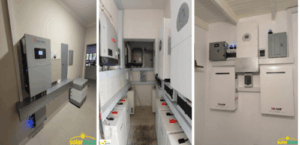
In practical terms, this means that many battery-based residential systems are structurally unlikely to produce meaningful excess electricity beyond the household’s own consumption needs. Applying a licensing framework designed for electricity exporters to these self-consumption systems therefore introduces regulatory complexity without addressing a genuine operational need.

A more proportionate approach would clearly distinguish between:

  • Systems designed to export electricity to the grid, for which a net billing licence is appropriate and necessary; and
  • Systems designed primarily for household self-consumption, for which a streamlined pathway – anchored in the GER Compliance Certificate – would be both sufficient and more administratively efficient.

Such clarity would not only simplify the process for homeowners, but would also strengthen confidence in the policy framework governing residential solar. We have respectfully advocated for precisely this distinction in our engagement with the Ministry, and we remain encouraged by the constructive dialogue to date.

When Policy and Finance Align

When incentives operate efficiently, solar investments produce faster returns. Shorter payback periods improve household cash-flow profiles and strengthen borrowers’ ability to service solar financing.

In practical terms, well-aligned policy can materially de-risk solar lending by improving borrower capacity and stabilising household energy expenses. For financial institutions evaluating solar loans, predictable cash flows and shorter payback timelines are not abstract benefits as they directly improve the credit profile of borrowers and help unlock broader access to financing for clean energy technologies.

The Bank of Jamaica’s caution that credit conditions may tighten further lends urgency to the need for a seamless and accessible incentive process for households seeking to finance solar adoption.

Administrative efficiency within incentive programs such as the RPSTC is not simply a regulatory matter. It directly influences the pace at which households are able to adopt solar, strengthen their long-term energy resilience, and confidently manage the financial commitment involved.

A Narrowing Window in Global Solar Pricing

Global solar pricing may soon face upward pressure following the scheduled removal of export tax rebates on photovoltaic products such as batteries, panels and inverters by the Chinese government.

Given Jamaica’s reliance on imported solar equipment, these shifts are expected to gradually translate into higher landed costs for distributors and homeowners, tighter inventory allocation and possibly shorter quotation validity periods. In practical terms, this means the window for securing systems at today’s pricing may narrow over the coming months.

Ensuring that the solar tax incentive operates smoothly and efficiently is therefore not merely beneficial but also time-sensitive. A streamlined process would allow more households to adopt solar while equipment pricing remains relatively favourable, helping them lock in lower energy costs for years to come.

Beyond Installation

At Solar Buzz, our advocacy on this issue is guided by a simple principle: when our clients and subscribers are willing to invest their own capital in strengthening their household’s energy resilience and in doing so, contribute to the country’s broader energy future, public policy should facilitate that decision rather than inadvertently complicate it.

The transition toward distributed renewable energy will not be driven by government policy alone. It will depend on the cumulative decisions of thousands of households choosing to invest in solar technologies. Ensuring that the incentive framework reflects the practical realities of that investment will help accelerate that transition for everyone.

The Path Forward

We remain committed to constructive engagement between policymakers, regulators and industry as Jamaica’s renewable energy framework continues to evolve toward outcomes that are economically sound, administratively efficient and supportive of homeowners.

At Solar Buzz, we will continue to advocate for our clients and for the homeowners helping to build Jamaica’s more resilient energy future.


Fossil fuel price surge after US-Israeli attacks on Iran prompts calls to end dependence on ‘volatile’ energy source.

The UK government must double down on its clean energy drive to protect bill payers from increasingly volatile fossil fuel markets in the wake of the US-Israel war on Iran, climate groups, academics and energy experts have warned.

Research published on Thursday shows that the last fossil fuel energy crisis, caused by the Russian invasion of Ukraine, cost the EU and the UK $1.8tn between 2022 and 2025, driving up bills and fuelling a devastating cost of living crisis.

The US-Israeli attacks on Iran, which started at the weekend, have resulted in fossil fuel prices surging again. Experts say it underscores the need for the UK to end its dependance on such an unstable energy source.

Bob Ward, from the Grantham Research Institute at the London School of Economics, warned the ongoing conflict in the Middle East and subsequent surge in oil and gas prices “could translate into significantly higher energy bills for British households and consumers”.

“The UK is vulnerable to the volatility of international fossil fuel markets, and the only way to protect ourselves from these price increases is by speeding up the transition to domestic supplies of clean energy, namely renewables and nuclear power.”

The UN’s climate chief, Simon Stiell, said the latest upheaval in the Middle East “shows yet again that fossil fuel dependence leaves economies, businesses, markets and people at the mercy of each new conflict or trade policy lurch.”.

He added: “There is a clear solution to this fossil fuel cost chaos – renewables are now cheaper, safer and faster-to-market, making them the obvious pathway to energy security and sovereignty.”

Research published on Thursday by the Transition Security Project showed that the 2022 energy shock had cost the UK and the EU $1.8tn and left governments increasingly dependent on imports of liquid natural gas from the US, giving Donald Trump a stranglehold over EU and UK energy supplies.

The study found the rising costs came through higher household and business energy bills and from the cost of government policies such as price caps, rebates and tax cuts, which aimed to softened the direct impact on consumers of the fossil fuel crisis.

Kevin Cashman, author of the report, said the 2022 energy crisis “presented a fork in the road for Europe – double down on volatile fossil fuel markets, or pivot to homegrown clean energy and greater security”.

“The failure to do the latter has left people on ordinary incomes paying the price for an irresponsible and shortsighted energy policy,” he said.

Khem Rogaly, co-director at the Transition Security Project, said European leaders had prioritised their relationship with the US over the needs of their citizens after the 2022 energy crisis. “Instead of clinging on to a broken transatlantic partnership, Europe needs to develop an independent foreign policy based on international solidarity, restraint and climate collaboration.”

Earlier this week, eight former energy ministers wrote an open letter to the UK prime minister, Keir Starmer, urging the government to reverse its ban on new oil and gas licences in the North Sea and give the green light to two new fields, Rosebank and Jackdaw.

But experts say such a move would do nothing to reduce energy bills, improve energy security, protect fossil fuel jobs in the long term or reduce the UK’s reliance on fossil fuel imports. It would also be a significant blow to efforts to fight the climate crisis and reduce emissions.

The energy secretary, Ed Miliband, said on Wednesday that the latest conflict in the Middle East was “yet another reminder that the only route to energy security and sovereignty for the UK is to get off our dependence on fossil fuel markets, whose prices we do not control, and onto clean homegrown power we do”.

He added: “The Tories and Reform have opposed our clean energy mission at every turn. They have learned nothing from their own failures during Russia’s invasion of Ukraine, which landed us with the biggest cost of living crisis in generations due to our exposure to fossil fuels. The North Sea will continue to play an important role in our energy mix for decades to come, but new exploration licences won’t take a penny off bills.”

Tessa Khan, the executive director of Uplift, said the “oil and gas industry, and its political cheerleaders, were peddling a fantasy”. She said new fields such as Rosebank would do nothing to protect UK households from the inevitable price shocks caused by war in the Middle East.

“Rosebank is an oilfield whose reserves, if developed, would be exported – like 80% of all UK oil. It contains minimal gas. In the best case, it would provide just one per cent of UK gas demand. Like all North Sea production, it would do nothing to lower our energy bills.”

Khan pointed out that even if the UK continued to develop new fields, it would still become almost entirely dependent on gas imports by 2050, due to the declining oil and gas reserves in the North Sea basin, leaving bill payers and businesses “hugely exposed to price shocks for decades to come. All this while the nation sits on some of the best wind resources in the world”.

She added: “This is not the first time we have seen the gas price soar off the back of conflict and it will not be the last. We need this government to urgently learn the lessons of the past five years – that the UK’s dependence on oil and gas is making us all poorer – and instead free us from fossil fuels by doubling down on renewables and upgrading homes.”

The Guardian

Australia’s energy regulator will cap key elements of electricity bills for the first time while introducing incentives to use power when solar generation is flooding the grid, as the Albanese government moves to ease political pressure over soaring household energy costs.

The reforms will be made through the Default Market Offer – the benchmark electricity price set by the Australian Energy Regulator for households and small businesses in NSW, South Australia and southeast Queensland.

The changes will cap individual tariff components such as daily supply charges and peak electricity rates, tightening a system that previously allowed retailers broad flexibility in how tariffs were structured provided the overall annual benchmark price was met.

The regulator had flagged the changes without specifics to the Default Market Offer.

The most eye-catching element of the reforms is the introduction of a new ‘Solar Sharer Offer’ – which will provide households with a daily window of free electricity in the middle of the day when solar power is abundant.

Under the proposal, retailers with more than 1000 customers will be required to make the opt-in tariff available, offering three hours of free electricity during daylight hours – between 11am and 2pm in NSW and southeast Queensland, and from noon to 3pm in South Australia.

The free electricity will be capped at roughly the amount of power used in a day by a five-person household, after which normal regulated tariffs will apply.

The policy is designed to encourage households to run energy-hungry appliances – such as washing machines, dishwashers or electric vehicle chargers – in the middle of the day when solar generation is flooding the grid and wholesale power prices are often at their lowest.

The changes come as electricity costs remain a politically charged issue after households endured sharp increases in power bills following the global energy shock triggered by Russia’s invasion of Ukraine in 2022.

Wholesale electricity prices surged as global gas and coal markets tightened, flowing through to retail power bills across Australia. The spike left a record number of households struggling to pay their electricity bills and forced governments to introduce a range of cost-of-living measures aimed at cushioning the blow for consumers.

The surge in electricity prices also became a significant contributor to Australia’s inflation spike, prompting repeated warnings from policymakers about the role energy costs were playing in pushing up household living expenses.

Against that backdrop, Labor has increasingly sought to point to retailer pricing behaviour as it tries to demonstrate action on energy bills.

Retailers, however, argue thebiggest driver of rising electricity costs is the expense of expanding networks and building new generation needed to support the government’s rapid shift toward renewable energy.

The AER says the latest reforms are designed to stop retailers shifting costs into particular parts of a power bill – such as sharply higher supply charges or expensive peak-time electricity rates – while still technically complying with the overall annual benchmark price.

Before the reforms, the Default Market Offer operated primarily as a cap on the total annual bill rather than the structure of the tariff itself. While the regulator set the benchmark price for a typical customer, retailers could decide how the individual charges – including supply fees and electricity usage rates – were arranged to reach that total.

The new measures form part of a broader redesign of the benchmark price following reforms announced by the federal government in late 2025 aimed at strengthening the Default Market Offer as a consumer safeguard while adapting the electricity system to Australia’s rapidly growing solar generation.

Alongside the tariff limits, the regulator will also publish two benchmark prices for households in each distribution zone for the first time – one based on a flat electricity rate and another based on time-of-use tariffs – giving consumers a clearer way to compare electricity plans as retailers increasingly charge different prices depending on when power is used.

The latest initiatives come as energy policymakers have increasingly focused on the challenge created by Australia’s rooftop solar boom. While solar power has helped push down electricity prices during daylight hours, demand surges in the evening as people return home and solar generation fades, putting pressure on the grid and driving the need for additional generation and network investment.

Shifting more electricity use into the middle of the day could help smooth those peaks and reduce the amount of expensive infrastructure needed to keep the system running.

The Default Market Offer itself is designed as a safety net for customers who do not shop around for better electricity deals, while also acting as the reference price against which retailers advertise discounts on market offers.

Despite its role as the benchmark price, relatively few customers remain on the standing offer, with fewer than 10 per cent of households and about 18 per cent of small businesses using it.

The regulator will release a draft determination next week before finalising the benchmark price in May following consultation with retailers, consumer groups and other stakeholders. The new price will take effect from July 1.

The Australian

The New Cost Reality

Jamaica confronts a sobering reality. The Bank of Jamaica (BOJ) has cautioned that inflationary pressures, intensified by Hurricane Melissa’s impact on agriculture, infrastructure, and energy supply chains, will persist, with headline inflation unlikely to return to the 4–6% target band until 2027.

Recent electricity bills have already reflected this strain, registering a 7% increase in December 2025 (for November consumption), driven by reliance on more costly fuel alternatives following disruptions to natural gas supplies and a sharp drop in overall sales.

Beyond these projected domestic pressures, global pricing shifts are set to take effect from April 2026 and will reshape the cost landscape for solar adoption.

Property as the Hedge

Against this backdrop, a more structural response is quietly asserting itself through the transformation of property from a passive holding into an active hedge against inflation. 

The BOJ’s warnings underscore the urgency of this shift. With inflation projected to remain elevated well into the medium term, and utility costs unlikely to ease meaningfully before 2027, Jamaicans face a prolonged period in which essential expenses will continue to erode disposable income and operating margins. 

The present environment underscores that resilience includes repositioning assets to absorb economic shock. When energy generation is embedded into a home or commercial building, the property itself becomes a stabilising mechanism. 

A solar-equipped asset delivers a measurable, recurring financial benefit by reducing exposure to rising electricity costs and, in some cases, eliminating it altogether. Over time, this predictability functions much like an inflation hedge, insulating cash flows, preserving purchasing power, and improving the long-term economics of the asset. 

The Household and Business Dividend

For families, this means greater disposable income for education, healthcare, or discretionary spending, alongside more predictable energy costs and a meaningful step towards economic resilience. 

For businesses, the implications extend beyond savings. Commercial clients contemplating expansion should incorporate solar as the foundational step. 

Lower and more stable energy costs free up capital that might otherwise be siphoned into overhead, enabling reinvestment in growth. Capital can be redeployed into staff investment, productivity enhancements, or expansion.

A solar-powered factory or office also enhances its value proposition to investors, creditors, and clients.  

In this context, incorporating solar at the point of business growth, whether during construction, renovation, or scale-up, is a strategic first step in protecting future profitability. The property now becomes not merely an energy source, but a strategic multiplier of value and profitability.

Banking Innovation as the Critical Link

This asset-based logic should resonate just as strongly within Jamaica’s financial sector and, by extension, our public policy. 

Banks and lenders have an opportunity, and arguably a responsibility, to modernise how they assess and finance energy infrastructure. The BOJ’s admonition that borrowing will remain costly lends particular urgency to innovative financing mechanisms for solar adoption.

A well-maintained solar system with competitive warranties and a reliable 15–25-year lifecycle constitutes a tangible, appreciating asset. 

Banks can leverage solar systems that are actively maintained, particularly those whose upkeep meets insurability criteria, to offer secured lending options where the installation itself serves as collateral. This materially lowers risk and creates scope for more competitive interest rates and terms, reflecting the reduced probability of performance failure or asset degradation.

Such an approach would also alleviate the barriers many borrowers face when attempting to leverage property equity for energy upgrades. 

“A well-maintained solar system is not merely equipment; it is bankable infrastructure.”

Financing frameworks that recognise the solar system itself as collateral, particularly when its upkeep is verifiable and insured, can simplify approval processes, reduce transaction costs, and accelerate solar adoption.

In doing so, banks can avoid the cumbersome and often discouraging equity-based lending models that slow decision-making and dampen client demand.

Secured financing where the solar installation itself serves as collateral,  democratizes access for middle-income families and small-to-medium enterprises, while aligning lending portfolios with resilient, future-proof investments.

Embedding solar financing into mortgage products, whether for new construction or existing property improvements, would mark a watershed moment. Homebuyers and property investors could access clean energy without a separate financing hurdle, thereby accelerating solar adoption. 

For developers and commercial landlords, integrated solar not only reduces operating costs, but enhances rental and resale valuations.

Commercial enterprises must factor energy autonomy into their core expansion playbooks to reduce utility overhead and create competitive headroom in pricing, investment, and growth.

The banking industry is called upon to innovate and craft solar-enabling products that are accessible, equitable, and aligned with long-term economic resilience.

Policy Must Reduce Barriers, Not Add Them

Complementing these private-sector innovations, we recommend that government incentives, particularly the residential solar tax credit (offering 30% of acquisition and installation costs, capped at credit of J$1.2 million for systems valued up to J$4 million for primary residences), be further reviewed and optimized to accelerate mainstream solar adoption.

The residential solar tax credit was conceived to stimulate solar adoption, yet its current structure could benefit from adjustments to enhance accessibility. 

For instance, the requirement for a net billing licence, with its associated costs and administrative steps, presents an upfront challenge that may deter some potential adopters, even for systems primarily intended for self-consumption.

For homeowners, the promise of a future credit is diluted by immediate cash outlays and procedural complexity.

There is also a practical precedent for how effective the incentive can be when designed to minimise barriers. One of our clients successfully completed the income tax application process under the residential solar tax incentive and received their benefit by way of a cash refund at a time when the net billing requirement had not yet been introduced.

In that instance, the only meaningful upfront cost was the Government Electrical Regulatory (GER) Certificate of Compliance, which made the process attractive, credible, and relatively seamless. The incentive functioned as it should, rewarding responsible investment while shortening the payback horizon and strengthening household resilience.

If solar energy is to be truly mainstreamed as a national resilience strategy, we suggest evolving incentive mechanisms accordingly. For example, considering a review of the net billing requirement for residential installations primarily intended for self-consumption could help improve adoption rates. 

Additionally, structuring the tax credit to facilitate refunds with reduced upfront costs would shorten payback periods, enhance returns, and make solar investment accessible to a wider cross-section of households.

For banks, such policy alignment would further de-risk solar lending by improving cash-flow profiles and strengthening borrower capacity. Homeowners would be better positioned to accelerate the transformation of their property into a stabilising asset capable of absorbing inflationary pressure rather than amplifying it.

“When incentives are accessible, they move from policy intention to lived outcome.”

Several of our clients whom we have assisted in submitting their applications are now awaiting their incentive, which will be issued either as a cash refund or as a tax credit, as applicable.

Our clients’ progress reinforces a central point, that when incentives are structured to reduce upfront costs and procedural requirements, they encourage solar adoption in both principle and practice.

Why Timing Now Matters

The impact of Hurricane Melissa on the standard of living cost is not the only factor urging immediate action by businesses and homeowners to rethink what their assets can do for them. 

China, the global epicenter of solar and battery manufacturing, is eliminating key export tax rebates for photovoltaic and battery products beginning April 1, 2026, with further phase-outs for batteries through January 1, 2027.

This reduction is poised to elevate wholesale and retail prices globally, which is significant as most Jamaican solar suppliers rely heavily on Chinese imports.

Solar systems procured now will likely prove more economical than those acquired in the coming quarters, as the absence of these rebates will force upward adjustments in procurement and resale costs. 

For Jamaican homeowners and entrepreneurs, this means that early action can avert higher asset costs down the line. Those considering solar must act now, before pricing shifts materially erode the cost advantages of installation.

In this transition, one persistent bill becomes the foundation for sustained prosperity, and properties become the quiet architects of resilience.

The antidote to Jamaica’s protracted inflationary challenge cannot be confined to incremental household austerity or episodic business cost-cutting. Jamaicans will have to be willing to proactively fortify the very assets that define household and commercial stability. 

Solar adoption, therefore, is best understood as an exercise in strategic asset optimisation that converts property into a productive instrument capable of stabilising cash flow, preserving purchasing power, and enhancing long-term value. 

BOJ’s inflation outlook, higher borrowing costs, utility volatility, and impending global price adjustments are not isolated developments. Together, they form a clear signal.

For stakeholders prepared to respond with innovation rather than inertia, they define a narrowing window to act decisively while the economics remain favourable.

For those considering adoption, SolarBuzz can provide a tailored quote and timeline while current pricing conditions remain favourable. Our team is available for a complimentary online consultation for your home or business.

Deidre Wedderburn is the Client Relations Manager at SolarBuzz, dedicated to building long-term partnerships and delivering top-tier client experience (deidre@solarbuzzjamaica.com). 

Applications to build battery storage drive boom as offshore wind projects given go-ahead jump sevenfold year on year

A record number of renewable energy projects were given the go-ahead in Great Britain in 2025, after planning approvals almost doubled year on year, according to an analysis.

The energy capacity of new battery, wind, and solar projects that received approval climbed to 45GW this year, 96% higher than in 2024, according to data from Cornwall Insight.

The boom was driven by applications to build new battery storage, which almost doubled to 28.6GW this year from 14.9GW in 2024. Planning approvals for offshore wind developments jumped more than sevenfold to 9.9GW from 1.3GW last year.

Planning approvals for battery, wind and solar power have risen by more than 400% over the past five years.

The energy secretary, Ed Miliband, said: “After years of delay and underinvestment, this government is keeping its promise to take back control of Britain’s energy with clean homegrown power.

“Every project we approve, every investment we make is about getting the country off the rollercoaster of fossil fuel markets, protecting households and lowering bills for good.”

The record-breaking surge in planning approvals signals real momentum in the UK’s energy transition, according to Robin Clarke, a senior analyst at Cornwall Insight, but many could still face delays starting up.

“On paper, the UK’s renewables pipeline has never looked stronger,” he said. “But approvals don’t generate electricity, and we urgently need to move from ambition to actual delivery of these projects. Too much capacity is still stuck in queues or waiting on grid upgrades. Grid bottlenecks remain one of the biggest risks to turning today’s approvals into tomorrow’s power.”

Although approvals have accelerated, the pace of projects starting up has lagged behind, largely as a result of long construction timelines and grid connection delays, according to Cornwall.

Many projects have been stuck in a “first come, first served” connections queue, but recent reforms to remove “zombie projects” from the queue and shift to a “first ready, first needed, first connected” approach is expected to clear some of the bottlenecks and quicken the pace of Britain’s renewable energy buildout.

Britain’s energy system operator pulled the plug on hundreds of electricity generation projects earlier this month to clear a huge backlog that had stopped many “shovel-ready” schemes from connecting to the power grid.

More than half of the energy projects in the queue will be removed to make way for about £40bn-worth of schemes considered the most likely to help meet the government’s goal to build a virtually zero-carbon power system by 2030.

Britain’s growing renewables industry may also have accelerated in 2025 as developers rush to get their projects over the line before tougher rules over which projects can connect to the grid, and upcoming local elections that could create uncertainty over future renewable energy planning policies.

Clarke said: “The recent grid connection reforms are a significant step forward, and should help clear some of the backlog, but they won’t solve everything. We need faster decisions, more investment in the grid, and real collaboration between government, regulators and industry. Without that, these record numbers risk becoming just another statistic.”

Cornwall added that the rapid expansion of renewable projects would also mean the UK must reinforce and build out its electricity grid at scale.

“The current infrastructure was never designed for such high volumes of intermittent generation and storage, so investment in grid flexibility, transmission upgrades, and smart technologies will be critical to ensure these projects can deliver power where and when it’s needed,” it said.

The Guardian

On the edge of the sleepy town of Figueruelas, a single, vast wind turbine spins around, casting its shadow over the buildings nearby.

It’s a reminder of the importance of renewable electricity in this windswept area of Aragón, in north-eastern Spain, whose plains are host to many of the country’s wind and solar energy farms.

Figueruela’s status as a symbol of Spain’s green transition has been further boosted recently, as work starts nearby on the construction of a vast factory that will produce batteries for electric vehicles.

Chinese firm CATL and the Netherlands-based Stellantis are investing a combined €4bn ($4.7bn; £3.5bn) in the facility. Yao Jing, China’s ambassador in Spain, described it as “one of the biggest Chinese investments Europe has ever seen”.

Luis Bertol Moreno, mayor of the town, says the area was a logical choice for the project.

“We’re in Aragón, where there’s wind all year round, there are lots of hours of sunshine, and we are surrounded by wind turbines and solar panels,” he says.

“Those [energy sources] will be crucial in generating electricity for the new factory, and I understand that was the key reason for building it here in Figueruelas.”

The factory can be seen as vindication of Spain’s energy model, which prioritises renewable sources. In 2017, renewables contributed just a third of Spain’s electricity production, but last year they represented 57%.

By 2030, the government wants them to contribute 81% of electricity output.

Earlier this year, Prime Minister Pedro Sánchez summarised his government’s approach as he delivered a riposte to US President Donald Trump’s pro-fossil fuel “Dig, baby, dig” slogan. “Green, baby, green,” said the Socialist, as he pointed to the benefits of renewable energy.

However, in recent months, Spain’s all-in commitment to renewables has come under scrutiny. This was in great part due to an 28 April blackout that left homes, businesses, government buildings, public transport, schools and universities in the dark across Spain and neighbouring Portugal for several hours.

With the government unable to offer a full explanation for the outage, the country’s energy mix became a fiercely-debated political issue. Alberto Núñez Feijóo, leader of the conservative opposition, accused the government of “fanaticism” in pursuing its green agenda, suggesting that an over-reliance on renewables might have caused the incident.

Feijóo and others on the right advocated a rethink of the national energy model.

The fact that, a week before the blackout, solar generation in mainland Spain registered a record 61.5% of the electricity mix has fuelled such claims.

Yet the government and national grid operator Red Eléctrica have both denied that the outage was linked to the preponderance of renewable energy sources in Spain.

“We have operated the system with higher renewable rates [previously] with no effect on the security of the system,” says Concha Sánchez, head of operations for Red Eléctrica. “Definitely it’s not a question of the rate of renewables at that moment.”

Ms Sánchez said the blackout was caused by a combination of issues, including an “unknown event” in the system moments before, which saw anomalous voltage oscillations.

However, Red Eléctrica and the government are still awaiting reports on the incident that they hope will determine the exact cause. A cyber-attack has repeatedly been ruled out.

Meanwhile, since April, Spain’s electricity mix has been modified somewhat, with greater reliance on natural gas, reinforcing the notion that the country is at an energy crossroads.

Spain’s nuclear industry, which currently contributes around 20% of national electricity, has been particularly vocal since the blackout, pushing back against government plans to close the country’s five nuclear plants between 2027 and 2035.

With many European countries undergoing a nuclear renaissance, the planned closures make Spain something of an outlier. The companies that own the Almaraz plant in south-western Spain, due to be the first to shut down, have requested a three-year extension to its life until 2030. That request is currently under consideration.

Ignacio Araluce, president of Foro Nuclear, an association that represents the industry, says Spain is the only country in the world that is scheduling the closure of nuclear plants that are in operation. He believes nuclear energy provides stability while being compatible with the green energy transition.

“It’s prudent to have a mix of renewables and nuclear energy,” he says.

Mr Araluce praises renewable sources because they only require natural elements to generate electricity, but points out that they are not able to operate around the clock or when weather is unfavourable.

“How can you produce energy in those hours when the renewables are not producing?” he asks. The answer, he added, is “with a source like nuclear, that is not producing CO2, that is producing all hours of the year”.

The political opposition is staunchly opposed to the nuclear shut-down. The far-right Vox, criticising what it saw as a lack of explanation by the government for the April blackout, recently described nuclear power as “a crucial source of stability”.

Ms Sánchez acknowledges that there is room for improvement for Spain’s electricity model, pointing to the Iberian peninsula’s relative isolation from the European grid compared to most of its EU neighbours. She also sees storage as an issue.

“While we have taken a good path when it comes to renewable installation, we cannot say the same regarding storage,” she says. “We need to foster storage installation.”

Spain’s political panorama adds an element of uncertainty to its energy future. The Socialist-led coalition has been mired in corruption scandals and its parliamentary majority appears to have collapsed in recent weeks, raising the possibility of a snap election in the coming months.

A right-wing government, which polls suggest would be the likely outcome, would almost certainly place less emphasis on renewables and advocate a partial return to more traditional energy sources.

But in the meantime, Spain’s renewable transition continues.

And for Figueruelas, in Aragón, that means not just cheap, clean energy, but investment. The town’s population, of just 1,000, is due to increase dramatically, with 2,000 Chinese workers scheduled to arrive to help build the new battery plant, which is expected to create up to 35,000 indirect jobs once it starts operating.

“These kinds of investments revitalise the area, they revitalise the construction sector, hostelry,” says local man Manuel Martín. “And the energy is free – it just depends on the sun and the wind.”

BBC

TOKYO, Dec 23 (Reuters) – Japan plans to provide 210 billion yen ($1.34 billion) to help companies that are using clean power to fund investments, in a push to boost demand for renewable energy and spur growth in regional areas, a government official said late on Monday.

The subsidies are designed to help the country, the world’s fifth-largest emitter of carbon dioxide, reach its clean energy targets and reduce its reliance on imported fossil fuels after facing setbacks on wind and solar projects.

The scheme will provide funds over five years starting in fiscal 2026, said Juntaro Shimizu, director of the Green Transformation (GX) policy group at the Ministry of Economy, Trade and Industry.

Companies that rely entirely on decarbonised electricity and contribute to regions where the power is generated will be eligible for subsidies covering up to half of their capital expenditure, he said. Data centre operators meeting the same criteria will also qualify.

The government plans to begin soliciting applications from eligible businesses next fiscal year.

Japan wants renewables to account for up to 50% of its electricity mix by fiscal 2040, with nuclear power supplying another 20%, up from 22.9% renewables and 8.5% nuclear in fiscal 2023.

Progress toward the renewable energy goal has slowed as offshore wind projects, seen as crucial to achieving the target, have faced surging costs, while large-scale solar farms have stalled due to local opposition.

The new support measures form part of Japan’s “GX 2040 vision,” a national strategy integrating decarbonisation and industrial policy approved by the Cabinet earlier this year, seeking to promote the energy transition and economic growth.

As part of the framework, the government will establish a “GX Strategy Region” system to create new industrial clusters in areas with decarbonised power sources.

Local governments and companies will jointly draw up plans, with the national government selecting regions and providing support through subsidies and regulatory reforms. Applications from local governments are expected to open later this fiscal year, Shimizu said.

Reuters

Keir Starmer prepares to miss key green target in effort to keep energy bills down

Ministers are considering dropping one of their central green pledges in an effort to keep energy bills down, sources have told the Guardian.

Government insiders say Keir Starmer is prepared to miss his own target of removing almost all fossil fuels from the UK’s electricity supply by 2030 if doing so proves much more expensive than building gas power instead.

The issue will come to a head within weeks as Ed Miliband, the energy secretary, decides how much renewable energy to commission for the next few years. Allies say Miliband is willing to buy less than experts say is needed to hit the 2030 target, if paying for them would push energy bills much higher than their current levels.

Concern is growing in Downing Street that the cost of living is fuelling the rise of Reform UK, which leads national polls and is predicted to take the Welsh Senedd seat of Caerphilly in a byelection this week.

One government insider said: “There is a choice about what price you’re willing to pay for the next [renewables] auction round, which is key to hitting 2030. If it comes to a choice between hitting the target and overpaying, or missing it and keeping costs down, we will miss it.”

Officials pointed to comments Miliband made last week, when he told an energy industry conference: “We won’t buy at any price. And if specific technologies aren’t competitive, we will look elsewhere. We will take the long-term decisions to secure the right amount of capacity at the right price for the country.”

Starmer committed to hitting the clean power target last year in his “plan for change”. The prime minister said at the time the plan would “make Britain a clean energy superpower and accelerate to net zero”.

Experts say that hitting the target would require Miliband to commission a record 8 gigawatts of new electricity generation at the current auction round. The government sets subsidy levels by asking renewable companies to bid and then commissioning whichever projects promise the cheapest clean energy.

The energy secretary is in talks with Rachel Reeves, the chancellor, about how much to spend on the commissioning round.

But energy industry insiders say high interest rates and the sheer amount of electricity that needs to be commissioned is likely to push prices beyond what it would cost to build the equivalent amount of gas power.

Dieter Helm, professor of economic policy at the University of Oxford, said Miliband was “deluded” if he thought he could bring down energy bills by pushing for clean power by 2030. “The reality is that net zero by 2030 is expensive and that by dashing flat-out towards it, the result will be even higher costs. The price is not coming down; it is going up.”

The state-owned energy system operator, NESO, which runs the electricity grid, recently warned: “With a short and shrinking window of time, pace must be the primary goal. However, this cannot come at the expense of public consent or excessive cost as that would mean the clean power objective would be self-defeating.”

 report published on Thursday by the Tony Blair Institute argues the government should drop the 2030 target altogether while sticking to the longer-term net zero commitment.

Tone Langengen, the report’s author, said: “Launched in the middle of the gas crisis and in a low-interest environment, Clean Power 2030 was right for its time, but circumstances have changed.”

The institute has been criticised for its founder’s links to the fossil fuel industry, but its reports are taken seriously in Downing Street, which is staffed by several of its former employees.

Some officials in Downing Street and the Treasury want the prime minister to publicly drop the 2030 target in a sign to both voters and the energy industry that he is not willing to let bills rise, having previously promised to bring them down by £300.

Starmer is resisting this, and is instead understood to be willing to simply miss the target rather than openly disown it. One government aide said: “The prime minister made this the centrepiece of one of his missions. He is not going to drop it now.”

Another insider said: “It would be really silly to amend the target publicly – even if we accept the higher risk it won’t be met.”

Green experts also warn that ditching the target – either quietly or publicly – would reduce business confidence.

Jess Ralston, an energy analyst at the Energy & Climate Intelligence Unit, said: “Renewables provided around half of our electricity last year, and we have the world’s second largest market for offshore wind. Drastic policy changes could jeopardise that investment and those jobs, like we have seen in the US.”

Allies of Miliband insist that even if he does not commission the full 8GW of power in January, there will be other ways to make sure the electricity grid is almost entirely carbon free by 2030. They include building more batteries and encouraging people to use less electricity at peak times in order to reduce the amount of new capacity that needs to be built.

However, industry insiders say the 2030 target would be almost unachievable without the extra renewable power they say needs to be commissioned in January. One said: “There are other ways to make the sums add up, but unless you get close to 8GW of new power in this round, you’re very unlikely to hit the 2030 target.”

A government spokesperson said: “The government is fully committed to delivering clean power by 2030 because it is how we deliver a system that can bring down bills for consumers.”

The Guardian

The U.S. International Trade Commission voted on Friday to proceed with an investigation into whether solar panels from India, Laos and Indonesia are stifling domestic manufacturing, a key procedural step that could result in tariffs on those imports.

WHY IT’S IMPORTANT

The unanimous decision by the three-member panel is a victory for domestic solar manufacturers who say Chinese companies with operations in those countries receive unfair government subsidies and are selling their products below the cost of production in the United States. U.S. producers are seeking to protect billions of dollars of investment in American factories.

KEY QUOTE

“Today’s ITC decision confirms what our petitions allege: U.S. solar manufacturers are being undercut and harmed by unfairly traded imports. Chinese-owned and other companies in Laos, Indonesia, and India are gaming the system with unfair practices that are gutting U.S. jobs and investment,” said Tim Brightbill, lead counsel to the Alliance for American Solar Manufacturing and Trade and partner at Wiley Rein LLP.

CONTEXT

The case was brought in July by the alliance, a coalition of U.S. solar manufacturers including First Solar (FSLR.O) and Hanwha’s (000880.KS)  Qcells.

Imports from India, Indonesia, and Laos surged to $1.6 billion last year, up from $289 million in 2022, according to the group. Many of these imports are believed to have shifted from countries already subject to U.S. tariffs on Southeast Asian solar exports.

WHAT’S NEXT

The U.S. Department of Commerce will continue investigations into the imports, with preliminary determinations on countervailing, or anti-subsidy, duties expected around Oct. 10 and on antidumping duties around Dec. 24.

Reuters

Transport secretary promises to make buying electric cars ‘easier and cheaper’ as £700m subsidy package prepared.

The transport secretary has promised to make it “easier and cheaper” to buy electric cars, as the government announces £63m worth of funding to help build charging infrastructure.

Heidi Alexander said on Sunday she wanted to make it more affordable to switch to electric vehicles as she announced new money for councils and other bodies to spend on facilities to charge cars.

She announced £63m worth of funding for EV charging, with officials also finalising plans for a £700m package of subsidies to bring down the cost of buying a new electric car.

The money still falls short of the £950m pledged by the Conservatives for motorway charging points, however, which the Labour government scrapped last month, accusing the previous government of having failed to set aside funding for it.

UK-made EVs are expected to receive the most generous subsidies under the scheme, which would probably benefit the Japanese carmaker Nissan, which is gearing up to produce a new version of its Leaf electric car in Sunderland.

Support is expected to be targeted at the buyers of more affordable cars, meaning that premium and luxury vehicles such as those made by the US manufacturer Tesla and the new UK-made electric Range Rover and other Land Rover models soon to be launched by JLR may not be eligible.

Alexander said on Sunday: “We do need to make it easier and cheaper for people to buy an electric vehicle. So today we’re announcing really big investment, £63m in charging infrastructure across the country – £25m for councils.”

She said some of the money would be spent on new charging points, but the money for local authorities was to enable them to dig gullies under paving slabs to allow car owners to run charging cables across residential streets. An additional £30m would go to vehicle depots such as those used by the NHS.

Rachel Reeves, the chancellor, pledged £400m for charging infrastructure over the next five years at last month’s spending review – part of a £1.4bn fund to support the uptake of all EVs.

Just over 20% of new cars sold this year were electric, according to the data company Zap Map. But while the number of electric car sales increased by about 240% from 2021 to 2024, they still account for less than 5% of all the cars on British roads.

Ministers have set a target that electric cars should account of 28% of all new sales this year, though have introduced “flexibilities” into those rules that bring the real target down to about 22%, according to the thinktank New Automotive.

The Conservative and Liberal Democrat coalition government introduced the first purchase subsidies for EVs in 2011, when sales and the number of models on offer were tiny. However, the Conservatives ended the subsidies in 2022 amid concerns that the policy was expensive and mainly benefited wealthier households, in a move that was heavily criticised by carmakers.

The government is also seeking to boost domestic manufacturing of zero-emission vehicles, and separately announced on Sunday it would invest £2bn over the next five years on a range of technologies to help the industry.

Jonathan Reynolds, the business secretary, said: “We’re helping British carmakers get to the front of the pack by working hand in hand with investors to build a globally competitive electric vehicle supply chain in the UK.”

The Guardian