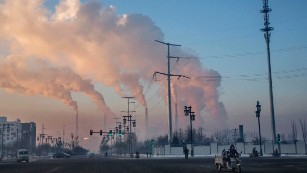
Representatives from nearly 200 member countries of the Montreal Protocol agreed on a deal to reduce emissions of powerful greenhouse gases at a summit Saturday in Kigali, Rwanda.

The landmark deal will reduce the use of hydrofluorocarbons, or HFCs, the world’s fastest-growing greenhouse gases, the UN Environment Program said in a statement.
HFCs are potent greenhouse gases commonly used in refrigeration and air conditioning instead of other ozone-depleting substances.
“The amendment to the Montreal Protocol on Substances that Deplete the Ozone Layer endorsed in Kigali today is the single largest contribution the world has made towards keeping the global temperature rise ‘well below’ 2 degrees Celsius, a target agreed at the Paris climate conference last year,” the UN agency said in a statement Saturday.
According to the agency, the agreed reduction in HFCs could prevent up to 0.5 degrees Celsius (0.9 degrees Fahrenheit) of global warming by the end of this century. The deal was reached at a Meeting of the Parties to the Montreal Protocol, which started Thursday. Several high-profile leaders attended the meeting, including US Secretary of State John Kerry.

“It is not often you get a chance to have a 0.5-degree centigrade reduction by taking one single step together as countries — each doing different things perhaps at different times, but getting the job done,” Kerry said in a speech Friday.
“If we continue to remember the high stakes for every country on Earth, the global transition to a clean-energy economy is going to accelerate.”
The European Union also welcomed the deal. Miguel Arias Cañete, EU commissioner for climate action and energy, described it as “huge win for the climate” and the first step toward delivering on promises made on climate change in Paris in December.
The agreement in Kigali comes only days after enough countries ratified the Paris Agreement on climate change — which calls for the world to become carbon neutral this century — to become international law.
“Last year in Paris, we promised to keep the world safe from the worst effects of climate change. Today, we are following through on that promise,” said Erik Solheim, executive director of the UN Environment Program.
The White House
Today, nearly 200 countries took an historic step to for future generations by phasing down HFCs: http://go.wh.gov/qnkYar pic.twitter.com/f2wUyaLTt3
President Barack Obama also hailed the Kigali deal.
“Today’s agreement caps off a critical 10 days in our global efforts to combat climate change,” the US leader said. “In addition to today’s amendment, countries last week crossed the threshold for the Paris Agreement to enter into force and reached a deal to constrain international aviation emissions.
“Together, these steps show that, while diplomacy is never easy, we can work together to leave our children a planet that is safer, more prosperous, more secure and more free than the one that was left for us.”

Growing demand for cooling

The rapid increase in HFC emissions — put by the UN agency at 10% a year — is due in part to a growing demand for cooling, particularly in developing countries with hot climates and an expanding middle class, the agency said.
The agreement includes provisions for hot countries to reduce their use of HFCs at a slower rate. Developed countries will start to reduce the use of HFCs by 2019, while developing nations have been given a longer time frame in which to freeze their use of the damaging gases.
Funding for measures to reduce HFC use and research into alternatives is to be finalized next year, the UN agency said.
Kerry recalled how the world’s nations had worked together on climate change since first meeting in the 1980s in Montreal in a bid to protect the world’s fragile ozone layer from ozone-depleting chemicals such as chlorofluorocarbons.
“Thanks to the cooperation and the courage that we summoned at that critical time almost 30 years ago, the hole in the ozone layer — which had been growing at an alarming rate, and which was the reason that we came together — that hole is now shrinking, and it’s on its way to full repair,” he said.
“So we proved that we can make a difference. We proved that science has a value. We proved that if we come together in a forum like this, we can actually do things that affect the entire planet.”
Kerry also acknowledged that HFCs had turned out not to be the best solution for the problem of ozone depletion.
“We replaced the ozone depleting substances, but we came to understand the hard way that HFCs may be safe for the ozone layer, but they are disastrous for our climate, in many cases thousands of times more damaging than carbon dioxide,” he said.
Used in everyday household items such as refrigerators and air conditioners, he said, “in a single year, these substances emit as much CO2 equivalent as nearly 300 coal-fired power plants.”
The head of Rwanda’s climate change unit, Faustin Munyazikwiye, also welcomed the world’s commitment on HFCs after long hours of negotiations in Kigali.
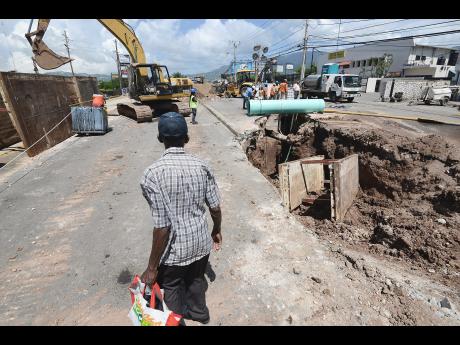
A man walks along a construction site on Constant Spring Road, St Andrew on Friday, October 7. The roadway in the vicinity of the Marketplace commercial complex is being repaired following its collapse from rains associated with Hurricane Matthew.

After a period of uncertainty, it has been confirmed that the Paris Agreement on Climate Change will enter into force on November 4.

This is good news for the Caribbean, one of the parts of the world most at risk from sea level change and severe climatic events.

By global treaty standards, formal agreement has been achieved remarkably quickly, especially as the solutions that the treaty proposes remain politically controversial in many of the nations that agreed last December to the final text.

Normally, ratification takes years to achieve. However, faced with evidence that the planet continues to warm and the possibility that Donald Trump could become the next US president and may pick apart the hard-won agreement, the world’s largest carbon emitters – China, the United States, Brazil, the European Union, and India, but not so far Japan or Russia – have agreed to ratify, thereby reaching the agreed target of 56.87 per cent of all global emissions, for the treaty to come into force.

In many respects, this is a victory for the Caribbean, for CARICOM in particular, and the African, Caribbean and Pacific Group of States (ACP) and other small-island developing states, which in Paris last December made clear that a positive outcome was existential.

In outline, the 31-page agreement proposes that a balance between greenhouse gas emissions and the sinks for ameliorating them is achieved in the second half of this century.

It emphasises the need to hold the increase in the global average temperature well below 2 degrees Celsius (36 degrees Fahrenheit) above pre-industrial levels; proposes “pursuing efforts to limit the temperature increase to 1.5 degrees Celsius (35 degrees Fahrenheit)”; and recommends that a peak in global greenhouse gas emissions be achieved as soon as possible. It allows for an asymmetrical approach, enabling all developing countries – including large industrialising carbon emitters like China, India and Brazil – to have more time to adapt.

In a section that addresses loss and damage, the agreement establishes funding at the minimum annual rate of US$100 billion up to 2030 to enable support for mitigation and adaptation in developing nations. However, it does not set a timescale for reaching greenhouse gas emission neutrality.

Unlike the earlier Kyoto Protocol of 2005, which required major carbon emitters to agree to binding emissions reductions, but failed when the US decided not to ratify because of exclusion of nations like China, the Paris agreement requires all countries to devise their own climate action plans and then improve on them at regular intervals.

What comes next is likely to be difficult, requiring all of the diplomatic and political skills that the Caribbean and other small-island developing states have.

ACCESS TO RESOURCES

While Hurricane Matthew and the damage that it wreaked in Haiti, The Bahamas, and Cuba was a salutary global reminder of the risk that low-lying states with limited resources face, CARICOM, as its Secretary General, Irwin LaRocque, noted earlier this year, now faces the challenge of being able to access the resources the agreement promises.

An important recent development in this respect has been the establishment by the Commonwealth Secretariat, with Australian finance, of a new facility intended to assist governments obtain available funding.

The idea is that a Commonwealth Climate Finance Access Hub will locate national climate-finance advisers in countries for two-year periods to help access climate change support. Among the first countries likely to receive such support are Antigua, Barbados, Dominica, Guyana, Jamaica, and St Kitts, as well as other small island states in the Indian Ocean and the Pacific.

Other funding options are also being considered. Recently, Jamaica’s Prime Minister Andrew Holness indicated that Jamaica is to work with its international development partners to pursue debt for climate-change swaps. Such an approach, he says, has the potential to provide fiscal relief while helping to unlock climate financing to fund adaptation and mitigation initiatives.

What is clear is that when it comes to funding, the treaty agreement as is so far little more than an aspirational framework.

For this reason, at the forthcoming climate change conference in Marrakesh in November, CARICOM will need – together with its Alliance of Small-Island States – the global grouping which brings together small island and low-lying coastal countries that share similar development concerns – to hold the world to account for what has been agreed.

This will not just be a test of the Caribbean’s staying power and the willingness of regional governments to fund and support a continuing focus. It will also require the Caribbean to remind the countries that it supported during the negotiations, and which expressed concern about the implications of climate change for the region, of their commitments.

Put more bluntly, it is now the time for China and Brazil, as much as the US and Europe, to ensure that the support for adaptation that the region needs, now materialises.

In this, both CARICOM and the CARICOM Climate Change Centre will continue to have a critical role in coordinating the regional effort. But it will also be up to individual governments to maintain the political momentum, demonstrate a unity of purpose, and be determined to address the Caribbean’s implementation deficit.

CLOSE TO THE SEA

Climate change is an issue on which the Caribbean has had every reason to have its voice heard and be taken very seriously. Fifty per cent of its population and the majority of the region’s productive enterprise and infrastructure lie within 1.2 miles of the sea. Its low-lying nature, its fragile ecosystems, and extreme weather events demonstrate that it is a prime candidate to benefit from what has been agreed.

While countries in the region are often accused of allowing mendacity to drive their foreign policy, here is an example where the Caribbean deserves a transfer of resources if it quite literally is not to disappear beneath the sea.

Climate change also has a strategic importance. It enables the Caribbean to demonstrate an approach that owes more to the future than to the past; it is an issue on which it has a better chance to exert leverage; and one that can deliver national and regional development objectives. It is an issue on which the region occupies the moral high ground and has popular international support.

Gleaner

Caribbean waters have been disturbed by Hurricane Matthew, which has left a trail of death and destruction in its wake this past week.


While Jamaica was spared the full wrath of Hurricane Matthew, others in the Caribbean were not, making well the case for holding global temperatures at 1.5 degrees Celsius in the face of a changing climate.

So says respected meteorologist and former climate change negotiator for Jamaica, Clifford Mahlung.

For him, the experience of Matthew – leaving in its wake a trail of bodies and extensive infrastructure damage in not only Haiti, which took a severe battering, but also the Dominican Republic and Cuba – is chock-full of takeaways.

“The lessons that we gather from Matthew are numerous. It certainly strengthens the argument that we keep our global temperatures as close as we can to 1.5 degrees, because anything above 1.5 will result in many such systems like the one we just experienced with this hurricane,” Mahlung told The Gleaner.

In the run up to and during the international climate change talks held in France last year, the Caribbean aggressively lobbied for and ultimately secured the inclusion of 1.5 degrees Celsius as a target referenced in the new climate deal.

Dubbed ‘The Paris Agreement’, it has as its goal to hold “the increase in the global average temperature to well below 2 degrees Celsius above pre-industrial levels, and to pursue efforts to limit the temperature increase to 1.5 degrees Celsius above pre-industrial levels, recognising that this would significantly reduce the risks and impacts of climate change”.

The agreement will come into force next month following reports of endorsement from European nations yesterday, which sent the accord across a crucial threshold. “European nations raised backing for the 2015 Paris Agreement to countries representing 56.75 per cent of world greenhouse gas emissions, above the 55 per cent needed for implementation,” a Reuters news report said, quoting from a United Nations website.

With this year’s global climate change talks, to be held in Marrakesh, now only weeks away, Mahlung said Hurricane Matthew lends significance to the coming into force of the agreement. It also underscores, he said, the need for global financial and other support for climate change adaptation and loss and damage associated with extreme weather events in small-island developing states (SIDS).


HURRICANE CATEGORIES


“Hurricane Matthew was able to maintain category three or higher for several days. It shows that we can get a category five hurricane in a matter of hours,” Mahlung said.

“It shows the difficulties of even doing some of the predictions, as we saw how the projected tracks changed considerably over time; and this is not because the models are not good, but that the kind of conditions we now face with respect to tropical cyclone development have changed significantly from the good old days of, say, a Gilbert or Ivan,” he added.

According to the meteorologist, SIDS have to remain vigilant.

“You can appreciate that there were times when the people in Haiti and Dominican Republic would have thought that the system would not have come to Hispaniola. We saw where, in the final analysis, Jamaica was spared and the track was changed, resulting in grave devastation in Hispaniola and particularly Haiti,” Mahlung noted.

“So when we make the case with respect to adaptation in Marrakesh in a few weeks time, and also loss and damage, we will go into those negotiations with first-hand experiences of just what severe weather events such as a tropical cyclone, can do to small-island states,” he emphasised.

Former head of the Meteorological Service, Jeffrey Spooner, for his part, said there was no question of the need to continue the push for a climate-secure Caribbean.

“My real wish is that Marrakesh continues the work to ensure that we get to the point where we can really seal this deal to cap the increase in global temperatures at 1.5 degrees Celsius. Jamaica, CARICOM and SIDS need to continue to press for that,” he said.

pwr.gleaner@gmail.com

The Gleaner 

Project Administrator at the Climate Change Division in the Ministry of Economic Growth and Job Creation, Clifford Mahlung, addresses a consultation on ‘climate change and human health in Jamaica and its implications for other sectors’ at the Climate Change Division located at Half-Way Tree Road in Kingston. (Photo: JIS)

JAMAICA is expected to deposit its instruments of ratification of the Paris Agreement on climate change by year end.

The Paris Agreement emphasises that climate change is a threat to human society and that there is a growing need for international collaboration, deep reductions in greenhouse gas (GHG) emissions, establishment of a framework for the involvement of local communities and people with disabilities, and the empowerment of women, among others.

Speaking with JIS News

on Thursday, project administrator at the Climate Change Division in the Ministry of Economic Growth and Job Creation, Clifford Mahlung, said the process towards ratification will require Government’s approval, which is under way.

“We are awaiting the assessment from the Attorney General’s Department. We are close to hearing from them, and that will allow us to make a submission to Cabinet and then Cabinet will decide that we should go ahead and ratify,” he explained.

The Paris Agreement was adopted by 196 countries at the United Nations Framework Convention on Climate Change (UNFCCC) Conference of the Parties (COP21) held in Paris in December 2015.

Mahlung said that the ratification means that Jamaica will become a party to the Paris Agreement “and so we can become involved and participate in all aspects of the work of the agreement”.

He said that to date, 61 countries have ratified the agreement, adding that there have been commitments from the European Union and India to sign on before the end of the year.

The Agreement calls on nations that have ratified to pursue their highest possible ambition to reduce greenhouse gas emissions using Nationally Determined Contributions and monitored through a reporting mechanism.

The overall goal of the Paris Agreement is for countries to take action to keep global temperature rise this century below two degrees Celsius above pre-industrial levels while at the same time using best efforts to limit global temperature rise to 1.5 degrees Celsius.

The Agreement will come into force when the total number of countries that have ratified the convention accounts for 55 per cent of global greenhouse gas emissions

Jamaica Observer

There's a cheap, proven fix to the world's biggest problem

Nearly everyone who studies climate change policy agrees on one thing: To fix this monster of a problem, governments need to put a price on dangerous carbon pollution.

Carbon pricing can take a few forms, and it’s not a cure-all, to be sure. But it is generally considered by climate wonks to be the cheap-but-effectiveholy grail.” That’s why the world should applaud Canadian Prime Minister Justin Trudeau’s decision this week to implement carbon pricing across that country. It’s a move the United States should copy, too. It’s not as cute or heartwarming as when Trudeau welcomed those refugees, perhaps. But it should be seen as just as noteworthy.
The country’s bold policy shift “will help the country’s environment and economy as we compete for the rapidly growing global demand for clean energy,” Matt Horne, associate director of the Pembina Institute, an environmental think tank in Vancouver, said in an emailed statement. In other words: It’s a win for everyone. Not all politicians see it that way, of course, even in green ole’ Canada. “Why is (Trudeau) using a sledgehammer to force the provinces and territories to accept a carbon tax grab and what happened to his promised new era of cooperative federalism?” Conservative MP Ed Fast asked, according to CBC News.
Such complaints are shortsighted, though. They fail to recognize what’s becoming increasingly clear: Unless we do far more to clean up the global economy, we are passing an era of storms, floods and environmental wreckage on to future generations.
Because we’ve been so slow to act on this crisis, bold action is now required. To meet the international goal of limiting warming to 2 degrees Celsius, we need to ditch fossil fuels this century, hopefully by 2050. That goal is written into the Paris Agreement, which, this week, appears poised to become international law. The United States has ratified that agreement, and Canada has signed it, according to WRI. So far, however, pledges to cut pollution fall short of what’s needed.
We need to price carbon to meet those lofty (and critical) goals. Here’s how it works: Pricing carbon is an inherently conservative and market-friendly way to cut heat-trapping emissions that are causing seas to rise, ice caps to melt, wildfires to worsen and so on. These policies work by making a bad thing — burning high pollution fuels like coal, for example — more expensive. By comparison, smarter, cleaner energy choices — wind, solar, etc. — become cheaper. British Columbia already has a successful carbon tax in place. I visited earlier this year and talked to people at a gas station near the US border. I was surprised to find many people who said they wanted to pay the carbon tax — even wanted it to be higher — because it’s good for the environment.
Research shows carbon emission in the province dropped 5% to 15% and fuel use dropped 16% after the tax’s implementation. Yet, the economy continued to grow, slightly outpacing the rest of Canada. The only injustice of the tax is that neighbouring provinces didn’t have to pay it. The revenues from the carbon tax actually go directly back to citizens. These concepts continue to spread, which is cause for hope. Another version of carbon pricing, called cap-and-trade, is in place in California. (Cap-and-trade systems set a maximum amount of allowable pollution and then let businesses buy and sell pollution credits on a market.)
Canada will give provinces the choice of implementing either type of policy. The government says the prices must go into effect by 2018, with the price of carbon starting at a minimum of $10 per metric ton of pollution and rising to $50 per ton by 2022. Some environmentalists have called the plan too lax. It’s not perfect, but it’s far better than the piecemeal approach of waiting for jurisdictions to act on their town.
In the United States, Washington state residents will vote on a carbon tax this November.
I’m hopeful that vote — and this big push from Trudeau’s Canada — will reignite a debate about carbon pricing in the US federal government. Donald Trump and other American politicians can deny the harsh realities of climate science all they want, but that won’t change the urgency with which we need to act.

New Fortress Energy has committed to recurrent environmental monitoring and reporting on site preparation, construction and operation of the liquefied natural gas (LNG) terminal and pipeline project to be developed in St Catherine.

At a public consultation with residents of Old Harbour, the American company also promised, as far as is possible, to train and employ persons from the community to work at the facility instead of bringing in skill sets from outside.

The gas will be transported to Jamaica from the United States or other markets to a new offshore terminal at Portland Bight, where it will be regasified and distributed via an undersea pipeline to the Jamaica Public Service Company (JPS) power plant, said Managing Director of Fortress Investment Group Brannen McElmurray at the forum on Wednesday.

The main infrastructure will include a berth and regasification platform; a natural gas pipeline; and an automotive diesel pipeline and other facilities. The terminal is to be located on the western side of Portland Bight, about 2,000 metres from the shipping channel to Port Esquivel. It will have a depth of about 14 metres, sufficient to berth a floating storage unit for the LNG as well as LNG carrier vessels without the need for dredging.

McElmurray said the Port Authority of Jamaica has reviewed the general location and concluded it does not interfere with shipping activities. The floating unit, an LNG carrier refitted to for use as a storage vessel, will be located far enough from shore and, hence, will not be visually obtrusive.

Experts have recommended a 500-metre safety exclusion zone around the floating unit in which navigation is restricted.

However, environmental consultant Dr Carlton Campbell, whose company CL Environmental Limited undertook the environmental impact assessment presented at the public consultation, said that zone was reduced to 200 metres based on complaints from fisherfolk.

The exclusion zone would have denied them access to regular sites where they normally harvest fish.

However, one resident was against the compromise reached, saying the zone should not have been reduced to facilitate more fishing, given that the 500-metre recommendation was made by safety experts.

The LNG terminal being developed through NFE South Holdings will supply gas to JPS, which itself is finalising plans to build an LNG-fired power plant at Old Harbour.

According to the environmental impact assessment, monitoring of various aspects of the New Fortress project will be done by persons appointed by New Fortress Energy, the JPS, and “capable organisations”, the latter monitoring water quality, salinity and dissolved oxygen, among other conditions.

However, some residents suggested that members of the Old Harbour Bay community should be involved in monitoring as they did not entirely trust the National Environment and Planning Agency and the parish council to do so on their behalf.

McElmurray said some of the equipment for the project will be offloaded at Port Esquivel and transported by trailers to the Old Harbour Bay site, giving rise to concerns about road damage.

Campbell assured concerned residents that mitigation measures have been put in place for noise from heavy equipment, access road to facilitate movement of heavy vehicles and equipment, potential negative impact on marine life and various other environmental issues.

He said horizontal drilling would be used for the pipeline to ensure the reef is not destroyed, and that the developers would have to work with the fishing community to safeguard fish pots set to harvest fish.

In the regasification process, New Fortress will heat the LNG using seawater to convert it to natural gas and then release the water back to the sea. Campbell assured residents the water would be cooler at release and so would not affect marine life.

During construction an estimated 225 to 250 persons will be employed, McElmurray said. New Fortress Energy estimates that it can start delivering natural gas to JPS at Old Harbour by the second quarter of 2018.


Outside view of International Conference Center in Algiers, Algeria, where energy ministers from OPEC and other oil-producing countries are gathered to attend the opening session of the 15th International Energy Forum Ministerial meeting in Algiers, Algeria.

OPEC nations reached a preliminary agreement on Wednesday to curb oil production for the first time since the global financial crisis eight years ago, pushing up prices that had sunken over the past two years and weakened the economies of oil-producing nations.

Mohammed Bin Saleh Al-Sada, Qatar’s energy minister and current president of OPEC, announced the deal after several hours of talks in the Algerian capital. The levels must still be finalised at an OPEC meeting in Vienna in November.

The preliminary deal will limit output from the Organisation of the Petroleum Exporting Countries to between 32.5 million and 33 million barrels per day, he said. Current output is estimated at 33.2 million barrels per day.

Benchmark United States crude jumped US$2.38, or 5.3 per cent, to US$47.05 a barrel in New York. Brent crude, the international standard, was up US$2.72, or 5.9 per cent, to US$48.69 a barrel in London.

Long-running disagreements between regional rivals Saudi Arabia and Iran had dimmed hopes for a deal at Wednesday’s talks.

Iran had been resistant to cutting production, as it is trying to restore its oil industry since emerging from international sanctions over its nuclear program earlier this year. According to Wednesday’s deal, Iran exceptionally will be allowed to increase production to 3.7 million barrels a day, according to Algerian participants at the meeting. It is currently estimated to be pumping around 3.6 million.

The OPEC officials met informally on the sidelines of an energy conference in Algiers to try to find common ground on how to support oil markets.

POSITIVE DEAL

“We reached a very positive deal,” said Nigerian Oil Minister Emmanuel Ibe Kachikwu. He said all countries will reduce output but the specific quotas will be set in Vienna in November.

Earlier, Iranian Petroleum Minister Bijan Namdar Zanganeh had played down the OPEC gathering, calling it “just a consultation meeting”.

The price of crude oil has fallen sharply since mid-2014, when it was over US$100 a barrel, dropping below US$30 at the start of this year.

Saudi Arabia, the world’s biggest oil producer and Iran’s rival for power in the Middle East, appeared to be more amenable to some sort of production limit, certainly more so than in April when OPEC failed to agree on measures to curb supplies.

Saudi Energy Minister Khalid Al-Falih this week promised to “support any decision aimed at stabilising the market”.

Over the past couple of years, OPEC countries, led by Saudi Arabia, had been willing to let the oil price drop as a means of driving some US shale oil and gas producers out of business. Shale oil and gas requires a higher price to break even.

Those lower prices have hurt many oil-producing nations hard, particularly OPEC members Venezuela and Nigeria, but also Russia and Brazil.

Gleaner

NEW YORK — The United Nations General Assembly (UNGA) kicked off on Tuesday here with more than 140 heads of state and government and a yearly tradition of speeches made to the 193 member states of the chief deliberative, policymaking and representative organ of the United Nations.

This year marks the 71st session of the UNGA, convened under the theme ‘The Sustainable Development Goals: a universal push to transform our world’, with particular focus on Goal #13: Take urgent action to combat climate change and its impacts.

This high-level week with world leaders is an opportunity for the Kingdom of Morocco to promote the 22nd Conference of the Parties to the United Nations Framework Convention on Climate Change (COP22) set to take place in Marrakech, November 7 to 18. Salaheddine Mezouar, Minister of Foreign Affairs and Cooperation, will be on hand for a series of side-events and bilateral meetings aimed at reinforcing and promoting Morocco’s climate initiatives, including those on energy, agriculture, capacity building, adaptation and finance, discussing global warming issues affecting the most vulnerable countries and island states, and mobilising the international community for an ambitious global climate action agenda in Marrakech to implement the Paris Agreement.

United Nations Secretary

hosted a special event to encourage parties to ratify the agreement. According to the United Nations Framework on Climate Change, as of Tuesday, 29 parties have ratified the agreement, accounting for 40.12 per cent of global emissions. The Kingdom of Morocco will be among approximately 20 countries to deposit their instruments of ratification here during this week’s proceedings, inching closer to the 55 per cent necessary for legal entry into force when the agreement takes effect and becomes legally binding for those countries that have joined.

During his opening remarks, Ban underscored the importance of the climate change agenda.

“With the Paris Agreement we are tackling the defining challenge of our time. We have no time to lose. I urge you to bring the Agreement into force before the end of year. We need 26 more countries equalling 15 per cent of global emissions for entry into force,” he stated.

US President Barack Obama, during his last speech to the UNGA, called on the international community to keep working together to solve global issues including climate change. “The Paris Agreement gives us a framework to act, but only if we scale up our ambition,” he stated.

UNGA President Peter Thomson, the first from a Pacific Island nation (Fiji), underscored the need to act on climate change to avoid its negative impacts. “We are steadily moving towards the ratification of the Paris Agreement. We must not delay any further.”

Brazilian President Michel Temer affirmed his country’s commitment to fighting global warming, saying: “Tomorrow I will deposit Brazil’s instruments of ratification of the Paris Agreement.”

As the first African head of state to address the UNGA, Idriss Déby Itno, president of Chad, highlighted the importance of working with the international community to fight global warming on the continent. “It’s not about giving charity to Africa, it’s about true partnership with Africa to tackle climate and global challenges,” he said.

The traditional roll call of speeches to the UNGA starts with the United Nations secretary general, followed by the President of the UNGA, president of Brazil (first Member State to speak in the general debate since the 10th session of the General Assembly) and president of the United States (host country). For all other member states, the speaking order is based on the level of representation, preference and other criteria such as geographic balance.

observer

When Blue Mountain Renewables (BMR) began operating its 36-megawatt wind farm in Potsdam, St Elizabeth, a few months ago, the facility became Jamaica’s largest private-sector renewable energy project.

Minister of Science, Energy and Technology Dr Andrew Wheatley, who gave the keynote address at the official opening on August 11, pointed out that the wind farm would help to diversify the country’s energy matrix and ease the dependence on imported fossil fuels.

“The wind farm is expected to reduce greenhouse gases by about 66,000 tons of carbon dioxide equivalent per year, roughly equivalent to taking 13,000 cars off the road,” he informed.

Wheatley also applauded the relationship and assistance the company has given to the neighbouring schools, Munro College and Hampton High, as well as the treatment of farmers in St Elizabeth who were affected during the construction phase.

Principal of Hampton High Heather Murray said that she could literally see the ‘wind of change’ with the advent of the BMR wind project.

She bemoans the fact that nearly a quarter of her school’s budget is spent on high electricity cost, money that could be spent on building a state-of-the-art science laboratory.

“BMR brings hope and we welcome them wholeheartedly. We are also excited about the efforts to go green and we are doing our part here at Hampton. Earlier this year, we swapped all fluorescent light bulbs for more environmentally friendly LED bulbs,” Murray stated.

She also informed that Hampton had installed about 12 solar panels to integrate renewable energy into their electric supply. The panels, combined with small wind turbines on the campus, now provide about one-fifth of the school’s energy needs, she noted.


TO SERVE THOUSANDS


The BMR Jamaica Wind project will serve thousands of customers annually. Power will be sold to the Jamaica Public Service (JPS) Company, under a 20-year power-purchase agreement. This electricity is expected to be among the lowest cost sources of power available on the JPS system.

Jamaica currently relies on oil imports to meet 90 per cent of its energy needs. This leaves the country vulnerable to fluctuating oil prices, which can make it difficult to budget and plan effectively.

To ease the dependence, the country has set a target to generate 30 per cent of its energy from local renewable sources such as hydro, wind and solar power by 2030.

President of BMR Bruce Levy said construction of the project was made easier by the cooperation of the Potsdam residents and the appreciation they showed for the work being done in their community.

“We made sure there was significant benefit to the local and wider community, with billions of dollars of direct spending and employment of hundreds of Jamaicans during construction. We say, without any fear of contradiction, that we are committed to community development,” he said.

Levy informed that the wind farm was made possible through a US$62.7 million financing package, including a US$42.7 million loan from the Overseas Private Investment Corporation (OPIC); a US$10 million loan from the International Finance Corporation (IFC), and a US$10 million loan from the IFC-Canada Climate Change Programme. BMR Energy provided an equity investment of US$26.9 million.

Gleaner

In this August 2016 photo, New Fortress Energy (NFE) hosts a tour of its Montego Bay terminal. Walking the port are (from left) Brendan McElmurray of NFE, Minister without Portfolio in the Ministry of Economic Growth and Job Creation Dr Horace Chang, Attorney General and Member of Parliament for West Central St James, Marlene Malahoo Forte, Ed Marsh of the Port Authority of Jamaica, Johnathan Klion of NFE, and chairman of the Montego Bay Free Zone, Mark Hart.

The plan to build and operate a liquefied natural gas marine terminal and pipeline by American company New Fortress Energy (NFE) will place the facility five kilometres offshore within the Portland Bight area or close to the Goat Islands, according to the environmental impact assessment (EIA) released this month.

New Fortress will execute the marine terminal and pipeline project through affiliate NFE South Holdings Limited. A public consultation on the project is set for September 28 in Old Harbour.

The environmental report done by CL Environmental Consultants Limited on behalf of New Fortress also estimates that the project will provide nearly US$1 billion worth of value over its lifetime and create about 300 direct jobs in the process. Indirect jobs are estimated at 200 to 600.

“Based on this analysis, the final net present value of the project, after application of social cost benefit analysis, turns out to be US$953.4 million. Hence, the project should be undertaken as it has multiple social benefits which are reflected in the final positive NPV of the project,” the report stated.

In arriving at that final figure, the EIA considered the financial profitability measured at market prices; the net benefit of the project measured in terms of economic prices; then adjusted for the impact of the project on savings and investment, income distribution, the impact of the project on merit goods and demerit goods, and the environmental impact.

LNG plan

The project forms part of the wider plan to bring LNG to the national grid. The marine terminal will feed gas to the new 190MW plant that Jamaica Public Service Company is developing at Old Harbour. New Fortress is also supplying gas to JPS’ Bogue plant from a terminal developed in Montego Bay.

The marine terminal EIA report reasoned that consumers, but in particular the manufacturing sector, would benefit from the lower cost of electricity and the establishment of a more reliable power supply.

“This will lead to more possibility of manufacturing that will lead to creation of employment opportunities for unskilled and skilled workers. This is hard to quantify and hence the number are not adjusted for it. Which means that the social benefit stayed below is a lower bound,” the report stated.

The NFE project involves constructing a marine terminal comprising of a vessel berth and offshore offloading and regasification platform.

“The location will be up for approval by the Port Authority of Jamaica in the Portland Bight area of Jamaica,” said the environmental report.

It adds that the facility will accommodate a floating storage unit or FSU vessel for LNG storage and a LNG carrier delivering gas to the FSU. The platform would contain equipment to regasify LNG as well as related process and safety equipment.

“The liquid gas from the FSU would be carefully regasified and the gas would then be released into an undersea pipeline which will be mostly directionally drilled in basically a straight line from the platform to the vicinity of the JPS plant,” stated the EIA, which adds that the pipeline, at some five kilometres in length, would connect to the JPS gas power plant on shore.

“In addition, the project will construct a new, or refurbish an existing, automotive diesel oil line from storage tanks to the renovated power plant in order to enhance the reliability of the facility in case of LNG delivery interruptions.”

The marine terminal will be constructed offshore in the western side of Portland Bight, at a distance about 200 metres from the shipping channel to Port Esquivel in approximately 14 metre of water depth. “This location offers sufficient depth to berth the FSU and the LNG carrier vessels without the need for dredging, yet has sufficient protection from storm wave impacts as a result of the shape of the Bight,” stated the report.

Energy Policy

NFE is expected to supply JPS as well as potential future industrial users with natural gas. The main objective is to provide the Jamaica Public Service Company’s Old Harbour Plant with a cleaner and more cost-effective fuel in furtherance of the goals of the National Energy Policy.

NFE will conduct the project through its NFE South Holding and with the sponsorship of Fortress Investment Group, a global asset management firm with approximately US$70.64 billion of assets under management and an experienced investor in transportation, infrastructure and energy assets around the world, the environmental report said.

The annual fuel savings from the project is projected at US$74.2 million which represents a 38 per cent reduction in cost. The report adds that, assuming a 75 per cent pass-through to the consumer and a 25 per cent mixed of the generating capacity of the JPS, it will result in a seven per cent reduction is consumer prices. This figure matches the fuel savings published in a separate EIA report on the JPS Old Harbour plant upgrade released in April, as the projects are complementary.

JPS, which has a licence from the Jamaican Government to operate the national electricity grid, is constructing the 190MW plant adjacent to its existing Old Harbour facility in St Catherine, which has the capacity to generate 220MW of power. The current plant will be dismantled once the new one is commissioned.

Gleaner