Century 21, a leading real estate company, and SolarBuzz Jamaica, an innovative player in the renewable energy sector, have joined and formed a partnership which was the subject of a signing ceremony earlier today.
With the recent majority stake acquisition of Century 21 by FirstRock, a prominent real estate company, the partnership takes on even greater significance, establishing a robust foundation for an ambitious expansion. This alliance between Century 21 and SolarBuzz Jamaica marks the first of many strategic collaborations as Century 21 paves the way for key industry partnerships.
“Century 21 is thrilled to embark on this transformative journey alongside SolarBuzz Jamaica,” said Jordan Chin, Executive Chairman of Century 21 Heave Ho Properties. “This partnership opens up remarkable opportunities to enhance our services and provide unmatched value to our customers. Together, we will revolutionise the real estate industry and exceed expectations.”
Jason Robinson, CEO of SolarBuzz Jamaica, expressed his enthusiasm for the partnership, stating, “We are delighted to collaborate with Century 21 on this strategic venture. By combining our renewable energy expertise with Century 21’s exceptional real estate services, we can create sustainable and innovative solutions for our customers. This partnership marks a significant milestone in reshaping the industry and driving positive change.”
To solidify their commitment to delivering specialised services to clients and customers, Century 21 and SolarBuzz Jamaica have signed a memorandum of understanding. This agreement not only ensures superior service but also guarantees heightened brand exposure and publicity, bolstering the reach and impact of both companies.
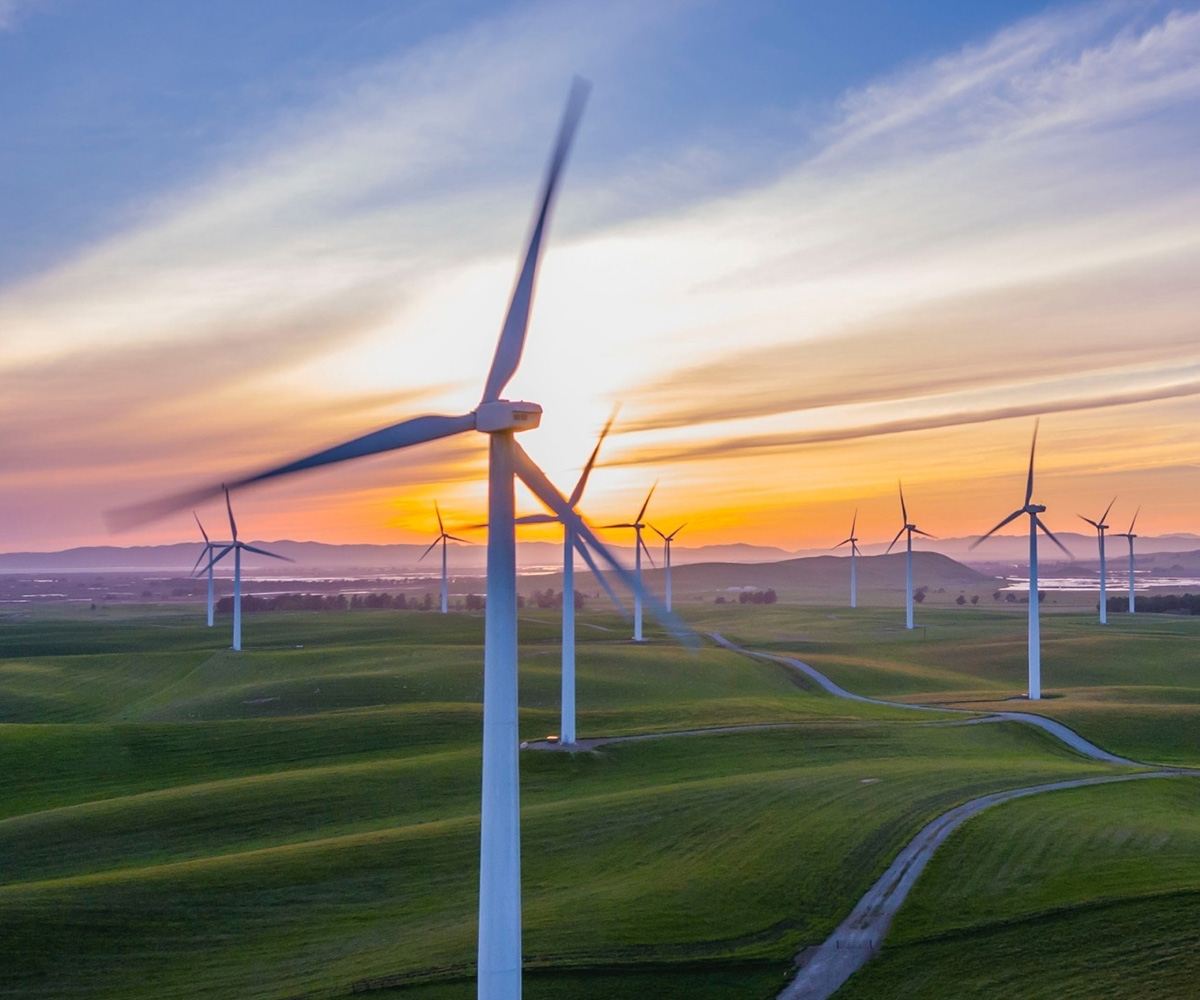
Investments in wind and solar power generation need to grow at least eightfold to hit and surpass the target of 50 per cent renewables, new documents from power utility Jamaica Public Service Company show.
“In order to achieve this target, there will be a heavy reliance on solar and wind renewable sources and long duration battery energy storage systems (BESS), assuming a build-out of 60 MW of solar and 60 MW of wind in any one particular year,” said JPS, which is hunting a consultant to assess the cheapest and most effective method of transmitting power across the grid up to year 2041.
Within that 18-year span, the electricity supplier expects the power mix to undergo substantial adjustment.
The power generation network is then expected to have added 870 MW of wind, 510 MW of solar, 34 MW of hydro and 600 MW of storage, according to the JPS document, which referenced parts of the Jamaican government’s Integrated Resource Plan #2, referred to as IRP2.
The existing renewables capacity include 101 MW of wind, 57 MW of solar at the base level, and 28 MW of hydropower. It is expected that some of the existing units will be replaced over time with new units, but the breakdown wasn’t immediately available. JPS did not respond immediately to requests for comment made on Monday.
Under the IRP2, the Jamaican government is pushing for renewables to account for 50 per cent of the power grid by 2030.
JPS said within that initial timeframe, seven years, equal amounts of new solar power units and wind power are targeted for addition to the national electricity grid, which it operates exclusively under licence from the government, but that beyond 2030, it will shift towards a heavier reliance on wind.
Investors in these new power units will largely be sought through public auction, a function that is generally within the remit of the Office of Utilities Regulation, the state regulator of telecoms and electricity utilities.
“As the country moves to a more sustainable future, it is essential that the stability, security and reliability of the network is maintained as variable renewable sources and battery energy sources become a more dominant feature,” JPS said in the tender documents for the consultant.
The issue with renewables remains the fluctuation in power delivered to the grid when compared with conventional fuel sources such as diesel and natural gas, which together power most of Jamaica’s electricity generation units. Renewables are affected by cloud coverage for solar or slow wind speeds that affect the operations of turbines that generate wind power.
Renewable energy currently accounts for 30 per cent of the power mix. Rebalancing the mix to half of the grid capacity aims to safeguard against world market energy price shocks, improve energy security and protect consumers on the grid.
Higher fuel prices have been affecting much of the world since February 2022 when Russia, a large oil-producing nation, invaded its neighbour Ukraine. For instance, fuel imports in the first two months of this year cost Jamaica nearly $48 billion, up from $40 billion in the similar period a year ago, according to official data agency Statistical Institute of Jamaica.
JPS wants the consultant it is hiring to develop and test a plan for the transmission network up to 2041. It should include a review of the existing computer models of generation and transmission expansion, and an analysis of normal and abnormal conditions.
The full IRP2 plan has not yet been made public by the Ministry of Science, Energy, Telecommunications and Transport.
The portion of the IRP2 referenced by JPS indicates that the energy plan to 2030 involves adding 360 MW of wind, 360 MW of solar, 375 MW of storage, and 34 MW of hydro. Thereafter between 2031 and 2041 the target is an additional 510 MW of wind, 150 MW of solar, 225 MW of storage and no additional hydro.
The document gave no indication of cost of capital to roll out the plan.
Jamaica Public Service owns and operates 22 generating units. Its assets include conventional thermal plants that generate 315 MW, hydro 28 MW; and wind turbines that produce 3.0 MW; as well as 1,200 kilometres of transmission lines supporting over half a million customers. The company is co-owned and controlled by Marubeni Corporation of Japan and Korea East-West Power, with Jamaica as a minority partner.
While JPS has a monopoly on power distribution, the market for power generation remains open to competition. These suppliers, called independent power producers, sell electricity to JPS under power purchase agreements. The IPPs as a bloc produce 537 MW of power from diesel or natural gas, 98 MW of wind, and about 57 MW of solar power.
Within the renewable energy market, the large operators and their capacity include: Wigton Windfarm with a capacity of 67 MW – a former government-owned business that was privatised via the stock market four years ago; BMR Energy at 32 MW, with assets held by Richard Branson’s Virgin Group; the Eight Rivers/Paradise Park solar project at up to 51 MW, and held by Rekamnair, Neoen and MPC Energy; and Content Solar at 20 MW, held by WRB Enterprises.
As a young university graduate with a degree in physics and applied physics, I was an ardent advocate of nuclear power in Jamaica. I argued that the use of nuclear power was necessary to generate abundant, cheap energy to allow Jamaica to develop manufacturing industries such as the production of aluminium and other finished goods, providing much-needed jobs and economic growth. At the same time, I dismissed cons such as environmental pollution and safety issues as being irrelevant and of secondary concern.
With advancing years and hopefully a little more wisdom, I have come to realise that we have an obligation to pass our only planet on to our descendants in a condition that is no worse than we found it.
The recent announcements by the prime minister and Minister Vaz that Jamaica is planning to add nuclear power generation in the form of small nuclear reactors to our energy mix, leaves me with grave concerns about the advice they are receiving.
As Dr Dennis Minott has said in several articles in your newspaper, there are a number of issues that need to be carefully considered before making such a decision. Among them are:
1. Although the manufacturers of these plants promise that they will take them back for disposal when they reach the end of their useful life, what guarantee do we have that the company will still be around to fulfil its obligation when the 40-50 year expected lifespan expires?
2. Even if the company is still in business, changes in government regulations in their home country may well bar them from shipping the unit or its disassembled components into their country. The radioactive waste may then find its way into poor third countries in exchange for a pittance paid to corrupt politicians, or simply be dumped into the ocean.
3. Although some nuclear power plants use air cooling, most such plants, including small modular reactors (SMRs), use significant amounts of water for cooling and for the production of steam to generate electricity. This water can be held in either a closed-loop or a ‘once-through’ system. The actual amount of water consumed will vary depending on the technology being used and may fall as the technology improves, but a reasonable estimate for an SMR generating 300 MW will typically range between two to 14 million gallons per day for the primary coolant (used to transfer heat away from the fuel rods), plus an additional eight to 80 million gallons per day for the secondary coolant (used to transfer heat from the primary coolant to the steam-generation system, where the actual electricity is produced). In total, we are looking at anywhere from 10-94 million gallons of water consumed per day, depending on the plant design and whether the system is open or closed-loop.
4. Even more concerning, and a fact that is often glossed over by advocates, is that ALL nuclear reactors produce radioactive coolant (usually water) as a by-product of their operation. By design, coolant comes into contact with the reactor core where the uranium fuel rods are contained. As the fuel undergoes fission, radioactive isotopes are generated, some of which can dissolve or become suspended in the coolant. This radioactive coolant is treated to reduce the radioactivity as much as is possible with current technology, but it is impossible to remove it entirely. The radioactive coolant has to be stored somewhere – usually in some sort of storage pond. In a country that sits on a major fault zone, where a high-magnitude earthquake is a matter of ‘when’ NOT ‘if’, a pond full of radioactive water/coolant represents a potential environmental disaster. If you have doubts about this, consider the repeated discharge of polluted industrial effluent into the Rio Cobre.
METHODS OF DISPOSAL
5. Returning to the issue of disposing of the nuclear plant at the end of its useful life, the most common methods are: a) decommissioning and dismantling, b) entombment (encasing it in an element such as lead), and c) deep geological repository (disposing of the radioactive components by dumping them in a salt formation or deep rock formation). Given Jamaica’s small land area and widespread porous limestone geology, options b) and c) are impractical, which leaves us with option a) which involves removing all radioactive materials, decontaminating the site, and demolishing the facility. The radioactive waste generated during this process is packaged and stored in specialised containers for long-term storage or disposal. It is obvious that to minimise transmission costs and losses, the SMR location can’t be too remote from where the power is to be used, which means that in reality, this demolished, still-radioactive site will be left sitting within a few miles of major industrial and/or residential centres. It is important to note that EVERY gram of radioactive waste generated since the first nuclear power plant was built in 1954, is still sitting somewhere out there emitting radiation!
We should ask ourselves why, prior to the Ukraine-Russia war, many European and Asian countries were planning to mothball their very expensive nuclear power plants long before they had become obsolete.
Assuming that we find a suitable location and an adequate water supply and that the plant does become a reality, I very much doubt that future generations will thank us for the legacy we plan to leave for them.
MINOTT… we are not doing a good job at dealing with waste at all, let alone with nuclear waste which is thousands and millions of times more dangerous.
EXPONENTIAL start-up costs, qualified employees, proper waste disposal and site selection are being cited as factors for Jamaica’s shortfall to be able to successfully establish a nuclear energy facility on the island.
The concerns were raised by Dr Dennis Minott, a scientist trained in applied nuclear physics, with a PhD in physics and undergraduate training in engineering, who has described announcements by the Government to introduce nuclear energy in the renewable energy mix as delusive.
“The cost of small nuclei is running at about US$8 million per megawatt. Just the capital cost. And for Jamaica, if we were even to have a 10-megawatt plant let alone a 100-megawatt plant that would be US$800 million of installation cost, let alone the cost of personnel, the cost of infrastructure, the need for clear space and the need to be extremely military,” Dr Minott revealed to the Jamaica Observer in an interview.
In a recent sectoral debate presentation in Parliament, Minister of Science, Energy and Technology Daryl Vaz said if Jamaica does not join the rest of the world in pursuit of building its own nuclear energy capabilities, the country will be left behind. However, the renewable energy specialist says several things need to be in place before such a move could even be considered, and Jamaica’s economic position already put it at a disadvantage.
He explained that for such transformation to take place, a rigorous evaluation of what the aim is will be needed. For a nuclear plant to operate effectively, he says the trained human capital is paramount and it would require to have on stream, all the time, one or two nuclear physicists available 24/7 and these trained employees will need to be properly compensated.
“It cost CAN$251,000, US$190,000 (plus) per annum to even get a low-grade physicist to work full time at the boring, but important job of supervising a nuclear power reactor. Then you need engineers, they come in at roughly the same costs, then you have got to have operators, they come in at about US$90,000 plus per annum,” added Dr Minott.
He reiterated that the country has no experienced civilian engineers, physicists, operators or fire personnel in dealing with nuclear energy. For the most part, the human capital that is available and is knowledgeable about some nuclear science and technology resides at the University of the West Indies, Mona, in the International Centre for Environmental and Nuclear Sciences (ICENS). But, ICENS only operates a small nuclear reactor, which is slow and small-scale and Dr Minott says it is a misrepresentation of what a nuclear facility is.
“It [ICENS] has nothing to do with this [nuclear energy] at all. It is blatantly untrue to say that we’ve had 40 years of experience with nuclear power, we have not, and we have no experience whatsoever. We may have one or two people trained in nuclear power like myself, but nobody based on anything in Jamaica has been trained in Jamaica to handle nuclear matters,” he said.
But even with trained members operating in a nuclear facility, proper disposal of nuclear waste is another concern.
“We are not doing a good job at dealing with waste at all, let alone with nuclear waste which is thousands and millions of times more dangerous,” he said discerningly.
In pointing to the country’s already troubled disposal practices, including from medical waste which has been piling up, Dr Minott said those waste could possibly include radionuclides from nuclear medicine practice. He believes if medical waste is not being disposed of properly now, the same will follow suit with nuclear waste.
“Have no doubt that the medical doctors who must have administered those nuclear medicines knew that these were extremely hazardous materials but they are out there because whoever is disposing of them is not incinerating them,” said Dr Minott with serious concern.
He says that medical nuclear waste is likely to stay radioactive for three or four months, while nuclear waste has far longer-lasting radioactivity. He explained that even if nuclear waste is disposed of in deep salt mines some 500 to 600 metres or more below the earth’s surface or in mountains, they are still radiating. As such, it’s just a matter of putting them out of direct reach from people, and he’s of the view that it’s highly unlikely nuclear waste generated in Jamaica will be dumped elsewhere.
He, however, admitted that it is possible to minimise the risks against alpha particles, and beta particles because they can be contained. But gamma radiation, which is electromagnetic radiation, cannot be contained effectively without adequate shielding and less frequent exposure.
“Workers cannot be continuously going five days a week or seven days a week, spending five hours per day, on a reactor, and not come away hurt, and I’m not talking about nuclear accidents, I’m just talking about normal operations,” he said.
He added that the narrative or assumption that Jamaica has an insufficiency of power is false and a false solution is being pushed. He says the issue of grid stability is not only dependent on the availability of power.
“Jamaica doesn’t have an ideal grid but it’s not unstable. JPS doesn’t necessarily run an unstable utility. The problem is we have failed to invest in infrastructure, the distribution lines as well as the big transmissions lines. We have failed to invest in the kinds of consumption devices that we ought to, and not just invest, we do not maintain them as well as we should. We do a bad job at it,” said Dr Minott.
He further added that if Jamaica were to get and concentrate on getting power properly connected to the electricity grid, then it would have stability because the instability that Jamaica endures is not caused by lack of power.
If all these were to be in place, though an advantage to pursue the creation of its own nuclear facility, Dr Minott reminded of Jamaica’s geographical position on the tectonic plates which poses a major risk of a nuclear accident due to earthquakes.
“Even an earthquake that is near the Jamaican soil, let alone one that hits and moves two tectonic plates in the way we know they can shake and I don’t know of any nuclear plant that’s built to withstand that,” he added.
And based on Jamaica’s small size, he says it’s a terrible idea to build a nuclear plant in Jamaica, explaining that large reactors are only appropriate for places with enough space. The Business Observer asked Dr Minott, should a nuclear facility be built in Jamaica, where would be a good location? His response was “The part of Jamaica that fits on Antarctica.”
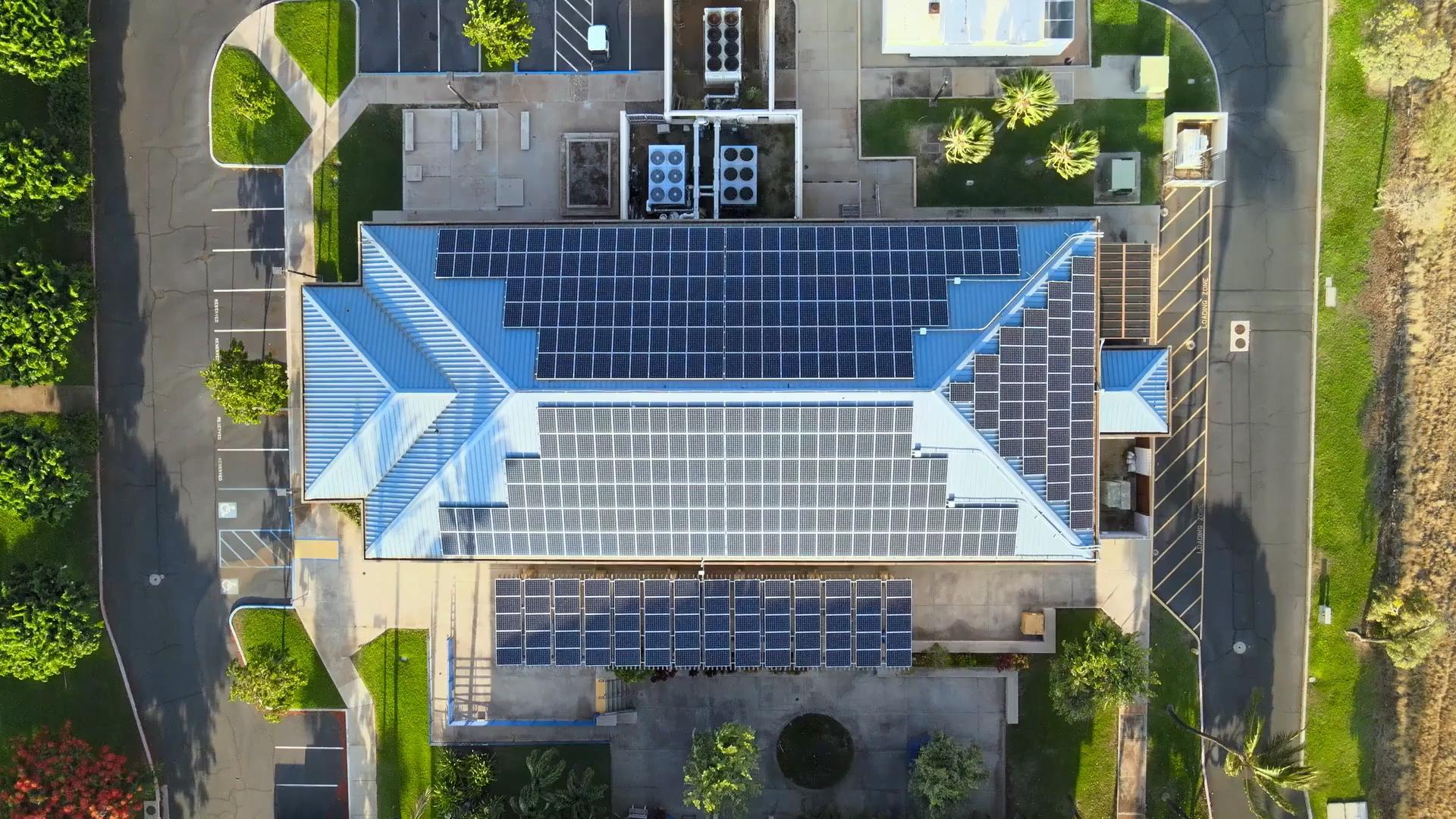
It’s no secret, there are a lot of solar panels on the market. Many promise different results from lower prices to better aesthetics. But what factors should you weigh when evaluating which solar provider to choose? It all comes down to these 3 things – efficiency, durability and warranty.
Efficiency
SunPower® solar panels are widely known to be the most efficient on the market*. That’s because SunPower solar cells are unobstructed by metal gridlines across the top, unlike most conventional solar cells. That means that there is plenty of open space for each solar cell’s unique light-trapping surface to absorb more than just visible light rays such as ultraviolet and infrared light.
SunPower also uses intra-digitated back contact technology, meaning all of the wires that carry the electricity from each cell in the solar panel are placed onto the back. This eliminates shading and helps SunPower solar panels generate more energy, even when the weather isn’t ideal. SunPower’s technology and strategic design give its solar panels the ability to harvest more sunlight than conventional solar panels.
Durability
In addition to their design for efficiency, SunPower solar panels were also created with durability in mind. SunPower solar cells have a strong copper backing that is resistant to corrosion and weathering. This is incredibly important because solar panels sit on rooftops and are subject to harsh temperature and weather changes. Exposure to the elements causes all solar panels to degrade over time. But the rate of degradation can vary heavily from one solar panel provider to another. For a conventional solar panel, this reduction of power output happens at an average rate of 0.5% each year. But a SunPower solar panel degrades much more slowly at only 0.25% each year. That’s a big difference and illustrates just how durable SunPower solar panels are.
Warranty
Not all warranties are created equal. To find the real value behind a warranty, homeowners should look past just the years a solar system is covered. Some solar companies have warranties that only cover the materials but not the loss of power production. Or, they source parts from different manufacturers, leaving you with multiple warranties to sort through. SunPower offers the most comprehensive warranty in the industry, with coverage spanning both power and product. In addition, SunPower is the only company that stands behind the entire solar system, not just the panels. In the rare likelihood that something does go wrong, you only need to contact one company to fix the issue – SunPower.
But SunPower doesn’t just stop at the product. We also guarantee that your panels won’t lose more than 8% of their original DC power output in 25 years. When compared to conventional solar providers that only guarantee 19%, there’s a clear winner.
When deciding which solar panels are right for your home, do yourself a favor and evaluate which option delivers the most overall value. Chances are, you’ll land on SunPower as the obvious choice.
UN sec-gen bemoans ‘developed world’s’ unfulfilled promise of US$100b to tackle climate change
United Nations Secretary-General Antonio Guterres speaks to the media at a press conference at Jamaica House Media Centre in Kingston yesterday.
UNITED NATIONS (UN) Secretary-General Antonio Guterres has described as “absolutely regrettable” the unfulfilled promises by developed countries to provide US$100 billion annually since 2020, in support of developing countries impacted by climate change.
He bemoaned that the failure by the developed world to make good on their commitment that would assist developing states hit by the effects of climate change was indicative of an injustice of the world system.
“As it is not yet clear that the commitment that was made to double the finance for adaptation will be met, and this has been a huge cause of frustration in the developing world and a pretext for some emerging economies not to do what they also need to do in relation to the reduction of emission,” Guterres argued, during a press briefing at the media centre, Jamaica House in St Andrew.
According to the UN, the Adaptation Fund finances projects and programmes that help vulnerable communities in developing countries to adapt to climate change.
The UN and environmental groups around the world have pressed for urgent reduction in greenhouse gas emissions to limit the impacts of climate change on vulnerable small island developing states, among others.
Guterres made a strong appeal yesterday to the international community, in particular the developed world, “to make sure that we do not wait one minute more to ensure that these two promises are quickly implemented”.
The UN boss was on a two-day visit to Jamaica where he held talks with Prime Minister Andrew Holness.
He also praised Holness for being “a champion in relation to climate action and a champion in relation to an effective reformed multilateral financial architecture in the world”.
The prime minister told Guterres that Jamaica has been experiencing one of its worst droughts in the last six months. He also highlighted that in a matter of weeks the 2023 hurricane season will begin.
According to Holness, the country understands in real ways the impacts of climate change.
He said it is a moral imperative that more developed countries seek to ensure that countries like Jamaica, small-island developing states, who are vulnerable to climate impacts are put in a position where they can adapt to the changing climate.
He argued that there should be some form of reparation for loss and damage caused by the effects of climate change and that these impacted countries also benefit from technologies that could mitigate the impact.
Germany’s exit from nuclear power on April 15 doesn’t single it out as a quirky anomaly or black sheep in a world otherwise enthusiastically embracing nuclear energy.
Rather, it situates Germany firmly within the global mainstream: ever more countries are abandoning or scaling back their nuclear power programs, including the US.
Nuclear power’s share of global electricity generation has now slid to its lowest point in four decades. While at the same time, renewable energy generation – clean tech like solar, wind, bioenergy and geothermal – has expanded by more than 30-fold.
Despite bipartisan backing, the US, the globe’s nuclear energy stronghold, has 12 fewer reactors operational than a decade ago – and none at all under construction.
In fact, when matched up against renewables as a source of energy that doesn’t emit carbon, nuclear power falls egregiously short.
It is so expensive and grievously slow to roll out that its steady decline is no wonder – even if there’s currently the illusion of nuclear’s comeback as a solution for the climate crisis.
Nuclear power may look like an attractive, big bazooka fix to rising emissions. But it is a red herring and the so-called renaissance is nothing but a soap bubble. Nuclear power actually obstructs the transition to a carbon-neutral world. It robs the urgent rollout of clean tech funds, obscures planning clarity and throws a spanner in energy systems driven increasingly by renewables.
In terms of price, nuclear power is itself a striking anomaly in the world of technology, as cost has risen over the course of time rather than sunk.
Since 2011, the price of a kilowatt of nuclear generated electricity has soared by 40%.
The cost of a megawatt-hour generated by utility-scale solar or wind is around $38; the same from a nuclear plant runs around $167. Why invest four dollars in a unit of energy when get you the same for one?
The high price tag on nuclear kilowatts is a result of the exorbitant construction bill and insurance costs. The tab is so high that countries simply can’t attract investors no matter how sweet they make the deal.
The two reactors that will go online this year in the US state of Georgia racked up costs of more than $30 billon. But the Hinkley C plant in the UK takes the dubious prize of the priciest: currently $32 billion.
As for rollout time – critically important as the planet is racing against the clock to stop global warming – nuclear also occupies the doghouse. While authoritarian states such as China start up plants more quickly – though not nearly as quickly as they throw up giant wind and solar farms – in the West construction time is almost always vastly underestimated. Supposedly about ten years, though usually much longer.
Since 2000 only one new European reactor has gone online, and in the US the first to be built in more than three decades began operations in Georgia this year. Of the 63 reactors that commenced construction globally between 2012 and 2021, only 19 are operational – and almost all of them in China.
This also means that the world’s current nuclear fleet is aging – average age 31 years. And as France’s disastrous summer of 2022 taught us (half of its reactors were down for repairs) old nuclear technology is unreliable – anything but the 24/7 phenomenon that advocates claim.
None of these numbers or arguments, however, should obscure the original reason that Germany, as well fellow European countries Spain and Switzerland, chose to toss in nuclear power, to say nothing of many of the 163 countries that never went the way of spitting atoms for energy in the first place.
Nuclear fission remains an extremely dangerous and toxic means of energy generation. In addition to the meltdowns in Chernobyl, Ukraine (1986) and Fukushima, Japan (2011), according to the IAEA, there have been 31 serious incidents at nuclear power stations worldwide since 1952— including two in France and six in the United States.
Most recently, in November 2022 the Monticello Nuclear Generating Plant north of Minneapolis, Minnesota, leaked about 400,000 gallons of radioactive water into a nearby stream.
And nuclear waste remains a radioactive dilemma without a solution. There are currently more than 250,000 tonnes of spent fuel sitting on or near nuclear plant sites – waiting for permanent repository sites to be named and constructed. The problem since 1954: nobody but nobody wants it stored near their communities or water supplies.
Germany, and all of Europe, is building out renewable energy, smart grids, electric vehicles and energy storage facilities at breakneck pace to eliminate fossil fuels from its energy supply.
This is a clear-headed, evidence-based decision in contrast to the pipedream of a nuclear future.
Local scientist warns Caribbean leaders about building nuclear power plants
Jamaican scientist Dr Dennis Minott has issued an appeal to Caribbean governments to exercise caution on the matter of erecting inland or near-shore mini nuclear fusion power plants, saying that any such venture could pose serious risk to lives and the natural environment.
Dr Minott, who has a PhD in physics, postgraduate training in applied nuclear physics, and undergraduate training in engineering, made the appeal in a letter to the Jamaica Observer over the weekend in response to a comment by Prime Minister Andrew Holness at the opening ceremony of Expo Jamaica 2023 on April 27.
Holness had said that the Government was looking at introducing new energy sources that will make power generation in Jamaica more reliable, available, and affordable.
“We are currently doing a new integrated resource plan to make sure that when we do introduce more green energy, up to 50 per cent, that the entire grid is stable, and that the capacity has been increased,” the Jamaica Information Service reported Holness as saying.
“So, we are looking at pumped hydro storage… looking at the Mahogany Vale project, which I announced as an important element in our energy mix. I have [also] met with the International Atomic Agency. Jamaica has to explore new technology in nuclear energy, small nuclear plants to generate energy in Jamaica, which will be cheaper, more stable, and more affordable,” he added, as he indicated that the Government is serious about insulating the economy from energy shocks and high energy prices.
These initiatives, Holness is reported as saying, may take a decade to happen, but the country, he argued, has been lagging for 40 years.
“Let us start doing things differently. Let us start looking at the big projects that are going to make the difference, and that is what we are investing in now, to create a new paradigm in energy in Jamaica,” the prime minister said.
Dr Minott did not name Holness in his letter; however, it was clear that he was including the Jamaican chief executive in his plea to Caribbean leaders.
Stating that he understands the importance of considering all available options when it comes to energy generation, Minott said that “it is crucial that we do not compromise safety and sustainability in the pursuit of cheaper or more efficient energy”.
“As you are well aware, the Caribbean is renowned for its beautiful beaches, diverse wildlife, and vibrant communities. It is essential that we prioritise the safety of our people, environment, and future generations when making decisions about energy generation,” Minott said.
“Given our geographies, it is almost impossible to locate any small nuclear fusion power plant that would be 35km or more clear of human, large-animal, or fish habitation on these islands. Moreover, nuclear wastes must be safely disposed of, and there is very limited availability of trained physicists and nuclear power engineers, let alone civilian nuclear power technicians. Therefore, it would be unwise to venture into nuclear energy without proper consideration of the long-term implications,” he argued.
He said the potential dangers of nuclear energy are well-documented, and “it would be irresponsible to put our people and environment at risk without proper consideration of the consequences”.
He reiterated his appeal to Caribbean leaders to prioritise the safety of the region’s people and environment when considering energy-generation options.
“There are many viable alternatives to nuclear energy that we can further explore, including renewable energy sources like solar, wind power, small, medium and mini-hydro, and farmed biomass. These options are safer, more sustainable, and less likely to cause harm to our communities,” Minott stated.
In 2022, the International Atomic Energy Agency (IAEA) launched a project to help Caribbean countries safely reap the benefits of nuclear technologies in medicine, industry, agriculture, and research.
The Regulatory Infrastructure Development Project opened on April 11 with a four-day workshop in Vienna, Austria, with some participants joining online. Government officials from 14 countries in the region, all at different stages in the development of their nuclear regulatory infrastructure, had the opportunity to hold bilateral sessions with IAEA experts to assess their needs, the agency stated in an online report.
Participants included experts from Antigua and Barbuda, The Bahamas, Barbados, Belize, Dominica, Grenada, Guyana, Jamaica, St Vincent and the Grenadines, St Kitts and Nevis, and Suriname.
Two years earlier, Jamaica officially launched its Hazardous Substances Regulatory Authority, becoming the first Caricom member state to establish an independent regulatory body to ensure safety and security in the operation of facilities involving ionising radiation and nuclear technology in the country, including the Caribbean’s only nuclear reactor — the 20kW SLOWPOKE research reactor, which is owned and operated by The University of the West Indies on its Mona Campus.
The reactor is primarily used for neutron activation analysis of trace elements in studies related to health, the environment and agriculture as well as in education and training.
The Jamaica Public Service Company (JPS) is reporting revenues of more than US$1 billion in 2022, as demand recovered from the COVID-19 slump at a time when electricity prices reached the highest they had been for more than a decade.
“Operating revenues for the group was US$1,163 million, which represented a 20 per cent or US$190-million increase over the previous year with the greatest contributor being electricity revenues which increased by US$190 million,” the JPS said in its annual report. Profits last year was US$54 million up 28 per cent from a year earlier.
It said as the country continued its recovery from the COVID-19 pandemic, electricity sales rose 3 per cent in 2022. The increased demand was still 3 per cent below the pre-COVID year of 2019, but a welcome improvement nonetheless, the JPS said.
That came as the cost of a kilowatt of electricity reached 40 US cents in 2022, up 17.6 per cent, as the war in Ukraine sent fuel prices spiralling worldwide.
“This in turn fed into markedly higher electricity tariff for our customers, further increasing the theft of electricity, payment delinquency, and the incentive for large commercial customers to consider defecting from the grid and supplying their own electricity. The war also threatened the availability of goods and services needed to operate, maintain and upgrade the equipment that produces and supplies electricity.”
That aside, the JPS which is now celebrating 100 years, marked some milestones during 2022.
Its MyJPS mobile app which was introduced in 2020 to allow customers to track energy usage, make and track reports, check balances and pay bills, now has more than 420,000 customers registered “with a significant percentage being from the older demographics”, the JPS said.
It also said its service standards have improved with 64 per cent of its residential customers expressing satisfaction with the company versus the 60 per cent who were satisfied the prior year. Among commercial and industrial customers, the satisfaction level was much higher at 74 per cent in 2022, compared to 69 per cent in 2021.
Gov’t exploring nuclear energy as part of National Energy Policy
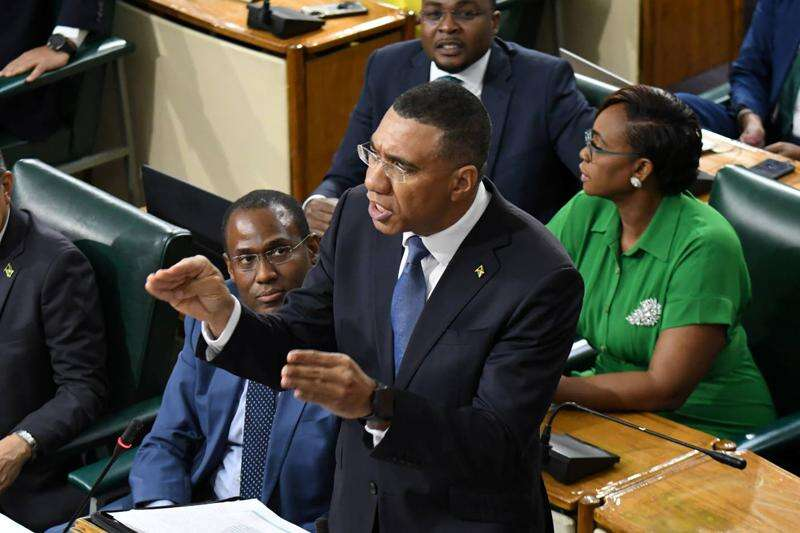
Prime Minister Andrew Holness has signalled the intentions of the Government to integrate nuclear energy in the country’s energy mix.
Speaking at the opening ceremony of Expo Jamaica 2023 last week Thursday, April 28, 2023, the prime minster revealed that already he had spoken to the International Atomic Energy Agency (IAEA) — the world’s central intergovernmental forum for scientific and technical co-operation in the nuclear field — about using nuclear energy to generate electricity.
The move will form part of the Government of Jamaica’s National Energy Policy which, in part, aims to generate 50 per cent of electric energy from renewable sources by 2030. This, Holness said, will make the supply of electricity “more reliable, more available, and more affordable”.
“Jamaica has to explore new technology in [the form of] nuclear energy — small nuclear plants to generate in Jamaica — which is cheaper, more stable and more affordable,” he explained further.
“So the Jamaica Government is serious about insulating our economy [against] energy shocks and high energy prices,” the prime minister continued.
The move has been welcomed by president of the Jamaica Renewable Energy Association (JREA) Alex Hill, who informed Jamaica Observer that “nuclear cannot be written off as future energy source”. He added that though there are pros and cons, the energy source should be considered for integration into the country’s energy mix over the next five years.
Last October, Jamaican billionaire and chairman of Portland Holdings Michael Lee-Chin signed a memorandum of understanding with the Canadian Nuclear Laboratory (CNL) under which he will be promoting nuclear technology — through small modular reactors (SMRs) — as the means to decarbonise electricity production across the world. When asked by Business Observer if Jamaica will be targeted for SMRs, he responded, “Every country is a target, whether you are a large oil-producing nation, or Jamaica, there are demands for our services.”
Still vice-president of JREA Jason Robinson is of a completely different opinion to his colleague Hill, explaining that Jamaica is not ready “or will ever be ready” for such energy source.
“Jamaica is located in a hurricane and earthquake zone which puts us in extreme danger with out having to worry about a nuclear meltdown. Also Jamaica’s brand is a natural vibe not a one that fits well with nuclear energy. I think it would take a lot away from Brand Jamaica in terms of tourism as well,” he contended.
While Robinson notes the comments of Lee-Chin, and the backing he has received from Government, the JREA vice-president told Business Observer that there needs to be a much heavier debate before there is a push towards a nuclear facility in Jamaica.
“We all can remember Fukushima and Jamaica and the Caribbean cannot withstand that type of meltdown,” he added.
Hydroelectricity
In the meantime, Holness, pointing to an announcement he made in his budget presentation in March, said on Thursday that the Government of Jamaica of creating “a new Integrated Resource Plan [IRP]” that will facilitate the introduction of new energy sources to the energy mix and ensure that the grid is stable and has the capacity to respond to the growing demand for electricity.
Back in March, Holness informed Parliament that the draft of the IRP 2 was being presented to various stakeholders for discussion and feedback, and thereafter will be finalised and presented to the Cabinet for consideration and approval.
One of the energy sources the IRP 2 will explore is hydroelectricity from hydro storage pumps. In particular, he said the Government is pursuing the Mahogany Vale Project as a national priority and an important element in the energy mix. The Mahogany Vale Dam, located in St Thomas, was first proposed as a source of convert electricity from potable water supplied to the Kingston Metropolitan Area in 1967.
“These initiatives will not materialise in two years. It may take a decade to materialise but I want you to reflect on it: we have been lagging behind for 40 years. Let’s start doing things differently now, let’s start looking at the big picture to transform our country [and] let’s start looking at big projects that are going to make a difference,” Holness urged.
The introduction of new energy sources, the prime minister argued, will create a new paradigm in energy and “change the parameters that can reduce the cost of production, increase [businesses’] capacity, and ensure [businesses] can innovate integrate technology and compete effectively with the rest of the world”.