


ENERGY MINISTER Andrew Wheatley has sought to quiet ongoing concerns over reports that the new Chinese owners of ALPART, Jiuguan Iron and Steel, are looking to set up a 1,000-megawatt coal plant in Jamaica to support their operations.
“Where we are right now, we have not received any application, any proposal, as it relates to a coal-fired plant at ALPART. What we know for a fact is that the new owners are rehabilitating, retrofitting the old ALPART facility,” he told The Gleaner on the sidelines of the Caribbean Sustainable Energy Forum (CSEF) in The Bahamas on Tuesday.
“The plan is for them to use the traditional source of fuel – HFO – to drive that bauxite facility. We expect that facility to be up and running in another 16 to 18 months, starting to produce bauxite and employing Jamaicans,” he added.
“I don’t want to speak for them, but I know they are exploring other sources of energy, separate and apart from coal,” Wheatley said further.
At the same time, the minister suggested that this ministry would not readily entertain any such application.
“The truth is that coal is a part of our energy policy, a part of that mix. But if we are to embark on such a direction, it would have to be after serious consultation. We would have to ensure that there is some technology that would, more or less, mitigate against the negative environmental impacts associated with coal in the past,” he noted.
CLEAN TECHNOLOGY
“So there is a clean-coal technology being mooted. That is something that we would have to explore. But we would never engage or embark on the use of coal – at least that capacity of producing 1,000 megawatts – without our having the necessary consultations with the different stakeholders,” he said.
News of the 1,000-megawatt plant accompanied the sale of ALPART to Jiuguan last year. The construction of such a plant would exceed Jamaica’s current generating capacity of some 800 megawatts while threatening to undermine efforts to treat with climate change, which prompted outcry from among civil society actors.
The minister’s statements on what would need to happen regarding any coal project, meanwhile, are in line with what the Council of the Jamaica Institute of Environmental Professionals called for last August.
“We look forward to seeing the holistic analysis on the full economic costs and benefits for the chosen source of energy, including the lifetime costs of energy production, the cost of treatment of pollutant emissions and effluent, the cost of any investment or operation costs for ensuring compliance with all relevant national environmental and working standards,” the entity said.
“This analysis should include critical factors such as the economic cost of health effects and medical treatment from exposure to plant emissions and effluent on workers and communities surrounding the plant,” the council added.
Ultimately, like a number of other civil society actors, it concluded: “It is our position that a coal-fired plant is counter-productive to Jamaica’s own Vision 2030 and our other commitments on energy, sustainable development, and climate change,” it said.
“We hasten to point out that there is a cost associated with sourcing and transportation of coal from overseas; the potential impact on human health, including long-term treatment; and the cost of ensuring that all relevant national standards are met,” they added.

The Jamaica Public Service Company (JPS) is preparing for a battle with the Government over any attempt to review its operating licence.
The JPS was put on its guard last Friday when Government senator and chief technical adviser to the finance minister, Aubyn Hill, declared that the Andrew Holness-led administration is obliged to review the licence of the light and power company because of threats to the Jamaican economy.
Opening the State of the Nation Debate in the Senate, Hill called for a review of the modified licence issued to JPS last January, because it “seems to be quite opposed to the interest of Jamaicans”.
“We have to look at that licence carefully [and] as a new Government, we’re obliged to,” Hill told his parliamentary colleagues.
But Kelly Tomblin, the president and chief executive officer of the JPS, in a quick response, rejected Hill’s reasons for questioning the changes to the licence and expressed the hope that his comments would not suggest that Holness will shred the contract.
“I’m sure, similar to how the Government has continued on the framework for fuel diversity, that this Government certainly wouldn’t suggest that a licence negotiated in good faith, in which the JPS has made investments, would be negated by a subsequent government,” said Tomblin.
“Surely, he’s (Hill) not suggesting that,” added Tomblin.
In his Senate presentation, Hill argued that he was making the call from his position as a senator.
“Because I may have some influence on policy, I do not lose my right as a senator to bring up independent issues. My position is quite different from a recommendation, and if I gave a recommendation I probably would not be speaking on it publicly,” said Hill.
The international banker argued that the replacement of the price cap regime with the revenue cap in the licence “could dampen economic growth” because JPS’s growth is no longer tied to that of the economy.
“A good argument can be made that the revenue cap approach blunts any incentive on JPS’s part to support the expansion of renewable sources of energy or to improve efficiencies in their current business,” said Hill, who is the chairman of Innovative Renewable Energy & Electronics Limited.
He said giving the JPS the right of first refusal to replace generating plants due for retirement entrenches the company’s near-monopoly and is inconsistent with international standards and Jamaica’s national energy policy.
‘Inaccurate Conclusions’
Tomblin rejected those claims, arguing that Hill was making “inaccurate conclusions”.
“We negotiated with the Government for our licence amendments that we believe serve the country. We have about 31 guaranteed standards that are monitored by the Office of Utilities Regulation (OUR).
“Our overriding goal is to support economic growth. This (Hill’s arguments) requires a more fulsome discussion with the utility,” said Tomblin.
Hill’s call came days after the OUR announced new regulation which should give it more power to monitor the operations of the JPS and other entities which generate or supply electricity.
The regulation will govern the operational standards and established procedures for handling the generation, transmission, distribution, supply and dispatch of electricity across the island.
According to the OUR, the regulation adopts five grid codes, which are generation, transmission, distribution, supply, and dispatch.
“The codes, which were finalised in August 2016, have been developed in parallel, and are designed to be used in conjunction with each other,” said the OUR.

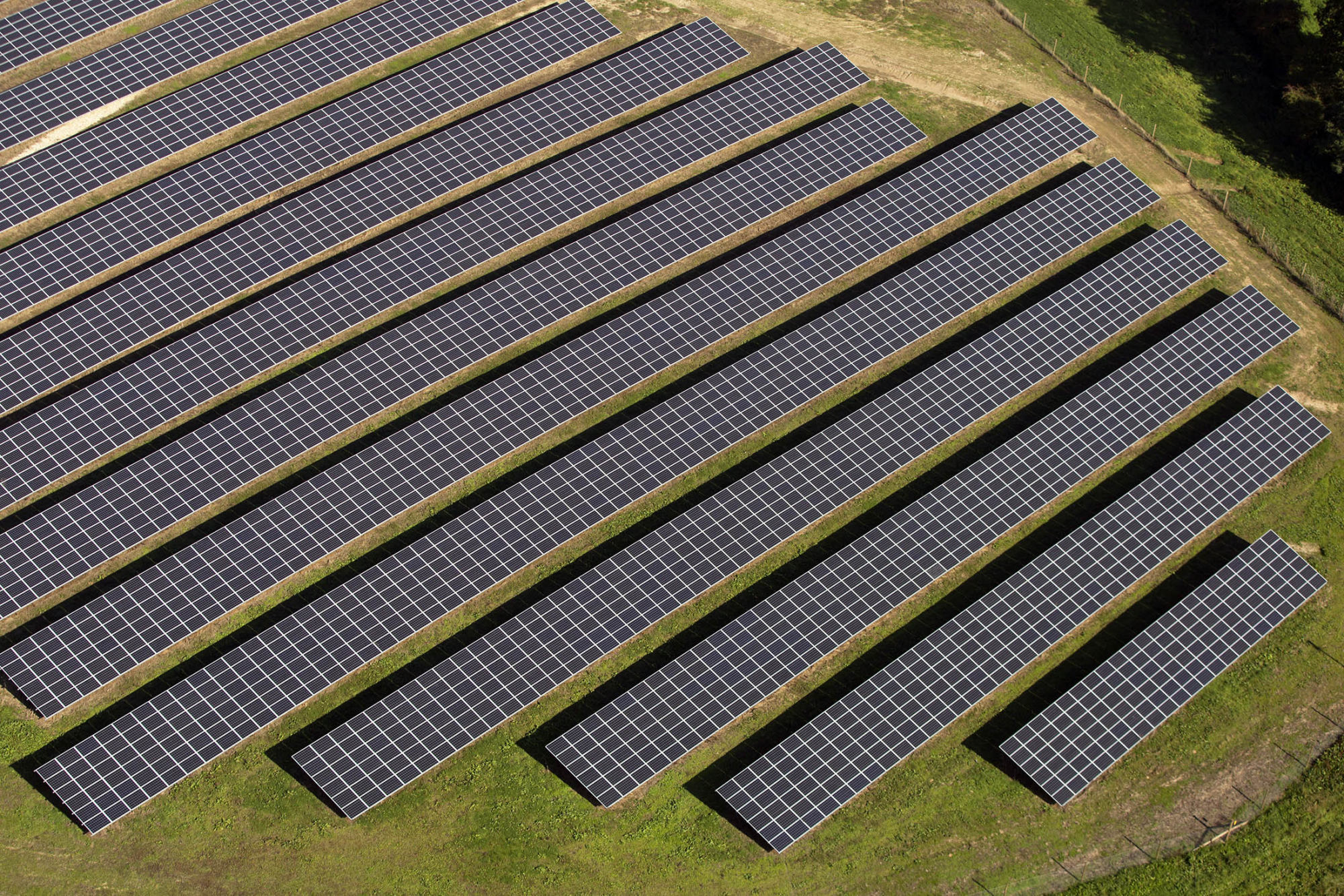
Electric avenues that can transmit the sun’s energy onto power grids may be coming to a city near you.
A subsidiary of Bouygues SA has designed rugged solar panels, capable of withstand the weight of an 18-wheeler truck, that they’re now building into road surfaces. After nearly five years of research and laboratory tests, they’re constructing 100 outdoor test sites and plan to commercialize the technology in early 2018.
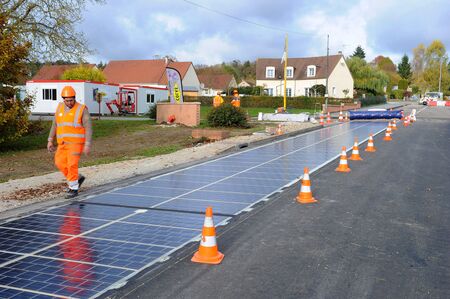
Wattway’s solar road in Tourouvre
“We wanted to find a second life for a road,” said Philippe Harelle, the chief technology officer at Colas SA’s Wattway unit, owned by the French engineering group Bouygues. “Solar farms use land that could otherwise be for agriculture, while the roads are free.”
As solar costs plummet, panels are being increasingly integrated into everyday materials. Last month Tesla Motors Inc. surprised investors by unveiling roof shingles that double as solar panels. Other companies are integrating photovoltaics into building facades. Wattway joins groups including Sweden’s Scania and Solar Roadways in the U.S. seeking to integrate panels onto pavement.
To resist the weight of traffic, Wattway layers several types of plastics to create a clear and durable casing. The solar panel underneath is an ordinary model, similar to panels on rooftops. The electrical wiring is embedded in the road and the contraption is topped by an anti-slip surface made from crushed glass.
A kilometer-sized testing site began construction last month in the French village of Tourouvre in Normandy. The 2,800 square meters of solar panels are expected to generate 280 kilowatts at peak, with the installation generating enough to power all the public lighting in a town of 5,000 for a year, according to the company.
For now, the cost of the materials makes only demonstration projects sensible. A square meter of the solar road currently costs 2,000 ($2,126) and 2,500 euros. That includes monitoring, data collection and installation costs. Wattway says it can make the price competitive with traditional solar farms by 2020.

The electricity generated by this stretch of solar road will feed directly into the grid. Another test site is being used to charge electric vehicles. A third will power a small hydrogen production plant. Wattway has also installed its panels to light electronic billboards and is working on links to street lights.
The next two sites will be in Calgary in Canada and in the U.S. state of Georgia. Wattway also plans to build them in Africa, Japan and throughout the European Union.
“We need to test for all kinds of different traffic and climate conditions,” Harelle said. “I want to find the limits of it. We think that maybe it will not be able to withstand a snow plow.”
The potential fragility joins cost as a potential hurdle.
“We’re seeing solar get integrated in a number of things, from windows in buildings to rooftops of cars, made possible by the falling cost of panels,” Bloomberg New Energy Finance analyst Pietro Radoia said. “On roads, I don’t think that it will really take off unless there’s a shortage of land sometime in the future.”’

Prime Minister Andrew Holness addresses the opening ceremony of the Organisation of Caribbean Utility Regulators Conference in Montego Bay, St James, yesterday.
Asserting that “we must get it right”, Prime Minister Andrew Holness has urged utility regulators to take seriously their role in helping the Caribbean ease its dependence on oil and embrace technologies and renewables key to energy diversification.
The regulators’ role, he said, is linked to the creation of partnerships with investors who want returns, consumers and governments pushing for the economic development of their countries.
Holness was addressing the opening ceremony for the 14 Organisation Of Caribbean Utility Regulators (OOCUR) conference at the Secrets Resorts & Spa in Montego Bay, St James.
A variety of issues are set for discussion over three days by the more than 160 regional and international experts.
However, Holness, noting the importance of energy to the region’s development and the current high levels of dependence on oil, made it clear that the issue should be at the top of the agenda.
“Energy is clearly the mission-critical frontier,” he said, pointing to the role of Jamaica’s Office of Utilities Regulation (OUR) in helping Jamaica introduce liquefied natural gas (LNG) as part of the energy mix.
“The OUR approved the funding for the conversion of the Jamaica Public Service Bogue plant to enable the move from heavy dependence on oil to diversifying to LNG. I applaud the OUR in this regard for being a strong regulator and helping to make this move a reality – to take Jamaica on this new platform. This is a great example of collaboration among Government, regulator, and utility,” Holness added.
A shipment of LNG supplies arrived in Jamaica last week Saturday, and in two weeks, is expected to be in full use.
TAKE ROLE SERIOUSLY
The prime minister emphasised that regulators have to take seriously their role in helping the Caribbean Community implement the Caribbean energy policy that was approved in 2013.
That policy promotes a shift in sustainable energy through increased use of renewable energy sources and energy efficiency, among other things.
“OOCUR, you have your work cut out for you as not only is Jamaica focused on diversifying its energy mix, so, too, is CARICOM, and we must get it right in the region. Access to affordable energy is a necessary requirement for addressing sustainable development in the region,” Holness said.
He also argued that while there is need for partnership with all stakeholders in the provision of utilities, the providers must insist on self-regulation to ensure that standards are upheld and service delivery is at a high quality.
Earlier, Albert Gordon, chairman of OOCUR, said the conference was happening at a time when regulation was becoming more important for sustainable development.
The conference schedule has placed heavy emphasis on renewable energy and investment.
Jamaica and many other small-island states of the Caribbean are heavy importers of oil, which increases their vulnerabilities to external shocks such as sharp oil price rises. Except for Trinidad and Tobago, the only net exporter of oil and natural gas, all other Caribbean countries are net oil importers.
“For importers other than Suriname, around 87 per cent of primary energy consumed is in the form of imported petroleum products. Imports are mostly diesel fuel for electricity generation, gasolene for transportation, and liquefied petroleum gas used as cooking gas in households,” experts noted in a paper titled ‘Caribbean Energy: Macro-Related Challenges’ released in March by the International Monetary Fund.
This, they said, has led to consistently high electricity rates, which affects the competitiveness and development of CARICOM nations.

A new energy-saving project costing US$30 million ($3.8 billion) will seek to reduce traffic jams in the Kingston Metropolitan Area (KMA) by synchronising 140 stop lights through a fibre-optic ring, while also cutting energy consumption at scores of government buildings.
The plan requires funding approval from donor agencies Inter-American Development Bank (IDB) and Japan International Cooperation Agency. Both are considering loans of up to US$15 million each to a project that has Petroleum Corporation of Jamaica acting as the executing agency.
The project, dubbed ‘Jamaica Energy Management and Efficiency Programme’, involves three components: it aims to fast-track Government’s National Energy Conservation and Efficiency Policy 2010-2030, target a 70 per cent reduction in energy “intensity”, and reduce greenhouse gas emissions by 10 per cent, said the IDB.
The traffic component aims to reduce the idle time that cars run on the road, which would reduce gas consumption. It would achieve this by implementing a more robust urban traffic management system – UTMS – which involves linking into the fibre-optic ring already developed by telecoms providers.
The IDB revealed the project late August and released documents on the project profile and environmental analysis. Both documents contain figures which vary slightly when breaking down each component, but the objectives remain consistent.
Regarding the road network, the government will upgrade or implement technologies for nine road segments, most of which are located in Kingston and one in Spanish Town.
39-50 Per Cent Growth
The IDB, utilising data from the National Works Agency (NWA), indicated that traffic growth along some of the KMA’s key corridors has increased 39-50 per cent over a decade, 2005-2015, without any associated improvements in road or intersection capacity.
Additionally, the absence of a complete UTMS to sync the operation of 140 traffic lights, with average spacing of 300 metres in between, remains a key factor causing congestion in the KMA.
“Most of the population commutes within urban centres, resulting in significant amount of congestion, lost time and wasted gasolene during idling or stalled traffic, especially the capital city Kingston,” stated the IDB.
Component I of the project amounts to US$24 million to finance energy efficiency and energy-conservation measures in government facilities, which could span 75 entities, with focus on educational and health facilities. Component II, at US$2.8 million, involves the financing of fuel efficiency in the transport sector. Component III, at US$1.8 million, will finance institutional strengthening for energy planning by developing information systems and training.
In 2015, public-sector facilities consumed some 7.4 per cent of all electricity generated in Jamaica, or approximately 393 gigawatt hours, costing the GOJ around US$36 million in oil imports, or an estimated US$102 million in electricity bills, the IDB said. Of this figure, roughly 22 per cent related to education and health facilities.

Malvern, St Elizabeth — Eighteen months after ground was broken, the 36.3-megawatt wind farm run by BMR Jamaica Wind at Potsdam, Malvern, high in the Santa Cruz Mountains, was formally commissioned in mid-August.
Priced at US$89.9 million, the wind project, located across the road from another wind farm run by light and power company Jamaica Public Service Company (JPS), is being described as the single largest investment in St Elizabeth since construction of the Alpart alumina plant at Nain in the late 1960s.
The BMR project includes eleven wind turbines, which will provide energy to JPS’s national grid at US12.9 cents per kilowatt-hour.
BMR Jamaica Wind is a subsidiary of US-based BMR Energy. Guests at the recent formal commissioning were told that billionaire British investor, Sir Richard Branson — who turned up for the commissioning — was in the process of acquiring BMR through his wide- ranging and far-flung Virgin Group.
Branson, who triggered laughter by ripping up and throwing away what he said were his speaking notes, told his audience that his motive for the acquisition was to promote a clean energy revolution.
“I decided recently that we needed to get one or two core (clean energy) companies under our belt so that we can actually get out there and speed up this revolution …” he said.
“ We were delighted to acquire BMR and we will be out there trying to hustle and bustle governments all over the Caribbean and other countries to hurry up towards carbon neutrality by 2050. Personally, I don’t need to make money out of it, if it makes a bit of money, fine; if it doesn’t, fine. I just want to get the wind out there get the solar out there, … be powered by sun, wind, sea… a green energy revolution and bring the cost of energy down for everybody; get rid of the dangers of coal and oil and the dirty energies that we are using today… ” said Branson, founder of the Virgin Group.
Funding for the BMR project in Malvern was sourced through a package including a US$42-million loan from the US quasi-government investment agency Overseas Private Investment Corporation (OPIC), which pushes US overseas investment globally; US$10 million from the International Finance Corporation (IFC), which promotes private sector development; US$10 million from the IFC-Canada Climate Change Programme and equity investment of US$26.9 million from BMR Energy.
Jamaica’s energy minister Andrew Wheatley said the BMR wind farm formed part of the government’s drive to significantly reduce reliance on fossil fuels and reduce the current annual oil bill of about US$2 billion. Ninety-two per cent of Jamaica’s energy needs are currently met by oil imports, he said.
The project was in line with the target of 30 per cent renewables in the national energy mix by 2030, as stated in the National Energy Policy, and in keeping with Vision 2030 Jamaica, the minister said.
“Projects like BMR continue to establish Jamaica as a clear renewables market leader within the Caribbean. By the end of this year, we would have added 80 MW of renewable energy to the national grid, through Wigton III (a wind farm at Rose Hill in southern Manchester), Content Solar (solar plant in Clarendon), and this facility,” Wheatley said.
Bruce Levy, president of BMR Energy, said the company had plans to expand the wind farm at Malvern by an additional three wind turbines. Small farmers would co-exist with the energy-generating operations, he said.

JMMB Group Limited will spend US$420,000 ($53 million) on a solar energy system to power various offices across Jamaica this year.
The project forms part of a wider move by JMMB to reduce its carbon footprint.
“We plan to implement this on a location-by-location basis, with the first implementation taking place at one of our locations in Kingston, in the coming months. The cost is as stated, US$420,000,” the financial conglomerate told the Financial Gleaner.
JMMB estimates the project payback period will span just about five years based on expected energy savings.
The solar plant will generate up to 293,935 kilowatts, hours of electricity per year with the use of clean renewable energy.
“The system is expected to save the company US$90,000 annually, and reduce oil energy dependency by 34 per cent,” JMMB said in its newly released annual report for year ending March 2016.
Roughly three years ago, JMMB embarked on a company-wide initiative coined ‘Go Green’, with one of the primary objectives to change the group’s energy practices in a way that was more environmentally friendly and cost-efficient.
“This investment in a grid-tied solar system is just another step in the direction of making us even more efficient at how we use energy,” the company said via email.
A grid-tied solar system is one where the system itself is tied to the external electricity grid, as opposed to batteries.
“In other words, the system uses the sun to generate our electricity needs, with any unused electricity going back to the external grid, as opposed to being stored in batteries,” said JMMB.
JMMB expects the project to expand over time through exploration of other renewable resources to all JMMB Group locations, where possible.
JMMB Group made $2.3 billion profit off $10.42 billion of net revenue in FY2016.

The Office of Utilities Regulation (OUR) says it will ensure that power utility Jamaica Public Service Company does not increase bills to consumers based on the delay in the delivery of cheaper gas fuel.
The first delivery of liquefied natural gas – LNG – by JPS’ supplier was expected in April, but has been pushed back to August.
New Fortress Energy has developed a terminal in Montego Bay to feed gas to JPS’ Bogue plant, which has been converted to burn either LNG or automotive diesel oil.
“The OUR has moved to assure consumers that it will be vigilant in ensuring that the delay in the delivery of liquefied natural gas to the Bogue power plant will not result in an increase in the price of electricity,” said the regulator in a statement.
While welcoming the completion of the conversion of the 120-megawatt combined cycle plant, the OUR signalled disappointment with the “four-month delay” in the delivery of the overall project.
The gas supply agreement signed by JPS and New Fortress Energy on August 5, 2015, stipulated that gas delivery would commence April 2016, the OUR stated.
“Safeguards for customers were included in the agreement with New Fortress to ensure that any delay on its part would not result in negative cost implications for customers,” noted OUR Director General Albert Gordon. “The OUR has been monitoring the project closely and will continue to keep the public abreast of its progress.”
Project’s goal
The Bogue project’s goals, which are aligned to those in the National Energy Policy, were to reduce fuel cost, and lower the operations and maintenance expenditure of electricity generation. Gordon noted that the OUR’s involvement in the project began in 2008 and that the agency mandated that the plant be upgraded to burn gas in the 2014-2019 JPS tariff determination.
“To ensure this, the OUR also made provisions for the setting up of the Bogue Plant Reconfiguration Fund (BPRF), financed through the tariff, to facilitate the conversion cost,” the agency said.
The revenues for the BPRF – which totalled $15 million – were collected by the JPS through a line item in the monthly fuel rate calculation on customers’ bills, over a twelve-month period, between February 2015 and January 2016, the OUR said.
Requests to JPS for comment were unanswered up to press time.