
screen-shot-2016-10-28-at-6-20-33-pm

What will Donald Trump actually do?

It’s a question many Americans are asking themselves now that the U.S. has wrapped up one of its least policy-specific elections ever. The president-elect has offered only the loosest of legislative prescriptions, including whatever plans he may have for the energy industry.

The mystery hangs over turbine manufacturers like Vestas Wind Systems, which fell 12 percent since the election, and coal companies such as Peabody Energy Corp., which soared 73 percent. In his only major energy speech, Trump, 70, said he would rescind “job-destroying” environmental regulations within 100 days of taking office and revive U.S. coal. It’s terrible news for efforts to slow the pace of climate change, but the impact on the renewable energy revolution may be limited. Here’s what it could mean for America’s clean-energy darling, Tesla Motors Inc.:

1. Solar and wind subsidies are probably safe

Tesla is, first and foremost, an electric car company. But on Nov. 17 shareholders will vote on final approval of CEO Elon Musk’s $2.2 billion deal to buy SolarCity Corp. The acquisition would make Tesla the biggest U.S. rooftop solar installer and the first major manufacturer to integrate solar panels with battery backup to extend power into the night.

The swift spread of rooftop solar in the U.S. has been made possible by two government policies. First, most utilities are required to credit homeowners for the excess power they send back to the grid. Those requirements are state-level and shouldn’t be affected by Trump. Second is the 30 percent federal tax credit to offset the cost of installations. The credits were first signed into law under Republican President George W. Bush in 2005 and extended by a Republican Congress late last year. Given their broad support, the subsidies are unlikely to be repealed.

2. Even without incentives, renewables will get cheaper

Solar panel prices have dropped, on average, more than 15 percent a year since 2013. On a utility scale, solar power is already cheaper than coal-fired grid electricity across most of the U.S., after subsidies. Even if the incentives were suddenly removed next year—an improbable and economically destructive scenario—the industry would eventually recover as prices continue to fall.

Incentives are designed to make superior new technologies initially affordable, but once those technologies take off, economies of scale take over.
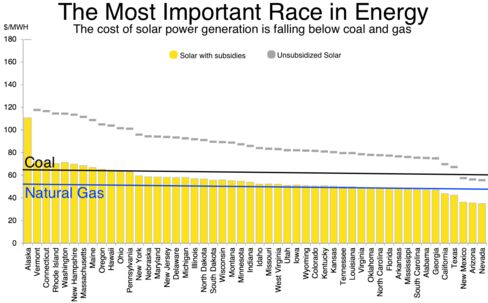
Source: Bloomberg New Energy Finance

A loss of the federal tax credit could slow the rollout of Tesla’s unusual new rooftop solar shingles. Traditional rooftop panels, however, are almost ready to stand on their own. The payback period currently ranges from about 5 to 10 years, after subsidies and state rebates. If Tesla can achieve the cost savings it hopes for with the merger, it won’t be long before that’s the payback timeline without subsidies.

3. Gasoline fuel-efficiency targets could be dismantled

One of President Barack Obama’s most significant climate achievements was to push through ambitious fuel-economy regulations for U.S. vehicles. The Environmental Protection Agency is scheduled next year to re-asses rules intended to double the average efficiency of cars and trucks to almost 55 miles per gallon by 2025. Those goals could be delayed or dismantled under Trump, accelerating America’s shift to trucks and SUVs. Stocks of Detroit carmakers have predictably surged, while Tesla shares fell 4.9 percent in the two days after the election.

This is obviously bad news for human health and the environment, but it’s impact on Tesla won’t be catastrophic. The price of batteries is dropping rapidly, and by the early 2020s electric cars should be cheaper and better performing than their gasoline-powered equivalents across the board. Lowering efficiency standards will make gasoline cars a bit cheaper to manufacture, but it will also make them more costly to drive over the life of the vehicle.

4. Electric vehicle incentives will expire on their own

The U.S. push for electric cars was set in motion by a $7,500 federal tax break. The Trump administration could eliminate the subsidy, but the impact would be short-lived for electric pioneers including Nissan Motor Co., General Motors Co., and Tesla. That’s because the electric-vehicle subsidies were already designed to phase out after each automaker reaches its 200,000th domestic EV sale. Tesla may be first to cross that finish line, probably in the first half of 2018.

The incentives were intended to overcome steep startup costs and slow initial demand for new electric vehicles. Removing the tax break now would effectively pull the ladder up behind Tesla and make it more expensive for other automakers to transition to battery power, a result that wouldn’t be in anyone’s best interest.

5. States wield the power of their own incentives

Some of the biggest incentives in renewable energy are offered by states, not the federal government. Each state has authority over its own solar and wind rebates, credits for power sold back to the grid, renewable-mix requirements for utilities, and electric-car subsidies. These policies cross ideological borders into deeply Republican states. For example, Louisiana residents can get an additional tax credit of almost $10,000 for buying a long-range electric car. In Colorado, it’s an extra $5,000.
Under Trump, the role of cities and states in regulating pollution and expanding clean energy will increase. So will the disparity between states that prioritize the issue and those that don’t. But again, don’t expect the energy revolution to follow rigid red-state, blue-state definitions. The states producing the most wind power in the U.S. include Texas, Kansas, and Oklahoma. For solar, Arizona, North Carolina, and Nevada are among the top ten. Of those, Hillary Clinton won only Nevada.

6. Keystone’s resurrection won’t make gasoline cheaper

This election was great news for oil companies. Reviving the Keystone XL pipeline, which was rejected under Obama, is on Trump’s list of priorities for his first 100 days. He is also likely to support the beleaguered Dakota Access Pipeline. The company building it, Energy Transfer Partners LP, says business is “only going to get better” under Trump.

These pipelines are hugely symbolic for climate activists who say we can’t keep building infrastructure for oil we can’t afford to burn. But the impact of the pipelines themselves is open to debate. They increase profitability for oil companies, but as oil trades on a global market, the impact on U.S. gasoline prices and by extension demand for electric cars is negligible.

7. Trade barriers with Mexico would hurt Tesla’s rivals

Trump wants to scrap or renegotiate the North American Free Trade Agreement (NAFTA). That could be a dicey proposition for the car industry. Since 2010, nine automakers, including Ford Motor Co., GM and Fiat Chrysler have announced more than $24 billion in Mexican investments. They rely on Mexican plants to produce millions of vehicles and a high volume of parts.

By contrast, Tesla’s manufacturing and assembly are done almost entirely in California and Nevada. Tesla also plans to begin solar-panel production next year at SolarCity’s massive plant in Buffalo, N.Y. Tariffs on solar panels made outside the U.S. would make Tesla’s American-made products more competitive.

In the end, the confluence of all of these forces, but especially the precipitous decline of coal and increasing affordability of renewable sources of energy, is probably too strong to be reversed by the incoming Republican administration. That’s good news for Tesla, and a lot of other companies working to clean up the energy supply.

Bloomberg

 ExxonMobil and others pursued research into technologies, yet blocked government efforts to fight climate change for more than 50 years, findings show

Exxon Mobil
The patent records were among a new trove of documents published by the Center for International Environmental Law, and deepen the public relations challenge for Exxon. Photograph: Jessica Rinaldi/Reuters

Patent records reveal oil companies actively pursued research into technologies to cut carbon dioxide emissions that cause climate change from the 1960s – including early versions of the batteries now deployed to power electric cars such as the Tesla.

Scientists for the companies patented technologies to strip carbon dioxide out of exhaust pipes, and improve engine efficiency, as well as fuel cells. They also conducted research into countering the rise in carbon dioxide emissions – including manipulating the weather.

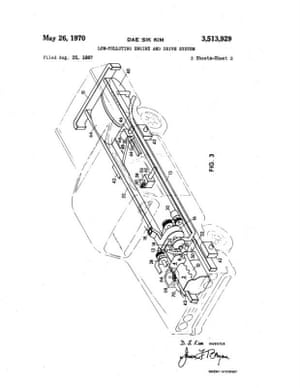
Esso, one of the precursors of ExxonMobil, obtained at least three fuel cell patents in the 1960s and another for a low-polluting vehicle in 1970, according to the records. Other oil companies such as Phillips and Shell also patented technologies for more efficient uses of fuel.

However, the American Petroleum Institute, the main oil lobby, opposed government funding of research into electric cars and low emissions vehicles, telling Congress in 1967: “We take exception to the basic assumption that clean air can be achieved only by finding an alternative to the internal combustion engine.”

This 1970 patent, assigned to Esso (now ExxonMobil), is a design for a low-polluting engine system.
  This 1970 patent, assigned to Esso (now ExxonMobil), is a design for a low-polluting engine system. Photograph: Handout


And ExxonMobil funded a disinformation campaigned aimed at discrediting scientists and blocking government efforts to fight climate change for more than 50 years, beforepublicly disavowing climate denial in 2008.

The patent records were among a new trove of documents published on Thursday by the Center for International Environmental Law, and deepen the legal and public relations challenge for Exxon.

“What we saw was an array of patent technologies that demonstrated that these companies had the technologies they needed and could have commercialised to help address the problem of C02 pollution,” said Carroll Muffett, president of the Ciel. “They then turned to Congress and said you don’t need to invest in electrical vehicle research because the research is ongoing and it’s robust.”

The findings echo those in the documentary Who Killed the Electric Car?, which explored the deliberate destruction of GM’s first electric vehicles.

Alan Jeffers, an Exxon spokesman, insisted he could not comment directly on the documents as he was unable to access the Center for International Environmental law website on which they were published on Thursday morning.

In an emailed statement, Jeffers said: “The Guardian gave us only a few hours to comment on documents from four decades ago.”

Jeffers went on: “This further illustrates the Guardian’s well-established bias on climate change issues which has been demonstrated previously through its keep it in the ground campaign.”

He said the company believed the risks of climate change were real, was researching lower emission technologies, and engaged in “constructive dialogue” with policy makers about energy and climate change.

Researchers discovered more than 20 such patents filed by oil companies from as early as the 1940s for technologies that could help in the development of electric cars.

However, Ron Dunlop, president of Sun Oil and API chairman, told a joint hearing of the commerce committee in 1967 that government funding of research into electric cars would be misplaced – because the oil companies were so advanced in their research of cleaner cars. “We in the petroleum industry are convinced that by the time a practical electric car can be mass produced and marketed, it will not enjoy any meaningful advantage from an air pollution standpoint,” he told Congress. “Emissions from internal-combustion engines will have long since been controlled.”

Muffett said the findings were the result of three years of research and were not exhaustive.

“The question is what did they do to try to commercialise these technologies, knowing what they did about climate change,” he went on.

The revelations, the second set of documents released by Muffett’s organisation, reinforce charges by campaigners that Exxon was well aware that the burning of fossil fuels was a main driver of climate change – despite its public posture of doubt.

In addition to the technologies with potential for electric cars, Exxon and other oil companies were actively researching methods to cut emissions of carbon dioxide – the main greenhouse gas.

In another historic document that surfaced last month, a Canadian subsidiary of Exxon admitted the company had the technology to cut carbon emissions in half. However, the corporate memo dating from 1977 said it would be prohibitively expensive – doubling the cost of electricity generation, according to the documents obtained by Desmog blog.

New York and 17 other attorneys general, including DC and the US Virgin Islands, are investigating whether the oil company lied to investors and the public about the threat of climate change.

Campaigners plan to further turn up the heat on the company next week when Exxon holds its annual shareholder meeting in Dallas.

Campaigners have argued for more than a decade that Exxon bankrolled a network of front groups and conservative think tanks aimed at discrediting well-established science – confusing the public and delaying governments efforts to cut the greenhouse gas emissions responsible for warming.

Those efforts to put Exxon on the spot gathered pace after Inside Climate News and the Los Angeles Times reported that the company’s own scientists knew as early as the 1970s that greenhouse gases caused climate change.

The attorney general of the US Virgin Islands has subpoenaed Exxon to turn over email, documents and statements over the last decades.

Exxon has dismissed the investigations as politically motivated.

However, the company has reversed its opposition to fuel cell technology. Earlier this month, the company announced it had been conducting a joint research effort on fuel cell power plants with FuelCell.

The initiative, which got underway in 2011, aims to route the carbon dioxide from fossil fuel burning power plants into fuel cells, producing low emissions electricity. The company has estimated it can cut 90% of carbon dioxide emissions.

“At ExxonMobil, we share the view that the risks of climate change are serious and warrant thoughtful action,” Rex Tillerson, Exxon’s chief executive, told the US Energy Association after receiving its annual award.

The Guardian

The first Caribbean International Electric Car Show was launched at the Cayman Motor Museum in West Bay in Grand Cayman.

There it was officially announced that regulations allowing electric cars to be registered in the Cayman Islands had been approved.

A number of different models were on display, including the popular Wheego; a two-seater zippy vehicle that will be one of the cars available for purchase in the Cayman islands.

http://rjrnewsonline.com/business/cayman-hosts-1st-caribbean-international-electric-car-show