
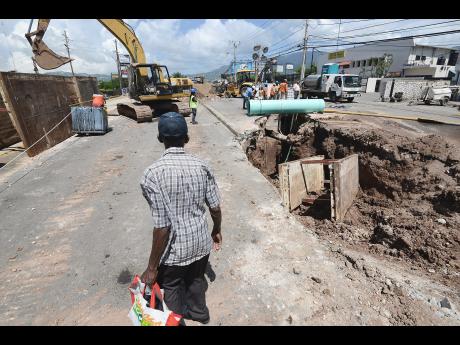

Caribbean waters have been disturbed by Hurricane Matthew, which has left a trail of death and destruction in its wake this past week.
While Jamaica was spared the full wrath of Hurricane Matthew, others in the Caribbean were not, making well the case for holding global temperatures at 1.5 degrees Celsius in the face of a changing climate.
So says respected meteorologist and former climate change negotiator for Jamaica, Clifford Mahlung.
For him, the experience of Matthew – leaving in its wake a trail of bodies and extensive infrastructure damage in not only Haiti, which took a severe battering, but also the Dominican Republic and Cuba – is chock-full of takeaways.
“The lessons that we gather from Matthew are numerous. It certainly strengthens the argument that we keep our global temperatures as close as we can to 1.5 degrees, because anything above 1.5 will result in many such systems like the one we just experienced with this hurricane,” Mahlung told The Gleaner.
In the run up to and during the international climate change talks held in France last year, the Caribbean aggressively lobbied for and ultimately secured the inclusion of 1.5 degrees Celsius as a target referenced in the new climate deal.
Dubbed ‘The Paris Agreement’, it has as its goal to hold “the increase in the global average temperature to well below 2 degrees Celsius above pre-industrial levels, and to pursue efforts to limit the temperature increase to 1.5 degrees Celsius above pre-industrial levels, recognising that this would significantly reduce the risks and impacts of climate change”.
The agreement will come into force next month following reports of endorsement from European nations yesterday, which sent the accord across a crucial threshold. “European nations raised backing for the 2015 Paris Agreement to countries representing 56.75 per cent of world greenhouse gas emissions, above the 55 per cent needed for implementation,” a Reuters news report said, quoting from a United Nations website.
With this year’s global climate change talks, to be held in Marrakesh, now only weeks away, Mahlung said Hurricane Matthew lends significance to the coming into force of the agreement. It also underscores, he said, the need for global financial and other support for climate change adaptation and loss and damage associated with extreme weather events in small-island developing states (SIDS).
“Hurricane Matthew was able to maintain category three or higher for several days. It shows that we can get a category five hurricane in a matter of hours,” Mahlung said.
“It shows the difficulties of even doing some of the predictions, as we saw how the projected tracks changed considerably over time; and this is not because the models are not good, but that the kind of conditions we now face with respect to tropical cyclone development have changed significantly from the good old days of, say, a Gilbert or Ivan,” he added.
According to the meteorologist, SIDS have to remain vigilant.
“You can appreciate that there were times when the people in Haiti and Dominican Republic would have thought that the system would not have come to Hispaniola. We saw where, in the final analysis, Jamaica was spared and the track was changed, resulting in grave devastation in Hispaniola and particularly Haiti,” Mahlung noted.
“So when we make the case with respect to adaptation in Marrakesh in a few weeks time, and also loss and damage, we will go into those negotiations with first-hand experiences of just what severe weather events such as a tropical cyclone, can do to small-island states,” he emphasised.
Former head of the Meteorological Service, Jeffrey Spooner, for his part, said there was no question of the need to continue the push for a climate-secure Caribbean.
“My real wish is that Marrakesh continues the work to ensure that we get to the point where we can really seal this deal to cap the increase in global temperatures at 1.5 degrees Celsius. Jamaica, CARICOM and SIDS need to continue to press for that,” he said.
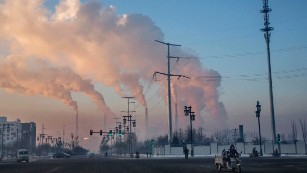
Nearly everyone who studies climate change policy agrees on one thing: To fix this monster of a problem, governments need to put a price on dangerous carbon pollution.
NEW YORK — The United Nations General Assembly (UNGA) kicked off on Tuesday here with more than 140 heads of state and government and a yearly tradition of speeches made to the 193 member states of the chief deliberative, policymaking and representative organ of the United Nations.
This year marks the 71st session of the UNGA, convened under the theme ‘The Sustainable Development Goals: a universal push to transform our world’, with particular focus on Goal #13: Take urgent action to combat climate change and its impacts.
This high-level week with world leaders is an opportunity for the Kingdom of Morocco to promote the 22nd Conference of the Parties to the United Nations Framework Convention on Climate Change (COP22) set to take place in Marrakech, November 7 to 18. Salaheddine Mezouar, Minister of Foreign Affairs and Cooperation, will be on hand for a series of side-events and bilateral meetings aimed at reinforcing and promoting Morocco’s climate initiatives, including those on energy, agriculture, capacity building, adaptation and finance, discussing global warming issues affecting the most vulnerable countries and island states, and mobilising the international community for an ambitious global climate action agenda in Marrakech to implement the Paris Agreement.
United Nations Secretary
hosted a special event to encourage parties to ratify the agreement. According to the United Nations Framework on Climate Change, as of Tuesday, 29 parties have ratified the agreement, accounting for 40.12 per cent of global emissions. The Kingdom of Morocco will be among approximately 20 countries to deposit their instruments of ratification here during this week’s proceedings, inching closer to the 55 per cent necessary for legal entry into force when the agreement takes effect and becomes legally binding for those countries that have joined.
During his opening remarks, Ban underscored the importance of the climate change agenda.
“With the Paris Agreement we are tackling the defining challenge of our time. We have no time to lose. I urge you to bring the Agreement into force before the end of year. We need 26 more countries equalling 15 per cent of global emissions for entry into force,” he stated.
US President Barack Obama, during his last speech to the UNGA, called on the international community to keep working together to solve global issues including climate change. “The Paris Agreement gives us a framework to act, but only if we scale up our ambition,” he stated.
UNGA President Peter Thomson, the first from a Pacific Island nation (Fiji), underscored the need to act on climate change to avoid its negative impacts. “We are steadily moving towards the ratification of the Paris Agreement. We must not delay any further.”
Brazilian President Michel Temer affirmed his country’s commitment to fighting global warming, saying: “Tomorrow I will deposit Brazil’s instruments of ratification of the Paris Agreement.”
As the first African head of state to address the UNGA, Idriss Déby Itno, president of Chad, highlighted the importance of working with the international community to fight global warming on the continent. “It’s not about giving charity to Africa, it’s about true partnership with Africa to tackle climate and global challenges,” he said.
The traditional roll call of speeches to the UNGA starts with the United Nations secretary general, followed by the President of the UNGA, president of Brazil (first Member State to speak in the general debate since the 10th session of the General Assembly) and president of the United States (host country). For all other member states, the speaking order is based on the level of representation, preference and other criteria such as geographic balance.

To take better strategic advantage of climate finance opportunities while continuing the courtship of local business interests, Jamaica is looking to have private sector representation on its team to Marrakesh in November.
“In this COP (Conference of the Parties to the United Nations Framework Convention on Climate Change), we would want even one private sector representative – and probably, more specifically, from the financial sector – accompanying the delegation,” said head of the Climate Change Division.
“I am going to shamelessly and aggressively pursue that to see if it will happen,” she added.
According to Gordon, who recently assumed leadership of the division, it is critical to have the private sector fully sold on and involved in Jamaica’s climate change response efforts.
“When we have a weather event, then people suffer, but the private sector’s bottom line is [also] impacted severely. So we want the private sector to have a higher profile in this round,” Gordon noted.
Among the climate change impacts facing Jamaica and other small-island developing states of the Caribbean are extreme weather events, including hurricanes and droughts.
Both types of events have seriously affected the performance of the Jamaican economy in the past.
For example, data compiled by the Planning Institute of Jamaica on nine hurricanes impacting the island between 2001 and 2010 put the estimated cost at more than $111 billion.
The infrastructure sector is said to have accounted for $51.7 billion of that sum, while the transport sector, including roads and bridges, accounted for $44.4 billion.
Climate threats to Jamaica extend beyond extreme weather events to rising sea levels and the associated negative impact on coastal livelihoods. They also include warmer global temperatures and the negative health implications that flow from that, including an increase in diseases such as dengue.
THE Inter-American Development Bank (IDB) has launched ‘Rise Up’, a free multimedia tool for primary and secondary schools in Latin America and the Caribbean to empower students, parents and teachers to address climate change and improve their quality of life through creative, viable and long-term solutions.
“The solution to climate change is very complex. So we created an innovative knowledge tool in a multimedia format, to address part of the problem,” said Emma Näslund-Hadley, project co-ordinator and lead specialist in the Education Division of the IDB.
Rise Up encourages teachers and students to be part of the solution. Instead of teaching science in a traditional way, Rise Up transforms learning at both school and home to harness the potential of youth and adults to mitigate and reverse climate change.
According to the World Wide Fund for Nature (WWF Spain), if we continue at this pace, the “excessive” consumption of natural resources would force humanity to have 1.6 planets to meet demand globally.
To help counter climate change, Rise Up provides instructional videos, lesson plans, video games and a green kit in English and Spanish at no cost on the initiative’s website.
Rise Up is part of the efforts of the IDB and the Inter-American Investment Corporation to combat the effects of climate change facing the region. Last year, the IDB Group announced the goal of increasing to 30 per cent the volume of loan approvals for operations related to climate change by the end of 2020.
From getting acquainted with how government does business to informing and reassuring partners and planning for the Marrakesh negotiations next month, it’s been a whirlwind of activities for the new captain at the helm of the Climate Change Division.
But no neophyte to work and management in the development arena, UnaMay Gordon, 58, has been handling things with aplomb.
The first order of business has been to get the lay of the land and to make some decisions as to direction.
“I took over the division in the middle of the year. It means, therefore, that an operational plan would already be in place. I am looking at it now to see what was done, what was achieved and spending time tying up loose ends. Most of that is completed now,” Gordon, who has been in the position for just a month, told The Gleaner.
She comes to the division following two years of work as an environmental consultant and having served in various capacities with organisations such as the Inter-American Institute for Cooperation on Agriculture and GraceKennedy Limited.
Partners have been written to on the change in leadership and the necessary steps taken to settle Jamaica’s representation and/or participation in various climate change processes and events.
Meanwhile, work at the division – tasked to coordinate, facilitate and support climate change mainstreaming in Jamaica, from adaptation to mitigation, together with finance – goes on.
Cabinet recently gave the nod for a Climate Change Advisory Board to replace what was the Climate Change Advisory Committee headed by Dr Conrad Douglas. The division is now seeing to it that that is operationalised.
“We are (also) looking at what is going on with the climate change focal point and how we are going to use them to assist with the work of the division. There will be increased focus on the network to ensure we can deliver on the mandate,” revealed Gordon, who compiled Jamaica’ First National Communication on Climate Change to the United Nations Framework Convention on Climate Change and is the principal author for the island’s national biodiversity strategy.
There are currently some 27 designated focal points inside various ministries and agencies of government to advance the integration of climate change considerations into the planning for and operations of each entity.
Also on the agenda, Gordon said, is attention to the Climate Change Policy Framework.
“The policy framework is set within (Jamaica’s national development plan) Vision 2030. I would want to ensure that we are implementing the policy, which is the guide for the Government’s work and to ensure that there is a monitoring framework in place to track the progress,” said the woman, who founded the Institute for Sustainable Livelihood Leadership and Exchange that promotes entrepreneurship as a vehicle for sustained livelihood among youth and women in the Americas.
Ongoing stakeholder engagement is another crucial element of the work of the division now and in the future- as is growing the small staff.
Two years ago, the division got going with a secretary, a principal director (Albert Daley) and two senior technical officers – one with responsibility for adaptation (Dr Orville Gray) and the other for mitigation (Gerald Lindo).
In the last two months, both Daley and Lindo have left.
With Gordon in as Daley’s replacement, she said efforts are under way to have a new mitigation officer join the team. Recruitment of a public relations officer and consultant behaviour change specialist is also underway.
There are, too, efforts to take advantage of available support for climate change financing personnel.
“The plan is to make modifications and to ensure that we manage, especially with our international partners, the gap that was left by the transition and to ensure that the representation to the international community is maintained seamlessly,” said Gordon, the holder of a masters in environmental sciences from Wageningen Agriculture University in Holland and recipient of the honorary degree of Doctorate of Philosophy in Humanities from the United Graduate College and Seminary International.
“Jamaica has been a leader. We have led a number of the international processes, so just to ensure there is no gap, that is very important for me,” she added.

Khan
Jamaica has begun preparations to participate in this year’s international climate talks set for Marrakesh in November, having earlier inked the historic Paris Agreement, which emerged from last year’s negotiations, held in France.
“I know the Government intends to be represented as usual, so discussions have started on the complement of the team to go and how we will fund that participation,” Colonel Oral Khan, chief technical director in the Ministry of Economic Growth and Job Creation told The Gleaner.
On Earth Day this year, Jamaica – represented by Foreign Affairs and Foreign Trade Minister Kamina Johnson-Smith – was among the more than 100 countries to sign the agreement that was the result of years long wrangling among world leaders and their technical teams.
In signing, they signalled their intent to ratify the deal, which sets out the road map for what many hope will be a climate-secure future, given its goal to hold “the increase in the global average temperature to well below 1.5 degrees Celsius above pre-industrial levels, recognising that this would significantly reduce the risks and impacts of climate change”.
The inclusion of 1.5 in the text constituted a victory for small-island developing states, including those of the Caribbean. The icing on the cake for the Caribbean lobby was the region’s 1.5 to Stay Alive campaign – the collaborative effort of Panos Caribbean; the Caribbean Community Climate Change Centre; the Saint Lucia Ministry of Sustainable Development, Energy, Science and Technology; the Organisation of Eastern Caribbean States; and the Regional Council of Martinique.
With funding from the Caribbean Development Bank, the campaign ran over five months – from October 2015, ahead of the Paris Talks, through February 2016.
Over the period, artists, artistes, media workers, civil-society organisations and government officials worked together to raise awareness of the importance of the negotiations and their implications for the region.
The key message conveyed was the need for a transparent and verifiable agreement that limits carbon emissions and ensures global temperatures do not rise more than 1.5 degrees Celsius above pre-industrial levels.
It also sought to highlight the fact that it is the poorest countries, communities and people who are the most vulnerable to climate change, and that the fight against climate change is also the fight against poverty and for social justice.
Among the products from the campaign were a Facebook page (www.1point5.info) and Twitter account (@1point5OK) that attracted hundreds of followers; the 1.5 Selfie Video Challenge (http://www.1point5.info/actscentral); and a flash mob held in Jamaica and involving Panos’ Voices for Climate Change Education artistes.
There were also a number of creative outputs from artists, including Jonathan Guy-Gladding, out of Saint Lucia, who did a painting that bears the name of the campaign; and the production of a new album titled Earth Inspired that features the 1.5 to Stay Alive campaign theme song – available at soundcloud.com/panos-caribbean – and individual songs by artistes Aaron Silk, Minori Russell, Pam Hall and Lovindeer.
Aaron Silk and another Caribbean artiste Adrian ‘The Doc’ Martinez also attended and performed at the Paris Talks as part of the campaign. In doing so, they attracted onlookers to not only the Caribbean pavilion, but also helped to focus the spot light on 1.5 degrees Celsius as a necessary ingredient in the new climate deal.
Whether this year’s talks – which constitute the 22 Conference of the Parties (COP) to the United Nations Framework Convention on Climate Change (UNFCCC) – will yield anything momentous remains to be seen.
“This COP is not one of the big ones that is going to create a lot of excitement. But we have the Paris Agreement now; we have to keep our vigilance,” he said.
“We are hoping that even one of the larger emitters will sign off [on the Paris Agreement] before Marrakesh. That would give a big boost going into those discussions and could possibly bring along sufficient parties to ensure that the agreement could come into force even before 2020,” Khan added.
Up to August 23, there were 180 signatories to the Paris Agreement.
“Of these, 23 states have also deposited their instruments of ratification, acceptance or approval accounting in total for 1.08 per cent of the total global greenhouse gas emissions,” reveals the UNFCCC website.
With only 23 states having so far ratified, the journey to having the agreement enter into force could prove long.
The agreement itself stipulates that it shall enter into force on the 30th day after the date on which “at least 55 parties to the Convention (UNFCCC) accounting in total for at least an estimated 55 per cent of the total global greenhouse gas emissions have deposited their instruments of ratification, acceptance, approval or accession”.

The United Nations (UN) climate change secretariat has added its voice to concerns being raised about a proposal made by China’s Jiuquan Iron and Steel Company (JISCO) for the construction of a coal-fired plant in St Elizabeth.
The proposal was announced after JISCO completed a deal to acquire the Alpart alumina factory from Russian company, UC Rusal. The new Chinese owners plan to upgrade the plant with an aluminum smelter that would be powered by a 1,000-megawatt coal-fired plant.
Based on calculations provided by the CoalSwarm Global Plant Tracker, a 1,000 megawatt coal plant would produce 5.6-5.8 million tonnes of CO2 annually, increasing Jamaica’s emissions of CO2 by 79-82 per cent. Greenpeace campaigner Lauri Myllyvirta has said that the construction of the plant would violate the Paris Agreement signed under the UN Framework Convention on Climate Change (UNFCCC).
Commenting on the possible impact of the proposed coal plant on Jamaica’s UNFCCC standing, Nick Nuttall, UNFCCC spokesperson, pointed out that Jamaica had submitted an ambitious national climate action plan to the UN aimed at achieving a nearly eight per cent emission reduction by 2030. He also argued that the action plan promised commitments of greater investment in greener sources of homegrown energy such as wind and solar power rather than increases in oft-imported fossil fuels.
He argued that economic growth and job creation were not antithetical to environmental protection.
“Many complex choices will be made by governments over the years and decades to come, including with regard to energy sources, but today, there is an ever clearer consensus that overcoming poverty and growing GDP, which are critical for developing countries, can go hand in hand with generating new kinds of high-tech jobs; creating healthier, less polluted societies and a transition to a low carbon economy …,” he said in an email response to The Gleaner.
Prime Minister Andrew Holness has said that the Government is committed to balancing its economic-growth aspirations with its environmental and international commitments.
Comments solicited from Jamaica’s mission to the UN and the Ministry of Foreign Affairs were not forthcoming up to press time.
Consulting engineer Howard Chin is making the case for the Alpart plant, which was recently acquired by Chinese firm Jiuquan Iron and Steel Company Ltd (JISCO), to be operated entirely using renewable energy.
JISCO has announced plans to invest US$2 billion to expand the plant which will see the addition of an aluminium smelter powered by a coal-fired plant.
Chin has, however, argued that the heat that would be generated from the coal-fired plant could be detrimental to aquatic, plant and animal life in and around the Black River area, and as such, renewable-energy sources should be considered.
“Cooling the power plant and running the bauxite refinery requires a lot of water. How hot would the Black River become downstream of Alpart? Hot enough to kill animal life? Certainly, NEPA (National Environment and Planning Agency) is not answering these questions which have to be answered. Nor do they have the technical capability to do so,” Chin said in an emailed response to The Gleaner.
In recognition of the problem of storage capacity associated with renewables, Chin explained that a large pumped hydroelectric storage power plant could be used to power the alumina plant in the first instance.
“It could be done using a large renewable energy system backed up by a pumped storage system,” he said.
Pumped hydroelectric storage facilities store energy in the form of water in an upper reservoir, pumped from another reservoir at a lower elevation. During periods of high electricity demand, power is generated by releasing the stored water through turbines in the same manner as a conventional hydropower station. During periods of low demand, the upper reservoir is recharged by using lower-cost electricity from the grid to pump the water back to the upper reservoir.
Turning his attention to the Bayer Process, which would be used to produce aluminium should the Chinese go ahead with plans to build a smelter at Alpart, Chin observed that the heat given off could be transferred to the alumina refinery, which requires it in large quantities. According to the former Jamaica Institution of Engineers president, the smelter could also be powered by renewable energy.
“The alumina refinery needs a lot of heat. The aluminium smelter needs electricity and ends up giving off a lot of heat. Frankly, it might be possible to run the combined alumina and aluminium refining plant on a mostly very large renewable-energy system and a very large pumped storage system, and moving the heat from where it is produced to where it is needed,” he said.