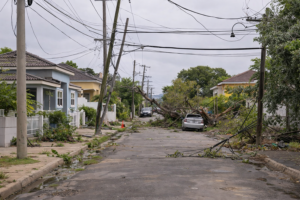
Editor’s Note: Our clients and systems were referenced in a recent New York Times article examining the impact of Hurricane Melissa and how rooftop solar systems performed during and after the storm. Readers who wish to view the article may do so using the link below.

👉 Read the New York Times article:
https://www.nytimes.com/2025/11/08/climate/jamaica-hurricane-solar-power.html


Resilience is not a foreign concept in Jamaica. For generations, Jamaicans have navigated environmental uncertainty and economic constraint with ingenuity, perseverance, and resolve. From small business owners reopening their doors after floodwaters recede, to households restoring order and routine in the aftermath of storms, adaptability is not merely a response – it is our defining trait.

As climate change accelerates and extreme weather events intensify, hurricanes of Melissa’s magnitude are no longer exceptional. In this reality, resilience can no longer rely solely on human determination.

Our capacity to recover must be reinforced by infrastructure, particularly energy systems, that are designed to endure disruption and enable swift recovery. Jamaica’s solar and energy storage systems must deliver continuity, reliability, and stability precisely when communities need them most.

Resilience requires energy systems built to perform under pressure.

Systems That Stand When It Matters Most

In recent storms, a quiet yet consequential shift has been unfolding across the island. Properly designed solar energy systems have emerged as a cornerstone of resilience, supporting not only individual households but entire communities. Installed solar capacity has expanded from less than 1.4 megawatts in 2015 to nearly 65 megawatts by 2024, now accounting for approximately ten percent of Jamaica’s electricity mix.

Beyond capacity figures, solar has revealed a deeper dimension of resilience. When engineered correctly and installed to rigorous standards, these systems become anchors of care and solidarity. 

Homes that retain power after a storm often evolve into community lifelines and spaces where neighbours gather to charge devices, preserve food, access information, and reconnect with loved ones. In these moments, resilience transcends technology; it becomes collective.

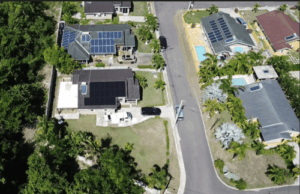
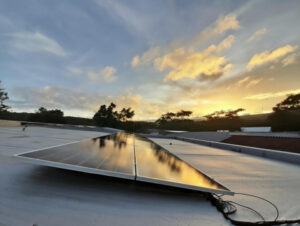
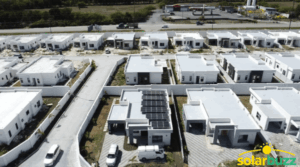
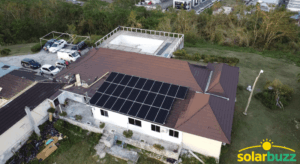
Post-Melissa reporting in a recent New York Times article underscored this reality. Properly mounted solar panels largely withstood hurricane-force winds, maintained uninterrupted power supply throughout the storm, and enabled households to remain operational while serving as points of support for their communities. The article, After Jamaica’s Disastrous Storm, Solar Power Is a Bright Spot, featuring SolarBuzz clients in Treasure Beach and Kingston, highlights how rooftop solar systems, when done right, deliver continuity of power and meaningful community benefit.

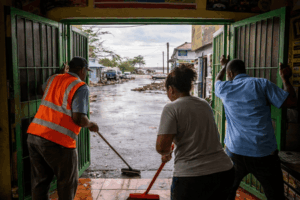
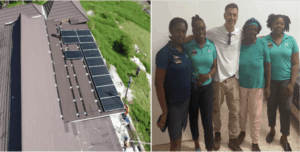
One featured client, Jennifer Hue of Treasure Beach, experienced flooding and property damage during the hurricane, yet her rooftop solar system remained fully operational. While the grid failed, her home stayed powered, allowing neighbours to charge phones, preserve food, and maintain vital communication.

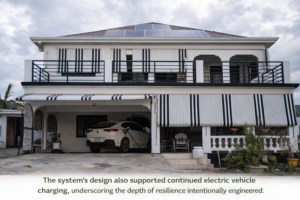
Similarly, Twila-Mae Logan of Kingston was able to use her solar-equipped home as a hub for food storage and family support during the outage.

At SolarBuzz, we view solar not as a lifestyle enhancement, but as essential infrastructure that is central to household safety, economic stability, and energy independence. 

These featured systems did not endure by chance. They performed as designed because they were engineered for Jamaica’s environmental realities and installed to standards capable of withstanding hurricane-force winds and extreme conditions.

Breaking the Cycle of Darkness

Despite this progress, access to resilient solar and storage systems remains uneven. While declining global equipment costs, government incentives such as the solar tax credit, financing mechanisms, and net billing policies should, in theory, make solar more attainable, local bureaucratic barriers continue to impede adoption.

Lengthy approval timelines, complex banking and net billing requirements, and lingering policy ambiguity place resilient energy solutions beyond the reach of many Jamaicans. However, climate realities demand the opposite approach.

Reducing dependence on long, vulnerable transmission lines and decentralising power generation directly at the point of use is no longer optional; it is imperative.

Incentive frameworks must therefore be clear, accessible, and free from protracted delays or cost-intensive administrative requirements.

Competitive financing from major banks, including the ability to integrate solar systems into new mortgages, is essential to broadening access to properly designed solar and battery solutions.

As Caribbean leaders continue to call for greater international support to address climate impacts the region played little role in creating, local action must demonstrate clarity, urgency, and execution.

Jamaicans deserve a straightforward, efficient, and affordable pathway to resilient solar adoption, alongside continued investment in strengthening the national grid.

For Jamaica, resilience now means empowering homeowners to invest confidently in high-quality solar and storage systems designed to withstand hurricane-force winds and deliver long-term energy security.

Deidre Wedderburn is the Client Relations Manager at SolarBuzz, dedicated to building long-term partnerships and delivering top-tier client experience (deidre@solarbuzzjamaica.com). 

People with rooftop solar panels got their power back almost immediately. The ‘entire neighbourhood benefits’, one resident said.

The morning after Hurricane Melissa tore through Jamaica, Jennifer Hue, a retired tax auditor living close to hard-hit Treasure Beach, woke up to devastation. Her mango, breadfruit and papaya trees were lost, their tops snapped off by 180-mile-per-hour winds. There was water everywhere.

But her roof was intact, and just as importantly, so were the solar panels she had installed two years ago. Most of her neighbors didn’t have electricity. But she did.

Neighbors began stopping by to charge their phones, to take a cool drink from the refrigerator, to message loved ones to let them know they were safe. Ms. Hue is still hosting a cousin and his mother, as well as two medical students from the local university, whose accommodations were damaged.

“The wind was like a tornado, and water came through every crevice,” Ms. Hue said. “But we didn’t lose any solar panels, and the next morning, the sun was shining bright and early,” she said. “We had our power back.”

A small but vibrant market for rooftop solar panels in Jamaica has long been seen as a promising way to wean the nation off imported fossil fuels. The country is reliant on oil and gas from abroad for its power plants, which not only is polluting but also makes Jamaica’s electricity some of the priciest in the world per kilowatt-hour.

But now, solar power is also seen as a way for Jamaica and other nations in one of the world’s most hurricane-prone regions to become more resilient to ever-intensifying storms.

Rooftop solar has grown significantly in Jamaica over the past decade, from less than 1.4 megawatts in 2015 to nearly 65 megawatts in 2023, a significant amount for a small island, experts say. Overall, solar and other forms of renewable energy made up about 10 percent of Jamaica’s power generation in 2023.

The hope is that growth will start to cut down on Jamaica’s dependence on imported oil and liquefied natural gas, which is shipped in tankers to the island nation, at a time when ports, refineries, power plants and transmission lines are becoming vulnerable to extreme weather worsened by a warming planet.

Wide swaths of the country remain without electricity after Hurricane Melissa hit Jamaica as a Category 5 storm last week, killing at least 32 people and destroying an untold number of buildings and homes. “You’re talking about restoring a very lengthy, complex and expensive infrastructure,” said David Gumbs, an expert on energy in the Caribbean at the Rocky Mountain Institute and the former chief executive of the Anguilla Electricity Company.

“With solar, you maintain some ability to continue generating electricity” without relying on hundreds of miles of damaged power lines, he said. “And in the Caribbean context, when the hurricane passes, if I have rooftop solar and batteries and if I can keep my refrigerator running, my entire neighborhood benefits.”

The solar panels must survive the high winds, of course. Jason Robinson, who runs Solar Buzz, an installer based in Kingston, Jamaica’s capital, has been surveying the damage this week, navigating roads on the west side of the island strewed with downed trees and power lines. “With nearly 200 mile-per-hour winds, you’re in the universe’s hands,” Mr. Robinson said.

But so far, none of his nearly 300 clients have reported extensive damage, he said. Panels installed flat against the roof, in particular, fared well. Some rooftop solar owners have taken to removing their panels ahead of strong winds. Many were already back online.

“As long as you install to code, and your roof stays on, you have a chance of surviving extremely long power outages,” Mr. Robinson said. “Resiliency is becoming even more important than lowering your bill.”

Solar panels remain beyond the reach of many Jamaicans, but prices are falling rapidly as Chinese gear floods into the market. In recent years the Jamaican government has also started providing a solar income-tax credit, and banks have begun to offer more financing. Jamaica’s electric utility also now compensates solar households for excess electricity they put back into the grid.

That’s helping Jamaica make progress toward its goal of generating 50 percent of its electricity from renewable sources by 2030.

Annabelle Todd manages an oceanfront guest villa on Treasure Beach, where two dozen panels and battery storage were installed two-and-a-half years ago. The panels survived, apart from one that was punctured by flying debris. She had electricity and air-conditioning the morning after the storm, much to the envy of her neighbors.

The system wasn’t cheap, costing about $30,000. But it has virtually eliminated electricity bills that used to top $1,000 a month, because her guests “would run that A.C. morning and noon and night,” she said. “Honestly, we could pay it off in two, three years,” she said.

More than that, not losing power has been a relief, she said. It’s the second year in a row that the seaside community, known for its black sand beaches, has been ravaged by a hurricane.

“Now everyone who runs villas here wants solar. I already see solar suppliers driving up and down Treasure Beach,” Ms. Todd said. “They got hit two years in a row, and they’re not going to fool around anymore.”

Twila-Mae Logan, deputy executive director of the University of the West Indies’ business school, spent about $20,000 to install panels at her Kingston home two years ago. The capital was spared the worst of Hurricane Melissa, but even then, her neighborhood lost power, making her home one of the few with electricity. Ahead of the storm, her brother and her niece rushed to her home to store food in her freezer so it wouldn’t spoil.

“We’re a third-world country and our government is significantly under-resourced, but I really do think our government has put some fair degree of priority behind solar,” she said. “Most people would go solar, save for the expense.”

Leaders across the Caribbean have demanded more financial assistance from the world’s rich countries to help Jamaica contend with the consequences of climate change. Caribbean island nations will suffer the most from climate change, despite being least responsible for the greenhouse gas emissions that are warming the world, they say. The International Monetary Fund says the region requires about $100 billion in economic investment to build resilience to climate-fueled disasters.

Ms. Hue, the retired tax auditor, doesn’t expect to quickly make back the tens of thousands of dollars she paid for her solar panels in 2023. But “it was never about that,” she said. “It was about having very reliable power, and having peace of mind.”

“We were just fortunate to have the sun out the next morning,” she said.

The New York Times

When Terrence Dwyer received a knock on his door and a flyer for a solar panel system small enough to fit on his deck, he was quickly sold. Solar systems that plug into regular wall outlets have been popular in Europe for years and are gaining traction in the U.S. for their affordability and simple installation.

“We thought absolutely, let’s do this right away,” said Dwyer, who lives in Oakland, California.

These small-scale solar systems could become attractive to more homeowners now that President Donald Trump’s sweeping budget-and-policy package will scrap residential rooftop solar tax credits and may shift interest to cheaper alternatives. Even before the GOP bill passed, manufacturers of the smaller systems known as plug-in or balcony solar were seeing increased demand and other positive signs such as a new Utah law streamlining regulations for homeowners to buy and install them. The systems about the size of a door haven’t been as widely adopted in the U.S. as in Europe because of lack of awareness, patchwork utility rules and limited availability.

The $2,000 plug-in solar system installed on Dwyer’s backyard deck in March consists of two 400 watt panels, an inverter, a smart meter and a circuit breaker. It saves him around $35 per month on his power bill because he is consuming less energy from the grid, but he said reducing his carbon footprint was his primary motivation.

“We like the environmental benefits of solar and wanted to engage with solar in some fashion,” Dwyer said.

Had Dwyer opted for rooftop solar, he would have paid $20,000 for the system and $30,000 to upgrade his roof to support the panels.

Installing a plug-in solar system requires some homework. What power companies let customers do with energy-generating equipment varies, which is why prospective purchasers should check their utility’s policies first. Building permits might be required depending on the municipality. Some systems can be self-installed, while others may require an electrician. For example, some kits have meters that must be wired into a home’s circuit breaker.

Removing hurdles for plug-in solar

Dwyer bought his system from Bright Saver, a nonprofit company in California that advocates for plug-in solar. In addition to the type Dwyer bought, the company also offers a smaller model costing $399 that recently sold out in six days.

“The interest and demand have been overwhelming,” said Cora Stryker, a founder of Bright Saver. “It is clear that we are hitting a nerve — many Americans have wanted solar for a long time but have not had an option that is feasible and affordable for them until now.”

Kevin Chou, another founder of Bright Saver, said wider adoption of the systems in the U.S. has been hindered by utility policies that create uncertainty about whether they’re allowed and a lack of state and local policies to make clear what rules apply.

Some utilities contacted by The Associated Press say plug-in solar systems require the same interconnection applications as rooftop panels that send electricity back to the wider network. But Steven Hegedus, an electrical engineering professor at University of Delaware, said he doesn’t understand why a utility would need to require an interconnection agreement for plug-in solar because, unlike rooftop systems, they are designed to prevent energy from flowing to the grid.

Still, if in doubt, a customer should follow their utility’s policy.

During the early days of plug-in solar’s growth, some opposition from utilities is likely since customers are buying less energy, said Robert Cudd, a research analyst at the California Center for Sustainable Communities at the University of California, Los Angeles.

“Utilities really prefer everyone being a predictable and generous consumer of the electricity they sell,” Cudd said.

This year, Utah enacted a novel law supporting plug-in solar by exempting certain small-scale systems from interconnection agreements and establishing safety requirements such as being certified by a nationally recognized testing organization such as Underwriters Laboratories. It appears to be the only state that’s passed legislation supporting plug-in solar, according to the National Conference of State Legislatures.

Republican state Rep. Raymond Ward, who sponsored the legislation, said the smaller systems allow people to better manage where their energy comes from and what they pay.

“Europe has these things. You can go buy them and they work and people want them. There is no reason why we shouldn’t have them here in the United States,” Ward said.

Bright Saver says they are lobbying other states for similar legislation.

Alexis Abramson, dean of the University of Columbia Climate School, also applauded Utah’s move.

“We actually need more localities, more states putting in allowances for this type of equipment,” she said.

Plug-in solar availability and savings potential

Some questions remain about how much customers could save. Severin Borenstein, a professor at the University of California, Berkeley’s Haas School of Business, said the cost of some portable solar systems in the U.S. would make it hard for customers to come out ahead on their utility bills over the time they own them. He estimates the price of a $2,000 system in the U.S. works out to paying about $0.20 a kilowatt-hour over a 25-year period, which only saves people money if they have high utility costs. By comparison, Borenstein said the cost of systems sold in Europe, typically around $600, is equivalent to paying about $0.05 or $0.06 per kilowatt-hour over 25 years.

Baltimore resident Craig Keenan said saving money was only part of why he installed one of the smaller Bright Saver models on his balcony in July.

“I’m interested in renewable energy because the amount of carbon emissions that we produce as a species is very, very unsustainable for our world,” he said.

He said he expects the system will save him about $40 per year on utility bills, so it would take him about 10 years to recoup the cost of the kit.

Keenan, a mechanical engineer, said installation took him 10 to 15 minutes.

“I think anyone can install this,” he said. “It’s not complicated. It doesn’t require a technical degree.”

Other companies selling plug-in solar kits include Texas-based Craftstrom. It has sold about 2,000 systems in the U.S. since 2021, mostly in California, Texas and Florida. The company’s basic kits contain a solar panel that can fit in a backyard or other sunny space, along with equipment to maintain and regulate the flow of energy including an inverter and smart meter.

Kenneth Hutchings, Craftstrom’s chief revenue officer, said their U.S. sales rose this year even before the passage of the GOP tax bill, and he expects demand for plug-in solar to increase further as federal rooftop solar credits expire.

The company advises customers to notify their power company before installation, but it has “never had any pushback from any utility,” said Michael Scherer, one of the founders of Craftstrom.

China-based EcoFlow plans to begin selling plug-in solar systems in Utah and expand to other states if supportive legislation is passed, said Ryan Oliver, a company spokesperson.

“This is an example of where technology is sort of ahead of the regulators,” Oliver said, adding: “As this rolls out to more of a nationwide product, we expect it will become more mainstream as people understand it better.”

The Associated Press 

Researchers also suggest system could resolve problems with irregular and weather-dependent Earth-based supply.

Solar panels in space could cut Europe’s terrestrial renewable energy needs by 80% by 2050, a study has found.

Using a detailed computer model of the continent’s future power grid, the researchers found that a system of space-based panels designed by Nasa could reduce the cost of the whole European power system by as much as 15%. It could also cut battery use by more than two-thirds.

The study, led by researchers at King’s College London, is the first to assess the possible impact of space solar energy on Europe. The space-based solar power (SBSP) panels that yielded the positive results uses a heliostat design. The design, which the system imitates, uses mirror-like reflectors to collect sunlight in orbit. The sunlight is then transmitted to stations on Earth and converted to electricity before it is delivered to an energy grid.

The computer model of the continent’s power grid spans 33 countries, and simulates electricity demand, generation and storage to identify the lowest-cost option to meet Europe’s electricity needs.

When the researchers integrated the SBSP concept into the model based on Nasa’s predictions of its potential energy capacity, results showed that it could replace as much as 80% of Europe’s land-based renewable energy.

Land-based renewable energy is irregular and weather-dependent, complicating reliable supply, and comes at varying costs, the researchers point out. SBSPs could be an alternative centralised energy resource that operates above the atmosphere with continuous gigawatt-scale power.

The authors note that the modelling does not account for potential impacts from space-specific challenges such as orbital congestion, transmission interruptions or beaming variability, which could influence SBSP reliability and operational performance.

Nor could the potential cost-effectiveness of SBSP be realised until 2050 because building, launching and maintaining it would be too expensive unless technological growth reduces its costs.

Dr Wei He, a senior lecturer at KCL’s engineering department and lead author of the study, which is published in Joule, said: “There are some risks to consider, such as how the satellite in space could have too many solar panels. Could it cause collisions or be damaged by debris in space?”

Despite those risks, Wei believes the research shows that SBSP has the potential to help countries in achieving net zero. “Renewable energy to replace fossil fuels is the most important action we are taking as humans. Space-based solar power is a potential technology and can provide continuous solar power as a renewable energy source,” he said.

Japan is already developing SBSP and integrating it into its space and net-zero strategy, Wei said.

Europe could follow suit, the paper suggests, mentioning the continent’s longstanding tradition of multinational cooperation of cross-border electricity exchange and satellite ventures under the European Space Agency.

The authors believe Europe could leverage its multinational cooperation to develop and operate a centralised SBSP infrastructure. In doing so, it could create a continent-scale solution to provide stable, baseload-scale renewable supply, reducing the continent’s reliance on gas-fired power.

“Now is the time,” Wei said.

The Guardian

Global wariness of Chinese solar and E.V. domination offers India an opening. The government is spending money to try to catch up, but it has a long way to go.

China, the world’s clean-energy juggernaut, faces a rival right next door. And one of its top customers, no less.

India, a big buyer of Chinese solar panels and electric vehicle batteries, is using a raft of government incentives to make more green gear at home. It is driven not just by the need to satisfy the galloping energy demands of its 1.4 billion people, but also to cash in on other countries that want to China-proof their energy supply chains, not least the United States.

India remains a tiny and tardy entrant. Last year it produced around 80 gigawatts of solar modules, while China produced more than 10 times that. India is still tied to coal, the dirtiest fossil fuel: Coal is its largest source of electricity, and India plans to mine for more of it.

But India is aggressively trying to take advantage of a global energy transition and a backlash against Chinese dominance of new energy technologies.

Hoping to spur a clean energy manufacturing boom, the government is offering lucrative subsidies for locally produced solar cells and batteries, and it is restricting foreign products in its biggest renewable-energy projects. To cash in on government contracts to install rooftop solar for 27 million households by the end of this decade, for instance, companies must make the panels at home.

For New Delhi, there are social, economic and geopolitical imperatives. China is its most formidable rival — the two countries have in the past gone to war over border disputes — so India’s quest to build solar, wind and electric vehicle factories is partly designed to secure its energy supply chain. At the same time India wants to create good-paying manufacturing jobs.

Still, India confronts a dilemma facing many other countries: Either buy renewable energy technologies as cheaply as possible from China, or spend more to make the goods at home.

“Strategically, to ensure we have energy independence, we need to have manufacturing capacity,” said Sudeep Jain, additional secretary in India’s Ministry of New and Renewable Energy. “Currently, yes, there is a cost arbitrage.”

The problem is that China commands the building blocks of renewable energy goods. More than 90 percent of the polysilicon that goes into solar panels is in Chinese control. So even as India rapidly expands its production of solar panels, it still imports most of the cells that go into the panels, mainly from Chinese companies. And Indian companies that make solar cells typically import silicon wafers mainly from China.

India has a very tiny battery industry, and it has proven difficult, for a host of reasons, to scale up. Two Indian companies making electric vehicle batteries, Reliance Industries and Ola Electric, recently missed production targets they had promised to hit in exchange for government subsidies. It doesn’t help that China dominates the processing of key battery minerals like lithium.

China has “first mover’s advantage,” said Amit Paithankar, chief executive of Waaree Energies, the country’s largest solar panel maker. “It’s about us being proactive, and being a part of the solution in diversifying the supply chain for India, for the U.S. and for the world.”

Borrowing China ideas

India is lifting from the Chinese playbook in at least one way. It is counting on its enormous domestic demand.

India’s wind and solar capacity has nearly doubled in the past five years, according to the research firm Ember, making it the world’s third largest generator of electricity from renewable sources after China and the United States. It plans to incorporate 500 gigawatts of non-fossil-fuel sources into its electricity grid by 2030.

The government has put in place both carrots and sticks to encourage production.

For the past several years, there were subsidies for locally produced solar panels. Those are now being discontinued, but new subsidies are kicking in next year for locally produced solar cells that go into panels, as well as for battery cells.

Domestic demand isn’t the only driver. Last year, more than half of India’s solar modules ended up on American soil.

Now, the wild card for India’s export dreams is the tariff chaos sown by President Trump.

The latest Trump administration duties on goods imported from India are far lower (27 percent) than new duties on Chinese goods (145 percent) and on those from Southeast Asia (up to 3,500 percent), where Chinese companies have set up shop.

Prime Minister Narendra Modi of India has sought to cultivate warm relations with Mr. Trump, and officials from the two countries say they hope to negotiate a bilateral trade deal in May. “Whatever the United States is going to import, we may still be the most competitive to supply it,” Mr. Jain said.

Wanted: More good jobs

The global energy transition potentially brings India something it badly needs: factory jobs.

Two out of three Indians are under the age of 35. A majority of people still work in agriculture. And manufacturing as a share of the national economy is still barely 13 percent, a bit lower than it was a decade ago.

The southern state of Tamil Nadu has been among the most forceful in attracting new factories, including in the clean-energy sector. Wind blade makers arrived nearly a decade ago, followed by solar panel makers and electric vehicle companies.

Tamil Nadu offered ready land and government subsidies. The state supported pensions and housing for workers.

“These are all schemes we came up with, peering into the future, looking at how the world is going,” the state’s industry minister, T.R.B. Rajaa, said in an interview. “Energy is everything. Energy security must be localized.”

Perhaps most important, Tamil Nadu, with a long record of women’s education, offered an army of women workers with college degrees.

Which is how 26-year-old Amala K. came to chase her dreams at the Tata Power solar panel factory on the outskirts of a small town, Tirunelveli, near India’s southern tip. (Like most people in the region, she uses her father’s initial as a surname.)

Around 2,000 women like her run the machines round the clock at this factory. Every day, starting at dawn, they move in and out by the busload. Dark blue uniforms. Backpacks. Sandals that are traded for steel-toe factory shoes. The factory floor is largely automated. Human workers are there to make sure robot arms are working properly, to solder a junction box or pick up broken shards of wafers that have slipped in between cracks.

The sun was already shining bright and hot by 7 a.m. on a recent Wednesday, as Amala boarded a company bus after her all-night shift. The bus pulled out of the parking lot, drove past banana orchards, and wove through a river of honking cars and motorcycles. Some of the women nodded off. A few scrolled through their phones.

Amala leaned against the window. For her, the job was partly a way to defer the inevitable arranged marriage. “If I stayed home, I’d be married by now,” she said.

In between work shifts, she was preparing to take an exam to become a physics professor.

Varsha A.R., 26, sitting one row up, had to persuade  her mother to let her take this job.

Her mother worried about Varsha living two hours away from home, in a workers’ dorm. So Varsha brought her there and introduced her to other workers. “I explained that this is an opportunity for my life and my career,” Varsha said.

The job meant different things to different women workers. Some said they were saving to buy gold jewelry for their weddings. Others said they were saving to go to graduate school. A few said they liked being able to buy gifts for their nieces and nephews — or buy themselves an ice cream when they wanted.

Varsha and Amala stepped off the bus and walked down a narrow lane to their dorm, two workers in an energy industry all but unknown in their parents’ time. Each year, at least seven million young Indians like them enter the labor market, according to the International Labor Organization. India’s efforts to expand its clean-energy business is a key test of the country’s efforts to deliver the skilled jobs that a new generation of Indians has come to expect.

The solar panels they help make in Tirunelveli furnish Tata Power’s four-gigawatt solar farm on the other side of the country, in the northwestern desert of Rajasthan. The wafers still come from China. So, too, many of the glass panels on which they are affixed.

The risks of relying on Chinese suppliers became abundantly clear during the coronavirus epidemic, Tata Power’s chief executive, Praveer Sinha, recalled. Shipments were disrupted. There were unexpected price swings.

“It’s very important you have a supply chain that’s not vulnerable to two or three countries,” he said.

At the time, during President Biden’s term, the United States agreed. The U.S. International Development Finance Corporation, a government lender, supported the Tata project with a $425 million loan, with the goal of “diversifying global supply chains.”

First Solar, a U.S. company, set up shop near the state capital, Chennai, also with financing from the U.S. government. Vikram Solar, which makes solar modules near Chennai, is set to build one gigawatt of battery storage.

In an industrial park farther west in Tamil Nadu, the Indian electric scooter company, Ola, is getting ready to produce its own battery cells. At the moment, like most electric car and scooter makers in India, a majority of battery cells come from China.

Selling to America

The question for renewable energy companies now is whether they focus on the Indian market or push to sell Indian-made goods abroad.

Until recently, an export strategy was enormously profitable for Waaree Energies. It made most of its money last year exporting its Indian-made solar panels to the United States. Lured by tax breaks offered by the Biden administration, Waaree invested $1 billion in a solar-panel plant in Houston.

Other companies’ exports surged, too. Between 2022 and 2024, the export of Indian solar modules grew “exponentially” by 23 times, according to the Institute for Energy Economics and Financial Analysis, a research group. So spectacular was the growth that the group concluded that India could potentially replace Southeast Asian countries as the leading supplier of solar photovoltaics to the United States.

Then Mr. Trump took office. Solar’s future in the United States became far more uncertain. Waaree stocks slumped. The company intends to continue to make solar panels for Americans, Mr. Paithankar, Waaree Energies’ chief executive, said.

In the end, whether Indian companies can muscle in on the renewable energy supply chain depends less on India and more on the geopolitical trade-offs that every government will have to make. “Whether we can become an alternative to China depends on what other countries do,” said Sumant Sinha, chief executive of ReNew Power, which builds solar and wind equipment for the Indian domestic market. “If everyone says, ‘I’m going to buy cheap,’ then China will come out dominating.”

The New York Times