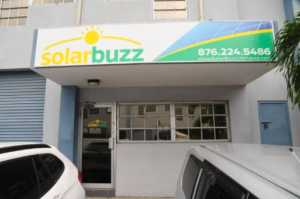
Today Solar Buzz has grown its business to a team of eight and operates from The Trade Centre on Red Hills Road in Kingston. As part of the company’s growth plans, Robinson is eyeing a second location for Solar Buzz outside of Kingston. (Photo: Joseph Wellington)

After 13 years of carving out a niche in the renewable energy market, Solar Buzz is ready to deepen its business with residential customers as the new solar energy loan financing programme by the National Housing Trust (NHT) takes effect.

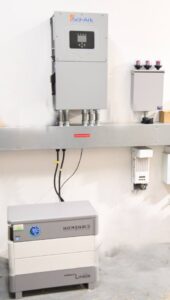
The family-owned business, which was conceptualised with a vision of raising the standard of solar installations in Jamaica, today earns the majority of its revenues from residential battery storage installations. Still, it’s a space that CEO Jason Robinson sees as having much scope for growth.

Fraser-Pryce withdraws from Switzerland meet

“We are in a hurricane zone obviously, and Beryl shows us that every home needs some sort of solar system, even if it’s something small. Commercial was our first go because that’s where the financing was and it’s still easier to get financing on commercial products; but getting a net billing licence is a lot more onerous than it should be and so some of the commercial customers get frustrated and may back out of the project.

“Residential is an opportunity we see because the market is not saturated and then there is a big push for electric vehicles and if you have an EV, having your own solar system goes hand in hand,” Robinson told the Jamaica Observer.

Solar Buzz is now banking on new business from the NHT’s smart energy home improvement loan, which took effect on July 1. Under the loan arrangement, individuals who received an NHT loan at least 10 years ago can access $1.5 million each, or $3 million jointly, to purchase solar panels and batteries, solar water heaters, solar insulation, other renewable energy technology such as windmills, hydropower and biomass; rainwater harvesting and storage systems to include water tanks and pumps.

The loans are being disbursed at an interest rate of 5 per cent with a payback period of up to 10 years. The new loan programme comes at a time when lithium-ion battery prices are also trending down.

“It’s a game changer for a couple of reasons: NHT financing is our main source of residential financing now just because the interest rates for the regular banks are so high because of what’s happening in the market now.

“People are working from home and they realise that even with a blip from JPS, they lose connection with their
Zoom meeting or school-from-home meeting, etc. We have been trying to work with the NHT for years and so them coming on stream with this loan product is really expected to drive growth in this industry,” Robinson Business Observer.

Currently, roughly 75 per cent of Solar Buzz’s business comes from residential lithium-ion battery storage systems.

Founded in June 2011 by brothers Jason and Justin, along with their father Gordon, Solar Buzz has grown from humble beginnings to become a key player in the Caribbean’s solar energy landscape.

The inspiration for Solar Buzz began during Robinson’s early years in California, where he witnessed the State’s progressive stance on renewable energy and recycling from 2002 to 2010. During this period, Robinson said he engaged in various environmental groups, took relevant classes, and interned at different businesses, solidifying his passion for the field.

The inspiration for Solar Buzz began during Robinson’s early years in California, where he witnessed the state’s progressive stance on renewable energy and recycling from 2002 to 2010. During this period, Robinson engaged in various environmental groups, took relevant classes, and interned at different businesses, solidifying his passion for the field.

“I got involved in everything solar business because I knew then that it was a field that I wanted to be involved in one day. Then in 2008, when the energy crisis hit and oil prices skyrocketed to over US$100 per barrel people started going out of business.

“Because my family is here, I was focused on what was happening in Jamaica, and I saw that as the opportune time for me to try to work in the industry, so I moved down in 2010, worked with a company, kinda learned how they did business, but I didn’t like the approach and thought I could do a better job,” Robinson recalled.

The early years were challenging. Securing financing for solar installations was difficult, pushing Solar Buzz to focus on energy efficiency and educating clients on optimising their solar systems.

However, a significant turning point for Solar Buzz came in 2014 when the Development Bank of Jamaica (DBJ) launched a solar financing programme. That initiative allowed clients to use their solar systems as collateral, unlocking access to solar financing for the first time.

Robinson credits Edison Galbraith, general manager for channels, relationships and marketing and his team at DBJ, for this groundbreaking development, which catalysed the growth of the residential and small commercial solar industry in Jamaica.

“It was huge. I credit Edison Galbraith and his team,” Robinson said, adding that the company’s client base currently includes Island Smiles, Gray’s Peppers, Chas E Ransom’s Group, Caribbean Foods, and The University of the West Indies.

Today Solar Buzz has grown its business to a team of eight and operates from The Trade Centre on Red Hills Road in Kingston. Its product and services have also expanded to include solar energy systems that offer up to 90 per cent savings on electricity bills for commercial and residential use; glass tinting for commercial, residential, and auto/fleet applications to provide instant reduction of glare, heat, and UV exposure; solar water heaters; solar pool pumps; solar inflatable lantern that inflate to 8 inches and provides 15 square feet of light and up to 12 hours of illumination, along with solar hybrid flashlights.

Exploring partnerships

As the company works to expand its presence in the residential market, Robinson stated that Solar Buzz is exploring strategic partnerships with developers and companies selling electric vehicles such as ATL Auto. The CEO is also looking to deepen its relationship with the bank and insurance firms.

“So far, our partners and clients have trusted us to install systems that are protected against up to category four hurricanes and we want to keep that relationship going. We have never considered ourselves to be the cheapest but our clients come to us because they know they are getting quality products and so we want to build on those relationships,” he said.

Robinson is also taking a serious look at financing options to prepare for growth opportunities. While the company is open to both private and public partnerships, Robinson currently leans towards private collaborations.

“We have really built the company out of self-funding and we are getting to the point where we need to look at how do we scale the business. Everything is on the table right now, we are looking at how best to scale, who to partner with and the opportunities that are there, what developers to work with and I think that is going to be a big focus for us going forward,”

“As it relates to going to public, its something that we would look at further down the line, I don’t think we are there yet to want to go public because that comes with a lot of responsibilities,” he said.

As part of the growth plans, Robinson is also eyeing a second location for Solar Buzz outside of Kingston.

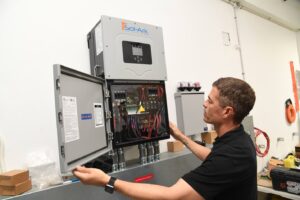
ROBINSON…we are in a hurricane zone obviously, and Beryl shows us that every home needs some sort of solar system, even if it’s something small
Solar Buzz is banking on new business from the NHT’s smart energy home improvement loan which took effect on July 1. Roughly 75 per cent of company revenues currently comes from residential solar installations; however, Robinson see more scope for growth in that segment of the market.
Solar Buzz deals in lithum battery storage systems; grid-tie solar systems; glass tinting for commercial, residential, and auto/fleet applications; solar water heaters; solar pool pumps; solar inflatable lantern and solar hybrid flashlights.

Jamaica Observer

Income Tax Credit for Persons Who Acquire and Install Solar Photovoltaic System

The House of Representatives, on Tuesday (July 9), passed the Income Tax (Amendment) Act, 2024, which seeks to implement a regime to provide income tax credit to individuals who acquire and instal a solar photovoltaic system at their primary place of residence.

Minister of Finance and the Public Service, Dr. the Hon. Nigel Clarke, had informed of the initiative during his 2023/24 Budget presentation.

“This Bill seeks to achieve this by setting out the appropriate legal framework that would allow individuals to benefit from this income tax credit.

This measure forms part of a much broader goal of reducing our dependence on fossil fuels and substantially increase the share of renewable energy in our local energy mix,” Dr. Clarke told the House.

The Minister said Jamaica has set a target to achieve a 50 per cent use of renewable energy in the electricity generation sector by 2030, and that the utilisation of appropriately targeted fiscal measures is critical to achieving this result.

“You will also recall that in my budget presentation earlier this year, as a part of the 2024/25 Budget, I indicated that the Government will also be reducing the corporate income tax rate for independent power producers producing 75 per cent or more of their energy from renewable sources, from 33 1/3 per cent to 25 per cent,” Dr. Clarke said.

“The objective of this rate reduction is to promote growth within the renewable energy sector but providing a more favourable tax environment and providing more of an incentive for larger-scale investment in renewable energy technologies, such as wind and solar,” he added.

The Minister said that the major components utilised in the installation of a solar photovoltaic system, such as the solar photovoltaic panels, solar inverters and solar batteries, including lithium-ion batteries, are also exempt from the payment of General Consumption Tax (GCT).

“These fiscal measures are proof of the Government’s commitment to achieve the target of 50 per cent use of renewables by 2030. The Government will continue to explore measures, fiscal and otherwise, to ensure that this target is met. The Bill before us sets out the criteria that will enable individuals who have installed a solar photovoltaic system at their primary residence to benefit from the income tax credit,” Dr. Clarke said.

In addition, the Bill makes provisions for, among other things, an income tax credit at the rate of 30 per cent of the acquisition and installation cost of the solar photovoltaic system for the taxpayer primary residence, up to a maximum cost of $4 million.

“This means that the maximum credit an individual will be allowed to claim is $1.2 million. This measure shall apply to solar photovoltaic systems acquired and installed on or after January 1, 2023 [that is] for the year of assessment 2023. The value of the income tax credit will be applied to the acquisition installation price of the solar photovoltaic system and will be claimable in the year the system is installed,” he stated.

“The income tax credit will be used by the taxpayer to offset their total income tax liability equal to the total value of the credit received. The credit would be non-refundable, i.e, the total value of the credit exceeds the total taxpayer’s liability; the taxpayer would not receive a cash refund. A carry-forward provision is included to allow the individual to apply the unused portion of the credit to future tax years,” he added.

Dr. Clarke said the amount of credit applied would be restricted to a maximum of 50 per cent of income tax payable by the taxpayer in the assessed year, with the remaining amount being carried forward and applied to the future tax year.

In order to claim the credit, the taxpayer will have to provide proof such as invoices and independent verification that the solar photovoltaic system is installed and is generating electricity.

“The Bill [also] seeks to amend the income tax prescribed form order 2015, to prescribe new taxpayer return forms to facilitate the tax credit in the relevant forms,” Dr. Clarke said.

JIS

ROBINSON…we have seen…on the commercial side where you go on the roofs of some of these prominent businesses and its just roof membrane with plyboard and zinc. No weight can go on the roofs

AS the dialogue around solar systems strengthens following the passage of Hurricane Beryl, vice-president of Jamaica Energy Renewable Association and CEO of Solar Buzz Jason Robinson is emphasising the need for government policy to ensure that new constructions are solar-ready, as Jamaica progresses in its transition to renewable energy.

“We’re seeing a shift where more architects understand the importance of integrating solar into their designs. Previously, the focus was on aesthetics for clients but now functionality is paramount,” Robinson told the Jamaica Observer.

However, he warns that without mandated policies, builders might avoid incorporating solar-friendly features, in order to cut costs.

“We have seen…on the commercial side where you go on the roofs of some of these prominent businesses and its just roof membrane with plyboard and zinc. You can’t put any solar on that — and they are massive buildings…This needs to change,” he said.

Robinson’s call for government regulations requiring new constructions to be designed with solar capabilities aligns with a target set by the Ministry of Science, Energy and Technology for Jamaica to achieve 33 per cent of electricity generation from renewables by 2030, and 50 per cent by 2037.

By next year the Government had projected to hit 320 megawatts of solar and wind generation, 120 megawatts of liquefied natural gas (LNG), and 74 megawatts of hydro waste energy and/or biomass.

 In support of the broad renewable energy target the Andrew Holness-led Administration has slashed import duty on electric vehicles from 30 per cent to 10 per cent, and purchasers of those vehicles will not have to pay licence fees over a five-year period.

On July 1 the National Housing Trust (NHT) Smart Energy Home Improvement Loan took effect, thereby creating a pathway for property owners to access $1.5 million each, or $3 million jointly, to purchase solar panels and batteries, solar water heaters, solar insulation; other renewable energy technology such as windmills, hydropower and biomass, rainwater-harvesting and storage systems to include water tanks and pumps.

The loans are being disbursed at an interest rate of five per cent with a payback period of up to 10 years.

Robinson noted that while much progress has been made to support the country’s transition to cleaner energy, he said the missing element is a solar building code to guide how developers move forward.

Checks made by the Business Observer show that internationally, safety regulations are also in place to govern the process of solar installations. For example, in Minnesota, United States, solar companies cannot place panels within three feet of the edge of roofs and must also create pathways of that same width between arrays, to provide access for firefighters and emergency personnel. Such guidance may be necessary for new apartment complexes.

“Going forward we hope that there will be policies to say, ‘Build with solar in mind’. The Government is reducing the duties on electric vehicles but they’re not forcing developers of apartment complexes to build with the ability to install an EV charger for the meter at your parking spots,” Robinson said.

“We get calls all the time from people that live in an apartment complex and we have to tell them it can’t be done, it has to go somewhere else. It’s very inconvenient because the young professionals are the ones buying these apartments and want these electric vehicles,” he continued.

Robinson acknowledges that policy changes cannot happen overnight without disrupting industries and livelihoods, but stresses the urgency of collaborative efforts. “We need a holistic approach. Reducing duties on EVs is a step in the right direction but we also need the infrastructure to support these vehicles. Why is this progress being slowed down?”

Designing roofs with solar in mind

For optimal solar installations Robinson recommends southward-facing roofs and metal-standing seam roofs which allow for easy installation without roof penetration, thereby preventing leaks. He also suggests slab or concrete roofs for commercial customers as they offer flexibility in panel orientation.

Robinson is hopeful about upcoming government policies and tax breaks that could further incentivise solar adoption.

“We’re looking forward to property tax breaks for solar-equipped homes, as mentioned by the Ministry of Finance. These initiatives could significantly boost the renewable energy sector in Jamaica.”

Jamaica Observer

Effective Monday (July 1), the National Housing Trust (NHT) will be launching a series of policy changes and initiatives that will significantly benefit contributors looking to buy or improve their homes.

There will be an expansion of the ’10 Plus’ home improvement loan.

As more Jamaicans become homeowners, there has been an increased demand for home-improvement financing.

Come Monday, all mortgagors will be able to access their home improvement loan after only 10 years, a significant reduction from the previous 15-year wait time. With a maximum loan amount of up to J$3.5 million, contributors will be able to undertake more extensive renovations to their properties with a shorter wait period.

‘Smart Energy’ home improvement loan

Under the Smart Energy loan facility, homeowners may access up to J$1.5 million to install energy-saving technology such as solar panels, batteries, solar water heaters, and solar insulation, as well as other renewable energy technology including windmills, hydropower, and biomass.

In addition, homeowners can also use the loan to install rainwater harvesting and storage systems, including tanks and pumps. Contributors will access this loan at a standard five per cent interest rate with a payback period of up to 10 years or by the time the homeowner reaches age 70, whichever comes first. This initiative promotes climate change resilience through improved energy-saving technologies, further enforcing NHT’s commitment to environmental sustainability.

Smart Energy grant (public sector pensioners)

In addition to the Smart Energy loan, the NHT is expanding its grant offering with the introduction of the Smart Energy grant. The programme will target public sector pensioners, who will be able to access up to J$1.5 million to enhance their homes with energy-saving technologies. The Smart Energy grant will benefit 30 pensioners per parish each year, for the next three years.

Beneficiaries will be selected at random based on the following criteria:

  • At the point of retirement, the pensioner was earning less than $30,000.99 per week;
  • Must be a homeowner (this includes owners of non-NHT constructed houses);
  • Must be 60 years or older;
  • Must not have already installed these systems;

Preference will be given to pensioners living in areas with unreliable or irregular electricity supply. This grant will help them reduce their utility bills and minimise their environmental impact. The NHT will advise when it will begin accepting applications for the Smart Energy Grant.

Policy change to benefit young adults

To address the rising need for housing among young Jamaicans, the NHT will now reserve a minimum of 10 per cent of NHT’s housing solutions to contributors under 36 years old. With the NHT’s 100 per cent financing (subject to affordability) for its scheme development, this new policy change opens the door for more young people to access NHT developments.

Homestarter programme

The state-owned entity will also make homeownership a reality for more young adults with its HomestarterpProgramme. The programme offers one-bedroom starter apartment complexes with easy access to urban centres. An innovative feature of the programme is its optional buy-back clause, which allows contributors to sell their units back to the NHT within 15 years.

This will free up the new mortgagor to access a new non-homeowner’s loan benefit from the NHT for the purchase of a new home. Currently, the programme includes housing developments in Vineyard Town and Howard Avenue, St. Andrew, and a planned development at Barracks Road, St James.

OUR Today

Industry data now show utility-level solar costing between US$29 and US$96 per megawatt-hour (MWh) when compared to US$39 – US$101 per MWh for natural gas. Additionally, PV panel manufacturing costs have also fallen from $5 per watt in 2000 to less than $0.25 in 2023.


Even as the country’s sole light and power distribution company, Jamaica Public Service (JPS), takes steps to diversify its energy mix, director of Jamaica Renewable Energy Association (JREA) Jason Robinson has called on more residential clients to plug into solar as a form of back-up.

“Every home in Jamaica needs to be plugged in to some form of solar plus storage. Reduce your JPS bill but also have back-up power for safety. During blackouts the photovoltaic (PV) batteries act as a giant surge protector, so in the event there are fluctuations from the grid — which could damage your TV and other household appliances — users will be insulated from all of that,” Robinson told reporters during a Jamaica Observer Business Forum last week.

Having recently taken up the task to continue the build out of Jamaica’s solar energy resilience from Jamaica Energy Resilience Alliance (JERA), the JREA director, who is also the CEO of Solarbuzz Jamaica Limited, said the group as a successor will continue to advocate for solar adoption across, not just commercial and industrial enterprises but also for residential clients.

“These are the people we don’t want to have to leave the island in a case where, let’s say, the national grid should go down for six months. I say this because, following hurricanes in Puerto Rico, about 20-30 per cent of their population is said to have fled to the US after months without power. Here in Jamaica we can’t afford for that to happen, which is why we need to build resilience within both the commercial and residential markets — this as we also push other aspects of the global green campaign,” Robinson said.

As Jamaica continues to faces numerous climate change risks and high energy costs, stakeholders believe clean energy technologies like solar and battery storage can help to significantly mitigate these impacts, enhancing energy resilience while improving business profitability.

Considered to be the cheapest of the various forms of alternate energy sources, industry data now show utility-level solar costing between US$29 and US$96 per megawatt hour (MWh) when compared to US$39-US$101 per MWh for natural gas. Additionally, PV panel manufacturing costs, which have fallen from approximately US$5 per watt in 2000 to less than US$0.25 in 2023, have also created more opportunities for subsidised installations in some countries.

As reports from global sustainability firm Rocky Mountain Institute (RMI) project wind and solar projects remaining on track to account for more than a third of the world’s electricity by 2030, more countries across the globe have stepped up their adoption of these forms of energy. Locally, a US$1.2-billion price tag has been attached to the realising of clean energy transition — a move under which Jamaica is seeking to achieve its target of having 50 per cent renewables (a mix of wind, solar and energy) by 2030.

Mark Dennis, chair and senior energy expert for JERA and who played an active role in the recent re-energising of Jamaica’s solar resilience under the just-completed, three-and-half-year Strengthening Energy Sector Resilience (SERS) in Jamaica programme, further supported the adoption of solar technologies locally.

“Whether for commercial or residential clients, if there is a disruption to the grid for any reason— man-made or natural — being plugged into solar technologies will allow clients to still have power flowing to their facilities. As a consultant, my recommendation is never for people to completely dismiss JPS, as we still need a central grid, but people should also begin to supplement their usage with solar as a viable form of back-up,” he said.

Jamaica Observer

Financiers shy away from funding solar systems

PLAYERS in the nation’s renewable energy sector say banks are still nervous about lending to entities wanting to instal solar systems to help reduce their electricity bills each month.

The issue came to light at the Jamaica Observer Business Forum held recently. The forum was held to look at the successes of the Strengthening Energy Sector Resilience in Jamaica (SESR-Jamaica) programme which lasted for three-and-a-half years which targeted commercial and industrial entities for reducing their power costs and green their operations.

However this comment from Mark Dennis, chair, Jamaica Energy Resilience Alliance (JERA) and senior energy advisor to SESR-Jamaica, said one of the things he has had to do in the programme is to dispel some of the myths banks have surrounding solar power systems for businesses.

“One of the biggest myths that we have encountered particularly in the financing sector is that the technology is not mature enough or that it fails too often and that has kinda fed into a lot of the apprehension that banks have [to lend for solar systems], so we thought it important to demonstrate in a definitive way that it works,” Dennis told the forum.

His point was supported by Jason Robinson, vice-president of Jamaica Renewable Energy Association (JREA) and CEO of Solar Buzz.

“What we have seen over the years is that there has always been a problem to get the financial institutions on board. They have always been a bit hesitant because what they are scared of is default rates, that’s the main thing.”

But Robinson said once installers of solar systems are installing systems that perform as promised, clients are not going to default on their loans.

“The key is to have these installers as members of Jamaica Renewable Energy Association to really get the confidence of the banks in there because the banks haven’t really put any cohesive energy lending policies in place,” he added.

Robinson said his experience is that there is only one person at each bank who interacts with Government agencies like the Development Bank of Jamaica (DBJ) about loans targeted to those wanting to instal solar systems, but when these people move on to other jobs, the knowledge goes with them.

“There is no focus, so like how the Government gives focus to the BPO sector and there is a cohesive push to get investments here, we haven’t gotten that from the Government for renewavle energy…especially distributed energy,” Robinson pointed out.

Lasco Manufacturing, which in April launched a 500megawatt solar photovoltaic plus (PV+) system at its White Marl, St Catherine, location, he said, was chosen to be part of the programme to demonstrate definitively that the technology works.Lasco had a 10KW solar hybrid system installed which also provides power to the adjacent Central Village multi-purpose centre.

But Dennis who has been having seminars with banks about solar power to encorage them to finance energy systems particularly for commercial and industrial entities said he detected that some of the misconceptions the banks have about the technology stems from them being poorly installed and stressed that that apprehension can be overcome by ensuring that those chosen to instal the systems are registered with the Jamaica Renewable Energy Alliance (JREA) which guarantees they are well-trained.

“They are getting a lot better now, but the feedback that we are getting is that some of them are still a little hesitant and that’s understandable, because how banks operate, they look at the risk, and for them, there has to be adequate collateral or security for them to lend. We have seen a trend over the last several years, with banks being a little more amenable to lending to the renewable energy industry,” Dennis added.

Edison Galbraith, general manager for channels, relationship and marketing at the DBJ, put some of the reticence down to cycles and the perceived risks the financial institutions see in lending for solar projects outside of large projects aimed at supplying the grid.

“The financial sector is fairly broad and they have a lot of options available to them, so they are looking at all different products and determining where to put their money, so it’s critical, and we’ve done some work over the years and getting financial institutions, suppliers in the market, energy auditors to go out there and get businesses to take up renewable energy,” Galbraith said.

He said one of the key outcomes of the SESR-Jamaica programme is that it has re-energised the industry to get more persons onboard.

DBJ provides loans, grants for energy audits, guarantees under the credit enhancement facility and work with suppliers in the market to get leads and customers from JERA.

He said there was a lot of activity from companies wanting to instal solar systems from 2013 to 2017 but that interest died down and is only now being rekindled.

“DBJ started its energy programme probably around 2012 and over that period we supported over 300 businesses getting energy efficiency in the first instance as well as renewable energy systems,” Galbraith pointed out.

He said that programme covered the poultry sector, factories, barber shops, offices, small hotels and residences which can borrow to $5 million.

“The bulk of that money, $4.5 billion, was done between 2013 to 2019,” Galbraith added.

He said the default rate on those loans is less than one per cent, leading players in the industry to question why private sector banks are still hesitant to lend for the projects.

The revelation brought consternation from Robinson.

“The majority of Jamaicans want solar for their homes and the lending for that is extremely difficult… even from small and medium-sized enterprises, it’s difficult to get the financing for it, and the banks really should be using the systems as collateral, not asking for additional collateral because the systems have extreme value,” Robinson said.

He pointed out that if it wasn’t for the DBJ launching their energy facility, a renewable energy system sector for distributed energy would not have developed.

He wants Government to give more support to the sector to help get loans to fund the systems which save entities millions in electricity bills each year.

“We have installed for many factories and that offset up to 70 per cent of bills,” Robinson pointed out.

“The banks should just be giving money away to those types of businesses [to instal solar systems], in my opinion, because the impact is so huge because there is no demand charge,” he added.

Nicholas Chen, director at Jamaica Macaroni Factory, which installed a solar system at its factory 18 months ago, said he had to put up collateral to get a loan for a solar system at the factory and questioned how many other companies can find such collateral to get a loan.

He said his system has saved the factory 20 per cent of its energy bill since installation in January last year.

But all is not lost, Dennis noted. From the seminars, he said he is seeing positive responses from banks to consider lending to companies wanting to instal solar systems.

“The responses were good and we saw a marked difference after the workshops. They are now more willing to lend. At the end of the programme, we managed to mobilise over US$5 million in financing for solar PV systems; half of that has already been invested already.”

The DBJ itself said 17 financial institutions are working with the DBJ and a lot of these are not required to put cash up for loans.

Jamaica Observer

A family stands in front of property with solar panels

A big part of why many homeowners get solar panels installed on their properties is to offset high electricity bills, especially during the summer months when energy usage rises sharply. While many types of solar panels can cover up to 100% of the electricity consumption needs of a household, you might still have to rely on the energy provided by your utility company to meet the excess demand. In the best-case scenario, the utility bills you receive as a result of this usage should be minimal.

However, from time to time, you might notice a spike in your electricity bills, even with your solar panels working. There are numerous reasons for this, from increased energy usage on your part to a malfunction in the system. There can also be external factors that are just beyond your control. That said, the sooner you look into what’s causing the spike and address the issue, the sooner you can bring down your utility bills and continue enjoying the benefits of your solar system installation. Below, we’ll take a look at five of the most common reasons for high electricity bills, despite having a solar system.

Changing energy consumption patterns

Person turns on AC

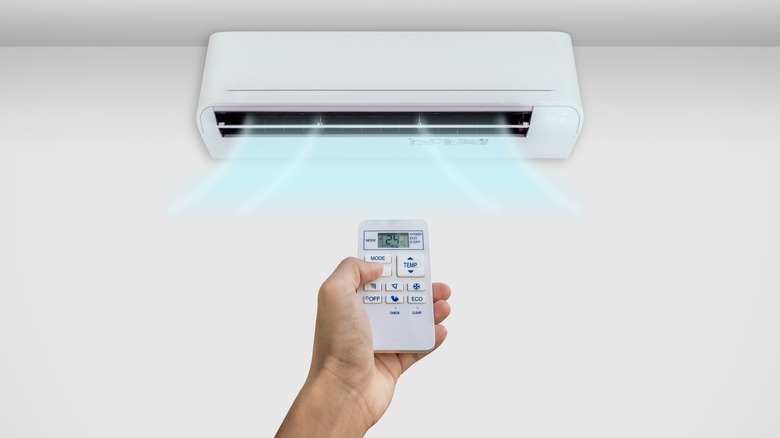
Often, after homeowners install solar panels on their property, they stop keeping track of their energy consumption. Whether it’s plugging in and using appliances and lights that are not needed or cranking up the air conditioner, many of these habits can, unsurprisingly, cause your electricity needs to rise.

Even if you’ve been careful about your energy usage, changes in your living situation or the addition of new appliances to your household might be what’s causing a spike in your electricity bill. For instance, guests visiting you during the holidays naturally add to energy needs. The same goes for if you or another resident shift to a remote work situation. Additionally, if you don’t like the heat, staying indoors for more hours can significantly increase your energy consumption too.

While some of these changes are temporary, it’s a good idea to take a look at your energy consumption over a few weeks and try to spot new habits or inefficiencies in your appliances that might be running up your electricity usage. Taking steps to be more mindful about your energy consumption and getting appliances, like your air conditioner and refrigerator, serviced can help keep your utility bills under control.

Weather-related factors

The weather has a big impact on how well your solar panels function. If you’ve been getting a lot of rain, or it’s been getting darker earlier in the day, your solar system’s efficiency will naturally take a dip. Cool, sunny days are what’s ideal for your solar panels to function at their peak capacity. On the other hand, intense heat, cloudy skies, snow, and even excess humidity can reduce a solar system’s efficiency. If the weather conditions haven’t been conducive for a while, you may be relying more on traditional sources to meet your energy consumption demands. This, in turn, can cause an increase in your electricity bills.

The best way to keep weather-related factors from affecting your solar system’s energy production capacity is to install the panels in a sunny location. However, if your roof isn’t positioned in a way that gets maximum sun exposure, consider using portable solar panels that can be moved around your property to capture more sunlight. Additionally, you might want to invest in a few energy-saving lighting options, so you’re not using as much electricity.

Malfunctioning or dirty solar panels

Cleaning solar panels

Solar panels usually have a pretty solid build quality, given that they’re expected to work outdoors and hold up to the elements. However, it’s possible for the panels to malfunction and even potentially break due to a number of reasons, from debris falling on the surface to the effects of corrosion.

If your electricity bills have recently risen while your electricity consumption has remained the same, it’s worth checking if your panels are working as they should. If you don’t see any obvious signs of damage on the panels, check if the breaker switches have tripped. If all those seem fine, check whether your solar inverter is functioning normally. Typically, a green light means it’s working fine, whereas a red, yellow, or blinking light indicates an issue. Your manual should have more information about how to identify potential issues. Since the inverter is an important part of a solar system, addressing any problems related to the inverter will help.

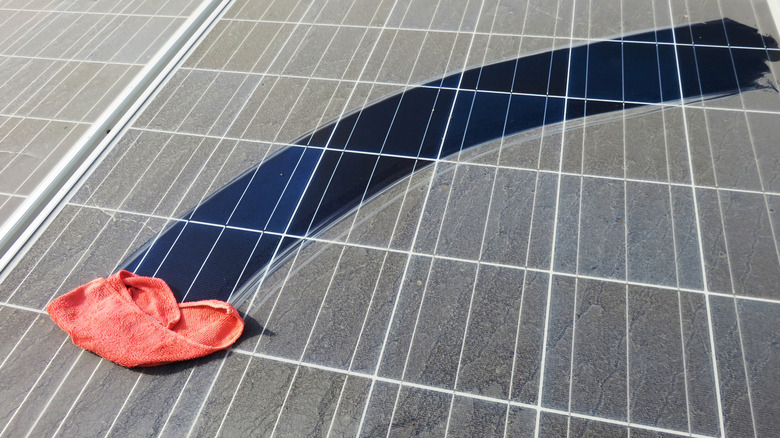
Another thing you should do is check if the solar panels are clean. MIT News reported that the accumulation of dust on solar panels can reduce the output of the panels by up to 30% in just one month, which means dirty panels might just be what’s causing your electricity bills to rise. The good news is that cleaning solar panels is fairly easy and should result in better output.

Size of your solar system


People installing solar panels

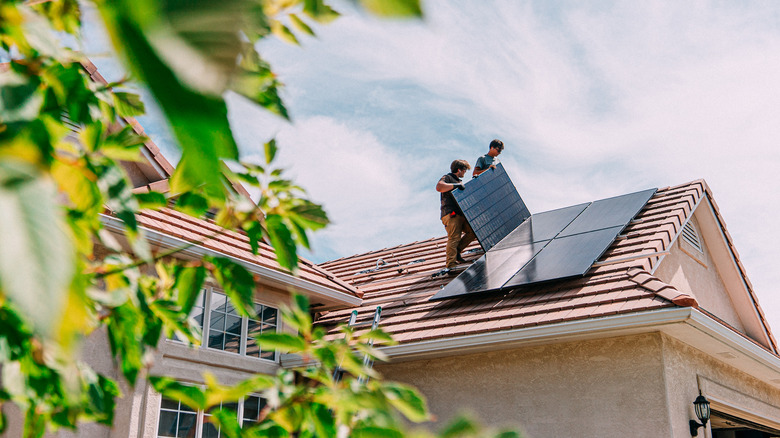
How many solar panels you need to power your home will depend on your energy needs. If your current solar system is too small for your needs and is not offsetting 100% of your consumption, your electricity bills might fluctuate. In this case, the easiest thing to do is add more solar panels to the roof. This way, your consumption will be met by the increased output provided by the new panels.

If your roof cannot accommodate more panels, consider purchasing portable solar panels. Alternatively, you might want to purchase a solar battery. Keep in mind that your solar panels generate maximum energy when the sun is the brightest, and this usually happens between 9 a.m. and 3 p.m. for east-facing panels, and later in the day for west-facing panels. If you’re not using enough energy during these hours and are using more energy in the evenings or at night, a solar battery might come in handy since it can store some of the surplus energy that is generated during the peak production hours. This can help you use solar energy continuously throughout the day.

Incorrect meter reading

Electrician inspecting meter

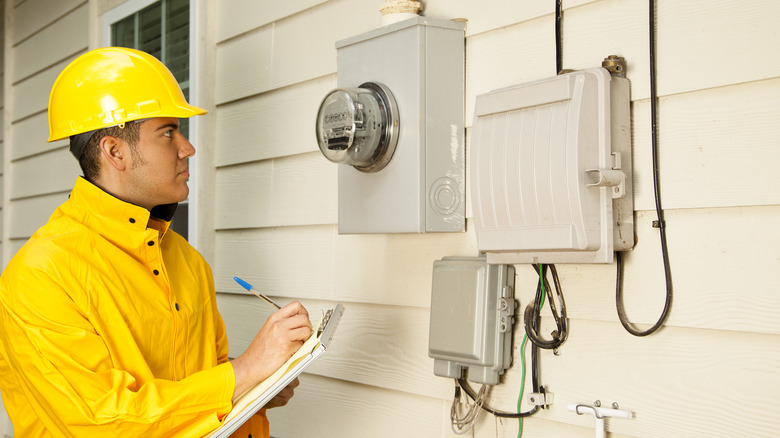
If none of the above-mentioned reasons explain why your energy bills are spiking, it’s worth checking if the culprit is a faulty meter that’s causing a billing inaccuracy. Billing inaccuracies can have a number of causes, but if you’ve already determined that none of your appliances are malfunctioning and using up more energy, you’ll want to check if the utility meter is working. If you just moved into your home, it’s also possible that the meter wasn’t installed or activated properly. 

If you suspect that your meter is malfunctioning, call your utility company or an electrician to inspect the meter. A professional will be able to test the meter and identify if it’s working normally or is malfunctioning and causing incorrect meter readings. If it’s faulty or broken, there’s a good chance you’ll receive a refund from your energy company for any overbilling that the meter caused, and this should address the spike in your electricity bills.

SlashGear

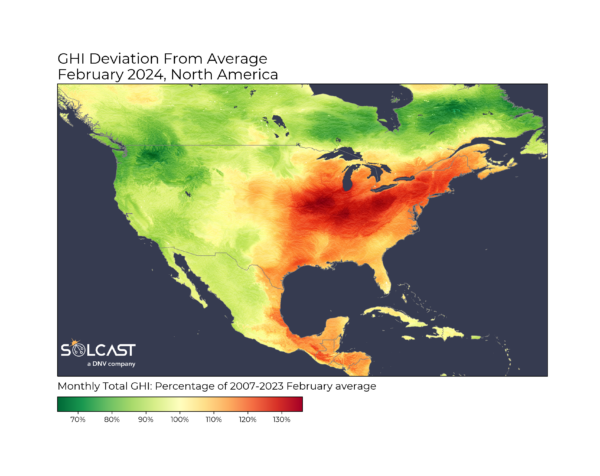
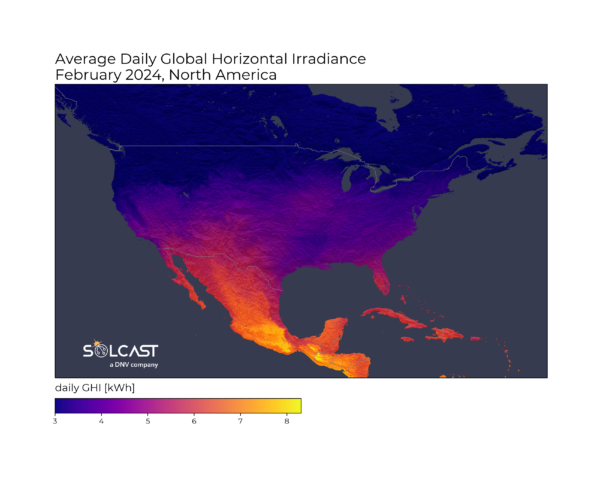
In a new weekly update for pv magazine, Solcast, a DNV company, reports that persistent high pressure in the upper atmosphere led to irradiance as high as 30% above normal, and new records for solar generation and temperature in North America in mid-February.

A warm end to winter hit most of North America this February. In the west, during February mild air from the Pacific banked up clouds and depressed irradiance by 10-20%, according to analysis completed using the Solcast API. In the east, persistent high pressure in the upper atmosphere led to irradiance as high as 30% above normal, and new records for solar generation and temperature

A clear east/west divide is present in the irradiance anomaly this month. A strong low pressure system sat further east than normal over the Atlantic which brought calm, drier and sunny conditions to the Eastern U.S. and Mexico. Sunnier than normal conditions delivered 20-30% more irradiance than normal from Texas to New England. On the west coast however, high pressure was further west over the Pacific, so that coastal low pressure systems pulled moist air from equatorial regions, leading to increased clouds, blocking irradiance.

Clear skies and higher than normal irradiance will have benefited both large and small scale, solar producers. Residential ‘behind the meter’ solar performed strongly this February all over the East Coast. Solcast’s Grid Aggregation model for NYISO shows residential solar peaked at 3.52GW, and saw 23% more solar generation than last year after adjusting for capacity increases. By contrast, CAISO’s residential solar generation was down 12% on the long term capacity-adjusted average.

Utility scale generation in ERCOT also hit and surpassed their generation peak record, hitting 17.2GW on February 20th. A 50.1% increase in peak generation in February 2023, is mostly a function of capacity increases in the last year.

But it wasn’t just grid performance breaking recent records, temperature records were broken across the country, with the average temperature, more than 4 degrees above normal. Killeen in Texas saw a peak temperature of 38 C (100 F), and Jacaranda trees in Mexico City have been in full bloom all month, 6-8 weeks earlier than normal. Despite the heat further south, areas in Eastern Canada saw significant snowfall caused by a low pressure system stalling over the area, drawing in continuous cold air from the Atlantic. This caused one of the heaviest snowfall events in 20 years, blanketing parts of Nova Scotia with more than a meter of snow.

This extreme weather is reflective of an overall pattern being seen globally, as February 2024 was Earth’s warmest month on record for the 9th consecutive month.

PV Magazine

The American Clean Power Association (ACP) has released its Clean Power Annual Market Report, highlighting a landmark year for U.S. clean energy with more capacity installed in 2023 than in any previous year.

The industry added a total of 33.8 GW of new utility-scale clean energy projects, surpassing by 12.5% the previous annual installation record set in 2021. Solar and storage additions led the charge, breaking previous records for both technologies. Clean power accounted for most of the new power capacity installed. 

The U.S. now has 262 GW of clean energy powering its grid, and as a result, the nation now generates 16% of its electricity from wind and solar. Clean energy can be found in 93% of congressional districts and in all 50 states. The ACP says future development looks promising, with the report finding project pipelines are reaching historic levels. 

“Clean energy is fundamental to the American economy, accounting for more than 75% of all new power brought online last year. We are generating clean energy in every state and nearly every congressional district,” said ACP CEO Jason Grumet. “It has been a banner year for storage and solar, and there is real excitement over the 123 newly announced manufacturing facilities that will bring economic development to communities across the country. But despite these achievements, we need to make even greater strides to meet our shared energy security and net-zero goals. ACP will continue to advocate for improvements to siting, permitting, and planning processes to accelerate the deployment of clean energy.”  

Highlights from the Clean Power Annual Market Report 2023 include:

  • Solar, wind, and storage accounted for 77% of all new power capacity installed. 
  • Utility-scale solar installations soared to 19.6 GW, with utility-scale projects leading the expansion. 
  • Energy storage capacity nearly doubled as developers connected 7.9 GW to the grid. 
  • Investment in domestic clean energy manufacturing has grown significantly, spurred by federal tax incentives. 
  • The development pipeline is up over 25% year-over-year to 170 GW, indicating robust future clean power growth. 
  • Clean energy is found in 93% of congressional districts and in all 50 states.

Utility-scale solar energy — bolstered by favorable federal policies and decreasing costs — experienced nearly 20 GW installed across 44 states. Texas and California led the country in solar additions, bringing 5.9 GW and 2.3 GW of new solar online respectively. More than half of the 94 GW of solar in operation at the end of 2023 came online between 2020 and 2023. And more is on the way, with over 92 GW in the pipeline.

Battery storage demonstrated near-exponential growth by almost doubling installed capacity with around 8 GW installed. This brings the total operating capacity to 17 GW. California and Texas accounted for nearly three-quarters of the year’s storage additions, but a total of fifteen states added new storage capacity in 2023 (AZ, CA, CO, HI, MA, MN, NC, NJ, NM, NV, NY, OH, TX, VA, VT). The rapid growth of storage was supported by a new tax credit for standalone storage, the boom in solar power, the value storage delivers during peak demand and times of grid stress, and a decline in prices for key battery materials, ACP said.

The land-based and offshore wind sectors faced challenges in 2023, delivering 6.4 GW of wind power capacity—the slowest year for new wind installations in a decade. This slowdown was attributed largely to policy uncertainty, high costs of capital, long permitting processes, siting barriers, and a challenging environment for building new transmission, ACP said.

Corporate buyers are playing an important role in driving up clean energy demand by purchasing clean power for their operations. The top three commercial and industrial (C&I) buyers in 2023 were Amazon, Meta, and Google. Meta leads as the top buyer of operating clean power, while Amazon leads with the most total clean power capacity contracted.  

Renewable Energy World

I’ve added electrification predictions for 2024 to my customary set of solar and storage predictions. Electrification incentives in the Inflation Reduction Act (IRA) are already starting to drive demand for heat pumps and electrical upgrades, just as tax credits accelerated the solar and EV markets in the past. My better half pointed out that 2024 predictions are much tougher than 2023 recaps. Nevertheless, here I go sticking my neck out again with these 10 predictions for 2024.


1. EVs will be equipped with integrated 240-volt generators

More EV manufacturers will follow Ford’s and Tesla’s lead with integrated 240-volt generators in their vehicles. These generators will enable owners to use those huge batteries on wheels to power their home, both for ordinary daily use as well as during increasingly frequent blackouts. Clever drivers will learn to charge their vehicles inexpensively during the day, and then use their vehicle’s batteries to power their homes during peak electric times during the evening.

2. Heat pump sales will surge by 25%

Heat pump HVAC and water heater system sales will surge by 25% in 2024, limited only by equipment supplies and contractor resources. Even though IRA rebates for these systems are still not available due to DOE and state energy office delays, customers are buying because of the market awareness created by the IRA. Customers are taking advantage of currently available tax credits and local incentives for this equipment — which in some cases cover more than half the total installation cost.

3. Fewer than half of new clean energy manufacturing plants will be completed

The IRA provides strong incentives for EVs, solar, storage and heat pump manufacturing in the United States. However, rules for applying these incentives to both manufacturing facilities and projects are complicated. Although there have been over 60 manufacturing plants announced, fewer than half will actually go into full-scale production once the incentive and supply chain details are understood.

4. Utilities in other states will follow California’s lead to end net metering

Credit: Titan Solar Power

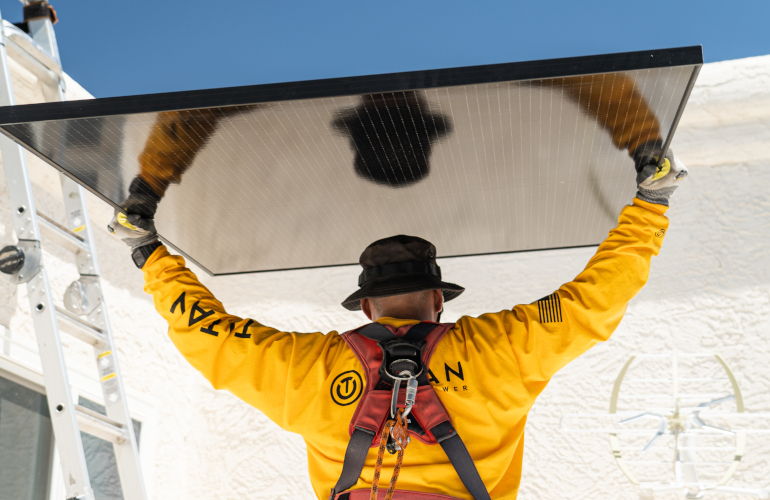
The end of net metering in California will energize utilities in other states to limit the growth of rooftop solar and storage. The dirty secret is that utilities are permitted to use ratepayer funds to influence state politicians to eliminate competition from rooftop solar – and basically enforce their monopoly. Laws to restrict utility lobbying are uniquely difficult to pass since utilities spend tens of millions of dollars to lobby against these same laws.

5. Residential solar revenues in California will plunge by 50%

Residential rooftop solar revenues in California will plunge by 50% in 2024 compared to 2023. Even though California electric rates continue to increase at over 10% per year, the state is unlikely to recover its solar leadership position until net-metering policies are restored. Customer rage from skyrocketing electric bills and the end of NEM will backfire on politicians who accepted millions in contributions from utility interests over the past six years. Relying on the utility gravy train to get re-elected will no longer work for politicians once voters link their electric bills with the lobbying money their state representatives raked in.

6. A national-scale solar installation company will file for bankruptcy

Continued financial losses at national-scale solar installation and finance companies will result in at least one high-profile bankruptcy. The finance business model for large-scale residential solar companies is very sensitive to interest rates. Solar finance companies borrow money for PPAs and leases for relatively short terms to fund their growth and then get paid back over the much longer term of the PPA or lease. When interest rates spiked, they were not able to maintain their profits due to lower revenue and higher borrowing costs. Interest rates will decline significantly in 2025 at which time the solar finance market will bounce back, especially since average electric rates will be higher and equipment costs will be lower.

7. Tesla will claw its way into the U.S. inverter business

The inverter duopoly of SolarEdge and Enphase will turn into a tri-opoly (new word, not the board game) with the entrance of Tesla’s hybrid string inverter. Tesla will muscle into the inverter business with the combination of its brand name advantage and lower system costs – even though the performance of their systems will be lower without module-level electronics.

8. VPPs and V2G will not gain traction

Utility-sponsored tests of virtual power plants (VPPs) and vehicle-to-grid (V2G) will continue but will not gain traction without large customer incentives. The underlying friction of these business models is that utilities are unwilling to compensate customers for the full value of the battery systems – for the simple reason that utilities generate higher profits if these battery assets are owned by the utility itself rather than the customers. The paltry amount of money that utilities are willing to pay for customer-sited resources is insufficient to cover customer costs of their batteries, not to mention installer, manufacturer and aggregator costs to support these systems.

9. The residential battery system business will consolidate

The crowded residential battery system business will consolidate down to four national-scale players. Batteries by themselves are relatively inexpensive. On the other hand, releasing a complete and fully UL-approved battery and software system is expensive. But that’s just the beginning — building out a national sales and service organization costs a fortune. New battery system entrants — without the investment and army of people that it takes to support customers — will not succeed.

10. It’s game-over for fossil fuels

COP28 showed the world that it is “game over” for fossil fuels. Economics is the simple reason for this transition, although it will take another generation for the transition to be completed. Energy from solar and wind is already much less expensive than fossil fuels. These renewable energy sources are being deployed at an accelerating rate, while at the same time technologies that clean up fossil fuel emissions — such as carbon sequestration and storage, and direct air capture — struggle to pencil out economically. Despite the billions of dollars that fossil fuel companies spend to extend their businesses and continue to pollute, they are destined to become extinct just as their dinosaur ancestors.

Solar Power World