A smart meter is seen on display at the launch.         Ricardo Makyn

The Jamaica Public Service (JPS) launched their nationwide smart meter roll-out at the JPS headquarters on July 7.

According to President and CEO of JPS Kelly Tomblin, “the future of energy is bright… Jamaica and JPS are embedded in a phase of unprecedented progress”. Gary Barrow, chief technology officer at JPS, underscored the importance of smart meters and the benefits to the current national grid.

“We’re actually putting more intelligence in the grid to provide the stability and reliability that is going to be necessary when we start to integrate mass amounts of these renewables and that is really the start of our smart grid, the primary driver,” he said. “This year, we’re going to be launching three applications … those are going to be smart-phone applications.” On these applications, customers will be able to get outage notifications, restoration times, and real-time consumption and see their bill online and pay it.

“All of our appliances in a short while will become Wi-Fi-enabled and it will mean that you will be able to use your smartphone wherever you are, whatever time, to actually look at your devices, to get access to your devices and turn them on and off,” he said. The company is also investing in other smart grid technologies and services, including smart LED street lighting, smart parking and smart vehicle-charging stations for electric vehicles. This is all part of building a smart energy economy.

A pilot programme was launched three years ago in sections of the Jacks Hill and Barbican communities and Barrow said the company learned much from both customers and on the technical side.

“Already, we have over 50,000 smart meters in the field right now that we’re able to control remotely and we’re able to get usage patterns, but we don’t have the software that actually allows our customers to dial in.”

This year, the company is targeting to roll out over 20,000 smart meters on that network at a cost of approximately US$5 million. Seven parishes will be covered: Kingston, St Catherine, Clarendon, St Ann, St Mary, St James and Westmoreland. JPS technicians will visit customers over the next four to five months and will change the current meters free of cost

BY AVIA COLLINDER Business reporter collindera@jamaicaobserver.com


LNG is coming to Jamaica


New Fortress Energy, the company which has won the contract to supply the island’s sole power distributor the Jamaica Public Service Company (JPS) with LNG for substations in Bogue, Montego Bay and another to be developed in Old Harbour, St Catherine, said it buys supplies from sources worldwide.

The company has declined to comment whether its suppliers include Trafigura Beheer, from which the Jamaica Observer understands it has sought to make buys.

Meanwhile, the Electricity Sector Enterprise Team (ESET) has indicated to theBusiness Observer that it does not matter where in the world the gas comes from.

Trafigura is the world’s third-largest private oil and metals trader. That company is also seeking to grow its market for LNG supply globally.


However, in 2011 the Dutch company was involved in controversy for a $31-million political donation to the the People’s National Party administration, which was then the governing party.

The company continues to sell supplies through third-party deals to the local market, including spot purchases made by Petrojam.

Describing the surge in LNG demand as an “LNG revolution”, Trafigura says on its wesbite that it plans to double supplies sold year over year from base year 2013 when the company transported one metric tonne (mt) of LNG globally.

The company has three full-time traders based in Geneva supported by its US Natural Gas team in Houston, Texas, and a European Natural Gas team, working with 27 LNG regional offices in key export and import countries across the globe.

However, as to sales programmed for Jamaica, the company said it has no comment.

“We don’t comment on our day-to-day commercial arrangements,” Victoria Dix, media liaison for Trafigura said when asked to channel questions about the Caribbean market, including Jamaica.

Bloomberg describes Trafigura Beheer as the world’s current largest LNG trader, reporting at year end December 2015 that the commodity trader “boosted the amount of LNG handled to 4.2 million metric tonnes in the financial year ended September 30, from 1.7 million a year earlier following a doubling in volumes… that made it the world’s biggest independent LNG trader.”

A source close to New Fortress Energy told the Business Observer that it is normal for ships to swap cargo and there may have been spot purchases, but that there is, however, no long-term relationship with Trafigura.


More directly, the company, through a spokesperson, said it sources LNG from all over the world.

“In addition to supplying our own gas from the United States, New Fortress Energy sources gas from all over the world. As a matter of policy, we cannot comment further,” New Fortress said.

He stated that in relation to Bogue, “we’re making significant progress and are excited to provide natural gas to help further Jamaica’s clean energy transition. We’re in close coordination with JPS on the process and timeline”.

Chairman of ESET Dr Vincent Lawrence told the Business Observer on Monday that the source of LNG was immaterial.

“ESET is not aware of any trades, swaps or short-term source arrangements that New Fortress Energy may make in satisfying its contractual arrangements with JPS.

“NFE under its Gas Supply Agreement arrangements can supply gas from any origin. However, in ESET granting approval of the Gas Supply Agreement between JPS and NFE, in order to ensure security of supply, NFE had to demonstrate as to its long-term ownership of and access to gas from the United States including the ability to obtain any required export permits.”

Lawrence added, “The contractual arrangements are private and between two private companies,” further adding that “the GOJ is not a party to the contractual nor day to day delivery arrangements”.

The island is moving towards the majority use of LNG as fuel for energy, with the aim of reducing dependence on oil which is subject to price volatility.

To that end, JPS has retrofitted its 115MW gas turbine plant in Montego Bay from automotive diesel oil to dual fuel use. The conversion, it was projected, will result in an approximate 40 per cent fuel price reduction.

New Fortress has also secured the supply contract for the JPS’s planned 195MW plant in Old Harbour which is being razed and will be rebuilt and expanded.

Start-up of LNG use at the JPS Bogue plant is due to begin in August, when construction of fuel lines and storage facilities are expected to be completed.

New Fortress is also slated to construct an expandable 100MW, natural, gas-fired, cogeneration plant for alumina producer, Jamalco, replacing a previous plan for a coal-fired alternative


The Observer

Tomblin


The Jamaica Public Service Company (JPS), managers of the national electricity grid expects Golar LNG to ship liquefied natural gas to Jamaica, despite its heavy losses.

Golar is contracted to New Fortress Energy (NFE), the latter being JPS’s selected partner to develop and supply natural gas to the Jamaican utility. New Fortress is five months behind schedule with deliveries.

JPS President and Chief Executive Officer Kelly Tomblin said that even in the worst-case scenario, the power utility remains protected.

“Golar is a public company with a market cap of about US$1.5 billion and a balance sheet with over US$4 billion of assets. It’s been in business since 1946 and is widely followed by investors all over the world,” said Tomblin in a response to Gleaner queries.

“New Fortress Energy has indicated to me that they have been a dependable and reliable partner in preparing to deliver gas to Jamaica. JPS is protected contractually if New Fortress fails to bring gas, as required in the gas supply agreement.”

NFE earlier this year contracted Golar for two years to ship LNG to Jamaica. The first shipments will feed JPS’s plant at Bogue in Montego Bay, which has already been retrofitted to burn gas as well as diesel oil.

In early June, NFE acknowledged Gleaner queries regarding the implications of Golar’s finances, but did not follow through with a response.

NET LOSSES

Golar reported net losses of US$80 million for its first quarter ending March. The loss was mainly because of its US$61.5 million in operating expenses, towering over its US$18.6 million in revenues for the period. Over 12 months, Golar posted a US$197.6-million net loss for financial year 2015 and US$43 million in net losses for 2014.

Last month, CEO Gary Smith resigned, and its former CEO, Oscar Spieler, retook control of the company amid restructuring of the operations.

Tomblin expects the LNG projects at Bogue and, later, at Old Harbour, along with additional capacity from renewable plants, to reduce the power utility’s reliance on heavy oil from 95 per cent to 50 per cent in the medium term.

steven.jackson@gleanerjm.com


The Gleaner

BMW Is Turning Used i3 Batteries Into Home Energy Storage Units


Repurposed batteries could create a new revenue stream for EV customers. But it’s not yet clear how the buyback program will work.

by Julia Pyper
June 21, 2016
BMW is making a major push into the stationary energy storage market.

The German automaker announced that it is turning new and used i3 batteries into energy storage solutions for homes and small businesses. The company unveiled its plans at an electric vehicle symposium in Montreal.

“With a battery storage system electrified by BMW, our customers can take the next step toward a sustainable energy lifestyle. Coupled with the home-charging and solar energy programs, the system enables BMW drivers to embrace holistic sustainability beyond e-mobility,” said Rob Healey, manager of electric vehicle infrastructure for BMW North America, in a statement.

In an interview, Healey added that energy storage fits with BMW’s 360º Electric program, which currently offers customers electric vehicles, charging infrastructure and rooftop solar through a partnership with SolarCity. Through that partnership BMW i owners receive a $1,000 credit toward SolarCity’s home solar offer. BMW’s sustainability package sounds very similar to the type of solution Tesla wants to offer with its proposed acquisition of SolarCity.

“This is really a part of a much bigger puzzle for BMW that we’re putting together as we look out to the future,” said Healey. “We offer customers electric vehicles, we offer customers charging, and we offer customers access to solar panels and producing their own renewable energy. And now, with this next piece, we offer the customer an energy storage solution that fits into the overall picture of sustainability.”

The market-ready product currently uses i3 high-voltage batteries, but can be equipped to incorporate second-life batteries as they become available. There are relatively few of these used batteries on the market today, because the i3, an all-electric city car, has only been on the market since 2013. That will change as the lithium-ion batteries degrade over time and are no longer considered suitable for vehicle use. A repurposed battery can offer “many additional years of service,” according to BMW.

As i3 batteries reach the end of their automotive life, BMW and German-based Beck Automation plan to turn them into plug-and-play energy storage systems by unbolting them from the i3 and installing them in a Beck-designed charging module. The system is sized to fit conveniently in a basement or a garage where it can be used to power electrically operated devices in a home or to charge an electric car.

The energy storage units are equipped with BMW i3’s 22-kilowatt-hour or 33-kilowatt-hour capacity batteries, which are ideally suited to operate appliances and entertainment devices for up to 24 hours. A typical home in the U.S. consumes between 15 and 30 kilowatt-hours of energy per day.

The systems are outfitted with software to determine the optimal time to charge or discharge the system. The BMW storage system also includes a voltage converter and power electronics to manage the energy flow between renewable energy resources, the home and the battery.

“With this system, which integrates seamlessly with charging stations and solar panels, customers can offset peak energy costs and also enjoy the added security of an available backup energy supply during power outages,” according to the BMW press release.

Theoretically, this concept should give i3 drivers a new way to make money from their used cars by creating a market for second-life batteries. However, it’s not yet clear how a battery buyback program would work.

There are also a number of outstanding questions around battery design and cost. Tesla’s 6.4-kilowatt-hour home battery sells to installers for $3,000 and is estimated to retail for around $7,000. Can BMW’s 22-kilowatt-hour used battery get anywhere close to that price?

In addition, the product release timeline has yet to be determined. According to a spokesman, “BMW is currently evaluating a distribution/marketing strategy where pilot programs in the U.S. could start in 2017.”

BMW has been preparing to enter the stationary energy storage market for a number of years. In 2013, the automaker installed a microgrid application at the University of California San Diego using second-life Mini E batteries. In 2014, BMW integrated high-voltage batteries into a stationary storage system in Hamburg for Vattenfall that stores solar power as a buffer for fast-charging stations. In 2015, NextEra signed a contract for the delivery of 20 megawatt-hours of repurposed automotive batteries from the i3 and BMW’s ActiveE test fleet — which BMW claims is the largest contract of its kind in automotive history.

In addition, BMW continues to participate in an energy storage pilot projectwith Pacific Gas & Electric. Under the program, PG&E manages 100 kilowatts of demand from 100 active i3 vehicles and a stationary unit of repurposed BMW Mini E batteries located at BMW’s Mountain View office. The system was designed to test how electric vehicles and second-life batteries can offer reliability services to the grid. Last fall, BMW shared preliminary results showing that the system had delivered on more than two dozen demand response events called by the utility.

According to Cliff Fietzek, manager of connected e-mobility at BMW North America, past experience revealed that it’s very expensive to reconfigure batteries for reuse, which is why BMW developed a plug-and-play solution for it’s home battery. “We don’t have to put any special software in or take modules out and can take advantage of all of the engineering we put into producing the car battery,” he said. “We can use the same heating and cooling system for the car battery and the same safety mechanisms … there is not too much work to be done on the integration side, which saves a lot on cost and increases flexibility.”

However, the company will have to wait to see the results of its home battery pilot programs before really knowing what the cost and return on investment is, he added.

BMW is the latest auto company to get into stationary storage. Tesla has garnered an enormous amount of attention with the launch of its energy storage business and massive battery Gigafactory. Meanwhile, Toyota,General Motors and Nissan are actively testing stationary storage solutions and looking to make larger plays. Daimler/Mercedes-Benz introduced a stationary battery business in Europe last year, and is rumored to be launching a U.S. product this fall.

Green Tech Media

Tesla Motors, manufacturer of electric vehicles (EVs) and batteries, plans to enter the solar space in a big way. The company has offered to acquire residential solar giant SolarCity in an all-stock deal estimated to total up to $2.8 billion.

The two companies have something in common: Elon Musk. The billionaire entrepreneur serves as CEO of Tesla and chairman of SolarCity. He is also the biggest shareholder of both firms and the cousin of SolarCity co-founders and executives Lyndon Rive and Peter Rive.

Tesla has proposed to acquire all of SolarCity’s outstanding shares of common stock in exchange for common shares of the EV and battery company. In a letter to SolarCity CEO Lyndon Rive, Telsa explains that the offer represents a value of between $26.50 and $28.50 per SolarCity share.

“Tesla’s mission has always been tied to sustainability,” says Tesla in a blog post, later adding, “It’s now time to complete the picture.” Aside from providing EVs, the company also started offering Powerwall and Powerpack energy storage solutions in 2015, and SolarCity already uses the products for some of its solar projects.

“Tesla customers can drive clean cars and they can use our battery packs to help consume energy more efficiently, but they still need access to the most sustainable energy source that’s available: the sun,” says Tesla in its blog.

The company adds the acquisition would allow it to become “the world’s only vertically integrated energy company offering end-to-end clean energy products to our customers.”

“This would start with the car that you drive and the energy that you use to charge it, and would extend to how everything else in your home or business is powered,” says Tesla.

According to a Reuters report, Musk called the acquisition a “no brainer” during a conference call.

He said, “Instead of making three trips to a house to put in a car charger and solar panels and battery pack, you can integrate that into a single visit. It’s an obvious thing to do.”

Meanwhile, SolarCity’s Lyndon Rive says he is “really excited about this.”

In an email to the solar company’s employees, the CEO writes, “There are tremendous synergies between these two companies.”

He also notes, “You should know that the board and the shareholders will be considering this, and so while I am personally excited, I will be recusing myself from the decision-making process. Ultimately, the shareholders will decide.”

Musk has also recused himself from voting on the proposal, as has Antonio Gracias, who serves as a board member at both Tesla and SolarCity.

In its letter, Tesla says the proposed deal will require several approvals but adds, “While a transaction would be further subject to customary and usual closing conditions, we believe that Tesla is well positioned to negotiate and complete the transaction in an expedited manner. We do not anticipate significant regulatory or other obstacles in consummating a mutually beneficial transaction promptly.”

According to various reports, stocks of SolarCity jumped on Wednesday following Tesla’s announcement, while stocks of Tesla dropped.

“The deal makes sense to Elon Musk, but so far, it hasn’t made much sense to shareholders,” says Raj Prabhu, CEO and co-founder of Mercom Capital Group, a clean energy communications and research firm.

Prabhu also believes that because both companies have the same majority shareholder, a family connection and some overlapping board members, the deal represents a conflict of interest and governance problems. He suggests similar leadership issues plagued the now-bankrupt renewable energy company SunEdison.

Nonetheless, Prabhu says this proposed acquisition does offer some potential benefits to both parties.

“There is a similar customer base; SolarCity brings the installation expertise; Tesla brings manufacturing capabilities; the company will be able to use Tesla’s stores to sell solar installations; and they will be able to leverage SolarCity’s finance lease/loan expertise,” he explains. That said, Prabhu adds they are “still very different businesses.”

Looking ahead, he says, “The question is: How will the shares be valued if the deal goes through? Is the company an auto manufacturer or a vertically integrated cleantech company? Public markets haven’t been very kind to cleantech companies lately. If the stock price falls after the acquisition goes forward, it will become harder to raise funding.

“Of course, these are the worst-case scenarios,” he continues. “But we have seen it happen.”

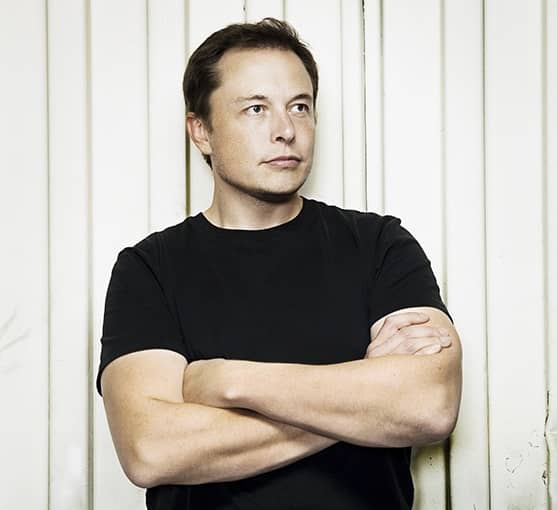
Photo of Elon Musk courtesy of SolarCity’s website


Solar Industry

Cheaper coal and gas will do nothing to derail the renewable energy revolution according to BNEF’s New Energy Outlook 2016.

Bloomberg New Energy Finance states 60% of installed capacity will be zero-emission energy sources by 2040 and wind and solar power will take the lion’s share of new power generation capacity added – 64%.

Solar power is forecast to be the cheapest generation technology in most countries by 2030 and account for 3.7TW, or 43%, of new capacity added in 2016-40. This will represent $3 trillion of new investment.

A very important point in the report is that around 2027, new wind and solar will be cheaper than running existing coal and gas generators, particularly where carbon pricing has been implemented. In just over a decade we may see a marked uptick in current fossil fuel generation plants being shuttered. The report says there will be a net closure of 286GW of coal in OECD economies by 2040.

By 2040, BNEF states Australia will have wind and solar penetration of more than 50%.

Another prediction will get electric vehicle supporters excited – BNEF’s modeling suggests EV’s will comprise a quarter of the global car fleet by 2040. This is also good news for the residentialand commercial solar sector as it will accelerate a reduction in battery costs through technology development, economies of scale and enhanced manufacturing know-how.

BNEF sees a very healthy future for small-scale solar power, with it accounting for 10% of global generating capacity by 2040. With regard to home battery systems, Bloomberg expects solar energy storage to be commonly deployed alongside rooftop solar panel systems by 2020.

Behind-the-meter energy storage generally will see a sharp rise from around 400MWh today to nearly 760GWh in 2040.

While the news is upbeat about renewables generally, forecasted additions won’t be enough to rein in carbon emissions to the required degree.

“Some $7.8 trillion will be invested globally in renewables between 2016 and 2040, two thirds of the investment in all power generating capacity, but it would require trillions more to bring world emissions onto a track compatible with the United Nations 2°C climate target,” said Seb Henbest, lead author of the report and head of Europe, Middle East and Africa for BNEF.

BNEF suggests approximately USD $5.3 trillion would need to be invested in zero-carbon power by 2040 to prevent carbon dioxide levels rising above 450 parts per million.

Bloomberg

Devon Gardner

THE CARIBBEAN is, within the next two or so years, to have an energy efficiency strategy that should serve the growth agenda of various islands.

To begin the work, the Caribbean Community (CARICOM) has secured the support of the European Union (EU).

“The EU will send a team in to work with us to identify the elements of the framework for the strategy. Having identified that framework, we will utilise a Technical Cooperation Facility (TCF) that we have with the IDB (Inter-American Development Bank) as well as support that we are already getting from the GIZ to do what I refer to as investment grade analysis to identify the energy efficiency options in the various sectors across countries in the CARICOM states,” said Dr Devon Gardner, programme manager for energy with the CARICOM secretariat.

He was speaking to the Gleaner at the energy and sustainable development forum hosted by the University of the West Indies in Kingston on Tuesday.

According to Gardner, the strategy – to be developed in line with CARICOM’s five-year strategic plan for 2015 through 2019 will take account of key productive sectors (tourism, agriculture, services and the public sector) together with the electricity and transport sectors.


MANY DELIVERABLES


In the end, he said it should deliver on:

• an energy efficient building code for the region;

• energy performance standards for certain types of appliances, including refrigerators, air conditioners, washing machines, and lights (LED and CFLs);

• energy labelling standards for appliances that provide consumers with information and operating cost of the various devices; and

• performance standards for a number of renewable energy devices, including solar water heaters.

“What are doing is not just to understand the amount of energy savings potential, but critically it is to understand the value of the energy savings to the economy and the investment package required to pursue those opportunities if we desire,” Gardner noted.

News of the regional energy efficiency strategy comes at a time when CARICOM countries are collectively using some 13,000 Btu of energy to produce one US dollar of gross domestic product (GDP) compared to 4,000 Btu of energy used by Japan, for example, to produce the same one US dollar of GDP and the global average of 10,000 Btu.

This is according to Gardner who said that “the region is perhaps the most inefficient in the world as regards energy efficiency.”

pwr.gleaner@gmail.com

The Gleaner

Devon Gardner

THE CARIBBEAN is, within the next two or so years, to have an energy efficiency strategy that should serve the growth agenda of various islands.

To begin the work, the Caribbean Community (CARICOM) has secured the support of the European Union (EU).

“The EU will send a team in to work with us to identify the elements of the framework for the strategy. Having identified that framework, we will utilise a Technical Cooperation Facility (TCF) that we have with the IDB (Inter-American Development Bank) as well as support that we are already getting from the GIZ to do what I refer to as investment grade analysis to identify the energy efficiency options in the various sectors across countries in the CARICOM states,” said Dr Devon Gardner, programme manager for energy with the CARICOM secretariat.

He was speaking to the Gleaner at the energy and sustainable development forum hosted by the University of the West Indies in Kingston on Tuesday.

According to Gardner, the strategy – to be developed in line with CARICOM’s five-year strategic plan for 2015 through 2019 will take account of key productive sectors (tourism, agriculture, services and the public sector) together with the electricity and transport sectors.


MANY DELIVERABLES


In the end, he said it should deliver on:

• an energy efficient building code for the region;

• energy performance standards for certain types of appliances, including refrigerators, air conditioners, washing machines, and lights (LED and CFLs);

• energy labelling standards for appliances that provide consumers with information and operating cost of the various devices; and

• performance standards for a number of renewable energy devices, including solar water heaters.

“What are doing is not just to understand the amount of energy savings potential, but critically it is to understand the value of the energy savings to the economy and the investment package required to pursue those opportunities if we desire,” Gardner noted.

News of the regional energy efficiency strategy comes at a time when CARICOM countries are collectively using some 13,000 Btu of energy to produce one US dollar of gross domestic product (GDP) compared to 4,000 Btu of energy used by Japan, for example, to produce the same one US dollar of GDP and the global average of 10,000 Btu.

This is according to Gardner who said that “the region is perhaps the most inefficient in the world as regards energy efficiency.”

pwr.gleaner@gmail.com


The Gleaner