As of January 1, 2017 the Ministry of Science, Energy and Technology took over responsibility for applications for net billing, electric power wheeling and auxiliary connections.

Information about the new arrangements, posted on the ministry website, comes after a period of uncertainty characterised by legislative changes, delays and temporary arrangements.

Minister of Science, Energy and Technology

Dr Andrew Wheatley announced in April 2016 that the Office of Utilities Regulation (OUR) would resume accepting applications on behalf of the ministry for net billing. This would be under similar terms as the previously concluded net billing pilot project, which ran for two years until May 2015. Up to that time, the ministry had received 351 applications for net billing, of which 311 were approved.

Net billing allows persons who produce electricity from renewable sources such as wind or solar to sell the excess to the Jamaica Public Service Company (JPS), thus offsetting the electricity consumed when they use power from the grid. The OUR was charged with the responsibility for continuing to accept applications until the details of a permanent programme were finalised.

Public education specialist at the OUR, Elizabeth Bennett Marsh, says that with changes to some aspects of the legislation, the responsibility for approving net billing was passed back to the ministry.

“There was a brief hiatus where we had stopped accepting because we said we really wanted to get everything clarified. The ministry subsequently asked the OUR to continue accepting applications. So we agreed to continue until they could sort it out, and now that it has been completed we handed over,” Bennett Marsh said.

According to the information on the ministry”s website, “All persons who are desirous of connecting to the Jamaica Public Service grid are required to obtain a licence from the minister with responsibility for energy. The Ministry of Science, Energy and Technology, therefore, advises the public that, effective January 1, 2017, all applications for net billing, electric power wheeling and auxiliary connections are to be made directly to the ministry.”

READY TO DO ITS PART

The ministry declined to comment by telephone on the new requirement and did not respond to emailed questions up to press time.

JPS Director of Corporate Communications Winsome Callum said the light and power company was aware of the changes and stood ready to do its part in adding new systems to the grid.

“This new development came out of the review of the net billing process in 2015. It was decided that the ministry would start accepting applications as of January 2017.

“JPS will continue its role in facilitating the contracts and the commissioning of the systems. We will continue our efforts to ensure that the connections are made as seamlessly and as quickly as possible,” Callum said in a written response.
Gleaner

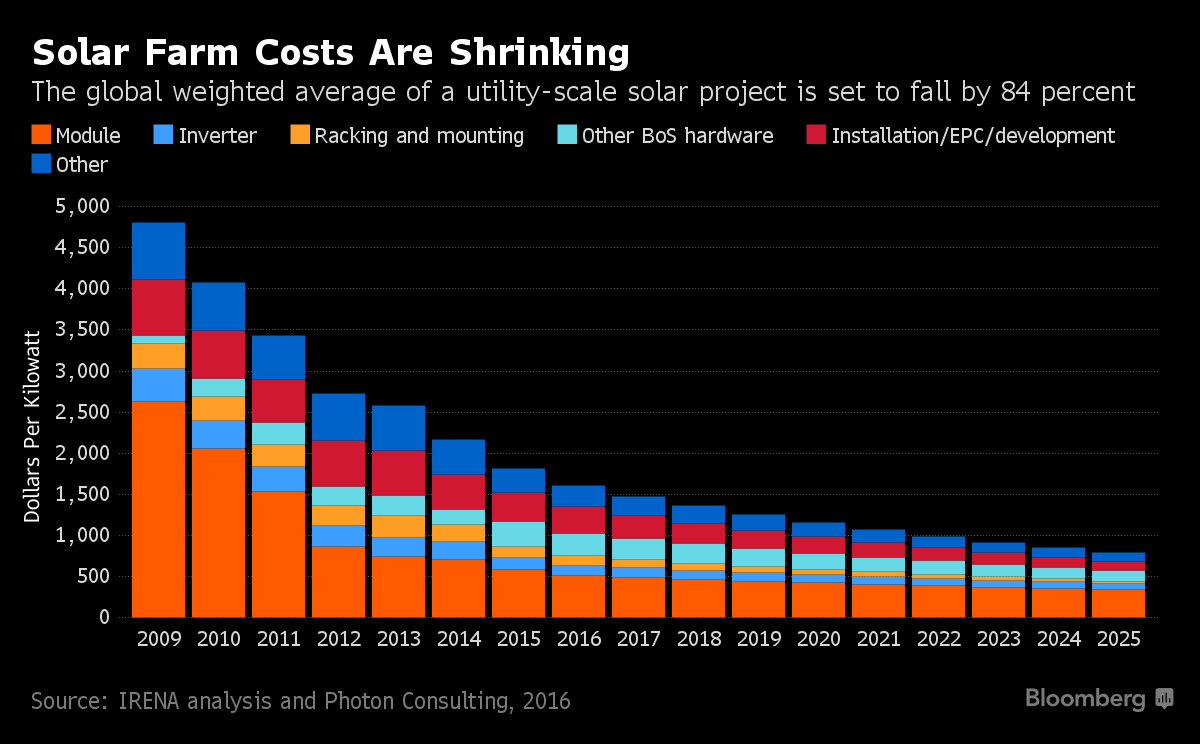
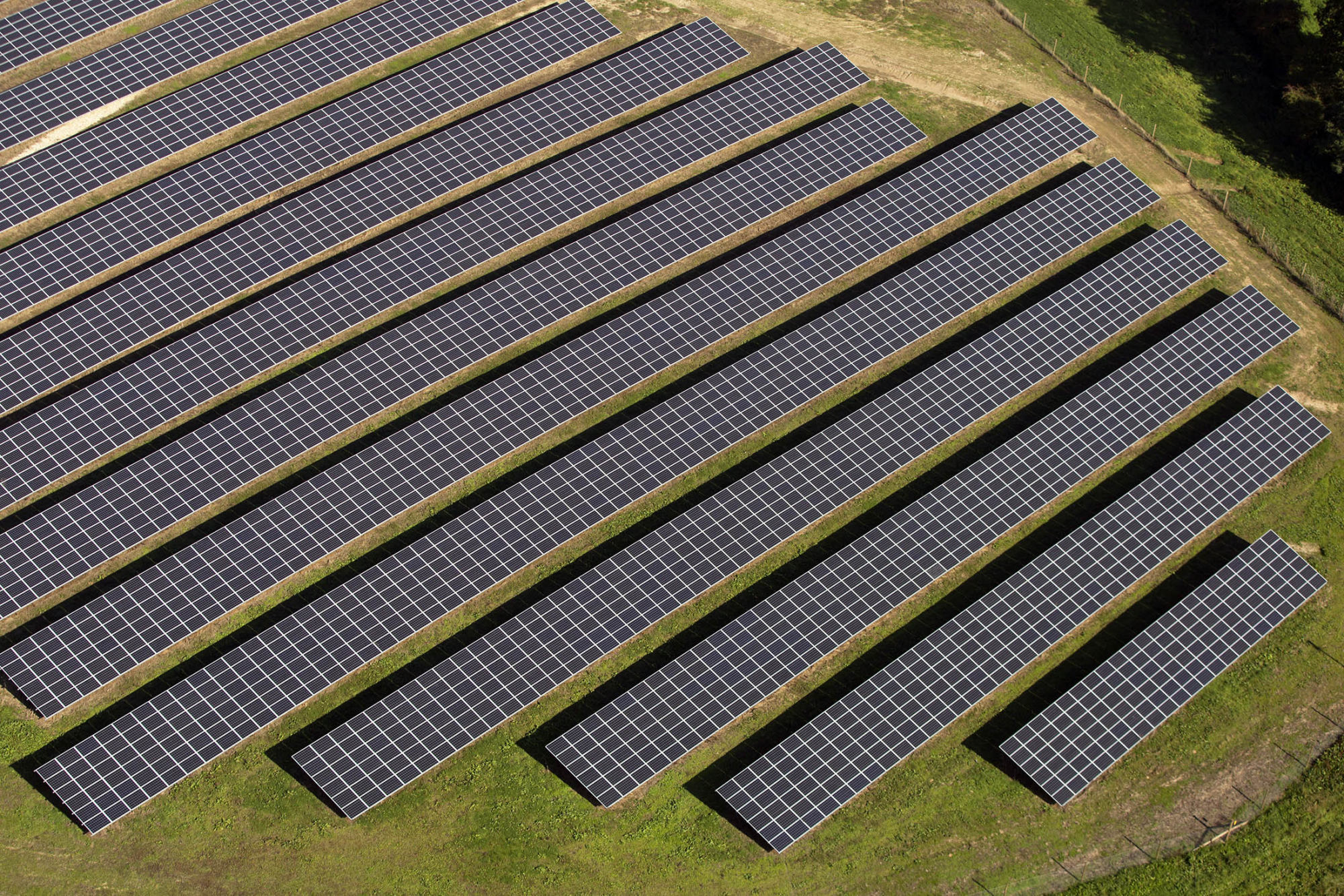
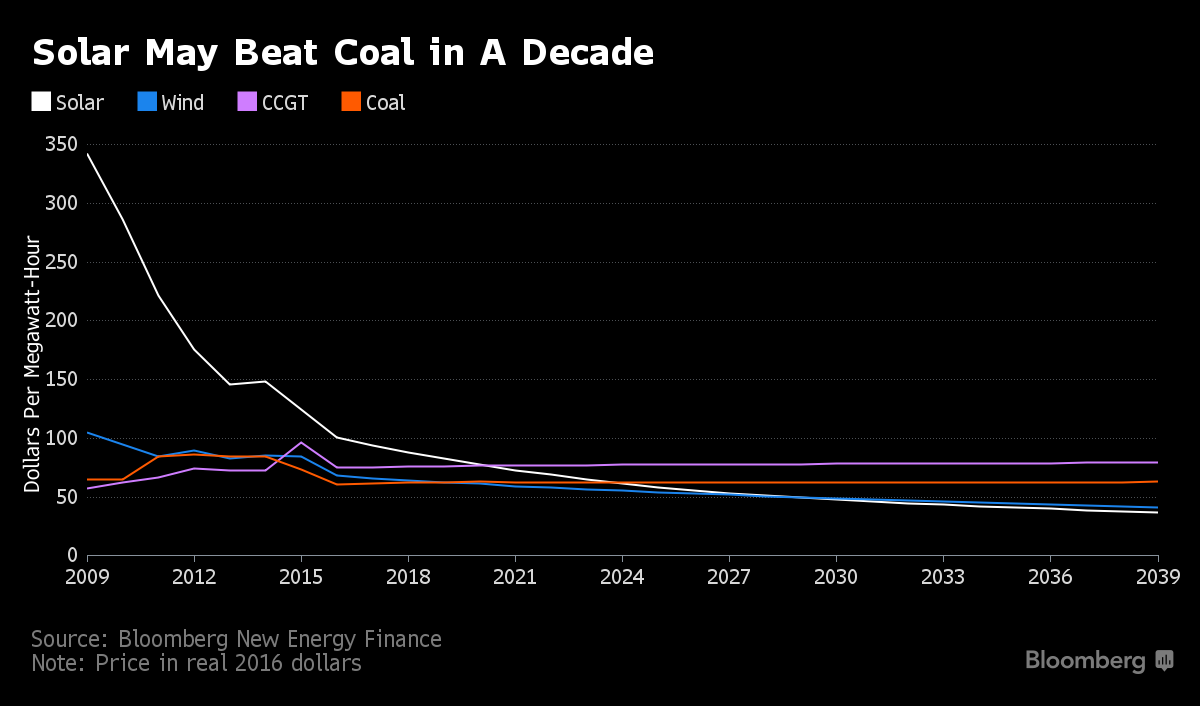
Solar power is now cheaper than coal in some parts of the world. In less than a decade, it’s likely to be the lowest-cost option almost everywhere.

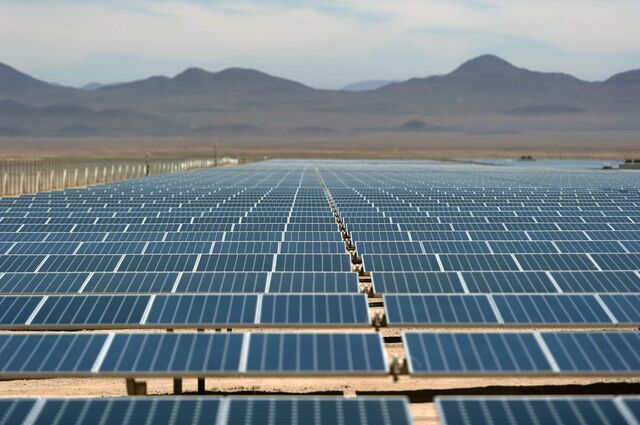
In 2016, countries from Chile to the United Arab Emirates broke records with deals to generate electricity from sunshine for less than 3 cents a kilowatt-hour, half the average global cost of coal power. Now, Saudi Arabia, Jordan and Mexico are planning auctions and tenders for this year, aiming to drop prices even further. Taking advantage: Companies such as Italy’s Enel SpA and Dublin’s Mainstream Renewable Power, who gained experienced in Europe and now seek new markets abroad as subsidies dry up at home.

Since 2009, solar prices are down 62 percent, with every part of the supply chain trimming costs. That’s help cut risk premiums on bank loans, and pushed manufacturing capacity to record levels. By 2025, solar may be cheaper than using coal on average globally, according to Bloomberg New Energy Finance.

“These are game-changing numbers, and it’s becoming normal in more and more markets,” said Adnan Amin, International Renewable Energy Agency ’s director general, an Abu Dhabi-based intergovernmental group. “Every time you double capacity, you reduce the price by 20 percent.”

Better technology has been key in boosting the industry, from the use of diamond-wire saws that more efficiently cut wafers to better cells that provide more spark from the same amount of sun. It’s also driven by economies of scale and manufacturing experience since the solar boom started more than a decade ago, giving the industry an increasing edge in the competition with fossil fuels.

The average 1 megawatt-plus ground mounted solar system will cost 73 cents a watt by 2025 compared with $1.14 now, a 36 percent drop, said Jenny Chase, head of solar analysis for New Energy Finance.

That’s in step with other forecasts.

  • GTM Research expects some parts of the U.S. Southwest approaching $1 a watt today, and may drop as low as 75 cents in 2021, according to its analyst MJ Shiao.
  • The U.S. Energy Department’s National Renewable Energy Lab expects costs of about $1.20 a watt now declining to $1 by 2020. By 2030, current technology will squeeze out most potential savings, said Donald Chung, a senior project leader.
  • The International Energy Agency expects utility-scale generation costs to fall by another 25 percent on average in the next five years.
  • The International Renewable Energy Agency anticipates a further drop of 43 percent to 65 percent for solar costs by 2025. That would bring to 84 percent the cumulative decline since 2009.

The solar supply chain is experiencing “a Wal-Mart effect” from higher volumes and lower margins, according to Sami Khoreibi, founder and chief executive officer of Enviromena Power Systems, an Abu Dhabi-based developer.

The speed at which the price of solar will drop below coal varies in each country. Places that import coal or tax polluters with a carbon price, such as Europe and Brazil, will see a crossover in the 2020s, if not before. Countries with large domestic coal reserves such as India and China will probably take longer.

Coal’s Rebuttal

Coal industry officials point out that cost comparisons involving renewables don’t take into account the need to maintain backup supplies that can work when the sun doesn’t shine or wind doesn’t blow. When those other expenses are included, coal looks more economical, even around 2035, said Benjamin Sporton, chief executive officer of the World Coal Association.

“All advanced economies demand full-time electricity,” Sporton said. “Wind and solar can only generate part-time, intermittent electricity. While some renewable technologies have achieved significant cost reductions in recent years, it’s important to look at total system costs.”

Even so, solar’s plunge in price is starting to make the technology a plausible competitor.

In China, the biggest solar market, will see costs falling below coal by 2030, according to New Energy Finance. The country has surpassed Germany as the nation with the most installed solar capacity as the government seeks to increase use to cut carbon emissions and boost home consumption of clean energy. Yet curtailment remains a problem, particularly in sunnier parts of the country as congestion on the grid forces some solar plants to switch off.

Sunbelt countries are leading the way in cutting costs, though there’s more to it than just the weather. The use of auctions to award power-purchase contracts is forcing energy companies to compete with each other to lower costs.

An August auction in Chile yielded a contract for 2.91 cents a kilowatt-hour. In September, a United Arab Emirates auction grabbed headlines with a bid of 2.42 cents a kilowatt-hour. Developers have been emboldened to submit lower bids by expectations that the cost of the technology will continue to fall.

“We’re seeing a new reality where solar is the lowest-cost source of energy, and I don’t see an end in sight in terms of the decline in costs,” said Enviromena’s Khoreibi.

Bloomberg

HEAD OF the Intergovernmental Panel on Climate Change (IPCC) Hoesung Lee has urged attention and focus on the science and not politics in decision-making about climate change.

“One common question (at the Marrakech climate talks held recently in Morocco) was whether political developments in some countries could hinder the global community in providing a science-based response to climate change. My view, the scientists’ view, is that values and political beliefs may vary, but science is the common ground where these conflicting views can find a common understanding,” he said.

Lee was speaking in Jamaica recently where the IPCC the international body that assesses the science related to climate change held its most recent outreach event for the region and which formed a part of Climate Change Awareness Week celebrations on the island.

His comments come even as the world waits to see what the new United States (US) President and climate sceptic, Donald Trump, will do.

The US, up to now, has been one of the more significant contributors to the work of the IPCC, for example, and has done much to bolster global adaptation and mitigation efforts.


Urgent Action

According to Lee, the science has so far revealed the need for urgent action on climate change.

“Responding to climate change is not an either/or choice for a country, it’s part of its development strategy. You all know that,” he said, while referencing the IPCC’s Fifth Assessment Report (AR5).

The synthesis report of the AR5 points, among other things, to ongoing and exacerbated warming of the planet due to human actions.

“Emissions of carbon dioxide from fossil fuel combustion and industrial processes contributed about 78 per cent of the total GHG emissions increase from 1970 to 2010, with a similar percentage contribution for the increase during the period 2000 to 2010,” reads a section of the report.

“Globally, economic and population growth continued to be the most important drivers of increases in carbon dioxide emissions from fossil fuel combustion,” it added.


Population Growth

“The contribution of population growth between 2000 and 2010 remained roughly identical to the previous three decades while the contribution of economic growth has risen sharply,” the document said further.

In the wake of those findings, the IPCC and its team of scientists from across the globe, is to contribute more to the existing body of knowledge on the subject.

Among other things, they are to prepare a special report on the impacts of warming of 1.5 degrees Celsius and related emissions pathways.

“Earlier this year, we brought experts together to scope out that report, and we signed off the outline the table of contents and structure in October. We are now recruiting authors to write the report, which will be delivered in 2018,” Lee said.

All this, while seeking to make their work more accessible.

“We are looking at how to work with our new authors to encourage them to produce their summaries for policymakers in clear, accessible language for non-specialists, and with academies to help them develop educational materials based on our reports,” Lee said to an audience of not only NGOs and policymakers, but also students.

Gleaner

Energy minister Dr Andrew Wheatley (left) and Petroleum Coprporation of Jamaica general manager Winston Watson.

The Petroleum Corporation of Jamaica (PCJ) will be carrying out major energy efficiency and renewable energy projects at six public hospitals to reduce electricity costs under the United Nations Development Programme’s (UNDP) Deployment of Renewable Energy and Improvement of Energy Efficiency in the Public Sector Project.

The facilities slated to benefit are the National Chest Hospital and the Sir John Golding Rehabilitation Centre in St Andrew; Bellevue Hospital in Kingston; May Pen Hospital in Clarendon; Savanna-La-Mar Hospital in Westmoreland and the Black River Hospital in St Elizabeth.

Among other things, the interventions at these institutions will involve energy audits and the installation of energy-efficient lighting, solar photovoltaic technology and solar water-heating systems, PCJ said in a release yesterday.

SPECIALISED SERVICES

The selected institutions provide specialised services to a large cross section of the population and have high capital and operational expenditure.

Assessments revealed that energy-efficiency interventions at these hospitals can achieve considerable savings which will help to achieve the PCJ’s objective of reducing the public sector’s energy spend. The infusion of renewable energy and energy-efficient technology into the hospitals’ operations is expected to reduce their collective electricity demand by 1,305,000 kWh each year, which at current rates translates to more than J$41 million in savings.

The PCJ’s general manager, Winston Watson, said: “We are pleased to partner with the UNDP on this project, since the objective of incorporating more energy-efficiency solutions into the public sector’s operations aligns perfectly with our mandate to reduce the Government’s energy bills.”

The Deployment of Renewable Energy and Improvement of Energy Efficiency in the Public Sector Project is a US$12-million initiative comprised of three components.

The energy interventions to be undertaken by the PCJ are being carried out under the third component, which focuses on economic and fiscal instruments to facilitate the uptake of renewable energy and energy efficiency in the public sector.

Project execution under this component is projected to cost US$2.01 million, of which PCJ will provide just over US$1,360,000 and US$650,000 will come from the Global Environment Facility Trust Fund.

WORTHWHILE INVESTMENT

“We consider this a worthwhile investment for the Government and people of Jamaica as it will improve conditions in the health sector while reducing electricity costs, which will mean savings for the public sector, and we are therefore looking forward to a successful partnership with the UNDP,” Watson said.

Bruno Pouezat, UN resident coordinator and UNDP resident representative, said: “As we mark the official launch of this landmark project, I recall the words of United Nations Secretary General Ban Ki-moon, who in 2010 called for ‘a global clean energy revolution’. He added that “energy is the golden thread that connects economic growth, increased social equity and an environment that allows the world to thrive. We look forward to working with all of our partners in Jamaica in securing these ideals.”

Minister of Science, Energy and Technology Dr Andrew Wheatley said the public sector accounted for 15.5 per cent of total electricity sales in Jamaica in 2015.

“We are working assiduously to reduce our overall consumption and I am pleased that this project seeks to deploy renewable energy and improve energy efficiency in the public sector, as these interventions will serve to bolster our ongoing efforts to reduce the Government’s energy consumption while driving efficiency,” he added.

The Deployment of Renewable Energy and Improvement of Energy Efficiency in the Public Sector Project was officially launched on November 30, 2016. The PCJ will begin project implementation in early 2017.

Gleaner

Rooftop solar energy is becoming a financially viable way for millions of U.S. consumers to generate their own electricity — and utilities are doing everything to kill the solar boom before it gains too much traction. Utilities in states such as Florida, Wisconsin, and Nevada have tried to undermine rooftop solar at the regulatory level and in ballot measures. As a reaction, voters have fought back and beaten the efforts to squash solar energy.

The impact on residential solar companies Tesla (NASDAQ: TSLA), Vivint Solar(NYSE: VSLR), Sunrun (NASDAQ: RUN), and SunPower (NASDAQ: SPWR) shouldn’t go unnoticed. They’re winning the policy war against utilities, and as they do, it’ll open a larger and larger market across the country.

POLICY WINS ARE GOING TO RENEWABLE ENERGY

The election earlier this month was accompanied by a number of ballot initiatives that will impact solar energy for years to come. And for the most part, solar energy was a huge winner.

Despite utilities’ spending $26 million to pass a referendum that would have undermined solar economics in the state, Florida voters rejected the utility referendum. The state now looks like it’ll have a bright solar future.

In Nevada, less than a year after the public utility commission essentially killed the rooftop solar industry, residents overwhelmingly voted to break up Berkshire Hathaway (NYSE: BRK-B)-owned NV Energy’s long monopoly in the state. Customers have to be given energy choice, meaning more solar in one of the country’s sunniest states.

In the past, Wisconsin has tried to add fees to utility bills that would kill solar energy before it ever got started, but those attempts were rejected by the court.

There’s an important trend here for utilities and solar companies: When solar energy goes on the ballot or to the court, it wins. That should have every utility in the country frightened because that gives millions of customers choice regarding their energy needs.

THE LOOMING THREAT FOR UTILITIES

Policy wins are important because they lay the groundwork for future innovations to take hold in energy. Today, that means rooftop solar on more than 1 million homes in the U.S. — and that number is growing quickly.

The next step will be adding energy storage to homes, something that Tesla is leading on and that Vivint, Sunrun, and SunPower are all adding, as well. As energy storage is added, customers can use more of their own energy, making net metering less important and providing more flexibility for customers.

The holy grail for renewable energy is allowing customers to cut the cord to the utility altogether. We may be a decade from that being a reality, but the more utilities add fixed fees or demand charges, the more quickly the economics of cord-cutting will become compelling. Long-duration energy-storage technologies are already beginning to be deployed, and before long, a couple of Powerwalls and a long-duration energy-storage system may be a viable option for consumers, making utilities irrelevant.

THE SLIPPERY SLOPE IN ENERGY

Utilities are in a tough position, having incentives to apply policies that protect short-term profits but which may undermine long-term competitiveness. It’s clear that when push comes to shove, voters are willing to overturn utility policies, voting for solar energy across the country. That has to be a concern for utilities, and it shows that the future is getting brighter for solar energy companies providing the solutions customers want.

FlipBoard


Electric avenues that can transmit the sun’s energy onto power grids may be coming to a city near you.

A subsidiary of Bouygues SA has designed rugged solar panels, capable of withstand the weight of an 18-wheeler truck, that they’re now building into road surfaces. After nearly five years of research and laboratory tests, they’re constructing 100 outdoor test sites and plan to commercialize the technology in early 2018.

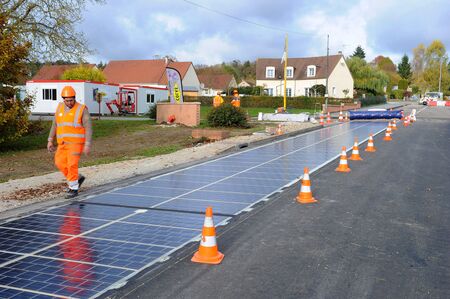
Wattway’s solar road in Tourouvre

“We wanted to find a second life for a road,” said Philippe Harelle, the chief technology officer at Colas SA’s Wattway unit, owned by the French engineering group Bouygues. “Solar farms use land that could otherwise be for agriculture, while the roads are free.”

As solar costs plummet, panels are being increasingly integrated into everyday materials. Last month Tesla Motors Inc. surprised investors by unveiling roof shingles that double as solar panels. Other companies are integrating photovoltaics into building facades. Wattway joins groups including Sweden’s Scania and Solar Roadways in the U.S. seeking to integrate panels onto pavement.

To resist the weight of traffic, Wattway layers several types of plastics to create a clear and durable casing. The solar panel underneath is an ordinary model, similar to panels on rooftops. The electrical wiring is embedded in the road and the contraption is topped by an anti-slip surface made from crushed glass.

A kilometer-sized testing site began construction last month in the French village of Tourouvre in Normandy. The 2,800 square meters of solar panels are expected to generate 280 kilowatts at peak, with the installation generating enough to power all the public lighting in a town of 5,000 for a year, according to the company.

For now, the cost of the materials makes only demonstration projects sensible. A square meter of the solar road currently costs 2,000 ($2,126) and 2,500 euros. That includes monitoring, data collection and installation costs. Wattway says it can make the price competitive with traditional solar farms by 2020.

screen-shot-2016-11-27-at-21-44-24


The electricity generated by this stretch of solar road will feed directly into the grid. Another test site is being used to charge electric vehicles. A third will power a small hydrogen production plant. Wattway has also installed its panels to light electronic billboards and is working on links to street lights.

The next two sites will be in Calgary in Canada and in the U.S. state of Georgia. Wattway also plans to build them in Africa, Japan and throughout the European Union.

“We need to test for all kinds of different traffic and climate conditions,” Harelle said. “I want to find the limits of it. We think that maybe it will not be able to withstand a snow plow.”

The potential fragility joins cost as a potential hurdle.

“We’re seeing solar get integrated in a number of things, from windows in buildings to rooftops of cars, made possible by the falling cost of panels,” Bloomberg New Energy Finance analyst Pietro Radoia said. “On roads, I don’t think that it will really take off unless there’s a shortage of land sometime in the future.”’

Bloomberg


THE average Jamaican, while being aware of worsening beach erosion, hotter temperatures and an increased mosquito population, does not necessarily know that excessive amounts of green-house gases belched into the air by industrial processes is at the root of the problem. Neither does he know how to address it.

For that reason, the Government has declared November 28 – December 3 Climate Change Awareness Week and plans to engage policymakers, business leaders, academia, the media, young people and the wider public through a series of events.

“Climate Change Awareness Week is designed to build awareness about climate change and its impacts,” chief technical director in the Ministry of Economic Growth and Job Creation Lt Col Oral Khan told the Jamaica Observer on Monday.

“The climate is changing already and will continue to change and if we’re not prepared the effects will be disastrous for us,” he added.

The slate of activities for the week includes a journalism training workshop, a two-day workshop for the scientific coomunity at the University of the West Indies Regional Headquarters, a meeting with members of the Youth Environmental Advocacy Programme (YEAP) and high school students from across the country, a session with permanent secretaries, and a two-day Climate Smart Expo at Emancipation Park on December 2-3.

The week coincides with a regional outreach visit to Jamaica by the Intergovernmental Panel on Climate Change (IPCC) intended to:

1. Raise awareness in the region about the IPCC, its role, activities and workplan for the Sixth Assessment Report (AR6);

2. Present the outcome of the Fifth Assessment Report AR5 and demonstrate how climate change is affecting the region;

3. Enlist the participation of the local science and research community in climate research and encourage regional participation in AR6; and

4. Foster a better understanding among the news media about climate science, solutions to climate change and the IPCC process.

Khan, as well as project administrator and senior climate negotiator in the Climate Change Division Clifford Mahlung — who was part of Jamaica’s delegation to COP22 in Marrakech over the last two weeks; founder of the Climate Studies Group at the University of the West Indies, Mona, nobel laureate and professor emeritus Anthony Chen; physicist Dr Tannecia Stephenson; and managing director of Environmental Solutions Limited Eleanor Jones were guests of the newspaper at its weekly Monday Exchange

Jamaica Observer

screen-shot-2016-11-23-at-12-49-25

Professor Emeritus Anthony Chen, advocate in renewable energy mitigation and founder of the Climate Studies Group at The University of the West Indies, explains the environmental and health hazards that the proposed coal fire plant in St Elizabeth would create. (Photos: Naphtali Junior)

FOUNDER of the Climate Studies Group at the University of the West Indies (The UWI), Professor Anthony Chen, says the unawareness among politicians about the impact of climate change on small island states such as Jamaica is contributing to a lack of sustainability of mitigation efforts.

“We are not going to solve the problem until we get the political directorate involved (and) committed, and that requires awareness. Most of us are not really aware of the full implications of climate change… I think we need to make the politicians much more aware,” Chen said, pointing to the two per cent growth in the economy over the last quarter.

He was among a team of climate change experts from the Ministry of Economic Growth and Job Creation who were guests at the Jamaica Observer Monday Exchange.

He noted that it was the agricultural sector which accounted for this jump, and that this was directly attributable to a significant increase in rainfall following two years of drought. Professor Chen said politicians must take note of developments such as these so that the country can prepare itself for what will certainly come next — another period of harsh drought.

“If politicians understood full understanding of climate change they would know that the next drought may very well be much worse (than the last) and it will continue to get worse,” he said.

“We have to convince the politicians,” Professor Chen insisted, noting his disappointment that the Inter-governmental Panel on Climate Change team that will visit Jamaica from November 28 to December 1 will not have the opportunity to meet with parliamentarians because of local government election activities.

Professor Chen also argued that Jamaicans, politicians included, are not paying nearly enough attention to the country’s level of greenhouse emissions and the increasing negative consequences.

“In Jamaica we don’t realise this. We concentrate a lot on adaptation, so people believe that taking care of the environment will solve climate change, and it will not. We have to get major developed countries to cut back on greenhouse gases,” he said.

In fact, Professor Chen argued that there needs to be much greater pressure and advocacy at international meetings for developed countries with the highest emissions, such as China and the United States to help fix the damage they cause, such as assisting small island developing states with storage for renewable energy.

Meanwhile, chief technical director at the Ministry of Economic Growth and Job Creation, Lieutenant Colonel Oral Khan, emphasised that climate change policy does feed into the Government’s wider economic development. He explained that Cabinet is usually briefed, through the portfolio minister, on any important findings that is expected to have an impact on the economic planning process.

“When plans or projects are put forward, if they are going to have an impact on the environment, or if they have a large footprint, NEPA would usually require that an Environmental Impact Assessment be conducted to see the feasibility of the project to determine the impact on the environment and what mitigating factors or actions would have to be put in place,” he outlined. Khan also noted the recent appointment of a Climate Change Advisory Board to advise the minister and the division on critical climate change matters.

Professor Chen suggested that an economic unit should be incorporated into the Climate Change Department, to determine the economic cost of climate change in various areas.

Project administrator and senior climate change negotiator, Clifford Mahlung, noted that the Climate Change Division is seeking to streamline and synergise the climate change activities that are already being carried out across all ministries, agencies and departments, to develop sector strategies.

Jamaica Observer 

MARRAKECH, Morocco:

Jamaica is choosing, at least for now, not to worry over whether climate finance flows from the United States (US) will dry up under the presidency of Donald Trump.

This is despite news that the president-elect – a climate-change sceptic – may be looking to opt out of the historic Paris Agreement.

The US ratified the agreement on September 3 under President Barack Obama, who, after submitting the documents to the United Nations, is reported to have said: “Some day we may see this as the moment when we decided to save our planet.”

Fast-forward just two months and the victory of the Republican Trump over the Democrats’ Hillary Clinton to succeed Obama has triggered anxiety among participants here at the international climate talks.

Holness Not Worried

Jamaican Prime Minister Andrew Holness, who was in Marrakech last week, does not share in the worry.

“I think the public should be aware that the US is a party to this agreement; it is an international agreement. So, too, are other major powers in the world, including China and India, and that is significant,” he noted.

“The signing of the Paris Agreement is a significant movement in the world – towards making some definitive attempts to address the issue of climate change. I believe it is still early days yet for us to cast any conclusions. I am still confident and very optimistic that the movement which has started will not be turned back,” Holness added.

At the same time, the PM hinted at the intention to do whatever possible to ensure the success of the agreement.

“There is always room for negotiations, for change, for improvement, and for Jamaica, it is in our interest to ensure that this movement continues because we are susceptible [to climate threats]. We are seeing the effects of increased tropical storms, of sea-level rise, of droughts, unpredictable weather events, which are impacting on our infrastructure – damage to our roads, our gullies, our drains,” said the PM, who was attending the COP for the first time.

“[There is also] the emergence in recent times of various health threats which are transmitted because of changes in the weather which allow the breeding of various vectors, particularly mosquitoes. So we have a vested interest in ensuring there is a global movement that will protect our environment,” Holness added.

Jamaica is not alone in choosing not to worry over the future of US climate financing.

“We work with the US government and the US institutions, US researchers, and we look forward to continuing the work with the new administration,” Jonathan Lyn, head of communications and media relations at the Intergovernmental Panel on Climate Change (IPCC), told The Gleaner.

The IPCC is the international body for assessing climate science. Set up in 1988 by the World Meteorological Organisation and the United Nations Environment Programme, it provides policymakers with regular assessments of the scientific basis of climate change, its impacts and future risks, and options for adaptation and mitigation.

Wait And See

“There is a new administration. We are waiting to see what the policies will be. The US has been a very active participant in the IPCC, and not just in terms of financial contributions but contributing experts,” said Lyn, who will be in Jamaica later this month for an IPCC-led regional workshop.

“We have seen how the world is using our scientific findings to work together on tackling climate change, and there has been real momentum on that in the last few months. We expect that global effort to continue and we expect to continue to contribute to that with good, robust science,” he added.

The US has contributed some US$2 million annually to the work of the IPCC over the last five years. Since the international climate talks in Copenhagen in 2009, it has “ramped up its climate finance for developing countries fourfold”, according to the Overview of the Global Climate Change Initiative: US Climate Finance 2010-2015report available on the State Department’s website.

“Between 2010 and 2015, the United States allocated $15.6 billion in climate finance across adaptation, clean energy, and sustainable landscapes activities. Additionally, in 2014 the United States pledged $3 billion to the Green Climate Fund, the largest pledge by any country,” it added.

screen-shot-2016-11-19-at-13-31-23

China couldn’t have invented global warming as a hoax to harm U.S. competitiveness because it was Donald Trump’s Republican predecessors who started climate negotiations in the 1980s, China’s Vice Foreign Minister Liu Zhenmin said.

U.S. Presidents Ronald Reagan and George H.W. Bush supported the Intergovernmental Panel on Climate Change in initiating global warming talks even before China knew that negotiations to cut pollution were starting, Liu told reporters at United Nations talks on Wednesday in Marrakech, Morocco.

Ministers and government officials from almost 200 countries gathered in Marrakech this week are awaiting a decision by President-elect Trump on whether he’ll pull the U.S. out of the Paris Agreement to tackle climate change. The tycoon tweeted in 2012that the concept of global warming “was created by and for the Chinese in order to make U.S. manufacturing non-competitive.” China’s envoy rejected that view.

“If you look at the history of climate change negotiations, actually it was initiated by the IPCC with the support of the Republicans during the Reagan and senior Bush administration during the late 1980s,” Liu told reporters during an hour-long briefing.

Reagan’s Legacy

While Reagan died in 2004, George Schulz, who served as his secretary of state, has become one of the most prominent Republicans voicing concern about climate change and urging action.

“The potential results are catastrophic,” said Schulz, 95, in an interview with Bloomberg in 2014. “So let’s take out an insurance policy.”

Increased U.S. efforts to curb emissions through investing in new cleaner technologies and manufacturing could actually boost U.S. competitiveness, Liu countered. “That’s why I hope the Republican’s administration will continue to support this process.”

A fortnight of discussions in Marrakech were thrust into the spotlight last week by Trump’s victory. The negotiating texts being drafted by delegates and officials in north African country were suddenly overshadowed by a uncertain political future cast by Trump’s shadow over the two-decade-old process.

Outgoing U.S. Secretary of State John Kerry, who helped secure the Paris Agreement last year, said the majority of U.S. citizens back action on climate change and tried to assuage concern.

“No one has a right to make decisions for billions of people based solely on ideology,” he said. “Climate change shouldn’t be a partisan issue. It isn’t a partisan issue for our military. It isn’t a partisan issue for our intelligence community.”

China’s President Xi Jinping underlined the importance of cooperation between the two largest economies when he spoke to Trump on Monday, said Liu, who added China will continue its fight against climate change “whatever the circumstances.”

He added that richer nations should take more responsibility than poor countries for financing the fight against climate change, in line with the UN’s Framework Convention on Climate Change. “Of course we’re still expecting developed countries including the United States will continue to take the lead on mitigating climate change,” he said.

Bloomberg