The Government of Jamaica has formally notified the Jamaica Public Service Company (JPS) of its intention not to renew the current all-island electricity licence under the existing terms upon its expiration on July 8, 2027.

Energy Minister, the Honourable Daryl Vaz, MP, made the announcement on Tuesday (July 1, 2025), underscoring the Government’s commitment to meaningful reform in Jamaica’s electricity sector and the delivery of better outcomes for the Jamaican people.

“This morning, in my capacity as Energy Minister, I wrote the Jamaica Public Service Company (JPS) and gave formal notice of the Government’s intention upon expiration of the current all-island licence NOT to renew under existing terms,” Minister Vaz announced.

The Government’s decision is rooted in the need to reduce Jamaica’s high electricity costs, expand the use of renewables, and introduce more favourable licensing arrangements. Minister Vaz emphasized that “the people of Jamaica have NOT been served well by the existing electricity supply arrangements. The terms under the current licence have yielded electricity prices which are amongst the highest in the region. The arrangements are deeply flawed and in need of significant reform.”

The Government’s notification to JPS is in accordance with Condition 27 of the current licence, which provides for the Government of Jamaica to acquire the licensed business upon expiration.

Minister Vaz was clear in stating that the Government does not intend to take over operations of the JPS. Instead, the Government will pursue negotiations for a new licence with more favourable terms for the Jamaican people and is open to exploring offers from potential investors, including JPS.

“The action I have taken today, on behalf of the Government of Jamaica, in giving formal notice to the JPS of the Government’s intention to acquire the licensed business at the expiration of the term of the licence, is a step towards achieving the change which our country demands,” Minister Vaz stated.

The Energy Minister assured Jamaicans that this move will not disrupt electricity services and that stability will be maintained throughout the transition period.

In the meantime, Minister Vaz reaffirmed the Government’s goal: “This administration of Prime Minister Andrew Holness will NOT enter into arrangements which do not provide a framework for positive reformation of the energy sector. We fully intend to deliver real and sustainable results for the people of Jamaica.”

The Government will now move forward with the development of a long-term plan aimed at securing more reliable, affordable, and renewable energy solutions for Jamaican households and businesses.

OPM News

Solar Buzz Jamaica commends the Government’s recent announcements on the non-renewal of the current JPS licence and its renewed emphasis on expanding renewables to lower electricity costs. These measures echo proposals that industry bodies – including the Jamaica Renewable Energy Association (JREA) for over a decade and the recently formed JMEA Energy Committee – have advanced. 

While the renewed focus is welcome, the real measure of success will be in how swiftly and effectively the Government addresses the practical hurdles that have slowed our energy transition.

Government Announcements

JPS Licence Renewal
On July 1st 2025, Minister Daryl Vaz confirmed that Jamaica Public Service’s all-island licence will not be renewed under its current terms when it expires on July 8th 2027.

Private-Sector Leadership
At the CARICOM summit days later, Prime Minister Andrew Holness encouraged businesses to invest boldly in renewables, highlighting their role in lowering bills and building resilience.

Net-Billing: A Critical Bottleneck

Distributed rooftop solar has enormous potential to reduce system demand, stabilize the grid, and deliver low-cost energy to all Jamaicans. 

Yet the Net-Billing framework remains encumbered by:

  • Complex Application Requirements — multiple technical reviews and declarations that can feel duplicative.

  • Substantial Up-Front Fees — including a J$19,000 non-refundable processing charge.

  • Prolonged Approval Timelines — often stretching weeks or months beyond statutory targets.

These procedural barriers deter many prospective applicants and slow the very renewable deployment the Government now champions.

Residential Tax Breaks: Unintended Consequences

In March 2025, MSET imposed the Net-Billing licence requirement for homeowners applying for residential renewables tax credits just days before the  April 1st 2025 deadline. The last-minute rule change stipulated that only those with approved Net-Billing licences would qualify – a requirement that was not initially imposed when the incentive was announced with great fanfare. 

Although Minister Vaz granted a limited extension until April 1st 2025, this effectively means all homeowners with solar systems now need a Net-Billing licence or risk operating illegally. This is not only impractical and, at this point, impossible to govern, but the Electricity Act itself states that homeowners who self-generate power from solar, with no intention of selling back, are exempt from needing a Net-Billing licence.

Recommendations for Practical Progress

To convert policy intent into real-world impact, we urge the Government to:

  1. Set and Enforce Clear Timelines
    Institute a statutory 10-business-day window for Net-Billing licence decisions, with automatic escalation if unmet.

  2. Simplify Documentation
    Review and eliminate overlapping technical or financial declarations to streamline the customer experience.

  3. Stabilize Incentive Rules
    Publish any changes to tax-credit eligibility at least six months before they take effect, ensuring homeowners can plan with certainty – and clarifying that self-generating systems with batteries do not require a Net-Billing licence.

Engage Stakeholders Continuously
Convene regular working groups with industry, regulators, and consumer representatives to monitor progress and troubleshoot emerging issues – rather than announcing new policies that do not sync with the Vision 2030 policy or the Government’s renewed focus on high energy costs.

Solar Buzz Jamaica stands ready to partner with MSET, the Office of Utilities Regulation, Tax Administration of Jamaica and other stakeholders to translate today’s announcements into tomorrow’s clean-energy achievements. 

With targeted adjustments to Net-Billing procedures and tax-incentive clarity, we can accelerate the deployment of distributed rooftop solar across the island – not just large, tendered grid installations – bringing lower bills, greater job creation, and enhanced resilience for all Jamaicans, especially at the residential level.


Jason Robinson
Chief Executive Officer
Solar Buzz Jamaica

Electric vehicle (EV) dealership BYD Jamaica has partnered with the Jamaica Public Service Company (JPS) to offer residential customers 50 per cent off their electricity bills for six months by purchasing select BYD models.

Customers who purchase 2025 models from March to April, and 2026 models from June to July, are eligible for the promotion.

Sloane Jackson, head of business at BYD Jamaica, remarked “This partnership was born out of an increased and growing interest in electric vehicles islandwide, so we decided to incentivise potential customers’ curiosities by reaching out to the JPS, who has enthusiastically agreed to work with us in getting more customers to purchase EVs; specifically, BYD models”.

“An electricity bill reduced by up to 50 per cent for six months allows customers to easily and seamlessly start their EV journeys. JPS will also provide a thoughtful delivery care package with a radio frequency identification (RFID) card, details on how to use the card and the app, and a full list of the 68 JPS/Evergo charging stations across the island.”

Additionally, Dionne Nugent, director of business development at JPS, noted, We’re always looking to unleash Jamaica’s growth and productivity through innovative energy solutions, and we’re excited to do that by partnering with a fantastic brand such as BYD. We do not doubt that Jamaicans will enjoy driving away in their BYD vehicles with the bonus of reduced electricity bills during the promotion period.

The eligible models are the Yuan Plus, Seal, Song Plus DM-i, Sealion, and Shark.

Discounted bills start from the date of the vehicle’s delivery, and customers will receive up to 50 per cent off (or a maximum of J$25,000) their electricity bills for the next six months. The BYD Sales Team will send the [vehicle] registration details, driver’s license, and current JPS bill with the customer and property number to the JPS team. Terms and conditions will apply.

The ATL Automotive Group, exclusive distributors of BYD in the Caribbean, advised that as is standard, any purchase of a hybrid or electric vehicle includes the complimentary installation of a home charging station for easy access.

As the world’s leading EV manufacturer—renowned for its groundbreaking battery technology used in its wide range of electric vehicles, as well as energy systems and portable devices—BYD is committed to technological innovations for a better life, while simultaneously protecting the environment and cooling the earth by one degree.

Our Today

Jamaica Public Service Company (JPS) is exploring the possibility of underground power lines as part of a sweeping overhaul to fortify its grid against the growing threat of Category 5 hurricanes.

While the company has long relied on overhead transmission lines, the increasing frequency of stronger hurricanes and other climate-driven disasters has renewed discussions around selective undergrounding to protect critical infrastructure and reduce extended power outages.

At the Jamaica Chamber of Commerce breakfast conversation last Friday, the discussion turned to whether JPS would align with the approach taken by some developed nations and explore the feasibility of underground power lines as part of its infrastructure strategy. Underground power lines typically helps to reduce the risk of wildfires and outages caused by storms.

“An underground system is about 10 times more expensive than an overhead system,” JPS President and CEO Hugh Grant said.

“However, for selective areas, particularly critical infrastructure, it can help to reduce storm-related outages and speed up recovery.”

JPS is conducting feasibility studies to determine where undergrounding would provide the most value, balancing the significant upfront costs with long-term resilience benefits. While full-scale undergrounding isn’t feasible due to cost constraints, Grant noted that high-density commercial zones and essential service hubs could benefit from a more resilient underground system.

“We won’t be able to underground everything, but where it makes sense—such as in high-traffic business districts and areas where rapid restoration is critical—we are looking at the feasibility,” he said.

The undergrounding initiative is just one part of JPS’s broader infrastructure upgrade, which also includes transitioning to hurricane-resistant power poles, reinforcing substations, and enhancing Jamaica’s preparedness for earthquakes.

JPS’s grid-hardening strategy comes in response to Hurricane Beryl, which caused widespread power outages across Jamaica earlier this year. The company acknowledges that its infrastructure is currently built to withstand Category 3 hurricanes, but as storms become more intense, it is now designing for Category 5 conditions.

“We saw the impact that Beryl had, and going forward, we are designing for a Category 5,” Grant said.

A major component of this shift involves replacing wooden utility poles with concrete structures, which offer greater wind resistance and durability. Grant explained that JPS is already making this transition as part of its regular infrastructure upgrades.

“One of the things we are doing right now is moving from wooden structures to concrete poles, which have higher wind resistance and better longevity in extreme weather conditions,” he told the Business Observer in a follow-up interview.

Additionally, JPS is strengthening its substations, many of which are located in coastal areas prone to flooding. The company is also expanding vegetation management programs, as fallen trees and overgrown branches remain a major cause of storm-related outages.

Beyond its internal upgrades, JPS is partnering with developers to ensure that new residential and commercial projects integrate storm-resistant power infrastructure from the start.

“For new developments, we are working with developers to see how we can integrate more resilient infrastructure from the outset. That means pre-installed underground circuits where feasible, reinforced pole structures, and smart grid solutions that allow for faster power restoration after a storm,” Grant said.

While much of JPS’s disaster resilience planning has focused on hurricanes, Grant also highlighted the need to prepare for earthquakes, a less-discussed but serious risk for Jamaica’s power network.

Between August and December last year, the country recorded 11 earthquakes, ranging in magnitude from 2.9 to 6.5, according to The University of the West Indies’ Earthquake Unit.

“When it comes to earthquakes, the type of devastation we’re talking about calls for alignment and joint partnerships across the board,” Grant said. “The power sector, government, military, and telecoms must have a coordinated response plan.”

JPS’s earthquake-readiness plan involves reinforcing transmission towers and substations to withstand seismic shocks, enhancing emergency response protocols to ensure faster power restoration after an earthquake, and securing backup power solutions for critical facilities such as hospitals, water treatment plants, and emergency services.

Although Jamaica’s power grid has automatic shutdown mechanisms in place to protect major infrastructure during an earthquake, Grant warned that significant structural damage could take weeks to repair. As a result, JPS is prioritising reinforcement of critical infrastructure, particularly in urban centers where power restoration is most critical.

“Unlike hurricanes, earthquakes happen with no warning. So our approach has to be proactive rather than reactive,” Grant emphasised.

With 14,000 kilometres of distribution lines and 3,000 kilometres of transmission lines, upgrading Jamaica’s power grid is a massive undertaking. Grant acknowledged concerns about how these improvements will be financed without placing an additional burden on consumers.

“This is not an overnight fix,” he admitted. “With the scale of infrastructure we are working with, this is a multi-year, phased approach. We have to prioritise key areas first, then expand as funding allows.”

JPS is working to secure funding through multiple channels to avoid sharp increases in electricity rates. These include public-private partnerships with developers, government-backed infrastructure initiatives, and international climate resilience funding.

Grant noted that while these upgrades will require significant capital investments, they are expected to reduce long-term operational costs, ultimately saving money by minimising storm damage and cutting outage restoration times.

“We are balancing the need for resilience with ensuring energy remains affordable,” he said. “If we execute this correctly, these investments will save us money in the long run—by reducing storm damage costs, cutting outage durations, and improving overall efficiency.”

Jamaica Observer

The head of Jamaica Public Service Company Limited, JPS, had cautioned against the quick adoption of renewable energy into the electricity grid, stating that other areas have experienced power outages in their efforts to switch to renewable sources.

However, a spokesman for renewable energy providers says Jamaica has been too slow in ditching fossil fuels and is calling on the Jamaican government to be more proactive in facilitating the use of solar to power businesses and homes.

JPS President and CEO Hugh Grant expressed support for the adoption of renewable energy into the grid, but warned that it had to be coupled with adequate battery storage to be successful.

“Renewables, independent of energy storage, is not a reliable and resilient solution. We need to have renewables coupled with storage to have a viable solution. Jamaica is an island; we have to ensure that we have a diversified energy mix, and frankly, as part of that mix, we have to think about storage… . That source of energy is something that at any time, in any weather condition, you can call upon and it can respond. Particularly due to the fact that we are here on an island, we don’t have the luxury of not getting it right,” Grant said at a forum hosted by the Jamaica Chamber of Commerce in Kingston.

Grant, a former vice-president of Consolidated Edison Company in New York, emphasised that other countries such as Germany and parts of the United States had made fast transitions to renewables, only to return to fossil fuels shortly afterwards because of constant outages and intermittent power. In New York, the company had to rebuild new transmission lines in record time because they had dismantled the retired fossil plants.

We just have to take a look at it and monitor our pace, learn from others, and move in that direction,” Grant said.

The JPS boss also indicated that renewable energy along with the required battery storage could prove costly.

“If you don’t have the dependency of the grid, the price for the renewable solution, which is the solar plus the batteries, is 50 per cent more than the price” of a gas turbine burning liquefied natural gas. The reality is, you’re going to need renewables and battery size to the appropriate capacity, so you don’t have dependency on the grid,” said the power utility CEO.

However Jason Robinson, vice-president of the Jamaica Renewable Energy Association, says the transition to renewables can be speedier with proper planning, especially from the government.

“I think I respectfully disagree with (Grant),” Robinson told the Financial Gleaner. “I think the cost of utility-scale renewables will continue to fall, and grid reliability can be maintained with effective planning, energy storage, and modern grid technology. That’s happening all over the world and many places that have, had to upgrade their grid to work better with renewables,” he said.

“The real challenge is ensuring that (renewable sources) are built out and managed properly, rather than dismissing renewables as unreliable or too expensive. Grid-scale solar is expensive, but it hasn’t been deployed in a very large enough scale in Jamaica to where we can see the impact on our residential bills,” added Robinson, who heads the renewable company Solar Buzz.

He also wants the Jamaican government to simplify the process of net billing for small businesses and householders, as he says the current approval process can take up to two years.

Net billing allows for financial compensation for excess electricity generated but not utilised.

“Currently, the net billing programme we have is really cumbersome and very difficult to do. Most installers are not applying for net billing because it takes a very long time to get the licence for you to sell back (electricity to the grid),” he said.

Robinson suggests that the government should offer more incentives including low interest loans for businesses to put solar panels on buildings, instead of relying on large scale tenders to grow the renewable energy sector.

Renewables currently make up about 20 per cent of the national power grid. The Jamaican government intends to grow that ratio to 50 per cent.

Jamaica Gleaner

Jamaica’s Energy Vulnerability

As Jamaica prepares for the upcoming hurricane season, the potential for extended power outages remains a significant concern. Past hurricanes have left many homes and businesses without electricity for days or even weeks, and the recent impact of Hurricane Beryl highlights the country’s vulnerability. Given this, exploring alternatives to traditional energy sources can offer added resilience, especially in the face of increasingly severe weather events.

JPS Plans for Power Resilience

The Jamaica Public Service Company (JPS) has announced plans to strengthen its grid by undergrounding some of its power lines in an effort to better withstand Category 5 hurricanes. This initiative comes in response to the growing frequency and strength of hurricanes, as seen with the impact of Hurricane Beryl. The current infrastructure, according to JPS, is only capable of handling Category 3 conditions, and these upgrades aim to future-proof the grid against more intense storms.

Solar Energy: A Resilient Alternative

While this move by JPS is a step toward greater grid resilience, it’s important to recognize that the fortification process may lead to higher energy costs for consumers. As the company seeks funding for these upgrades, there is concern that the increased investment in infrastructure may be passed on to customers in the form of higher rates. This makes the decision to invest in renewable energy sources, such as solar power, an increasingly attractive option for those seeking more predictable energy costs.

Economic Advantages and Integration of Solar Solutions

In addition to greater energy security, the Government of Jamaica’s recent Income Tax Credit initiative, which offers up to 30% of the value of a solar system or a maximum of J$1.2 million, adds a financial incentive for those considering solar energy. This initiative can help accelerate the return on investment for solar installations, making it a more viable option for households and businesses looking to reduce their reliance on the grid and manage energy costs more effectively.

There is also a growing interest in integrating solar energy solutions into new developments. Developers and financial institutions are now considering the inclusion of solar power systems in their building designs, which allows homeowners to finance the cost of installation through their mortgage over a 20-30 year period. This approach can make it easier for individuals to transition to solar energy and ensure reliable power supply without the upfront financial burden.

Securing Jamaica’s Energy Future

While JPS’s grid fortification plans are promising, their implementation is likely to take years. As the frequency and intensity of hurricanes continue to rise, it’s becoming increasingly important for Jamaicans to consider alternative energy solutions. Solar power offers a way to ensure energy security, regardless of the timeline for grid upgrades.

In light of these factors, it may be wise for Jamaicans to explore the benefits of solar energy as a way to address both current and future energy needs, while also managing the uncertainty of potential energy rate increases.

To request a quote from SolarBuzz and get started towards real energy freedom, please click here.

Deidre Wedderburn, Client Relations Manager (deidre@solarbuzzjamaica.com)


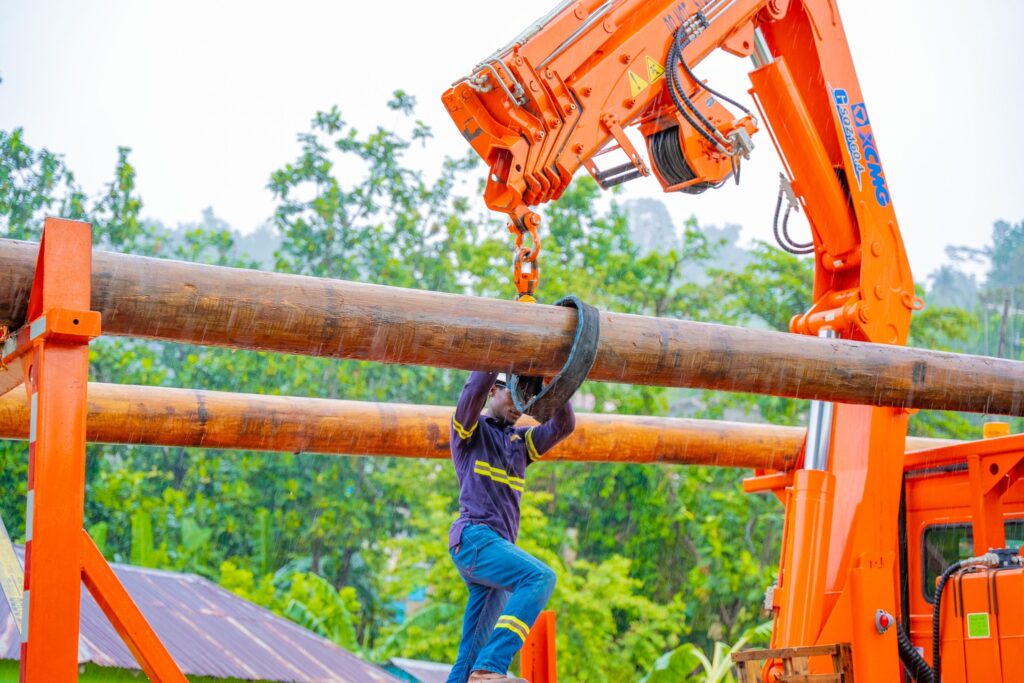
Jamaica Public Service (JPS) technician aligning new wooden utility poles on July 7, 2024, in the aftermath of Hurricane Beryl’s passage in Portland.

Hurricane Beryl has brought significant damage to a few communities in Jamaica and it passed south of the island. 

If it had travelled across the island like Hurricane Gilbert, then it would have had a devastating impact, as it would mean that you could apply that devastation to most, if not all parishes. If it had even come 10 miles further inland, then St Catherine and St Andrew, with the largest population, would have been dealt a severe blow. 

The impact would have been way more than just the damage caused on the day but the significant cost of living increase, significant rebuilding costs (which could put persons into further debt), and reduced income as persons may have lost jobs if businesses had to close, possibly more loss of life, etc.

Already, with St Elizabeth hit so hard we will see food inflation. The country will recover and it will be more difficult for individuals.

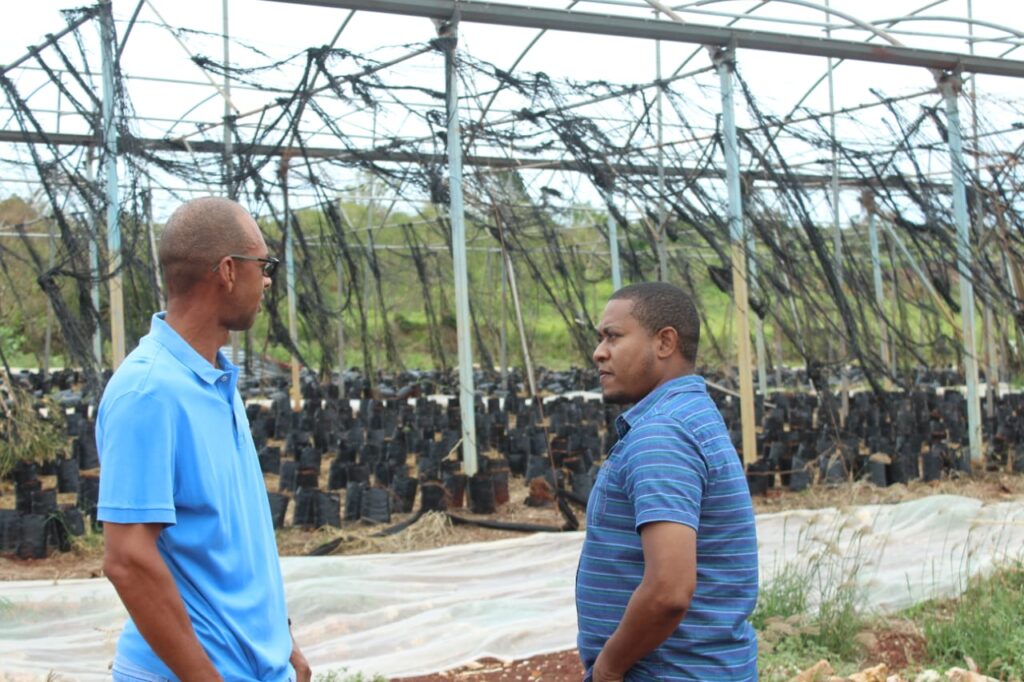
Minister of Agriculture Floyd Green (right) speaks to St. Elizabeth greenhouse farmer, Vaughn Ebanks, about the damage to his facility in the aftermath of Hurricane Beryl. Green led an assessment tour of farms in the parish on Saturday, July 6, 2024. (Photo: JIS)

This highlights the need for us to develop greater resilience as the best solution to dealing with natural disasters. The fact is that, just like death,  hurricanes and other natural disasters will come and we never know when. What we know though is that it is certain. 

What we know also is that we cannot totally remove the personal impact. So, when a hurricane is coming we may be able to relocate to a different location, but your house cannot move. You will also be affected by food and other price increases and by electricity, water and telecoms disruption. 

It means that the best approach is to build resilience, as a country but more importantly, individuals need to do this. Perhaps, instead of borrowing money to buy a car, borrow to build greater resilience at home, which is protecting your assets. The National Housing Trust (NHT), for example, has a loan for solar setup, which will assure you electricity throughout and after the hurricane, and will also send down your costs. 

Personally, right throughout the hurricane, I had electricity, internet and water. And so after the storm passed the only thing I had to do was clean up outside and put back what was stored to protect them from the winds. 

The challenge is that I was unable to get in touch with many because they lost all the utilities  What this means is that if we need to get back to normal as quickly as possible then this resilience must be widespread, or else productivity will be impacted.

Jamaica’s GDP for 2024 is estimated at J$3.2 trillion (or J$8.6 billion per day).

A man walks in a flooded street as Hurricane Beryl hits the southern coast of the island, in Kingston, Jamaica, July 3, 2024. (Photo: REUTERS/Marco Bello)

So for each day we have no activity we lose J$8.6 billion and if we take time to get back to full production we lose a portion of that daily GDP (gross domestic product). So if it takes us a week to get back to full production and we lose 50 per cent productivity, we would have lost J$30.1 billion, which is income for persons. The government would have lost close to J$8 billion in taxes, which means social services and capital expenditure could be delayed. 

With the impact of climate change, we can expect that hurricanes will get more intense, and even many modern roofs may have been built for a Category 3 hurricane. So as individuals and the wider Jamaican society as a whole, we need to start putting measures in place to make the country more resilient, or we will face greater personal and national losses. Spend the money now or it will end up costing us a lot more later.

OUR Today

Power utility Jamaica Public Service Company, JPS, made record nine-month profit totalling U$$47.2 million, which outperformed the previous year by one-quarter.

It reflects increased earnings from its new ventures and higher demand for electricity, due to the record summer heat induced by increased warming of the planet.

“A significant portion of the improved performance for the referenced nine months would have been as a result of the strong performances of our non-utility business segments or investments,” said JPS Chief Financial Officer Vernon Douglas, in response to Financial Gleaner queries.

“Notwithstanding, our utility business also grew. This is attributable mainly to warmer temperatures throughout 2023, which would have resulted in increased demand.”

Earth experienced its hottest summer on record this year and led to persons finding refuge within air-conditioned offices, stores or homes. In Jamaica, that translated to increased demand for electricity for cooling purposes.

JPS, however, doesn’t solely rely on utility sales for revenue, which hit US$788 million over January to September. The electricity provider also earns from its renewable energy installation subsidiary, Caribbean Blue Skies Energy Limited, and associate business South Jamaica Power Company.

About US$10 million, or 20 per cent of the profit, made by JPS this year came from non-core activity, which it listed as ‘other income’ and ‘share of profit from equity-accounted investee’.

For JPS, which is owned by Korean, Japanese and Jamaican interests, it is the third straight year of rising profit for the group that experienced a fall in earnings in 2020 due to pandemic-related economic shocks.

“The group has diversified investments in new businesses since 2016, which would have changed the historic shape and trajectory of its performance,” Douglas said.

Profit as a proportion of the US$598 million in capital held by JPS rose to an annualised 10.5 per cent, up from 9.3 per cent in 2022, 7.8 per cent in 2021, and 6.5 per cent in 2020. The ratio reflects the rate at which the business is growing and serves as a proxy for comparing its performance to the yield on other investments, such as government paper, bonds or stocks.

“Our business has navigated various challenges this year, but we have remained resilient. We have strategically adapted to market shifts, focusing on innovation and customer-centric approaches. Our performance reflects the broader economic landscape, and we’re confident in our long-term strategies to drive sustainable growth and value for our stakeholders,” said Douglas.

Overall, the rate of profit generation at the JPS group has increased 55 per cent since the pandemic. On average, the power company averaged US$47.5 million in annualised profit for the period spanning 2020 to 2023. That’s better than the US$30.3 million annual average for the 2016 to 2019 period.

Douglas downplayed the linkages between global oil price fluctuations on JPS’s current financial performance. The utility doesn’t make money from fluctuations in energy prices. It passes on the cost to customers without adding a margin, based on regulatory requirements.

Customer bills, however, would have experienced fluctuations largely arising from Russia’s invasion of Ukraine in 2022 as oil prices spiked to highs of US$122 a barrel in June of that year. Oil is currently hovering at US$81 a barrel, based on Brent crude prices, which Jamaica tracks.

“While electricity is not a known elastic good and service, generally speaking, lower fuel prices have at intervals shown some levels of correlation with electricity demand, as has been the case in 2023 versus 2022,” Douglas said.

JPS annual profit:

2023: US$63 million (annualised)

2022: US$54.4 million

2021: US$42.1 million

2020: US$31.1 million

2019: US$42.2 million

Gleaner

The Jamaica Public Service Company (JPS) is reporting revenues of more than US$1 billion in 2022, as demand recovered from the COVID-19 slump at a time when electricity prices reached the highest they had been for more than a decade.

“Operating revenues for the group was US$1,163 million, which represented a 20 per cent or US$190-million increase over the previous year with the greatest contributor being electricity revenues which increased by US$190 million,” the JPS said in its annual report. Profits last year was US$54 million up 28 per cent from a year earlier.

It said as the country continued its recovery from the COVID-19 pandemic, electricity sales rose 3 per cent in 2022. The increased demand was still 3 per cent below the pre-COVID year of 2019, but a welcome improvement nonetheless, the JPS said.

That came as the cost of a kilowatt of electricity reached 40 US cents in 2022, up 17.6 per cent, as the war in Ukraine sent fuel prices spiralling worldwide.

“This in turn fed into markedly higher electricity tariff for our customers, further increasing the theft of electricity, payment delinquency, and the incentive for large commercial customers to consider defecting from the grid and supplying their own electricity. The war also threatened the availability of goods and services needed to operate, maintain and upgrade the equipment that produces and supplies electricity.”

That aside, the JPS which is now celebrating 100 years, marked some milestones during 2022.

Its MyJPS mobile app which was introduced in 2020 to allow customers to track energy usage, make and track reports, check balances and pay bills, now has more than 420,000 customers registered “with a significant percentage being from the older demographics”, the JPS said.

It also said its service standards have improved with 64 per cent of its residential customers expressing satisfaction with the company versus the 60 per cent who were satisfied the prior year. Among commercial and industrial customers, the satisfaction level was much higher at 74 per cent in 2022, compared to 69 per cent in 2021.

Jamaica Observer

Vaz

Opposition spokesman on science, energy and technology, Phillip Paulwell has raised concerns that some customers of the Jamaica Power Service Company (JPS) have been bearing the burden of cost as other customers leave the grid to utilise alternate facilities.

“A significant number of large customers are utilising natural gas to generate their own electricity. There is one supplier of natural gas so far in Jamaica and it is my understanding that when that supplier and infrastructure was being created, the JPSCo customers are currently paying for that,” Paulwell said in a Joint Select Committee meeting on the Electricity Act on Wednesday, March 15.

But chief technical director of energy in the Ministry of Science, Energy and Technology, Brian Richardson, clarified that the fixed capital cost of LNG also included the infrastructure referred to by Paulwell. He told the meeting that the fixed cost is what pays for the electricity and that the infrastructure was built into the cost of the generation plant. He further outlined that the infrastructure is paid for by anyone who remains connected on the grid.

However, Paulwell insisted that large customers who are getting natural gas from that same facility should also pay, and the Ministry needs to ensure that this is so.

Minister of Science, Energy and Technology, Daryl Vaz agreed that this is something that needs to be addressed, telling members that he intends to have further discussions on this issue.

Paulwell

But committee member Fitz Jackson was not pleased with that response, and expressed his displeasure that the committee keeps having these fruitless discussions.

“It would appear in a very vivid way that there is no intention to implement that policy position, only to acknowledge it as a policy, but not to act on it. And therefore the comfort that consumers would have had, that they would be compensated for what they have paid for, by reduction or which other mechanisms that would have been chosen, but there would have been some benefit, and it is only the new users who are getting the benefit of their sacrifice,” he said.

Acknowledging the member’s frustration, Vaz said that this issue often takes the form of a private contractual arrangement between the LNG supplier and the customer. However, the minister committed to address the issue, telling the committee that he will give an update within 60-90 days.

IMPROVE TRANSPARENCY

The minister also reiterated his position that the country could not afford an unbundling of the electricity market. Pointing to statistics from the World Bank which stated that a country needs a system size of at least 3000 megawatts at peak demand, a power market trading value of over 1 billion dollars to justify investments in the needed energy trading platform and have at least 20 terawatt hours of annual sales, he said Jamaica’s grid is a little 600 megawatts at peak demand by comparison (and) has only three terawatt hours of sale per annum.

The minister also indicated that this change would be costly for Jamaican taxpayers who would now have to bear the financial costs related to the termination of JPS current licence and restructuring of the electricity legal and regulatory framework to accommodate an unbundled system.

“If Jamaica forces unbundling then the restructuring cost that will be borne by the JPS would either be recovered from the government of Jamaica or the remaining customers on the grid.”

Instead, he said his ministry will improve transparency in the process.

“With or without JPS, Jamaica’s small electricity market cannot support unbundling. The ministry will set up systems to hold itself accountable and to give a work plan with timelines and updates to the citizenry in order to demonstrate its progress as we chart the way forward,” he said.

And indicating that the process to review the Electricity Act 2015 will be expedited, Vaz outlined that increased focus will be placed on the replacement of existing generation capacity with renewables to achieve 50 per cent renewables by 2050 target.

“We’re at the opportune time right now to be able to do the appropriate step based on our understanding of the grid. And I think having renewables being the dominant procurement going forward should be the pathway that Jamaica goes on,” Richardson said, “Every time we delay we are causing our own issues as a country and our economic security is at risk as well.”

Gleaner