


With the Marrakech climate change talks now only weeks away, the few CARICOM member states that have not yet ratified the Paris Agreement – Jamaica among them – have been urged to do so.
The appeal has come from Dr James Fletcher, former head of the CARICOM Task Force on Sustainable Development.
He predicted that the failure to ratify will see those islands running the risk of not having a say in the first meeting of the parties to the global deal next month.
“Given that the Paris Agreement will enter into force in the Marrakech meeting … if you haven’t ratified the Paris Agreement, then really you cannot be at the table determining rules and procedures and everything else,” he cautioned.
“If you have not ratified the agreement, then you don’t have a voice at the meeting. There will be CARICOM countries there (who share similar challenges) and who will speak on your behalf, but I don’t think it is a position you want to be in because you cannot articulate your own concerns,” added Fletcher, also the former minister of sustainable development for St Lucia.
Ten CARICOM countries have so far ratified the agreement. They include Antigua and Barbuda, Barbados, The Bahamas, Belize, Dominica, Grenada, Guyana, St Kitts and Nevis, St Lucia, and St Vincent and the Grenadines.
They are among the 81 countries to have ratified the agreement, which prescribes the way forward for the planet in its battle against the changing climate.
Caribbean islands and other small-island developing states (SIDS) are counted among those most vulnerable to climate threats.
Those threats include extreme weather events, the likes of Hurricane Matthew, which barrelled across the region recently, leaving in its wake death and destruction in places such as Haiti, Cuba and The Bahamas.
In Haiti alone, the death toll is registered at more than 900, with millions of dollars in loss and damage to infrastructure.
Meanwhile, Fletcher – a respected regional statesman reputed for his work in climate change and other development issues, including energy – is buoyed with the progress on the Paris Agreement. Still, he cautions that there are still miles to go to where the region needs to get in its readiness for climate change.
“We are very encouraged by how quickly this agreement has come into force … It really is awesome for me that the community has rallied to this cause and there seems to be an urgency that, at least philosophically, we need to move in a particular direction,” he said.
“What is worrying to me is that there does not seem to be an urgency where climate action is concerned. If you look at the level of ambition for the level of greenhouse gases, it is still not taking us below 2.7 degrees Celsius. Nobody has come out and said, for example, that they will reduce their emissions by another 25 per cent,” Fletcher added.
This, he noted, is what is required if the world is to realise one of the objectives of the Paris Agreement, to hold “the increase in the global average temperature to well below 2 degrees Celsius above pre-industrial levels and to pursue efforts to limit the temperature increase to 1.5 degrees Celsius above pre-industrial levels, recognising that this would significantly reduce the risks and impacts of climate change”.
“I would like to see greater pledges from major emitters to reduce their emissions and more pledges where finance is concerned,” the former minister noted.
“There is a lot that has to be done where SIDS are concerned. (We are in a time when we) have hurricanes hitting multiple countries and travelling in pairs. So the situation is ominous; the projections are all showing that our area will be one of the hardest hit by climate change, and we don’t have the funds to adapt,” he said.
“We are really are saying to our residents that they are in for a very bleak future when we should be saying, having signed the agreement, we can now assure that the climate finance is going to flow and action is going to be taken to reduce greenhouse gases to get us close to 1.5,” added Fletcher, who will be in Marrakech next month to support CARICOM.
“We are not in a good place where bending that temperature curve is concerned, and making finance more readily available to SIDS is one way to get there,” he said.

Governor of the Bank of Jamaica (BOJ) Brian Wynter and Financial Secretary Everton McFarlane have come out defending the costly ‘insurance’ Jamaica has taken out against oil prices as the expiration date nears and a new one is being prepared for Parliament’s approval.
Hedging is an investment position used to reduce substantial losses that could be incurred based on actual or perceived fluctuating developments.
Last year June, Jamaica entered an arrangement with Citibank, which covers the period from June 2015 to December 2016, and for which the bank has been paid approximately J$3.3 billion (US$27.9 million) in premiums. The arrangement involved three contracts.
Under the arrangement, Jamaica would get a payout if oil prices exceed US$66 per barrel. Up to yesterday, the West Texas Intermediate crude rate used under the hedge put the latest oil prices at US$51.60 per barrel.
McFarlane told Parliament’s Public Administration and Appropriations Committee (PAAC) yesterday that the Parliament would be approached to approve funds to extend the hedge as no provision was made in the 2016-2017 National Budget, approved in May.
“In the coming Supplementary Estimates, we are looking to find the resources so that we’re covered a longer period of time,” he said. He added in a Gleaner interview later that “the details as to the period to be covered and the level of coverage are to be finalised in short order.”
He said the resources would come from budgetary reallocations.
The BOJ Governor also noted that with just two months to go under the last contract, the number of barrels has been declining.
“We’re not covering the full monthly amount now. This is the tail end of what was being hedged over a year ago. It’s a little under 200,000 barrels per month, whereas when you’re covering (fully), you’d be up there at about 700,000 or 800,000 barrels per month,” he said.
Concerns had been raised that because prices have remained low, Jamaica was losing millions under what some critics held was an unnecessary hedge.
PAAC member Franklyn Witter, using similar concerns, questioned whether the risks that gave rise to the hedge still existed.
“You have a projection over the medium term for oil to remain within $52 per barrel, so given that projection, why do you think it would be important to continue with the hedge?”
McFarlane responded that the risks still existed and that “Jamaica’s interest in continuing the hedge is based on the loss of foreign exchange that can entail or the budgetary loss that may arise in the event of significantly higher prices”.
Wynter, meanwhile, noted that investors have questioned how Jamaica would cope when oil prices increase even if other risks are low.
“There are several different answers to give. One answer is to build the Net International Reserves up by an extra billion so that we have it sitting down. The other extreme is to pay the $20 million or $30 million, still a lot of money, which, if nothing happens, you lose the premium, but if that event occurs, you get the payout that someone else has to have to pay you.
“We do look at what makes more sense,” he added. “Accumulating reserves is good for all sorts [of] reasons, but it’s also costly. So what we’ve done is try to strike the balance.”
The hedge has been funded by a special consumption tax on fuel.
The Private Sector Organisation of Jamaica has supported it.
No date has been given for the tabling of a supplementary budget, which the Finance Minister Audley Shaw has indicated will be coming.
In January, while on opposition benches, Shaw said the administration may have been ill-advised in pursuing the hedge.
Representatives from nearly 200 member countries of the Montreal Protocol agreed on a deal to reduce emissions of powerful greenhouse gases at a summit Saturday in Kigali, Rwanda.
 The White House

Caribbean waters have been disturbed by Hurricane Matthew, which has left a trail of death and destruction in its wake this past week.
While Jamaica was spared the full wrath of Hurricane Matthew, others in the Caribbean were not, making well the case for holding global temperatures at 1.5 degrees Celsius in the face of a changing climate.
So says respected meteorologist and former climate change negotiator for Jamaica, Clifford Mahlung.
For him, the experience of Matthew – leaving in its wake a trail of bodies and extensive infrastructure damage in not only Haiti, which took a severe battering, but also the Dominican Republic and Cuba – is chock-full of takeaways.
“The lessons that we gather from Matthew are numerous. It certainly strengthens the argument that we keep our global temperatures as close as we can to 1.5 degrees, because anything above 1.5 will result in many such systems like the one we just experienced with this hurricane,” Mahlung told The Gleaner.
In the run up to and during the international climate change talks held in France last year, the Caribbean aggressively lobbied for and ultimately secured the inclusion of 1.5 degrees Celsius as a target referenced in the new climate deal.
Dubbed ‘The Paris Agreement’, it has as its goal to hold “the increase in the global average temperature to well below 2 degrees Celsius above pre-industrial levels, and to pursue efforts to limit the temperature increase to 1.5 degrees Celsius above pre-industrial levels, recognising that this would significantly reduce the risks and impacts of climate change”.
The agreement will come into force next month following reports of endorsement from European nations yesterday, which sent the accord across a crucial threshold. “European nations raised backing for the 2015 Paris Agreement to countries representing 56.75 per cent of world greenhouse gas emissions, above the 55 per cent needed for implementation,” a Reuters news report said, quoting from a United Nations website.
With this year’s global climate change talks, to be held in Marrakesh, now only weeks away, Mahlung said Hurricane Matthew lends significance to the coming into force of the agreement. It also underscores, he said, the need for global financial and other support for climate change adaptation and loss and damage associated with extreme weather events in small-island developing states (SIDS).
“Hurricane Matthew was able to maintain category three or higher for several days. It shows that we can get a category five hurricane in a matter of hours,” Mahlung said.
“It shows the difficulties of even doing some of the predictions, as we saw how the projected tracks changed considerably over time; and this is not because the models are not good, but that the kind of conditions we now face with respect to tropical cyclone development have changed significantly from the good old days of, say, a Gilbert or Ivan,” he added.
According to the meteorologist, SIDS have to remain vigilant.
“You can appreciate that there were times when the people in Haiti and Dominican Republic would have thought that the system would not have come to Hispaniola. We saw where, in the final analysis, Jamaica was spared and the track was changed, resulting in grave devastation in Hispaniola and particularly Haiti,” Mahlung noted.
“So when we make the case with respect to adaptation in Marrakesh in a few weeks time, and also loss and damage, we will go into those negotiations with first-hand experiences of just what severe weather events such as a tropical cyclone, can do to small-island states,” he emphasised.
Former head of the Meteorological Service, Jeffrey Spooner, for his part, said there was no question of the need to continue the push for a climate-secure Caribbean.
“My real wish is that Marrakesh continues the work to ensure that we get to the point where we can really seal this deal to cap the increase in global temperatures at 1.5 degrees Celsius. Jamaica, CARICOM and SIDS need to continue to press for that,” he said.

Project Administrator at the Climate Change Division in the Ministry of Economic Growth and Job Creation, Clifford Mahlung, addresses a consultation on ‘climate change and human health in Jamaica and its implications for other sectors’ at the Climate Change Division located at Half-Way Tree Road in Kingston. (Photo: JIS)
JAMAICA is expected to deposit its instruments of ratification of the Paris Agreement on climate change by year end.
The Paris Agreement emphasises that climate change is a threat to human society and that there is a growing need for international collaboration, deep reductions in greenhouse gas (GHG) emissions, establishment of a framework for the involvement of local communities and people with disabilities, and the empowerment of women, among others.
Speaking with JIS News
on Thursday, project administrator at the Climate Change Division in the Ministry of Economic Growth and Job Creation, Clifford Mahlung, said the process towards ratification will require Government’s approval, which is under way.
“We are awaiting the assessment from the Attorney General’s Department. We are close to hearing from them, and that will allow us to make a submission to Cabinet and then Cabinet will decide that we should go ahead and ratify,” he explained.
The Paris Agreement was adopted by 196 countries at the United Nations Framework Convention on Climate Change (UNFCCC) Conference of the Parties (COP21) held in Paris in December 2015.
Mahlung said that the ratification means that Jamaica will become a party to the Paris Agreement “and so we can become involved and participate in all aspects of the work of the agreement”.
He said that to date, 61 countries have ratified the agreement, adding that there have been commitments from the European Union and India to sign on before the end of the year.
The Agreement calls on nations that have ratified to pursue their highest possible ambition to reduce greenhouse gas emissions using Nationally Determined Contributions and monitored through a reporting mechanism.
The overall goal of the Paris Agreement is for countries to take action to keep global temperature rise this century below two degrees Celsius above pre-industrial levels while at the same time using best efforts to limit global temperature rise to 1.5 degrees Celsius.
The Agreement will come into force when the total number of countries that have ratified the convention accounts for 55 per cent of global greenhouse gas emissions
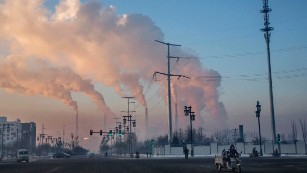
Nearly everyone who studies climate change policy agrees on one thing: To fix this monster of a problem, governments need to put a price on dangerous carbon pollution.

New Fortress Energy has committed to recurrent environmental monitoring and reporting on site preparation, construction and operation of the liquefied natural gas (LNG) terminal and pipeline project to be developed in St Catherine.
At a public consultation with residents of Old Harbour, the American company also promised, as far as is possible, to train and employ persons from the community to work at the facility instead of bringing in skill sets from outside.
The gas will be transported to Jamaica from the United States or other markets to a new offshore terminal at Portland Bight, where it will be regasified and distributed via an undersea pipeline to the Jamaica Public Service Company (JPS) power plant, said Managing Director of Fortress Investment Group Brannen McElmurray at the forum on Wednesday.
The main infrastructure will include a berth and regasification platform; a natural gas pipeline; and an automotive diesel pipeline and other facilities. The terminal is to be located on the western side of Portland Bight, about 2,000 metres from the shipping channel to Port Esquivel. It will have a depth of about 14 metres, sufficient to berth a floating storage unit for the LNG as well as LNG carrier vessels without the need for dredging.
McElmurray said the Port Authority of Jamaica has reviewed the general location and concluded it does not interfere with shipping activities. The floating unit, an LNG carrier refitted to for use as a storage vessel, will be located far enough from shore and, hence, will not be visually obtrusive.
Experts have recommended a 500-metre safety exclusion zone around the floating unit in which navigation is restricted.
However, environmental consultant Dr Carlton Campbell, whose company CL Environmental Limited undertook the environmental impact assessment presented at the public consultation, said that zone was reduced to 200 metres based on complaints from fisherfolk.
The exclusion zone would have denied them access to regular sites where they normally harvest fish.
However, one resident was against the compromise reached, saying the zone should not have been reduced to facilitate more fishing, given that the 500-metre recommendation was made by safety experts.
The LNG terminal being developed through NFE South Holdings will supply gas to JPS, which itself is finalising plans to build an LNG-fired power plant at Old Harbour.
According to the environmental impact assessment, monitoring of various aspects of the New Fortress project will be done by persons appointed by New Fortress Energy, the JPS, and “capable organisations”, the latter monitoring water quality, salinity and dissolved oxygen, among other conditions.
However, some residents suggested that members of the Old Harbour Bay community should be involved in monitoring as they did not entirely trust the National Environment and Planning Agency and the parish council to do so on their behalf.
McElmurray said some of the equipment for the project will be offloaded at Port Esquivel and transported by trailers to the Old Harbour Bay site, giving rise to concerns about road damage.
Campbell assured concerned residents that mitigation measures have been put in place for noise from heavy equipment, access road to facilitate movement of heavy vehicles and equipment, potential negative impact on marine life and various other environmental issues.
He said horizontal drilling would be used for the pipeline to ensure the reef is not destroyed, and that the developers would have to work with the fishing community to safeguard fish pots set to harvest fish.
In the regasification process, New Fortress will heat the LNG using seawater to convert it to natural gas and then release the water back to the sea. Campbell assured residents the water would be cooler at release and so would not affect marine life.
During construction an estimated 225 to 250 persons will be employed, McElmurray said. New Fortress Energy estimates that it can start delivering natural gas to JPS at Old Harbour by the second quarter of 2018.

OPEC nations reached a preliminary agreement on Wednesday to curb oil production for the first time since the global financial crisis eight years ago, pushing up prices that had sunken over the past two years and weakened the economies of oil-producing nations.
Mohammed Bin Saleh Al-Sada, Qatar’s energy minister and current president of OPEC, announced the deal after several hours of talks in the Algerian capital. The levels must still be finalised at an OPEC meeting in Vienna in November.
The preliminary deal will limit output from the Organisation of the Petroleum Exporting Countries to between 32.5 million and 33 million barrels per day, he said. Current output is estimated at 33.2 million barrels per day.
Benchmark United States crude jumped US$2.38, or 5.3 per cent, to US$47.05 a barrel in New York. Brent crude, the international standard, was up US$2.72, or 5.9 per cent, to US$48.69 a barrel in London.
Long-running disagreements between regional rivals Saudi Arabia and Iran had dimmed hopes for a deal at Wednesday’s talks.
Iran had been resistant to cutting production, as it is trying to restore its oil industry since emerging from international sanctions over its nuclear program earlier this year. According to Wednesday’s deal, Iran exceptionally will be allowed to increase production to 3.7 million barrels a day, according to Algerian participants at the meeting. It is currently estimated to be pumping around 3.6 million.
The OPEC officials met informally on the sidelines of an energy conference in Algiers to try to find common ground on how to support oil markets.
“We reached a very positive deal,” said Nigerian Oil Minister Emmanuel Ibe Kachikwu. He said all countries will reduce output but the specific quotas will be set in Vienna in November.
Earlier, Iranian Petroleum Minister Bijan Namdar Zanganeh had played down the OPEC gathering, calling it “just a consultation meeting”.
The price of crude oil has fallen sharply since mid-2014, when it was over US$100 a barrel, dropping below US$30 at the start of this year.
Saudi Arabia, the world’s biggest oil producer and Iran’s rival for power in the Middle East, appeared to be more amenable to some sort of production limit, certainly more so than in April when OPEC failed to agree on measures to curb supplies.
Saudi Energy Minister Khalid Al-Falih this week promised to “support any decision aimed at stabilising the market”.
Over the past couple of years, OPEC countries, led by Saudi Arabia, had been willing to let the oil price drop as a means of driving some US shale oil and gas producers out of business. Shale oil and gas requires a higher price to break even.
Those lower prices have hurt many oil-producing nations hard, particularly OPEC members Venezuela and Nigeria, but also Russia and Brazil.

