Solar Buzz FAQ Series: Straight Answers for Jamaica’s Reality


By: Deidre Wedderburn

Client Relations Manager, Solar Buzz Jamaica 

deidre@solarbuzzjamaica.com


Since mid-2024, the island has experienced a pattern that is difficult to dismiss as seasonal variation.

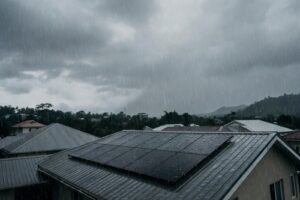
What should have been a dry season, the December-to-March period that Jamaicans have long relied upon as a natural pause between the demands of hurricane season, arrived instead with persistent rainfall, overcast skies, and flooding events across multiple parishes. The early months of 2026 have continued that pattern, with above-normal precipitation recorded well into what is traditionally the island’s driest quarter.

This is not a coincidence. The developing La Niña conditions that characterised the 2024–2025 Pacific cycle are well-documented drivers of increased Caribbean rainfall and elevated Atlantic hurricane activity.

What is less discussed, but increasingly difficult to ignore, is the structural implication that the traditional binary of “dry season” and “wet season” is becoming less reliable as a planning framework. Jamaica may no longer be able to rely on a meaningful meteorological reprieve between its wet seasons. The traditional calendar that once offered a window for planning, repair, and preparation is compressing.

For homeowners and businesses considering solar energy, this shift carries a consequence that is rarely addressed directly. Extended cloud cover and persistent rainfall do not merely inconvenience solar systems. They alter the calculus of how those systems must be designed.

Battery storage, long positioned as a convenience for after-hours electricity, is increasingly a necessity for daytime continuity during weather events where generation is suppressed for days at a time.

A solar system without adequately sized battery storage is not a resilient solution. It is a fair-weather asset.
Engineered to Stay

The most common enquiry Solar Buzz has received since Hurricane Melissa is whether we remove solar panels ahead of an approaching storm. It is an understandable question, and it deserves a direct answer. But it is, in a meaningful sense, the secondary question. The primary one is whether a solar system and the roof beneath it have been engineered to render removal unnecessary.

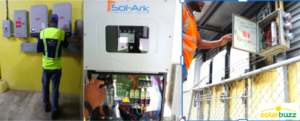
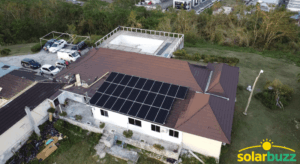
Solar Buzz does not remove panels prior to storms. Every system we design and install is built to withstand extreme weather conditions, including hurricane-force winds.

Our mounting structures and installation methods are certified to Category 4 conditions at approximately 150 mph,  a threshold that aligns with insurance industry standards and represents the rated specification for our racking systems.

“That certification is not the ceiling of what our systems have demonstrated. It is the floor.”

The timing window before a storm makes landfall is rarely sufficient to safely remove and reinstall systems across all clients. More fundamentally, removal defeats the purpose. The value of a solar PV battery system during a hurricane is not what it contributes before the event.

The true measure of a solar and battery system is what it sustains through and beyond the storm, when the grid is down and the question of who has power and who does not becomes one of the sharpest distinctions a community can draw.

Preparation Before Landfall

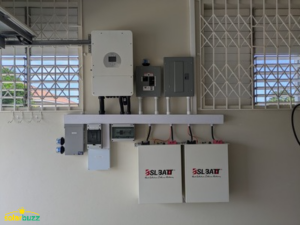
When a storm system is tracking toward Jamaica, our team remotely accesses client systems and adjusts settings to ensure batteries reach full charge ahead of landfall.

When the grid goes down, as it did for an extended period during Hurricane Melissa, the solar system transitions automatically to independent battery operation. No manual intervention or delay, allowing uninterrupted household operation and activities. 
That automatic transition carries particular weight in the context of what Jamaica’s evolving weather patterns now demand.

During a severe weather event, cloud cover can suppress solar generation entirely for twenty-four to forty-eight hours or longer. A battery that enters the storm fully charged and sized correctly for the home’s essential load is what sustains a household through that suppression window. 

As the interval between significant weather events narrows and the dry season becomes less reliable as a recovery period, battery sizing has moved from a secondary design consideration to the central one.”

It is no longer sufficient to size a battery for overnight use. It must be sized for sustained generation loss.

Resilience that Cannot be Modelled

Another common enquiry that Solar Buzz has received since Hurricane Melissa is whether our systems are engineered to withstand Category 5 conditions.

Melissa, which produced sustained Category 5 winds across Jamaica, was the stress test no simulation can replicate. It answered that question in the field more definitively than any specification sheet could.
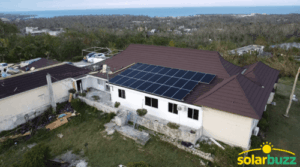
In Treasure Beach, St. Elizabeth – the storm’s epicentre, where sustained winds reached approximately 185 mph – not a single Solar Buzz panel was lost. In Montego Bay, St. James, where winds exceeded 200 mph in coastline-exposed areas, panel damage was minor and occurred exclusively among clients whose roofs had sustained significant structural failure. In every instance, the solar systems remained operational. 

“Clients in both communities maintained continuous power for three to four months, the full duration of the JPS grid outage in those areas.”

Our systems performed well beyond their rated specification under conditions Jamaica had not experienced in a generation. That outcome was not incidental. It followed directly from how the systems were engineered, how the panels were mounted, and critically, what sat beneath them.

The Roof Beneath the System

Melissa stated something plainly that the industry has always understood but rarely communicated with sufficient clarity: no solar system can outperform the roof it sits on.

Where Solar Buzz installations remained intact, the roofs beneath them were structurally sound. Where panel damage occurred, it was invariably preceded by roof failure and not system failure. The distinction is consequential for anyone planning an installation or assessing an existing one.

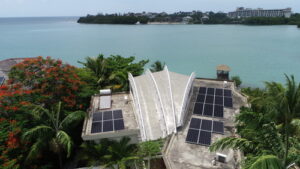
Standing seam metal roofs and concrete slab roofs performed with notable resilience in high-wind zones during Melissa and have proven to be the most reliable foundations for roof-mounted solar systems in Jamaica when wind loading is properly engineered. These configurations offer superior uplift resistance, reduced lateral movement risk, and the structural durability that a professionally mounted system requires to perform as designed under extreme conditions.

Annual roof inspections, structural assessments, and ongoing maintenance are not peripheral concerns for solar owners. They are foundational in the most literal sense.

Solar Buzz conducts a thorough assessment of roof condition and suitability as a standard component of every installation.

A system mounted on a compromised roof is not a resilience investment but a liability dressed as one.

At Solar Buzz, location-specific irradiance and weather pattern analysis is a standard input to every system design, lending directly to the proven weather resilience of our installations. 

Jamaica’s parishes do not share a uniform solar resource. 

Mandeville and the central highlands of Manchester experience significantly more cloud cover and reduced irradiance year-round, a function of elevation and orographic weather patterns rather than season alone. Portland’s windward exposure makes it one of the wettest environments in the Caribbean basin. St. Elizabeth’s rain shadow produces conditions at the opposite extreme.

This design approach, which extends beyond structural considerations to the meteorological profile of your specific location, is precisely what determines whether a home retains power when conditions deteriorate. 

Approaching each system design from this angle is not optional. It is the foundation of what hurricane preparedness, properly understood, actually demands of any solar designer.

Insurability: Prepardness for Fast Recovery

Since Melissa, there has been a meaningful and sustained increase in clients formally incorporating their solar systems into their property insurance policies. Our professional maintenance programme is structured to facilitate this, meeting insurance industry standards in a manner that simplifies claims processing and supports faster recovery when damage occurs.

In the context of hurricane preparedness, recovery speed is as important as resilience. A properly insured and maintained system is not just protected. It is positioned to restore your energy independence faster when it matters most.

Financing the Preparation

The National Housing Trust (NHT) has made energy independence more accessible than most contributors realise. 

What contributors can appreciate is that the NHT’s mandate extends beyond the front door with two loan facilities, including an option to combine, that speak directly to the quality, resilience, and energy performance of the homes they  own.

It is one of the most affordable financing instruments for solar in Jamaica, that speaks directly to true hurricane preparedness and at subsidised rates that the open market simply cannot match.

The Smart Energy Loan, which is available to all active contributors, offers up to J$2.5 million specifically for solar PV systems with battery storage and energy-efficient appliances. 

The Home Improvement Loan, which is available to contributors without an NHT mortgage or anyone who has held an NHT mortgage for at least seven years, offers up to J$5 million for a broader scope of work such as  roof repair and remodelling, structural upgrades, appliance replacement, and solar installation.

For homeowners who need roof work alongside solar, this loan makes doing both simultaneously significantly more economical. Integrating solar during a roof repair or remodel costs meaningfully less than returning to an already-completed roof to mount a system. 

These two loan facilities offered by the NHT are not mutually exclusive.

Used in combination, they unlock up to J$7.5 million which is enough to remodel, repair, and install a complete off-grid energy solution in a single, coordinated project. This would be ideal for projects of greater scope such as larger homes, heavier electrical loads, or where more extensive structural work is required. 

Solar Buzz is an NHT-approved vendor. That designation means that we know how to structure your project from the start to align with your loan facility, whether that’s the Smart Energy Loan, the Home Improvement Loan, or both combined. 

Our consultations are built around your home’s actual energy profile, your billing charges, your roof’s current condition, your appliance load, and your NHT eligibility. We design the entire solution, encompassing home, solar system, and financial structure, as a single coherent decision

Preparedness Is No Longer Seasonal

The rain across Jamaica this week is not an interruption to the planning season. For much of the past eighteen months, it has been the planning season.

Hurricane preparedness in the public imagination still begins with lanterns and tinned goods. What Melissa demonstrated, and what Jamaica’s shifting weather patterns have continued to reinforce in the months since, is that it must now begin with engineering. The storm was a single, catastrophic event. 

The compressed dry seasons, the anomalous rainfall, the erosion of the meteorological reprieve that Jamaicans once planned around are not events but a condition that require structural responses, not seasonal ones.

The pattern Jamaica has experienced since mid-2024 of compressed dry seasons, anomalous rainfall, and the structural intensification of Atlantic storm activity, is consistent with the longer-term trajectory that climate science has projected for the Caribbean basin. It is unlikely to reverse. It is the new baseline against which resilient homes must now be measured.

In that context, hurricane preparedness does not begin in June. It is a year-round posture.

At Solar Buzz, it begins with a properly engineered solar PV battery system that is designed for weather conditions Jamaica is now learning, season by season, to expect.

If you have questions about your existing system, your roof’s structural readiness, or how solar fits into your long-term preparedness picture, our team is here to assist.
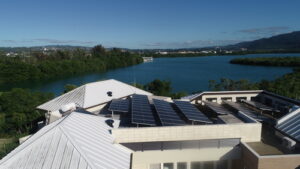
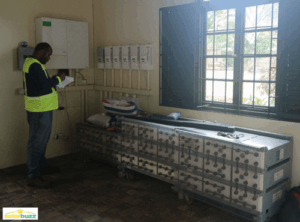
– Installation Is Not the Asset

As climate change drives longer rainy seasons and more frequent, intense storm events, true energy security can no longer be defined solely by system capacity or component quality. 

Instead, it is shaped by the quality of ongoing maintenance, the rigor of system oversight, and the strength of the partnership with a solar provider operating a reputable, active maintenance program.

Hurricane Melissa offered a compelling, real-world demonstration of this reality. 

While the storm tested infrastructure across the island, it revealed a clear distinction between solar systems that merely existed and those that were actively managed, professionally maintained, and operationally prepared.

Proactive system maintenance underpins resilience, reliability, and long-term return on investment. When paired with a reputable company operating an insurance-approved maintenance program, solar systems evolve from static installations into dynamic energy security assets.

A Partnership for Energy Security

At SolarBuzz, we recognize that energy resilience is not achieved in isolation, but rather through an ongoing partnership with our clients, in which our technical team ensures that equipment condition, system settings, and operational performance remain aligned with evolving environmental conditions and grid realities.

Clients whose systems were under active maintenance prior to Hurricane Melissa benefited from continuous online monitoring, remote system support, proactive adjustment of system settings informed by weather tracking, guidance on maximizing system readiness ahead of landfall, and field visits where required. 

These coordinated efforts translated directly into greater continuity of power during and after the storm, even as grid restoration lagged across entire regions.

This partnership model reframes system maintenance from a reactive service into a strategic discipline. It ensures batteries are protected from harmful discharge cycles and that system configurations are proactively optimized to preserve performance and asset lifespan, while also securing dependable backup power when it matters most.

Viewed through this lens, maintenance also functions as a form of asset governance, safeguarding system performance, financial value, and operational intent over the life of the investment.

Risk Management Through Regular System Maintenance

Regular maintenance plays a pivotal role in safeguarding system performance under normal operating conditions. 

Routine professional servicing enables early fault detection, supports warranty and insurance compliance, and extends the productive life of high-value components, particularly batteries.

Environmental factors such as dust, salt, and debris can quietly erode energy output by as much as 20% if left unaddressed. When unchecked, minor issues can compound into costly failures, often at the most inopportune times.

Remote monitoring further strengthens this advantage by allowing performance anomalies to be identified and corrected before they escalate into outages or irreversible damage.

Securing Your Power

Hurricane Melissa reinforced a fundamental reality that real energy resilience lies not in the installation of a system, but in its continuous and disciplined maintenance. 

At SolarBuzz, our clients experienced uninterrupted power supply from systems that withstood hurricane-force winds, supported by wind-load engineered designs, code-compliant installations, and consistent system management delivered through our maintenance program and responsive technical team.

In keeping with our value statement, the maintenance of our clients’ solar systems is treated as a direct extension of our engineering practice. 

Our maintenance program is a data-driven, standards-based approach designed to preserve energy independence, protect financial investment, and ensure that systems perform reliably when national infrastructure is most vulnerable.

As Jamaica enters an era of increasingly severe weather events, proactive system maintenance stands as one of the most powerful tools for safeguarding assets, securing continuity of supply, and maintaining control over the energy future.

Deidre Wedderburn is the Client Relations Manager at SolarBuzz, dedicated to building long-term partnerships and delivering a top-tier client experience (deidre@solarbuzzjamaica.com). 

Editor’s Note: Our clients and systems were referenced in a recent New York Times article examining the impact of Hurricane Melissa and how rooftop solar systems performed during and after the storm. Readers who wish to view the article may do so using the link below.

👉 Read the New York Times article:
https://www.nytimes.com/2025/11/08/climate/jamaica-hurricane-solar-power.html


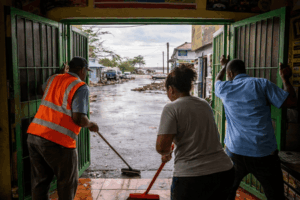
Resilience is not a foreign concept in Jamaica. For generations, Jamaicans have navigated environmental uncertainty and economic constraint with ingenuity, perseverance, and resolve. From small business owners reopening their doors after floodwaters recede, to households restoring order and routine in the aftermath of storms, adaptability is not merely a response – it is our defining trait.

As climate change accelerates and extreme weather events intensify, hurricanes of Melissa’s magnitude are no longer exceptional. In this reality, resilience can no longer rely solely on human determination.

Our capacity to recover must be reinforced by infrastructure, particularly energy systems, that are designed to endure disruption and enable swift recovery. Jamaica’s solar and energy storage systems must deliver continuity, reliability, and stability precisely when communities need them most.

Resilience requires energy systems built to perform under pressure.

Systems That Stand When It Matters Most

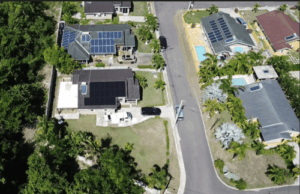
In recent storms, a quiet yet consequential shift has been unfolding across the island. Properly designed solar energy systems have emerged as a cornerstone of resilience, supporting not only individual households but entire communities. Installed solar capacity has expanded from less than 1.4 megawatts in 2015 to nearly 65 megawatts by 2024, now accounting for approximately ten percent of Jamaica’s electricity mix.

Beyond capacity figures, solar has revealed a deeper dimension of resilience. When engineered correctly and installed to rigorous standards, these systems become anchors of care and solidarity. 

Homes that retain power after a storm often evolve into community lifelines and spaces where neighbours gather to charge devices, preserve food, access information, and reconnect with loved ones. In these moments, resilience transcends technology; it becomes collective.

Post-Melissa reporting in a recent New York Times article underscored this reality. Properly mounted solar panels largely withstood hurricane-force winds, maintained uninterrupted power supply throughout the storm, and enabled households to remain operational while serving as points of support for their communities. The article, After Jamaica’s Disastrous Storm, Solar Power Is a Bright Spot, featuring SolarBuzz clients in Treasure Beach and Kingston, highlights how rooftop solar systems, when done right, deliver continuity of power and meaningful community benefit.

One featured client, Jennifer Hue of Treasure Beach, experienced flooding and property damage during the hurricane, yet her rooftop solar system remained fully operational. While the grid failed, her home stayed powered, allowing neighbours to charge phones, preserve food, and maintain vital communication.

Similarly, Twila-Mae Logan of Kingston was able to use her solar-equipped home as a hub for food storage and family support during the outage.

At SolarBuzz, we view solar not as a lifestyle enhancement, but as essential infrastructure that is central to household safety, economic stability, and energy independence. 

These featured systems did not endure by chance. They performed as designed because they were engineered for Jamaica’s environmental realities and installed to standards capable of withstanding hurricane-force winds and extreme conditions.

Breaking the Cycle of Darkness

Despite this progress, access to resilient solar and storage systems remains uneven. While declining global equipment costs, government incentives such as the solar tax credit, financing mechanisms, and net billing policies should, in theory, make solar more attainable, local bureaucratic barriers continue to impede adoption.

Lengthy approval timelines, complex banking and net billing requirements, and lingering policy ambiguity place resilient energy solutions beyond the reach of many Jamaicans. However, climate realities demand the opposite approach.

Reducing dependence on long, vulnerable transmission lines and decentralising power generation directly at the point of use is no longer optional; it is imperative.

Incentive frameworks must therefore be clear, accessible, and free from protracted delays or cost-intensive administrative requirements.

Competitive financing from major banks, including the ability to integrate solar systems into new mortgages, is essential to broadening access to properly designed solar and battery solutions.

As Caribbean leaders continue to call for greater international support to address climate impacts the region played little role in creating, local action must demonstrate clarity, urgency, and execution.

Jamaicans deserve a straightforward, efficient, and affordable pathway to resilient solar adoption, alongside continued investment in strengthening the national grid.

For Jamaica, resilience now means empowering homeowners to invest confidently in high-quality solar and storage systems designed to withstand hurricane-force winds and deliver long-term energy security.

Deidre Wedderburn is the Client Relations Manager at SolarBuzz, dedicated to building long-term partnerships and delivering top-tier client experience (deidre@solarbuzzjamaica.com). 

People with rooftop solar panels got their power back almost immediately. The ‘entire neighbourhood benefits’, one resident said.

The morning after Hurricane Melissa tore through Jamaica, Jennifer Hue, a retired tax auditor living close to hard-hit Treasure Beach, woke up to devastation. Her mango, breadfruit and papaya trees were lost, their tops snapped off by 180-mile-per-hour winds. There was water everywhere.

But her roof was intact, and just as importantly, so were the solar panels she had installed two years ago. Most of her neighbors didn’t have electricity. But she did.

Neighbors began stopping by to charge their phones, to take a cool drink from the refrigerator, to message loved ones to let them know they were safe. Ms. Hue is still hosting a cousin and his mother, as well as two medical students from the local university, whose accommodations were damaged.

“The wind was like a tornado, and water came through every crevice,” Ms. Hue said. “But we didn’t lose any solar panels, and the next morning, the sun was shining bright and early,” she said. “We had our power back.”

A small but vibrant market for rooftop solar panels in Jamaica has long been seen as a promising way to wean the nation off imported fossil fuels. The country is reliant on oil and gas from abroad for its power plants, which not only is polluting but also makes Jamaica’s electricity some of the priciest in the world per kilowatt-hour.

But now, solar power is also seen as a way for Jamaica and other nations in one of the world’s most hurricane-prone regions to become more resilient to ever-intensifying storms.

Rooftop solar has grown significantly in Jamaica over the past decade, from less than 1.4 megawatts in 2015 to nearly 65 megawatts in 2023, a significant amount for a small island, experts say. Overall, solar and other forms of renewable energy made up about 10 percent of Jamaica’s power generation in 2023.

The hope is that growth will start to cut down on Jamaica’s dependence on imported oil and liquefied natural gas, which is shipped in tankers to the island nation, at a time when ports, refineries, power plants and transmission lines are becoming vulnerable to extreme weather worsened by a warming planet.

Wide swaths of the country remain without electricity after Hurricane Melissa hit Jamaica as a Category 5 storm last week, killing at least 32 people and destroying an untold number of buildings and homes. “You’re talking about restoring a very lengthy, complex and expensive infrastructure,” said David Gumbs, an expert on energy in the Caribbean at the Rocky Mountain Institute and the former chief executive of the Anguilla Electricity Company.

“With solar, you maintain some ability to continue generating electricity” without relying on hundreds of miles of damaged power lines, he said. “And in the Caribbean context, when the hurricane passes, if I have rooftop solar and batteries and if I can keep my refrigerator running, my entire neighborhood benefits.”

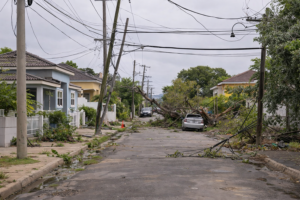
The solar panels must survive the high winds, of course. Jason Robinson, who runs Solar Buzz, an installer based in Kingston, Jamaica’s capital, has been surveying the damage this week, navigating roads on the west side of the island strewed with downed trees and power lines. “With nearly 200 mile-per-hour winds, you’re in the universe’s hands,” Mr. Robinson said.

But so far, none of his nearly 300 clients have reported extensive damage, he said. Panels installed flat against the roof, in particular, fared well. Some rooftop solar owners have taken to removing their panels ahead of strong winds. Many were already back online.

“As long as you install to code, and your roof stays on, you have a chance of surviving extremely long power outages,” Mr. Robinson said. “Resiliency is becoming even more important than lowering your bill.”

Solar panels remain beyond the reach of many Jamaicans, but prices are falling rapidly as Chinese gear floods into the market. In recent years the Jamaican government has also started providing a solar income-tax credit, and banks have begun to offer more financing. Jamaica’s electric utility also now compensates solar households for excess electricity they put back into the grid.

That’s helping Jamaica make progress toward its goal of generating 50 percent of its electricity from renewable sources by 2030.

Annabelle Todd manages an oceanfront guest villa on Treasure Beach, where two dozen panels and battery storage were installed two-and-a-half years ago. The panels survived, apart from one that was punctured by flying debris. She had electricity and air-conditioning the morning after the storm, much to the envy of her neighbors.

The system wasn’t cheap, costing about $30,000. But it has virtually eliminated electricity bills that used to top $1,000 a month, because her guests “would run that A.C. morning and noon and night,” she said. “Honestly, we could pay it off in two, three years,” she said.

More than that, not losing power has been a relief, she said. It’s the second year in a row that the seaside community, known for its black sand beaches, has been ravaged by a hurricane.

“Now everyone who runs villas here wants solar. I already see solar suppliers driving up and down Treasure Beach,” Ms. Todd said. “They got hit two years in a row, and they’re not going to fool around anymore.”

Twila-Mae Logan, deputy executive director of the University of the West Indies’ business school, spent about $20,000 to install panels at her Kingston home two years ago. The capital was spared the worst of Hurricane Melissa, but even then, her neighborhood lost power, making her home one of the few with electricity. Ahead of the storm, her brother and her niece rushed to her home to store food in her freezer so it wouldn’t spoil.

“We’re a third-world country and our government is significantly under-resourced, but I really do think our government has put some fair degree of priority behind solar,” she said. “Most people would go solar, save for the expense.”

Leaders across the Caribbean have demanded more financial assistance from the world’s rich countries to help Jamaica contend with the consequences of climate change. Caribbean island nations will suffer the most from climate change, despite being least responsible for the greenhouse gas emissions that are warming the world, they say. The International Monetary Fund says the region requires about $100 billion in economic investment to build resilience to climate-fueled disasters.

Ms. Hue, the retired tax auditor, doesn’t expect to quickly make back the tens of thousands of dollars she paid for her solar panels in 2023. But “it was never about that,” she said. “It was about having very reliable power, and having peace of mind.”

“We were just fortunate to have the sun out the next morning,” she said.

The New York Times

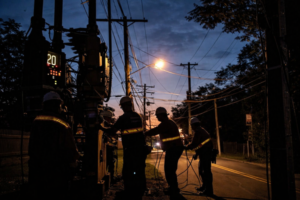
Jamaica Public Service Company (JPS) is exploring the possibility of underground power lines as part of a sweeping overhaul to fortify its grid against the growing threat of Category 5 hurricanes.

While the company has long relied on overhead transmission lines, the increasing frequency of stronger hurricanes and other climate-driven disasters has renewed discussions around selective undergrounding to protect critical infrastructure and reduce extended power outages.

At the Jamaica Chamber of Commerce breakfast conversation last Friday, the discussion turned to whether JPS would align with the approach taken by some developed nations and explore the feasibility of underground power lines as part of its infrastructure strategy. Underground power lines typically helps to reduce the risk of wildfires and outages caused by storms.

“An underground system is about 10 times more expensive than an overhead system,” JPS President and CEO Hugh Grant said.

“However, for selective areas, particularly critical infrastructure, it can help to reduce storm-related outages and speed up recovery.”

JPS is conducting feasibility studies to determine where undergrounding would provide the most value, balancing the significant upfront costs with long-term resilience benefits. While full-scale undergrounding isn’t feasible due to cost constraints, Grant noted that high-density commercial zones and essential service hubs could benefit from a more resilient underground system.

“We won’t be able to underground everything, but where it makes sense—such as in high-traffic business districts and areas where rapid restoration is critical—we are looking at the feasibility,” he said.

The undergrounding initiative is just one part of JPS’s broader infrastructure upgrade, which also includes transitioning to hurricane-resistant power poles, reinforcing substations, and enhancing Jamaica’s preparedness for earthquakes.

JPS’s grid-hardening strategy comes in response to Hurricane Beryl, which caused widespread power outages across Jamaica earlier this year. The company acknowledges that its infrastructure is currently built to withstand Category 3 hurricanes, but as storms become more intense, it is now designing for Category 5 conditions.

“We saw the impact that Beryl had, and going forward, we are designing for a Category 5,” Grant said.

A major component of this shift involves replacing wooden utility poles with concrete structures, which offer greater wind resistance and durability. Grant explained that JPS is already making this transition as part of its regular infrastructure upgrades.

“One of the things we are doing right now is moving from wooden structures to concrete poles, which have higher wind resistance and better longevity in extreme weather conditions,” he told the Business Observer in a follow-up interview.

Additionally, JPS is strengthening its substations, many of which are located in coastal areas prone to flooding. The company is also expanding vegetation management programs, as fallen trees and overgrown branches remain a major cause of storm-related outages.

Beyond its internal upgrades, JPS is partnering with developers to ensure that new residential and commercial projects integrate storm-resistant power infrastructure from the start.

“For new developments, we are working with developers to see how we can integrate more resilient infrastructure from the outset. That means pre-installed underground circuits where feasible, reinforced pole structures, and smart grid solutions that allow for faster power restoration after a storm,” Grant said.

While much of JPS’s disaster resilience planning has focused on hurricanes, Grant also highlighted the need to prepare for earthquakes, a less-discussed but serious risk for Jamaica’s power network.

Between August and December last year, the country recorded 11 earthquakes, ranging in magnitude from 2.9 to 6.5, according to The University of the West Indies’ Earthquake Unit.

“When it comes to earthquakes, the type of devastation we’re talking about calls for alignment and joint partnerships across the board,” Grant said. “The power sector, government, military, and telecoms must have a coordinated response plan.”

JPS’s earthquake-readiness plan involves reinforcing transmission towers and substations to withstand seismic shocks, enhancing emergency response protocols to ensure faster power restoration after an earthquake, and securing backup power solutions for critical facilities such as hospitals, water treatment plants, and emergency services.

Although Jamaica’s power grid has automatic shutdown mechanisms in place to protect major infrastructure during an earthquake, Grant warned that significant structural damage could take weeks to repair. As a result, JPS is prioritising reinforcement of critical infrastructure, particularly in urban centers where power restoration is most critical.

“Unlike hurricanes, earthquakes happen with no warning. So our approach has to be proactive rather than reactive,” Grant emphasised.

With 14,000 kilometres of distribution lines and 3,000 kilometres of transmission lines, upgrading Jamaica’s power grid is a massive undertaking. Grant acknowledged concerns about how these improvements will be financed without placing an additional burden on consumers.

“This is not an overnight fix,” he admitted. “With the scale of infrastructure we are working with, this is a multi-year, phased approach. We have to prioritise key areas first, then expand as funding allows.”

JPS is working to secure funding through multiple channels to avoid sharp increases in electricity rates. These include public-private partnerships with developers, government-backed infrastructure initiatives, and international climate resilience funding.

Grant noted that while these upgrades will require significant capital investments, they are expected to reduce long-term operational costs, ultimately saving money by minimising storm damage and cutting outage restoration times.

“We are balancing the need for resilience with ensuring energy remains affordable,” he said. “If we execute this correctly, these investments will save us money in the long run—by reducing storm damage costs, cutting outage durations, and improving overall efficiency.”

Jamaica Observer

Jamaica’s Energy Vulnerability

As Jamaica prepares for the upcoming hurricane season, the potential for extended power outages remains a significant concern. Past hurricanes have left many homes and businesses without electricity for days or even weeks, and the recent impact of Hurricane Beryl highlights the country’s vulnerability. Given this, exploring alternatives to traditional energy sources can offer added resilience, especially in the face of increasingly severe weather events.

JPS Plans for Power Resilience

The Jamaica Public Service Company (JPS) has announced plans to strengthen its grid by undergrounding some of its power lines in an effort to better withstand Category 5 hurricanes. This initiative comes in response to the growing frequency and strength of hurricanes, as seen with the impact of Hurricane Beryl. The current infrastructure, according to JPS, is only capable of handling Category 3 conditions, and these upgrades aim to future-proof the grid against more intense storms.

Solar Energy: A Resilient Alternative

While this move by JPS is a step toward greater grid resilience, it’s important to recognize that the fortification process may lead to higher energy costs for consumers. As the company seeks funding for these upgrades, there is concern that the increased investment in infrastructure may be passed on to customers in the form of higher rates. This makes the decision to invest in renewable energy sources, such as solar power, an increasingly attractive option for those seeking more predictable energy costs.

Economic Advantages and Integration of Solar Solutions

In addition to greater energy security, the Government of Jamaica’s recent Income Tax Credit initiative, which offers up to 30% of the value of a solar system or a maximum of J$1.2 million, adds a financial incentive for those considering solar energy. This initiative can help accelerate the return on investment for solar installations, making it a more viable option for households and businesses looking to reduce their reliance on the grid and manage energy costs more effectively.

There is also a growing interest in integrating solar energy solutions into new developments. Developers and financial institutions are now considering the inclusion of solar power systems in their building designs, which allows homeowners to finance the cost of installation through their mortgage over a 20-30 year period. This approach can make it easier for individuals to transition to solar energy and ensure reliable power supply without the upfront financial burden.

Securing Jamaica’s Energy Future

While JPS’s grid fortification plans are promising, their implementation is likely to take years. As the frequency and intensity of hurricanes continue to rise, it’s becoming increasingly important for Jamaicans to consider alternative energy solutions. Solar power offers a way to ensure energy security, regardless of the timeline for grid upgrades.

In light of these factors, it may be wise for Jamaicans to explore the benefits of solar energy as a way to address both current and future energy needs, while also managing the uncertainty of potential energy rate increases.

To request a quote from SolarBuzz and get started towards real energy freedom, please click here.

Deidre Wedderburn, Client Relations Manager (deidre@solarbuzzjamaica.com)


Cost has always been cited as the restrictive factor when considering alternative forms of energy, but Hurricane Beryl, and all she brought, should have more Jamaicans keen on embracing these.


No bigger sales pitch is needed than those Jamaicans who have experienced countless days and nights without electricity since the hurricane’s passing on July 3, and the subsequent struggles to stay powered.

Smart energy has been pushed by friends of the environment for aeons, and Jamaica has been slowly recognising its merit.

In March, Prime Minister Andrew Holness announced that National Housing Trust contributors would be able to access a new loan product for smart home energy solutions — for solar panels and batteries; solar water heaters; solar insulation; and other renewable energy technology such as windmills, hydropower and biomass.

It’s a good start for an island that has really been slow to embrace the alternative energy sources freely available year round in the form of solar, wind and hydro energy.

In the wake of Beryl, which left thousands without power, the urgency of rethinking our energy strategy has never been more apparent. This natural disaster underscored the vulnerability of the island’s energy infrastructure, and the pressing need for a more resilient and sustainable solution.

Embracing alternative energy is not just an environmentally friendly choice, but a strategic move towards energy security and economic stability.

One of the most compelling merits of solar energy, for example, is its reliability and resilience. Unlike traditional power grids, which can be severely disrupted by storms, solar panels can continue to generate electricity as long as there is sunlight. Even during a hurricane, when cloud cover might reduce efficiency, solar systems equipped with battery storage can ensure that essential services remain powered. This resilience is invaluable in countries prone to natural disasters.

By harnessing this natural resource, Jamaica can significantly reduce its dependence on imported fossil fuels and channel these resources to other critical areas.

Indeed, though pricey, the initial costs of solar installations are rapidly decreasing, and the long-term savings from reduced energy bills and maintenance costs make solar a financially prudent choice.

We understand that to fully realise the potential of alternative energy, supportive policies and investments are essential, and these have to go beyond the energy loans now offered. Government can play a pivotal role by cutting the bureaucracy around acquiring these loans, offering more incentives for installations, streamlining regulatory processes, and investing in research and development to improve alternative energy technologies.

Embracing alternative energy in Jamaica is not just an option now; it is a necessity. Beryl has highlighted the vulnerabilities of the current system, and it is imperative that we build a more resilient, sustainable, and economically viable energy infrastructure.

By investing in alternative energy power systems, Jamaica can turn the challenge of frequent natural disasters into an opportunity for transformative progress.

Jamaica Observer

Dr Nigel Clarke (left), minister of Finance and the Public Service, shakes hands with Milton Brady (right), chairman, Sygnus Capital, while Jason Morris, co-founder, executive vice president, chief investment officer, Sygnus Capital, looks on during the Ja

Finance Minister Dr Nigel Clarke says economic resilience has got to be the key economic priority for Caribbean countries.

This, he said, is especially true given the open economies and narrow economic bases of small island developing states (SIDS), like Jamaica, which continue to face challenges ranging from economic vulnerability to climate change.

Speaking at the Jamaican launch of the US$135 million Caribbean Community Resilience Fund (CCRF) held last Thursday at the AC Hotel by Marriott, Clarke noted that it was “challenging to make life work for small island states, even if you have high per capita GDP”.

This is because the structural economic realities within the Caribbean indicates that even if there exists a certain amount of wealth, as measured by invested capital, it could all go away with one or two economic shocks.

“If it’s one thing we know, economic shocks are going to be a permanent reality of life in the Caribbean and being open means that it affects us when it may not affect somebody else,” Clarke noted.

Using the American state of Louisiana as an example, he explained that because the United States was “extremely resilient” a hurricane affecting one state would have no measurable impact on the GDP of the overall country.

Therefore, Clarke said it was the region’s duty to take responsibility for its vulnerabilities, as “that’s what societies that are advanced do for themselves”.

Continuing with another example, Clarke stated that in Canada where they are vulnerable to extremely cold weather which can have below freezing temperatures for long periods of time making life difficult, they are one of the countries with the largest amount of underground infrastructure, with millions of square feet of retail office space which allowed individuals to be able to spend an entire week underground.

This, he added, is an example of taking responsibility for one’s vulnerability.

In expressing his satisfaction with the announcement what the CCRF intends on achieving, he shared that it “was like music to the ears of policymakers”.

‘Timely’ and ‘exciting’

He praised how “timely” and “exciting” the fund is, as it “comes at a time where Jamaica and the Caribbean are all facing a potential crisis … where the solution to a large extent is going to lie in having pools of capital available to invest in our economies in finding solutions”.

The fund, which is supported by the United States Agency for International Development (USAID), promises to revolutionise the region’s approach to tackling climate resilience and economic sustainability.

Sygnus Group, which operates in Jamaica, St Lucia, and Puerto Rico, will manage the fund. The CCRF will target seven key resilience sectors, including energy, transportation, blue economy, housing, finance, information and communications technology (ICT), and agriculture.

Jason Morris, co-founder and executive vice president of Sygnus Capital, clarified that while the CCRF’s primary goal was climate resilience, its other objectives included strengthening the infrastructure of Caribbean nations by giving access to capital for projects and businesses, giving investors in the Caribbean the chance to invest in impact investments, offering technical support for capacity building, providing catalytic capital for the region, and providing flexible, patient, risk-tolerant, concessionary, and impactful capital.

The chief investment officer continued that the investment horizon of the 10-year fund can be increased to two one-year periods.

Divided into two investment periods, the fund will have two portfolios: an equity portfolio which has an investment period of five years, and a debt portfolio which has an investment period of seven years.

The debt portfolio will have two closure dates: the first is on June 30 and the second is some time in February 2025.

Morris, who gave a breakdown of the fund, stated that the Caribbean Development Fund (CDF) as a sponsor and supporting as first loss capital made a commitment of US$15 million. Additionally, over US$1 million was from Sygnus and US$5 million from enhanced capacity building.

For his part, Jason Connor, chief executive officer of Sygnus Capital Puerto Rico, said that he was well aware of the region’s lack of access to capital and that the CCRF’s launch would help to raise the visibility of both the Caribbean and the sectors that the fund is targeting, which were both severely underdeveloped for capital on a large scale.

“Recently I read as part of the development of the fund, the document from USAID states that just in climate related resiliency there’s over US$20 billion worth of opportunities to be deployed, to be unleashed in the Caribbean,” he said. “That doesn’t include the non-climate related opportunities, so we’re talking anywhere from $10 to $15 billion dollars additional of opportunities that year after year go unsolved, unreleased.”

Connor went on to say that while banks are unable to bridge this gap, they nonetheless try their best, and this is true even in countries with larger economies.

He emphasised that the only area that differed substantially from the developed world was the non-banking sector. According to him, this industry really required expansion so that businesses who do not qualify access the capital through the banks and have options.

Gleaner

The Biden administration on Wednesday finalized one of the most significant pieces of its ambitious climate agenda: the strongest new tailpipe rules for passenger cars and trucks that will decisively push the US auto market toward electric vehicles and hybrids.

But in a concession to automakers and labor unions, the rules will be phased in more slowly than originally proposed and will give automakers more choices for how to comply.

Nearly a year ago, the Environmental Protection Agency proposed a fast ramp-up into EVs — a rule that would have ensured two-thirds of all vehicles sold were electric by the end of this decade. The EPA pumped the brakes on that plan Wednesday.

Instead of pushing automakers to sell more EVs to meet stringent pollution targets, the administration is allowing plug-in hybrids — vehicles that combine gas engines and EV-like batteries — to play a much bigger role in the electric transition.

In 2023, EVs made up just 7.6% of new car sales, according to Kelley Blue Book. The new rule is targeting 35% to 56% for EVs in 2032, and 13% to 36% for plug-in hybrids.

Transportation has an outsized climate impact, making up nearly a third of all US climate pollution, so even small steps can lead to significant change. Margo Oge, who previously headed the agency’s office of Transportation and Air Quality, called the new standard “the single most important climate regulation in the history of the country.”

In a statement Wednesday, President Joe Biden vowed the cars would be made by American workers. “US workers will lead the world on autos making clean cars and trucks, each stamped ‘Made in America,’” Biden said. “You have my word.”

Federal officials said the rule doesn’t favor electric vehicles over other types of vehicles, and will reduce nearly as much pollution as the original proposal — more than 7 billion metric tons of planet-warming emissions, along with other pollution that is detrimental to human health. By 2032, the new rule is expected to slash passenger car pollution nearly in half from 2026 levels.

“Within those ranges, we got to the same place” as the standard proposed last year, said Joe Goffman, who leads the agency’s Office of Air and Radiation.

Goffman said the agency considered different ways automakers could “mix and match” new vehicle models to meet the standard — by using more efficient gasoline engines, hybrids, plug-in hybrids and battery electric vehicles.

“By taking seriously the concerns of workers and communities, the EPA has created a more feasible emissions rule that protects workers building (traditional, gas-powered) vehicles, while providing a path forward for automakers to implement the full range of automotive technologies to reduce emissions,” the United Auto Workers union said in a statement.

White House national climate adviser Ali Zaidi said that “one of the really strong features” of the new rule was its flexibility.

“Different automakers are going to approach this in different ways,” Zaidi said. “You’ll have some automakers that maybe have a third of their fleet be plug-in hybrid electric vehicles.” Zaidi argued that would “translate into a lot of consumer choice.”

Carmakers get flexibility

Automakers like Toyota, who are favoring hybrids and plug-in hybrids and moving slowly on EVs, could be big benefactors of EPA’s new rule.

Toyota, the world’s largest automaker, is among the companies that aggressively pushed back against the Biden administration’s original proposal.

In a memo sent in the fall of 2023 to car dealers across the US, Toyota Motor North America group vice president of government affairs Stephen Ciccone described the EPA’s original EV proposal as a “mandate” and “draconian,” CNN recently reported. Ciccone wrote the proposal had caused an “existential crisis” in the industry and suggested an option giving automakers more choice.

“Toyota’s position is that the best way to reduce carbon is by giving consumers a choice of powertrain options, including hybrids, plug-in hybrids, fuel cells, fuel efficient ICE vehicles, and BEVs,” Ciccone wrote.

That flexibility is what the EPA finalized on Wednesday. But Toyota continued to characterize EPA’s rule as a “regulatory mandate” that will force it further into the EV game than it’s currently positioned.

The rule “requires a precipitous shift from around 8% market share of battery electric vehicles today to more than half by 2032 – an aggressive, sixfold increase over just eight years,” said Toyota spokesperson Edward Lewis in a statement. “Toyota will continue to lead the industry and comply with regulations, but serious challenges around affordability, charging infrastructure, and supply chain will need to be addressed before this mandate is realized.”

President Joe Biden has made the transition to EVs a signature issue of his presidency, stressing the economic impacts, in addition to the climate benefits, of cutting pollution. In August 2021, after the president announced an ambitious target that half of vehicles sold in the country by 2030 would be either battery electric, fuel-cell electric or plug-in hybrid, Biden test-drove a hybrid-electric Jeep on the White House grounds.

But political battle lines are being drawn around the EV transition. Former President Donald Trump, the Republican nominee for the 2024 presidential election, has railed against EVs in his speeches. He recently characterized EVs as “all” being made in China, even though Democrats’ Inflation Reduction Act has pushed a new EV manufacturing and assembly to the United States.

With the new standard giving automakers more flexibility, EPA administrator Michael Regan denounced the characterization that the agency was setting an EV “mandate.”

“When you look at the differences between the proposal and final, you will see that there is absolutely no mandate,” Regan told reporters, adding his agency was staying “well within the confines of the law.”

It’s not just Trump; the jump to EVs has some of Biden’s political allies worried, too. The United Auto Workers, a powerful union that has endorsed Biden, has also expressed concerns about what the shift to EVs could mean for their workers, who believe battery-powered cars require less labor to build.

But the demand for fully electric cars is growing in the US. The nation crossed a key threshold at the end of last year: 1.2 million electric vehicles were sold — a 46.3% jump from 2022.

EV adoption rates are likely to slow down this year, which is to be expected, said Trevor Houser, partner at the nonpartisan Rhodium Group. He’s looking for two main signs of EV success in the coming years: whether automakers can make a wide enough variety of the vehicles Americans want to drive, and whether the cost can come down to a more affordable range of $20,000 to $30,000.

“We won’t really know before (2025) how successfully we’re making that transition because the next generation of more affordable EVs won’t be on the market,” Houser told CNN.

Zaidi agreed it would take time to see whether more Americans move to fully electric cars.

“That’s something we’ll see over time,” Zaidi said. “But this rule is very flexible and allows for all of those pathways to emerge, and for (automakers) to pursue those in a manner that’s consistent with their strategies.”

Climate and health impacts

While the climate impact of the tailpipe rules have drawn the most attention, there is a big public-health component, as well.

Reducing pollution from cars and trucks could help Americans’ health on multiple levels, since the EPA’s multi-pollutant standards will tackle greenhouse gases that cause climate change, smog and particle emissions.

No amount of air pollution is safe, and according to the World Health Organization, it’s one of the greatest environmental risks to human health.

Vehicle exhaust is made up of all sorts of pollutants, including carbon monoxide, particulate matter, nitrogen oxides, sulfur dioxide and carbon emissions that contribute to a warming world, which is also itself a major threat to health.

Exposure to particle pollution ages and reduces lung function, and it can lead to cancerstrokeheart problemsCOPD and other lung and vascular issues. It can aggravate asthma and is linked to neurodegenerative diseases like Alzheimer’s, Parkinson’s and other types of dementia, studies have found. People exposed to higher amounts of this pollution for longer periods also have an increased risk of depression and anxiety. Exposure can even contribute to problems thinking clearly.

Particle pollution led to more than 107,000 premature deaths in the US in just one year, one 2019 study found. That’s more than the number of people killed each year in homicides and traffic accidents combined, researchers said.

“These standards really provide significant relief that communities across America need from vehicle exhaust,” said  Will Barrett, the American Lung Association’s senior director of advocacy for clean air. “It’s very much setting a strong direction to ensuring the auto industry cleans up harmful pollutants and communities are better protected from traffic emissions.”

CNN

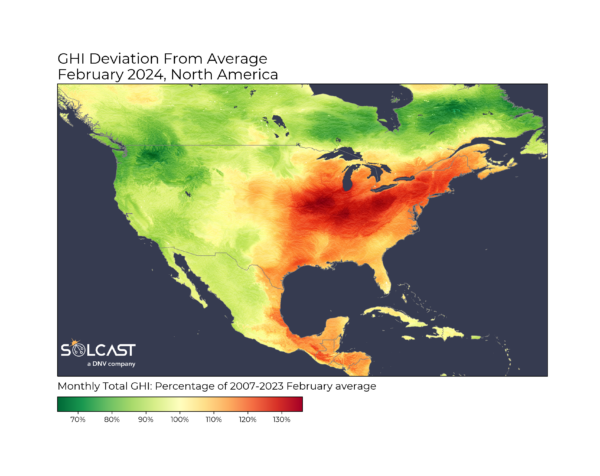
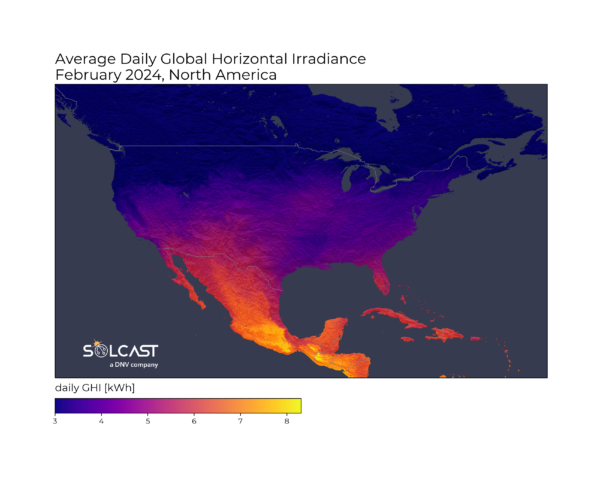
In a new weekly update for pv magazine, Solcast, a DNV company, reports that persistent high pressure in the upper atmosphere led to irradiance as high as 30% above normal, and new records for solar generation and temperature in North America in mid-February.

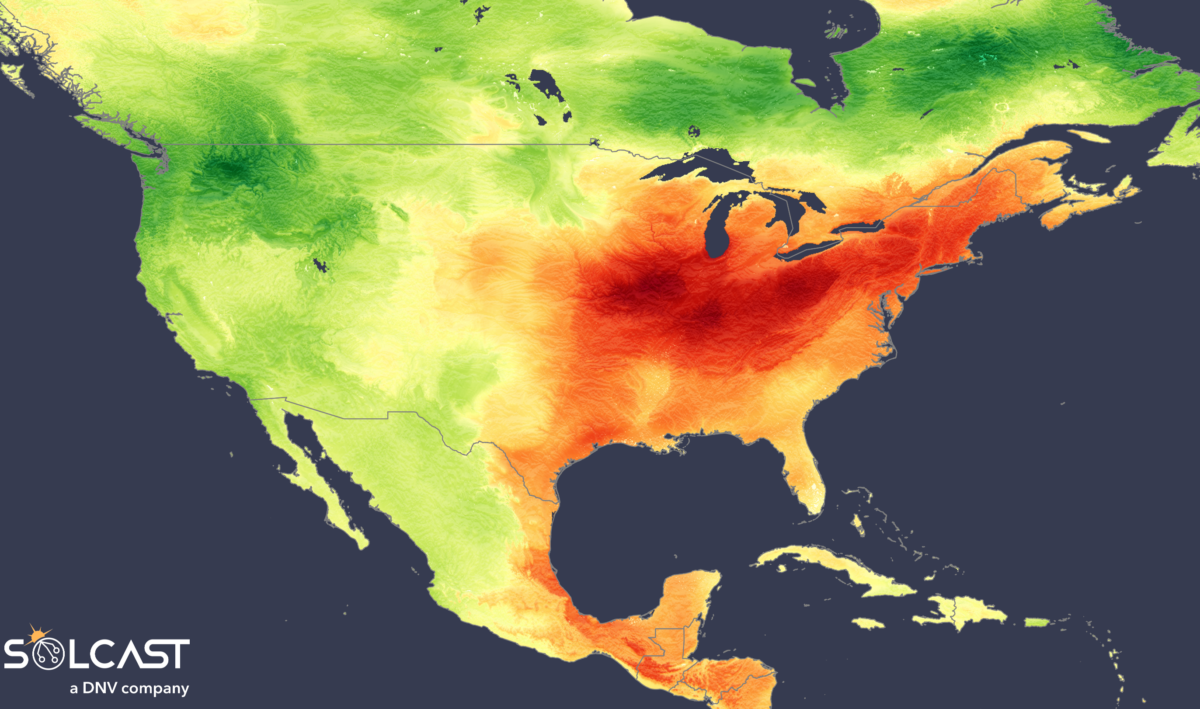
A warm end to winter hit most of North America this February. In the west, during February mild air from the Pacific banked up clouds and depressed irradiance by 10-20%, according to analysis completed using the Solcast API. In the east, persistent high pressure in the upper atmosphere led to irradiance as high as 30% above normal, and new records for solar generation and temperature

A clear east/west divide is present in the irradiance anomaly this month. A strong low pressure system sat further east than normal over the Atlantic which brought calm, drier and sunny conditions to the Eastern U.S. and Mexico. Sunnier than normal conditions delivered 20-30% more irradiance than normal from Texas to New England. On the west coast however, high pressure was further west over the Pacific, so that coastal low pressure systems pulled moist air from equatorial regions, leading to increased clouds, blocking irradiance.

Clear skies and higher than normal irradiance will have benefited both large and small scale, solar producers. Residential ‘behind the meter’ solar performed strongly this February all over the East Coast. Solcast’s Grid Aggregation model for NYISO shows residential solar peaked at 3.52GW, and saw 23% more solar generation than last year after adjusting for capacity increases. By contrast, CAISO’s residential solar generation was down 12% on the long term capacity-adjusted average.

Utility scale generation in ERCOT also hit and surpassed their generation peak record, hitting 17.2GW on February 20th. A 50.1% increase in peak generation in February 2023, is mostly a function of capacity increases in the last year.

But it wasn’t just grid performance breaking recent records, temperature records were broken across the country, with the average temperature, more than 4 degrees above normal. Killeen in Texas saw a peak temperature of 38 C (100 F), and Jacaranda trees in Mexico City have been in full bloom all month, 6-8 weeks earlier than normal. Despite the heat further south, areas in Eastern Canada saw significant snowfall caused by a low pressure system stalling over the area, drawing in continuous cold air from the Atlantic. This caused one of the heaviest snowfall events in 20 years, blanketing parts of Nova Scotia with more than a meter of snow.

This extreme weather is reflective of an overall pattern being seen globally, as February 2024 was Earth’s warmest month on record for the 9th consecutive month.

PV Magazine