Minister of Industry, Investment and Commerce Senator Aubyn Hill has shot back at claims that a delegation he led to the last meeting of the Caribbean Community (Caricom) Council on Trade and Economic Development (COTED) did little to preserve a common external tariff (CET) waiver on the importation of lithium-ion batteries. Lithium-ion batteries are used to store the excess power produced by solar photovoltaic systems.

Speaking to the Jamaica Observer last Friday following a press briefing held at Kingston Wharves Limited in conjunction with the European Union, Hill said he challenged COTED’s decision when he attended the meeting.

“I was there; I pushed back when Minister [of State in Foreign Trade and Business Sandra] Husbands from Barbados raised the issue. I raised the issue that the technical team representing Barbados…did not raise the issue. I raised the issue and objected,” he asserted.

Documents submitted to the Business Observer reveal that at the COTED meeting held November 27-28, 2023, in Georgetown, Guyana, the Jamaican delegation submitted a “Request for Approval of the Suspension of the CET on a Priority List of Renewable Energy and Energy Efficient Technologies”, citing the need to increase the penetration of renewable energy sources and greater adoption of energy efficiency measures in order to reduce the country’s carbon emissions.

The application for the roll-back on the 20 per cent charge would apply to compact fluorescent lamps, vapour absorption refrigeration systems, thermal storage air conditioning systems, rechargeable batteries for renewable energy systems (photovoltaic systems), among others. The council however refused to approve the suspension of CET on lithium-ion batteries, nothing that “Barbados indicated its ability to supply 240,000 lithium-ion batteries… as requested by Jamaica, for the period 1 January 2024 to 31 December 2025”.

The documents did not identify the name of the Bajan company that has offered to supply the Caricom Single Market with the batteries, but checks have revealed that Meritsun Power is the only supplier of that type of energy storage unit in the Eastern Caribbean island.

However, according to Alex Hill, president of the Jamaica Renewable Energy Association (JREA), “The Ministry of Science, Energy, Telecommunications and Transportation (MSETT) is choosing to protect the name of the company in Barbados instead of sharing it with stakeholders in the sector. This company formally approached COTED and stopped our local tax incentives and therefore should not be protected by our Government. Their name should be publicly available so that importers in Jamaica can contact them and make orders from them. After all, they are now the preferred supplier for the region.”


Questions arising

The decision of COTED and what was deemed the inaction of Minister Hill and his team have been met with ire by both the JREA and the Opposition People’s National Party.

Noting concerns being raised in the renewable energy industry, Opposition spokesman on investment trade and global logistics Anthony Hylton questioned why a last-minute submission by Barbados was allowed to block Jamaica’s request for CET exemption.

Moreover, he underscored, “It is the practice that a request for suspension is not denied without prior evidence resulting from an investigation by the Secretariat technical staff that the Caricom producer satisfies at least 75 per cent of the product demand in Caricom.”

In an e-mail to the
Business Observer, JREA President Hill, who is the son of Minister Aubyn Hill, argued, “We know that this company cannot do what they purport to do because Barbados does not have known lithium deposits, industrial lithium processing or commercial manufacturing facilities for lithium batteries. As a point of reference, Jamaica imported approximately 11,000 lithium-ion batteries for renewable energy purposes between 2021 to 2022.”

He added: “The Jamaican delegation that attended this past COTED meeting should have vehemently rejected any suggestion by the Barbadian delegation that a single company could supply the needs of Jamaica without first reviewing the technical aspects of their product offerings, their manufacturing capability and standards. That is what the stakeholders in the renewable energy sector expect from their Government, to protect our local industry players and the Jamaican citizens who have spoken with their wallets and are purchasing lithium-based battery energy storage systems en masse. These taxpaying citizens should not bear the brunt of a 20 per cent tax because a no-name company, without a track record, or even a website, makes an erroneous claim that they can supply the needs of the Jamaican market.”

The JREA president further pointed out, “It has been reported that the Trinidadian Government has chosen not to implement the 20 per cent tax as the company in Barbados has not yet been able to substantiate their claims.”

With this is mind, he questioned why the Government has quickly implemented the CET in an “unplanned manner” and what timeline MSETT has in mind to request a revocation of the CET. This question was posed on Friday to Minister Hill.


Next steps

In his response, the minister said his portfolio ministry has alongside MSETT investigated the claim made by the Barbados company of its capacity to supply lithium-ion batteries to the region.

“A position is coming out very shortly,” he told the
Business Observer, adding: “What we were arguing is that they’re not manufacturers of [lithium-ion] batteries.”

Based on COTED rules, a company’s market share can be protected with the application of a CET on similar products imported from outside the region once it can prove that it can adequately supply the Caricom Single Market. Additionally, the entity must show that it is engaged in the manufacturing of the product with most of the raw materials originating from the region.

Highlighting that he has written to the Caricom Secretariat to object to the CET, Minister Hill explained that the objection is accompanied by a request for the exemption to the tariff to be reinstated for the period January 1, 2024 to December 31, 2025. Additionally, he said that his ministry will present its findings to the Caricom Secretariat by latest next week.

Notwithstanding, the younger Hill, who is the managing director of IREE Solar, noted what he called a “condescending lack of communication” from MSETT.

“It is only exacerbated because the JREA was preemptive in requesting planning meetings with the MSETT team and, as such, the MSETT team had clear data and a plan going into this last COTED meeting to have the incentives extended. Furthermore, this decision was arrived at during the November 2023 meeting of COTED, but all stakeholders were informed of the decision by a newspaper article on the 28th December, 2023; a mere three days before the tax was to be applied. There was no proper communication with investors, project developers, importers or purchasers, and no planning period given to the industry. This cannot be the proper manner in which to conduct business in the energy sector in [2024],” he stated.

He continued: “In conclusion, it is evident that whatever regulations and rules that are currently being used to govern objections to incentives at COTED, and the application of CET to energy, efficient and renewable energy items is flawed, ineffective, and needs to be overhauled immediately. No company from any Caricom nation should be allowed to object without formally submitting specific data surrounding their ability to manufacture on scale, their product/s’ technical specifications and other pertinent business details. There must also be punitive measures applied against that single company and/or the government representing said company if their claims are untrue and fall short of their stated intent. Millions of Caricom citizens should not be expected to bear the burden of a tax during the deliberation stage of these incentive negotiations. That is unfair and illogical.”

In June 2022, after much agitation from the JREA, Jamaica’s Minister of Finance and the Public Service Dr Nigel Clarke announced the removal of both GCT and CET on lithium-ion batteries – the latter being due to an approval from COTED. However, when contacted by the
Business Observer last week, he clarified that matters under COTED are handled by the Ministry of Industry, Investment and Commerce. Additionally, he outlined that once COTED has reached a decision, it is binding on all Caricom member states and so the tariff on lithium-ion batteries will have to be reinstated.

Another insider from the JREA has indicated that the Ministry of Foreign Affairs and Foreign Trade will also submit a request to COTED for the reversal of the decision to impose the tariff.


Jamaica Observer

The government says it’s seeking a revision of the Council for Trade and Economic Development, COTED’s, decision not to extend the suspension of the Common External Tariff on Jamaica’s importation of lithium-ion batteries from outside the Caribbean.

COTED is the organisation responsible for the promotion of trade and economic development within CARICOM.

At a meeting held by COTED in November last year, the Ministry of Science and Energy requested that the suspension of the tariff on Jamaica’s importation of nine renewable and energy efficient technologies be extended until December 2025.

Among the technologies listed were lithium-ion batteries.

The previous two-year suspension ended December 31 last year.

However, according to the ministry, COTED decided not to grant the extension as a result of the Barbadian government indicating that a company located in the eastern country was able to supply the quantity of lithium-ion batteries being requested for tax exemption.

The ministry says following an assessment of the company, it was determined that the lithium-ion batteries on Jamaica’s priority list were different from those supplied by the Barbadian company.

It noted that the company’s existing production capacity amounted to only 1.5 per cent of the lithium-ion battery imports, particularly for use in renewable energy systems.

According to the ministry, the decision not to suspend the tax on the batteries did not sufficiently consider the rules of origin under the Revised Treaty of Chaguaramas and the production and export capabilities of the Barbadian company.

The ministry says it requested a revision of the council’s decision in mid-January.

While acknowledging the importance of COTED’s decision to Jamaica’s renewable energy sector, the ministry says it’s committed to working closely with its partner Ministries to have the decision reconsidered.

Abigail Bartley reports.

Nationwide Radio

The company from Barbados has been asked to provide the relevant information by no later than January 5, 2024


The Ministry of Science, Energy, Telecommunications and Transport has advised that a 20 per cent tariff will be applicable to the importation of lithium-ion batteries from outside the CARICOM region as of January 1.

A two-year suspension of the common external tariff (CET) is in place until the end of December, and Jamaica requested a further two year extension at a November meeting of the Council for Trade and Economic Development (COTED).

However, the ministry said in a media release on Friday that a Barbados-based company has objected to Jamaica’s application, indicating through the Barbados government that they produce the type of lithium-ion batteries being requested for CET suspension.

The  ministry said the necessary due diligence is now being done by the Jamaican authorities to assess the Barbadian company’s certificate of origin and their ability to meet the specifications and provide the quantities required by Jamaica’s renewable energy sector.

The company from Barbados has been asked to provide the relevant information by no later than January 5, 2024, to allow for the preparation of the Government of Jamaica’s response to COTED.

“Due to the objection raised by the Barbadian company, a 20 per cent CET will be applicable to the importation of lithium-ion batteries from outside the region as of 1st January 2024. While the country’s renewable energy stakeholders should remain guided by the Jamaica Customs Agency, it should be noted that only lithium-ion batteries imported for use in solar applications will be exempt from GCT,” the ministry stated.

The CET is applied by all participating countries on select products. It effectively raises the price of imports from outside of the region, giving internally manufactured products a competitive advantage.

Gleaner

A year into the implementation of the Government’s concessions on electric vehicles, new data show that EV imports soared to $9 billion over the period July 2022 to June 2023, as import volumes doubled year on year.

In a move aimed at softening the country’s dependence on petroleum for motor vehicles by making it more affordable for Jamaicans to acquire electric vehicles, the Government slashed the import duty on a limited number of electric vehicles from 30 per cent to 10 per cent and has removed licence fees for EVs. About a third of petroleum imports are used for transportation in Jamaica.

The concessionary measures took effect In July 2022 and will run to July 2027, but since then, EV imports have continued to rise, according to data requested by the
Jamaica Observer on electric vehicles including hybrids fromthe St atistical Institute of Jamaica (Statin).

For the year, July 2022 to June 2023, Jamaica imported 6,606 electric vehicles valued at $9.1 billion, more than double the 2,854 EVs imported a year earlier between July 2021 and June 2022 when the EVs imported were valued at $4.4 billion. Data provided by Statin only goes up to July 2023. Still, in that single month, Jamaica imported its highest quantity of EVs, totalling 951 units, which were valued at $1.5 billion. Still, despite doubling in the year to July 2023, EV imports were still just 16 per cent of the total $56 billion worth of vehicles imported into Jamaica in the same 12 months period.

While the data suggest that the EV market in Jamaica is slowly gaining some traction, key players in the industry have mixed reactions to the market’s performance, with at least one player — Andrew Jackson of Jetcon Corporation — taking the decision to minimise his company’s EV inventory.

“The EV market is dead. I’ve had EVs just sitting on the lot losing value, and even after cutting the price, they still weren’t moving. After about a year we got an offer from a company and we decided to take the deal,” Jackson told the
Jamaica Observer.

Jetcon is one the first used car dealers to dabble in the EV market. The company ordinarily stocked roughly 10 of the Nissan Leaf first-generation EV model, but given his experience with the market, Jackson says while he will still stock some EV units, the number will be fewer.

“I think a large part of the problem is the concession being offered by the Government. It’s a non-starter. It’s not significant enough to make the vehicle affordable for the average consumer and there are too many limits on who can actually benefit from the concession,” he said.

The reduced duties were expected to shave a little over $1 million off the Nissan Leaf, one of the lowest-priced battery electric vehicles available in Jamaica at $5 million, but those savings didn’t materialise for Jackson who said that upon entry into Jamaica he learnt that the vehicles did not fall within the prescribed age range to benefit from the tax break.

“It meant that those savings that I planned to pass on to the consumer were no longer possible,” Jackson said.

Days after the Government announced that it would provide a tax break on imported EVs, business operators, making early moves in the industry, criticised the Government for placing a cap of 1,000 units on the number of vehicles that could benefit from the tax break. Additionally, only electric vehicles below the age of three years could benefit from the tax incentive.

The operators’ initial take was that the measures were counterproductive, adding that the initiative would have a more meaningful impact had the limit been increased to 2,000 units. But Minister Clarke argued that the EV market cap would minimise the tax losses to $18 million over the five-year period.

Group marketing manager at ATL Automotive Limited, Christina Taylor, is also on board with the call for more incentives and has also called for greater clarity on the units which qualify for the duty break. However, EV sales at ATL Automotive are in stark contrast to EV sales a Jetcon.

“There has definitely been an uptick in sales as the price point is more attractive. We’ve introduced a variety of EVs across differing brands — mild hybrids, hybrids, plug-in, e-hybrids, and EVs since 2016, and the adoption, while slow, has increased,” Taylor told the
Business Observer.

She credits much of the improved performance to “lessening hesitancy” in the market as motorists become more aware of the benefits of EVs and the greater development of an ecosystem to facilitate electric mobility in Jamaica.

Jamaica is still in the early stages of adoption, but power provider Jamaica Public Service (JPS) and Evergo Jamaica continue to invest in charging stations. The latest target published by JPS is for the addition of 12 electric vehicle charging stations across the island, bringing to total 22 public electric vehicle charging stations operated by JPS. Later on, JPS is looking to roll out another 16 charging plugs.

Several of the charging stations are being constructed in partnership with gasoline retailers, whose sites host the stations. So far, partners have included Boots Gas Station, Texaco, and Total. Many of JPS’s charging stations are capable of recharging EVs at some of the fastest charging rates on the island.

“Through private sector organisations such as Evergo and JPS Charge N’ Go, the range anxiety that persons have been wary of has lessened as there are almost 100 charging stations island-wide, spanning multiple convenient locations in each parish so persons can charge wherever they go,” Taylor said.

She added that with improvements in technology, older EVs which would only have about 100 km of range are also a “thing of the past”.

“Through advanced technology and improvements in battery power, EVs nowadays can easily do 450 to 680 km, taking you from Kingston to Negril and back,” she said.

“Another hesitation has been the safety of EVs, but people are learning that EVs also undergo rigorous safety tests, just like any normal car. Additionally, through our training department, the ATL Academy, we’ve been working closely with the Jamaica Fire Brigade on how to extract persons from an EV in the event of an accident,” Taylor added.

ATL, which was last named the regional distributor for the BYD fleet of electric vehicles in Jamaica, Trinidad and Tobago, Cayman, Curaçao, Barbados, Aruba, Antigua, Saint Lucia, Guyana, and Suriname, also offers consumers a charger and complimentary installation at a location of their choice, whether at home or the office, as a sweetener for the purchase of any electric vehicle — be it plug-in, e-hybrid, or full EV.

ATL Automotive and Stewart’s Auto Sales Limited are two of the largest dealers of electric vehicles in Jamaica. However, efforts to get a comment from Duncan Stewart, general manager of affiliated company Stewart Motors Limited were unsuccessful up to press time.

EV brands carried by ATL Automotive include Audi, Porsche, BYD, BMW, and MINI. Meanwhile, Stewart’s Automotive represents brands such as Mercedes Benz, Land Rover, Jaguar, Mitsubishi, Suzuki, and Honda bikes.

Jamaica Observer

Solar panels are slowly becoming the new normal, but plenty of questions come with the most accessible form of renewable energy. Are plug-in solar panels any good? How much maintenance do they need? And, most importantly, how long do solar panels last?

There are plenty of hidden costs of home solar panels, but thankfully, frequent replacements aren’t something you’ll need to worry about. According to Sunrun, an industry-leading manufacturer, solar panels are made to last more than 25 years, with many from as early as the 1980s still working today. This Old House corroborates this statistic, saying that while it’s hard to gauge precisely how long solar panels last, many come with 25 to 30-year warranties, ensuring they’ll stick around for the long haul.

So, although you may need to fork over extra cash upfront, installing solar panels is a worthy investment for any household looking to cut back on energy costs. Given that they’ll last you a few decades, you won’t need to constantly spend money to maintain solar panels, and you can do a few things to make them last even longer.

How to make sure your solar panels last long

Solar panels aren’t cheap, and you’ll want your investment in green energy to last as long as possible. Thankfully, they aren’t very fragile either, so barring any unforeseen natural disaster or randomly accurate lightning strike, your solar panels will last you a few decades. But there are a few things you can do to ensure you get the most out of your investment.

First, you want to keep your solar panels clean and clear of any debris. While dirt, grime, pollen, and leaves won’t destroy your panels, large buildups could impact their efficiency. Usually, rain will be enough to get rid of most of these, but regular cleaning with a broom or hiring a professional team will secure your solar panels a long lifespan.

You should also frequently monitor the usage of your solar panels. Sometimes, after a cleaning, solar panels can develop random electrical problems, so if you notice a spike in your utility bill, it’s best to call a professional to check on them. And if your systems have a shut-off switch, make sure it doesn’t accidentally get turned off by yourself, your children, or anyone else. Although useful, if you, your children, or someone else accidentally shut off your solar panels, you likely won’t notice it immediately, which could result in wasting built-up energy generation.

Slash Gear

There has been no shortage of bleak climate news this year: unprecedented global heat fueled deadly extreme weather events, scientists issued dire warnings that next year may be worse still, and the world’s carbon pollution kept rising.

But amid the gloom, there have also been signs of progress. Renewable energy records have been set, the world celebrated one of its greatest environmental wins and countries made a cautious but historic step towards a fossil fuel-free future.

Here are five reasons to be hopeful.

A surge in renewable energy

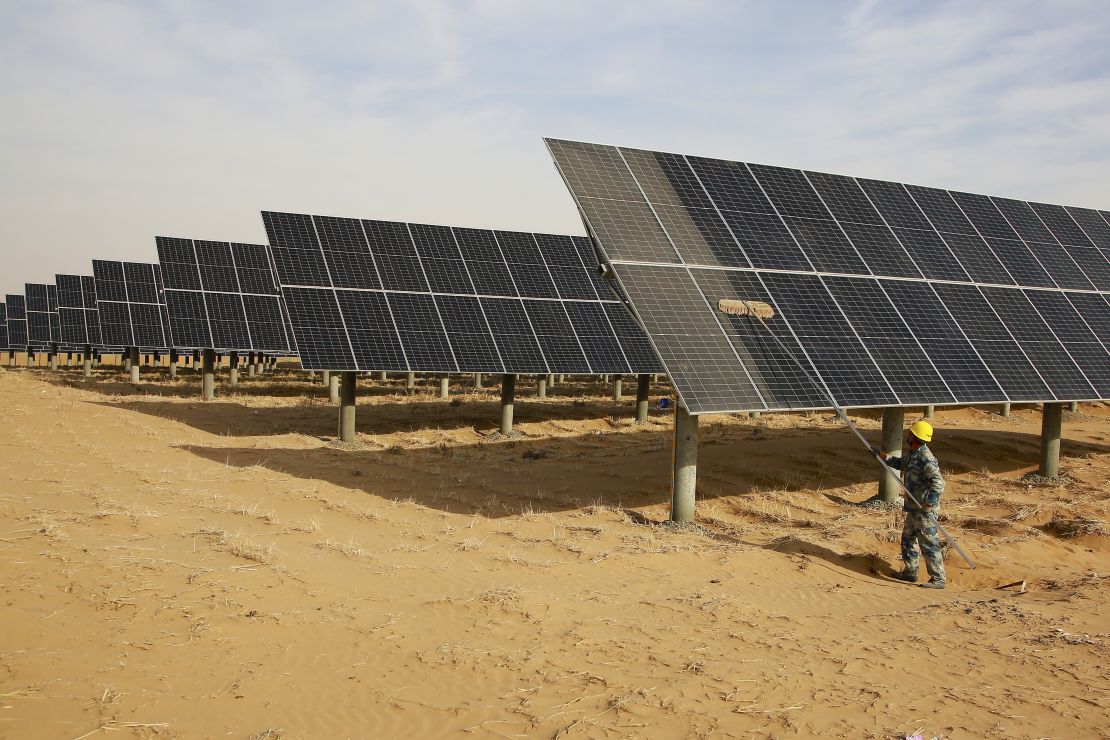
A worker cleans solar panels at a new energy base of Tengger Desert on December 9, 2023 in Zhongwei, Ningxia Hui Autonomous Region of China.

As the need to rapidly wean off planet-heating fossil fuels becomes increasingly urgent, there have been some clean energy bright spots around the world.

On Halloween, Portugal started a record-breaking streak. For more than six days straight, between October 31 to November 6, the nation of more than 10 million people relied solely on renewable energy sources — setting an exciting example for the rest of the world.

The year 2023 is on track to see the biggest increase in renewable energy capacity to date, according to the International Energy Agency.

China, the world’s biggest climate polluter, has made lightning advances in renewables, with the country set to shatter its wind and solar target five years early. A report published in June found that China’s solar capacity is now greater than the rest of the world’s nations combined, in a surge described by the report’s author, Global Energy Monitor, as “jaw-dropping.”

It can’t be ignored, however, that China also ramped up its coal production this year, turning to the fossil fuel as devastating heat waves increased energy demand for air conditioning and cooling, and as persistent drought in the country’s south impacted hydroelectric supplies, which are reliant on sufficient rainfall.

Hopes were raised that the country’s coal production will peak and come down soon, when China and the US in November announced they would resume cooperation on climate change, pledging a major ramp-up of renewable energy, specifically to replace fossil fuels.

A climate deal that targets fossil fuels

COP28 President Sultan al-Jaber, right, celebrates passing the global stocktake with United Nations Climate Chief Simon Stiell, left, and COP28 CEO Adnan Amin during a plenary session at the COP28 U.N. Climate Summit, Wednesday, Dec. 13, 2023, in Dubai, United Arab Emirates.

After more than two weeks of fraught negotiations, the COP28 climate summit in Dubai concluded in December with nearly 200 countries making an unprecedented commitment to move away from fossil fuels.

While the agreement fell short of requiring the world to phase out coal, oil and gas — which more than 100 countries had supported — it did call on countries to “contribute” to a “transition away from fossil fuels in energy systems.” This marked the first time that all fossil fuels, the main drivers of the climate crisis, were targeted in a COP agreement.

COP28 President Sultan Al Jaber, who presided over the negotiations, called the agreement “historic,” adding that the deal represented “a paradigm shift that has the potential to redefine our economies.”

How impactful this deal ultimately is will depend on what countries do next to implement it. Many experts warned of loopholes that could leave the door open to a continued expansion of fossil fuels.

But that a deal was struck at all on fossil fuels was widely welcomed seen as a breakthrough.

“We got people to do things they haven’t done before,” US climate envoy John Kerry told CNN’s Christiane Amanpour after the summit, describing it as a “historic success.”

Plummeting deforestation in Brazil

Aerial view of the city of Parauapebas surrounded by Amazon rainforest, in Para state, Brazil on May 17, 2023.

After years of soaring deforestation in the Brazilian Amazon, there was good progress this year in reducing forest destruction.

The Amazon is the world’s biggest rainforest and its protection is seen as vital to curbing climate change. It acts a carbon sink that sucks in planet-heating pollution from the atmosphere. When forests or trees are destroyed, they emit greenhouse gases. Deforestation and land degradation is responsible for at least one-tenth of the world’s carbon pollution.

Deforestation in Brazil fell by 22.3% in the 12 months through July, according to data from the national government, as President Luiz Ignácio Lula da Silva started to make progress on his pledge to rein in the rampant forest destruction that occurred under his predecessor, Jair Bolsonaro.

Marcio Astrini, head of advocacy group Climate Observatory, described it as an “impressive result” that “seals Brazil’s return to the climate agenda.”

Still, Brazil’s deforestation rate remained nearly twice that of its all-time low in 2012. Around 9,000 square kilometers of rainforest were destroyed in the period. There’s a long way to go to meet Lula’s pledge to reach zero deforestation by 2030.

The ozone layer is healing well

The Earth’s ozone layer is on track to recover completely within decades, a UN-backed panel of experts announced in January, as ozone-depleting chemicals are phased out across the world.

The ozone layer protects the planet from harmful ultraviolet rays, but since the 1980s, scientists have warned about a hole in this shield due to ozone-harming substances, including chlorofluorocarbons (CFCs), which were used widely in refrigerators, aerosols and solvents.

International cooperation has helped stem the damage. A deal known as the Montreal Protocol, which came into force in 1989, began the phase-out of CFCs. The ozone layer’s subsequent recovery has been hailed as one of the world’s greatest environmental achievements.

If global policies stay in place, the ozone layer is expected to recover to 1980 levels by 2040 for most of the world, the assessment found. For polar areas, the timeframe for recovery is longer: 2045 over the Arctic and 2066 over the Antarctic.

A study published in November, however, cast some doubt on this progress. The paper, published by Nature Communications, found that a hole in the ozone layer over the Antarctic “has not only remained large in area, but it has also become deeper throughout most of the Antarctic spring.” But some scientists were skeptical of the study’s findings, saying it relied on too short a time period to draw conclusions about the layer’s long-term health.

Electric vehicle sales surge

EV sales have surged to a record high in America this year.

The popularity of electric vehicles has surged this year, with American sales at an all-time high. People in China and Europe are snapping up EVs in large numbers as well.

Electric vehicles — which are better for the planet than gas and diesel-powered cars when they run on renewable energy sources — are key to decarbonizing road transport, which is responsible for around one-sixth of planet-heating pollution globally, according to the International Energy Agency.

Americans purchased 1 million fully electric vehicles in 2023, an annual record, according to a report from Bloomberg New Energy Finance.

Electric vehicles accounted for about 8% of all new vehicles sales in the US during the first half of 2023, according to the report. In China, EVs accounted for 19% of all vehicle sales, and worldwide, they made up 15% of new passenger vehicle sales.

EV sales in Europe were up 47% in the first nine months of 2023, according to data from the European Automobile Manufacturers Association (EAMA). However, car dealers have warned that sales are dropping off as consumers wait for cheaper models, expected in two to three years’ time.

CNN


In order to make your EV green-energy approved, you’ll need to charge it using a renewable energy source. Solar panels are one way to accomplish that.

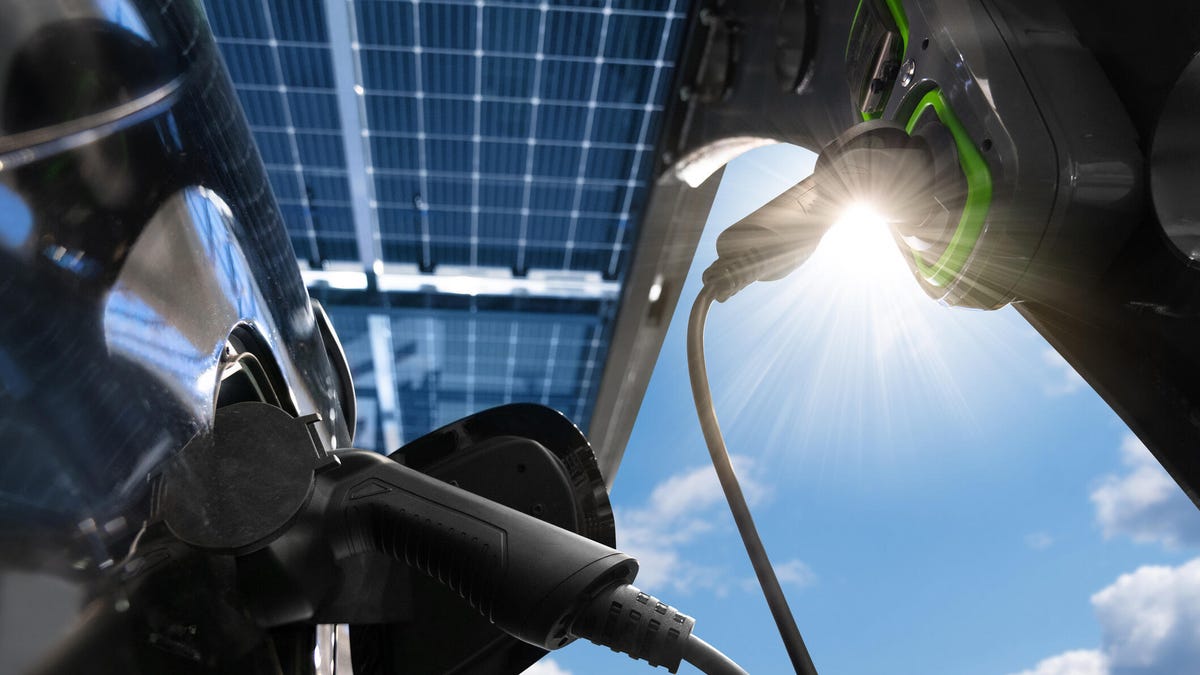
Close up view of an EV charging using a solar car port
Charging your electric car at home will only increase your electric usage unless you add another renewable energy source, such as solar panels, to offset it.

For the eco-conscious EV driver, an electric vehicle is only as clean and green as the source of electricity charging its battery.

That’s because EVs plugged into the grid can either be powered by “dirty” sources such as fossil fuels such as coal, or from “clean” renewable energy that comes from sources such as solar, hydro or wind power. With many utilities, it’s likely to be a mix of renewables and fossil fuels. The best way to ensure your EV is actually powered by renewable energy is to connect your home’s EV charger to a solar energy system or use a public charger also sourced by solar panels. 

With spiking gas and electric prices and an intensifying climate crisis, it’s no wonder the solar and electric vehicle industries are gaining in popularity each year.  Rooftop solar panel installations are breaking records, and US EV adoption is expected to accelerate — predicted to reach 40% of passenger car sales by 2030, according to the US Bureau of Labor and Statistics

Forget the statistics, it’s in plain sight and we can’t ignore it. EV charging stations are becoming the norm, automakers are making headlines as they invest in new EV technology, and rooftop solar panels are also becoming commonplace to see. 

Even with the upswing in EVs and home solar systems, switching from a combustion car to an electric vehicle, however, can be a complicated decision with considerations conventional car drivers don’t have to worry about, like installing a charger in your garage. Adding solar panels to the equation adds even more layers of complexity to an already significant investment.

Here’s what you need to know about powering your home and EV with solar panels and how many you’ll need if you do.  

Why use solar panels to charge an electric vehicle (EV)? 

There are some less obvious benefits to home solar charging in addition to watching free, clean electrons pulled from the sky streaming into your car’s battery. 

Most home EV chargers treat your car like any other appliance that needs to be plugged in and charged overnight. Actually, it’s more like a quite needy appliance that requires a particular current (DC) and lots of it as quickly as possible, which can mean operating at high voltage. 

All of this increases strain on the grid and can add a load to your home’s electrical system, especially if your wiring is older or in need of upgrading. In the worst cases of neglect or poor electrical work, it can even be dangerous. 

Using solar panels to charge an EV actually streamlines the charging process because both systems speak the same electrical language, in a way. 

As Wyldon Fishman, founder of the New York Solar Energy Society, explained, solar panels and electric vehicles both operate with direct current (DC), meaning there’s no need to install an inverter between your panels and EV, although a charge controller is still imperative to have in the circuit. DC can also run at lower, safer voltages. 

Relying on solar panels rather than the grid to charge your electric vehicle also means not having to worry about being stuck at home with a dead battery if the power goes out, especially if you opt to pair your panels with a battery or other solar storage. 

Home electricity scheme with battery energy storage system on modern house photovoltaic solar panels and rechargeable li-ion backup. Electric car charging on renewable smart power off-grid system.
A home’s energy set up could consist of solar panels, battery storage, inverter and an EV charger. Depending on the consumption, size, efficiency and how many panels you get, this equipment could accommodate all or some of this home energy production.  – Getty
How much energy is needed to charge your EV at home?

First, consider your goals for your solar charging system. Do you want to charge your car using your solar panelsand will you primarily be charging overnight? If so, you’re going to need to install a battery or other storage system. 

In most cases, you’re likely to have a solar system that’s hooked into the grid as well as your home, perhaps with a connected battery for emergency backup, or not. 

If this is your scenario, it could be helpful to know how much of your existing solar output the rest of your home is consuming. If you never pay a utility bill or your utility bill is primarily for nighttime or cloudy days (when your solar panels aren’t at work), this means your existing solar system is probably producing more than you need and the extra is being fed into the grid or a battery or both. Some of this excess energy could be used to charge your EV, meaning you will need fewer solar panels to drive a fully solar-powered car. 

Once you’ve got an idea of whether you’re running a solar surplus, the next step is determining how much additional demand an EV will add to your system. 

How many solar panels will I need to charge just my EV?

First, consider how much you typically drive in a day. Put simply, the more you drive, the more wattage you’re likely to need in panels. 

Here’s the steps to figuring out how your average daily energy needs to power an EV. 

Step 1. Determine how many kilowatt-hours your EV uses per mile. The EPA and US Department of Energy’s fueleconomy.gov site lists the estimated efficiency of all electric cars in kWh per 100 miles; simply divide by 100 for a per-mile estimate.

Step 2. Multiply your EV’s kWh/mi by the number of miles you anticipate you drive on an average day. (You can get your average daily miles by observing your driving habits for a few days or by dividing your annual observed mileage by 365). This gets you the total number of kilowatt-hours you’ll need to produce to power your daily driving.

Step 3. You can then divide the EVs needed kilowatt-hours by the number of peak sun hours you can expect to receive at your location each day. 

Step 4. The final figure should give you the size of your ideal EV-charging solar array in kilowatts.

Step 5To calculate the number of panels you’ll need, the wattage of the solar panel comes into play. The most efficient solar panel wattage can range from 370 to 465 watts. After you choose your best solar panel brand, convert the panel wattage of the panel to kilowatts by dividing by 1,000.

Step 6. Final math is to divide the EV kWh requirements by the solar panel efficiency in kWh to get the number of panels needed to charge the EV. 

The formula:
  1. kWh/mi for your EV x average miles driven in a day = total kWh production for the EV 
  2. Total kWh production needed for EV / local peak sun hours = size of ideal solar system (in kW)
  3. Convert the solar panel wattage of the brand of choice to kilowatts by dividing by 1,000. 
  4. EV production needed (in kWh per day) / panel efficiency (in kWh) = number of solar panels needed
Example math: 

Take the example of the Hyundai Ioniq 6, the most energy efficient electric sedan on the road today:

Step 1. According to fueleconomy.gov, it averages 24 kWh/100 mi or 0.24 kWh/mi

Step 2. We’ll also use the EPA’s average mileage estimate of 15,000 annual miles, which works out to around 41 miles per day

Step 3. 0.24 kWh/mi x 41 miles = 9.86 kWh daily power EV usage

Step 4. 9.86 kWh / 4 peak sun hours = 2.4 kW  (This is how much solar energy in kW you will need to charge your EV). 

Step 5. We will use a solar panel wattage of 410W, such as the Q.PEAK Duo Black from Qcells, to calculate the number of panels needed for the Hyundai Ioniq 6. Convert the 410W to kilowatts by dividing by 1,000 (0.41 kW). 

Step 6. EV production needed to charge the Hyundai Ioniq 6 (in kWh per day) / energy needed per Q.PEAK Qcells solar panel) = number of solar panels needed. 2.4 kW / 0.41 kW = 5.85 solar panels

In this example, six Qcells solar panels are needed to accommodate the energy needs of the Hyundai Ioniq 6 with average driving habits. Six Qcells solar panels don’t accommodate the rest of the home’s energy consumption. 

Meanwhile, at the other extreme, dropping the Ford F-150 Lightning‘s 48 kWh/100 mi into the same formula yields a daily energy use of 19.68 kWh and a 4.9 kW solar requirement, doubling the Qcells solar panels needed to 12 panels. 

If that’s too much math, Fishman simply recommends putting around  eight to 12 solar modules on a canopy that you can use as a solar carport

“It’s about 2.5 kilowatts that you need for a canopy. You might go a little more, but that’s all you need,” Fishman said.

We’ve seen others in the industry put the figure at closer to 3 kW, but if you’re unsure, you can run through all the math for your situation. 

How many solar panels will I need to power my whole home?

This basically comes down to figuring out your home’s total energy needs and then designing a solar array that can meet those needs. 

To calculate how many solar panels your home will needDesired energy production (kW) / Solar panel wattage (kW) = Number of solar panels needed

There’s a lot of things to consider to determine both sides of this equation, and CNET goes into further detail on the subject here. Adding EV chargers to your home simply means adding more energy use to both sides of the equation. 

Most reputable solar companies will help you work out your energy needs and propose a solution that they will surely be willing to install for you. But doing the math on your own as well can help you make the most informed choice when it comes to picking an installer and assisting in designing a system that meets your needs best. 

Don’t forget that there are other things you might want to do before even beginning to consider solar for your home. Making energy efficiency improvements can go a long way toward shrinking your overall needs and thereby shrinking the size of the solar system you require.  

Is it worth it to add more solar panels to accommodate an EV?

Adding more panels to your existing solar system or to one that you’re planning is one way to power all your home’s energy needs, including your EV. But it isn’t necessarily the only way to charge your EV.  You can also build a stand-alone off-grid system that’s dedicated to just your car. 

Fishman recommends building a carport topped with solar panels at just the right tilt to get a good amount of sun on average, based on your location on the globe. 

“A carport is fixed at latitude,” she explained. “So if you’re at 42 degrees above the Equator, then your tilt for your solar modules is 42 degrees.”

Which comes first: A solar panel or EV purchase?

If you’re dedicated to renewable energy and kicking fossil fuels to the curb, it makes sense to have your solar system all setup before you spring for the EV so you never have to worry about charging your car from dirtier energy sources that mix with renewables on the grid. 

But the reality for many people will be that an EV and home solar energy are two very costly investments. A car or EV tends to be a personal purchase that we spend a lot of time in, whereas energy is a readily available commodity that we tend to think about less. So it wouldn’t be surprising for people to prioritize a flashy new EV over adding solar panels to a home that already has access to electricity via the grid. 

Ultimately, it comes down to your priorities and your situation. Maybe your utility is good about incorporating solar into its energy mix via its own solar farm systemsrenewable energy credits or offering a community solar program. If so, you might have fewer qualms with plugging in your car at night, no matter how many panels are on the roof.  

CNET

Dear Editor,

Jamaica’s energy landscape stands at a crossroads as nuclear power is being considered.

In response to the Jamaican Government’s intention to explore nuclear energy, the expressed concerns of authors like Trevor Noel Blair and Ambassador Byron Blake, Jamaica’s former deputy permanent representative to the United Nations, underscore the potential drawbacks.

Blair elucidates issues concerning radioactive waste disposal, water consumption, and the risk of environmental disasters, while Blake highlights the challenge of finding suitable locations for nuclear power plants and emphasizes the importance of thorough consultation before making irreversible commitments.

Conversely, other contributors, like Haile Dennis, advocate for the potential benefits of nuclear power, focus on the safe management of radioactive waste, water usage, and the potential for reliable energy generation. Their opinions underscore the need for informed decision-making in the pursuit of a sustainable and resilient energy future for Jamaica.

Reforming the Electricity Act of 1995 is still essential. To foster renewable energy adoption, it is plausible to make solar panels and alternative energy generation methods economically more accessible, if not free. This move can ignite a green energy revolution. Simultaneously, registering electricity generation with the Government and introducing sensible taxation mechanisms ensure fair distribution of costs and benefits among Jamaican citizens.

Furthermore, decentralisation is the way forward. Removing houses from the grid and encouraging independent power generation aligns with the growing power needs of electric vehicles (EVs), which have become more commonplace.

A substantial reduction in the oil bill is on the horizon. As battery-swapping stations powered by alternative energy emerge, the transition to cleaner transportation is accelerated. For a sustainable future we recommend a bold step: make all vehicles imported after 2025 electric. This approach complements the evolving green energy grid, aligning with global sustainability goals.

Nuclear energy should be approached with caution, addressing the concerns raised by critics. The alternative is to transform Jamaica’s energy landscape by making renewable energy accessible, promoting decentralised energy generation, reducing the oil bill, and spearheading the transition to electric vehicles. This holistic strategy ensures a more sustainable and independent energy future for Jamaica.

L H Deer

Physics and integrated science teacher

Tivoli Gardens High School

Jamaica Observer

Jamaica's justification for the request included reference to the national energy policy, reducing carbon emissions and in particular, the goal to have 50 per cent renewable energy for electricity generation by 2030
Jamaica’s justification for the request included reference to the national energy policy, reducing carbon emissions and in particular, the goal to have 50 per cent renewable energy for electricity generation by 2030

CARICOM’s trade body is set to approve an extension of the suspension of a tax on Jamaica’s importation of nine renewable and energy efficient technologies, including lithium-ion batteries, from outside the region.

A two-year suspension of the Common External Tariff (CET) is due to end December 31. 

But Jamaica’s energy ministry has asked the Council for Trade and Economic Development (COTED) to keep the suspension in place for another two years, from January 1, 2024 – December 31, 2025.

That request was given favourable consideration at last week’s meeting of technical officials ahead of the November 27-28 meeting of CARICOM trade ministers under COTED, which has the authority rule on the matter. 

The CET is applied by all participating countries on select products. It effectively raises the price of imports from outside of the region, giving internally manufactured products a competitive advantage.

The treaty that governs CARICOM allows for a suspension for a variety reasons, including in instances where there is limited supply of product critical to a country’s economic development. 

Jamaica’s justification for the request included reference to the national energy policy, reducing carbon emissions and in particular, the goal to have 50 per cent renewable energy for electricity generation by 2030.

It also pointed to the recent adoption of the electric vehicle and the energy efficiency and conservation policy and guidelines for public facilities, specifically for schools and hospitals. 

Jamaica said the waivers would also assist consumers to finance the investment cost and increase the growth rate of installations and further that the targeted technologies are not being produced in Jamaica and the quantity of any of the products being produced does not satisfy the demand of the Jamaican market. 

The energy ministry said it consulted with private and public sector stakeholders – the Jamaica Renewable Energy Association, the Consumer Affairs Commission, the Bureau of Standards Jamaica; the Jamaica Customs Agency and the Ministry of Finance and the Public Service. 

Jamaica’s electricity sector mix was supplied by 34 per cent fossil fuels, 53 per cent Liquefied Natural Gas and 13 per cent renewable energy in 2022, according to the ministry. 

Renewable energy and energy efficient technologies on Jamaica’s priority list 

1. Compact fluorescent lamps

2. Air conditioning and chillers with rotary screw compressors

3. (Electric) vapour absorption refrigeration systems

4. Thermal storage air conditioning systems.

5. Ice thermal storage air condition systems

6. Solar water heating mounting accessories

7. Other accumulators – rechargeable batteries for renewable energy systems (photovoltaic systems)

8. Absorption refrigeration equipment and materials utilising solar energy 

9. Lithium-ion batteries. 

Gleaner

PROSPECT, Westmoreland — Minister of Science, Energy, Telecommunication and Transport Daryl Vaz says his ministry is currently looking into the issue of some insurance companies’ refusal to insure electric vehicles (EVs).

The minister said he was hearing for the first time about the issue, which was brought to his attention last week in a Jamaica Observer business report.

“It is something that the ministry is looking into, based on the complaint that was made. But the policy, as it stands, does allow for used and new electric vehicles,” stated Vaz.

In the Observer article, published last Wednesday, a lecturer in the Department of Life Sciences at The University of the West Indies, Mona, Dr Dwight Robinson said he purchased an EV in September but was unable to get it insured comprehensively with his insurer, Insurance Company of the West Indies (ICWI).

According to the article, president of ICWI Paul Lalor said the company would only refuse to insure an EV if it is a car imported by an individual or entity that is not one of the registered new car dealers, or if it is an imported used EV.

Said Vaz: “The insurance company has the right to decide whether they want to insure or what type of vehicle — whether new or used — but the bottom line is that the policy, which is what… [Government] is responsible for, allows for both. So, it is something that we will have to look into to see exactly what the issues are,” stated Vaz.

“I suspect that the issue of the charging of the electric vehicles and the fact that there has been some reported incidents of fire — which obviously nobody knows what the true situation is in terms of the cause of the fire — [might be the cause of this decision by the insurer],” said Vaz, noting that the Government will speak on the matter in due course.

In the article, Robinson said the issue is something Government should look into, considering its push for EVs.

In June of last year Cabinet approved a policy to incentivise the importation of EVs. Government had also announced that it is making adjustments to the Motor Vehicle Import Policy to accommodate an EV concessional rate of 10 per cent.

Vaz, asked if the development is a blow to Government’s push for EVs, said, “No, because the truth of the matter is that EV is a new technology. And I believe that once it shows that it can perform and that the vehicles are roadworthy, and of course safe, the panic and the concerns will die down.”

Jamaica Observer