JAMAICA’s Ministry of Industry, Investment and Commerce (MIIC) on Monday announced that the Caricom Secretariat has authorised the suspension of the Common External Tariff (CET) in respect of the importation of lithium-ion batteries into Jamaica.

This decision follows an intervention made by Senator Aubyn Hill, the minister of industry, investment and commerce, at the 57th meeting of the Caricom Council for Trade and Economic Development (COTED) on November 27, 2023, in addition to subsequent bilateral consultations between Jamaica and Barbados. It marks a pivotal development in fostering a conducive environment for investments in Jamaica’s renewable energy sector.

“The suspension of the CET is effective from February 2, 2024 to February 1, 2025, for a quantity of 240,000 lithium-ion batteries. Jamaica will continue to monitor the industry and utilise the mechanisms available under the Revised Treaty of Chaguaramas to verify and determine regional capacity to supply the product in the coming months. This will be an important factor in examining the scope critical for a renewal of the CET suspension,” according to a release from the MIIC on Monday.

The release said the collaborative efforts of representatives from MIIC; Ministry of Science, Energy, Telecommunications and Transport; Ministry of Foreign Affairs and Foreign Trade; and Ministry of Finance and the Public Service were integral to the successful negotiations.

“The Caricom Secretariat also played a vital role as facilitator. In addition, guidance was sought from the Attorney General’s Chambers and the Jamaica Customs Agency. These collective actions align with the provisions outlined in the Amended Article 83 of the Revised Treaty of Chaguaramas, regarding the operation of the Common External Tariff. This article stipulates that any alteration or suspension of the Common External Tariff on any item shall be decided by COTED in situations where the product is not being produced in the [Caribbean] Community, the quantity of the product produced in the community does not meet demand, or the quality falls below the community standard,” said the release.

It also said that the Ministry of Industry, Investment and Commerce, acting as the authorised body responsible for engaging with COTED on Jamaica’s behalf, played a pivotal role in securing the favourable outcome. Every effort was made by the MIIC and other GOJ representatives to expedite the assessment of Barbados’s capacity to supply the product and to engage the Caricom Secretariat for a speedy resolution.

In expressing his satisfaction with the decision, Hill said: “This approval is not just a win for the renewable energy sector but a testament to our commitment to creating a sustainable and innovative future. The discussions with Caricom and the successful negotiation of the CET suspension underscore our dedication to fostering a clean energy landscape in Jamaica. We are pleased that this decision will not only boost the renewable energy sector but will contribute significantly to Jamaica’s overall commitment to a greener and more sustainable future.”

Jamaica Observer

Minister of Industry, Investment and Commerce Senator Aubyn Hill has shot back at claims that a delegation he led to the last meeting of the Caribbean Community (Caricom) Council on Trade and Economic Development (COTED) did little to preserve a common external tariff (CET) waiver on the importation of lithium-ion batteries. Lithium-ion batteries are used to store the excess power produced by solar photovoltaic systems.

Speaking to the Jamaica Observer last Friday following a press briefing held at Kingston Wharves Limited in conjunction with the European Union, Hill said he challenged COTED’s decision when he attended the meeting.

“I was there; I pushed back when Minister [of State in Foreign Trade and Business Sandra] Husbands from Barbados raised the issue. I raised the issue that the technical team representing Barbados…did not raise the issue. I raised the issue and objected,” he asserted.

Documents submitted to the Business Observer reveal that at the COTED meeting held November 27-28, 2023, in Georgetown, Guyana, the Jamaican delegation submitted a “Request for Approval of the Suspension of the CET on a Priority List of Renewable Energy and Energy Efficient Technologies”, citing the need to increase the penetration of renewable energy sources and greater adoption of energy efficiency measures in order to reduce the country’s carbon emissions.

The application for the roll-back on the 20 per cent charge would apply to compact fluorescent lamps, vapour absorption refrigeration systems, thermal storage air conditioning systems, rechargeable batteries for renewable energy systems (photovoltaic systems), among others. The council however refused to approve the suspension of CET on lithium-ion batteries, nothing that “Barbados indicated its ability to supply 240,000 lithium-ion batteries… as requested by Jamaica, for the period 1 January 2024 to 31 December 2025”.

The documents did not identify the name of the Bajan company that has offered to supply the Caricom Single Market with the batteries, but checks have revealed that Meritsun Power is the only supplier of that type of energy storage unit in the Eastern Caribbean island.

However, according to Alex Hill, president of the Jamaica Renewable Energy Association (JREA), “The Ministry of Science, Energy, Telecommunications and Transportation (MSETT) is choosing to protect the name of the company in Barbados instead of sharing it with stakeholders in the sector. This company formally approached COTED and stopped our local tax incentives and therefore should not be protected by our Government. Their name should be publicly available so that importers in Jamaica can contact them and make orders from them. After all, they are now the preferred supplier for the region.”


Questions arising

The decision of COTED and what was deemed the inaction of Minister Hill and his team have been met with ire by both the JREA and the Opposition People’s National Party.

Noting concerns being raised in the renewable energy industry, Opposition spokesman on investment trade and global logistics Anthony Hylton questioned why a last-minute submission by Barbados was allowed to block Jamaica’s request for CET exemption.

Moreover, he underscored, “It is the practice that a request for suspension is not denied without prior evidence resulting from an investigation by the Secretariat technical staff that the Caricom producer satisfies at least 75 per cent of the product demand in Caricom.”

In an e-mail to the
Business Observer, JREA President Hill, who is the son of Minister Aubyn Hill, argued, “We know that this company cannot do what they purport to do because Barbados does not have known lithium deposits, industrial lithium processing or commercial manufacturing facilities for lithium batteries. As a point of reference, Jamaica imported approximately 11,000 lithium-ion batteries for renewable energy purposes between 2021 to 2022.”

He added: “The Jamaican delegation that attended this past COTED meeting should have vehemently rejected any suggestion by the Barbadian delegation that a single company could supply the needs of Jamaica without first reviewing the technical aspects of their product offerings, their manufacturing capability and standards. That is what the stakeholders in the renewable energy sector expect from their Government, to protect our local industry players and the Jamaican citizens who have spoken with their wallets and are purchasing lithium-based battery energy storage systems en masse. These taxpaying citizens should not bear the brunt of a 20 per cent tax because a no-name company, without a track record, or even a website, makes an erroneous claim that they can supply the needs of the Jamaican market.”

The JREA president further pointed out, “It has been reported that the Trinidadian Government has chosen not to implement the 20 per cent tax as the company in Barbados has not yet been able to substantiate their claims.”

With this is mind, he questioned why the Government has quickly implemented the CET in an “unplanned manner” and what timeline MSETT has in mind to request a revocation of the CET. This question was posed on Friday to Minister Hill.


Next steps

In his response, the minister said his portfolio ministry has alongside MSETT investigated the claim made by the Barbados company of its capacity to supply lithium-ion batteries to the region.

“A position is coming out very shortly,” he told the
Business Observer, adding: “What we were arguing is that they’re not manufacturers of [lithium-ion] batteries.”

Based on COTED rules, a company’s market share can be protected with the application of a CET on similar products imported from outside the region once it can prove that it can adequately supply the Caricom Single Market. Additionally, the entity must show that it is engaged in the manufacturing of the product with most of the raw materials originating from the region.

Highlighting that he has written to the Caricom Secretariat to object to the CET, Minister Hill explained that the objection is accompanied by a request for the exemption to the tariff to be reinstated for the period January 1, 2024 to December 31, 2025. Additionally, he said that his ministry will present its findings to the Caricom Secretariat by latest next week.

Notwithstanding, the younger Hill, who is the managing director of IREE Solar, noted what he called a “condescending lack of communication” from MSETT.

“It is only exacerbated because the JREA was preemptive in requesting planning meetings with the MSETT team and, as such, the MSETT team had clear data and a plan going into this last COTED meeting to have the incentives extended. Furthermore, this decision was arrived at during the November 2023 meeting of COTED, but all stakeholders were informed of the decision by a newspaper article on the 28th December, 2023; a mere three days before the tax was to be applied. There was no proper communication with investors, project developers, importers or purchasers, and no planning period given to the industry. This cannot be the proper manner in which to conduct business in the energy sector in [2024],” he stated.

He continued: “In conclusion, it is evident that whatever regulations and rules that are currently being used to govern objections to incentives at COTED, and the application of CET to energy, efficient and renewable energy items is flawed, ineffective, and needs to be overhauled immediately. No company from any Caricom nation should be allowed to object without formally submitting specific data surrounding their ability to manufacture on scale, their product/s’ technical specifications and other pertinent business details. There must also be punitive measures applied against that single company and/or the government representing said company if their claims are untrue and fall short of their stated intent. Millions of Caricom citizens should not be expected to bear the burden of a tax during the deliberation stage of these incentive negotiations. That is unfair and illogical.”

In June 2022, after much agitation from the JREA, Jamaica’s Minister of Finance and the Public Service Dr Nigel Clarke announced the removal of both GCT and CET on lithium-ion batteries – the latter being due to an approval from COTED. However, when contacted by the
Business Observer last week, he clarified that matters under COTED are handled by the Ministry of Industry, Investment and Commerce. Additionally, he outlined that once COTED has reached a decision, it is binding on all Caricom member states and so the tariff on lithium-ion batteries will have to be reinstated.

Another insider from the JREA has indicated that the Ministry of Foreign Affairs and Foreign Trade will also submit a request to COTED for the reversal of the decision to impose the tariff.

Jamaica Observer

The government says it’s seeking a revision of the Council for Trade and Economic Development, COTED’s, decision not to extend the suspension of the Common External Tariff on Jamaica’s importation of lithium-ion batteries from outside the Caribbean.

COTED is the organisation responsible for the promotion of trade and economic development within CARICOM.

At a meeting held by COTED in November last year, the Ministry of Science and Energy requested that the suspension of the tariff on Jamaica’s importation of nine renewable and energy efficient technologies be extended until December 2025.

Among the technologies listed were lithium-ion batteries.

The previous two-year suspension ended December 31 last year.

However, according to the ministry, COTED decided not to grant the extension as a result of the Barbadian government indicating that a company located in the eastern country was able to supply the quantity of lithium-ion batteries being requested for tax exemption.

The ministry says following an assessment of the company, it was determined that the lithium-ion batteries on Jamaica’s priority list were different from those supplied by the Barbadian company.

It noted that the company’s existing production capacity amounted to only 1.5 per cent of the lithium-ion battery imports, particularly for use in renewable energy systems.

According to the ministry, the decision not to suspend the tax on the batteries did not sufficiently consider the rules of origin under the Revised Treaty of Chaguaramas and the production and export capabilities of the Barbadian company.

The ministry says it requested a revision of the council’s decision in mid-January.

While acknowledging the importance of COTED’s decision to Jamaica’s renewable energy sector, the ministry says it’s committed to working closely with its partner Ministries to have the decision reconsidered.

Abigail Bartley reports.

Nationwide Radio

The company from Barbados has been asked to provide the relevant information by no later than January 5, 2024


The Ministry of Science, Energy, Telecommunications and Transport has advised that a 20 per cent tariff will be applicable to the importation of lithium-ion batteries from outside the CARICOM region as of January 1.

A two-year suspension of the common external tariff (CET) is in place until the end of December, and Jamaica requested a further two year extension at a November meeting of the Council for Trade and Economic Development (COTED).

However, the ministry said in a media release on Friday that a Barbados-based company has objected to Jamaica’s application, indicating through the Barbados government that they produce the type of lithium-ion batteries being requested for CET suspension.

The  ministry said the necessary due diligence is now being done by the Jamaican authorities to assess the Barbadian company’s certificate of origin and their ability to meet the specifications and provide the quantities required by Jamaica’s renewable energy sector.

The company from Barbados has been asked to provide the relevant information by no later than January 5, 2024, to allow for the preparation of the Government of Jamaica’s response to COTED.

“Due to the objection raised by the Barbadian company, a 20 per cent CET will be applicable to the importation of lithium-ion batteries from outside the region as of 1st January 2024. While the country’s renewable energy stakeholders should remain guided by the Jamaica Customs Agency, it should be noted that only lithium-ion batteries imported for use in solar applications will be exempt from GCT,” the ministry stated.

The CET is applied by all participating countries on select products. It effectively raises the price of imports from outside of the region, giving internally manufactured products a competitive advantage.

Gleaner

A year into the implementation of the Government’s concessions on electric vehicles, new data show that EV imports soared to $9 billion over the period July 2022 to June 2023, as import volumes doubled year on year.

In a move aimed at softening the country’s dependence on petroleum for motor vehicles by making it more affordable for Jamaicans to acquire electric vehicles, the Government slashed the import duty on a limited number of electric vehicles from 30 per cent to 10 per cent and has removed licence fees for EVs. About a third of petroleum imports are used for transportation in Jamaica.

The concessionary measures took effect In July 2022 and will run to July 2027, but since then, EV imports have continued to rise, according to data requested by the
Jamaica Observer on electric vehicles including hybrids fromthe St atistical Institute of Jamaica (Statin).

For the year, July 2022 to June 2023, Jamaica imported 6,606 electric vehicles valued at $9.1 billion, more than double the 2,854 EVs imported a year earlier between July 2021 and June 2022 when the EVs imported were valued at $4.4 billion. Data provided by Statin only goes up to July 2023. Still, in that single month, Jamaica imported its highest quantity of EVs, totalling 951 units, which were valued at $1.5 billion. Still, despite doubling in the year to July 2023, EV imports were still just 16 per cent of the total $56 billion worth of vehicles imported into Jamaica in the same 12 months period.

While the data suggest that the EV market in Jamaica is slowly gaining some traction, key players in the industry have mixed reactions to the market’s performance, with at least one player — Andrew Jackson of Jetcon Corporation — taking the decision to minimise his company’s EV inventory.

“The EV market is dead. I’ve had EVs just sitting on the lot losing value, and even after cutting the price, they still weren’t moving. After about a year we got an offer from a company and we decided to take the deal,” Jackson told the
Jamaica Observer.

Jetcon is one the first used car dealers to dabble in the EV market. The company ordinarily stocked roughly 10 of the Nissan Leaf first-generation EV model, but given his experience with the market, Jackson says while he will still stock some EV units, the number will be fewer.

“I think a large part of the problem is the concession being offered by the Government. It’s a non-starter. It’s not significant enough to make the vehicle affordable for the average consumer and there are too many limits on who can actually benefit from the concession,” he said.

The reduced duties were expected to shave a little over $1 million off the Nissan Leaf, one of the lowest-priced battery electric vehicles available in Jamaica at $5 million, but those savings didn’t materialise for Jackson who said that upon entry into Jamaica he learnt that the vehicles did not fall within the prescribed age range to benefit from the tax break.

“It meant that those savings that I planned to pass on to the consumer were no longer possible,” Jackson said.

Days after the Government announced that it would provide a tax break on imported EVs, business operators, making early moves in the industry, criticised the Government for placing a cap of 1,000 units on the number of vehicles that could benefit from the tax break. Additionally, only electric vehicles below the age of three years could benefit from the tax incentive.

The operators’ initial take was that the measures were counterproductive, adding that the initiative would have a more meaningful impact had the limit been increased to 2,000 units. But Minister Clarke argued that the EV market cap would minimise the tax losses to $18 million over the five-year period.

Group marketing manager at ATL Automotive Limited, Christina Taylor, is also on board with the call for more incentives and has also called for greater clarity on the units which qualify for the duty break. However, EV sales at ATL Automotive are in stark contrast to EV sales a Jetcon.

“There has definitely been an uptick in sales as the price point is more attractive. We’ve introduced a variety of EVs across differing brands — mild hybrids, hybrids, plug-in, e-hybrids, and EVs since 2016, and the adoption, while slow, has increased,” Taylor told the
Business Observer.

She credits much of the improved performance to “lessening hesitancy” in the market as motorists become more aware of the benefits of EVs and the greater development of an ecosystem to facilitate electric mobility in Jamaica.

Jamaica is still in the early stages of adoption, but power provider Jamaica Public Service (JPS) and Evergo Jamaica continue to invest in charging stations. The latest target published by JPS is for the addition of 12 electric vehicle charging stations across the island, bringing to total 22 public electric vehicle charging stations operated by JPS. Later on, JPS is looking to roll out another 16 charging plugs.

Several of the charging stations are being constructed in partnership with gasoline retailers, whose sites host the stations. So far, partners have included Boots Gas Station, Texaco, and Total. Many of JPS’s charging stations are capable of recharging EVs at some of the fastest charging rates on the island.

“Through private sector organisations such as Evergo and JPS Charge N’ Go, the range anxiety that persons have been wary of has lessened as there are almost 100 charging stations island-wide, spanning multiple convenient locations in each parish so persons can charge wherever they go,” Taylor said.

She added that with improvements in technology, older EVs which would only have about 100 km of range are also a “thing of the past”.

“Through advanced technology and improvements in battery power, EVs nowadays can easily do 450 to 680 km, taking you from Kingston to Negril and back,” she said.

“Another hesitation has been the safety of EVs, but people are learning that EVs also undergo rigorous safety tests, just like any normal car. Additionally, through our training department, the ATL Academy, we’ve been working closely with the Jamaica Fire Brigade on how to extract persons from an EV in the event of an accident,” Taylor added.

ATL, which was last named the regional distributor for the BYD fleet of electric vehicles in Jamaica, Trinidad and Tobago, Cayman, Curaçao, Barbados, Aruba, Antigua, Saint Lucia, Guyana, and Suriname, also offers consumers a charger and complimentary installation at a location of their choice, whether at home or the office, as a sweetener for the purchase of any electric vehicle — be it plug-in, e-hybrid, or full EV.

ATL Automotive and Stewart’s Auto Sales Limited are two of the largest dealers of electric vehicles in Jamaica. However, efforts to get a comment from Duncan Stewart, general manager of affiliated company Stewart Motors Limited were unsuccessful up to press time.

EV brands carried by ATL Automotive include Audi, Porsche, BYD, BMW, and MINI. Meanwhile, Stewart’s Automotive represents brands such as Mercedes Benz, Land Rover, Jaguar, Mitsubishi, Suzuki, and Honda bikes.

Jamaica Observer

CLARKE…to ensure there is a return on these projects that need the cost of capital, we need to have what is termed a blended financing arrangement with other streams of capital coming in that have other motives and, therefore, might have different expectations of returns.” (Photo: Joseph Wellington)

THE Jamaica Stock Exchange (JSE) is set to introduce the trading of green and blue bonds as the Government seeks to expand investment opportunities for the private sector. During the 19th Regional Investments and Capital Markets Conference at Jamaica Pegasus hotel in Kingston on Tuesday, Finance Minister Dr Nigel Clarke unveiled plans to launch the financing facilities designed to fund environmentally friendly projects related to climate sustainability and ocean conservation.

“The Jamaica Stock Exchange will become the first stock exchange in the region to facilitate the issuance of green, blue, and coloured bonds,” declared Clarke.

He further disclosed that the finance ministry is collaborating with multilateral and bilateral partners, including International Development Bank (IDB) and International Monetary Fund (IMF), to establish the facilities and have them domiciled in Jamaica.

“Whenever I go on these road shows — whether it’s a deal or non-deal road show — and you give your presentation, they say, ‘Wait a minute, you don’t have any green or blue instruments?’ “ said Clarke in revealing what prompted the financing models.

Recognising a growing trend where more money for emerging markets lies in green and blue investments, with support from Inter-American Development Bank the JSE will be developing the infrastructure on the Jamaica Stock Exchange for the issuance of a green financing facility, and establishing clear criteria to ensure investors know what it means. This initiative is expected to be available by the end of June. The objective, however, is to make both financing and private sector projects in Jamaica accessible while ensuring sustainability.

“To ensure there is a return on these projects that need the cost of capital, we need to have what is termed a blended financing arrangement with other streams of capital coming in that have other motives and, therefore, might have different expectations of returns,” explained Clarke.

While acknowledging challenges faced by small countries in accessing large multilateral sources of financing, Clarke proposed building the necessary facility in Jamaica rather than navigating complex processes elsewhere. In addition to green and blue bonds, the finance ministry is working on a project preparation facility in collaboration with the same group of partners. This facility aims to provide financing for projects undergoing environmental and feasibility studies, addressing the challenges posed by social factors and vulnerability considerations.

 
“We have to take into consideration social factors and the vulnerable; it can be difficult to allocate resources for project preparation for projects that will take five years to come to fruition when you have needs today — that’s why having a dedicated facility where funds are available for project preparation is critically important,” stressed Clarke.

He confirmed the launch of the project and expressed plans to provide more concrete details on capitalisation later next year.

Addressing concerns about crowding out the private sector, Clarke acknowledged the historical role of the country as a ready source of investment, and announced a product coming to market to allow private investors to find every incentive to innovate and generate their projects.

“We plan, over the next 12 months, to bring to the capital markets — by way of a public offering — the Jamaica Mortgage Bank.” He assured, promising further details at a later date.

Highlighting successful government investments including a 20 per cent stake in Trans Jamaican Highway; 10 per cent in South Jamaica Power, an LNG-powered electricity generating plant in St Catherine; and under 20 per cent in Jamaica Public Service Company (JPS), Clarke outlined plans to consolidate these assets into an infrastructure vehicle that will be listed on the stock exchange to allow investors an opportunity to participate and give the private market exposure to infrastructure assets.

“The Government will retain a sizeable stake in this vehicle; this infrastructure vehicle will be partially owned by the Government. At a later time in the future the divestment can be total, but to begin, what we will do is list this vehicle with the Government retaining a large majority stake,” he said.

Clarke, however, declined to say what stake the Government will hold in the vehicle, citing that the initiative is still in the draft stage.

Jamaica Observer 

Solar panels are slowly becoming the new normal, but plenty of questions come with the most accessible form of renewable energy. Are plug-in solar panels any good? How much maintenance do they need? And, most importantly, how long do solar panels last?

There are plenty of hidden costs of home solar panels, but thankfully, frequent replacements aren’t something you’ll need to worry about. According to Sunrun, an industry-leading manufacturer, solar panels are made to last more than 25 years, with many from as early as the 1980s still working today. This Old House corroborates this statistic, saying that while it’s hard to gauge precisely how long solar panels last, many come with 25 to 30-year warranties, ensuring they’ll stick around for the long haul.

So, although you may need to fork over extra cash upfront, installing solar panels is a worthy investment for any household looking to cut back on energy costs. Given that they’ll last you a few decades, you won’t need to constantly spend money to maintain solar panels, and you can do a few things to make them last even longer.

How to make sure your solar panels last long

Solar panels aren’t cheap, and you’ll want your investment in green energy to last as long as possible. Thankfully, they aren’t very fragile either, so barring any unforeseen natural disaster or randomly accurate lightning strike, your solar panels will last you a few decades. But there are a few things you can do to ensure you get the most out of your investment.

First, you want to keep your solar panels clean and clear of any debris. While dirt, grime, pollen, and leaves won’t destroy your panels, large buildups could impact their efficiency. Usually, rain will be enough to get rid of most of these, but regular cleaning with a broom or hiring a professional team will secure your solar panels a long lifespan.

You should also frequently monitor the usage of your solar panels. Sometimes, after a cleaning, solar panels can develop random electrical problems, so if you notice a spike in your utility bill, it’s best to call a professional to check on them. And if your systems have a shut-off switch, make sure it doesn’t accidentally get turned off by yourself, your children, or anyone else. Although useful, if you, your children, or someone else accidentally shut off your solar panels, you likely won’t notice it immediately, which could result in wasting built-up energy generation.

Slash Gear

Brian Hoeppner, right, and Nicholas Hartnett, owner of Pure Power Solar, install a solar panel on the roof of a home in Frankfort, Kentucky, on July 17, 2023. Nations have signed on to triple renewable energy by 2030.

Whenever there is bad news about climate change, people ask: What can be done?

That’s likely to be the case again following Tuesday’s news that 2023 shattered annual heat records.

The European climate agency Copernicus said average global temperatures were 1.48º Celsius (2.66º Fahrenheit) hotter than pre-industrial times. That’s barely within the 1.5ºC international goal countries agreed to in the 2015 Paris climate accord to avoid a world devastated by climate change.

And January 2024 is on track to be so warm that for the first time, a 12-month period will exceed the 1.5º threshold, Copernicus Deputy Director Samantha Burgess said.

Scientists have repeatedly said that Earth would need to average 1.5 degrees of warming over two or three decades to be a technical breach of the threshold.

Scientists and energy experts have long laid out roadmaps – solutions – to reduce greenhouse gases like carbon dioxide and methane that are heating up the planet. And there’s hope for the way forward, the International Energy Agency said in its World Energy Outlook for 2023.

Led by solar and electric vehicles, investment in clean energy has risen by 40 per cent since 2020. Proponents of nuclear power say ramping up that carbon-free source can replace fossil fuels now as a way of making electricity.

Sharp cuts in methane emissions have become a global priority, as shown by the discussions at the United Nations COP28 climate talks in Dubai last month. Each person can also reduce their impact on the environment through the choices they make, whether that’s saving energy at home, switching to an electric vehicle, reducing air travel, or eating less meat and more plant-based foods.

Below is a closer look at all of these solutions.

Renewables roll-out

Nearly 200 countries agreed last month at COP28 to move away from fossil fuels by tripling the use of renewable energy by 2030. It was the first time they’ve made that crucial pledge to transition, but it will require new installations at double the current rate.

UN chief António Guterres said a fossil fuel phaseout is “inevitable”. Scientists overwhelmingly agree the world needs to drastically cut the burning of coal, oil and gas to limit global warming. That’s because when fossil fuels are burned, carbon dioxide forms and is released.

As an example, a 200-megawatt onshore wind project consisting of roughly 50 turbines, on average, avoids the emissions equivalent of taking 100,000 cars off the road or planting 20 million trees, according to the American Clean Power Association. The United States, which has lagged far behind Europe and Asia in building large offshore wind farms, now has two sending power to the grid that could fully open early this year.

New nuclear

To control global warming, the IEA says global nuclear capacity needs to expand by about three per cent each year. The global nuclear industry launched an initiative at COP28 for nations to pledge to triple nuclear energy by 2050. More than 20 have already signed on, including the United States and the host of the talks, the United Arab Emirates.

The World Nuclear Association says this form of electricity can be deployed on a large scale in time to combat climate change by directly replacing fossil fuel plants. Unlike fossil fuel-fired power plants, nuclear reactors do not produce carbon dioxide while operating.

US nuclear companies are also working on the next generation of reactors that are far smaller and cheaper than traditional ones. These small modular reactors and microreactors in the future could power a community, campus or military complex. Sceptics, however, caution that nuclear technology still comes with significant safety, security and environmental risks that other low-carbon energy sources don’t.

Less methane

Methane, or natural gas, is an extraordinarily powerful greenhouse gas, more potent at trapping heat than carbon dioxide. It’s responsible for about 30 per cent of today’s global warming.

Many nations are prioritising bringing down methane emissions as a crucial, quick way to curb further warming, because it doesn’t last as long as carbon dioxide in the atmosphere absorbing the sun’s heat.

The Biden administration last month issued a final rule aimed at reducing methane emissions, targeting the United States’ oil and natural gas industry for its role.

Separately, 50 oil companies representing nearly half of global production pledged at COP28 to reach near-zero methane emissions and stop wasting natural gas by burning it off, by 2030. Environmental groups, however, called the pledge a “smokescreen to hide the reality that we need to phase out oil, gas and coal”.

Personal choices

Every individual can make choices that protect the environment and slow climate change, according to the United Nations’ Sustainable Development Goals.

The UN says start saving energy wherever possible – reduce heating and cooling, switch to LED light bulbs and energy-efficient electric appliances, wash laundry in cold water and hang things to dry. Improving a home’s energy efficiency through better insulation, or replacing an oil or gas furnace with an electric heat pump, can reduce the equivalent of up to 900 kilogrammes of CO2, or carbon dioxide, per year.

Switching from a gasolene- or diesel-powered car to an electric vehicle, taking fewer flights, and shifting from a diet reliant on meat to a vegetarian one can also make significant dents in one’s carbon footprint, the UN said. Producing plant-based foods generally results in fewer greenhouse gas emissions and requires less energy, land and water.

The record heat in 2023 made life miserable and sometimes deadly in Europe, North America, China and many other places last year. But scientists say a warming climate is also to blame for more extreme weather events, like the lengthy drought that devastated the Horn of Africa, the torrential downpours that wiped out dams and killed thousands in Libya, and the Canada wildfires that fouled the air from North America to Europe.

Antarctic sea ice hit record low levels in 2023 and broke eight monthly records for low sea ice, Copernicus reported.

Copernicus calculated that the global average temperature for 2023 was about one-sixth of a degree Celsius (0.3ºF) warmer than the old record set in 2016. While that seems a small amount in global record-keeping, it’s an exceptionally large margin for the new record, Burgess said. Earth’s average temperature for 2023 was 14.98ºC (58.96ºF), Copernicus calculated.

“It was record-breaking for seven months. We had the warmest June, July, August, September, October, November, December,” Burgess said. “It wasn’t just a season or a month that was exceptional. It was exceptional for over half the year.”

Gleaner

There has been no shortage of bleak climate news this year: unprecedented global heat fueled deadly extreme weather events, scientists issued dire warnings that next year may be worse still, and the world’s carbon pollution kept rising.

But amid the gloom, there have also been signs of progress. Renewable energy records have been set, the world celebrated one of its greatest environmental wins and countries made a cautious but historic step towards a fossil fuel-free future.

Here are five reasons to be hopeful.

A surge in renewable energy

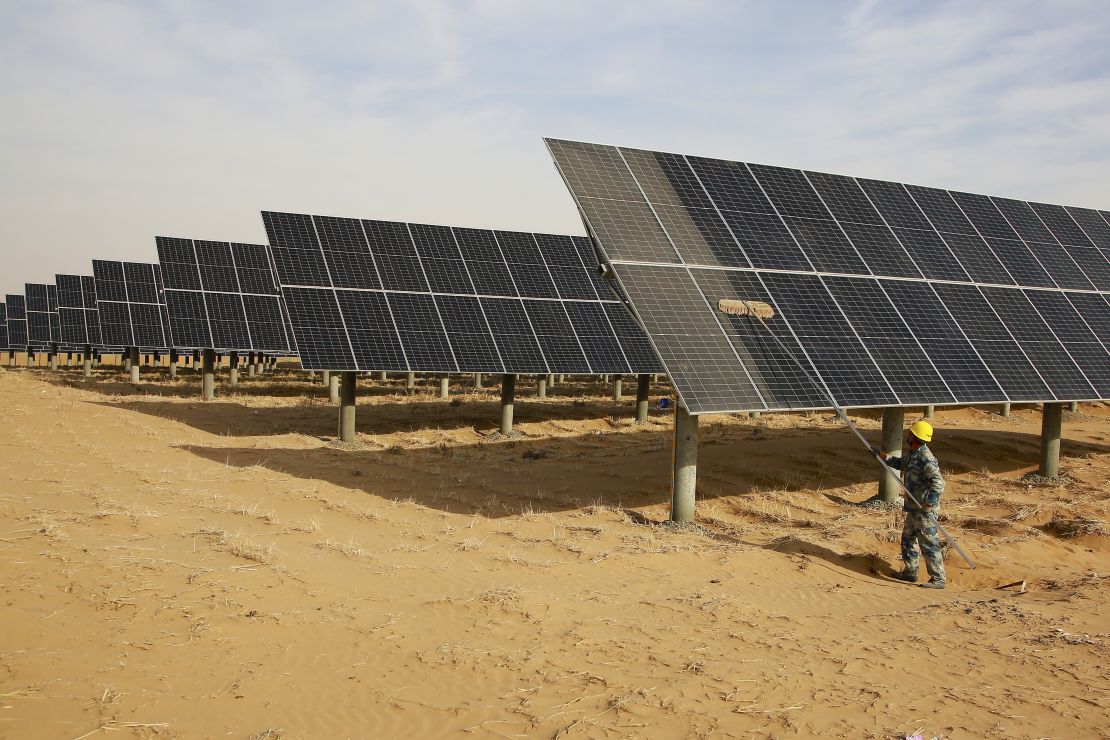
A worker cleans solar panels at a new energy base of Tengger Desert on December 9, 2023 in Zhongwei, Ningxia Hui Autonomous Region of China.

As the need to rapidly wean off planet-heating fossil fuels becomes increasingly urgent, there have been some clean energy bright spots around the world.

On Halloween, Portugal started a record-breaking streak. For more than six days straight, between October 31 to November 6, the nation of more than 10 million people relied solely on renewable energy sources — setting an exciting example for the rest of the world.

The year 2023 is on track to see the biggest increase in renewable energy capacity to date, according to the International Energy Agency.

China, the world’s biggest climate polluter, has made lightning advances in renewables, with the country set to shatter its wind and solar target five years early. A report published in June found that China’s solar capacity is now greater than the rest of the world’s nations combined, in a surge described by the report’s author, Global Energy Monitor, as “jaw-dropping.”

It can’t be ignored, however, that China also ramped up its coal production this year, turning to the fossil fuel as devastating heat waves increased energy demand for air conditioning and cooling, and as persistent drought in the country’s south impacted hydroelectric supplies, which are reliant on sufficient rainfall.

Hopes were raised that the country’s coal production will peak and come down soon, when China and the US in November announced they would resume cooperation on climate change, pledging a major ramp-up of renewable energy, specifically to replace fossil fuels.

A climate deal that targets fossil fuels

COP28 President Sultan al-Jaber, right, celebrates passing the global stocktake with United Nations Climate Chief Simon Stiell, left, and COP28 CEO Adnan Amin during a plenary session at the COP28 U.N. Climate Summit, Wednesday, Dec. 13, 2023, in Dubai, United Arab Emirates.

After more than two weeks of fraught negotiations, the COP28 climate summit in Dubai concluded in December with nearly 200 countries making an unprecedented commitment to move away from fossil fuels.

While the agreement fell short of requiring the world to phase out coal, oil and gas — which more than 100 countries had supported — it did call on countries to “contribute” to a “transition away from fossil fuels in energy systems.” This marked the first time that all fossil fuels, the main drivers of the climate crisis, were targeted in a COP agreement.

COP28 President Sultan Al Jaber, who presided over the negotiations, called the agreement “historic,” adding that the deal represented “a paradigm shift that has the potential to redefine our economies.”

How impactful this deal ultimately is will depend on what countries do next to implement it. Many experts warned of loopholes that could leave the door open to a continued expansion of fossil fuels.

But that a deal was struck at all on fossil fuels was widely welcomed seen as a breakthrough.

“We got people to do things they haven’t done before,” US climate envoy John Kerry told CNN’s Christiane Amanpour after the summit, describing it as a “historic success.”

Plummeting deforestation in Brazil

Aerial view of the city of Parauapebas surrounded by Amazon rainforest, in Para state, Brazil on May 17, 2023.

After years of soaring deforestation in the Brazilian Amazon, there was good progress this year in reducing forest destruction.

The Amazon is the world’s biggest rainforest and its protection is seen as vital to curbing climate change. It acts a carbon sink that sucks in planet-heating pollution from the atmosphere. When forests or trees are destroyed, they emit greenhouse gases. Deforestation and land degradation is responsible for at least one-tenth of the world’s carbon pollution.

Deforestation in Brazil fell by 22.3% in the 12 months through July, according to data from the national government, as President Luiz Ignácio Lula da Silva started to make progress on his pledge to rein in the rampant forest destruction that occurred under his predecessor, Jair Bolsonaro.

Marcio Astrini, head of advocacy group Climate Observatory, described it as an “impressive result” that “seals Brazil’s return to the climate agenda.”

Still, Brazil’s deforestation rate remained nearly twice that of its all-time low in 2012. Around 9,000 square kilometers of rainforest were destroyed in the period. There’s a long way to go to meet Lula’s pledge to reach zero deforestation by 2030.

The ozone layer is healing well

The Earth’s ozone layer is on track to recover completely within decades, a UN-backed panel of experts announced in January, as ozone-depleting chemicals are phased out across the world.

The ozone layer protects the planet from harmful ultraviolet rays, but since the 1980s, scientists have warned about a hole in this shield due to ozone-harming substances, including chlorofluorocarbons (CFCs), which were used widely in refrigerators, aerosols and solvents.

International cooperation has helped stem the damage. A deal known as the Montreal Protocol, which came into force in 1989, began the phase-out of CFCs. The ozone layer’s subsequent recovery has been hailed as one of the world’s greatest environmental achievements.

If global policies stay in place, the ozone layer is expected to recover to 1980 levels by 2040 for most of the world, the assessment found. For polar areas, the timeframe for recovery is longer: 2045 over the Arctic and 2066 over the Antarctic.

A study published in November, however, cast some doubt on this progress. The paper, published by Nature Communications, found that a hole in the ozone layer over the Antarctic “has not only remained large in area, but it has also become deeper throughout most of the Antarctic spring.” But some scientists were skeptical of the study’s findings, saying it relied on too short a time period to draw conclusions about the layer’s long-term health.

Electric vehicle sales surge

EV sales have surged to a record high in America this year.

The popularity of electric vehicles has surged this year, with American sales at an all-time high. People in China and Europe are snapping up EVs in large numbers as well.

Electric vehicles — which are better for the planet than gas and diesel-powered cars when they run on renewable energy sources — are key to decarbonizing road transport, which is responsible for around one-sixth of planet-heating pollution globally, according to the International Energy Agency.

Americans purchased 1 million fully electric vehicles in 2023, an annual record, according to a report from Bloomberg New Energy Finance.

Electric vehicles accounted for about 8% of all new vehicles sales in the US during the first half of 2023, according to the report. In China, EVs accounted for 19% of all vehicle sales, and worldwide, they made up 15% of new passenger vehicle sales.

EV sales in Europe were up 47% in the first nine months of 2023, according to data from the European Automobile Manufacturers Association (EAMA). However, car dealers have warned that sales are dropping off as consumers wait for cheaper models, expected in two to three years’ time.

CNN


Power utility Jamaica Public Service Company, JPS, made record nine-month profit totalling U$$47.2 million, which outperformed the previous year by one-quarter.

It reflects increased earnings from its new ventures and higher demand for electricity, due to the record summer heat induced by increased warming of the planet.

“A significant portion of the improved performance for the referenced nine months would have been as a result of the strong performances of our non-utility business segments or investments,” said JPS Chief Financial Officer Vernon Douglas, in response to Financial Gleaner queries.

“Notwithstanding, our utility business also grew. This is attributable mainly to warmer temperatures throughout 2023, which would have resulted in increased demand.”

Earth experienced its hottest summer on record this year and led to persons finding refuge within air-conditioned offices, stores or homes. In Jamaica, that translated to increased demand for electricity for cooling purposes.

JPS, however, doesn’t solely rely on utility sales for revenue, which hit US$788 million over January to September. The electricity provider also earns from its renewable energy installation subsidiary, Caribbean Blue Skies Energy Limited, and associate business South Jamaica Power Company.

About US$10 million, or 20 per cent of the profit, made by JPS this year came from non-core activity, which it listed as ‘other income’ and ‘share of profit from equity-accounted investee’.

For JPS, which is owned by Korean, Japanese and Jamaican interests, it is the third straight year of rising profit for the group that experienced a fall in earnings in 2020 due to pandemic-related economic shocks.

“The group has diversified investments in new businesses since 2016, which would have changed the historic shape and trajectory of its performance,” Douglas said.

Profit as a proportion of the US$598 million in capital held by JPS rose to an annualised 10.5 per cent, up from 9.3 per cent in 2022, 7.8 per cent in 2021, and 6.5 per cent in 2020. The ratio reflects the rate at which the business is growing and serves as a proxy for comparing its performance to the yield on other investments, such as government paper, bonds or stocks.

“Our business has navigated various challenges this year, but we have remained resilient. We have strategically adapted to market shifts, focusing on innovation and customer-centric approaches. Our performance reflects the broader economic landscape, and we’re confident in our long-term strategies to drive sustainable growth and value for our stakeholders,” said Douglas.

Overall, the rate of profit generation at the JPS group has increased 55 per cent since the pandemic. On average, the power company averaged US$47.5 million in annualised profit for the period spanning 2020 to 2023. That’s better than the US$30.3 million annual average for the 2016 to 2019 period.

Douglas downplayed the linkages between global oil price fluctuations on JPS’s current financial performance. The utility doesn’t make money from fluctuations in energy prices. It passes on the cost to customers without adding a margin, based on regulatory requirements.

Customer bills, however, would have experienced fluctuations largely arising from Russia’s invasion of Ukraine in 2022 as oil prices spiked to highs of US$122 a barrel in June of that year. Oil is currently hovering at US$81 a barrel, based on Brent crude prices, which Jamaica tracks.

“While electricity is not a known elastic good and service, generally speaking, lower fuel prices have at intervals shown some levels of correlation with electricity demand, as has been the case in 2023 versus 2022,” Douglas said.

JPS annual profit:

2023: US$63 million (annualised)

2022: US$54.4 million

2021: US$42.1 million

2020: US$31.1 million

2019: US$42.2 million

Gleaner