
Each year, environmental pollutants cost an estimated 1.7 million lives among children under 5, according to World Health Organization reports released Monday.

The causes include unsafe water, lack of sanitation, poor hygiene practices and indoor and outdoor pollution, as well as injuries.
The new numbers equate to these pollutants being the cause of one in four deaths of children 1 month to 5 years old.
One new report highlights that the most common causes of child death are preventable through interventions already available to the communities most affected. These causes are diarrhea, malaria and pneumonia, which can be prevented using insecticide-treated bed nets, clean cooking fuels and improved access to clean water.
“A polluted environment is a deadly one — particularly for young children,” Dr. Margaret Chan, the WHO director-general, said in a statement. “Their developing organs and immune systems, and smaller bodies and airways, make them especially vulnerable to dirty air and water.”
Infants exposed to indoor or outdoor air pollution, including secondhand smoke, have an increased risk of pneumonia during childhood as well as an increased risk of chronic respiratory diseases — such as asthma — for the rest of their lives, one report states.
The global body also highlighted the increased risk of heart disease, stroke and cancer from exposure to air pollution.
More than 90% of the world’s population is thought to breathe air that violates quality guidelines set by the WHO.
The reports further list ways in which these risk factors can be removed to prevent disease and death.
“Investing in the removal of environmental risks to health, such as improving water quality or using cleaner fuels, will result in massive health benefits,” said Dr. Maria Neira, director of the WHO’s Department of Public Health, Environmental and Social Determinants of Health. “A polluted environment results in a heavy toll on the health of our children.”
The growth of electronic and electrical waste is also a concern, according to the report. If not disposed of correctly, waste can expose children to toxins that can harm intelligence and cause attention deficits, lung damage and cancer.
Also among the fears: an increasing risk of climate change, due to rising temperatures and carbon dioxide levels, boosting pollen growth and possibly asthma. An estimated 44% of asthma cases among children worldwide are thought to be related to environmental exposures, the reports say.
In addition to highlighting the burden borne by young children, the new reports suggest ways in which risk factors — and therefore death rates — can be reduced.
These include reducing air pollution, improving access to clean water and sanitation, protecting pregnant women from secondhand smoke and building safer environments in order to reduce accidents and injuries.
“Both indoor and outdoor air pollution have an important effect on the health and development of children, and not just in the stereotypical ‘polluted cities’ context but also for very poor rural families who cook indoors,” said Joy Lawn, professor of maternal reproductive and child health epidemiology at the London School of Hygiene and Tropical Medicine.
“Clean water is taken for granted by families in high-income countries, and yet those children in the hottest climates, facing the greatest risks of infectious diseases, are the very ones with least access to clean water.”
But Lawn added that pollution is not the only risk factor when it comes to child mortality.
“We also need to be careful in attributing these deaths just to dirty water or pollution,” she said. “To prevent deaths from pneumonia, we also need vaccines and antibiotics; from malaria, we also need bed nets and anti-malarials. It Is not just about pollution.”
Other potential solutions mentioned in the reports are removing mould and pests from housing, removing lead paint, ensuring sanitation and good nutrition at schools and using better urban planning to create more green spaces in cities. Safe management of industrial waste by industries is also highlighted, along with stopping the use of hazardous pesticides and child labor in agriculture.
The report “highlights the scale of the problem of how environmental pollution affects the health of children across the globe,” said John Holloway, professor of allergy and respiratory genetics at the University of Southampton. Holloway recently authored a report on the lifelong impact of air pollution.
“We must also remember that it is not just the acute effects of pollution on children’s health mentioned in the report that we need to be concerned about, it is also the potential long-term effects of exposure to pollutants in early life that can have lifelong effects on health and well-being,” he said.
Holloway also stressed that this is not a concern solely for developing countries. “Exposures such as air pollution and secondhand tobacco smoke affects the health of children in developed countries such as the UK as well,” he said.
But, like the WHO, he also stressed that things can be done to help solve the problem and said authorities and individuals should act now — as well as think long-term — to protect the health of future generations.
“We all have a responsibility for reducing environmental pollution,” he said. “This is going to require changes in society such as better monitoring of pollution and taking into account the true long-term economic cost of pollution when assessing the cost of measures to reduce environmental pollution.”
 u
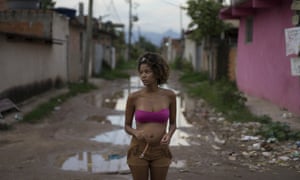
Warmer and wetter conditions facilitate transmission of mosquito-borne diseases, which may have added to spread, says lead climate change scientist


Zika virus Central South America climate change

Tamires da Costa, 16, who is four months pregnant, stands in a street with standing flood water next to her home in the Parque Sao Bento shantytown of Rio de Janeiro, Brazil on 29 January 2016. Photograph: Leo Correa/AP

The outbreak of Zika virus in Central and South America is of immediate concern to pregnant women in the region, but for some experts the situation is a glimpse of the sort of public health threats that will unfold due to climate change.

“Zika is the kind of thing we’ve been ranting about for 20 years,” said Daniel Brooks, a biologist at University of Nebraska-Lincoln. “We should’ve anticipated it. Whenever the planet has faced a major climate change event, man-made or not, species have moved around and their pathogens have come into contact with species with no resistance.”

It’s still not clear what role rising temperatures and altered rainfall patterns have had on the spread of Zika, which is mainly spread by mosquitos; the increased global movement of people is probably as great an influence as climate change for the spread of infectious diseases. But the World Health Organization, whichdeclared a public health emergency over the birth defects linked to Zika, is clear that changes in climate mean a redrawn landscape for vector and water-borne diseases.

According to WHO, a global temperature rise of 2-3C will increase the number of people at risk of malaria by around 3-5%, which equates to several hundred million. In areas where malaria is already endemic, the seasonal duration of malaria is likely to lengthen. Aedes aegypti, the mosquito that carries Zika and other diseases, is expected to thrive in warmer conditions.

As climate change reaches almost every corner of the Earth’s ecology, different diseases could be unleashed. Increased precipitation will create more pools of standing water for mosquitos, risking malaria and rift valley fever. Deforestation and agricultural intensification also heightens malaria risk while ocean warming, driven by the vast amounts of heat being sucked up by the oceans, can cause toxic algal blooms that can lead to infections in humans.

“We know that warmer and wetter conditions facilitate the transmission of mosquito-borne diseases so it’s plausible that climate conditions have added the spread of Zika,” said Dr Diarmid Campbell-Lendrum, a lead scientist on climate change at WHO.

“Infectious agents in water will proliferate with more flooding. It’s clear that we need to strengthen our surveillance and response to a range of diseases. Globalization, the movement of people, is an important factor too. In a world where we are disrupting the climate system we’ll have to pay the price for that.”

WHO estimates that an additional 250,000 people will die due to climate change impacts – ranging from heat stress to disease – by 2050, but Campbell-Lendrum said this is a “conservative estimate”.

“It is based on optimistic assumptions that the world will get richer and we’ll get better at treating these diseases,” he said. “We do need to get better at controlling diseases at their source and we do need to drive down greenhouse gases because there is a limit to our adaption. By moving to cleaner energy sources we will also help relieve one of the largest health burdens we have, which is the air pollution that kills seven million people a year.”

Until now, efforts to push back the threat of infectious diseases has been successful. Malaria, for example, used to be found in the New York area – and there is evidence to suggest it was once present in southern England; much earlier, the Romans used to retreat to the hills at certain times of the year to avoid mosquitos carrying the disease. Vaccines have been developed for a range of diseases including, belatedly, Ebola.

The eradication of threats like these makes wealthy western countries fret over outbreaks like Zika. As the world warms, there may be a lack of preparation for other diseases not currently considered threats.

“This is likely to become an equal opportunity crisis,” said Brooks. “The developing, poorer countries are impacted disproportionately but they deal with these diseases all the time, they are not surprised by them. But in Europe and North America, people have lived in a bubble where we think our wealth and technology can protect us from climate change. And that’s not true.

“The thing that worries me most is a death by a thousand cuts. I don’t think an Andromeda strain will wipe out all humans. But the amount of time, money and effort needed to combat these many different problems can overwhelm a healthcare system.”

So which climate-fueled diseases are likely to pop up next? Some experts believe that water-borne diseases could escalate, which would have significant consequences for countries such as Bangladesh – a low-lying nation with plenty of rivers that has a public health system already struggling to meet its population’s current needs.

“There’s not nearly enough attention paid to diseases that cause diarrhea, crypto spiridium, Hepatitis A,” said Aaron Bernstein, a pediatrician at Harvard Medical School.

“We’ve seen outbreaks of these diseases in the past due to extreme precipitation. The build environment we live in wasn’t designed for the climate we will soon be living in; when you consider half the world’s waterways have been engineered by man, they won’t be able to contain the extra water that will flood them.

“Flooding will certainly lead to mosquito-borne diseases but also cause water-borne diseases and also a lack of drinking water. People in Asia and Africa, particularly those living on the coast, will be very vulnerable, climate change could be the straw that breaks the camel’s back in terms of public health.”

The Guardian