
Steadman Fuller, custos of Kingston has described climate change as the single greatest threat to local agriculture and, by extension, the Jamaican economy.

“Sadly, ladies and gentlemen, the food security to which we are traditionally accustomed is under serious threat. Only this time, it is under threat not directly from crop diseases and pests or praedial larceny, but from a more severe, potentially devastating and costly phenomenon called climate change,” Fuller told patrons on Sunday while delivering the keynote address on day two of the annual Denbigh Agricultural, Industrial and Food Show.

Explaining climate change as a “noticeable and sustained variation in weather conditions”, the custos sought to drive home to his audience the impact of climate change.

“The excessive heat that we have experienced; the long, dry season and the disappearance of some of some of our beaches, such as what is taking place at Hellshire in Portmore, are the direct result of climate change. You may even want to account that the heat that you have been feeling today is part of that phenomenon. In relation to agriculture specifically, climate change is a ticking time bomb,” Fuller declared.

VULNERABLE

“Just to give you an example, the destructive forces of flood and bush fires which destroy hundreds of acres of crops and farmland across Jamaica in the process, are reminders of our vulnerability to the intensity of natural disasters due to climate change. If left unchecked, climate change could reduce crop yields and the overall contribution of agriculture to national development. The farming sector could be wiped out if measures to safeguard the industry are not swiftly implemented and vigorously pursued.”

Fuller said that the theme of this year’s show ‘Grow What We Eat … Eat What We Grow Through Climate-smart Agriculture’ is evidence that the Jamaica Agriculture Society is well aware of the imminent danger and is ready to have that important conversation with farmers and other stakeholders in order to avert the potential danger.

He also had a message for policymakers.

“While there is no simple solution to the threat and consequences of climate change, it is a reality that measures and strategies must be implemented to ensure that our farmers can continue to do what they have done for centuries, and that is feed our nation.

“As a nation, we have to introduce measures to embrace climate-smart agricultural practices, so that rural communities can remain economically viable; our tourism and hospitality sector can have a sustained supply of fruits and vegetables and high-quality products; (and) our agro-processing sector can achieve its growth potential.”
Gleaner

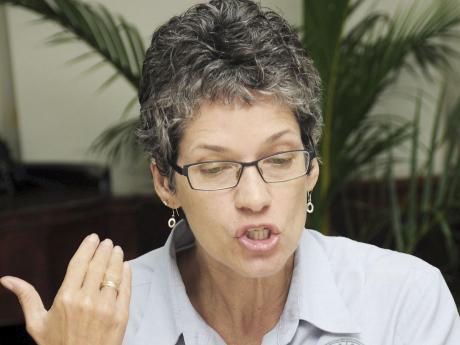
 McCaulay … It appears the environment will be under the Office of the Prime Minister along with a lot of different, other important national areas and I fear the environment focus will be lost in the other priorities.

Prime Minister Andrew Holness has attracted the attention of environmentalists with the exclusion of the environment and climate change portfolio as a named ministry in his Cabinet.

For environmentalists, it does not send a positive signal.

“I am disappointed to see that there is no environment ministry and no environment minister. It appears the environment will be under the Office of the Prime Minister along with a lot of different, other important national areas and I fear the environment focus will be lost in the other priorities,” said Diana McCaulay, Chief Executive Officer of the Jamaica Environment Trust (JET).

“I don’t think this first signal is a very positive one. It used to be that the environment portfolio moved around from ministry to ministry. Now it would it seem to have disappeared entirely,” she added.

Only last week, JET, along with a number of other entities, including the Windsor Research Centre, urged the new Prime Minister to give priority to a host of environment issues, notably:

*climate Change
*Cockpit Country
*planning for sustainable development
*protected areas
*sanitation and public health
*enforcement of environmental laws

With the Jamaica Labour Party vowing in its manifesto to work with environment actors, McCaulay said she was eager to learn how the realities of the new Cabinet will gel with the identified priority areas.

“I would like to hear the details of how this would work sooner rather than later and I would like to hear a timeframe for doing some of the things stated in the manifesto,” she told The Gleaner.

Head of the South Trelawny Environment Agency Hugh Dixon was in agreement.

“I think with growth and prosperity being the sort of thrust of the new government, it seems to be an awful oversight as the issues that are at the forefront of development are predicated to a great extent on an awareness and sensitivity to [for example] climate change,” he said.

According to Dixon, the situation is will challenge civil society environment groups to gain traction in terms of the significance and value of climate change, and the environment.

“I would, with caution, say that I hope that wherever it has been dispensed to, it holds some order of priority consistent with its current standing globally and any sort of growth and development agenda,” he added.

Former Minister of Local Government and Community Development, and one-time Opposition spokesman on Environment Noel Arscott has himself questioned the rationale behind the lack of a designated ministry of environment and/or climate change.

“Jamaica and the Caribbean fall in one of the most vulnerable regions in the world affected by the vagaries of the weather. We certainly are victims of any kind of climate change impacts… So for a government not to put that on the front burner was really shortsighted…” he said.

The Gleaner