In today’s environment, where electricity rates are increasingly vulnerable to global oil price swings, supply disruptions, grid upgrades, and the escalating effects of climate change – hotter days, stronger storms, and unpredictable weather – going solar is a responsible and bold step toward self-reliance and sustainability.

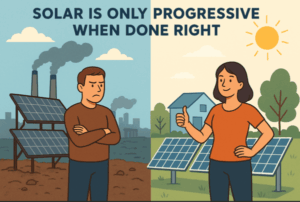
But going green is only truly progressive when it is done right.
Too often, homeowners and businesses are left with underperforming systems sold on vague promises based only on utility bills and assumptions; not on actual usage or site data.

Without designs grounded in factual analysis of energy usage and site conditions, solar risks becoming just another expense rather than a tool for energy independence.
At SolarBuzz, we believe progress should be measurable, not assumed. 

Our solar solutions are engineered and tailored to actual consumption, unique site layouts, and long-term energy goals. 

This approach ensures that every system we install delivers on performance, savings, and ROI as promised, while also reducing carbon emissions.

Progress That’s Measurable, Not Assumed

Progress is achieved when solar systems are built with high-quality, long-lasting equipment, designed through precise data analysis, and installed to maximize performance and measurable CO₂ reduction.

SolarBuzz has been entrusted by clients across Jamaica to install, upgrade, and optimize systems that allow them to adopt environmentally responsible practices while saving significantly on energy costs.

Case in Point: Fleetwood Jamaica Ltd.
In May 2022, Fleetwood Jamaica Ltd. partnered with us to reduce their reliance on fossil fuels and lower energy costs. 

After a detailed load profile analysis, we designed and installed a 53.1kW grid-tie system projected to offset 54% of grid consumption and reduce CO₂ emissions by 57.49 tonnes annually.
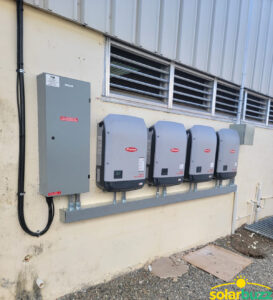
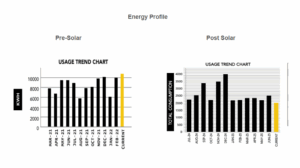
The results spoke for themselves: 51% offset, annual savings of J$3,077,214, and CO₂ reduction of nearly 80 tonnes. 
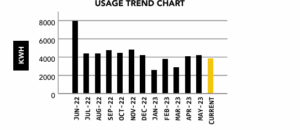
Encouraged by these measurable results, Fleetwood initiated a second phase in 2024, adding a 43.6kW system. 
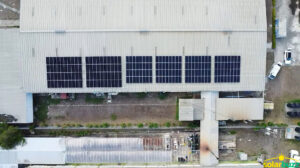
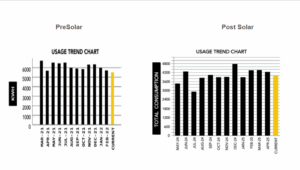
Today, they enjoy a 75%-80% energy offset from prior peak usage and total CO₂ reduction of 248.5 tonnes. 
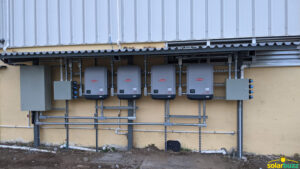
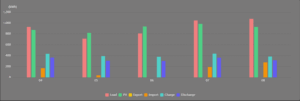
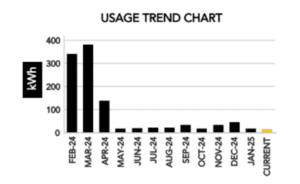
Their monthly electricity bills as seen in the graph below reflect over 7,000 kWh in savings, proof of how going green is progressive when done right.
Progress That Allows You to Do More With Less

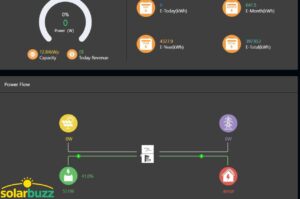
Our systems are not only designed to deliver savings; they are equipped with real-time monitoring and performance tracking to maximize value. 

Clients can see how their systems perform daily and adjust their energy use for even greater efficiency.
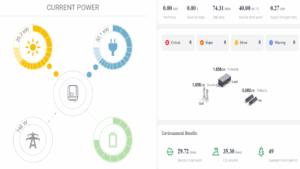


This capability allows businesses to scale production or homeowners to run appliances, charge EVs, and work from home during peak sunlight all while reducing grid dependency.

Case in Point: Gray’s Peppers
Gray’s Peppers sought to offset energy costs while boosting production. We installed a 38kW system projected to generate 4,307 kWh monthly and offset 35% of grid use. 
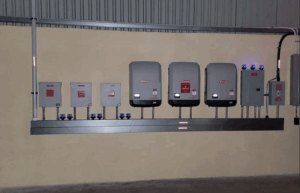
Our online monitoring of the system shows consistent performance within design expectations. 
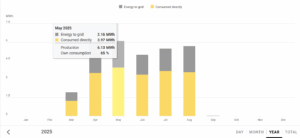
 

With an average offset of 34%, Gray’s Peppers has been able to expand operations without compromising projected savings.
Progress That Supports Modern Lifestyles

Solar isn’t just about savings; it’s about enabling a sustainable lifestyle.

Case in Point: Residential Client with EV Charging Needs
One of our featured homeowners wanted to upgrade his system to meet new EV charging needs. 

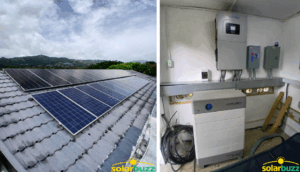
After analyzing his load profile via online monitoring data, we upgraded his existing grid tie system to 11.92kW with a 19.2kWh battery and a 15kW SolArk inverter, providing an output of 1,200 kWh per month. 
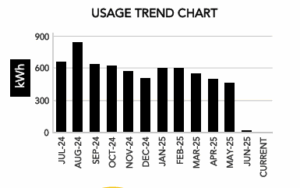
The electricity bill graph below shows the system performing as designed, powering daily EV charging and household needs, and further proving that going green the right way enables seamless integration with modern living.
Case in Point: Client with Remote-Work Office and EV Charging Needs
Another of our residential clients sought resilience against power outages and the flexibility to work from home while charging his EV. 
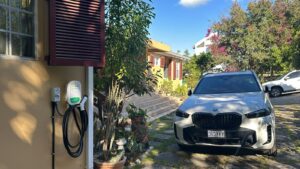
After analyzing his profile, we designed and installed a 14.72kW LFP battery system for his home.
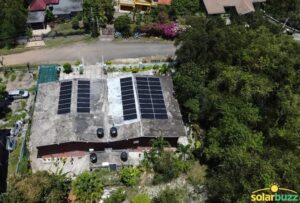
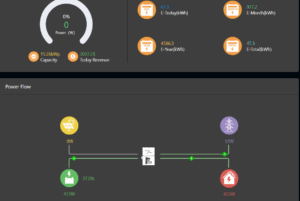
Since April 2025, he has enjoyed free daytime EV charging, uninterrupted productivity, and an 87% energy offset, making sustainability both practical and progressive.
Smart Systems for Smart Green Financing

When solar systems are designed using full load profiles, projected savings align with real performance. This makes them not only reliable but also ideal for financing.

At SolarBuzz, our data-engineered approach guarantees systems that support loan repayment schedules, replacing electricity bills with predictable loan obligations thus giving clients peace of mind.

Case in Point: Smart Energy Financing
One of our clients came to SolarBuzz with a clear goal: to cut his electricity bills as much as possible while securing financing through one of our banking partners.

For this client, achieving maximum solar savings was essential to ensure that his monthly loan payments could be seamlessly covered by the energy cost reductions.

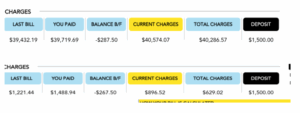
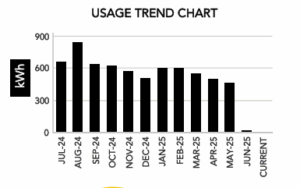
In May 2025, we designed and installed an 8.2kW lithium iron phosphate (LFP) battery-based system, tailored to his energy profile and projected to offset 84% of his grid usage.
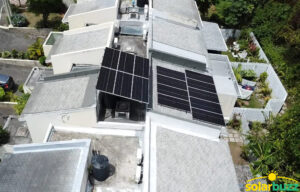
Already, our client is experiencing a drop in their bills from J$40,000 to J$630, exceeding our predictions!
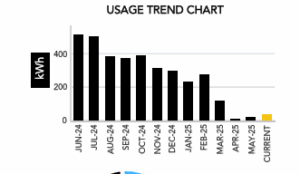
Similarly, another client leveraged the NHT’s Smart Energy Loan to finance with us a 4.36kW LFP battery system, projected to offset 90% of her total energy usage. 
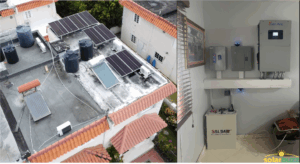
Since installation in February 2025, her system has performed consistently, with savings covering her loan obligations and serving as a true demonstration of how going green can be progressive when done right.
 

Progress That Empowers a Greener Future

When solar is engineered with precision, installed with integrity, and supported with monitoring, it becomes not just a system but a tool for measurable progress. 

Whether enabling businesses to scale, households to adopt EVs, or clients to finance sustainability with confidence, SolarBuzz ensures that going green is not just a choice but a smart, progressive investment.

At SolarBuzz, progress is always measurable, reliable, and empowering.

Solar progress, when done right, empowers you to save more, live better, and build a greener future.

If you wish to explore how we can design a data-engineered system tailored to your energy needs, please contact us today and start living your better, greener life!

Deidre Wedderburn is the Client Relations Manager at SolarBuzz, dedicated to building long-term partnerships and delivering a top-tier client experience (deidre@solarbuzzjamaica.com).
Daily blackouts averaging four hours or more have become the new normal across Cuba’s capital of Havana, an unsettling sign of a still-unresolved energy crisis as the sultry Caribbean summer sets in.

Havana’s misfortune follows a string of nationwide blackouts over several months, most recently in March, that plunged the country’s frail grid into near-total disarray, stressed by fuel shortages, natural disaster and economic crisis.

The major commercial hub on the island and a top tourist destination, Havana has long endured occasional blackouts but until this year had been largely shielded from the worst of the outages by the grid operator.

“People are stressed,” said Aramis Bueno, a 47-year-old resident of the densely populated Central Havana neighborhood of Dragones, as he sat on his doorstep during an evening blackout this week.

“It’s not easy living like this. Look at what time it is. We haven’t been able to shower, to eat … because of the blackouts.”

The worsening power outages in Havana come as the United States has severely tightened sanctions on Cuba, returning the island nation to a list of state sponsors of terrorism and ratcheting up restrictions on remittances, tourism and trade.

Blackouts in the capital, unlike in much of the rest of the country, are largely scheduled, and far shorter than in the outlying and more rural provinces, where outages sometimes span 15 hours or more per day.

But they are increasingly the talk of the town in Havana.

“It’s terrible, it’s terrible. The electricity system in this country right now just isn’t working,” said Dayamí Cheri, 52, a resident of cramped Old Havana. “With this heat and no electricity, no one can survive.”

Recent outages led to school and workplace closures, reinforcing an already deep shortfall in economic output, which fell 1.9% in 2023. The economy did not expand in 2024, when more severe blackouts set in, though the government has not yet released last year’s growth figures.

There are glimmers of hope, however.

Cuba is making progress this year on a China-backed plan to install more than 50 solar parks capable of churning out more than 1,000 megawatts of electricity.

Eleven such solar parks have been installed since February, offering the promise of a better future, though most Habaneros say they’re still hunkering down for a long summer.

“I was born with blackouts,” said Yasunay Perez, 46, of central Havana. “This is nothing new.”

Reuters

Spain and Portugal are reeling from a massive, unexplained power outage that knocked out traffic lights, caused chaos on roads and in airports, and prompted both countries to declare a state of emergency.

Portugal’s grid operator Redes Energéticas Nacionais (REN) said electrical supply was lost across the entire Iberian Peninsula, and in parts of France, shortly after midday. Hours later, Spain’s Prime Minister Pedro Sanchez said authorities were still not sure what caused the blackout.

The outage took out lighting and power sockets, and caused subway systems to suddenly fail. In Madrid, traffic piled up on the roads after the lights went out.

“I was driving and suddenly there was no traffic lights … It was a bit of a jungle,” Luis Ibáñez Jiménez told CNN. “I saw a massive bus coming, and I had to accelerate a lot to go past it.”

The cause of the blackout was unclear, but its impact was dramatic: transport hubs were shuttered and governments in both countries, which share a population of around 60 million people, hastily arranged emergency meetings to co-ordinate a response.

Spain’s Interior Ministry declared a state of emergency in the regions of Andalucia, Extremadura, Murcia, La Rioja and Madrid. After a late-night cabinet meeting, Portugal’s Prime Minister Luis Montenegro declared an energy crisis, with the country’s grid operator warning that fully restoring power would be a “complex operation.”

By the end of Monday, grid operators said the supply of energy was gradually being restored in pockets of both countries. More than 87% of power had been restored in Spain by early Tuesday morning, with all affected substations functioning again, while videos on social media showed people in Portugal cheering at night as power was restored.

Earlier, Madrid’s mayor José Luis Martinez Almeida asked people to minimize their movements and only call emergency services if it was truly urgent. He also called on people to clear the roads for emergency workers. Later in the day, Madrid’s emergency services provider urged the country’s government to declare a national emergency, and local leader Isabel Díaz Ayuso asked the country to deploy the army.

Antonio Costa – president of the European Council and Portugal’s former prime minister – said although the cause of the outage was not clear, there were “no indications” of a cyberattack.

Portugal’s prime minister blamed his neighboring nation for the scenes, saying his government did not yet know what caused the cut, but that it “did not originate in Portugal” and “everything indicates” that the problem started in Spain.

João Faria Conceição, head of REN, said Portugal was badly affected because it imports electricity from Spain in the morning, because Spain is one hour ahead and electricity produced by its solar plants is cheaper than producing it internally, during those hours.

“We are peripheral,” Conceição told a news conference Monday evening. While Spain received support from France and Morocco, Portugal had no country to turn to for emergency supplies of electricity.

Confusion grips major cities

Monday’s blackout hit a huge and busy swathe of southern Europe. Dozens of Iberian cities, like Madrid, Lisbon, Barcelona, Seville and Valencia, are major hubs for transport, finance and tourism. Two of the five busiest airports in the European Union in 2023 were Madrid’s and Barcelona’s, according to EU data.

For a few hours, modern routines were suspended: cash replaced card payments, police officers used arm signals to direct traffic, and restaurants, supermarkets and stores closed their doors. Madrid’s firefighters carried out 174 “elevator interventions” across the city on Monday, its Emergency Information Office said, and some shoppers stocked up on essentials and on canned goods.

The worst-case scenarios appear to have been averted, at least in the first hours of the blackout. Spain’s nuclear sites were declared operational and safe, while Portugal’s National Institute for Medical Emergencies said it had “activated its contingency plan,” running its telephone and IT systems through a back-up generator. Spain’s health ministry said the same process happened in hospitals there.

But travel was hit harder. Flights at major airports in the region were suddenly delayed or canceled, with travelers scrambling to adapt; online flight trackers reported that several airports saw their frequent departures suddenly halted after midday. Portugal’s flag carrier TAP Air Portugal told people not to travel to the airport until further notice.

Ellie Kenny, a holidaymaker inside Lisbon’s Humberto Delgado airport, said hundreds of people were stood in the dark in lines, with no air conditioning or running water. Shops were only accepting cash, she told CNN.

Trains were also suspended in Spain. And darkness suddenly descended in subway tunnels; video posted on social media showed blackened subway cars stuck in standstill on platforms in Madrid, where the metro was suspended and entrances to stations were taped off.

Sporting events were impacted too. Tennis fans at the Madrid Open filed out of courts after the outage caused play to be suspended.

Some parts of southern France, near the Spanish border, felt a more sporadic impact.

Emilie Grandidie, a spokeswoman for France’s electricity transmission operator RTE, told CNN there was “a small power cut” in the French Basque Country; “It lasted only a couple of minutes and was restored very quickly,” she said.

For several hours on Monday, tens of millions of people were asking each other when power would return, and why it was knocked out in the first place.

Neither question was easy to answer. But once power returns, it could still take days to untangle the damage caused by Monday’s worrying blackout.

Spain’s transportation minister said medium and long-distance trains won’t resume service until at least Tuesday, and the impact of a huge backlog in flights could stretch throughout the week.

CNN

In today’s climate of unpredictable weather patterns, rising energy costs and increasing reliance on modern amenities, solar energy is a strategic investment rather than just a sustainable choice.

From weather resilience and financial independence to increasing property value and providing unmatched peace of mind, solar energy offers a wealth of benefits that make it a solid long-term investment. 

Weather Resilience

Extreme weather events such as hurricanes, are becoming more frequent and intense, putting pressure on aging electrical grids.

A direct hit from a strong storm could easily leave thousands without power for days or even weeks. 

Solar energy systems, when paired with battery storage, offer a reliable solution for both homeowners and vacation villa owners ensuring that their family or guests have access to electricity and essential amenities even when the grid fails. 

This kind of weather resilience is a game-changer especially for vacation rental owners, as it offers guests a seamless experience while setting your rental apart in a competitive market and safeguarding your revenue stream.

Upfront Investment

The upfront cost of solar installation is an investment that pays off in a short period of time.

On average, residential solar systems with battery storage offer a return on investment within 4-6 years. This payback period can be even shorter as electricity rates continue to rise.

Homeowners can also maximize their returns by increasing daytime energy usage, effectively putting to use any excess solar energy that would otherwise go unused once their batteries are fully charged.

During the payback period, solar replaces your electricity bill while allowing you to invest in your own infrastructure or other opportunities.

With electricity rates still subject to global volatility and price hikes triggered by supply disruptions, oil market shifts or even local grid upgrades, solar energy shields you from these variables. Solar energy locks in predictable savings and provides a hedge against inflation in the utility sector.

Property Added Value and Revenue Security

Properties with installed solar systems enjoy higher resale value and market appeal.

Property owners who sell before the payback period ends can still benefit from accelerated financial returns by commanding a more competitive sale price. 

Vacation rental property owners stand to gain significantly from solar adoption.

Guests expect comfort and reliability, and a solar-powered villa offers them a superior experience that is uninterrupted by blackouts and free from energy usage restrictions without you bearing the burden of high energy bills.

This gives your property a competitive edge in the market since you can avoid passing fluctuating utility expenses onto guests. 

Furthermore, solar energy acts as a premium amenity that can justify higher nightly rates and boost income potential.

It also appeals to the Eco-Tourist that appreciates clean energy, enhancing your property’s attractiveness to the growing eco-tourism market.

Smart Investment for EV Owners

For those who own or plan to purchase an electric vehicle (EV), investing in solar energy is a no-brainer.

Harnessing solar energy to charge your EV in the day time can significantly reduce or even eliminate reliance on the grid, reducing your monthly expenses.

With the Jamaica Public Service (JPS) already approved to implement special billing for EV owners due to anticipated demand pressure on the grid, installing solar energy gives a clear advantage.

Solar becomes a proactive investment that allows EV owners to sidestep potential surcharges and truly enjoy energy independence.

Investment of a Lifestyle

Investing in solar energy is not just a financial decision but a lifestyle upgrade.

Solar allows homeowners to fully enjoy the comforts of modern living – especially the use of the air conditioning unit during increasingly hot days and nights – without the worry of high electricity bills. 

Additionally, modern solar systems include online monitoring tools that provide real-time insights into energy production and your usage.

This kind of monitoring empowers you to manage your energy consumption efficiently and inadvertently helps you to get the most out of your system while maximizing long-term savings.

Accelerated Investment Returns

The recently introduced solar tax credit further tilts the scales in favor of solar energy as an investment.

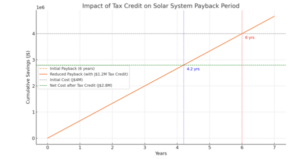
Homeowners can now claim up to 30% of the value of their system, capped at J$4 million which translates to a potential tax credit of up to J$1.2 million. This incentive can significantly shorten the payback period on your solar investment.


For PAYE-employed individuals who financed their solar system, this incentive is even more impactful since the tax credit is issued as a cash refund and can therefore be used to reduce loan balances if desired. 

Additionally, the cash refund from this solar tax credit can be reinvested into other opportunities, such as home renovations, upgrading your solar system, or ongoing maintenance to ensure optimal long-term performance and continued savings.

A Future-Proof Investment

With a payback period that is shrinking thanks to tax incentives and rising utility costs, the case for solar energy as an investment is stronger than ever.

Installing solar energy is a strategic move for financial security, property enhancement, energy resilience and peace of mind.

Invest today, and enjoy the rewards of resilience, savings, and independence for years to come. 

deidre@solarbuzzjamaica.com 

Jamaica’s Energy Vulnerability

As Jamaica prepares for the upcoming hurricane season, the potential for extended power outages remains a significant concern. Past hurricanes have left many homes and businesses without electricity for days or even weeks, and the recent impact of Hurricane Beryl highlights the country’s vulnerability. Given this, exploring alternatives to traditional energy sources can offer added resilience, especially in the face of increasingly severe weather events.

JPS Plans for Power Resilience

The Jamaica Public Service Company (JPS) has announced plans to strengthen its grid by undergrounding some of its power lines in an effort to better withstand Category 5 hurricanes. This initiative comes in response to the growing frequency and strength of hurricanes, as seen with the impact of Hurricane Beryl. The current infrastructure, according to JPS, is only capable of handling Category 3 conditions, and these upgrades aim to future-proof the grid against more intense storms.

Solar Energy: A Resilient Alternative

While this move by JPS is a step toward greater grid resilience, it’s important to recognize that the fortification process may lead to higher energy costs for consumers. As the company seeks funding for these upgrades, there is concern that the increased investment in infrastructure may be passed on to customers in the form of higher rates. This makes the decision to invest in renewable energy sources, such as solar power, an increasingly attractive option for those seeking more predictable energy costs.

Economic Advantages and Integration of Solar Solutions

In addition to greater energy security, the Government of Jamaica’s recent Income Tax Credit initiative, which offers up to 30% of the value of a solar system or a maximum of J$1.2 million, adds a financial incentive for those considering solar energy. This initiative can help accelerate the return on investment for solar installations, making it a more viable option for households and businesses looking to reduce their reliance on the grid and manage energy costs more effectively.

There is also a growing interest in integrating solar energy solutions into new developments. Developers and financial institutions are now considering the inclusion of solar power systems in their building designs, which allows homeowners to finance the cost of installation through their mortgage over a 20-30 year period. This approach can make it easier for individuals to transition to solar energy and ensure reliable power supply without the upfront financial burden.

Securing Jamaica’s Energy Future

While JPS’s grid fortification plans are promising, their implementation is likely to take years. As the frequency and intensity of hurricanes continue to rise, it’s becoming increasingly important for Jamaicans to consider alternative energy solutions. Solar power offers a way to ensure energy security, regardless of the timeline for grid upgrades.

In light of these factors, it may be wise for Jamaicans to explore the benefits of solar energy as a way to address both current and future energy needs, while also managing the uncertainty of potential energy rate increases.

To request a quote from SolarBuzz and get started towards real energy freedom, please click here.

Deidre Wedderburn, Client Relations Manager (deidre@solarbuzzjamaica.com)