Screen Shot 2016-04-05 at 18.56.54

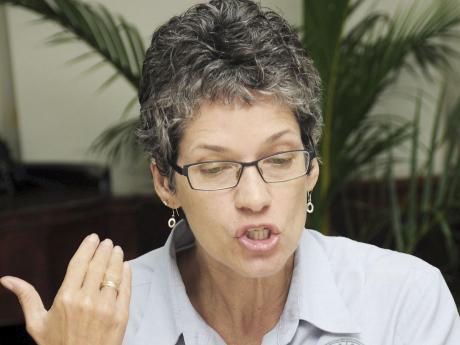
SIMPSON MILLER… I am not making the appeal for senior citizens in South West St Andrew alone


MEMBER of Parliament for South West St Andrew Portia Simpson Miller last Thursday pleaded with the Jamaica Public Service Company (JPS) to implement a discounted energy plan for senior citizens.

Simpson Miller, who presented the main address at a JPS Career Expo held at Caribbean Palms community centre, said that she understood the plight of senior citizens, especially those who no longer earn an income, people who get by no little or no savings, are handicapped by varying and expensive medical complaints, and even those who are dependent on their struggling children and caregivers who try to ensure the comfort of their elders.

“I am aware that every year the company incurs millions of dollars in losses, but I have recognised that our senior citizens are struggling to produce the funds to make the necessary payments on their electricity bills monthly,” Simpson Miller said.

“I am going to beg the JPS to see how they can work out a reasonable rate for our senior citizens. I am not making the appeal for senior citizens in South West St Andrew alone, but for every senior citizen across the country. A number of them have to depend on their children, many of whom are already financially burdened, to survive,” Simpson Miller added.Simpson Miller, leader of the Opposition People’s National Party, said that she was aware that there are a number of things that JPS will have to follow but she hoped they would be able to render some assistance to the vulnerable senior citizens group.

“I hope [too] that you (JPS) could consider how you could work into your plans a way that you could help an old man already struggling to buy food and medication or that crippled man or woman that you are able to give a [special] rate so that these senior citizens, their children or those people who assist them with their bills would not have it so hard finding the funds,” Simpson Miller said.

Jamaica Observer

Screen Shot 2016-03-29 at 13.04.35

PARIS, France (AFP) — Investment in renewable energy hit a record US$286 billion (256 billion euros) in 2015, more than half of which came from developing countries for the first time, according to a UN report released Thursday.

All told, new money put into solar, wind, biofuels and other cleaner energy technologies has exceeded US$2.3 trillion since 2004, when total investment was less than US$50 billion, it said.

“Renewables are becoming ever more central to our low-carbon lifestyles,” said Achim Steiner, executive director of the UN Environment Programme, which co-wrote the report.

“Importantly, for the first time in 2015, renewables investments were higher in developing countries than developed.”

That shift was led by China and India, both of which have invested heavily in clean energy even as their juggernaut economies continue to be mainly powered by carbon-intensive fossil fuels.

Renewables added more to global energy generation capacity in 2015 than all other technologies combined, including nuclear, coal, gas and mega-hydro projects of more than 50 megawatts.

Despite rock-bottom fossil fuel prices, new clean energy capacity — even excluding nuclear—- outstripped new coal and gas by more than 100 per cent, said the report, Global Trends in Renewable Energy Investment 2016.

The rapid transition to renewables, especially in developing and emerging economies, is “helped by sharply reduced costs, and by the benefits of local power production over reliance on imported commodities”, said Michael Liebreich, chairman of the advisory board of Bloomberg New Energy Finance, which co-launched the report.

As in previous years, the growth in clean energy in 2015 was dominated by solar photovoltaics and wind, which together added 118 gigawatts in generating capacity, nearly a quarter more than the year before.

Wind contributed 62GW and photovoltaics 56 GW, with more modest inputs coming from biomass, geothermal, solar thermal and ‘waste-to-power’, in which waste products are recycled.

The fact that renewables far exceeded conventional energy for new capacity in 2015 shows that a “structural change is underway”, the report said.

But the ultimate goal of a “carbon neutral” global economy enshrined by the world’s nations at UN climate talks in Paris in December is still a distant prospect.

Excluding major hydro projects, renewables still only account for 16 per cent of the world’s total power capacity, even if that figure has consistently climbed by double digits in recent years.

Plummeting costs

Actual electricity generated is even less — barely 10 per cent.

“Despite the ambitious signals from COP21 and the growing capacity of new, installed renewable energy, there is still a long way to go,” said Udo Steffens, president of the Frankfurt School of Finance and Management.

The Paris Agreement inked at the 195-nation ‘COP21’ talks vowed to cap global warming at below two degrees Celsius (3.6 degrees Fahrenheit), a goal that scientists say will require a wholesale shift away from fossil fuels.

Much of the record-breaking investment in clean energy last year came from China, which spent nearly US$103 billion (92 billion euros), 17 per cent more than in 2014 and 36 per cent of the world total.

India was a distant second, spending US$10.2 billion, followed by South Africa (US$4.5 billion), Mexico (US$4 billion) and Chile (US$3.4 billion).

Morocco, Turkey and Uruguay filled out the list of nations, investing at least US$1 billion.

Overall, developing countries poured 17 times more money into clean energy last year than in 2004.

Jamaica Observer

The increased availability of timely climate and weather information will position Jamaica to become more resilient to climate change impacts and improve development across key sectors such as health, agriculture and tourism. This was the consensus of experts at a forum and exhibition which was held in recognition of the 2016 World Meteorological Day, under the theme ‘Hotter, Drier, Wetter. Face the Future’, on Wednesday at The Knutsford Court Hotel, New Kingston.

“There is no doubt that future strategies to deal with climate change will depend upon sound knowledge of past and present climate in our nation and in our region”, Daryl Vaz, minister without portfolio in the Ministry of Economic Growth and Job Creation, disclosed.

A panel discussion, chaired by Professor Michael Taylor, director of the climate studies, University of the West Indies, Mona, brought home the potentially disastrous impact of climate change fallout on the activities of Jamaicans. Medical epidemiologist from the Ministry of Health, Sherine Huntley-Jones, discussed the impact of climate change on vector-borne diseases and explained that “even in prolonged periods of drought, we are expected to see an increase in vector-borne diseases as persons are going to be storing water, which will lead to an increase in breeding sites”.

Jacqueline Spence of the Meteorological Service of Jamaica introduced the fire-danger rating index being developed for the country, which will indicate the preconditions that would increase the likelihood for the occurrence of forest (bush) fires. Emeleo Ebanks, chief fire prevention officer at the Jamaica Fire Brigade, acknowledged the relevance of the fire-danger rating index and indicated that this tool, coupled with public education campaign, would be effective in minimising the incidents of forest fires.

Presenters Glenroy Brown and Dr Arpita Mandal, respectively, discussed climate services and products available for agriculture planning and management, and future implications for land use and economic planning in low-lying areas based on climate models.

The forum brought to the fore one of the strategies the Ja REEACH II, in collaboration with the Meteorological Service and other Government of Jamaica partners, will undertake to advance the availability and quality of climate data to be utilised across key sectors.

Gleaner

Claudette Sinclair-Mullings vents to our news team over the stalled Climate Change Park.

Instead of the tranquillity that was expected from a highly publicised Climate Change Park that was to be created in Portmore, St Catherine, residents are facing a major nuisance from what is now nothing more than a ‘dust bowl’.

Last week, residents of the Portmore community of Passagefort told The Sunday Gleaner that the 15-acre lot, which should have been a symbol of Jamaica’s commitment to tackling the problem of climate change, is instead a challenge to their health and finances.

“When we heard of the Climate Change Park, without seeing a plan, we said that was a good idea to have something constructed over there and don’t just allow the place to be going to waste like that,” said Gilroy Williams, a 76-year-old resident of Passagefort.

But with not much update on the planned project and after years of dealing with the dust pollution from the large lot, Williams, a retired police superintendent, said he and his wife are contemplating selling their house and moving, like several of their former neighbours who have left the community to escape the dust.

“It makes me feel miserable when you see the amount of dust that accumulates in our homes, and we are right in the centre of it, so you can image the problems that we are going through here,” said Williams.

“It makes you sick. It destroys your furniture and it gives the mistress and other people who live here extra work to clean and sweep on a regular basis. Even now the house needs painting, but there is no point in painting today and tomorrow it is going to return to a worse condition,” added Williams, who said both he and his wife suffer from sinusitis.

Residents said they have pleaded for help from the member of parliament for the area, Colin Fagan, acting Mayor of Portmore Leon Thomas, and the Urban Development Corporation (UDC) without success.

According to the residents, when they decided they were going to protest publicly, a pledge was made to truck water to the park to keep down the dust, and this was done at least three times weekly, but they have not seen the truck again since the start of this year.

Admitted To The Hospital

“We can’t live in this any longer. We are fed up of this,” said Claudette Sinclair-Mullings, who told The Sunday Gleaner that she was admitted to the hospital in 2014 because doctors found that her lungs were infected.

This diagnosis came after months of visiting the doctor and purchasing medications to deal with her medical challenges, which she blames on her exposure to the dust.

Her neighbour Garfield Rhoden was equally upset. He said the huge lot had been a swamp when most of them moved to the area in the 1970s, but then it was drained and the lot has since become an area for various activities, including concerts.

“The whole thing stinks. This is the town centre for Portmore and look at it. It’s a disgrace. It’s better they had let the swamp stay because that is a part of the ecosystem,” said Rhoden.

“They said they were going to plant trees and it was stupid, because the tree that they planted is not the type of tree for the area,” he chided.

The proposed Climate Change Park is to be created by the Portmore Municipal Council in partnership with the German city of Hagen under a Municipal Climate Partnership Programme.

It was touted as a poster child for climate change based on plans for the site, with a scheduled completion date of 2017.

The park is to be built across from the Portmore Mall, and is expected to feature solar and wind energy, rainwater harvesting, jogging trail, water fountain, park benches and a waste-water treatment plant, among other things. Germany had promised to allocate €250,000 to the project.

Although the two cities were linked in 2012 under former Portmore Mayor George Lee, who died while in office, details about the development only came to national prominence in May 2014 when the Climate Change Park was designated the National Labour Day project for the year.

Several ministers of government, then German Ambassador to Jamaica Josef Beck, representatives of corporate Jamaica, and residents of Portmore used the Labour Day to plant trees and beautify the area.

Missing Trees

More than 100 blue mahoe, lignum vitae, mahogany and poui trees were planted along the area’s periphery.

But when our news team visited the site last Tuesday, most of these trees were nowhere to be seen and several of those that have survived are in dire need of water.

The parched, unfenced lot is being used as a shortcut by several residents making their way to the nearby commercial district, despite a ‘No Trespassing’ sign erected by the UDC. A few tyres, two rusty football goalposts, plastic bottles and other debris were seen discarded in the area.

According to the residents, they have grown weary of the groundbreaking ceremonies hosted on the large property, as several proposals have been voiced for the transformation of the space, with none coming to fruition.

In 2003, for example, they watched as ground was broken for the Jamaica Football Federation Academy, but those plans were later shelved.

Then there was plan for a transport hub, which was publicly announced by different officials in the transport ministry, including former Transport Minister Dr Omar Davies.

When contacted last week, the acting mayor for the municipality said the land is being watered at least once per week. Thomas blamed the death of some of the trees on the poor quality of the soil on the lot.

He said the 15-acre property is to serve three purposes. Other than the proposed plans for a Climate Change Park and a transportation hub, the council also intends to build a monument dedicated to the Spaniards.

Thomas declined to say how much the Germans have already contributed to the facility, saying that could not be revealed until after the next meeting with representatives from Hagen, planned for this week. He argued that there was not much he could do to minimise the dust pollution.

“We have a whole heap of other open lots in Portmore where people encounter dust, because the time is dry. So there is nothing that the Portmore Municipality can do at this time,” said Thomas.

“We are hoping to get funding to do what we want to do. There is nothing that we can do to stop the dust from blowing over there because they live there years now and the dust usually blow across there. It’s nothing new,” added Thomas.

Gleaner

Trinidad & Tobago is confronting a major shock with the sharp fall in energy prices that accelerated early this year.

In a statement following the conclusion of a mission from the International Monetary Fund earlier this year, head of the IMF mission Elie Canetti said that based on available information, including that of job losses and continued supply-side constraints in the energy sector, Trinidad’s economy is expected to contract one per cent this year.

The mission also said that declines in energy-based revenues will constrain the government’s ability to act as an engine of growth.

Still: “With substantial financial buffers and low, albeit rising levels of public debt, Trinidad and Tobago is not in a crisis. Nonetheless, in recent years, taking into account the size of energy revenue windfalls, the country has under-saved and underinvested in its future,” the IMF said.

“As a consequence, the imbalances that are now starting to build up could lead the country to uncomfortable levels of debt and external financial cushions absent further action. The new Government agrees that policy adjustments are needed.”

The fund noted that in the half-year since they took office, the Keith Rowley-led administration has already taken “some difficult but necessary steps”, such as widening the value tax base, cutting fuel subsidies, and cutting the number of ministries.

BUDGET DEFICIT

Despite these measures, the IMF said it projects a 2016 Budget deficit at some 11 per cent of GDP. However, if asset sales were to be counted as revenue rather than financing, the deficit would be equivalent to about five per cent of GDP, it said.

“Continued projected deficits of this size call for further fiscal consolidation, perhaps of around 6 per cent of GDP over the next few years,” said the multilateral agency.

Trinidad has agreed to conduct a wide-ranging expenditure review, and will seek the assistance of the World Bank to rationalise and reverse the unsustainable increases in spending on transfers and subsidies over the last several years.

“We support the Government’s intent to conduct a national dialogue on fuel subsidies with a view to phasing them out over time,” said the fund. “The country’s external situation has been very challenging. Against a backdrop of foreign exchange shortages that have intensified since the beginning of 2015, the recent sharp falls in energy prices are further reducing the available supply.”

During the recent visit, the mission met with government officials, banks, and private-sector representatives to assess the foreign exchange market. The fund noted that the current shortage appears to be driven by business uncertainty but also speculative trades.

“While it is appropriate that the central bank paused in its interest rate hiking cycle in January, there is little scope, as the bank agrees, to cut interest rates, at least until shortages of foreign exchange are ameliorated,” the IMF said.

Gleaner

Screen Shot 2016-03-16 at 13.39.34

German artist Hermann Josef Hack’s World Climate Refugee Camp in Hannover displaying 600 miniature climate refugee tents. The model camp is a public art intervention that depicts the social impacts of climate change.

Scientists predict that if there is an increase in global temperature of up to 4° Celsius — which the current trajectory has us reaching by the end of this century, small island developing states (SIDS) face the threat of extinction. SIDS, with similar characteristics of tropical climates, small populations and related socio-economic and development challenges, are perhaps the most vulnerable countries to this phenomenon of global warming, primarily because of their low-lying position in relation to the sea and their limited economic ability to respond to catastrophic events.

For a small island like Jamaica, which has already begun to experience effects of climate change, using the significant beach erosion in the tourist areas of Negril and Hellshire, as well as lengthy periods of droughts as examples, a call for action cannot be overemphasised. Let’s act while we still can.

Identifying the problem

The unfortunate reality of industrialisation is that, although it has improved the lives of many, it has single-handedly resulted in a wealth of environmental catastrophes — climate change is arguably the worst.

Historically, States like the US and China, in their quest to becoming developed, have played a notorious role contributing to the destruction of the environment. Ironically, however, despite SIDS having contributed the least to global warming (accounting for less than one per cent towards GreenHouse Gas (GHG) emissions), they stand to be the worst affected.

Extreme weather patterns, like extended droughts and increased temperatures, are just some of the threats of climate change. Of the list, perhaps the most serious is a rise in sea levels. This will not only potentially cause ground and surface water sources to become contaminated but also affect the livelihoods of many. Sectors like tourism and agriculture, both of which are heavily relied on by many SIDS for economic growth and stability, will suffer greatly as beaches become eroded, fisheries collapse, and arable lands are destroyed. As a consequence, governments will have to contemplate strategies at domestic and regional levels to address issues of public health and job and food security.

In addition to the threat to infrastructure and economies, climate change also puts millions at risk of becoming either internally displaced or altogether stateless. That would create the real possibility of climate migration in the future. Issues surrounding statelessness and climate refugees have been widely discussed in the public domain, with many questioning the ability of the international community to cope with yet another humanitarian crisis.

Some critics believe that the overwhelming number of migrants that will result from climate change will far exceed the scale and gravity of any of the humanitarian disasters being experienced today. What’s worse, they posit that if the response of the international community to the humanitarian crisis in Syria is anything to go by, it is unlikely that attitudes towards climate-related event will be any different. For those who live amongst SIDS, this should be a matter of grave concern.

Maldives and Kiribati are two SIDS which have already researched relocating their populations to different countries due to their imminent threat of becoming submerged by rising seas. Other SIDS ought to follow suit with urgency to avoid the worst.

Solving the problem

It is prudent for States to appreciate that climate change is an economic issue just as much as it is an environmental one. Numerous developing countries, including SIDS, have traditionally concentrated their efforts on advancing development while postponing action on pertinent environmental issues. In recent years, the issue of climate change has increasingly gained recognition by the international community and has been put at the forefront of the agendas of many world leaders. Of note is the Paris Agreement arrived at in December last year, in which some 150 countries have agreed to take steps to limit global temperatures at or below 2° Celsius.

Caricom, including Jamaica, which lobbied in Paris as part of the Alliance of Small Island States, had pushed for it to be capped at 1.5° Celsius. It would therefore be now remiss of us not to follow through and implement practical steps towards achieving the target.

Traditionally, economics has influenced decision-making on a domestic and international level, and although it is justifiable to some degree, States need to divorce the practice of allowing economics alone to dictate political momentum. Environmental problems are becoming increasingly acute and nothing but short-term pain for long-term gain will bring about the kind of revolutionary change towards reducing carbon footprint and creating a greener space.

The truth is that the problems posed by climate change can no longer be ignored; they are here to stay. SIDS have the choice of mitigating the threats and adapting to the changes now, or suffering the consequences later.

While some may prefer one option over the other, particularly since adaptation over the longterm can be significantly more costly than mitigation, the Paris Agreement calls for both methods to be employed. SIDS have little option but to do both, for again, they contribute the least to the problems, but will be the ones most affected.

On a wider scale, reducing GHG emissions in line with the Paris Agreement is a target that all States should buy into as successfully ‘holding the increase in the global average temperature to well below 2°C above pre-industrial levels’ is contingent on the participation of all states.

It is hoped that with the US$100 billion pledged to developing countries under the Paris Agreement, SIDS will receive greater financial assistance that facilitate promote capacity building, sustainable livelihoods, and appropriate mitigation and adaptation schemes. It is hoped, too, that countries don’t wait until it is too late to act, but move with urgency now.

Jamaica Observer

Screen Shot 2016-03-16 at 13.30.41

Planning Institute of Jamaica Deputy Director General in charge of Sustainable Development and Social Planning Claire Bernard (left) in discussion with Evan Thompson, head of the Meteorological Service’s Weather Branch, during the launch of the Improving Climate Data and Information Management Project at the Terra Nova All-Suite Hotel in St Andrew.

JAMAICA’S efforts to strengthen resilience against climate change are being assisted through implementation of the $829.3-million (US$6.8 million) Improving Climate Data and Information Management Project (ICDIMP).

The project, which comprises phase two of the Pilot Programme for Climate Resilience (PPCR II), is being rolled out by the Planning Institute of Jamaica (PIOJ), with grant support from the World Bank through the Climate Investment Fund.

It is one of five projects under Jamaica’s Strategic Programme for Climate Resilience, and aims to improve the quality of data collected and used by public and private sector stakeholders at the local and national levels.

It involves climate resilient planning and hydromet information services development at a cost of approximately $168.3 million (US$1.38 million); a climate change public education and awareness campaign, targeting behavioural change at a cost of $88.4 million (US$725,000); and project management and evaluation to cost approximately $82.9 million (US$680,000).

One of the primary beneficiaries is the Meteorological Service of Jamaica (Met Service), which is slated to receive a new Doppler weather radar at a cost of approximately J$487.8 million (US$4 million).

The new radar, which is expected to be acquired during the 2016/17 fiscal year, will replace the existing equipment at the Met Cooper’s Hill, St Andrew, division which the agency has utilised for the past 16 years.

The support also includes renovation of the office, training of officers, as well as programmes focusing on quality assurance.

The Met Service Division, the Water Resources Authority (WRA), and the Rural Agricultural Development Authority (RADA) will also benefit from a number of other provisions.

These include 26 all-weather stations; 25 automatic recording rain gauges; 14 soil moisture probes; 11 groundwater loggers; eight agrometeorological stations; and one sea level tide monitoring station.

Head of the Met Service’s Weather Branch, Evan Thompson, welcomes the initiative, describing it as “an exciting moment for us” and, by extension, “all (of) our partner agencies”.

He notes that the division is poised for increased capacity “to deliver on many of our objectives in addressing resilience to climate change”.

“By the end of this project, in a matter of just five years, we would have seen improvements in our monitoring… (and) forecasting of hydro-meteorological and agrometeorological events,” Thompson says.

“We would be contributing more effectively to hurricane predictions, flash flood forecasting, modelling of scenarios due to the impact of climate change, as well as national development through greater and more efficient access to climatological data,” he adds.

He notes that there will also be significant investment in expanding the land and marine data gathering network to ensure that data collected are properly processed and managed, so that all sectoral interests will benefit from development programmes undertaken.

Thompson anticipates that the ICDIMP will build on collaborations with agencies such as WRA and RADA in enabling farmers to benefit from increased use of technology in agri-planning, and increase the number of weather data collecting platforms over eastern Jamaica.

“The (ICDIMP) is expected to take these…projects to the next level, building on the existing platforms and taking seriously the matter of climate change, which threatens to destabilise life as we have known it,” he notes.

In expressing confidence that the ICDIMP “will be another successful project”, Thompson assures that “we are prepared to stay the course to ensure that success”.

“We are mindful of the hard work that is ahead, and we look forward to following through with this project to completion so that the even more exciting phase of reaping the benefits takes place over the next five years,” he adds.

PIOJ Director General Colin Bullock, in welcoming the ICDIMP, says there is broad, multi-sectoral stakeholder acknowledgement that “our climate must be more deliberately factored into our economic analysis and planning”.

He says natural disasters cause disruption of lives and livelihoods, with losses at between one and two per cent of Gross Domestic Product.

“Having timely and good quality data can help to improve decision-making, not only at the national level, but also at the household and community levels,” Bullock states.

In noting that the project’s primary objective is advancing Jamaica’s transformation to a climate-resilient economy and society, the director general says it is consistent with the national strategy of climate change adaptation and disaster risk reduction, as outlined in Outcome 14 of the Vision 2030 Jamaica — National Development Plan.

“The wide scale availability of data and information through the climate information platform being developed will put easily digestible information at the fingertips of end users such as households, farmers, and the wider public, while the public education component should foster behaviour modification,” the director general notes.

Bullock says the PIOJ is committed to the project’s implementation, “and looks forward to working with (our partners) in meeting (its) development objective”.

World Bank Representative in Jamaica, Galina Sotirova, notes that climate change and its impact are “critical issues” which “disproportionately threaten” small island developing states like Jamaica.

These impacts, she points out, “are projected to get progressively more severe within a decade,” unless intervention measures are taken immediately.

Sotirova notes that climate change directly affects 60 per cent of Jamaica’s population who reside in coastal communities, rendering them “most vulnerable”.

It is for this reason, she says, that the World Bank and the Government of Jamaica agreed on a four-year Country Partnership Strategy in 2013, which identified priority areas of cooperation.

“Climate change, not surprisingly, emerged as a significant part of the conversation in the preparation period, and figures very prominently in one of the pillars of the four-year strategy, which focuses on social and climate resilience,” she states.

In pointing out that Jamaica “has always been a leader in the Caribbean,” she says the World Bank anticipates that the ICDIMP’s implementation will have a “welcome ripple effect throughout the region, as countries…are grappling and are trying to develop their strategies to secure sustainable economic growth”.

For her part, the PIOJ’s deputy director general in charge of sustainable development and social planning, Claire Bernard, describes the ICDIMP as a “multidimensional” and “potentially… transformational” project…pointing out that “there…is something in this project for everyone in Jamaica”.

Other partners in and beneficiary stakeholders of the ICDIMP include: the Ministry of Health; Office of Disaster Preparedness and Emergency Management; Climate Studies Group at the University of the West Indies, Mona Campus, in St Andrew; as well as the Climate Change and National Spatial Planning Management Divisions

Jamaica Observer

Screen Shot 2016-03-15 at 11.22.53

SINCE its inception in 2014, the Caribbean Climate Innovation Centre (CCIC) programme has been leading the way in developing a regionally integrated approach to solving the Caribbean’s climate, energy, and resource challenges.

The CCIC programme aims to assist Caribbean island states to adapt to and mitigate the impact of climate change by empowering each territory to create clean technologies and businesses, and strengthening several critical areas.

Chief Executive Officer (CEO) Everton Hanson says that the centre is taking an entrepreneurship approach to addressing the issues.

“The purpose of this project is to build an entrepreneurial ecosystem that will foster growth-oriented entrepreneurs and profitable businesses that address climate change mitigation and adaptation,” he explains.

The CCIC, which was established as a Consortium, is jointly managed by two of the Caribbean’s foremost scientific institutions — the Scientific Research Council (SRC), based in Jamaica, and the Caribbean Industrial Research Institute (CARIRI) situated in Trinidad and Tobago.

Both islands have active CCIC programmes and function as the project’s primary ‘country hubs’. These hubs are responsible for administering financing, management, and support service delivery regionally.

Locally, the CCIC project is housed at the offices of the SRC located at Hope Gardens in Kingston.

The programme, which emphasises the need for a unified response to developing climate change solutions, has 12 established country hubs in several other Caribbean Community (Caricom) states: Antigua and Barbuda, Bahamas, Barbados, Belize, Dominica, Grenada, Guyana, Montserrat, St Kitts and Nevis, St Lucia, St Vincent and the Grenadines, and Suriname.

The CCIC model was developed in collaboration with local stakeholders and addresses the gaps across five priority areas: solar energy, water management, sustainable agribusiness, resource use and efficiency, and energy efficiency.

The CCIC also offers services that assist entrepreneurs in developing business models for their products and services. Among these are technology commercialisation; market development; mentoring and training; networking, as well as business incubation support, and identifying and developing local, regional and international market opportunities.

A key feature of the programme is that it facilitates the testing and prototyping of proposed innovations, and provides technical support and information on contemporary green technology.

So far the bold initiative has met with success, instituting innovative activities in its goal of supporting companies from the nascent stage to an advanced stage of development. This has been accomplished through the staging of boot camps and accelerator programmes, among other activities.

One of its more notable programmes, the Proof of Concept (PoC) competition held in 2015, invites innovators to present designs and concepts for products which can be transformed into viable businesses.

Over 300 innovators from 13 Caribbean countries applied for grant funding through the competition, with 11 winners selected from the pool of applicants.

The successful participants, who were awarded grants ranging from US$10,000 to $50,000, came from Jamaica, Antigua and Barbuda, St Kitts and Nevis, Dominica, St Lucia, and Belize.

Additionally, the PoC winners benefited from several capacity-building exercises facilitated by CCIC and CARIRI, including mentorship, training and technical assistance in business incubator activities.

The CCIC in Jamaica recently hosted the Caribbean Green Tech Start up Boot Camp, which ran from February 26 to 28. Over 70 innovators and entrepreneurs from across the Caribbean participated in the interactive three-day workshop, which challenged them to refine their concepts, transforming them into viable, sustainable businesses.

Executive Director of the SRC, Dr Cliff Riley, points out that with the project is an important initiative as it directly addresses problems associated with climate change while stimulating economic development.

“It is a project for the entire region to build capacity and to ensure that innovative ideas and products can be translated into viable businesses,” he notes.

The programme was developed under the World Bank’s global partnership development programme, InfoDev, and is being implemented under its Climate Technology Programme.

The Caribbean component of the Climate Innovation Centre (CIC) is one of seven CICs established across the world. Other countries with CICs are Kenya, Ethiopia, South Africa, Vietnam, Morocco, and Ghana.

The CCIP programme is one of three components of the World Bank/InfoDev Entrepreneurship Programme for Innovation in the Caribbean and is funded by the Canadian International Development Agency.

Jamaica Observer

 McCaulay … It appears the environment will be under the Office of the Prime Minister along with a lot of different, other important national areas and I fear the environment focus will be lost in the other priorities.

Prime Minister Andrew Holness has attracted the attention of environmentalists with the exclusion of the environment and climate change portfolio as a named ministry in his Cabinet.

For environmentalists, it does not send a positive signal.

“I am disappointed to see that there is no environment ministry and no environment minister. It appears the environment will be under the Office of the Prime Minister along with a lot of different, other important national areas and I fear the environment focus will be lost in the other priorities,” said Diana McCaulay, Chief Executive Officer of the Jamaica Environment Trust (JET).

“I don’t think this first signal is a very positive one. It used to be that the environment portfolio moved around from ministry to ministry. Now it would it seem to have disappeared entirely,” she added.

Only last week, JET, along with a number of other entities, including the Windsor Research Centre, urged the new Prime Minister to give priority to a host of environment issues, notably:

*climate Change
*Cockpit Country
*planning for sustainable development
*protected areas
*sanitation and public health
*enforcement of environmental laws

With the Jamaica Labour Party vowing in its manifesto to work with environment actors, McCaulay said she was eager to learn how the realities of the new Cabinet will gel with the identified priority areas.

“I would like to hear the details of how this would work sooner rather than later and I would like to hear a timeframe for doing some of the things stated in the manifesto,” she told The Gleaner.

Head of the South Trelawny Environment Agency Hugh Dixon was in agreement.

“I think with growth and prosperity being the sort of thrust of the new government, it seems to be an awful oversight as the issues that are at the forefront of development are predicated to a great extent on an awareness and sensitivity to [for example] climate change,” he said.

According to Dixon, the situation is will challenge civil society environment groups to gain traction in terms of the significance and value of climate change, and the environment.

“I would, with caution, say that I hope that wherever it has been dispensed to, it holds some order of priority consistent with its current standing globally and any sort of growth and development agenda,” he added.

Former Minister of Local Government and Community Development, and one-time Opposition spokesman on Environment Noel Arscott has himself questioned the rationale behind the lack of a designated ministry of environment and/or climate change.

“Jamaica and the Caribbean fall in one of the most vulnerable regions in the world affected by the vagaries of the weather. We certainly are victims of any kind of climate change impacts… So for a government not to put that on the front burner was really shortsighted…” he said.

The Gleaner

The JPS power station at Bogue, Montego Bay, which is being converted to run on LNG.

New Fortress Energy, the company seeking to supply liquefied natural gas (LNG) to Jamaica, has secured a two-year contract for an LNG vessel and is to start shipping gas this month.

Golar LNG Limited, a Bermuda-registered company which operates the vessel Golar Artic, revealed the contract details to its investors.

“Golar has now concluded a two-year charter agreement with New Fortress Energy Transport Partners LLC (NFE) for the employment of Golar Arctic in Jamaica,” said Golar its statements obtained by the Financial Gleaner.

New Fortress has an agreement with Jamaica Public Service Company (JPS) to supply gas to its 120MW power plant at Bogue in Montego Bay, a contract New Fortress will service via gas infrastructure under development at the Montego Bay port. JPS has been mum on the price at which the gas will be supplied to Bogue.

The American company is also expected to develop gas infrastructure and supply JPS’ Old Harbour plant with LNG once it is built, but those negotiations continue.

Bogue is currently being converted to run on gas as well as diesel oil, the fuel on which it was originally commissioned in 2003. General Electric is doing the retrofitting under a US$22.74-million contract from JPS. Bogue will become a combined-cycle plant, capable of switching between gas and diesel.

New Fortress Energy assumes the costs for delivering gas to the burner tip. JPS has no stake in the gas infrastructure project.

New Fortress’ ambition Golar said the deal it has with New Fortress solves a long-standing problem regarding the cost of regasification, and that it fits with New Fortress’ ambition to become a regional supplier of LNG to Caribbean countries.

“Jamaica has long sought to replace liquid fuels with LNG, however, the size of the market has always made it difficult to justify the cost of a conventional floating storage and regasification unit,” said the fuel shipping company.

“New Fortress have now solved this challenge by utilising ship-to-ship transfer of LNG from Golar Arctic on to smaller LNG carriers to service a number of locations within the country of Jamaica.”

Golar Arctic is scheduled to load the first LNG cargo in support of this new business “during March 2016”. Golar and New Fortress believe this new approach to delivering LNG to niche markets has wide application within the Caribbean and other similar markets around the world, stated Golar.

“New Fortress have, with their entrepreneurial approach to business development, shown that downstream LNG markets can be developed within a much shorter time frame than is customary. Similar fast-track solutions will be essential if consumers are to benefit from the large incremental volumes of LNG that will be delivered to market over the next three-four years,” stated Golar.

The Financial Gleaner sought a project update from both JPS and New Fortress, but none came up to press time.

Golar LNG this week reported a fourth-quarter adjusted operating loss of US$35.9 million.

The Gleaner