Elon Musk’s Clean Energy Vision Includes a Strong Role for Utilities

At least one local environmentalist has hit back at Sally Porteous, custos of Manchester, over her arguments urging the Government’s authorisation of a coal plant for a US multibillion-dollar investment into the Alpart alumina plant in St Elizabeth.

The Chinese-owned Jiuquan Iron and Steel Company (JISCO) is planning to spend US$3 billion or J$387 billion for the upgrade of Alpart’s alumina plant in Nain and expansion into a special economic zone. More than 3,000 people are expected to be employed over the six-year period of initial investment.

However, a proposal to use a coal-fired plant has angered environmentalists, forcing the Government to come out declaring that any decision on whether to use coal is almost two years away.

Speaking last week at a Gleaner Jobs & Growth Forum in Manchester, Porteous did not hold back.

“While I listen to, and respect, the environmentalists, I sincerely hope that it is not going to be a case of crying wolf and preventing an enormous opportunity for Jamaicans to get work.

“From what I understand, they will not be using coal from China, they will be using coal from Colombia. The Alpart plant itself would be run on oil, and the coal they are going to be using for the coal plant will not emit any worst emissions than oil,” she added, noting that she recently met with Chen Chunming, the JISCO chairman.

But Diana McCaulay, chief executive officer of the Jamaica Environment Trust (JET), said Porteous’ analysis is not deep enough, and so, too, is her view that coal is cleaner than oil.

“People are entitled to their views. But coal is a 19th-Century technology. It is time for us to move forward, and it is time for us to take the position that we want development and we want industry and we want business and we want jobs for our people, but not at the expense of public health and the climate.”

She added: “Jamaica is incredibly vulnerable to climate change. To say that you’re willing to take this risk for some short-term jobs, I find mystifying.”

Jamaica has been going through decades of low growth, double-digit unemployment and crippling debt levels that have created the circumstances for a loan agreement with the International Monetary Fund.”

NOT FIRST TIME

It is not the first time a local official has waded into controversy over securing needed investment for the country. Last year January, in the face of a hotel investment being derail over breaches, Robert Pickersgill, then environment minister, in lifting a cessation order remarked that he took note of the “the substantial value of the project to the Jamaican economy, which outweighs all other consideration”.

In September, Mining Minister Mike Henry said a decision on the coal proposal was at least 18 months away.

Global environmental advocacy group Greenpeace has said constructing the plant would violate the Paris climate agreement aimed at limiting global warming.

Porteous maintained that the Chinese investment represents an opportunity to bring well-needed economic growth to central Jamaica.

“This is the centre of the island’s only chance for revival. We have nothing else. We’re not near a beach, the north coast is taking care of itself very, very well, and I can see very great business going into Kingston.

“We have the opportunity of a lifetime with JISCO coming to take over that plant,” she said.

The Manchester Chamber of Commerce said it is already taking steps to get the parish ready to claim some of the spinoff benefits.

“We’re currently in discussions with investors to try and lure them and encourage them to come into the development of the parish to aid in the development of the parish, especially as it related to three main areas,” said Michael Gottshalk, the chamber’s manager of communications and public affairs.

He said housing to accommodate the expected influx of workers, entertainment and parking are at the top of the list.

Gleaner

The Canadian federal government has committed to powering all of its buildings and operations using renewable energy sources by 2025. The goal is in support of a broader target to reduce the government’s greenhouse-gas (GHG) emissions by 40% by 2030.

Catherine McKenna, the federal minister of environment and climate change, announced the new commitments while speaking at the Canadian Wind Energy Association conference in Calgary on Wednesday. In a press release from the government, McKenna commented, “We are taking action on climate change by greening our government’s activities and are doing our part to make further progress toward Canada’s emissions target. We will do more as we develop our pan-Canadian climate plan – a plan that will create good jobs for the benefit of Canadians, especially the middle class and those striving to join it.”

In its release, the government notes that although the GHG-reduction target is set for 2030, it aspires to meet the goal by as early as 2025. By that date, the government continues, Public Services and Procurement Canada – the government’s principal landlord – will be purchasing 100% of its electricity from clean energy sources. The government notes that its Department of National Defense will be buying a significant amount of renewable electricity for its installations in Alberta. This will meet most of the electricity requirements for installations in Calgary, Cold Lake, Edmonton, Wainwright and Suffield.

John Gorman, president and CEO of the Canadian Solar Industries Association (CanSIA), has lauded the government’s new initiatives.

“The federal government’s commitment to purchasing 100 percent renewable electricity from sources, such as solar energy, as early as 2025 makes a significant contribution to Canada’s innovation and environmental protection agenda in two ways,” said Gorman in a statement.

“Firstly, they have the purchasing power to make a difference. Not only will their actions directly displace significant levels of greenhouse gas emissions, it will also give rise to new businesses and infrastructure.

“Secondly,” he continued, “being a part of the global response to climate change will bring changes to the decisions that are made by all consumers for goods, products and services. By leading by example, the government of Canada is demonstrating that every one of us has a role to play in making the right decision for future generations.”

In addition to renewable energy procurement, the government says it will make strategic investments in vehicle fleets and infrastructure. For example, the government says it will invest in revitalizing the heating and cooling plants in the National Capital Region, which provide services to more than 85 buildings and facilities. That investment is expected to modernize six separate facilities and reduce their emissions by more than 45%, according to the government.

The announcement did not provide many details regarding planned renewable energy procurements, including solar’s potential role; however, the government says it is establishing a new team, called the Center for Greening Government, to track the government’s emissions centrally, coordinate efforts across agencies and drive results to ensure the objectives are met.

Notably, these new initiatives are just the latest signs of hope that the Canadian government has provided to the country’s fledgling solar industry, which had only about 2.5 GW of cumulative installed capacity by the end of 2015. Canadian Prime Minister Justin Trudeau has committed Canada to the Paris Agreement, and in June, he united with U.S. President Barack Obama and Mexican President Enrique Pena Nieto to set a goal of achieving 50% clean power generation in North America by 2025. Furthermore, in October, the government introduced a nationwide carbon pollution pricing plan.

Solar Industry  

Armed with comments from the Office of the Attorney General (AG), Jamaica is looking at next year to ratify the Paris Agreement, which sets the framework for the global response to climate change.

“We have received the comments of the AG, which point out the obligations the country would have under the agreement. We now have to complete a series of consultations with the various stakeholders that would have a critical part to play in meeting those obligations,” revealed Colonel Oral Khan, chief technical director in the Ministry of Economic Growth and Job Creation.

“So we are going to be entering into that period of consultation before we seek the formal approval to ratify. We do not anticipate any hurdles; it is just now a process that we have to go through to ensure that we do not leave anybody behind. When we ratify, everybody must understand their obligations,” he added. Among other things, Jamaica will need to satisfy the United Nations Framework Convention on Climate Change (UNFCCC) requirement for nationally determined contributions (NDCs) to reducing greenhouse gas emissions, which fuel global warming.

“We already submitted our INDCs (Intended Nationally Determined Contributions) and we are to confirm they are to move from INDCs to NDCs. So we have to formally notify the UNFCCC of our NDCs,” Khan explained.

PROCEDURAL MATTERS

There are, too, a number of procedural matters to deal with “such as some reporting requirements that will have to be met”, he noted. Jamaica’s adaptation strategy and action plans are among those items that will need to be reported on. Already, the island has identified a number of priority sectors for these plans, including water, health, tourism, human settlement and coastal resources, in addition to agriculture, forestry and energy.

“We will have to keep the UNFCCC updated on our steps to implement and in preparing those annual reports that we have to make,” Khan said.

At the same time, the chief technical director indicated that ministries, such as the Ministry of Science, Energy and Technology, will have “a significant role to play”.

“A lot of our targets in the NDCs are things that fall under the energy policy in terms of switching to renewable energy and so on,” Khan noted. Once the consultations are finalised, they will report to Cabinet for the required approval to proceed with the instruments of ratification.

“We have to satisfy the Cabinet that we have engaged all the stakeholders so they have a fair appreciation of what is involved,” Khan said. He has, however, cautioned that the process will take some time.

“We can’t just wish it and it is done,” Khan told The Gleaner. “The time of the year we are in and approaching and with members of our Climate Change Division participating in the COP (the 22nd Conference of the Parties to the UNFCCC in Morocco), that kind of slows our process down in terms of our resources to undertake and lead in some of the consultations.”

Added Khan: “So for the month of November, we are going to be pretty much tied up and the environment in December will not be conducive to consultations. So we could end up seeing the process drag into next year.”

Gleaner

Prime Minister Andrew Holness addresses the opening ceremony of the Organisation of Caribbean Utility Regulators Conference in Montego Bay, St James, yesterday.

Asserting that “we must get it right”, Prime Minister Andrew Holness has urged utility regulators to take seriously their role in helping the Caribbean ease its dependence on oil and embrace technologies and renewables key to energy diversification.

The regulators’ role, he said, is linked to the creation of partnerships with investors who want returns, consumers and governments pushing for the economic development of their countries.

Holness was addressing the opening ceremony for the 14 Organisation Of Caribbean Utility Regulators (OOCUR) conference at the Secrets Resorts & Spa in Montego Bay, St James.

A variety of issues are set for discussion over three days by the more than 160 regional and international experts.

However, Holness, noting the importance of energy to the region’s development and the current high levels of dependence on oil, made it clear that the issue should be at the top of the agenda.

“Energy is clearly the mission-critical frontier,” he said, pointing to the role of Jamaica’s Office of Utilities Regulation (OUR) in helping Jamaica introduce liquefied natural gas (LNG) as part of the energy mix.

“The OUR approved the funding for the conversion of the Jamaica Public Service Bogue plant to enable the move from heavy dependence on oil to diversifying to LNG. I applaud the OUR in this regard for being a strong regulator and helping to make this move a reality – to take Jamaica on this new platform. This is a great example of collaboration among Government, regulator, and utility,” Holness added.

A shipment of LNG supplies arrived in Jamaica last week Saturday, and in two weeks, is expected to be in full use.

TAKE ROLE SERIOUSLY

The prime minister emphasised that regulators have to take seriously their role in helping the Caribbean Community implement the Caribbean energy policy that was approved in 2013.

That policy promotes a shift in sustainable energy through increased use of renewable energy sources and energy efficiency, among other things.

“OOCUR, you have your work cut out for you as not only is Jamaica focused on diversifying its energy mix, so, too, is CARICOM, and we must get it right in the region. Access to affordable energy is a necessary requirement for addressing sustainable development in the region,” Holness said.

He also argued that while there is need for partnership with all stakeholders in the provision of utilities, the providers must insist on self-regulation to ensure that standards are upheld and service delivery is at a high quality.

Earlier, Albert Gordon, chairman of OOCUR, said the conference was happening at a time when regulation was becoming more important for sustainable development.

The conference schedule has placed heavy emphasis on renewable energy and investment.

Jamaica and many other small-island states of the Caribbean are heavy importers of oil, which increases their vulnerabilities to external shocks such as sharp oil price rises. Except for Trinidad and Tobago, the only net exporter of oil and natural gas, all other Caribbean countries are net oil importers.

“For importers other than Suriname, around 87 per cent of primary energy consumed is in the form of imported petroleum products. Imports are mostly diesel fuel for electricity generation, gasolene for transportation, and liquefied petroleum gas used as cooking gas in households,” experts noted in a paper titled ‘Caribbean Energy: Macro-Related Challenges’ released in March by the International Monetary Fund.

This, they said, has led to consistently high electricity rates, which affects the competitiveness and development of CARICOM nations.

Gleaner

Republican Walter ‘Mike’ Hill makes a point during The Gleaner’s Editors’ Forum on Tuesday. Next to him is Democrat Moises ‘Moe’ Vela, and Judith Weddeburn of the 51% Coalition.

Jamaica and the Caribbean’s bid for a secure climate future is likely to be impacted by the outcome of the November 8 United States (US) presidential election.

However, whether the impact will be negative or positive remains to be seen, though the sentiments of representatives of the Republican and Democratic parties – present in Jamaica this week – provides an indication of the possibilities.

Republican Walter ‘Mike’ Hill, member of the Florida House of Representatives, has denied the existence of climate change.

“I do believe in climate change; it’s called summer, winter, spring and fall. It is not anthropogenic; it is not man-made,” he told The Gleaner‘s Editors’ Forum on Tuesday afternoon.

“Our climate is being affected primarily by two major forces – our sun and our oceans. Me driving my car to and from work is not changing our climate,” he added.

Hill went further to reveal his aversion to the Paris Agreement – which the US ratified on September 3 – and to the provision of financing to support climate change adaptation and mitigation, whether in the Caribbean or elsewhere.

REPUBLICAN ‘NO’

“I would say no to signing that agreement (the Paris Agreement) because it would be much too expensive to not only the American taxpayers, but the other countries that are imposed upon for what has been proven scientifically to be very minimal improvement in a reduction of carbon dioxide into the air, which, by the way, is not a poison. Our plants need it (carbon dioxide) in order to survive,” he said.

The Paris Agreement was brokered last year at the 21st Conference of the Parties to the United Nations Framework Convention on Climate Change, held in France.

The agreement – which is to come into force on November 4 – has as its goal: “holding the increase in the global average temperature to well below 2 degrees Celsius above pre-industrial levels and pursuing efforts to limit the temperature increase to 1.5 degrees Celsius above pre-Industrial levels, recognising that this would significantly reduce the risks and impacts of climate change”.

Democrat Moises ‘Moe’ Vela, who served in President Barack Obama’s administration as the director of administration and senior advisor in the Office of Vice-president Joe Biden, was of a different view from Hill.

“Senator [Hillary] Clinton has long been on the record, as I have been, as a matter of fact; we respect and we recognise the intelligence of our scientists from around the world. You don’t have to read 500 scientific reports to understand climate change is truly impacting our world,” he said.

“Secretary Clinton will continue to work with other leaders around the world as she has as secretary of state and as senator … to recognise the impact that climate change is having on our world,” Vela predicted.

CHILDREN OF THE WORLD

“I personally don’t have children, but I care enough about the children of the world, and I know she does as well… to give them an Earth that is sustainable … . We have got to address climate change so that the children of the world have a brighter future,” he said.

While admitting to having no authority to speak for Clinton “on the finance matter”, Vela said: “I would hope that the financials would flow from the United States to address climate change in the Caribbean basin and around the world.”

Meanwhile, Hurricane Matthew hammered the Caribbean recently, leaving hundreds dead, billions of dollars in infrastructural damage, and despair in countries such as Haiti, Cuba and The Bahamas – a grim reminder of the threat climate change presents to especially small-island states.

That threat includes not only warmer temperatures, but also rising sea levels, coastal erosion and extreme weather events, including more frequent and/or intense hurricanes and droughts.

On the outcome of the US presidential election and the implications for local efforts to bolster climate change readiness, chief technical director in the Ministry of Economic Growth and Job Creation Colonel Oral Khan said the island would wait to see.

“I think the US elections have generated a lot of interest beyond just questions of climate change, and we cannot escape taking note of the some of the things that are being said, but we will await the outcome, and through diplomatic channels, we will continue to press for what the Paris Agreement calls for,” he told The Gleaner.

AWARENESS INITIATIVE

Hill and Vela are in Jamaica this week as part of an initiative of the United States Embassy in Kingston and the 51% Coalition, with Panos Caribbean as implementing partner.

The initiative is designed to “raise public awareness and advance understanding of the US presidential election process, with an examination of lessons and implications for Jamaica and the Caribbean, in the interest of responsible and democratic governance,” according to information out of Panos.

In addition to Hill and Vela being present on the island for a round of media interviews and public engagements, there have also been a series of Dinner and a Debate viewing events. Those events saw Jamaicans exposed to the cut and thrust of the US presidential debates between Democratic Party candidate Hillary Clinton and Republican Party candidate Donald Trump.

Gleaner

CARICOM Secretary General Ambassador Irwin LaRocque (left) with Dr James Fletcher, who led CARICOM negotiators, in discussion with regional heads of government and ministers at the Paris Climate Talks last year.

With the Marrakech climate change talks now only weeks away, the few CARICOM member states that have not yet ratified the Paris Agreement – Jamaica among them – have been urged to do so.

The appeal has come from Dr James Fletcher, former head of the CARICOM Task Force on Sustainable Development.

He predicted that the failure to ratify will see those islands running the risk of not having a say in the first meeting of the parties to the global deal next month.

“Given that the Paris Agreement will enter into force in the Marrakech meeting … if you haven’t ratified the Paris Agreement, then really you cannot be at the table determining rules and procedures and everything else,” he cautioned.

“If you have not ratified the agreement, then you don’t have a voice at the meeting. There will be CARICOM countries there (who share similar challenges) and who will speak on your behalf, but I don’t think it is a position you want to be in because you cannot articulate your own concerns,” added Fletcher, also the former minister of sustainable development for St Lucia.

Ten CARICOM countries have so far ratified the agreement. They include Antigua and Barbuda, Barbados, The Bahamas, Belize, Dominica, Grenada, Guyana, St Kitts and Nevis, St Lucia, and St Vincent and the Grenadines.

They are among the 81 countries to have ratified the agreement, which prescribes the way forward for the planet in its battle against the changing climate.

Caribbean islands and other small-island developing states (SIDS) are counted among those most vulnerable to climate threats.

Those threats include extreme weather events, the likes of Hurricane Matthew, which barrelled across the region recently, leaving in its wake death and destruction in places such as Haiti, Cuba and The Bahamas.

In Haiti alone, the death toll is registered at more than 900, with millions of dollars in loss and damage to infrastructure.

Meanwhile, Fletcher – a respected regional statesman reputed for his work in climate change and other development issues, including energy – is buoyed with the progress on the Paris Agreement. Still, he cautions that there are still miles to go to where the region needs to get in its readiness for climate change.

“We are very encouraged by how quickly this agreement has come into force … It really is awesome for me that the community has rallied to this cause and there seems to be an urgency that, at least philosophically, we need to move in a particular direction,” he said.

LACK OF URGENCY

“What is worrying to me is that there does not seem to be an urgency where climate action is concerned. If you look at the level of ambition for the level of greenhouse gases, it is still not taking us below 2.7 degrees Celsius. Nobody has come out and said, for example, that they will reduce their emissions by another 25 per cent,” Fletcher added.

This, he noted, is what is required if the world is to realise one of the objectives of the Paris Agreement, to hold “the increase in the global average temperature to well below 2 degrees Celsius above pre-industrial levels and to pursue efforts to limit the temperature increase to 1.5 degrees Celsius above pre-industrial levels, recognising that this would significantly reduce the risks and impacts of climate change”.

“I would like to see greater pledges from major emitters to reduce their emissions and more pledges where finance is concerned,” the former minister noted.

“There is a lot that has to be done where SIDS are concerned. (We are in a time when we) have hurricanes hitting multiple countries and travelling in pairs. So the situation is ominous; the projections are all showing that our area will be one of the hardest hit by climate change, and we don’t have the funds to adapt,” he said.

“We are really are saying to our residents that they are in for a very bleak future when we should be saying, having signed the agreement, we can now assure that the climate finance is going to flow and action is going to be taken to reduce greenhouse gases to get us close to 1.5,” added Fletcher, who will be in Marrakech next month to support CARICOM.

“We are not in a good place where bending that temperature curve is concerned, and making finance more readily available to SIDS is one way to get there,” he said.

Gleaner

Representatives from nearly 200 member countries of the Montreal Protocol agreed on a deal to reduce emissions of powerful greenhouse gases at a summit Saturday in Kigali, Rwanda.

The landmark deal will reduce the use of hydrofluorocarbons, or HFCs, the world’s fastest-growing greenhouse gases, the UN Environment Program said in a statement.
HFCs are potent greenhouse gases commonly used in refrigeration and air conditioning instead of other ozone-depleting substances.
“The amendment to the Montreal Protocol on Substances that Deplete the Ozone Layer endorsed in Kigali today is the single largest contribution the world has made towards keeping the global temperature rise ‘well below’ 2 degrees Celsius, a target agreed at the Paris climate conference last year,” the UN agency said in a statement Saturday.
According to the agency, the agreed reduction in HFCs could prevent up to 0.5 degrees Celsius (0.9 degrees Fahrenheit) of global warming by the end of this century. The deal was reached at a Meeting of the Parties to the Montreal Protocol, which started Thursday. Several high-profile leaders attended the meeting, including US Secretary of State John Kerry.

“It is not often you get a chance to have a 0.5-degree centigrade reduction by taking one single step together as countries — each doing different things perhaps at different times, but getting the job done,” Kerry said in a speech Friday.
“If we continue to remember the high stakes for every country on Earth, the global transition to a clean-energy economy is going to accelerate.”
The European Union also welcomed the deal. Miguel Arias Cañete, EU commissioner for climate action and energy, described it as “huge win for the climate” and the first step toward delivering on promises made on climate change in Paris in December.
The agreement in Kigali comes only days after enough countries ratified the Paris Agreement on climate change — which calls for the world to become carbon neutral this century — to become international law.
“Last year in Paris, we promised to keep the world safe from the worst effects of climate change. Today, we are following through on that promise,” said Erik Solheim, executive director of the UN Environment Program.
The White House
Today, nearly 200 countries took an historic step to for future generations by phasing down HFCs: http://go.wh.gov/qnkYar pic.twitter.com/f2wUyaLTt3
President Barack Obama also hailed the Kigali deal.
“Today’s agreement caps off a critical 10 days in our global efforts to combat climate change,” the US leader said. “In addition to today’s amendment, countries last week crossed the threshold for the Paris Agreement to enter into force and reached a deal to constrain international aviation emissions.
“Together, these steps show that, while diplomacy is never easy, we can work together to leave our children a planet that is safer, more prosperous, more secure and more free than the one that was left for us.”

Growing demand for cooling

The rapid increase in HFC emissions — put by the UN agency at 10% a year — is due in part to a growing demand for cooling, particularly in developing countries with hot climates and an expanding middle class, the agency said.
The agreement includes provisions for hot countries to reduce their use of HFCs at a slower rate. Developed countries will start to reduce the use of HFCs by 2019, while developing nations have been given a longer time frame in which to freeze their use of the damaging gases.
Funding for measures to reduce HFC use and research into alternatives is to be finalized next year, the UN agency said.
Kerry recalled how the world’s nations had worked together on climate change since first meeting in the 1980s in Montreal in a bid to protect the world’s fragile ozone layer from ozone-depleting chemicals such as chlorofluorocarbons.
“Thanks to the cooperation and the courage that we summoned at that critical time almost 30 years ago, the hole in the ozone layer — which had been growing at an alarming rate, and which was the reason that we came together — that hole is now shrinking, and it’s on its way to full repair,” he said.
“So we proved that we can make a difference. We proved that science has a value. We proved that if we come together in a forum like this, we can actually do things that affect the entire planet.”
Kerry also acknowledged that HFCs had turned out not to be the best solution for the problem of ozone depletion.
“We replaced the ozone depleting substances, but we came to understand the hard way that HFCs may be safe for the ozone layer, but they are disastrous for our climate, in many cases thousands of times more damaging than carbon dioxide,” he said.
Used in everyday household items such as refrigerators and air conditioners, he said, “in a single year, these substances emit as much CO2 equivalent as nearly 300 coal-fired power plants.”
The head of Rwanda’s climate change unit, Faustin Munyazikwiye, also welcomed the world’s commitment on HFCs after long hours of negotiations in Kigali.

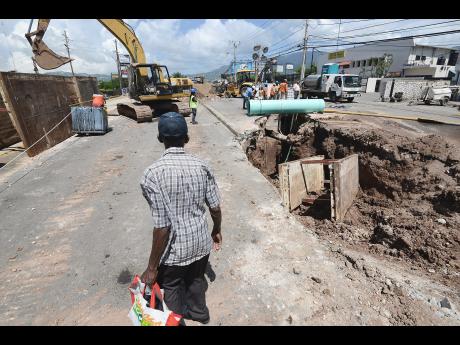
A man walks along a construction site on Constant Spring Road, St Andrew on Friday, October 7. The roadway in the vicinity of the Marketplace commercial complex is being repaired following its collapse from rains associated with Hurricane Matthew.

After a period of uncertainty, it has been confirmed that the Paris Agreement on Climate Change will enter into force on November 4.

This is good news for the Caribbean, one of the parts of the world most at risk from sea level change and severe climatic events.

By global treaty standards, formal agreement has been achieved remarkably quickly, especially as the solutions that the treaty proposes remain politically controversial in many of the nations that agreed last December to the final text.

Normally, ratification takes years to achieve. However, faced with evidence that the planet continues to warm and the possibility that Donald Trump could become the next US president and may pick apart the hard-won agreement, the world’s largest carbon emitters – China, the United States, Brazil, the European Union, and India, but not so far Japan or Russia – have agreed to ratify, thereby reaching the agreed target of 56.87 per cent of all global emissions, for the treaty to come into force.

In many respects, this is a victory for the Caribbean, for CARICOM in particular, and the African, Caribbean and Pacific Group of States (ACP) and other small-island developing states, which in Paris last December made clear that a positive outcome was existential.

In outline, the 31-page agreement proposes that a balance between greenhouse gas emissions and the sinks for ameliorating them is achieved in the second half of this century.

It emphasises the need to hold the increase in the global average temperature well below 2 degrees Celsius (36 degrees Fahrenheit) above pre-industrial levels; proposes “pursuing efforts to limit the temperature increase to 1.5 degrees Celsius (35 degrees Fahrenheit)”; and recommends that a peak in global greenhouse gas emissions be achieved as soon as possible. It allows for an asymmetrical approach, enabling all developing countries – including large industrialising carbon emitters like China, India and Brazil – to have more time to adapt.

In a section that addresses loss and damage, the agreement establishes funding at the minimum annual rate of US$100 billion up to 2030 to enable support for mitigation and adaptation in developing nations. However, it does not set a timescale for reaching greenhouse gas emission neutrality.

Unlike the earlier Kyoto Protocol of 2005, which required major carbon emitters to agree to binding emissions reductions, but failed when the US decided not to ratify because of exclusion of nations like China, the Paris agreement requires all countries to devise their own climate action plans and then improve on them at regular intervals.

What comes next is likely to be difficult, requiring all of the diplomatic and political skills that the Caribbean and other small-island developing states have.

ACCESS TO RESOURCES

While Hurricane Matthew and the damage that it wreaked in Haiti, The Bahamas, and Cuba was a salutary global reminder of the risk that low-lying states with limited resources face, CARICOM, as its Secretary General, Irwin LaRocque, noted earlier this year, now faces the challenge of being able to access the resources the agreement promises.

An important recent development in this respect has been the establishment by the Commonwealth Secretariat, with Australian finance, of a new facility intended to assist governments obtain available funding.

The idea is that a Commonwealth Climate Finance Access Hub will locate national climate-finance advisers in countries for two-year periods to help access climate change support. Among the first countries likely to receive such support are Antigua, Barbados, Dominica, Guyana, Jamaica, and St Kitts, as well as other small island states in the Indian Ocean and the Pacific.

Other funding options are also being considered. Recently, Jamaica’s Prime Minister Andrew Holness indicated that Jamaica is to work with its international development partners to pursue debt for climate-change swaps. Such an approach, he says, has the potential to provide fiscal relief while helping to unlock climate financing to fund adaptation and mitigation initiatives.

What is clear is that when it comes to funding, the treaty agreement as is so far little more than an aspirational framework.

For this reason, at the forthcoming climate change conference in Marrakesh in November, CARICOM will need – together with its Alliance of Small-Island States – the global grouping which brings together small island and low-lying coastal countries that share similar development concerns – to hold the world to account for what has been agreed.

This will not just be a test of the Caribbean’s staying power and the willingness of regional governments to fund and support a continuing focus. It will also require the Caribbean to remind the countries that it supported during the negotiations, and which expressed concern about the implications of climate change for the region, of their commitments.

Put more bluntly, it is now the time for China and Brazil, as much as the US and Europe, to ensure that the support for adaptation that the region needs, now materialises.

In this, both CARICOM and the CARICOM Climate Change Centre will continue to have a critical role in coordinating the regional effort. But it will also be up to individual governments to maintain the political momentum, demonstrate a unity of purpose, and be determined to address the Caribbean’s implementation deficit.

CLOSE TO THE SEA

Climate change is an issue on which the Caribbean has had every reason to have its voice heard and be taken very seriously. Fifty per cent of its population and the majority of the region’s productive enterprise and infrastructure lie within 1.2 miles of the sea. Its low-lying nature, its fragile ecosystems, and extreme weather events demonstrate that it is a prime candidate to benefit from what has been agreed.

While countries in the region are often accused of allowing mendacity to drive their foreign policy, here is an example where the Caribbean deserves a transfer of resources if it quite literally is not to disappear beneath the sea.

Climate change also has a strategic importance. It enables the Caribbean to demonstrate an approach that owes more to the future than to the past; it is an issue on which it has a better chance to exert leverage; and one that can deliver national and regional development objectives. It is an issue on which the region occupies the moral high ground and has popular international support.

Gleaner

Caribbean waters have been disturbed by Hurricane Matthew, which has left a trail of death and destruction in its wake this past week.


While Jamaica was spared the full wrath of Hurricane Matthew, others in the Caribbean were not, making well the case for holding global temperatures at 1.5 degrees Celsius in the face of a changing climate.

So says respected meteorologist and former climate change negotiator for Jamaica, Clifford Mahlung.

For him, the experience of Matthew – leaving in its wake a trail of bodies and extensive infrastructure damage in not only Haiti, which took a severe battering, but also the Dominican Republic and Cuba – is chock-full of takeaways.

“The lessons that we gather from Matthew are numerous. It certainly strengthens the argument that we keep our global temperatures as close as we can to 1.5 degrees, because anything above 1.5 will result in many such systems like the one we just experienced with this hurricane,” Mahlung told The Gleaner.

In the run up to and during the international climate change talks held in France last year, the Caribbean aggressively lobbied for and ultimately secured the inclusion of 1.5 degrees Celsius as a target referenced in the new climate deal.

Dubbed ‘The Paris Agreement’, it has as its goal to hold “the increase in the global average temperature to well below 2 degrees Celsius above pre-industrial levels, and to pursue efforts to limit the temperature increase to 1.5 degrees Celsius above pre-industrial levels, recognising that this would significantly reduce the risks and impacts of climate change”.

The agreement will come into force next month following reports of endorsement from European nations yesterday, which sent the accord across a crucial threshold. “European nations raised backing for the 2015 Paris Agreement to countries representing 56.75 per cent of world greenhouse gas emissions, above the 55 per cent needed for implementation,” a Reuters news report said, quoting from a United Nations website.

With this year’s global climate change talks, to be held in Marrakesh, now only weeks away, Mahlung said Hurricane Matthew lends significance to the coming into force of the agreement. It also underscores, he said, the need for global financial and other support for climate change adaptation and loss and damage associated with extreme weather events in small-island developing states (SIDS).


HURRICANE CATEGORIES


“Hurricane Matthew was able to maintain category three or higher for several days. It shows that we can get a category five hurricane in a matter of hours,” Mahlung said.

“It shows the difficulties of even doing some of the predictions, as we saw how the projected tracks changed considerably over time; and this is not because the models are not good, but that the kind of conditions we now face with respect to tropical cyclone development have changed significantly from the good old days of, say, a Gilbert or Ivan,” he added.

According to the meteorologist, SIDS have to remain vigilant.

“You can appreciate that there were times when the people in Haiti and Dominican Republic would have thought that the system would not have come to Hispaniola. We saw where, in the final analysis, Jamaica was spared and the track was changed, resulting in grave devastation in Hispaniola and particularly Haiti,” Mahlung noted.

“So when we make the case with respect to adaptation in Marrakesh in a few weeks time, and also loss and damage, we will go into those negotiations with first-hand experiences of just what severe weather events such as a tropical cyclone, can do to small-island states,” he emphasised.

Former head of the Meteorological Service, Jeffrey Spooner, for his part, said there was no question of the need to continue the push for a climate-secure Caribbean.

“My real wish is that Marrakesh continues the work to ensure that we get to the point where we can really seal this deal to cap the increase in global temperatures at 1.5 degrees Celsius. Jamaica, CARICOM and SIDS need to continue to press for that,” he said.

pwr.gleaner@gmail.com

The Gleaner