Electric vehicle (EV) dealership BYD Jamaica has partnered with the Jamaica Public Service Company (JPS) to offer residential customers 50 per cent off their electricity bills for six months by purchasing select BYD models.

Customers who purchase 2025 models from March to April, and 2026 models from June to July, are eligible for the promotion.

Sloane Jackson, head of business at BYD Jamaica, remarked “This partnership was born out of an increased and growing interest in electric vehicles islandwide, so we decided to incentivise potential customers’ curiosities by reaching out to the JPS, who has enthusiastically agreed to work with us in getting more customers to purchase EVs; specifically, BYD models”.

“An electricity bill reduced by up to 50 per cent for six months allows customers to easily and seamlessly start their EV journeys. JPS will also provide a thoughtful delivery care package with a radio frequency identification (RFID) card, details on how to use the card and the app, and a full list of the 68 JPS/Evergo charging stations across the island.”

Additionally, Dionne Nugent, director of business development at JPS, noted, We’re always looking to unleash Jamaica’s growth and productivity through innovative energy solutions, and we’re excited to do that by partnering with a fantastic brand such as BYD. We do not doubt that Jamaicans will enjoy driving away in their BYD vehicles with the bonus of reduced electricity bills during the promotion period.

The eligible models are the Yuan Plus, Seal, Song Plus DM-i, Sealion, and Shark.

Discounted bills start from the date of the vehicle’s delivery, and customers will receive up to 50 per cent off (or a maximum of J$25,000) their electricity bills for the next six months. The BYD Sales Team will send the [vehicle] registration details, driver’s license, and current JPS bill with the customer and property number to the JPS team. Terms and conditions will apply.

The ATL Automotive Group, exclusive distributors of BYD in the Caribbean, advised that as is standard, any purchase of a hybrid or electric vehicle includes the complimentary installation of a home charging station for easy access.

As the world’s leading EV manufacturer—renowned for its groundbreaking battery technology used in its wide range of electric vehicles, as well as energy systems and portable devices—BYD is committed to technological innovations for a better life, while simultaneously protecting the environment and cooling the earth by one degree.

Our Today
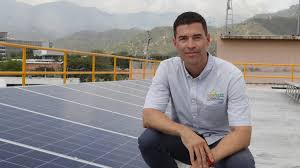
Thinktank says solar has been fastest-growing energy source for last 20 years, but remains dwarfed by hydro power

The world used clean power sources to meet more than 40% of its electricity demand last year for the first time since the 1940s, figures show.

A report by the energy thinktank Ember said the milestone was powered by a boom in solar power capacity, which has doubled in the last three years.

The report found that solar farms had been the world’s fastest-growing source of energy for the last 20 consecutive years.

Phil MacDonald, Ember’s managing director, said: “Solar power has become the engine of the global energy transition. Paired with battery storage, solar is set to be an unstoppable force. As the fastest-growing and largest source of new electricity, it is critical in meeting the world’s ever-increasing demand for electricity.”

Overall, solar power remains a relatively small part of the global energy system. It made up almost 7% of the world’s electricity last year, according to Ember, while wind power made up just over 8% of the global power system.

The fast-growing technologies remain dwarfed by hydro power, which has remained relatively steady in recent years, and made up 14% of the world’s electricity in 2024.

Hydro power is one of the modern world’s oldest renewable energy technologies, and made up a large proportion of global electricity in the 1940s – when the power system was about 50 times smaller than it is today.

The continuing growth of solar means clean power – including nuclear and bioenergy – is on track to expand faster than the world’s overall electricity demand, according to Ember. This should mean fossil fuels beginning to be squeezed out of the global power system.

Ember had previously predicted that 2023 would be the year in which emissions from electricity reached a peak, after a plateau in the first half of the year.

Climate experts hoped then that emissions would begin to fall, but a series of heatwaves across the globe ignited a surge in demand for electricity to power air conditioning and refrigeration systems, which caused fuel electricity to grow by 1.4% that year.

The report, which accounted for 93% of the global electricity market across 88 countries, found that the surge in demand pushed emissions from the global power sector up by 1.6% to an all-time high last year.

MacDonald said heatwaves were unlikely to ignite a similar demand surge in the year ahead – but the increasing use of electricity to power artificial intelligence, datacentres, electric vehicles and heat pumps was expected to play a bigger role in the world’s appetite for electricity.

Combined, these technologies accounted for a 0.7% increase in global electricity demand in 2024, double what they contributed five years ago, the report found.

“The world is watching how technologies like AI and EVs will drive electricity demand,” MacDonald said. “It’s clear that booming solar and wind are comfortably set to deliver, and those expecting fossil fuel generation to keep rising will be disappointed.”

The Guardian

Our Commitment to You

SolarBuzz, in partnership with the JREA, has been engaged in discussions with the government and relevant stakeholders regarding the recent Net Billing requirement for the Solar Tax Credit application. This solar tax credit allows individuals to claim up to 30% of the value of their solar system or a maximum of J$1.2 million, provided the system was installed on or after January 1, 2023, at the primary residence of the claimant.

Temporary Relief

While the initial requirements did not include a Net Billing licence, the Tax Administration Jamaica (TAJ) application process mandated this in addition to a GER Compliance Certificate. Following discussions with the Minister of Science, Energy, Telecommunications and Transport, Daryl Vaz, we have been granted temporary relief for this tax filing season. Until April 1, 2025, homeowners can apply for the solar tax credit without needing a Net Billing licence.

Act Now

We encourage eligible homeowners to take advantage of this limited-time waiver and submit their applications before the April 1, 2025 deadline. 


A GER inspector must inspect your system before submission to ensure compliance.

Applying for the Solar Tax Credit

This tax credit is available to:
✅ PAYE employees
✅ Pensioners
✅ Self-employed individuals

For PAYE employees and pensioners, the credit is issued as a cash refund, while self-employed individuals receive it as a tax credit for future liabilities.

Application Process:

  1. Apply online via the TAJ website. 
  2. Submit the appropriate form: 
    • S04 Form (for self-employed individuals or those filing their own income tax). 
    • IT05 Form (for PAYE employees or pensioners). 
  3. PAYE employees will need their P24 form for the relevant fiscal year to complete the application form. 
  4. You can claim up to 50% of your tax liability for the respective year for solar systems valued up to J$4 million.

Important Note: Due to the temporary waiver of the Net Billing Licence requirement and the absence of an updated TAJ application form, claimants must use the fiscal year that their system was installed as the Licensed Electrical Inspector Certificate Date when completing the application form.

Financial Benefits

This incentive provides homeowners with an early return on their solar investment particularly for those who financed their solar system, as any cash refund can be applied toward the existing loan balance. 

SolarBuzz strongly encourages eligible clients to take advantage of this tax credit incentive. We remain committed to helping you save on energy costs while maximizing your financial benefits.

Assistance to Non Clients

For homeowners whose systems were not installed by SolarBuzz, we offer consultation and GER inspection services for a fee. However, we cannot guarantee that non-SolarBuzz installations will pass inspection, as we cannot verify compliance with Jamaica’s electrical code.


Solar Financing: Making Energy Freedom a Reality

As part of the recent budget announcement, the Government has increased financing options for solar installations through the National Housing Trust (NHT) effective July 1, 2025:

  • Under the Home Improvement Loan, contributors with an existing NHT mortgage can now apply for solar financing after 7 years instead of the present 10-year requirement. 
  • The financing limit under the Home Improvement Loan will be increased to J$5 million per contributor. 
  • The Smart Energy Loan limit will be increased from J$1.5 million to J$2.5 million.

SolarBuzz welcomes this move by the Government as it will encourage greater solar adoption among Jamaican homeowners. With the growing need for energy resilience against powerful weather systems and fluctuations in electricity rates as per future grid upgrades, these financing options will provide significant support in achieving energy independence.

deidre@solarbuzzjamaica.com 

WASHINGTON (AP) — Installation of renewable energy worldwide hit a record high last year, with 92.5% of all new electricity brought online coming from the sun, wind or other clean sources, an international agency reports.

Nearly 64% of the new renewable electricity capacity in 2024 was in China, according to Wednesday’s report by the International Renewable Energy Agency (IRENA). Overall, the world added 585 billion watts of new renewable electrical energy, a 15.1% jump from 2023, with 46% of the world’s electricity coming from solar, wind and other green non-nuclear energy sources.

But even that big jump does not put the globe on track to reach the international goal of tripling renewable energy from 2023 to 2030, with the world on pace to be 28% short, IRENA calculated. The goal was adopted in 2023 as part of the world’s efforts to curb the increasing impacts of climate change and transition away from fossil fuels such as coal, oil and natural gas.

“Renewable energy is powering down the fossil fuel age. Record-breaking growth is creating jobs, lowering energy bills and cleaning our air,” United Nations Secretary-General Antonio Guterres said in a statement. “But the shift to clean energy must be faster and fairer.”

China added almost 374 billion watts of renewable power — three quarters of it from solar panels — in 2024. That’s more than eight times as much as the United States did and five times what Europe added last year.

China now has nearly 887 billion watts of solar panel power, compared to 176 billion in the United States, nearly 90 billion watts in Germany, 21 billion watts in France and more than 17 billion watts in the United Kingdom.

United Nations climate chief Simon Stiell used the figures Wednesday to challenge Europe and other industrialized nations to catch up with China.

“As one government steps back from climate leadership, it opens up space for others to step forward and seize the vast benefits,” Stiell told European leaders in Berlin, making reference to U.S. President Trump’s withdrawal from the Paris climate agreement. “The clean energy transition can be Europe’s economic engine-room now — when new sources of growth are vital to buttress living standards and for decades to come.”

Stiell said the IRENA numbers show that the “global renewables boom is unstoppable” and said the market for green energy reached $2 trillion last year.

The move to renewables can grow even faster, said Neil Grant, senior policy analyst at Climate Analytics, which tracks and projects countries’ climate change fighting efforts.

“If in 2024 renewables grew 15%, think how much faster they could grow with the full backing of comprehensive, credible and ambitious climate policies around the world,” said Grant, who wasn’t part of the IRENA report.

The Associated Press

Prime Minister Dr. Andrew Holness has announced a series of new and expanded benefits from the National Housing Trust (NHT) to benefit Jamaicans.

The series of improved benefits will take effect in the coming months are aimed at making homeownership more affordable and accessible for Jamaicans.

These enhancements, which include increased loan limits, reduced deposit requirements, and expanded grants, represent a significant investment in improving the lives of NHT contributors.

Starting July 1, 2025, several key changes will take effect:

  • Increased Loan Limits: Individual loan limits will rise from $7.5 million to $9 million, while two co-applicants can now access $17 million and three co-applicants up to $23 million.
  • The loan ceiling for construction loans will also be increased to $11 million for individuals$17 million for two co-applicants, and $23 million for three co-applicants.
  • Lower Deposit Requirements: For contributors earning less than $30,000 weekly, the deposit requirement for open market loans will be reduced from 5% to 2% for properties valued at $14 million or less, making it easier for more Jamaicans to own a home.
  • Reduced Service Charges: Those earning $30,000 or less per week will see their 2% service charge eliminated, while those earning between $30,000 and $42,000 per week will have their charge reduced from 5% to 2%.
  • Expanded Home Grant Eligibility: The maximum qualifying income for Home Grants will increase to $30,000 per week, enabling more contributors to access grants of up to $3.5 million.
  • Home Improvement Loan: The waiting time to access this loan will be reduced from 10 to 7 years, and the loan limit will increase from $3.5 million to $5 million.

There are also special Initiatives for pensioners and public sector workers. These include:

  • Smart Energy Grant Expansion: Initially available only to public sector pensioners, this grant of up to $1.5 million for solar panel installation and alternative energy systems will be expanded to private sector pensioners.
  • Smart Energy Loan Increase: The loan amount will increase from $1.5 million to $2.5 million, and the interest rate will now range from 0-5%, making it more affordable for lower-income contributors.
  • Targeted Institutional Loan Programme: The NHT will partner with hospitals to provide on-site housing for healthcare workers, with ongoing discussions also considering the tourism, security, and education sectors.

New Contribution Refund Option for Private Sector Mortgagors

Private sector mortgagors will now have the choice to apply their NHT contribution refunds toward their existing mortgages, provided their loans are free of arrears.

In the meantime, Prime Minister Holness announced that as the NHT approaches its 50th anniversary in 2025/26, the agency will commemorate its milestone with the development of a new park in Mandeville and the expansion of its scholarship programme from 10 to 50 awards.

Prime Minister Holness said his administration is committed to housing affordability, stating.

“These enhancements reflect our dedication to ensuring that every Jamaican has a fair opportunity to own a home and improve their quality of life,” said Dr. Holness.

The Office of the Prime Minister

The Government is waiving the requirement for homeowners to get the Ministry of Science, Energy, Telecommunications and Transport’s support in obtaining the income tax credit for residential solar photovoltaic system installations.

The ministry says the decision makes way for homeowners who have invested in solar energy to seamlessly access their tax benefits, “reinforcing the government’s commitment to achieving 50 per cent renewable energy generation goals by 2030”.

Under the programme persons can access an income tax credit at the rate of 30 per cent of the acquisition and installation cost of a solar photovoltaic system for the taxpayer’s primary residence to a maximum cost of $4 million.

“We recognise the efforts of Jamaicans who have taken the initiative to invest in solar energy. This waiver will streamline the process for these individuals and facilitate the timely disbursement of their entitled tax credits,” said Minister of Science, Energy, Telecommunications and Transport, Daryl Vaz, in a media release on Wednesday.

In the meantime, the ministry maintains that, starting April 1, 2025, a net billing licence will be a prerequisite for those seeking future incentives in accordance with The Electricity Act 2015 and The Electricity (Net Billing Regulations), 2022.

Only completely off-grid self-generators who are not connected to the Jamaica Public Service grid are exempt from licensing.

The Gleaner

LONDON, March 21 (Reuters) – GB Energy will lead a 200 million pound ($260 million) solar panel project for hospitals and schools, Britain said on Friday, in the first investment for the state-owned company since it was set up last year with the aim of lowering energy bills.
A key part of the Labour government’s plan to improve public services in Britain and help revive the economy, GB Energy was established in October to drive investment in renewables.
The 200-million-pound deal could help dampen speculation around GB Energy’s funding ahead of a budget update speech from finance minister Rachel Reeves next Wednesday, when she is expected to announce cuts to public spending plans.
GB Energy will pay for solar panels on the roofs of schools and hospitals, in this first major project, with the first installations expected to be made this summer, the government said.
A jump in energy bills since the Ukraine war has heaped extra pressure on already strained health and education budgets, but the new solar panels and related renewable schemes will help cut those costs, the statement said.
“Great British Energy’s first major project will be to help our vital public institutions save hundreds of millions on bills to reinvest on the frontline,” energy minister Ed Miliband said.
“This is our clean energy superpower mission in action, with lower bills and energy security for our country.”
GB Energy will make this investment alongside the government as the parliamentary process to finalise its creation is not expected to complete until next month.
Of the total investment, about 80 million pounds has been earmarked for schools in England, while 100 million pounds will go on hospitals. GB Energy will also work with devolved governments on solar projects for their schools and hospitals.
Reuters
HAVANA, March 20 (Reuters) – Cuba is making progress on a China-backed plan to install more than 50 solar parks this year capable of churning out more than 1,000 megawatts, the Energy Ministry said late on Wednesday, just days after the country’s antiquated grid collapsed and left millions in the dark.
In the most detailed report yet on the plan’s progress, energy officials said two solar parks had come online in February – one in Havana and one in Cienfuegos – and that by the end of March, workers would complete six more.
By the end of March, eight of the planned 50 solar parks will be operating, producing 170 megawatts, said Ovel Concepción Díaz, a top renewable energy official with the Energy Ministry.
The broader plan to expand renewable energy generation, announced in 2014, has gained momentum in recent months as the government looks to revive its ailing economy and alleviate tensions among island residents exhausted by months of rolling blackouts.
The goal by 2030 is to generate 24% of total electricity production using renewable sources, up from around 4% currently. That goal includes building 92 solar parks, the government has said, in addition to battery storage facilities, hydro- and wind-generation projects.
“That goal will be achieved before 2030 and the percentage (of renewable generation) may be a little higher,” said Rosell Guerra Campaña, Cuba’s director of renewable energy.
China and Russia have moved to help Cuba out of an energy crisis that has reached a tipping point after the country’s electric grid collapsed four times since October.
Russia has previously committed to helping Cuba modernize three of its oil-fired power plants, along with building a 200-MW plant to bolster the grid.
Cuba and China struck a deal last year in which Beijing agreed to help the island’s Communist-run government boost solar production. Neither country has elaborated on financing details.
China recently said it was donating materials and expertise to build 22 more solar parks across Cuba capable of generating 120 MW, starting this year.
Cuba blames its energy crisis on a Cold War-era U.S. trade embargo and fresh restrictions from U.S. President Donald Trump, who tightened sanctions on the nation and vowed to restore a “tough” policy toward the longtime U.S. foe.
Reuters

Solar dominates project queues through 2028, said data from the Federal Energy Regulatory Commission (FERC).

Solar now represents 10.53% of total available installed generating capacity in the United States, according to the Federal Energy Regulatory Commission (FERC).

Solar capacity is approaching that of its renewable energy counterpart in wind, which is now 11.77% of available capacity, and is expected to surpass it in the coming years. Hydrocarbon based power remains dominant on U.S. grids, with nearly 43% of capacity attributed to natural gas and 15% to coal. Hydropower contributes 7.6% of U.S. capacity, said FERC.

Despite natural gas dominance in existing power, solar energy leads the way for the present and future of installations. In January 2025, 2,950 MW was installed, compared to 60 MW of natural gas.

Looking ahead FERC tracks 89 GW of high-probability capacity additions from solar through January 2028, compared with 16 GW for natural gas. What’s more, FERC expects nearly 16 GW of natural gas retirements over the same period. Notably, nearly 25 GW of coal is also expected to be retired through January 2028, highlighting the shift toward emissions-free sources of power.

pv Magazine

Vaz rubbishes Opposition’s criticisms of Government’s energy policy

MINISTER with responsibility for energy Daryl Vaz has defended the Administration’s handling of the energy sector in the wake of claims by the Opposition People’s National Party (PNP) that the Government is to be blamed for the high electricity prices Jamaicans now face.

Making his presentation to the 2025/26 Budget Debate last week, Opposition spokesman on finance Julian Robinson slammed the Government over its energy policy as he pointed out that the cost of electricity in Jamaica is more than US$0.40 per kilowatt hour (kWh), while it was as low as US$0.22/kWh during the last PNP Administration.

That theme was continued by Opposition Leader Mark Golding during his presentation to the budget debate on Tuesday as he charged that the Andrew Holness Administration had dropped the ball as it failed to issue regular request for proposals (RFPs) for additional renewable energy for years which could have resulted in lower electricity prices for Jamaicans.

But during a mid-morning media briefing on Tuesday Vaz scoffed at the PNP’s claim that the high cost of electricity was due to Government’s inability to develop a sustainable renewable energy framework.

Vaz listed a multiplicity of factors he said caused the delay, rejected the narrative that little progress has been made in the renewable energy sector, and described the Opposition’s claims as “disingenuous and misleading”.

According to Vaz, measurable achievements and strategic investments in renewables underscore the Government’s commitment to achieving an evidence-based, sustainable, and affordable resilient energy future for Jamaica.

“Data clearly refutes claims of inaction and demonstrates a consistent, structured approach to energy diversification and transformation. The increase in electricity prices between 2016 and 2024 was not due to a lack of renewable energy deployment but rather global scenarios linked to fossil fuel volatility, inflation, supply chain disruptions and geopolitical issues.

“The Government’s renewable energy expansion remains on track, ensuring long-term energy affordability and security for Jamaica. More renewables are coming but at the right time and in the right way as we continue to lower the cost for all our citizens. Together we are building a cleaner and more secure energy future for Jamaica,” Vaz said.

He argued that detractors are spreading propaganda because the island is now in the “silly season” with a general election near.

“This is something that is ongoing and it is not specific to my ministry or to energy but there is just a lot of misconceptions, misleading, and disingenuous information. What I can say specifically is that I encourage all well-thinking Jamaicans to get the facts and most importantly judge the policies and performance of those who are putting themselves forward in the upcoming election,” Vaz said.

“We are not perfect, but definitively we have a lot of runs on the board and our job will be to make sure and put those out in the public domain so people can examine and make informed decisions,” added Vaz.

The energy minister said significant progress has been made in expanding the energy portfolio, guided by a robust policy framework and strategic investments.

He said several factors, including surging fossil fuel prices, the Russia-Ukraine war, and global supply chain disruptions have contributed to the high price for electricity.

Vaz argued that while renewable energy technology costs have declined over time, the transition from fossil fuels must be a planned, orderly and well-timed process.

Jamaica Observer