San Juan, Puerto Rico (AP) — An island-wide blackout hit Puerto Rico on Wednesday as the largely Catholic residents of the U.S. territory prepared to celebrate the Easter weekend, officials said.
All 1.4 million clients on the island were without power, Hugo Sorrentini, spokesman for Luma Energy, which oversees the transmission and distribution of power, told The Associated Press. “The entire island is without generation,” he said.
Hotels were at near-capacity, with thousands of tourists celebrating Easter vacations on the island.
Meanwhile, at least 78,000 clients were without water, with officials warning that power likely won’t be fully restored for another 48 to 72 hours.
“This is unacceptable,” said Josué Colón, the island’s so-called energy czar and former executive director of Puerto Rico’s Electric Power Authority.
It was not immediately clear what caused the shutdown, the latest in a string of major blackouts on the island in recent years. Gov. Jenniffer González, who was traveling, said officials were “working diligently” to address the outage.
Thousands of Puerto Ricans were fuming over the latest outage, with many renewing their calls that the government cancel the contract with Luma and Genera PR, which oversees generation of power on the island.
“This is a total disaster,” said Orlando Huertas, 68, as he sipped a drink with a friend at a streetside bar and criticized the government for not doing enough to tackle the chronic outages.
Dozens of people were forced to walk next to the rails of the rapid transit system that serves the capital, San Juan, while scores of businesses including the biggest mall in the Caribbean were forced to close. Professional baseball and basketball games were cancelled as the hum of generators and smell of smoke filled the air. Traffic became snarled as police officers were deployed to busy intersections.
By late Wednesday afternoon, some 5,000 to 7,000 clients had their power restored, although that number is expected to fluctuate. Those without generators crowded around grocery stores and other businesses to buy ice.
“I’m desperate. My generator is broken,” said Carmen Suriel, who worried about the impact of the blackout on her two children, a six-month-old and a five-year-old with Down syndrome, as the temperature rose across Puerto Rico on Wednesday.
Alma Ramírez, 69, said she was frustrated with the constant outages, some of which had already damaged her TV and microwave, forcing her to buy new appliances.
“They have to improve,” she said of the government. “Those who are affected are us, the poor.”
The island of 3.2 million residents has a more than 40% poverty rate, and not everyone can afford solar panels or generators. While there was a push to use more renewable energy sources under the administration of former U.S. President Joe Biden, which provided Puerto Rico with mega generators and other resources, experts worry that won’t happen under U.S. President Donald Trump.
Roughly 117,000 homes and businesses on the island have solar rooftops. Meanwhile, petroleum-fired power plants provide 62% of Puerto Rico’s power, natural gas 24%, coal 8% and renewables 7%, according to the U.S. Energy Information Administration.
Daniel Hernández, vice president of operations at Genera PR, said at a news conference that a disturbance hit the transmission system shortly after noon on Wednesday, during a time when the grid is vulnerable because there are not many machines regulating frequency at that hour.
Verónica Ferraiuoli, acting governor and secretary of state for Puerto Rico, said the White House reached out to local officials and said they are available if needed.
Pablo José Hernández, Puerto Rico’s representative in Congress, said he would work to ensure that “Washington understands the real and urgent situation Puerto Ricans face every day.”
“The electric grid crisis is frustrating, and after years of blackouts, it feels like it’s going from bad to worse,” he said.
The last island-wide blackout occurred on New Year’s Eve.
Puerto Rico has struggled with chronic outages since September 2017 when Hurricane Maria pummeled the island as a powerful Category 4 storm, razing a power grid that crews are still struggling to rebuild.
The grid already had been deteriorating as a result of decades of a lack of maintenance and investment.
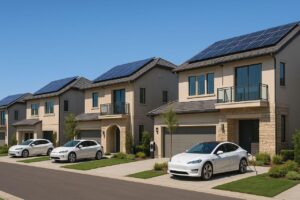
It’s 2025, and you just might be wondering if solar panels will really boost your home value or if they could actually make it harder to sell. That’s a valid concern, but here’s the truth: solar panels are now one of the most sought-after features in the housing market. Buyers aren’t just looking for charm or square footage—they want homes that save money and work smarter. Solar panels deliver both, making your property more appealing and valuable than ever before.
Key Takeaways
-
Solar panels are no longer a luxury—they’re a smart, value-boosting feature that buyers crave in 2025.
-
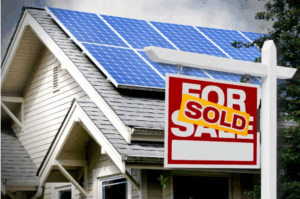
Homes with solar sell faster and for 6.8% more, translating to thousands in extra resale value.
-
Energy savings, sustainability, and sleek modern designs make solar-equipped homes irresistible.
-
Tax exemptions in many states sweeten the deal, saving you even more.
-
Whether sunny or cloudy, solar panels work everywhere—making your home future-ready.
Do Solar Panels Really Add Value to Your Home?
Solar panels are no longer just an eco-conscious choice—they’re a financial game-changer for homeowners. According to a recent SolarReviews report, homes with solar panels sold for 6.8% more than comparable properties without them over the past three years. That’s a significant leap from Zillow’s 2019 data, which showed only a 4.1% premium for solar-equipped homes. With Zillow reporting the median U.S. home value at $357,469, that’s an extra $24,308 in your pocket.
With rising electricity costs and a growing focus on sustainability, buyers are now seeking energy-efficient homes. Solar panels promise lower utility bills and a greener lifestyle, making them a win-win for homeowners and potential buyers alike. Buyers recognize this dual benefit of saving money and making a positive environmental impact, which explains why solar-equipped homes are increasingly sought after in today’s market.
Factors That Influence How Much Value Solar Panels Add to Your Home
Solar panels are a fantastic investment, but how much they boost your home’s value depends on a few key factors. Let’s break it down in a way that hits close to home.
-
Location: Where you live can make all the difference. If you’re in a sun-soaked state like California or Arizona, your solar panels are likely to generate a ton of energy—and attract buyers willing to pay a premium for them. But it’s not just about sunshine. States like New York or Massachusetts, with high electricity rates and solid tax incentives, also see homes with solar panels flying off the market. Curious about your state’s incentives? You might be surprised how much they could sweeten the deal for potential buyers.
-
Electricity Prices: We’ve all groaned looking at our electricity bills, haven’t we? That’s where solar panels come to the rescue. In areas where energy prices are high, homes with solar panels are like a golden ticket to lower monthly costs. Buyers are drawn to the idea of saving money—and who wouldn’t be?
-
System Quality and Age: Here’s the thing: not all solar panels are created equal. If your system is modern, efficient, and backed by a solid warranty, buyers will see it as a valuable upgrade. But if your panels are outdated or showing wear, they might raise concerns about future repairs.
-
Ownership Type: Here’s a pro tip: owning your system outright adds way more value than leasing it. Buyers often hesitate to take on a lease agreement, so if you’re leasing, consider buying it out before selling.
Common Misconceptions About Solar Panels and Home Value
Solar panels are gaining popularity, but some myths still hold homeowners back. Let’s bust those misconceptions and uncover the truth.
Buyers Don’t Care About Solar Panels
Think buyers are indifferent to solar panels? Think again! With energy bills climbing and sustainability taking center stage, solar-equipped homes are hotter than ever. Studies reveal that these homes sell faster and for a premium. Buyers love the promise of lower electricity costs and the chance to live a little greener. Solar panels aren’t just a nice-to-have—they’re a game-changer that savvy buyers are actively looking for in today’s market.
Solar Panels Hurt Curb Appeal
Worried solar panels might cramp your home’s style? Modern designs prove otherwise. Today’s panels are sleek, minimal, and can blend beautifully with your roofline. Some even mimic traditional shingles, making them a discreet yet powerful upgrade. Buyers see them as a sign of forward-thinking homeownership. Imagine your house standing out as a sustainable and energy-efficient gem—it’s not just about looks; it’s about showing off a home built for the future.
They’re Only Worth It in Sunny States
Solar panels only work in sunny states, right? Nope! Panels generate power from daylight, not just direct sun. Homes in cloudy places like Seattle or New York can benefit just as much—and sometimes even more. Why? Cooler temperatures boost efficiency. No matter where you live, solar panels deliver energy savings and long-term value. So, don’t let a few clouds rain on your solar dreams.
Solar Panels Make Your Home Harder to Sell
Think solar panels complicate a sale? In most cases, they do the opposite! Solar homes often attract buyers faster, thanks to their energy-saving benefits. That said, ownership matters—buyers prefer owned systems over leased ones. If you’re leasing, consider buying out the agreement to make your home even more attractive. Solar panels can be your home’s ultimate selling point!
Do Solar Panels Increase Your Property Taxes?
Adding solar panels to your home is an exciting upgrade—boosting your property’s value and slashing your electricity bills. But here’s a common concern: “Will this raise my property taxes?” Thankfully, in many states, the answer is no. A majority of states—29, to be exact—offer property tax exemptions for renewable energy installations. These exemptions ensure that while your home’s value goes up, your tax bill doesn’t follow suit.
But what if you’re in a state without these exemptions? Don’t worry, it’s not all doom and gloom. While your property taxes might increase slightly due to the higher home value, the financial perks of solar often far outweigh the costs. Think about it—every month, you’re saving on energy bills. Plus, when it’s time to sell, solar panels can add a premium to your home’s resale price, making the investment well worth it.
The best move is to do a little homework. Check with your local tax assessor to understand how solar installations are treated in your area. Even if there’s no statewide exemption, some cities or counties offer their own perks, so it’s worth asking. Keep records of your installation just in case you stumble upon additional rebates or credits.
Wrapping Up
Your home not only powers itself but also earns you money in the long run. That’s the beauty of solar panels—they transform your roof into an energy-producing powerhouse while boosting your property’s value. It’s a lifestyle change that saves you money, impresses buyers, and makes a real difference for the planet.
Integrate Sun
Powering a Greener Future
In a time where sustainability is no longer just an option but a necessity, the real estate and financial sectors are uniquely positioned to lead the charge toward a cleaner, more economically sound future.

The global shift toward renewable energy is undeniable and solar energy stands at the forefront of this transformation. The benefits are clear —lower energy costs, reduced carbon footprints, and energy independence for homeowners and businesses alike.
Unlocking the full potential of solar integration requires developers and financial institutions to work hand-in-hand, and offer attractive, flexible and secure financing solutions that treat solar as the high-yield investment that it is.
The Synergy of Bankers and Developers
Solar energy systems are tangible, low-risk assets offering homeowners significant savings, developers a competitive edge and banks the security of their investment.

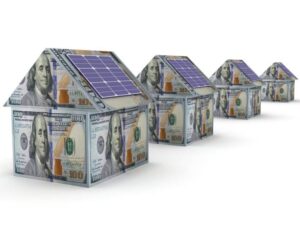
According to a 2024 U.S. study, homes equipped with solar systems sold for an average of 6.8% more than comparable homes without solar and spent less time on the market.

This premium reflects the growing demand for energy-efficient homes and makes a compelling case for developers to include solar in their projects.
Replacing monthly utility bills with solar loan payments of a similar or lower amount allows homeowners to reduce living costs without compromising their lifestyle or financial stability.
With one less major bill to worry about, the likelihood of loan defaults drops significantly.

Current data shows that the default rate for green energy loans is less than 1% making homes with installed solar systems a safe bet for banks.
Developers must design and build homes that are solar-ready or solar-integrated and banks need to create green loan products that match this forward-thinking approach.

Debunking Risk Aversion
Solar panels are income-generating assets. A properly installed solar system can save homeowners thousands of dollars over its lifetime and increase property value.
Homeowners can also generate additional savings by selling back any surplus energy to the grid through a Net Billing license.
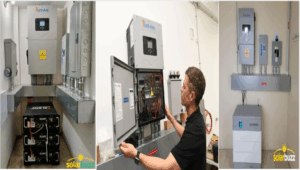
Modern solar systems that are data-engineered and include online monitoring, extended warranties, and long equipment lifespan are ideal collateral for financing.

Systems that are GER-certified, professionally installed, and maintained through structured programs reduce lending risk and ensure optimal system performance.
These features allow solar systems to function as secure collateral, much like a home or vehicle, which reduces risk for banks and enables competitive loan rates.

In the rare event of a loan default, the modern design and warranties of solar systems enable easy resale to schools, nonprofits, or existing bank customers.
Solar systems typically have a payback period of 4 to 6 years. For many PAYE employed who are leveraging the new solar tax credit, the payback period shortens.
Banks can further reduce risk by offering incentives to borrowers who apply their tax refunds to their loan balance.
Financing a Greener Future

Banks need to offer financing models that are just as innovative as the solar systems themselves:
- Incorporate solar into mortgages – Include solar systems in initial mortgage financing. Spreading the cost over a longer term makes systems more affordable and reduces default risk.
- Use solar systems as collateral – Given their high quality equipment, lifespan, warranties, and online monitoring capabilities, modern solar systems can serve as loan collateral. This approach protects the homeowner’s equity and reduces risk for lenders.
- Offer competitive interest rates – Secured loans, using the solar system as collateral, should have interest rates below the 15% – 19% that is currently on the local lending market. Lower rates encourage adoption and reduce defaults.
- Bundle EV and solar loans – Reduced interest rates for loans that combine a solar system with the purchase of an electrical vehicle (EV) is a dual investment that amplifies savings for homeowners. Solar energy can power both homes and vehicles further reducing monthly expenses and default risks.
- Leverage Net Billing for non primary residences – Require Net Billing licenses for non-primary residences to enhance their savings and reduce the likelihood of loan defaults.
- Mandate system maintenance – Require active maintenance as a clause in insurance coverage to ensure solar systems operate at optimal levels and protect the loan investment.
The National Housing Trust (NHT) is leading the way with revamped energy loan offerings like the Smart Energy Loan (up to J$2.5M) and Home Improvement Loan (up to J$5M) per contributor as of July 2024.
Banks should follow suit by offering secured solar financing backed by quality systems, long warranties and a maintenance program rather than relying on home liens
Developers, in turn, need access to financing with favorable terms so as to integrate solar into their designs without sacrificing profitability.

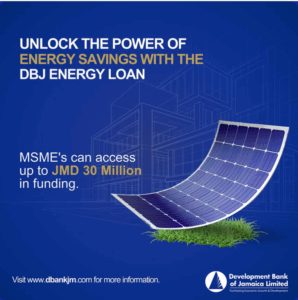
The Development Bank of Jamaica (DBJ) through its Credit Enhancement Facility (CEF), provides banks with funds for green energy loans for commercial clients where solar systems serve as collateral. Developers can therefore benefit from DBJ-backed competitive green financing.
Designing for the present
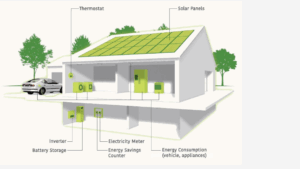
Developers can mainstream solar energy by incorporating it into their designs from the outset. Key design considerations include below:

- Roof Space Optimization – Ensure adequate, unshaded roof space for solar panels.
- Proximity to Infrastructure – Position main breaker panels close to designated solar equipment spaces for efficient installation.
- Battery Storage Readiness – Allocate dedicated indoor spaces for battery equipment to support energy storage.
- Pre-Wired Solar Circuits – Install breakers specifically for solar systems
- Solar Expertise and Aftercare Services – Collaborate with certified solar providers for installation and maintenance to ensure long-term system performance and insurability.
Integrating these features increases a property’s appeal and sale value, incentivizing more developers to embrace solar-ready designs.
A Win for All
Solar energy is a transformative investment with proven returns for homeowners, developers, and banks.

Banks can reimagine their lending practices, recognize the real value of solar systems and attract new customers with competitive green energy loans.
Developers can integrate solar systems into their offerings to enhance property value, accelerate sales, and meet growing consumer demand.

With low default rates, expanding consumer interest, and financial support from institutions like the DBJ, there has never been a better time for banks and developers to align and power a greener future together.
Deidre Wedderburn is the Client Relations Manager at SolarBuzz, dedicated to building long-term partnerships and delivering a top-tier client experience (deidre@solarbuzzjamaica.com).
In today’s climate of unpredictable weather patterns, rising energy costs and increasing reliance on modern amenities, solar energy is a strategic investment rather than just a sustainable choice.
From weather resilience and financial independence to increasing property value and providing unmatched peace of mind, solar energy offers a wealth of benefits that make it a solid long-term investment.
Weather Resilience
Extreme weather events such as hurricanes, are becoming more frequent and intense, putting pressure on aging electrical grids.
A direct hit from a strong storm could easily leave thousands without power for days or even weeks.
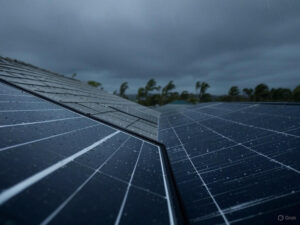
Solar energy systems, when paired with battery storage, offer a reliable solution for both homeowners and vacation villa owners ensuring that their family or guests have access to electricity and essential amenities even when the grid fails.
This kind of weather resilience is a game-changer especially for vacation rental owners, as it offers guests a seamless experience while setting your rental apart in a competitive market and safeguarding your revenue stream.
Upfront Investment
The upfront cost of solar installation is an investment that pays off in a short period of time.
On average, residential solar systems with battery storage offer a return on investment within 4-6 years. This payback period can be even shorter as electricity rates continue to rise.
Homeowners can also maximize their returns by increasing daytime energy usage, effectively putting to use any excess solar energy that would otherwise go unused once their batteries are fully charged.
During the payback period, solar replaces your electricity bill while allowing you to invest in your own infrastructure or other opportunities.
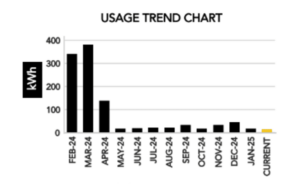
With electricity rates still subject to global volatility and price hikes triggered by supply disruptions, oil market shifts or even local grid upgrades, solar energy shields you from these variables. Solar energy locks in predictable savings and provides a hedge against inflation in the utility sector.
Property Added Value and Revenue Security
Properties with installed solar systems enjoy higher resale value and market appeal.
Property owners who sell before the payback period ends can still benefit from accelerated financial returns by commanding a more competitive sale price.
Vacation rental property owners stand to gain significantly from solar adoption.

Guests expect comfort and reliability, and a solar-powered villa offers them a superior experience that is uninterrupted by blackouts and free from energy usage restrictions without you bearing the burden of high energy bills.
This gives your property a competitive edge in the market since you can avoid passing fluctuating utility expenses onto guests.
Furthermore, solar energy acts as a premium amenity that can justify higher nightly rates and boost income potential.
It also appeals to the Eco-Tourist that appreciates clean energy, enhancing your property’s attractiveness to the growing eco-tourism market.
Smart Investment for EV Owners
For those who own or plan to purchase an electric vehicle (EV), investing in solar energy is a no-brainer.

Harnessing solar energy to charge your EV in the day time can significantly reduce or even eliminate reliance on the grid, reducing your monthly expenses.
With the Jamaica Public Service (JPS) already approved to implement special billing for EV owners due to anticipated demand pressure on the grid, installing solar energy gives a clear advantage.
Solar becomes a proactive investment that allows EV owners to sidestep potential surcharges and truly enjoy energy independence.
Investment of a Lifestyle
Investing in solar energy is not just a financial decision but a lifestyle upgrade.
Solar allows homeowners to fully enjoy the comforts of modern living – especially the use of the air conditioning unit during increasingly hot days and nights – without the worry of high electricity bills.

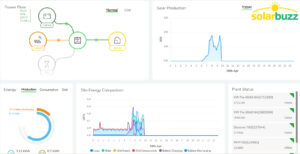
Additionally, modern solar systems include online monitoring tools that provide real-time insights into energy production and your usage.
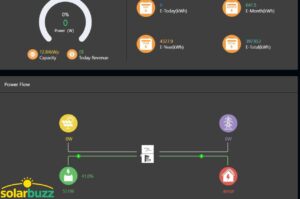
This kind of monitoring empowers you to manage your energy consumption efficiently and inadvertently helps you to get the most out of your system while maximizing long-term savings.
Accelerated Investment Returns
The recently introduced solar tax credit further tilts the scales in favor of solar energy as an investment.
Homeowners can now claim up to 30% of the value of their system, capped at J$4 million which translates to a potential tax credit of up to J$1.2 million. This incentive can significantly shorten the payback period on your solar investment.
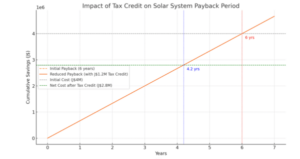
For PAYE-employed individuals who financed their solar system, this incentive is even more impactful since the tax credit is issued as a cash refund and can therefore be used to reduce loan balances if desired.
Additionally, the cash refund from this solar tax credit can be reinvested into other opportunities, such as home renovations, upgrading your solar system, or ongoing maintenance to ensure optimal long-term performance and continued savings.

A Future-Proof Investment
With a payback period that is shrinking thanks to tax incentives and rising utility costs, the case for solar energy as an investment is stronger than ever.
Installing solar energy is a strategic move for financial security, property enhancement, energy resilience and peace of mind.
Invest today, and enjoy the rewards of resilience, savings, and independence for years to come.
deidre@solarbuzzjamaica.com
Electric vehicle (EV) dealership BYD Jamaica has partnered with the Jamaica Public Service Company (JPS) to offer residential customers 50 per cent off their electricity bills for six months by purchasing select BYD models.
Customers who purchase 2025 models from March to April, and 2026 models from June to July, are eligible for the promotion.
Sloane Jackson, head of business at BYD Jamaica, remarked “This partnership was born out of an increased and growing interest in electric vehicles islandwide, so we decided to incentivise potential customers’ curiosities by reaching out to the JPS, who has enthusiastically agreed to work with us in getting more customers to purchase EVs; specifically, BYD models”.
“An electricity bill reduced by up to 50 per cent for six months allows customers to easily and seamlessly start their EV journeys. JPS will also provide a thoughtful delivery care package with a radio frequency identification (RFID) card, details on how to use the card and the app, and a full list of the 68 JPS/Evergo charging stations across the island.”
Additionally, Dionne Nugent, director of business development at JPS, noted, “We’re always looking to unleash Jamaica’s growth and productivity through innovative energy solutions, and we’re excited to do that by partnering with a fantastic brand such as BYD. We do not doubt that Jamaicans will enjoy driving away in their BYD vehicles with the bonus of reduced electricity bills during the promotion period.”
The eligible models are the Yuan Plus, Seal, Song Plus DM-i, Sealion, and Shark.
Discounted bills start from the date of the vehicle’s delivery, and customers will receive up to 50 per cent off (or a maximum of J$25,000) their electricity bills for the next six months. The BYD Sales Team will send the [vehicle] registration details, driver’s license, and current JPS bill with the customer and property number to the JPS team. Terms and conditions will apply.
The ATL Automotive Group, exclusive distributors of BYD in the Caribbean, advised that as is standard, any purchase of a hybrid or electric vehicle includes the complimentary installation of a home charging station for easy access.
As the world’s leading EV manufacturer—renowned for its groundbreaking battery technology used in its wide range of electric vehicles, as well as energy systems and portable devices—BYD is committed to technological innovations for a better life, while simultaneously protecting the environment and cooling the earth by one degree.
Our Today
Thinktank says solar has been fastest-growing energy source for last 20 years, but remains dwarfed by hydro power
The world used clean power sources to meet more than 40% of its electricity demand last year for the first time since the 1940s, figures show.
A report by the energy thinktank Ember said the milestone was powered by a boom in solar power capacity, which has doubled in the last three years.
The report found that solar farms had been the world’s fastest-growing source of energy for the last 20 consecutive years.
Phil MacDonald, Ember’s managing director, said: “Solar power has become the engine of the global energy transition. Paired with battery storage, solar is set to be an unstoppable force. As the fastest-growing and largest source of new electricity, it is critical in meeting the world’s ever-increasing demand for electricity.”
Overall, solar power remains a relatively small part of the global energy system. It made up almost 7% of the world’s electricity last year, according to Ember, while wind power made up just over 8% of the global power system.
The fast-growing technologies remain dwarfed by hydro power, which has remained relatively steady in recent years, and made up 14% of the world’s electricity in 2024.
Hydro power is one of the modern world’s oldest renewable energy technologies, and made up a large proportion of global electricity in the 1940s – when the power system was about 50 times smaller than it is today.
The continuing growth of solar means clean power – including nuclear and bioenergy – is on track to expand faster than the world’s overall electricity demand, according to Ember. This should mean fossil fuels beginning to be squeezed out of the global power system.
Ember had previously predicted that 2023 would be the year in which emissions from electricity reached a peak, after a plateau in the first half of the year.
Climate experts hoped then that emissions would begin to fall, but a series of heatwaves across the globe ignited a surge in demand for electricity to power air conditioning and refrigeration systems, which caused fuel electricity to grow by 1.4% that year.
The report, which accounted for 93% of the global electricity market across 88 countries, found that the surge in demand pushed emissions from the global power sector up by 1.6% to an all-time high last year.
MacDonald said heatwaves were unlikely to ignite a similar demand surge in the year ahead – but the increasing use of electricity to power artificial intelligence, datacentres, electric vehicles and heat pumps was expected to play a bigger role in the world’s appetite for electricity.
Combined, these technologies accounted for a 0.7% increase in global electricity demand in 2024, double what they contributed five years ago, the report found.
“The world is watching how technologies like AI and EVs will drive electricity demand,” MacDonald said. “It’s clear that booming solar and wind are comfortably set to deliver, and those expecting fossil fuel generation to keep rising will be disappointed.”
The Guardian
Our Commitment to You
SolarBuzz, in partnership with the JREA, has been engaged in discussions with the government and relevant stakeholders regarding the recent Net Billing requirement for the Solar Tax Credit application. This solar tax credit allows individuals to claim up to 30% of the value of their solar system or a maximum of J$1.2 million, provided the system was installed on or after January 1, 2023, at the primary residence of the claimant.

Temporary Relief
While the initial requirements did not include a Net Billing licence, the Tax Administration Jamaica (TAJ) application process mandated this in addition to a GER Compliance Certificate. Following discussions with the Minister of Science, Energy, Telecommunications and Transport, Daryl Vaz, we have been granted temporary relief for this tax filing season. Until April 1, 2025, homeowners can apply for the solar tax credit without needing a Net Billing licence.

Act Now
We encourage eligible homeowners to take advantage of this limited-time waiver and submit their applications before the April 1, 2025 deadline.

A GER inspector must inspect your system before submission to ensure compliance.
Applying for the Solar Tax Credit
This tax credit is available to:
✅ PAYE employees
✅ Pensioners
✅ Self-employed individuals
For PAYE employees and pensioners, the credit is issued as a cash refund, while self-employed individuals receive it as a tax credit for future liabilities.
Application Process:
- Apply online via the TAJ website.
- Submit the appropriate form:
- S04 Form (for self-employed individuals or those filing their own income tax).
- IT05 Form (for PAYE employees or pensioners).
- PAYE employees will need their P24 form for the relevant fiscal year to complete the application form.
- You can claim up to 50% of your tax liability for the respective year for solar systems valued up to J$4 million.

Important Note: Due to the temporary waiver of the Net Billing Licence requirement and the absence of an updated TAJ application form, claimants must use the fiscal year that their system was installed as the Licensed Electrical Inspector Certificate Date when completing the application form.
Financial Benefits
This incentive provides homeowners with an early return on their solar investment particularly for those who financed their solar system, as any cash refund can be applied toward the existing loan balance.

SolarBuzz strongly encourages eligible clients to take advantage of this tax credit incentive. We remain committed to helping you save on energy costs while maximizing your financial benefits.
Assistance to Non Clients
For homeowners whose systems were not installed by SolarBuzz, we offer consultation and GER inspection services for a fee. However, we cannot guarantee that non-SolarBuzz installations will pass inspection, as we cannot verify compliance with Jamaica’s electrical code.
Solar Financing: Making Energy Freedom a Reality
As part of the recent budget announcement, the Government has increased financing options for solar installations through the National Housing Trust (NHT) effective July 1, 2025:
- Under the Home Improvement Loan, contributors with an existing NHT mortgage can now apply for solar financing after 7 years instead of the present 10-year requirement.
- The financing limit under the Home Improvement Loan will be increased to J$5 million per contributor.
- The Smart Energy Loan limit will be increased from J$1.5 million to J$2.5 million.
SolarBuzz welcomes this move by the Government as it will encourage greater solar adoption among Jamaican homeowners. With the growing need for energy resilience against powerful weather systems and fluctuations in electricity rates as per future grid upgrades, these financing options will provide significant support in achieving energy independence.
deidre@solarbuzzjamaica.com
WASHINGTON (AP) — Installation of renewable energy worldwide hit a record high last year, with 92.5% of all new electricity brought online coming from the sun, wind or other clean sources, an international agency reports.
Nearly 64% of the new renewable electricity capacity in 2024 was in China, according to Wednesday’s report by the International Renewable Energy Agency (IRENA). Overall, the world added 585 billion watts of new renewable electrical energy, a 15.1% jump from 2023, with 46% of the world’s electricity coming from solar, wind and other green non-nuclear energy sources.
But even that big jump does not put the globe on track to reach the international goal of tripling renewable energy from 2023 to 2030, with the world on pace to be 28% short, IRENA calculated. The goal was adopted in 2023 as part of the world’s efforts to curb the increasing impacts of climate change and transition away from fossil fuels such as coal, oil and natural gas.
“Renewable energy is powering down the fossil fuel age. Record-breaking growth is creating jobs, lowering energy bills and cleaning our air,” United Nations Secretary-General Antonio Guterres said in a statement. “But the shift to clean energy must be faster and fairer.”
China added almost 374 billion watts of renewable power — three quarters of it from solar panels — in 2024. That’s more than eight times as much as the United States did and five times what Europe added last year.
China now has nearly 887 billion watts of solar panel power, compared to 176 billion in the United States, nearly 90 billion watts in Germany, 21 billion watts in France and more than 17 billion watts in the United Kingdom.
United Nations climate chief Simon Stiell used the figures Wednesday to challenge Europe and other industrialized nations to catch up with China.
“As one government steps back from climate leadership, it opens up space for others to step forward and seize the vast benefits,” Stiell told European leaders in Berlin, making reference to U.S. President Trump’s withdrawal from the Paris climate agreement. “The clean energy transition can be Europe’s economic engine-room now — when new sources of growth are vital to buttress living standards and for decades to come.”
Stiell said the IRENA numbers show that the “global renewables boom is unstoppable” and said the market for green energy reached $2 trillion last year.
The move to renewables can grow even faster, said Neil Grant, senior policy analyst at Climate Analytics, which tracks and projects countries’ climate change fighting efforts.
“If in 2024 renewables grew 15%, think how much faster they could grow with the full backing of comprehensive, credible and ambitious climate policies around the world,” said Grant, who wasn’t part of the IRENA report.
The Associated Press
Prime Minister Dr. Andrew Holness has announced a series of new and expanded benefits from the National Housing Trust (NHT) to benefit Jamaicans.
The series of improved benefits will take effect in the coming months are aimed at making homeownership more affordable and accessible for Jamaicans.
These enhancements, which include increased loan limits, reduced deposit requirements, and expanded grants, represent a significant investment in improving the lives of NHT contributors.
Starting July 1, 2025, several key changes will take effect:
- Increased Loan Limits: Individual loan limits will rise from $7.5 million to $9 million, while two co-applicants can now access $17 million and three co-applicants up to $23 million.
- The loan ceiling for construction loans will also be increased to $11 million for individuals, $17 million for two co-applicants, and $23 million for three co-applicants.
- Lower Deposit Requirements: For contributors earning less than $30,000 weekly, the deposit requirement for open market loans will be reduced from 5% to 2% for properties valued at $14 million or less, making it easier for more Jamaicans to own a home.
- Reduced Service Charges: Those earning $30,000 or less per week will see their 2% service charge eliminated, while those earning between $30,000 and $42,000 per week will have their charge reduced from 5% to 2%.
- Expanded Home Grant Eligibility: The maximum qualifying income for Home Grants will increase to $30,000 per week, enabling more contributors to access grants of up to $3.5 million.
- Home Improvement Loan: The waiting time to access this loan will be reduced from 10 to 7 years, and the loan limit will increase from $3.5 million to $5 million.
There are also special Initiatives for pensioners and public sector workers. These include:
- Smart Energy Grant Expansion: Initially available only to public sector pensioners, this grant of up to $1.5 million for solar panel installation and alternative energy systems will be expanded to private sector pensioners.
- Smart Energy Loan Increase: The loan amount will increase from $1.5 million to $2.5 million, and the interest rate will now range from 0-5%, making it more affordable for lower-income contributors.
- Targeted Institutional Loan Programme: The NHT will partner with hospitals to provide on-site housing for healthcare workers, with ongoing discussions also considering the tourism, security, and education sectors.
New Contribution Refund Option for Private Sector Mortgagors
Private sector mortgagors will now have the choice to apply their NHT contribution refunds toward their existing mortgages, provided their loans are free of arrears.
In the meantime, Prime Minister Holness announced that as the NHT approaches its 50th anniversary in 2025/26, the agency will commemorate its milestone with the development of a new park in Mandeville and the expansion of its scholarship programme from 10 to 50 awards.
Prime Minister Holness said his administration is committed to housing affordability, stating.
“These enhancements reflect our dedication to ensuring that every Jamaican has a fair opportunity to own a home and improve their quality of life,” said Dr. Holness.
The Office of the Prime Minister