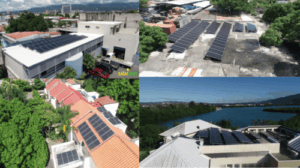
In today’s environment, where electricity rates are increasingly vulnerable to global oil price swings, supply disruptions, grid upgrades, and the escalating effects of climate change – hotter days, stronger storms, and unpredictable weather – going solar is a responsible and bold step toward self-reliance and sustainability.

But going green is only truly progressive when it is done right.
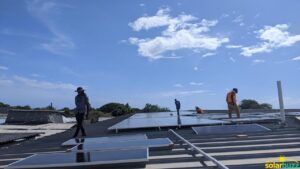
Too often, homeowners and businesses are left with underperforming systems sold on vague promises based only on utility bills and assumptions; not on actual usage or site data.

Without designs grounded in factual analysis of energy usage and site conditions, solar risks becoming just another expense rather than a tool for energy independence.
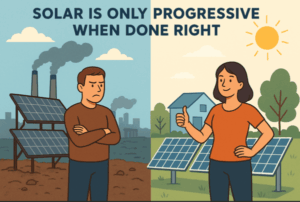
At SolarBuzz, we believe progress should be measurable, not assumed. 

Our solar solutions are engineered and tailored to actual consumption, unique site layouts, and long-term energy goals. 

This approach ensures that every system we install delivers on performance, savings, and ROI as promised, while also reducing carbon emissions.

Progress That’s Measurable, Not Assumed

Progress is achieved when solar systems are built with high-quality, long-lasting equipment, designed through precise data analysis, and installed to maximize performance and measurable CO₂ reduction.

SolarBuzz has been entrusted by clients across Jamaica to install, upgrade, and optimize systems that allow them to adopt environmentally responsible practices while saving significantly on energy costs.

Case in Point: Fleetwood Jamaica Ltd.
In May 2022, Fleetwood Jamaica Ltd. partnered with us to reduce their reliance on fossil fuels and lower energy costs. 

After a detailed load profile analysis, we designed and installed a 53.1kW grid-tie system projected to offset 54% of grid consumption and reduce CO₂ emissions by 57.49 tonnes annually.
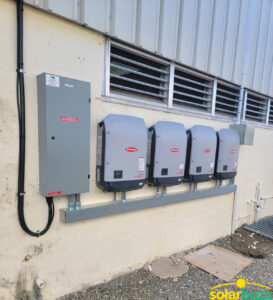
The results spoke for themselves: 51% offset, annual savings of J$3,077,214, and CO₂ reduction of nearly 80 tonnes. 
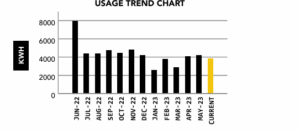
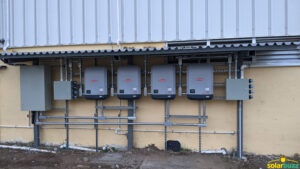
Encouraged by these measurable results, Fleetwood initiated a second phase in 2024, adding a 43.6kW system. 
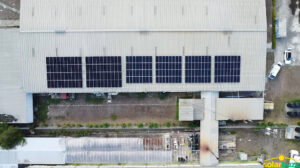
Today, they enjoy a 75%-80% energy offset from prior peak usage and total CO₂ reduction of 248.5 tonnes. 
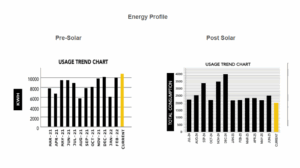
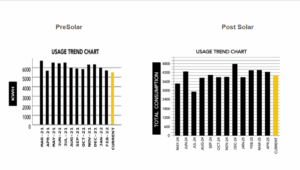
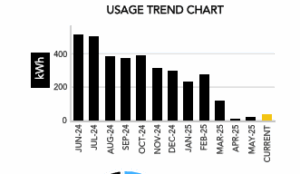
Their monthly electricity bills as seen in the graph below reflect over 7,000 kWh in savings, proof of how going green is progressive when done right.
Progress That Allows You to Do More With Less

Our systems are not only designed to deliver savings; they are equipped with real-time monitoring and performance tracking to maximize value. 

Clients can see how their systems perform daily and adjust their energy use for even greater efficiency.
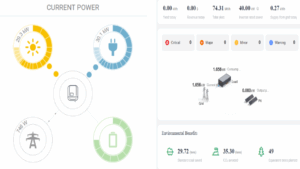


This capability allows businesses to scale production or homeowners to run appliances, charge EVs, and work from home during peak sunlight all while reducing grid dependency.

Case in Point: Gray’s Peppers
Gray’s Peppers sought to offset energy costs while boosting production. We installed a 38kW system projected to generate 4,307 kWh monthly and offset 35% of grid use. 
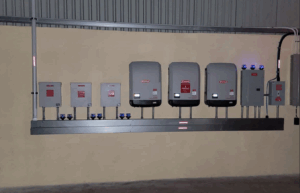
Our online monitoring of the system shows consistent performance within design expectations. 
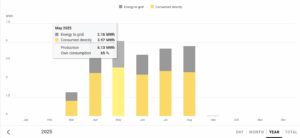
 

With an average offset of 34%, Gray’s Peppers has been able to expand operations without compromising projected savings.
Progress That Supports Modern Lifestyles

Solar isn’t just about savings; it’s about enabling a sustainable lifestyle.

Case in Point: Residential Client with EV Charging Needs
One of our featured homeowners wanted to upgrade his system to meet new EV charging needs. 

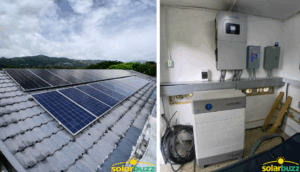
After analyzing his load profile via online monitoring data, we upgraded his existing grid tie system to 11.92kW with a 19.2kWh battery and a 15kW SolArk inverter, providing an output of 1,200 kWh per month. 
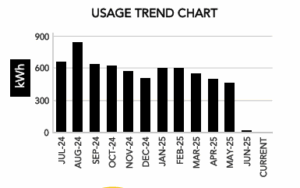
The electricity bill graph below shows the system performing as designed, powering daily EV charging and household needs, and further proving that going green the right way enables seamless integration with modern living.
Case in Point: Client with Remote-Work Office and EV Charging Needs
Another of our residential clients sought resilience against power outages and the flexibility to work from home while charging his EV. 

After analyzing his profile, we designed and installed a 14.72kW LFP battery system for his home.
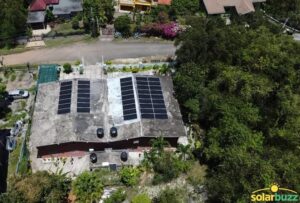
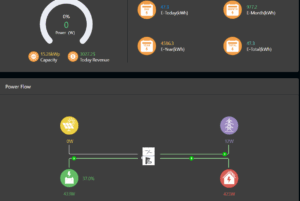
Since April 2025, he has enjoyed free daytime EV charging, uninterrupted productivity, and an 87% energy offset, making sustainability both practical and progressive.

Smart Systems for Smart Green Financing

When solar systems are designed using full load profiles, projected savings align with real performance. This makes them not only reliable but also ideal for financing.

At SolarBuzz, our data-engineered approach guarantees systems that support loan repayment schedules, replacing electricity bills with predictable loan obligations thus giving clients peace of mind.

Case in Point: Smart Energy Financing
One of our clients came to SolarBuzz with a clear goal: to cut his electricity bills as much as possible while securing financing through one of our banking partners.

For this client, achieving maximum solar savings was essential to ensure that his monthly loan payments could be seamlessly covered by the energy cost reductions.

In May 2025, we designed and installed an 8.2kW lithium iron phosphate (LFP) battery-based system, tailored to his energy profile and projected to offset 84% of his grid usage.
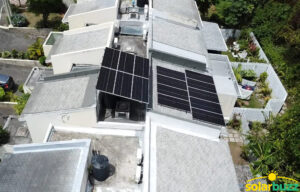
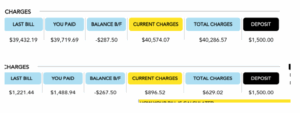
Already, our client is experiencing a drop in their bills from J$40,000 to J$630, exceeding our predictions!
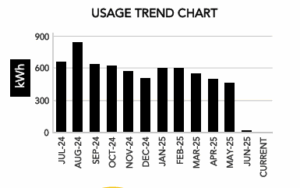
Similarly, another client leveraged the NHT’s Smart Energy Loan to finance with us a 4.36kW LFP battery system, projected to offset 90% of her total energy usage. 
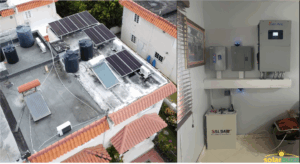
Since installation in February 2025, her system has performed consistently, with savings covering her loan obligations and serving as a true demonstration of how going green can be progressive when done right.
 

Progress That Empowers a Greener Future

When solar is engineered with precision, installed with integrity, and supported with monitoring, it becomes not just a system but a tool for measurable progress. 

Whether enabling businesses to scale, households to adopt EVs, or clients to finance sustainability with confidence, SolarBuzz ensures that going green is not just a choice but a smart, progressive investment.

At SolarBuzz, progress is always measurable, reliable, and empowering.

Solar progress, when done right, empowers you to save more, live better, and build a greener future.

If you wish to explore how we can design a data-engineered system tailored to your energy needs, please contact us today and start living your better, greener life!

Deidre Wedderburn is the Client Relations Manager at SolarBuzz, dedicated to building long-term partnerships and delivering a top-tier client experience (deidre@solarbuzzjamaica.com).


The U.S. International Trade Commission voted on Friday to proceed with an investigation into whether solar panels from India, Laos and Indonesia are stifling domestic manufacturing, a key procedural step that could result in tariffs on those imports.

WHY IT’S IMPORTANT

The unanimous decision by the three-member panel is a victory for domestic solar manufacturers who say Chinese companies with operations in those countries receive unfair government subsidies and are selling their products below the cost of production in the United States. U.S. producers are seeking to protect billions of dollars of investment in American factories.

KEY QUOTE

“Today’s ITC decision confirms what our petitions allege: U.S. solar manufacturers are being undercut and harmed by unfairly traded imports. Chinese-owned and other companies in Laos, Indonesia, and India are gaming the system with unfair practices that are gutting U.S. jobs and investment,” said Tim Brightbill, lead counsel to the Alliance for American Solar Manufacturing and Trade and partner at Wiley Rein LLP.

CONTEXT

The case was brought in July by the alliance, a coalition of U.S. solar manufacturers including First Solar (FSLR.O) and Hanwha’s (000880.KS)  Qcells.

Imports from India, Indonesia, and Laos surged to $1.6 billion last year, up from $289 million in 2022, according to the group. Many of these imports are believed to have shifted from countries already subject to U.S. tariffs on Southeast Asian solar exports.

WHAT’S NEXT

The U.S. Department of Commerce will continue investigations into the imports, with preliminary determinations on countervailing, or anti-subsidy, duties expected around Oct. 10 and on antidumping duties around Dec. 24.

Reuters

Transport secretary promises to make buying electric cars ‘easier and cheaper’ as £700m subsidy package prepared.

The transport secretary has promised to make it “easier and cheaper” to buy electric cars, as the government announces £63m worth of funding to help build charging infrastructure.

Heidi Alexander said on Sunday she wanted to make it more affordable to switch to electric vehicles as she announced new money for councils and other bodies to spend on facilities to charge cars.

She announced £63m worth of funding for EV charging, with officials also finalising plans for a £700m package of subsidies to bring down the cost of buying a new electric car.

The money still falls short of the £950m pledged by the Conservatives for motorway charging points, however, which the Labour government scrapped last month, accusing the previous government of having failed to set aside funding for it.

UK-made EVs are expected to receive the most generous subsidies under the scheme, which would probably benefit the Japanese carmaker Nissan, which is gearing up to produce a new version of its Leaf electric car in Sunderland.

Support is expected to be targeted at the buyers of more affordable cars, meaning that premium and luxury vehicles such as those made by the US manufacturer Tesla and the new UK-made electric Range Rover and other Land Rover models soon to be launched by JLR may not be eligible.

Alexander said on Sunday: “We do need to make it easier and cheaper for people to buy an electric vehicle. So today we’re announcing really big investment, £63m in charging infrastructure across the country – £25m for councils.”

She said some of the money would be spent on new charging points, but the money for local authorities was to enable them to dig gullies under paving slabs to allow car owners to run charging cables across residential streets. An additional £30m would go to vehicle depots such as those used by the NHS.

Rachel Reeves, the chancellor, pledged £400m for charging infrastructure over the next five years at last month’s spending review – part of a £1.4bn fund to support the uptake of all EVs.

Just over 20% of new cars sold this year were electric, according to the data company Zap Map. But while the number of electric car sales increased by about 240% from 2021 to 2024, they still account for less than 5% of all the cars on British roads.

Ministers have set a target that electric cars should account of 28% of all new sales this year, though have introduced “flexibilities” into those rules that bring the real target down to about 22%, according to the thinktank New Automotive.

The Conservative and Liberal Democrat coalition government introduced the first purchase subsidies for EVs in 2011, when sales and the number of models on offer were tiny. However, the Conservatives ended the subsidies in 2022 amid concerns that the policy was expensive and mainly benefited wealthier households, in a move that was heavily criticised by carmakers.

The government is also seeking to boost domestic manufacturing of zero-emission vehicles, and separately announced on Sunday it would invest £2bn over the next five years on a range of technologies to help the industry.

Jonathan Reynolds, the business secretary, said: “We’re helping British carmakers get to the front of the pack by working hand in hand with investors to build a globally competitive electric vehicle supply chain in the UK.”

The Guardian

Prime Minister Dr Andrew Holness has called on Caribbean businesses to take the lead in transforming the region’s energy landscape, saying the time has come for bold investment in renewables to drive down costs and strengthen economic resilience.

His comments come amid confirmation that the Government of Jamaica will not renew the all-island licence of the Jamaica Public Service (JPS) when it expires in 2027, a move that signals a major shift in the country’s energy future.

Speaking at the CARICOM Private Sector Organisation (CPSO) breakfast at Sandals Montego Bay on Tuesday, Monday, Holness said the Caribbean is blessed with abundant renewable resources, from solar and wind to hydro and geothermal, and must leverage them to reduce the high cost of living.

“Every island is bathed with incredible solar energy,” he said. “Some of us have wind, some hydro, some geothermal. The question is, how can we cooperate to use it beneficially for all?”

He pointed to hydrogen as a potential game-changer, referencing discussions with European partners interested in sourcing clean hydrogen from the Caribbean, should the region be able to convert its renewable energy at scale.

“If we can convert our solar and wind into hydrogen, there is a huge market we could supply endlessly,” Holness said. “I am throwing that out to the business community. We need you to apply greater innovation in the energy sector.”

Jamaica’s own decision to end the JPS monopoly has reenergized the conversation on energy independence and competition. With the current agreement ending in 2027, the government now has an opportunity to open the energy sector to new players, including regional and international investors in renewable infrastructure.

Holness did not directly address the JPS decision in his speech, but his remarks on innovation, regional collaboration, and de-risking frameworks for green energy investment struck a clear tone of urgency.

“Most of us are struggling with the overarching cost of living. Energy is a big part of that,” he said. “Government must provide the regulatory and de-risking support, but the private sector must seize the economic opportunity.”

Energy costs remain among the highest operational burdens for Caribbean businesses and households, affecting everything from food prices to digital services.

He also framed energy security as part of a broader national security strategy, protecting not just electricity access, but economic and cyber infrastructure. “Security is not just violence. It is the security of our telecommunications, our shipping and logistics, our financial systems. Energy underpins all of it.”

Jamaica Gleaner

PITTSBURGH, Pennsylvania, July 15 (Reuters) – President Donald Trump joined executives from some of the largest U.S. tech and energy companies for a summit in Pittsburgh on Tuesday as the administration prepares more measures to power the U.S. expansion of artificial intelligence.

Top economic rivals, the U.S. and China, are locked in a technological arms race over who can dominate AI as the technology takes on increasing importance everywhere from corporate boardrooms to the battlefield.

The Energy and Innovation Summit at Carnegie Mellon University brought tech executives and officials from top energy and tech firms, including Meta (META.O), Microsoft (MSFT.O), Alphabet (GOOGL.O) and Exxon Mobil (XOM.N), to discuss how to position the U.S. as a leader in AI.

Trump and the summit’s host, U.S. Senator Dave McCormick, a Republican ally from Pennsylvania, highlighted some $90 billion in artificial intelligence and energy investments in the state.

“This is a really triumphant day for the people of the Commonwealth and for the United States of America, we’re doing things that nobody ever thought possible,” Trump told the attendees.

Big Tech is scrambling to secure enough electricity to power the energy-guzzling data centers needed for its rapid expansion of artificial intelligence.

Companies began announcing their plans early on Tuesday, with Google inking a $3 billion electricity deal and CoreWeave (CRWV.O) touting a $6 billion AI data center.

Google said it secured as much as 3 gigawatts of U.S. hydropower in a deal between the tech firm and Brookfield Asset Management (BAM.TO) that includes initial 20-year power purchase agreements for electricity generated from two facilities in Pennsylvania.

Asset management firm Blackstone’s (BX.N) President Jon Gray also said they will announce on Tuesday a $25 billion investment in data centers and energy infrastructure in Pennsylvania.

The CEOs that attended included Khaldoon Al-Mubarak of Abu Dhabi investment company Mubadala, Rene Haas of Arm (O9Ty.F), Larry Fink of BlackRock (BLK.N), Darren Woods of Exxon Mobil, Brendan Bechtel of Bechtel and Dario Amodei of Anthropic.

The White House is considering executive actions in the coming weeks to make it easier for power-generating projects to connect to the grid and also provide federal land on which to build the data centers needed to expand AI technology, Reuters previously reported.

The administration is also weighing streamlining permitting for data centers by creating a nationwide Clean Water Act permit, rather than requiring companies to seek permits on a state-by-state basis.

Trump ordered his administration in January to produce an AI Action Plan that would make “America the world capital in artificial intelligence” and reduce regulatory barriers to its rapid expansion.

That report, which includes input from the National Security Council, is due by July 23.

Trump is set to mark that deadline with a major speech as part of an event titled “Winning the AI Race,” organized by White House AI and crypto czar David Sacks and his co-hosts on the All-In podcast, a White House official told Reuters.

U.S. power demand is hitting record highs this year after nearly two decades of stagnation as AI and cloud computing data centers balloon in numbers and size across the country.

The demand is also leading to unprecedented deals between the power industry and technology companies, including the attempted restart of the Three Mile Island nuclear power plant in Pennsylvania between Constellation Energy (CEG.O) and Microsoft.

The surge has led to concerns about power shortages that threaten to raise electricity bills and increase the risk of blackouts, while slowing Big Tech in its global race against countries like China to dominate AI.

Reuters

KINGSTON, Jamaica — The Government has signalled it will not be renewing the Jamaica Public Service’s (JPS) all-island licence to supply electricity without re-negotiation of the current terms, and is open to exploring other contracts with interested parties.

Minister of Science, Energy, Telecommunications and Transport Daryl Vaz made the announcement during a press briefing on Tuesday.

He indicated that the Government’s position was that the licence itself, which was signed for a 20-year period and gives JPS the power to operate, was “flawed”, resulting in “flawed service”. However, the Government will continue to operate under those conditions as mandated, until its expiry in 2027.

“In the meantime, the Government of Jamaica is going to start looking at our options, [those] options include any and everybody. Whoever it is that we end up going to the table with for a final negotiation for a new licence with new terms as of May 2027 will be terms that are favourable to the Jamaican people,” he said.

Vaz maintained that, under its current terms, the licence has not served the country well.

“The terms under the current licence have yielded electricity prices which are amongst the highest in the region. The arrangements are deeply flawed and in need of significant reform,” he said.

Forefront in that reform must be an increase in the use of renewable energy to generate the country’s electricity, according to Vaz.

“There has been a significant global reduction in the cost of renewables. The Government of Jamaica is determined that consumers of electricity in Jamaica should be placed in the best position to benefit from these developments. The current licensing arrangements with the JPS does not provide sufficient incentives to bring renewables onto the grid at scale, and it provides for generation via imported fossil fuels which is not cost-effective,” the minister said.

JPS was informed by letter of the Government’s intention to renegotiate, via condition 27 of the current licence, which allows the Government to acquire the licensed business at the expiration of the term of the licence, Vaz explained.

He stressed that the Government does not intend to take over electricity provision, and will instead renegotiate.

The minister maintained that the timing of the announcement, months before an election is expected to be called, was in fact the best “first opportunity presented to the current administration” to renegotiate the contract from a position of authority, pre-empting accusations of it being an election ploy.

“These were the timelines…July 8th 2023 for the Government to communicate to the licensee… and 2027, for the expiry of the existing licence,” he said.

Added Vaz, “We are getting an opportunity to draw a line in the sand, learn from our mistakes on an even keel to get the best results.”

In fending off the possibility of lower quality of service as the contract comes to an end, Vaz said he would deal with any dip in service quality by employing the strength of the Office of Utilities Regulation (OUR), but stressed he did not expect this to happen.

Jamaica Observer

The Government of Jamaica has formally notified the Jamaica Public Service Company (JPS) of its intention not to renew the current all-island electricity licence under the existing terms upon its expiration on July 8, 2027.

Energy Minister, the Honourable Daryl Vaz, MP, made the announcement on Tuesday (July 1, 2025), underscoring the Government’s commitment to meaningful reform in Jamaica’s electricity sector and the delivery of better outcomes for the Jamaican people.

“This morning, in my capacity as Energy Minister, I wrote the Jamaica Public Service Company (JPS) and gave formal notice of the Government’s intention upon expiration of the current all-island licence NOT to renew under existing terms,” Minister Vaz announced.

The Government’s decision is rooted in the need to reduce Jamaica’s high electricity costs, expand the use of renewables, and introduce more favourable licensing arrangements. Minister Vaz emphasized that “the people of Jamaica have NOT been served well by the existing electricity supply arrangements. The terms under the current licence have yielded electricity prices which are amongst the highest in the region. The arrangements are deeply flawed and in need of significant reform.”

The Government’s notification to JPS is in accordance with Condition 27 of the current licence, which provides for the Government of Jamaica to acquire the licensed business upon expiration.

Minister Vaz was clear in stating that the Government does not intend to take over operations of the JPS. Instead, the Government will pursue negotiations for a new licence with more favourable terms for the Jamaican people and is open to exploring offers from potential investors, including JPS.

“The action I have taken today, on behalf of the Government of Jamaica, in giving formal notice to the JPS of the Government’s intention to acquire the licensed business at the expiration of the term of the licence, is a step towards achieving the change which our country demands,” Minister Vaz stated.

The Energy Minister assured Jamaicans that this move will not disrupt electricity services and that stability will be maintained throughout the transition period.

In the meantime, Minister Vaz reaffirmed the Government’s goal: “This administration of Prime Minister Andrew Holness will NOT enter into arrangements which do not provide a framework for positive reformation of the energy sector. We fully intend to deliver real and sustainable results for the people of Jamaica.”

The Government will now move forward with the development of a long-term plan aimed at securing more reliable, affordable, and renewable energy solutions for Jamaican households and businesses.

OPM News

Solar Buzz Jamaica commends the Government’s recent announcements on the non-renewal of the current JPS licence and its renewed emphasis on expanding renewables to lower electricity costs. These measures echo proposals that industry bodies – including the Jamaica Renewable Energy Association (JREA) for over a decade and the recently formed JMEA Energy Committee – have advanced. 

While the renewed focus is welcome, the real measure of success will be in how swiftly and effectively the Government addresses the practical hurdles that have slowed our energy transition.

Government Announcements

JPS Licence Renewal
On July 1st 2025, Minister Daryl Vaz confirmed that Jamaica Public Service’s all-island licence will not be renewed under its current terms when it expires on July 8th 2027.

Private-Sector Leadership
At the CARICOM summit days later, Prime Minister Andrew Holness encouraged businesses to invest boldly in renewables, highlighting their role in lowering bills and building resilience.

Net-Billing: A Critical Bottleneck

Distributed rooftop solar has enormous potential to reduce system demand, stabilize the grid, and deliver low-cost energy to all Jamaicans. 

Yet the Net-Billing framework remains encumbered by:

  • Complex Application Requirements — multiple technical reviews and declarations that can feel duplicative.

  • Substantial Up-Front Fees — including a J$19,000 non-refundable processing charge.

  • Prolonged Approval Timelines — often stretching weeks or months beyond statutory targets.

These procedural barriers deter many prospective applicants and slow the very renewable deployment the Government now champions.

Residential Tax Breaks: Unintended Consequences

In March 2025, MSET imposed the Net-Billing licence requirement for homeowners applying for residential renewables tax credits just days before the  April 1st 2025 deadline. The last-minute rule change stipulated that only those with approved Net-Billing licences would qualify – a requirement that was not initially imposed when the incentive was announced with great fanfare. 

Although Minister Vaz granted a limited extension until April 1st 2025, this effectively means all homeowners with solar systems now need a Net-Billing licence or risk operating illegally. This is not only impractical and, at this point, impossible to govern, but the Electricity Act itself states that homeowners who self-generate power from solar, with no intention of selling back, are exempt from needing a Net-Billing licence.

Recommendations for Practical Progress

To convert policy intent into real-world impact, we urge the Government to:

  1. Set and Enforce Clear Timelines
    Institute a statutory 10-business-day window for Net-Billing licence decisions, with automatic escalation if unmet.

  2. Simplify Documentation
    Review and eliminate overlapping technical or financial declarations to streamline the customer experience.

  3. Stabilize Incentive Rules
    Publish any changes to tax-credit eligibility at least six months before they take effect, ensuring homeowners can plan with certainty – and clarifying that self-generating systems with batteries do not require a Net-Billing licence.

Engage Stakeholders Continuously
Convene regular working groups with industry, regulators, and consumer representatives to monitor progress and troubleshoot emerging issues – rather than announcing new policies that do not sync with the Vision 2030 policy or the Government’s renewed focus on high energy costs.

Solar Buzz Jamaica stands ready to partner with MSET, the Office of Utilities Regulation, Tax Administration of Jamaica and other stakeholders to translate today’s announcements into tomorrow’s clean-energy achievements. 

With targeted adjustments to Net-Billing procedures and tax-incentive clarity, we can accelerate the deployment of distributed rooftop solar across the island – not just large, tendered grid installations – bringing lower bills, greater job creation, and enhanced resilience for all Jamaicans, especially at the residential level.


Jason Robinson
Chief Executive Officer
Solar Buzz Jamaica

Investment in big batteries hit $2.4bn in the first three months of 2025, making it the second strongest quarter for energy storage on record in Australia.

The latest data from the Clean Energy Council found six new storage projects – totalling 1.5 gigawatts capacity – reached financial close (the financial commitment that means the project is likely to be built) and a level of investment last seen in the final quarter of 2023 with a record $2.8bn.

The largest was the four-hour Wooreen battery system in Victoria, at 350MW, which was supported by the federal government’s capacity investment scheme.

Three large-scale battery systems in South Australia, one in Queensland and one in New South Wales also reached financial close.

Renewable energy had a slower start to the year, with two solar farms – totalling 386MW and $410m investment – reaching financial close. A quieter first quarter was typical, the CEC said, with investment ramping up throughout the year.

“Over the past five years, new investment commitments in the first quarter of the year have averaged 427MW, compared to a Q4 average of 1,153MW over the same period,” it said.

By the end of March, 82 renewable energy projects had either reached financial commitment or were under construction, representing 12GW of capacity.

The strong result for storage in the first quarter followed Australia’s biggest yearfor clean energy investment in 2024, in which rooftop solar installations on homes and businesses raced past 4m, the CEC’s annual snapshot found.

Investment in large-scale renewable energy hit $9bn, a 500% increase on 2023. This combined with investment in energy storage to deliver the nation’s highest clean energy investment on record at $12.7bn.

The CEC’s chief policy and impact officer, Arron Wood, said political certainty would continue to help drive the “eye-watering” levels of private sector investment needed for the government to meet its target of 82% renewable energy by 2030.

“The target is ambitious, but it’s achievable,” Wood said. “With the election behind us, inflation easing and strong industry participation in the Capacity Investment Scheme, the early signs suggest we can expect to see private sector investment in both renewable power generation and battery storage projects continue to increase as the year progresses.”

Renewable energy provided 40% of Australia’s total electricity generation in 2024, up from 39.4% in 2023. The CEC report said an additional 6GW from wind and solar farms would be needed annually by 2030 to replace retiring coal generation.

“The Clean Energy Australia report has a lot of really good news in it,” Wood said, adding that it showed investment flowed with the right policy settings and continuity.

“The willingness to build Australia’s energy transition is there. But that’s not something where you can just set and forget.”

New transmission lines were critical to maintaining the pace, along with connecting projects to the grid as quickly and efficiently as possible, Wood said. Working with communities to build support for the transition and maximise local benefits was also important.

The director of Clean Energy Finance, Tim Buckley, said there was cause for optimism but maintaining the pace of investment and development required much quicker approvals, construction and commissioning.

“We need to get speed and scale way beyond current rates, particularly with extended delays to grid connection,” he said.

“There is great momentum, and more to do,” said Anna Skarbek, the chief executive of Climateworks Centre.

She said the electricity transition was tracking well in terms of replacing fossil fuels with renewable power.

“We know that to achieve a prosperous economy, in a fully decarbonised global economy, when all sectors are net zero – that actually will use a lot more electricity than what we use today,” she said.

Reaching the government’s legislated target of net zero by 2050 would mean at least a doubling in electricity demand as other sectors including transport, mining and industry sought to cut their emissions.

“We know that Australia has the capacity to do that,” Skarbek said. “Australia does have very large-scale potential to use renewable energy in its heavy industry sectors, and that’s a really important contribution to global trade. And also we have world-class solar penetration at what’s considered small scale or distributed energy in households.”

The Guardian

BYD on Monday unveiled a new platform for electric vehicles (EVs) that it said could charge EVs as quickly as it takes to pump gas and announced for the first time that it would build a charging network across China.

The so-called “super e-platform” will be capable of peak charging speeds of 1,000 kilowatts (kW), enabling cars that use it to travel 400 km (249 miles) on a 5-minute charge, founder Wang Chuanfu said at an event livestreamed from the company’s Shenzhen headquarters.

Charging speeds of 1,000 kW would be twice as fast as Tesla’s (TSLA.O), opens new tab superchargers whose latest version offers up to 500 kw charging speeds. Fast-charging technology has been key to increasing EV adoption as it is seen to help assure EV drivers’ concerns over being able to charge their cars quickly.

“In order to completely solve our user’s charging anxiety, we have been pursuing a goal to make the charging time of electric vehicles as short as the refuelling time of petrol vehicles,” Wang said.

“This is the first time in the industry that the unit of megawatt (charge) has been achieved on charging power,” he said.

The new charging architecture will be initially available in two new EVs – Han L sedan and Tang L SUV priced from 270,000 yuan ($37,328.91) and BYD said it would build over 4,000 ultra-fast charging piles, or units, across China to match the new platform.

The company didn’t specify the time frame or how much it would invest in building such facilities. To date, BYD owners have largely relied on other automakers’ charging facilities or public charging poles run by third-party operators to charge their vehicles.

Tesla has offered its superchargers in China since 2014 and BYD’s smaller Chinese peers such as Nio (9866.HK), opens new tab, Li Auto (2015.HK), opens new tab, Xpeng (9868.HK), opens new tab and Zeekr (ZK.N), opens new tab have also been investing extensively and building charging facilities for years.

BYD mostly relies on plug-in hybrids for its sales, which hit 4.2 million units last year. It has targeted selling 5-6 million units this year. 

Reuters