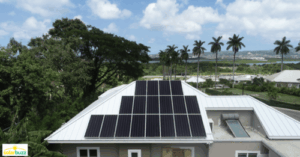
Solar Buzz FAQ Series: Straight Answers for Jamaica’s Reality


By: Deidre Wedderburn

Client Relations Manager, Solar Buzz Jamaica 

deidre@solarbuzzjamaica.com


Since mid-2024, the island has experienced a pattern that is difficult to dismiss as seasonal variation.

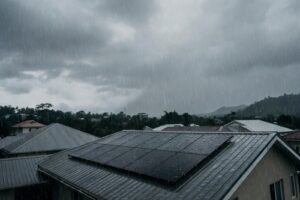
What should have been a dry season, the December-to-March period that Jamaicans have long relied upon as a natural pause between the demands of hurricane season, arrived instead with persistent rainfall, overcast skies, and flooding events across multiple parishes. The early months of 2026 have continued that pattern, with above-normal precipitation recorded well into what is traditionally the island’s driest quarter.

This is not a coincidence. The developing La Niña conditions that characterised the 2024–2025 Pacific cycle are well-documented drivers of increased Caribbean rainfall and elevated Atlantic hurricane activity.

What is less discussed, but increasingly difficult to ignore, is the structural implication that the traditional binary of “dry season” and “wet season” is becoming less reliable as a planning framework. Jamaica may no longer be able to rely on a meaningful meteorological reprieve between its wet seasons. The traditional calendar that once offered a window for planning, repair, and preparation is compressing.

For homeowners and businesses considering solar energy, this shift carries a consequence that is rarely addressed directly. Extended cloud cover and persistent rainfall do not merely inconvenience solar systems. They alter the calculus of how those systems must be designed.

Battery storage, long positioned as a convenience for after-hours electricity, is increasingly a necessity for daytime continuity during weather events where generation is suppressed for days at a time.

A solar system without adequately sized battery storage is not a resilient solution. It is a fair-weather asset.
Engineered to Stay

The most common enquiry Solar Buzz has received since Hurricane Melissa is whether we remove solar panels ahead of an approaching storm. It is an understandable question, and it deserves a direct answer. But it is, in a meaningful sense, the secondary question. The primary one is whether a solar system and the roof beneath it have been engineered to render removal unnecessary.

Solar Buzz does not remove panels prior to storms. Every system we design and install is built to withstand extreme weather conditions, including hurricane-force winds.

Our mounting structures and installation methods are certified to Category 4 conditions at approximately 150 mph,  a threshold that aligns with insurance industry standards and represents the rated specification for our racking systems.

“That certification is not the ceiling of what our systems have demonstrated. It is the floor.”

The timing window before a storm makes landfall is rarely sufficient to safely remove and reinstall systems across all clients. More fundamentally, removal defeats the purpose. The value of a solar PV battery system during a hurricane is not what it contributes before the event.

The true measure of a solar and battery system is what it sustains through and beyond the storm, when the grid is down and the question of who has power and who does not becomes one of the sharpest distinctions a community can draw.

Preparation Before Landfall

When a storm system is tracking toward Jamaica, our team remotely accesses client systems and adjusts settings to ensure batteries reach full charge ahead of landfall.

When the grid goes down, as it did for an extended period during Hurricane Melissa, the solar system transitions automatically to independent battery operation. No manual intervention or delay, allowing uninterrupted household operation and activities. 
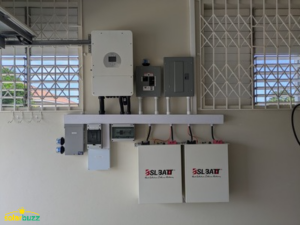
That automatic transition carries particular weight in the context of what Jamaica’s evolving weather patterns now demand.

During a severe weather event, cloud cover can suppress solar generation entirely for twenty-four to forty-eight hours or longer. A battery that enters the storm fully charged and sized correctly for the home’s essential load is what sustains a household through that suppression window. 

As the interval between significant weather events narrows and the dry season becomes less reliable as a recovery period, battery sizing has moved from a secondary design consideration to the central one.”

It is no longer sufficient to size a battery for overnight use. It must be sized for sustained generation loss.

Resilience that Cannot be Modelled

Another common enquiry that Solar Buzz has received since Hurricane Melissa is whether our systems are engineered to withstand Category 5 conditions.

Melissa, which produced sustained Category 5 winds across Jamaica, was the stress test no simulation can replicate. It answered that question in the field more definitively than any specification sheet could.
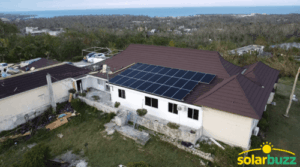
In Treasure Beach, St. Elizabeth – the storm’s epicentre, where sustained winds reached approximately 185 mph – not a single Solar Buzz panel was lost. In Montego Bay, St. James, where winds exceeded 200 mph in coastline-exposed areas, panel damage was minor and occurred exclusively among clients whose roofs had sustained significant structural failure. In every instance, the solar systems remained operational. 

“Clients in both communities maintained continuous power for three to four months, the full duration of the JPS grid outage in those areas.”

Our systems performed well beyond their rated specification under conditions Jamaica had not experienced in a generation. That outcome was not incidental. It followed directly from how the systems were engineered, how the panels were mounted, and critically, what sat beneath them.

The Roof Beneath the System

Melissa stated something plainly that the industry has always understood but rarely communicated with sufficient clarity: no solar system can outperform the roof it sits on.

Where Solar Buzz installations remained intact, the roofs beneath them were structurally sound. Where panel damage occurred, it was invariably preceded by roof failure and not system failure. The distinction is consequential for anyone planning an installation or assessing an existing one.

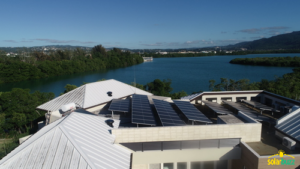
Standing seam metal roofs and concrete slab roofs performed with notable resilience in high-wind zones during Melissa and have proven to be the most reliable foundations for roof-mounted solar systems in Jamaica when wind loading is properly engineered. These configurations offer superior uplift resistance, reduced lateral movement risk, and the structural durability that a professionally mounted system requires to perform as designed under extreme conditions.

Annual roof inspections, structural assessments, and ongoing maintenance are not peripheral concerns for solar owners. They are foundational in the most literal sense.

Solar Buzz conducts a thorough assessment of roof condition and suitability as a standard component of every installation.

A system mounted on a compromised roof is not a resilience investment but a liability dressed as one.

At Solar Buzz, location-specific irradiance and weather pattern analysis is a standard input to every system design, lending directly to the proven weather resilience of our installations. 

Jamaica’s parishes do not share a uniform solar resource. 

Mandeville and the central highlands of Manchester experience significantly more cloud cover and reduced irradiance year-round, a function of elevation and orographic weather patterns rather than season alone. Portland’s windward exposure makes it one of the wettest environments in the Caribbean basin. St. Elizabeth’s rain shadow produces conditions at the opposite extreme.

This design approach, which extends beyond structural considerations to the meteorological profile of your specific location, is precisely what determines whether a home retains power when conditions deteriorate. 

Approaching each system design from this angle is not optional. It is the foundation of what hurricane preparedness, properly understood, actually demands of any solar designer.

Insurability: Prepardness for Fast Recovery

Since Melissa, there has been a meaningful and sustained increase in clients formally incorporating their solar systems into their property insurance policies. Our professional maintenance programme is structured to facilitate this, meeting insurance industry standards in a manner that simplifies claims processing and supports faster recovery when damage occurs.

In the context of hurricane preparedness, recovery speed is as important as resilience. A properly insured and maintained system is not just protected. It is positioned to restore your energy independence faster when it matters most.

Financing the Preparation

The National Housing Trust (NHT) has made energy independence more accessible than most contributors realise. 

What contributors can appreciate is that the NHT’s mandate extends beyond the front door with two loan facilities, including an option to combine, that speak directly to the quality, resilience, and energy performance of the homes they  own.

It is one of the most affordable financing instruments for solar in Jamaica, that speaks directly to true hurricane preparedness and at subsidised rates that the open market simply cannot match.

The Smart Energy Loan, which is available to all active contributors, offers up to J$2.5 million specifically for solar PV systems with battery storage and energy-efficient appliances. 

The Home Improvement Loan, which is available to contributors without an NHT mortgage or anyone who has held an NHT mortgage for at least seven years, offers up to J$5 million for a broader scope of work such as  roof repair and remodelling, structural upgrades, appliance replacement, and solar installation.

For homeowners who need roof work alongside solar, this loan makes doing both simultaneously significantly more economical. Integrating solar during a roof repair or remodel costs meaningfully less than returning to an already-completed roof to mount a system. 

These two loan facilities offered by the NHT are not mutually exclusive.

Used in combination, they unlock up to J$7.5 million which is enough to remodel, repair, and install a complete off-grid energy solution in a single, coordinated project. This would be ideal for projects of greater scope such as larger homes, heavier electrical loads, or where more extensive structural work is required. 

Solar Buzz is an NHT-approved vendor. That designation means that we know how to structure your project from the start to align with your loan facility, whether that’s the Smart Energy Loan, the Home Improvement Loan, or both combined. 

Our consultations are built around your home’s actual energy profile, your billing charges, your roof’s current condition, your appliance load, and your NHT eligibility. We design the entire solution, encompassing home, solar system, and financial structure, as a single coherent decision

Preparedness Is No Longer Seasonal

The rain across Jamaica this week is not an interruption to the planning season. For much of the past eighteen months, it has been the planning season.

Hurricane preparedness in the public imagination still begins with lanterns and tinned goods. What Melissa demonstrated, and what Jamaica’s shifting weather patterns have continued to reinforce in the months since, is that it must now begin with engineering. The storm was a single, catastrophic event. 

The compressed dry seasons, the anomalous rainfall, the erosion of the meteorological reprieve that Jamaicans once planned around are not events but a condition that require structural responses, not seasonal ones.

The pattern Jamaica has experienced since mid-2024 of compressed dry seasons, anomalous rainfall, and the structural intensification of Atlantic storm activity, is consistent with the longer-term trajectory that climate science has projected for the Caribbean basin. It is unlikely to reverse. It is the new baseline against which resilient homes must now be measured.

In that context, hurricane preparedness does not begin in June. It is a year-round posture.

At Solar Buzz, it begins with a properly engineered solar PV battery system that is designed for weather conditions Jamaica is now learning, season by season, to expect.

If you have questions about your existing system, your roof’s structural readiness, or how solar fits into your long-term preparedness picture, our team is here to assist.
By Deidre Wedderburn (deidre@solarbuzzjamaica.com)

Client Relations Manager, Solar Buzz Jamaica 

Focused on building long-term partnerships and delivering a high-quality client experience


In periods of global stability, energy decisions are often guided by convenience, incremental savings, or long-term environmental consideration. 

Moments defined by geopolitical tension, supply chain disruption, and rising inflationary pressures elevate energy choices into matters of financial strategy and resilience. 

Global Pressures Reshaping Energy Costs

Geopolitical Tensions

The conflict between the United States and Iran, including significant disruptions to the Strait of Hormuz, drove sustained increases in oil, gasoline, and related energy costs in the months preceding a recently announced two-week ceasefire. While this development offers a degree of near-term relief, it does not represent a structural resolution. The cost increases it has already set in motion, including those now reflected in Jamaican electricity bills, remain firmly in place.

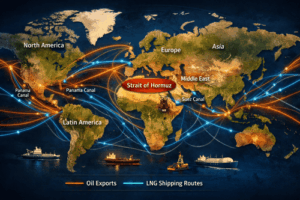
The Strait of Hormuz is a narrow stretch of water in the Persian Gulf through which roughly one in every five barrels of oil on earth must pass, and it sits at the geographic centre of this tension. 

Each escalation reprices crude, and repriced crude transmits directly into electricity costs, shipping, and the price of imported goods. Since the conflict intensified, global oil prices have risen from approximately US$60 per barrel to near US$100 per barrel, a shift with immediate implications for energy-dependent economies like Jamaica.

Rising Electricity Rates

For Jamaica, where electricity generation remains heavily tied to imported fuels, the effect is both immediate and direct.

The Jamaica Public Service Company Limited (JPSCo) has already communicated to customers that global fuel prices are rising sharply due to the conflict, and these increases will be reflected in the fuel charge on electricity bills.

With roughly 70 percent  of the island’s power generated from liquefied natural gas (LNG) and a further 20 percent from heavy fuel oil and diesel, international price increases translate directly into higher monthly costs for every household and business on the grid. 

Local business leaders, including Seprod Group CEO Richard Pandohie, have cautioned that the same global instability is likely to drive food price increases in the coming weeks, adding further weight to a cost-of-living environment that leaves little room for avoidable expense.

A Global Shift Toward Alternatives

Against this backdrop, consumer behaviour is shifting decisively toward alternatives. Higher fuel and electricity costs are accelerating interest in both electric vehicles and solar energy systems as people seek to hedge against sustained volatility.

Early indicators from across Asia, the UK, and the United States illustrate the scale of this shift. Dealerships for Chinese manufacturers such as BYD in Manila have reported significant increases in orders and showroom traffic since the conflict intensified. 

In the UK, electric car sales reached a record high in March, rising to 86,120 units according to the Society of Motor Manufacturers & Traders, with plug-in hybrids posting a 47% gain. As Albert Park, chief economist of the Asian Development Bank, observed, “Higher oil prices always help the transition to electric vehicles. It creates economic incentives to accelerate the green transition.”

The same dynamic is playing out strongly in Jamaica, where rising electricity rates have prompted more homeowners and businesses to view solar not merely as an environmentally responsible choice, but as a prudent financial hedge.

This surge in demand, however, introduces a dynamic that is critical to understand. The very forces driving people toward solar are simultaneously beginning to reshape the economics of accessing it.

The Collision of Surging Demand and Rising Costs

China manufactures approximately 80 percent of the world’s solar panels and a dominant share of lithium-ion battery technology. Effective April 1, 2026, it eliminated the value-added tax (VAT) export rebate on photovoltaic products, with a reduction on lithium batteries from 9 percent to 6 percent.  For years, these rebates underpinned a decade of falling panel prices across global markets. That is no longer the case.

This policy adjustment, alongside phased reductions in battery storage incentives, is already exerting upward pressure on module and component prices worldwide.

Analysts have projected near-term price increases of 9 percent to 15 percent across several markets. When combined with the global surge in demand, the result is a classic supply-demand pincer, with more buyers competing at higher price points for equipment that had historically only trended downward. 

The Narrowing Window

Against this global backdrop, Jamaica’s structural advantages remain firmly intact. The country’s exceptional solar irradiance, persistently high retail electricity rates, and net-billing arrangements, which allows system owners to receive credit for surplus electricity returned to the grid, collectively amplify the financial return on every unit of self-generated power.

Layered onto this is Jamaica’s residential solar photovoltaic tax credit, available to individual taxpayers for systems installed at primary residences since January 1, 2023, with a maximum credit of J$1.2 million.

For qualified homeowners, this incentive functions as a meaningful fiscal lever that, in combination with these underlying conditions, compresses payback periods to just a few years, after which the electricity generated by a well-designed system is effectively free and insulated from fuel-price volatility.

The same forces that make solar increasingly attractive are, however, also reshaping the supply landscape.

Rising electricity rates and growing awareness of energy vulnerability are driving a pronounced acceleration in demand globally. Simultaneously, adjustments in manufacturing economics, most notably the scaling back of Chinese export rebates that have underpinned solar pricing for over a decade, are beginning to exert upward pressure on system costs and installation timelines. What had been a sustained buyer’s market is quietly, but measurably, shifting.

This dynamic is compressing the window between current grid costs and solar investment costs. While the cost of going solar is rising, the cost of staying on the grid is rising as well. 

The critical difference is that solar represents a one-time investment that fixes your energy costs for the life of the system. Staying fully on the grid means absorbing every future increase with no ceiling in sight.

The window where solar remains the clearly smarter financial move is still open, even as it narrows.

The Time to Act is Now 

As electricity rates continue their upward trajectory and demand for solar systems accelerates globally, the likelihood of higher installation costs and extended lead times increases correspondingly. Each billing cycle that passes under rising grid tariffs represents continued exposure to precisely the volatility solar is designed to mitigate.

Acting now enables the locking in of current pricing before further market adjustments take hold.

Acting now enables the locking in of current pricing before further market adjustments take hold, the near-term realisation of savings, and the establishment of a degree of energy independence from increasingly unpredictable external cost drivers.

The financial structuring of a well-designed solar solution reinforces this position. When properly designed, a solar system can achieve a cash-positive outcome from inception, where monthly financing obligations align with, or remain below existing electricity expenditure. 

At Solar Buzz, this outcome is deliberately engineered. Every client engagement begins with a detailed, consultative review tailored to the home or business, providing full visibility into the required investment, timelines, projected savings, and expected payback. 

This approach ensures that the transition to solar introduces no additional financial burden, which is especially critical for clients pursuing solar financing. Instead, it reflects a disciplined reallocation of an existing expense toward the acquisition of a long-term asset. 

As electricity rates continue to rise, the financial advantage of this structure strengthens, with savings increasing over time.

Families and businesses that act decisively today are locking in stability ahead of the dual pressures of rising global demand and tightening export economics. 

There is no longer a question of whether solar is affordable. The more apposite question is whether continued exposure to rising, variable electricity costs, with no ceiling and no hedge, remains strategically justifiable.

The Window Remains Open

What is unfolding is not a temporary disturbance but a structural recalibration of the global energy landscape. Fuel markets are demonstrating increased sensitivity to geopolitical developments, supply chains are exhibiting reduced elasticity, and cost volatility is becoming more deeply embedded across energy-dependent sectors. For Jamaica, these dynamics are amplified by a structural dependence on imported fuel.

The recently announced ceasefire is a pause, not a resolution.  It is not a settlement, not a restoration of trust, and not a guarantee of stability. It is not peace earned, but a negotiated delay. 

The underlying conditions that drove oil from US$60 to near US$100 per barrel remain unresolved, and the cost increases already embedded in electricity bills, supply chains, and consumer prices do not reverse on the strength of a two-week pause. For a country like Jamaica whose energy security rests on external flows, a pause is not safety; it is time borrowed.

The window for securing solar under current conditions remains open. Those who act within it will do so at a point where the balance between system cost and avoided electricity expense remains distinctly favourable.

We invite you to contact Solar Buzz Jamaica today. Speak with one of our energy consultants and let us walk you through the numbers specific to your home or business. We will show you exactly what your transition would look like and how quickly your investment can pay for itself under current market conditions.

The window is open. Let us help you walk through it.

This article reflects market conditions as of early April 2026. Incentives and pricing are subject to regulatory and supplier confirmation.


After news broke of a two-week ceasefire in Iran, stock markets across the globe rallied and the price of crude oil plunged.

But there is less optimism over how much this will feed through to people’s finances, with fears long-lasting damage has already been set in motion.

The last month has seen ships carrying oil, liquid natural gas and fertiliser effectively blocked from passing through the Strait of Hormuz, while significant damage to facilities in the Gulf has halted production.

Even if the ceasefire holds and a peace deal is reached in time, analysts estimate it will take months to restart production and get supplies back to normal.

No immediate change to rising fuel prices

Despite today’s plunging crude oil price, it remains higher than pre-war levels and drivers should not expect a significant drop in costs at the pump soon, says the RAC.

Its head of policy Simon Williams says there is still huge uncertainty for drivers, and their best hope is for pump prices to stop rising in the coming days.

But he says some smaller independent forecourts – which buy oil as it costs on the day rather than in advance at a set price – may be quicker to pass on reductions.

“Much will depend on the stability of the ceasefire, whether oil shipments can move freely through the Strait of Hormuz, and the longer‑term impact on oil production across the Gulf,” he says.

He adds a sustained lower price – over several weeks – is needed to meaningfully lower wholesale fuel costs.

Rachel Winter, from the wealth management company Killik & Co, says it is difficult to predict how quickly costs at the pump might fall.

“I would expect it to take at least a few weeks, if not a few months,” she told BBC Radio 4’s Today Programme.

Meanwhile, jet fuel is roughly double its pre-war levels.

Willie Walsh, the boss of the International Air Transport Association (IATA), says even if traffic through the waterway resumes now, it will take months for supplies to reach the level they need to be at.

Passengers should expect higher ticket prices in the meantime, he says.

Some airlines have already hiked fares, while some have cut routes.

Even if jet fuel were able to flow through the strait, it still needs refining – and some facilities have been damaged, Winter adds.

Alan Gelder, senior vice-president of Refining, Chemicals and Oil Markets for energy analysts Wood Mackenzie, says the whole supply chain needs to return to normal, with ships getting to the right place and refineries resuming operation. That’ll take “weeks, not days”, he believes.

Food still expected to become more pricey

A third of the world’s fertiliser usually passes through the Strait of Hormuz, and consequently prices have shot up in recent weeks.

It has already become more expensive to transport food across the UK, and for farmers to operate agricultural machinery powered by increasingly expensive diesel, while crop growers who use energy to warm their greenhouses will be facing hikes when the energy price cap resets in July.

The Food and Drink Federation, which represents thousands of UK manufacturers, says the ceasefire hasn’t ended the “long‑term uncertainty”.

Recovery to supply chains and energy infrastructure in the Gulf is expected to take between six months and a year, says Dr Liliana Danila, its chief economist.

“This means manufacturers will continue to feel the impact of supply chain disruptions for oil, gas, fertiliser, packaging materials and essential cleaning chemicals, keeping costs under strain for months to come.”

Even if the conflict ends within the next two weeks, it expects UK food inflation to reach at least 9% before the end of the year.

Wholesale gas prices likely to stay high

So far, households under Ofgem’s energy price cap have been shielded from the spike in wholesale energy prices.

The cap resets for three months in July, and we are more than halfway through the window the regulator uses to calculate the new price. Experts have been expecting a big jump at this point.

The government has promised support based on household income, but hinted this might not come until autumn.

Dr Craig Lowrey, principal consultant at Cornwall Insight, says a ceasefire eases some of the immediate pressure on gas markets but “does not wipe the slate clean”.

If the strait opens and stays open this will ease prices and be reflected in the July price cap, he says, but adds: “Unless prices fall well below where they were before the conflict, the wholesale price rises seen through March and early April will still feed through to bills.”

Lars Jensen from Vespucci Maritime says companies will want reassurances on how vessels can transit safely, and he doesn’t believe the two-week pause will be enough to restore trust.

“We should see an increase in exiting vessels,” he told Today.

“We will likely also begin to see a trickle of vessels going into the Gulf, but those two will not be of the same magnitude.”

Aside from movement through the strait, Lowrey says damage to gas infrastructure in Qatar will take years to rebuild, meaning supply constraints will continue.

“As a result, even with a ceasefire, wholesale gas prices are likely to stay elevated for some time, limiting how far the July price cap can fall.”

BBC

Global oil prices have risen as concerns grow over whether a fragile US-Iran ceasefire will hold after Israel launched a wave of strikes on Lebanon.

The attacks led Tehran to warn of a “regret‑inducing response” if they continue, while US President Donald Trump has said the country’s forces will remain in the region until Iran complies with the “real” ceasefire agreement.

Oil prices had plunged on Wednesday after an agreement to pause the conflict was announced, which included the reopening of the key Strait of Hormuz waterway.

But reports that Iran said the crucial shipping route will stay closed because of the Israeli strikes has renewed fears of a lengthy disruption to energy supplies.

Global benchmark Brent crude rose 2% to $96.53 a barrel, while US-traded West Texas Intermediate was 2.8% higher at $97.02 as pressure mounted on what Vice President JD Vance described as a “fragile truce”.

Stock markets also reversed some of the major gains they made on Wednesday. Japan’s Nikkei 225 index closed down 0.5%, while in Europe the UK’s FTSE 100 slipped 0.4%, Germany’s Dax index was 1.3% lower and France’s Cac was down 0.8%.

“I think there’s a little bit of nervousness in global markets,” Victoria Scholar, head of investment at Interactive Investor, told the BBC’s Today programme.

“Markets are giving back some gains… and I think that reflects a lot of uncertainty over whether the Strait of Hormuz is actually open.”

Sim Moh Siong, strategist at Singapore bank OCBC, said the flow of energy shipments through the strait will be the focus in the days ahead while uncertainty remains over how Tehran plans to oversee the movement of vessels.

One of the conditions of the ceasefire agreement was that ships would be able to safely use the Strait of Hormuz.

However, vessels in the Gulf have received a warning from Iran’s navy that any vessels seeking to cross the Strait of Hormuz without permission “will be targeted and destroyed”, the shipping brokerage firm SSY has confirmed to BBC Verify.

Only a handful of ships have crossed the waterway since the deal was announced – well below the rate of some 130 vessels that transited daily before the war.

It will take a minimum of 10 days to clear the existing backlog of vessels, even if the strait resumes its usual volume of shipping, according to maritime tracking firm Pole Star Global.

In recent weeks, some countries, including Malaysia, India and the Philippines – have negotiated safe passage for its ships.

“It is very difficult to plan because every day you get very different news,” said Nils Haupt from container shipping firm Hapag-Lloyd, which still has six ships in the Persian Gulf.

“Yesterday [Wednesday] was a typical day. You get the news, ‘it will now be open and something is happening now’, and then in the evening it is not happening,” he told the Today programme.

Haupt said they were still waiting for official information on whether there will be fees to pass through the Strait of Hormuz, but warned that if there were it could have a major impact.

“If this means that for the coming years there will be a fee for the Strait of Hormuz of millions which is double, triple the price of crossing the Panama Canal or the Suez Canal it would be quite ridiculous for the entire industry.”

There is disagreement over whether Lebanon is included in the ceasefire.

On Wednesday, Israel launched its heaviest bombardment of the country in this conflict, killing at least 182 people.

Hezbollah said in a statement posted on social media that it had fired rockets at northern Israel. The Iran-backed militia says it was in response to ceasefire violations.

BBC

A ceasefire deal to pause the war in Iran appeared to hang by a thread Wednesday after the Islamic Republic closed the Strait of Hormuz again in response to Israeli attacks in Lebanon. The White House demanded that the channel be reopened and sought to keep peace talks on track.

The U.S. and Iran both claimed victory after reaching the agreement, and world leaders expressed relief, even as more drones and missiles hit Iran and Gulf Arab countries. At the same time, Israel intensified its attacks on the Hezbollah militant group in Lebanon, hitting several commercial and residential areas in Beirut without warning. At least 182 people were killed and hundreds were wounded in one of the deadliest days in the latest Israel-Hezbollah war.

The fresh violence threatened to scuttle what U.S. Vice President JD Vance called a “fragile” deal.

Parliament speaker accuses U.S. of breaking Iran’s conditions

The Iranian parliament speaker said planned talks with the U.S. to seek a permanent halt to hostilities were “unreasonable” because Washington broke three of Tehran’s 10 conditions for an end to the fighting. In a social media post, Mohammad Bagher Ghalibaf objected to Israeli attacks on Hezbollah, an alleged drone incursion into Iranian airspace after the ceasefire went into effect and the U.S. assertion that it will not accept any Iranian enrichment capabilities in a final agreement.

Iranian Foreign Minister Abbas Araghchi insisted that an end to the war in Lebanon was part of the ceasefire deal with the U.S. Israeli Prime Minister Benjamin Netanyahu and U.S. President Donald Trump said the truce did not cover Lebanon.

“The world sees the massacres in Lebanon,” Araghchi said in a post on X. “The ball is in the U.S. court, and the world is watching whether it will act on its commitments.”

Lebanon’s health ministry said Israeli strikes killed 182 people on Wednesday, the highest single-day death toll in the Israel-Hezbollah war.

White House press secretary Karoline Leavitt said the closing of the strait reported in Iranian state media was “completely unacceptable.” She repeated Trump’s “expectation and demand” that the channel be reopened.

U.S. Defense Secretary Pete Hegseth said American and Israeli forces had achieved a “capital V military victory” and that the Iranian military no longer posed a significant threat to U.S. forces or the region. The Iranian military said the country forced Israel and the U.S. to accept its “proposed conditions and surrender.”

Much about the agreement was unclear as the sides presented vastly different visions of the terms.

Iran said the deal would allow it to formalize its new practice of charging ships passing through the strait, a crucial transit lane for oil. But the details were not clear, nor was it known whether vessels would feel safe using the channel or whether ship traffic had resumed. It also was unclear whether any other country agreed to this condition. The White House said Trump is opposed to tolls for ship passage through the strait.

Only 11 vessels moved through the strait Wednesday, roughly the same as in prior days, according to Windward, a maritime intelligence firm. Iran was requiring shippers to pay tolls of up to $1 a barrel for outbound oil, it said. The largest supertankers carry up to 3 million barrels of crude.

The fate of Iran’s missile and nuclear programs — the elimination of which were major objectives for the U.S. and Israel in going to war — also remained unclear. Trump said the U.S. would work with Iran to remove buried enriched uranium, though Iran did not confirm that.

White House looks ahead to peace talks

Trump initially said Iran proposed a “workable” 10-point plan that could help end the war the U.S. and Israel launched on Feb. 28. But when a version in Farsi emerged that indicated Iran would be allowed to continue enriching uranium — which is key to building a nuclear weapon — Trump called it fraudulent without elaborating.

Vance later said the deal was being misrepresented within Iran, though he did not offer details.

Leavitt said Iran’s original, 10-point plan was “fundamentally unserious, unacceptable and completely discarded.” But a new, 15-point plan Iran presented Tuesday could now “align with our own” proposal for peace, she said.

The White House also said Vance would lead the American negotiating team in talks in Pakistan aimed at finding a permanent end to the war. Pakistan said the talks could begin in Islamabad as soon as Friday.

Iran’s demands for ending the war include a withdrawal of U.S. combat forces from the region, the lifting of sanctions and the release of its frozen assets.

United Nations Secretary General Antonio Guterres’s personal envoy arrived in Iran for talks on “the way forward.”

Meanwhile, Israeli Chief of Staff Lt. Gen. Eyal Zamir said Israel will continue to “utilize every operational opportunity” to strike Hezbollah. The Israeli military said it struck more than 100 targets within 10 minutes Wednesday across Lebanon, the largest wave of strikes since March 1.

Lebanese President Joseph Aoun condemned the Israeli attacks as “barbaric.” Arab League chief Ahmed Aboul Gheit accused Israel of “persistently seeking to sabotage” the Iran ceasefire deal.

Hezbollah has not confirmed if it will abide by the ceasefire, though the group has said it was open to giving mediators a chance to secure an agreement. An official, speaking on condition of anonymity because he was not authorized to comment publicly, said the group would not stop firing at Israel unless Israel agreed to do the same.

Iran and Oman could collect shipping fees in Strait of Hormuz

Iranian attacks and threats deterred many commercial ships from using the strait, through which 20% of all traded oil and natural gas passes in peacetime. That roiled the world economy and raised the pressure on Trump both at home and abroad to find a way out of the standoff.

The ceasefire may formalize a system of charging fees in the strait that Iran instituted — and give it a new source of revenue.

The plan allows for both Iran and Oman to charge ships, according to a regional official who spoke on condition of anonymity to discuss negotiations they were directly involved in. The official said Iran would use the money it raised for reconstruction.

That would upend decades of precedent treating the strait as an international waterway that was free to transit. Such a shift would likely be unacceptable to the Gulf Arab states, which also need to rebuild after repeated Iranian attacks targeting their oil fields.

Iran’s nuclear and missile threats survive

U.S.-Israeli strikes have battered Iran and its leadership, but they have not entirely eliminated the threats posed by Tehran’s nuclear program, its ballistic missiles or its support for regional proxies, like Hezbollah. The U.S. and Israel said addressing those threats was a key justification for going to war.

Trump said the U.S. would work with Iran to “dig up and remove” enriched uranium that was buried under joint U.S-Israeli strikes in June. He added that none of the material had been touched since. There was no confirmation from Iran.

Hegseth told a Pentagon briefing Wednesday that the U.S. would do “something like” last June’s joint strikes with Israel on Iranian nuclear sites if the country refuses to surrender its enriched uranium voluntarily.

Netanyahu warned in a televised address that his country was “ready to return to fighting at any time. Our finger is on the trigger.”

Tehran insisted for years that its nuclear program was peaceful, although it enriched uranium up to 60% purity, a short, technical step from weapons-grade levels.

Airstrikes reported after ceasefire announcement

Shortly after the ceasefire announcement, Bahrain, Israel, Kuwait, Saudi Arabia and the United Arab Emirates all issued warnings about incoming missiles from Iran. That fire stopped for a time, then hostilities appeared to restart.

An oil refinery on Iran’s Lavan Island came under attack, according to Iranian state television.

A short time later, the UAE’s air defenses fired at an incoming Iranian missile barrage. Kuwait said three power and water desalination plants were badly damaged after 28 Iranian drones were launched at the country. Saudi Arabia said it intercepted nine drones.

More than 1,900 people had been killed in Iran as of late March, but the government has not updated the war’s toll for days.

In Lebanon, where Israel is fighting Iran-backed Hezbollah militants, more than 1,700 people have been killed, and 1 million people have been displaced. Twelve Israeli soldiers have died.

In Gulf Arab states and the occupied West Bank, more than two dozen people have died, while 23 have been reported dead in Israel, and 13 U.S. service members have been killed.

PBS News

Before the war in Iran broke out, the global adoption of electric vehicles was largely being driven by a number of emerging economies, including India, Mexico and Brazil, who were reporting higher EV sales than developed economies like the U.S. and Japan. Now, the surge in global oil prices triggered by the Strait of Hormuz closure, appears to have brought an unexpected boon to the EV market—with increased interest and sales reported in a number of countries.  

United States

At the start of the year, it seemed as though the EV revolution in the U.S. was dead in the water—sales in the final quarter of 2025 were at the lowest point since the end of 2022 as Biden-era government EV subsidies expired and domestic automakers pulled back on their investments in electric vehicle production. 

But first-quarter data for 2026 shows that used EV sales were 12% higher than the same time last year and 17% higher than the previous quarter. One factor likely helping push buyers toward these cars is high gas prices, which recently topped $4.00 a gallon for the first time in four years.

U.K. & Europe 

In the U.K., electric car sales reached a record high, with 86,120 vehicles sold in March. U.K.-based EV specialist Octopus Electric Vehicles said on March 25 it had seen EV leasing inquiries rise 36% since the start of the conflict. 

The French online used-car retailer Aramisauto reported its share of EV sales nearly doubled from Feb. ​16 to March 9, rising to 12.7% from 6.5%, while sales of fueled models dropped to 28% of sales from 34%, and sales of diesel models dropped to 10% from 14%. 

Germany’s largest online car market, mobile.de, told Reuters that the share of EV searches on ⁠its website has ​tripled since the start of March—from 12% to 36%, with car dealers receiving 66% more ​enquiries for used EVs than in February.

Asia 

Asia receives 80% of the crude oil that passes through the Strait of Hormuz. This has left the region hard hit by the shutdown. The uncertainty is causing an uptick in EV adoption in many countries. 

​​South Korea reported that registrations for electric vehicles more than doubled in March compared to the prior year, due in part to rising fuel prices and government subsidies. In Malaysia, Chinese EV company BYD’s distributor told Reuters that it observed an uptick in enquiries and customer interest in March compared with the first two months of the year. In Pakistan, electric rickshaws have been selling out, according to Bloomberg

Nepal, on the other hand, has stood out for its above average EV adoption rates. This pre-war trend has helped shield many people from the impact of the spike in oil prices. EVs made up 76% of new car sales in 2024, according to the most recent data from the energy think tank Ember

New Zealand & Australia 

In New Zealand, more than 1,000 EVs were registered in the ‌week that ended ⁠on March 22, close to double the week before, making it the country’s biggest week for electric vehicle registrations since the end of 2023, according to the country’s Transport Minister, Chris Bishop.

Australia, meanwhile, has already been experiencing rising EV sales in recent years, but saw a surge in new interest as consumers face rising fuel costs.  

As Australian Prime Minister Anthony Albanese said at the end of March: “I don’t think there’s anyone out there today who has bought an electric vehicle who’s regretting the decision at this point in time.” 

Time Magazine


From the CEO’s Desk


A Shift in the Rationale for Solar

For many Jamaican households, the decision to invest in solar energy has moved well beyond environmental considerations, and is now increasingly a matter of financial prudence, resilience, and long-term stability.

Electricity costs remain among the most volatile components of household expenditure, while inflationary pressures and climate-related disruptions continue to underscore the importance of energy independence. For many families, electricity is now one of the largest and least predictable monthly expenses.

Against this backdrop, solar energy has become an increasingly rational investment for households looking to stabilise energy costs while strengthening their resilience in an uncertain environment.

The Government’s introduction of the Residential Photovoltaic (PV) Solar Tax Credit (RPSTC) in 2024 was therefore a welcome and important step. The incentive has the potential to accelerate distributed solar adoption and allow thousands of households to transform their homes into efficient, resilient, and economically productive assets. But as with many well-intentioned policies, the practical details of implementation matter.

Where Implementation Meets Opportunity

We appreciate Minister Vaz’s continued openness to engagement on policies that support Jamaica’s transition to renewable energy, including the temporary administrative waiver previously granted to facilitate residential solar adoption.

In recent weeks we have written to the Minister to respectfully request a review of the mandatory Net Billing Licence requirement currently associated with the tax credit application process.

Under the present framework, many homeowners applying for the solar tax credit must first obtain this licence even when their systems are designed primarily for self-consumption rather than exporting electricity to the grid.

At first glance, the requirement may appear administrative. In practice, however, it introduces costs and delays that risk weakening the incentive’s effectiveness.

The licensing process can take many months to complete, while the standard Government Electrical Regulatory (GER) Compliance Certificate – which confirms that a solar system has been safely installed and meets the required electrical standards – can typically be obtained within a matter of days. When this delay is compounded by the processing timelines associated with the portal for claiming the tax credit itself, many homeowners may wait a year or longer before realising the benefit of an incentive designed to accelerate solar adoption. 

The licensing process also introduces additional costs, compounding the upfront investment households are already making. These costs can be particularly difficult to absorb for middle-income families, precisely the demographic the incentive is best positioned to serve. For households where affordability is a genuine consideration, every friction point in the process matters.

For households considering a substantial investment in solar, both time and cost are crucial. A delayed and more expensive incentive weakens the economics of the investment and extends the system’s payback period.

What the Grid Never Sees

More fundamentally, the requirement risks applying an export-based regulatory framework to systems that are not designed to export electricity at all.

Most modern residential solar installations in Jamaica are configured primarily for self-consumption with battery storage. During the day, households draw electricity directly from their solar panels while simultaneously charging their battery systems. In the evenings and overnight, homes typically rely on that stored energy rather than the grid.

In this configuration, the utility grid functions largely as a backup supply, used mainly during periods of extended cloud cover or unusually high household demand. As a result, these systems are designed to minimise reliance on grid electricity, not to generate significant surplus energy for export.

In practical terms, this means that many battery-based residential systems are structurally unlikely to produce meaningful excess electricity beyond the household’s own consumption needs. Applying a licensing framework designed for electricity exporters to these self-consumption systems therefore introduces regulatory complexity without addressing a genuine operational need.

A more proportionate approach would clearly distinguish between:

  • Systems designed to export electricity to the grid, for which a net billing licence is appropriate and necessary; and
  • Systems designed primarily for household self-consumption, for which a streamlined pathway – anchored in the GER Compliance Certificate – would be both sufficient and more administratively efficient.

Such clarity would not only simplify the process for homeowners, but would also strengthen confidence in the policy framework governing residential solar. We have respectfully advocated for precisely this distinction in our engagement with the Ministry, and we remain encouraged by the constructive dialogue to date.

When Policy and Finance Align

When incentives operate efficiently, solar investments produce faster returns. Shorter payback periods improve household cash-flow profiles and strengthen borrowers’ ability to service solar financing.

In practical terms, well-aligned policy can materially de-risk solar lending by improving borrower capacity and stabilising household energy expenses. For financial institutions evaluating solar loans, predictable cash flows and shorter payback timelines are not abstract benefits as they directly improve the credit profile of borrowers and help unlock broader access to financing for clean energy technologies.

The Bank of Jamaica’s caution that credit conditions may tighten further lends urgency to the need for a seamless and accessible incentive process for households seeking to finance solar adoption.

Administrative efficiency within incentive programs such as the RPSTC is not simply a regulatory matter. It directly influences the pace at which households are able to adopt solar, strengthen their long-term energy resilience, and confidently manage the financial commitment involved.

A Narrowing Window in Global Solar Pricing

Global solar pricing may soon face upward pressure following the scheduled removal of export tax rebates on photovoltaic products such as batteries, panels and inverters by the Chinese government.

Given Jamaica’s reliance on imported solar equipment, these shifts are expected to gradually translate into higher landed costs for distributors and homeowners, tighter inventory allocation and possibly shorter quotation validity periods. In practical terms, this means the window for securing systems at today’s pricing may narrow over the coming months.

Ensuring that the solar tax incentive operates smoothly and efficiently is therefore not merely beneficial but also time-sensitive. A streamlined process would allow more households to adopt solar while equipment pricing remains relatively favourable, helping them lock in lower energy costs for years to come.

Beyond Installation

At Solar Buzz, our advocacy on this issue is guided by a simple principle: when our clients and subscribers are willing to invest their own capital in strengthening their household’s energy resilience and in doing so, contribute to the country’s broader energy future, public policy should facilitate that decision rather than inadvertently complicate it.

The transition toward distributed renewable energy will not be driven by government policy alone. It will depend on the cumulative decisions of thousands of households choosing to invest in solar technologies. Ensuring that the incentive framework reflects the practical realities of that investment will help accelerate that transition for everyone.

The Path Forward

We remain committed to constructive engagement between policymakers, regulators and industry as Jamaica’s renewable energy framework continues to evolve toward outcomes that are economically sound, administratively efficient and supportive of homeowners.

At Solar Buzz, we will continue to advocate for our clients and for the homeowners helping to build Jamaica’s more resilient energy future.

The UK’s biggest energy firm has seen a 50% rise in solar panel sales after the US-Israel war with Iran pushed oil and gas prices up, its boss told the BBC.

Greg Jackson, head of Octopus Energy, described a “huge jolt” in sales of solar panels and heat pumps, as well as enquiries about electric vehicles and chargers, so far this month compared to February.

Jackson said households would “very likely” see higher energy bills from July when Ofgem’s price cap, which is currently shielding millions of households, is reset.

He told the BBC’s Big Boss Interview podcast that Octopus was staying optimistic about the impacts of the conflict, but planning on it being “more serious”.

Wholesale oil and gas prices have surged since the war broke out on 28 February, disrupting the production and transportation of energy across the Middle East.

Higher energy prices may lead to a rise in the cost of other goods around the world, but it often shows up first at the fuel pump.

Jackson said the UK had experienced a “much more dramatic increase in energy costs than we are likely to see here” after Russia’s full-scale invasion of Ukraine in 2022.

He acknowledged it “couldn’t be more confusing” for people that the price cap will lower prices for three months from April, while at the same time people are being warned the crisis will likely lead to future energy bill rises.

He said this had pushed households to think about renewable energy.

He said customers were saying “Look, we’ve just got to do something about it” with Octopus seeing a 50% rise in solar panel sales and 30% rise in heat pump sales, while enquiries about EVs were up more than a third, and chargers by about a fifth.

This is based on comparing the first three weeks of February and March, with Jackson saying orders and enquiries were normally fairly steady month on month.

He was also asked about recent comments to the BBC by Larry Fink, chief executive of the world’s biggest asset management company, BlackRock, comparing progress on energy in China to Europe where he just sees “a lot of talk and no action”.

Jackson said Europe was “torturing” itself over discussions about moving too fast or slow on green energy, and North Sea drilling.

China, however, was just “getting on with it”, he said, citing its state oil company’s aim to get rid of all petrol stations by 2040.

“They’re doing it because it gives them more and more resilience, more and more energy security against the kind of crisis we’re seeing yet again in the Middle East and in the global fossil fuel industries,” he said.

He brushed aside suggestions that more oil drilling in the North Sea would make the UK more resilient.

This would make only a “tiny difference”, he said, adding the fossil fuel industry will never have lots of spare capacity which is why prices go “through the roof” when there is a supply crunch.

He said the most important thing is to get the cost of electricity down in the UK, which would enable more people to use EVs and heat pumps.

While EVs would once have been regarded as expensive options, he said there was more parity now between petrol and electric models and an emerging second-hand market.

The divide where lower income households were priced out of affording EVs is “disappearing”, he added.

In the wide-ranging interview, Jackson also cited the role of the welfare state in supporting his “incredible single mum” who was studying while bringing him and his siblings up.

He said the benefits bill was often seen as too high, and there was a need to find ways to get people into work.

“And exactly as it happened for my mum, be a sort of an enabler to go on to great things,” he continued. “So I do think it’s really important that we have some of the social structures that let people get through tough times in order to become contributors.”

Jackson also touched on Artificial Intelligence (AI), warning the “relentless pace” in advancement could leave humans with very little that they are better at than machines.

We must be ready for an “incredible degree of change”, he said, adding: “There’s going to be a lot less if anything that’s unique about people and we’re going to have to really work hard to work out how we make that good for us.”

BBC News

China’s decision to end value-added tax rebates on solar panel exports and phase out incentives for making battery storage equipment could push up the cost of solar installations in Africa, which relies heavily on imported Chinese technology.

The changes, expected to take effect April 1 for solar panels and beginning next year for batteries, may complicate efforts to expand renewable energy to close vast electricity gaps across Africa, though experts say the impact likely will be manageable.

“We are likely to see solar panel prices increase in Africa, because most of the inputs come from China,” said Wangari Muchiri, an energy analyst focused on Africa’s clean energy sector. “Removing the rebate will add to existing costs, especially when you consider shipping, logistics, and other import fees.”

Africa already pays significantly more for solar equipment than other regions because of transport costs, smaller import volumes and tariffs.

China’s policy change reflects broader shifts after fierce competition among Chinese manufacturers pushed solar module prices to as little as $0.07 per watt in 2025, from $0.25 in 2022. That helped drive global adoption of solar energy but left many companies with heavy losses.

Some Chinese companies built VAT rebates into their export pricing, effectively transferring those subsidies to their overseas buyers. But Beijing has cut back on those payments as it reins in overcapacity and shifts toward more advanced technologies.

Rather than a sharp price shock, the loss of such rebates will likely gradually raise prices, setting a firmer global price floor.

“The changes are significant, but not catastrophic,” said John van Zuylen, CEO of the Africa Solar Industry Association.

“The entire recent solar boom was built on artificially cheap Chinese pricing,” van Zuylen said. “That era is now ending.”

“When a structural rebate is removed, exporters typically either absorb the cost, raise prices, or reduce discounting,” van Zuylen said. “African countries will likely feel this as a gradual upward shift in pricing rather than a single dramatic spike.”

Even with modest price increases, solar is expected to remain competitive across much of the continent, since it’s the cheapest source of energy in Africa, Muchiri said.

“Even with higher panel prices, it will still be significantly cheaper than alternatives like diesel,” she said.

“It will increase project costs slightly and might delay the project construction pipeline due to supply chain shortages and contractual changes, stockpiling rush, congestion in shipment for the countries heavily reliant on Chinese imports,” said Sonia Dunlop, CEO of the Global Solar Council, an industry association.

Battery storage, critical for providing electricity after sunset, may face a bigger challenge as incentives are phased out through 2027. Higher costs may affect smaller users the most, van Zuylen said.

“Batteries matter more than panels for Africa because storage is what makes solar reliable for off-grid and backup users,” he said.

Basil Abia, co-founder of the Nigerian energy research firm Truva Intelligence, said that “batteries have historically been expensive, and many solar installations in Africa were built without them”.

“Only recently have we started seeing more systems combining solar with battery storage,” Abia said.

He said that, even without rebates, solar modules remain relatively affordable. Through 2024 and early 2025, module prices fell sharply from around $0.25 per watt in previous years to as low as $0.07 per watt.

Demand for solar, which now supplies three per cent of power generation in Africa, is expected to continue growing as storage improves reliability. Meanwhile, the heavy dependence on Chinese equipment is drawing attention to limited local manufacturing capacity.

“The VAT removal will slow, but not reverse Africa’s clean energy transition,” Abia said. “Countries that use this moment to accelerate local manufacturing will emerge stronger. Those that do not will remain exposed to Beijing’s next industrial policy adjustment.”

AP News

Editor’s Note:

For homeowners and businesses considering solar installation, timing is becoming a more important part of the decision.

Recent developments in global solar supply chains may influence equipment pricing and availability over the coming months, making planning decisions today more consequential. Understanding these shifts can help inform more effective investment decisions.

Jamaica’s solar market remains closely connected to global supply chains, so developments abroad often shape local availability and cost structures.

This edition outlines what is changing – and what it may mean for solar adoption in Jamaica.


The global solar supply chain is entering a period of adjustment. China, the world’s largest producer of photovoltaic equipment, has announced changes to export tax rebates that have historically helped stabilize international solar pricing. This policy adjustment is expected to influence global supply chain dynamics and is likely to affect international solar pricing structures over time.

Under the new policy framework, export VAT rebates for photovoltaic products, including solar panels, cells, wafers, inverters, and other PV system components will be eliminated beginning April 1, 2026. Export rebates for batteries will decline from 9 percent to 6 percent in April 2026 before being fully eliminated on January 1, 2027.

As these incentives are phased out, procurement patterns, equipment availability, and ultimately the economics of solar installation in import-dependent markets such as Jamaica are likely to be affected. These rebates have historically helped offset exporters’ tax burdens, lowering international prices. Their removal raises the underlying cost structure for manufacturers unless those costs are absorbed through narrower margins.

“Removing export rebates raises the cost base for solar manufacturers unless those costs are absorbed through tighter margins.”

Storage-inclusive solar systems, which are increasingly important for backup reliability, may remain relatively stable through much of 2026 but still warrant proactive planning ahead of the more significant pricing adjustment expected in 2027.

While global competition may soften the full pass-through of these costs, the policy nonetheless introduces a structural adjustment in the international solar equipment market. Over the medium term, China’s policy adjustment may also enhance the competitiveness of alternative manufacturing hubs in Southeast Asia, India, and Turkey, encouraging gradual diversification within global solar supply chains.

Global Procurement Pressures

Ahead of April 2026 and its domino effects, international buyers are expected to accelerate purchases to secure current pricing structures. This “front-loading” effect typically results in shorter quotation validity periods, allocation-based supply, and temporary tightness in availability.

“Many buyers are already positioning to secure supply ahead of the policy deadlines, tightening inventory availability.” 

For Jamaica, an import-dependent solar market closely tied to China-centered supply chains through regional distributors, these movements are most likely to appear first in the form of extended lead times and inventory allocation pressures, followed by incremental adjustments in landed equipment costs.

Projects quoted locally in Jamaican dollars but procured in U.S. dollars may experience an additional layer of volatility, as shifts in global pricing interact with exchange-rate movements and freight dynamics. 

“Solar projects priced in Jamaican dollars but procured in U.S. dollars may face additional volatility as global prices shift.”

Many buyers globally are already positioning to secure supply ahead of the implementation dates, a development that may place additional pressure on inventory availability and procurement timelines in the months ahead.

Gradual Upward Pressure on Solar Installed Costs

Although market competition may absorb a portion of the change, removing export rebates increases the underlying cost base for manufacturers. Solar module pricing may therefore face upward pressure from the second quarter of 2026 onward.

Beginning in April 2026, export rebates for batteries will decline from 9 percent to 6 percent, introducing a modest increase in export-level costs that could translate into several percentage points of upward pressure on battery pricing, depending on how much manufacturers absorb through margins. A more material adjustment may emerge heading into 2027, when the remaining rebate is fully removed.

Additionally, the front-loading of purchases by international buyers is expected to create temporary global supply tightness in the first half of 2026. With demand for solar equipment remaining strong in import-dependent markets such as Jamaica, this short-term scarcity may exert incremental upward pressure on pricing in the near term, compounding the direct effect of the removed export rebates.

For Jamaican homeowners and commercial operators considering solar installation, the implication is relatively straightforward. The current procurement window may offer comparatively stable pricing conditions relative to what could emerge in 2026–2027.

“The current procurement window may offer relatively stable pricing compared with what could emerge in 2026–2027.”

Financing Pathways for Solar Adoption

Institutional Financing Channels 

A growing number of financial institutions, including JMMB, EXIM Bank, First Global Bank (FGB), CIBC and Lascelles Employees & Partners Co-operative Credit Union, offer structured financing solutions that allow solar systems to be integrated into broader property or energy investments. In many cases, once a system satisfies local insurability standards, it may serve as secured collateral within these financing arrangements.

“Once a solar system meets insurability standards, it becomes an energy asset and a financeable component of the property.” 

Solar Buzz systems are designed and installed to meet the insurability standards required within Jamaica’s insurance industry. As a result, these systems can typically be incorporated into a homeowner’s existing property insurance coverage, allowing them to function not only as an energy asset but also as a financeable component of the property itself.

National Housing Trust (NHT) Financing Programmes

The National Housing Trust (NHT), in particular, provides two notable pathways for homeowners seeking financing of solar energy into their properties:

  • Smart Energy Loan

Available to all NHT contributors for solar energy installations, offering financing of up to J$2.5 million.

  • Home Improvement Loan

Providing up to J$5 million, this facility allows homeowners to undertake structural improvements such as roof repairs or roof adjustments required for solar readiness, while also financing the installation of a solar system.

With interest rates typically ranging from approximately 3 percent to 5 percent and repayment periods extending up to 30 years or until retirement, the Trust’s programmes create a rare alignment of long-term financing and energy infrastructure investment.

For many homeowners, this creates a practical pathway to address structural upgrades and solar installation within a single financing structure, strengthening both the physical resilience of the property and its long-term energy cost stability as Jamaica approaches another hurricane season.

Looking Ahead: Solar Adoption in Jamaica

China’s export policy adjustment does not signal disruption so much as it serves as a reminder that global energy markets are continually evolving.

As international buyers adjust procurement strategies ahead of the upcoming policy deadlines, Jamaican households and businesses evaluating solar energy solutions may wish to factor these developments into their planning. 

With appropriate timing, sound financing structures, and well-designed solar systems, solar continues to offer a practical pathway toward greater energy resilience and long-term cost stability.

Jamaica’s abundant solar resource, combined with expanding financing pathways, means that thoughtful planning today can help position homeowners and businesses to navigate the evolving energy landscape with greater confidence.

By Deidre Wedderburn

Client Relations Manager, Solar Buzz

Focused on building long-term partnerships and delivering a high-quality client experience

deidre@solarbuzzjamaica.com